A practical guide to what machine learning actually does inside restaurant software, which features matter, and how to choose a platform that pays for itself.
What Is Machine Learning Best Restaurant Software
Restaurant operators are being sold "AI-powered" everything right now, and most of it is marketing paint on ordinary reporting tools. This guide separates the two. It explains what machine learning genuinely is inside a restaurant software stack, which capabilities create measurable margin, and how to evaluate a platform before you sign a multi-year contract.
Quick Answer: Machine learning in restaurant software means systems that learn from your historical sales, labor, and inventory data to predict future outcomes instead of only reporting past ones. The best restaurant software applies it to demand forecasting, inventory ordering, labor scheduling, and menu pricing, delivering measurable food-cost and labor savings.
What Machine Learning Actually Means in a Restaurant Context
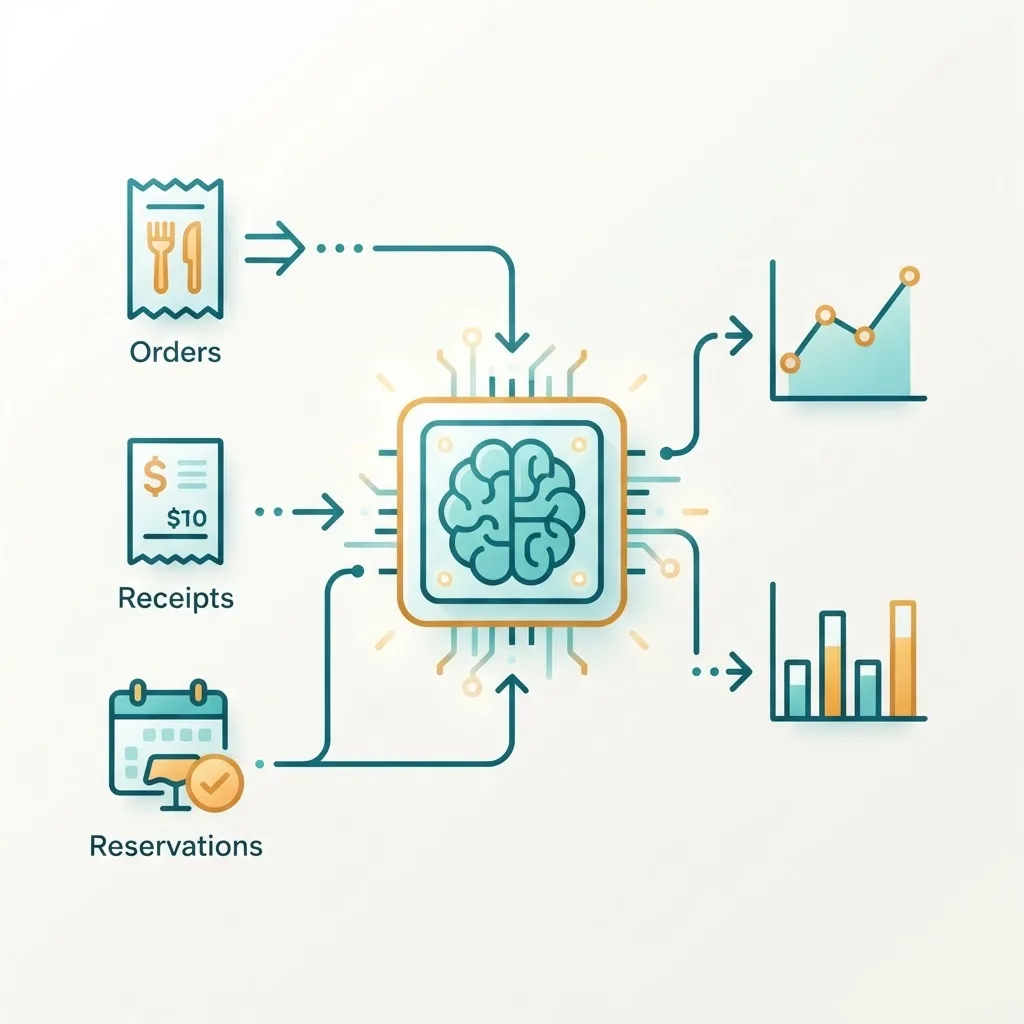
Machine learning is a method where software identifies patterns in historical data and uses them to predict future outcomes without a human writing the rules. Traditional restaurant reporting tells you that last Friday you sold 214 covers. A machine learning model tells you that next Friday you will likely sell between 198 and 236 covers because of the weather forecast, a local event, payroll timing in your area, and your own three-year seasonal pattern.
That distinction is the entire value proposition. Reporting is retrospective. Machine learning is prospective. A restaurant runs on perishable inventory and hourly labor, both of which must be committed before demand arrives. Any system that improves the accuracy of those advance commitments directly improves your margin.
The Three Terms Vendors Blur Together
- Automation: A fixed rule you configured. "Reorder tomatoes when stock drops below 10 kg." No learning involved.
- Analytics: Descriptive summaries of what already happened. Dashboards, cost percentages, sales mix reports.
- Machine learning: A model that updates its own predictions as new data arrives, improving accuracy over time without reconfiguration.
If a vendor calls a rules-based reorder trigger "AI," that is a useful feature but it is not machine learning. Ask directly: does the system's accuracy improve as it ingests more of my data? If the answer is no, you are buying automation, and you should pay automation prices.
Why Prediction Matters More in Restaurants Than Most Industries
Restaurants operate on some of the thinnest margins in retail. Industry benchmarks consistently place full-service restaurant net profit margins in the 3 to 6 percent range, with food costs typically consuming 28 to 35 percent of revenue and labor another 30 to 35 percent. When those two line items make up roughly two thirds of every dollar, a two-percentage-point improvement in either is not incremental. It can double net profit.
The waste side is equally stark. The United Nations Environment Programme's Food Waste Index Report estimates that the global food service sector generates around 290 million tonnes of food waste annually, a large share of which is over-purchasing and over-prepping driven by guesswork. Better forecasting attacks that number directly.
This is why machine learning has landed harder in restaurants than in many other verticals. The decisions are frequent, the data is structured, and the feedback loop is short. You place an order, you see the result within days.
The Four Machine Learning Capabilities That Actually Pay
Across the operators we have worked with at ZoneTechify, four applications produce a defensible return. Everything else is a bonus.
1. Demand Forecasting
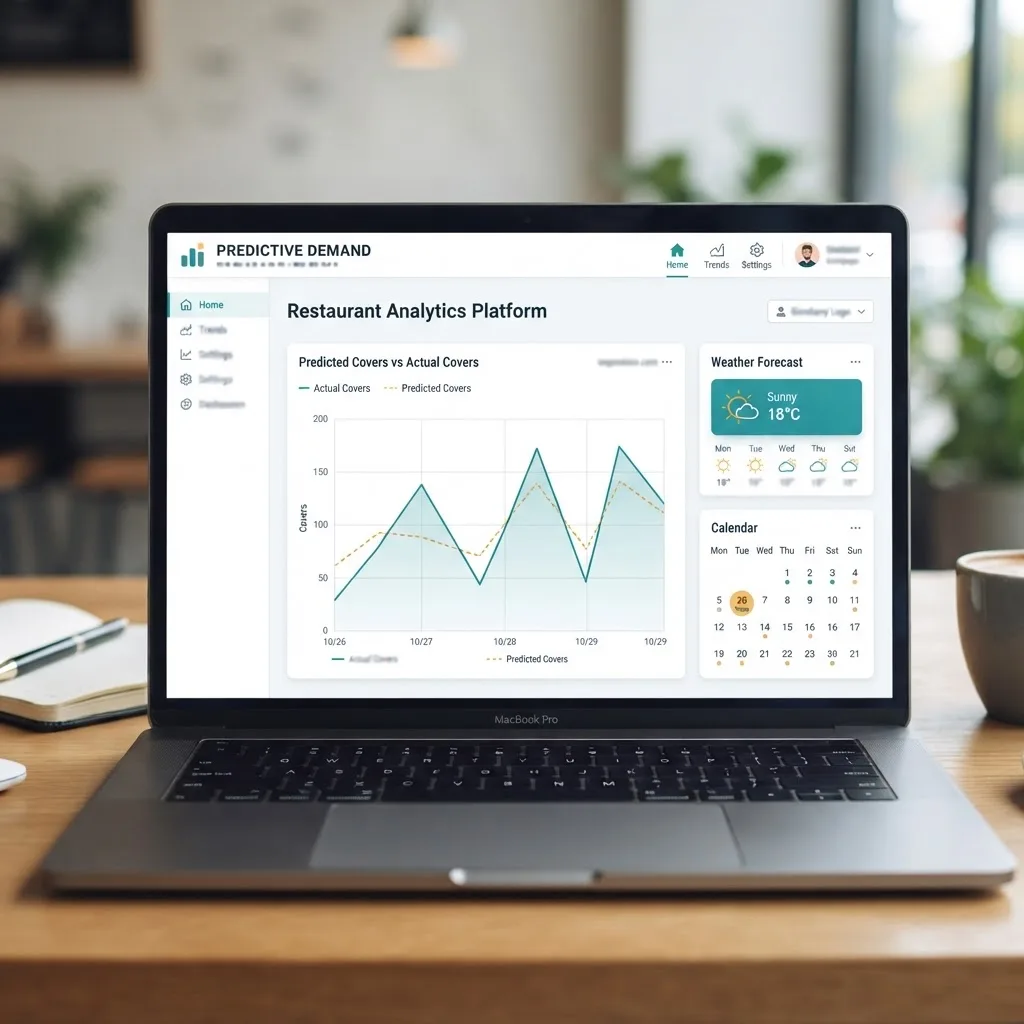
Demand forecasting predicts how many covers, orders, or units of a specific dish you will sell in a future time window. Good models forecast at the item level and by hour or daypart, not just daily totals. A daily total tells you nothing about whether to prep more braise at 4 p.m.
The signals a serious model uses include at least two years of your own sales history, day of week, weather, local school and public holiday calendars, nearby event schedules, promotional activity, and delivery-platform volume. Vendors that forecast from sales history alone will be accurate on ordinary weeks and wrong exactly when accuracy matters most.
2. Inventory and Purchasing Optimization
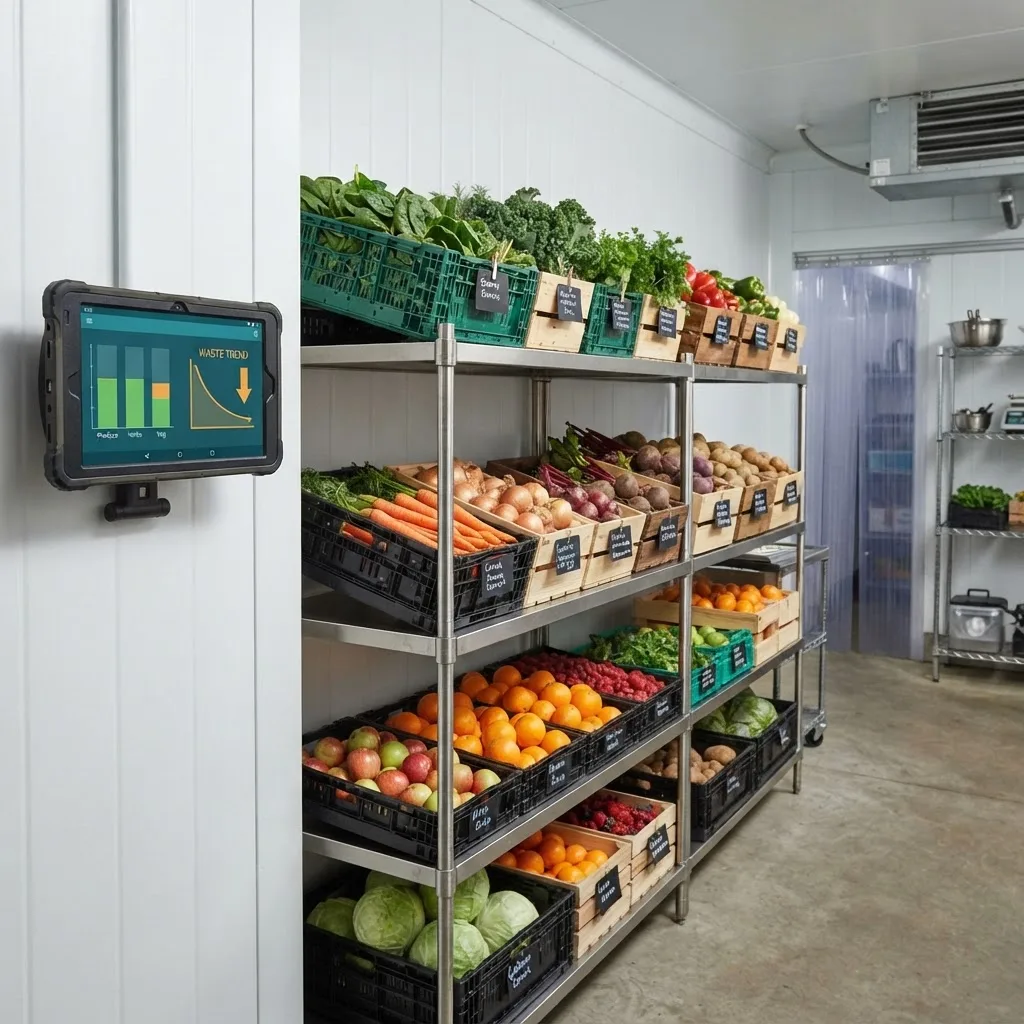
Once you can forecast item-level demand, you can convert it to ingredient-level need through your recipe data. The model calculates required quantities, subtracts current stock, accounts for supplier lead time and minimum order quantities, and produces a purchase order you review rather than build.
The practical gain shows up in three places: less spoilage, fewer emergency top-up orders at retail prices, and fewer 86'd items during service. Ask any vendor for their theoretical-versus-actual usage variance reporting. If the platform cannot show you the gap between what you should have used and what you actually used, it cannot help you close it.
3. Labor Scheduling
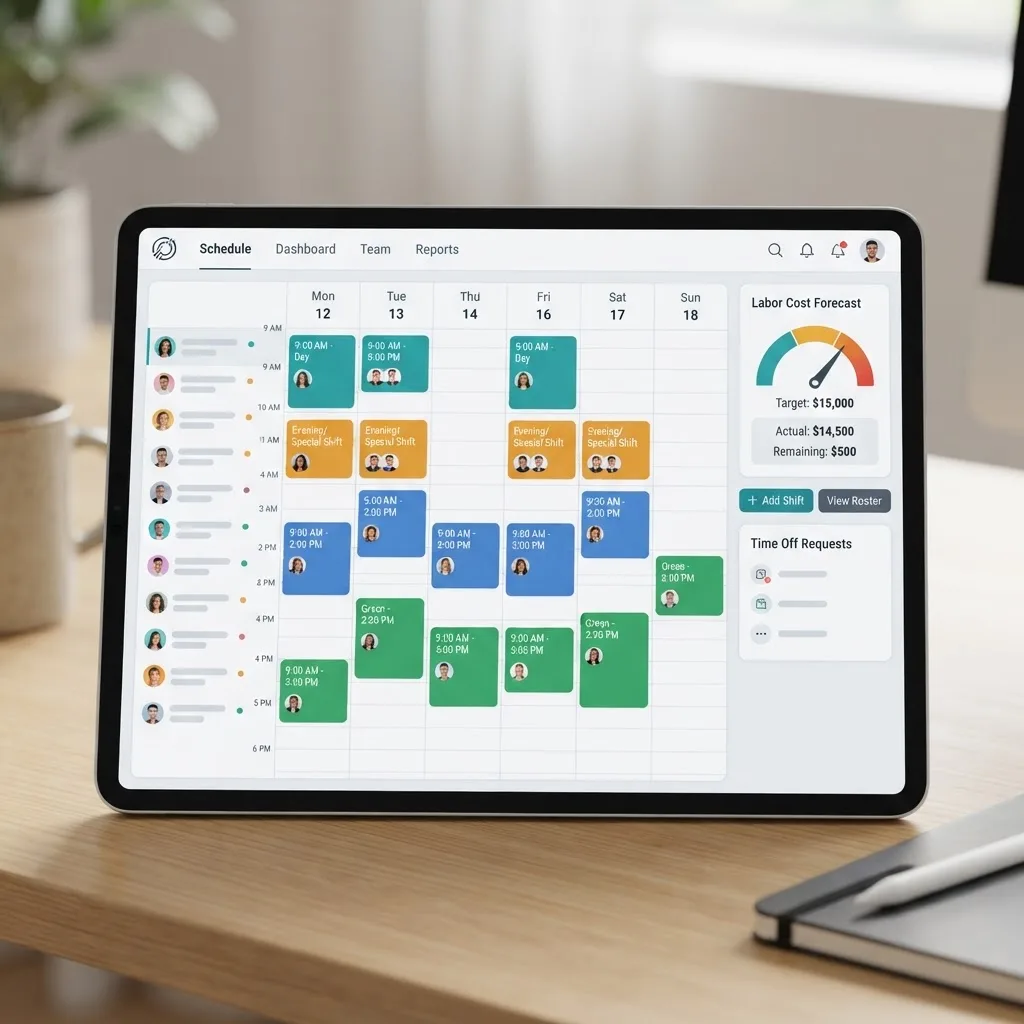
Predictive scheduling converts a demand forecast into recommended shift coverage by role and by hour. Instead of scheduling five servers every Friday because that is what you always do, the system recommends four until 7 p.m. and six from 7 to 10 p.m. based on predicted covers, then flags where the schedule breaches overtime thresholds or local predictive-scheduling laws.
The honest caveat: labor optimization has a floor. Cut past a certain point and service quality collapses, which damages retention and reviews far more than the saved wages are worth. The best systems let you set a minimum service level per station and optimize within it. Treat any tool that only minimizes cost as dangerous.
4. Menu Engineering and Pricing
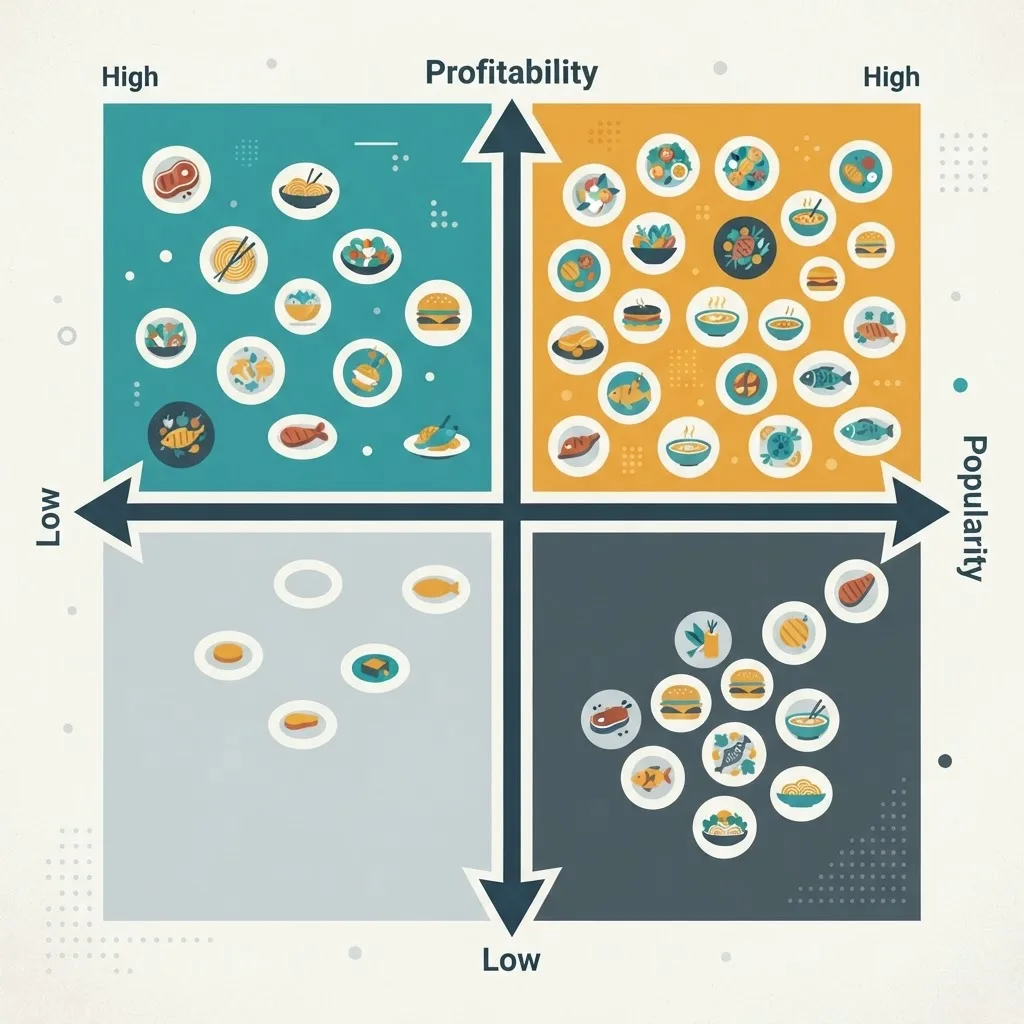
Menu engineering models classify every dish by contribution margin and popularity, then simulate what happens if you reprice, reposition, or remove it. The stronger platforms estimate price elasticity per item, which answers the question owners actually care about: if I raise this dish from 18 to 19.50, how many sales do I lose, and does total profit rise or fall?
This is also where machine learning earns its keep on the revenue side rather than the cost side. Most operators underprice their signature items and overprice their commodity items, and the data usually says so clearly.
Comparing Software Categories
Restaurant software is not one market. Different categories apply machine learning to different problems, and most operators end up combining two or three.
| Software Category | Core Job | Machine Learning Depth | Best Fit |
|---|---|---|---|
| Cloud POS with analytics add-on | Take orders, report sales | Light: sales trends, basic forecasts | Single sites, cafes, quick service |
| Dedicated inventory and back-office | Purchasing, recipe costing, variance | Medium to high: usage and ordering models | Full-service, 2 to 20 locations |
| Workforce management platform | Scheduling, compliance, payroll | Medium to high: labor demand models | Labor-heavy or multi-shift operations |
| Reservation and guest CRM | Bookings, no-show handling, guest profiles | Medium: no-show and lifetime-value scoring | Reservation-led full-service dining |
| Delivery and channel manager | Aggregating third-party orders | Light to medium: prep-time prediction | Delivery-first and virtual brands |
| Custom integrated platform | Unifies all of the above on your data | Highest: models trained on your full stack | Groups above roughly 15 sites |
Small independents almost always get better returns from a strong POS plus a dedicated inventory tool than from a custom build. Groups past fifteen or twenty locations often hit the opposite conclusion, because their competitive advantage lives in the combined dataset that no off-the-shelf vendor can see. That is the point at which a purpose-built platform, of the kind covered under web application development, starts to make financial sense.

How to Evaluate a Vendor's Machine Learning Claims
Use these seven questions in every demo. They are difficult to answer with marketing language.
- How much of my history do you need before forecasts are reliable? Credible answers are 8 to 12 weeks for basic patterns and 12 to 24 months for seasonality. Anyone promising accuracy from day one is describing an industry average, not your restaurant.
- What is your forecast error rate, and how do you measure it? Ask for mean absolute percentage error on comparable venues. Item-level errors under 15 to 20 percent are genuinely good. A refusal to quote any number is a red flag.
- Which external signals feed the model? Weather, holidays, and local events should all be named specifically.
- Can I see and override every recommendation? You need explanations and a manual override on every automated order or schedule.
- Who owns the data, and can I export it in full? Insist on complete historical export in a standard format. This is your leverage at renewal.
- What does the integration path look like? Confirm documented APIs to your POS, payroll, and suppliers. Integration gaps, not model quality, are the most common cause of failed rollouts.
- What happens during an anomaly? Ask how the model handled the pandemic period or a local road closure. Mature systems flag anomalies and exclude them rather than absorbing them as normal.
A Realistic Rollout Sequence
- Clean your data first. Fix duplicate menu items, wrong recipe yields, and stale supplier prices. Models inherit every error in your master data.
- Run forecasting in observation mode for four to six weeks while your team continues ordering manually. Compare weekly.
- Automate one category, usually high-volume perishables, and measure spoilage before and after.
- Expand to labor scheduling only after forecast accuracy is proven, since scheduling depends entirely on it.
- Review model performance quarterly. Menu changes and new competitors both shift the underlying patterns.
Operators who skip step one account for most of the disappointing outcomes we see. The model is rarely the problem. The data feeding it usually is.
Key Takeaways
- Machine learning predicts future outcomes; analytics only describes past ones. Only the former improves decisions you must make in advance.
- Full-service restaurant net margins typically sit between 3 and 6 percent, so a two-point improvement in food or labor cost can transform profitability.
- The UNEP Food Waste Index estimates roughly 290 million tonnes of annual food service waste, much of it caused by forecasting error.
- Four applications reliably pay back: demand forecasting, inventory optimization, labor scheduling, and menu pricing.
- Item-level forecast error under 15 to 20 percent is strong performance; vendors who will not quote error rates should be treated with caution.
- Custom platforms generally make sense above roughly fifteen locations, not below.
- Data hygiene, not algorithm choice, determines whether a rollout succeeds.
Frequently Asked Questions (FAQ)
What is machine learning in restaurant software?
Machine learning in restaurant software is technology that studies your historical sales, labor, and inventory data to predict future demand, ordering needs, and staffing levels. Unlike standard reporting, it improves its own accuracy as more data arrives, helping you commit inventory and labor before customers walk in.
Do small restaurants actually benefit from machine learning software?
Yes, provided they have consistent digital sales records. A single location with two years of clean POS data can forecast well enough to cut spoilage noticeably. Small operators should choose an established POS with a forecasting module rather than commissioning custom software, which rarely justifies its cost below several locations.
How much data do I need before forecasts become accurate?
Most systems produce usable weekday and daypart patterns after 8 to 12 weeks of transaction data. Reliable seasonal forecasting, including holidays and annual cycles, generally requires 12 to 24 months. Before that threshold, treat every recommendation as advisory and keep a manager reviewing each order.
Will machine learning software replace my restaurant managers?
No. It removes the guesswork from ordering and scheduling, but managers still make judgment calls about service quality, staff development, and unusual local events the model cannot see. In practice good software returns several administrative hours per week to managers so they spend more time on the floor.
What is the biggest reason restaurant AI projects fail?
Dirty master data. Duplicate menu items, incorrect recipe yields, outdated supplier prices, and unreconciled stock counts all corrupt model output. Audit and correct your recipes and inventory records before onboarding, and confirm that your POS integration captures voids, comps, and modifiers accurately.
How do I know if a vendor's AI claim is genuine?
Ask whether accuracy improves as the system ingests your data, request a quoted forecast error rate on comparable venues, and ask which external signals such as weather and local events feed the model. Genuine machine learning vendors answer all three specifically; rules-based tools cannot.
Where to Go From Here
Start with a single measurable target. Pick either food cost percentage or labor percentage, record your current four-week baseline, and evaluate every platform against its ability to move that one number. Vendors will try to sell you the whole suite. Buy the part that fixes your largest leak, prove the return, then expand.
If you want a second opinion on architecture, integration risk, or whether a custom build is justified at your scale, the teams at ZoneTechify and WebPeak both work on the data-integration layer that makes these predictions trustworthy in the first place. That layer, not the model, is where most of the real work lives.