
A practical guide to artificial intelligence jewelry: how AI now shapes jewelry design, gemstone grading, virtual try-on, authentication, and online selling. Includes real workflows, comparison data, and answers for jewelers evaluating AI tools.
Artificial Intelligence Jewelry
Jewelry is one of the last industries people expected software to reshape, because its value has always rested on human hands, rare materials, and trust built over generations. Yet artificial intelligence is now embedded in nearly every stage of the modern jewelry business, from the first sketch of a ring to the moment a customer clicks buy on a phone screen. The term artificial intelligence jewelry covers two distinct things: jewelry pieces whose designs are generated or optimized by AI systems, and the AI infrastructure jewelers use to grade stones, forecast demand, authenticate pieces, and personalize the buying experience.
This guide separates the marketing hype from the workflows that actually produce results in a working studio or retail operation. Every section below is written from the perspective of what a jeweler, brand owner, or e-commerce manager can implement, measure, and defend to a customer who asks how the piece was made.

Quick Answer: Artificial intelligence jewelry refers to jewelry designed, graded, authenticated, or marketed with the help of AI systems. Designers use generative models to explore hundreds of design variations quickly, while machine vision grades gemstones, powers virtual try-on, detects counterfeits, and personalizes online storefronts to raise conversion rates.
What Artificial Intelligence Jewelry Actually Means
The phrase gets used loosely, so it helps to define the three layers precisely.
AI-generated design means a generative model produces form variations, pattern systems, or full CAD-ready geometry from a designer's prompt, sketch, or parameter set. The designer still curates, corrects, and finishes the piece.
AI-assisted operations means machine learning handles a repeatable judgment task inside the business: grading a stone's clarity, matching pearls by luster, estimating metal weight from a CAD file, or flagging a suspicious resale listing.
AI-driven commerce means models decide what a shopper sees, from which necklace appears first on a category page to which engraving option is suggested at checkout.
Only the first layer changes the object. The other two change the business around the object, and in most jewelry companies they generate returns faster because they attach to existing revenue rather than requiring a new product line.
How Generative AI Changes Jewelry Design
Generative design tools compress the exploration stage of jewelry design from weeks to hours. A traditional custom ring commission might involve three to five hand sketches before a client picks a direction. A designer working with image and geometry models can present twenty to forty coherent variations of the same brief in a single session, then take the chosen direction into CAD for real manufacturing tolerances.
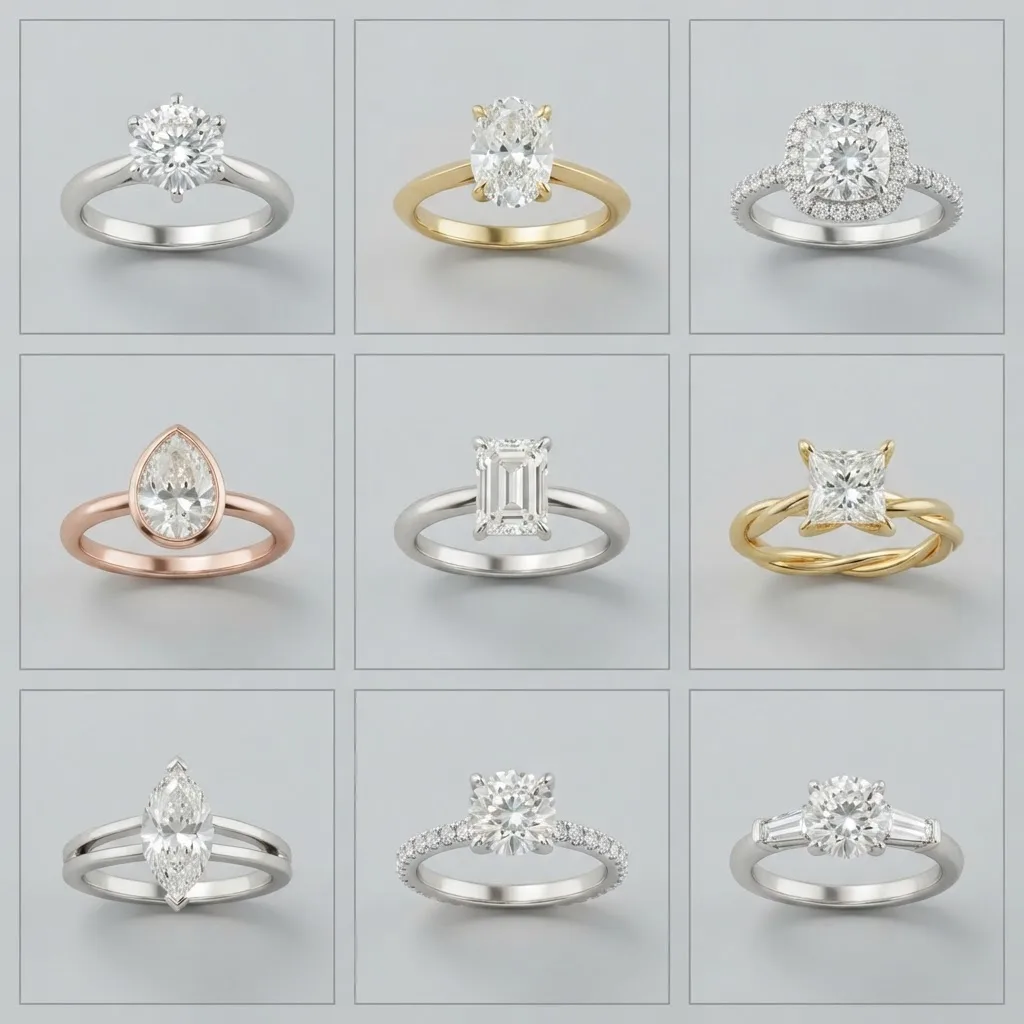
The practical workflow most studios settle on looks like this:
- Write a design brief with hard constraints: metal, stone size, budget band, wearer profile, and setting type.
- Generate concept imagery to explore silhouette, proportion, and ornament density.
- Select two or three directions and rebuild them properly in parametric CAD, where prong thickness, girdle clearance, and shank width are real numbers.
- Run manufacturability checks for casting, stone security, and finishing access.
- Print a resin pattern or a wax and evaluate it physically before committing metal.
Step three is where most AI jewelry projects fail. Concept images are not manufacturing data. A generated image may show a pave field with stones spaced too tightly to set, or a cantilevered gallery that will not survive daily wear. AI accelerates the front of the process; a trained bench jeweler still governs the back of it.
Where Generative Design Adds the Most Value
The highest-leverage use is not the one-off statement piece. It is collection building. When a brand needs fifteen variations of a signature motif across rings, studs, pendants, and bracelets, parametric plus generative workflows let one designer maintain visual consistency across the whole family while adapting proportions to each product type. Brands working with a full stack AI solutions partner typically start here, because collection consistency is measurable and directly tied to sell-through.
Machine Vision for Gemstone Grading and Quality Control
Gemstone grading has always carried a subjective margin. Two qualified graders can disagree on a clarity grade, and that disagreement moves price. Machine vision systems now image stones under controlled lighting and score inclusions, symmetry, proportions, and color against reference datasets, producing repeatable output where human fatigue previously introduced variance.
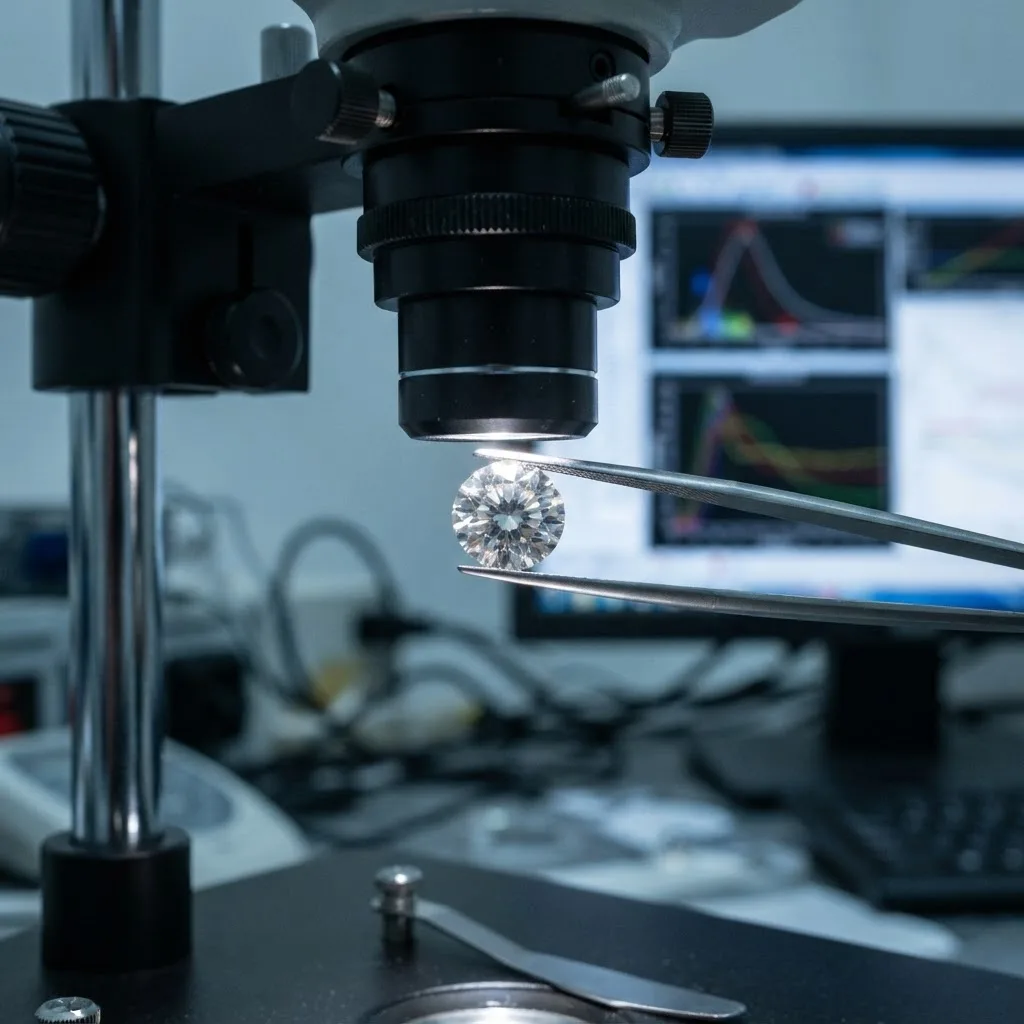
The major laboratories have moved in this direction publicly. GIA has described using automated and AI-supported systems in its diamond grading operations, and the Gemological Institute has published research on machine learning applied to color grading consistency. De Beers, through its Lightbox and Tracr initiatives, has invested in digital provenance infrastructure that pairs stone imaging with a traceable record from mine to retail.
For a small or mid-size jeweler, the accessible version of this is narrower and still useful:
- Photograph every inbound stone under identical lighting and store the image with the purchase record.
- Use image comparison to confirm the stone returned from a setter is the stone that was sent.
- Batch-match colored stones and pearls by trained similarity scoring rather than eye alone.
- Detect surface-reaching feathers and chips at intake instead of after setting.
That last point is where the money is. A chip discovered after a stone is set costs labor, metal, and often the stone. Catching it at intake costs a photograph.
Virtual Try-On and the Conversion Problem
Jewelry has a structural e-commerce disadvantage: scale is hard to judge on a screen. A 14mm hoop and an 18mm hoop look identical in a product photo, and that ambiguity produces returns.

AI-powered try-on solves this with hand, wrist, ear, and neck landmark detection, placing a physically scaled 3D model of the piece onto a live camera feed. The measurable effects reported across accessory and eyewear retail are consistent in direction: higher engagement time, higher add-to-cart rates, and lower size-related returns. Google's own AR try-on rollouts for beauty and eyewear were built on the same landmark-detection foundations, which is why the technology matured quickly for jewelry.
Three implementation details separate a try-on feature that converts from one that annoys:
- True scale, not visual approximation. The model must be dimensioned in millimeters and anchored to detected anatomy, or customers stop trusting it after the first delivery.
- Material accuracy. Yellow gold, white gold, and rhodium-plated silver reflect differently. A single generic metallic shader makes every product look like the same product.
- Graceful degradation. Older phones and restricted camera permissions need a static fallback with a reference object for scale.
AI for Authentication, Provenance, and Resale
The secondhand luxury market has made authentication a mainstream consumer concern rather than a specialist one. AI image models trained on hallmark stamps, clasp geometry, engraving depth, and finishing signatures can now flag likely counterfeits at a speed no human queue matches.
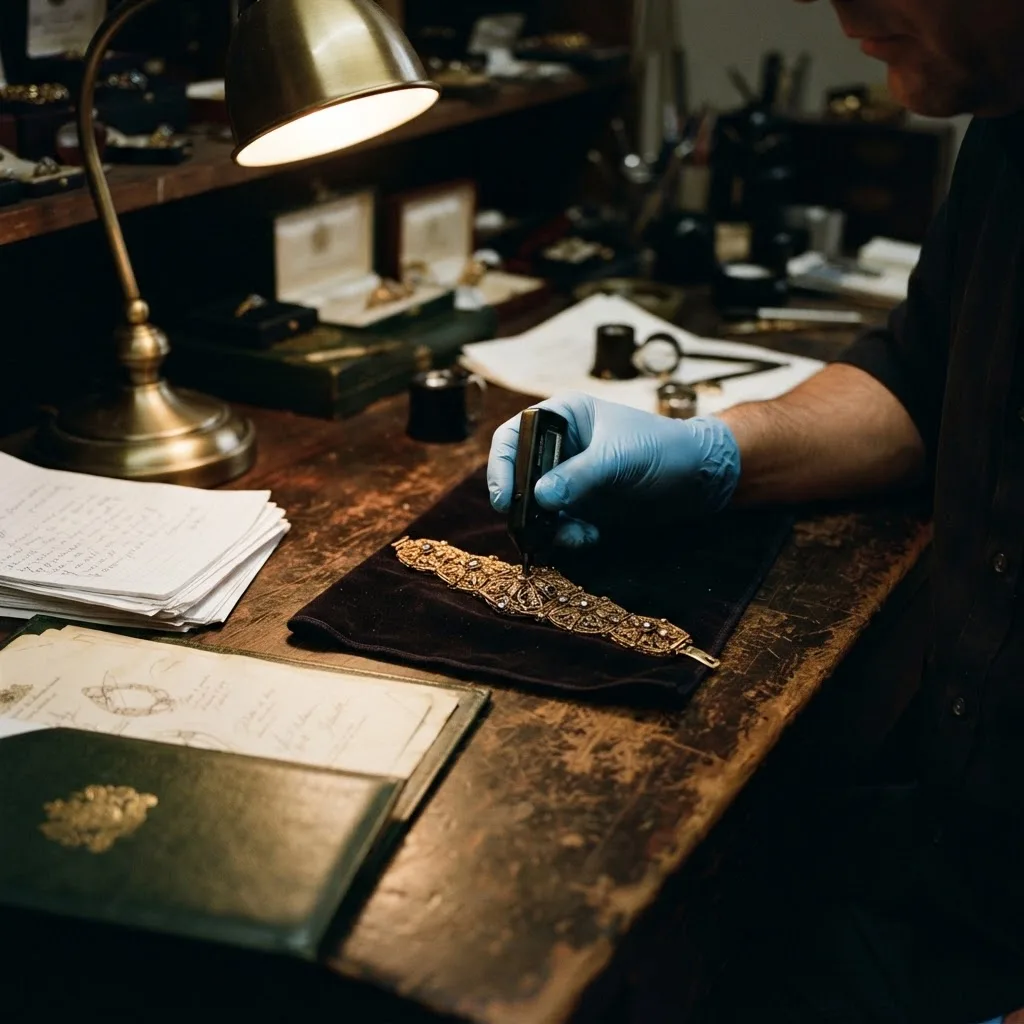
Authentication AI works as triage, not verdict. A well-calibrated system sorts incoming pieces into three buckets: clearly consistent with the brand's known production, clearly inconsistent, and ambiguous. The first bucket moves fast, the second is rejected, and the third goes to a human expert. The business gain is throughput on the easy cases, which frees expert attention for the hard ones.
Provenance is the adjacent opportunity. When a stone's imaging record, grading data, and ownership transfers live in one queryable record, resale value becomes defensible with data instead of paperwork. Independent studies of luxury resale consistently find that documented provenance commands a price premium over undocumented equivalents, and AI-driven record matching is what makes documentation cheap enough to apply to mid-range inventory rather than only high jewelry.
From CAD to Cast: AI in Jewelry Production
Production is where AI stops being creative and becomes logistical. The tasks that pay for themselves are unglamorous.
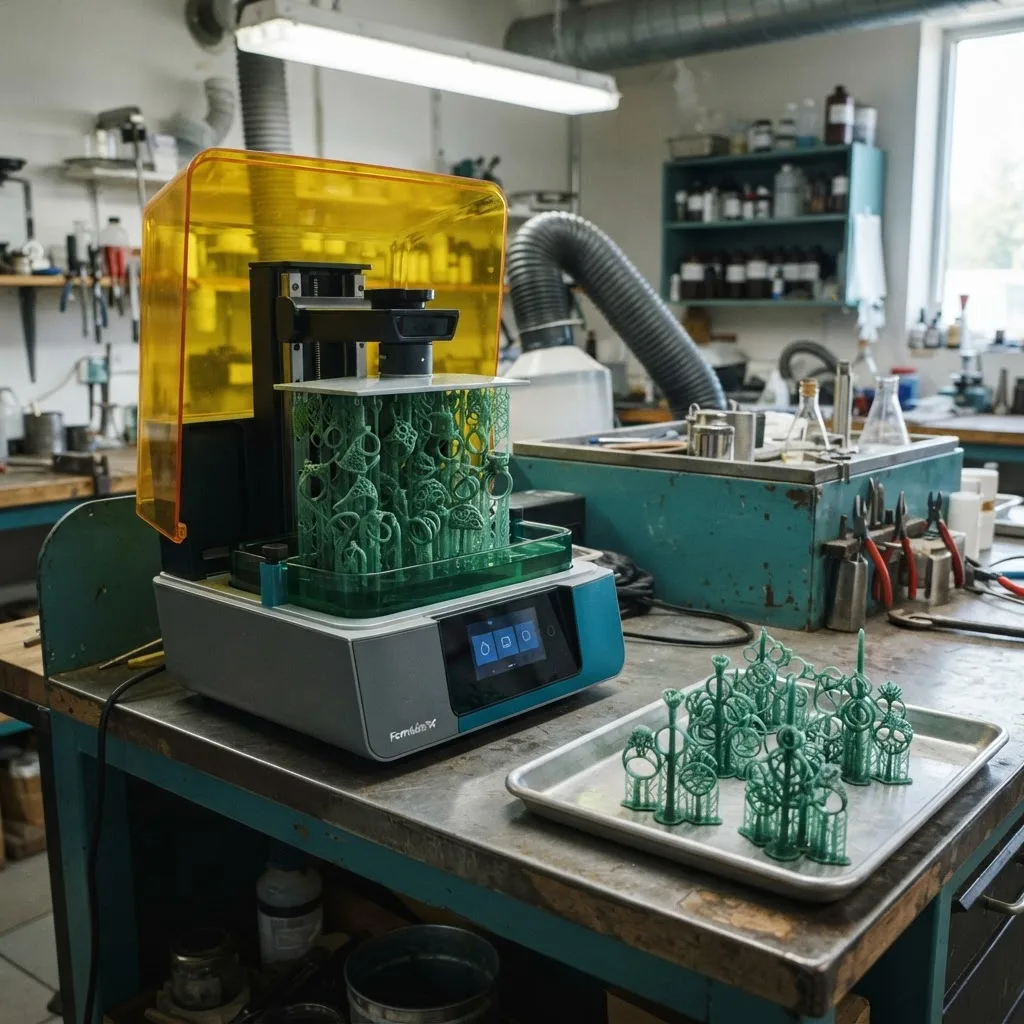
- Metal weight and cost estimation from CAD geometry, which lets a studio quote custom work accurately instead of padding every estimate.
- Nesting and build-plate optimization for resin printing, which reduces resin waste and print time per pattern.
- Casting defect prediction based on wall thickness, sprue placement, and historical failure data from the studio's own record.
- Demand forecasting on ring sizes and chain lengths, so working capital is not tied up in sizes that sit.
Studios that instrument these four items typically find the forecasting item has the largest cash effect, because jewelry inventory is expensive per unit and slow to turn.
Comparison: Traditional vs AI-Assisted Jewelry Workflow
| Stage | Traditional Approach | AI-Assisted Approach | Practical Gain |
|---|---|---|---|
| Concept exploration | 3 to 5 hand sketches over days | 20 to 40 curated variations in hours | Faster client sign-off |
| Gemstone grading | Manual eye grading, grader variance | Controlled imaging with scored output | Repeatable, auditable grades |
| Sizing confidence online | Product photos and size charts | True-scale AR try-on | Fewer size-related returns |
| Authentication | Full expert review of every piece | AI triage with expert escalation | Higher throughput per expert |
| Quoting custom work | Estimated weight, padded margin | CAD-derived weight and cost | Tighter, more competitive quotes |
| Inventory planning | Historical intuition | Demand forecast by size and style | Less capital in dead stock |
What AI Cannot Do in Jewelry
Honest limits matter more than capability lists, because overpromising is what damages a jewelry brand's credibility.
AI cannot judge how a piece feels in the hand, how a clasp behaves after a thousand openings, or whether a setting will catch on a sweater. It cannot verify that a supplier's ethical sourcing claim is true, only that the paperwork is internally consistent. It cannot replace the bench skills of stone setting, hand engraving, or finishing, and generated concept imagery routinely proposes geometry that is beautiful and unmanufacturable.
There is also a taste problem. Generative models are trained on what already exists, so they regress toward the average of published jewelry. Brands that lean on them entirely produce work that looks familiar. The competitive advantage belongs to designers who use AI for breadth and their own judgment for the decision.
Building the Digital Side of a Jewelry Brand
The AI layer only pays off when the storefront around it is fast, well structured, and measurable. A try-on widget on a slow, poorly indexed product page changes nothing. Product data needs consistent attributes for metal, carat weight, stone dimensions, and finish, because every downstream AI feature, from recommendations to search, reads those attributes.

That is an engineering problem before it is a marketing one, which is why jewelry brands increasingly work with a production grade web apps team rather than bolting features onto a generic template. Clean structured data, fast image delivery for high-resolution product photography, and schema markup for products and reviews do more for discoverability than any single AI feature.

On the marketing side, the durable wins are attribution and creative testing. Knowing which product images drive add-to-cart, which collections attract first-time buyers versus repeat customers, and which channels deliver customers who return within twelve months is more valuable than automating content volume.
Key Takeaways
- Artificial intelligence jewelry spans three layers: AI-generated design, AI-assisted operations such as grading and authentication, and AI-driven commerce.
- Generative tools compress concept exploration from days to hours, but concept imagery is not manufacturing data and must be rebuilt in parametric CAD.
- Major labs including GIA and industry initiatives such as De Beers Tracr have invested in automated grading and digital provenance, signaling that machine-assisted assessment is now mainstream.
- True-scale AR try-on addresses jewelry's core e-commerce weakness, which is size ambiguity, and reduces size-related returns when built with millimeter-accurate models.
- Authentication AI works best as triage: fast clearance of obvious cases, expert escalation for ambiguous ones.
- CAD-derived metal weight, print nesting, casting defect prediction, and size-level demand forecasting deliver the clearest cash returns in production.
- AI regresses toward the average of existing jewelry, so human taste remains the differentiator.
Frequently Asked Questions (FAQ)
What is artificial intelligence jewelry?
Artificial intelligence jewelry describes pieces whose designs are generated or optimized using AI, and the AI systems jewelers use to grade stones, authenticate pieces, run virtual try-on, and personalize online stores. The physical craft remains human; AI accelerates exploration, assessment, and selling.
Can AI actually design a ring that can be manufactured?
AI can produce compelling ring concepts, but generated imagery is not production data. A designer must rebuild the chosen concept in parametric CAD with real prong thickness, stone clearance, and shank dimensions, then verify casting and setting feasibility before any metal is committed to the piece.
Is AI gemstone grading more accurate than a human grader?
AI grading is more consistent rather than simply more accurate. Machine vision removes fatigue and subjective drift, producing repeatable scores under controlled lighting. Human gemologists still handle ambiguous stones, treatment detection, and final certification decisions where judgment and experience matter most.
Does virtual try-on really reduce jewelry returns?
Yes, when the 3D models are dimensioned in real millimeters and anchored to detected anatomy. Size ambiguity drives a large share of jewelry returns, so accurate scale preview directly reduces them. Approximate or visually scaled try-on can increase returns by creating false expectations.
How much does it cost a small jeweler to start using AI?
A small studio can start for very little. Subscription design and imaging tools, consistent intake photography, and a spreadsheet-level demand record cover the highest-value use cases. Custom AI development, integrated grading hardware, and bespoke try-on builds are later-stage investments once volume justifies them.
Will AI replace bench jewelers and designers?
No. AI replaces repetitive judgment and exploration tasks, not stone setting, hand finishing, engraving, or taste. Because generative models average existing designs, original human direction becomes more valuable, not less. The jobs that shift most are administrative and cataloging roles rather than craft roles.