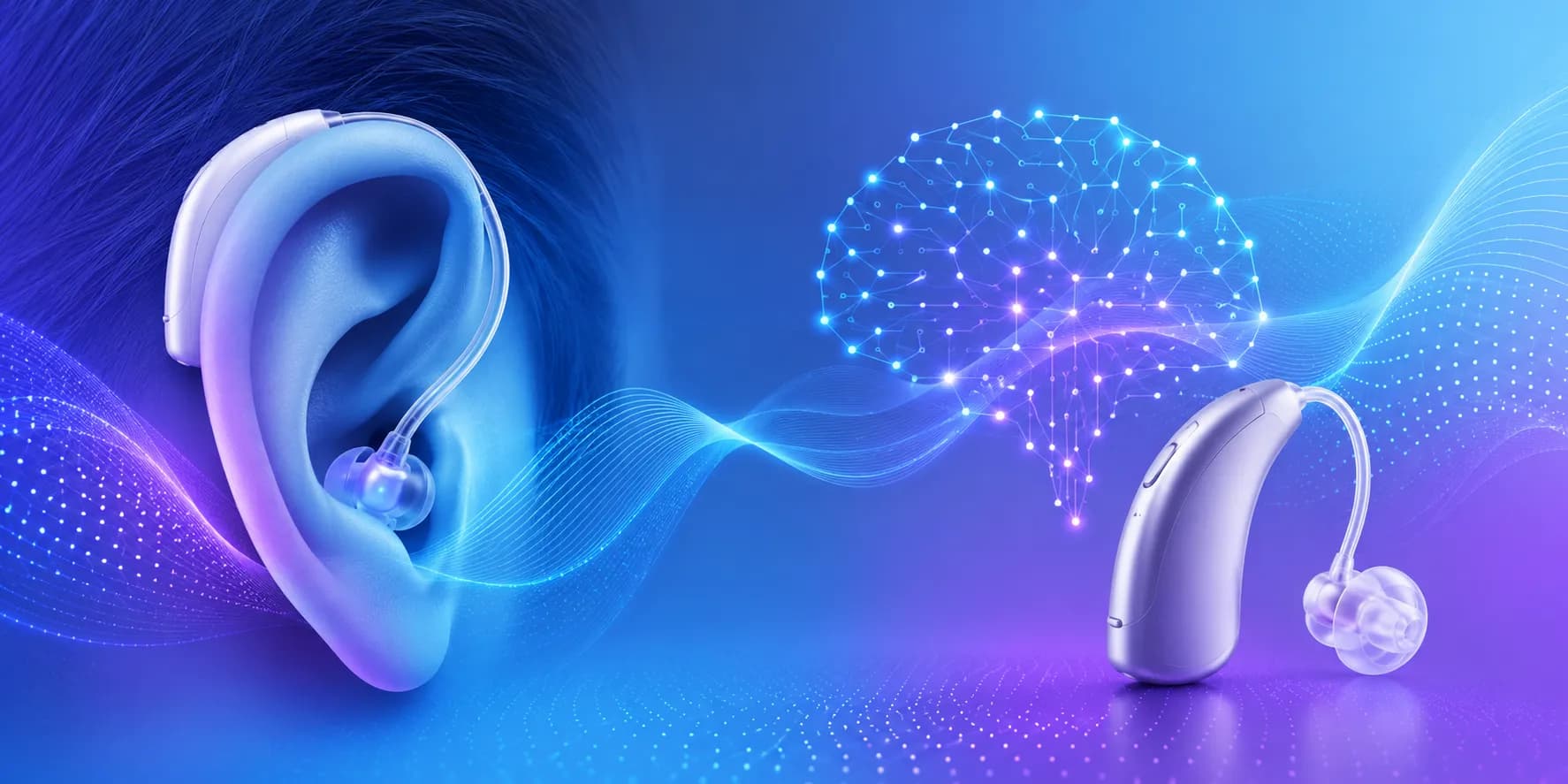
Artificial intelligence hearing aids use on-chip neural networks to separate speech from noise, adapt in real time, and track health. Here is how they work.
Artificial Intelligence Hearing Aids
Hearing aids used to be amplifiers with filters. The devices sold today are small computers that run machine learning models inside the shell, dozens of times per second, on a battery the size of a shirt button. That shift matters because the hardest problem in hearing loss was never volume. It was clarity in a crowded room, and volume alone never solved it.
This guide explains what artificial intelligence actually does inside a modern hearing aid, which claims hold up, which are marketing, and how to evaluate a device before you spend money on one. It is written for people comparing options and for anyone who has been told louder is the same as clearer.
Quick Answer: Artificial intelligence hearing aids run trained neural networks on a low-power chip inside the device. Instead of only amplifying sound, they classify the listening environment, separate speech from background noise in milliseconds, and adjust gain, directionality, and compression automatically, which improves speech understanding in noisy places.
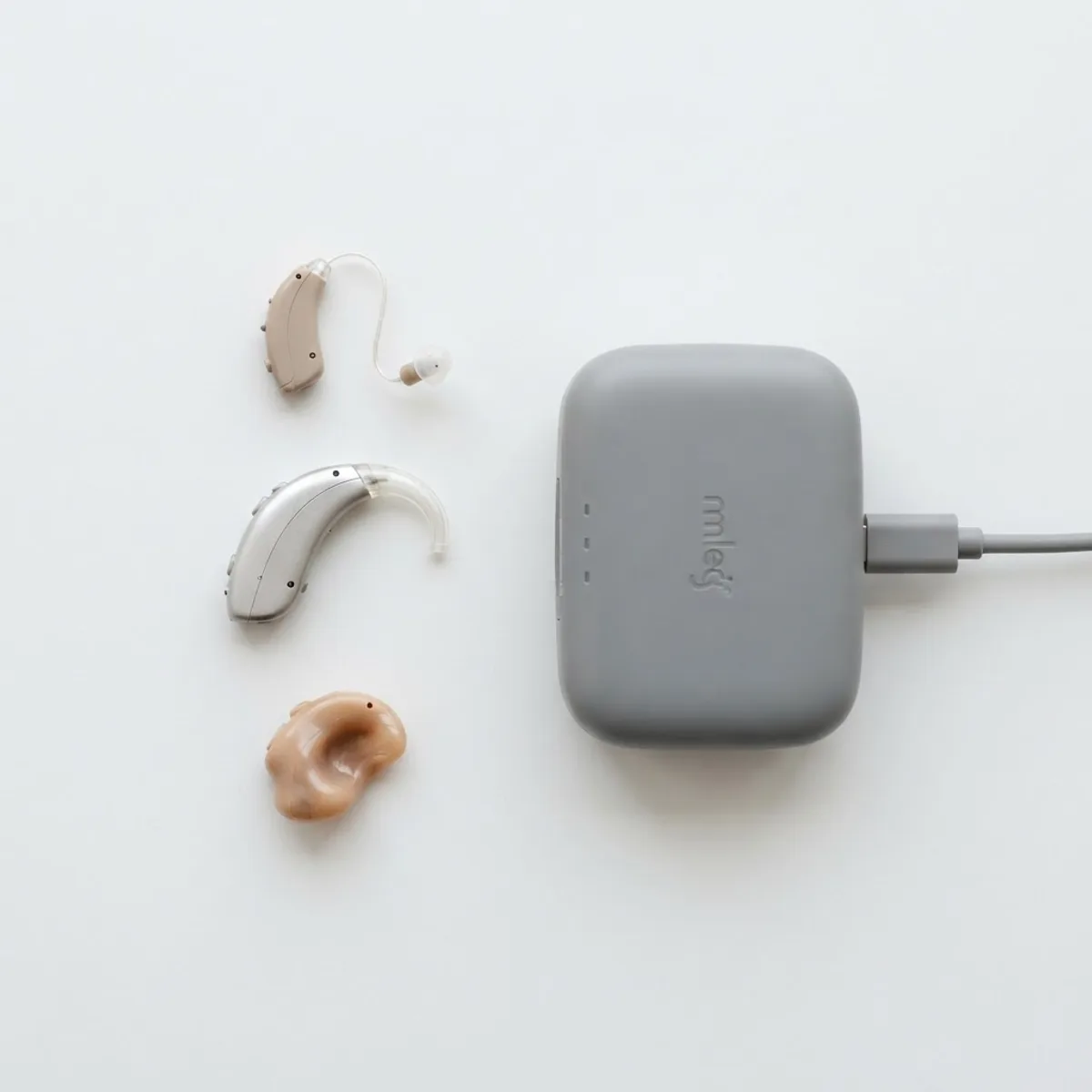
What Actually Makes a Hearing Aid Intelligent
The useful definition is narrow: an AI hearing aid uses a model trained on large audio datasets to make decisions that engineers previously hard-coded as rules. A traditional digital aid follows fixed logic, such as reduce gain above 4 kHz when input exceeds a threshold. A neural aid has learned, from millions of labeled sound scenes, what a voice looks like compared to a dishwasher, and rebuilds the scene accordingly.
Key Terms Defined
- Deep neural network (DNN): a layered model trained offline on labeled sound scenes, then compressed and burned onto the hearing aid chip. It does not learn from you in real time.
- On-device inference: the model runs locally on the aid, not in the cloud, because a delay above roughly 10 milliseconds makes your own voice sound wrong.
- Scene classification: the aid decides whether you are in quiet, speech in noise, traffic, or music, then loads the matching processing strategy.
- Machine learning fitting: a phone app that learns your gain preferences from paired comparisons and refines your prescription over weeks.
One of the first mass-market examples, the Oticon More released in 2021, was trained on roughly 12 million real sound scenes. That number is the point. Rule-based systems were written by a handful of engineers imagining environments. Trained systems have effectively been exposed to the messy reality of restaurants, offices, and traffic.

How AI Hearing Aids Process Sound
The pipeline is consistent across manufacturers, even when the branding differs.
- Capture. Two or three microphones per ear sample the environment and preserve the tiny timing differences your brain uses to locate sound.
- Analyze. The signal is split into frequency bands and passed to the classifier, which labels the scene and estimates the signal-to-noise ratio.
- Reconstruct. The neural network separates the speech component from competing noise and rebalances them, rather than simply attenuating whole frequency bands.
- Amplify to prescription. The cleaned signal is shaped to your audiogram, with compression applied so soft speech becomes audible without loud sounds becoming painful.
Binaural streaming is the quiet advance underneath all of this. The left and right aids exchange data continuously, so the pair can agree on one decision instead of drifting apart. That coordination is what keeps a noisy street from sounding like two separate rooms.

Solving the Restaurant Problem
Ask any hearing aid wearer where their device fails and the answer is a restaurant. Multiple voices, hard surfaces, and clattering plates create overlapping speech that classic directional microphones handle badly, because narrowing the beam to the person in front of you also deletes the person beside you.
Neural processing attacks this differently. Rather than picking a direction and discarding the rest, the model attempts to preserve multiple speech sources while suppressing non-speech noise, leaving your brain to choose where to attend. Independent laboratory studies of DNN-based noise reduction have generally reported speech-in-noise improvements in the range of a few decibels of signal-to-noise ratio. That sounds modest, but in speech perception a 1 dB improvement typically translates to a measurable gain in words understood, so a 3 dB shift is the difference between following a conversation and nodding along.
The honest caveat: results vary by degree of loss, years of untreated deprivation, and cognitive factors. Two people with identical audiograms can get different outcomes from the same device.
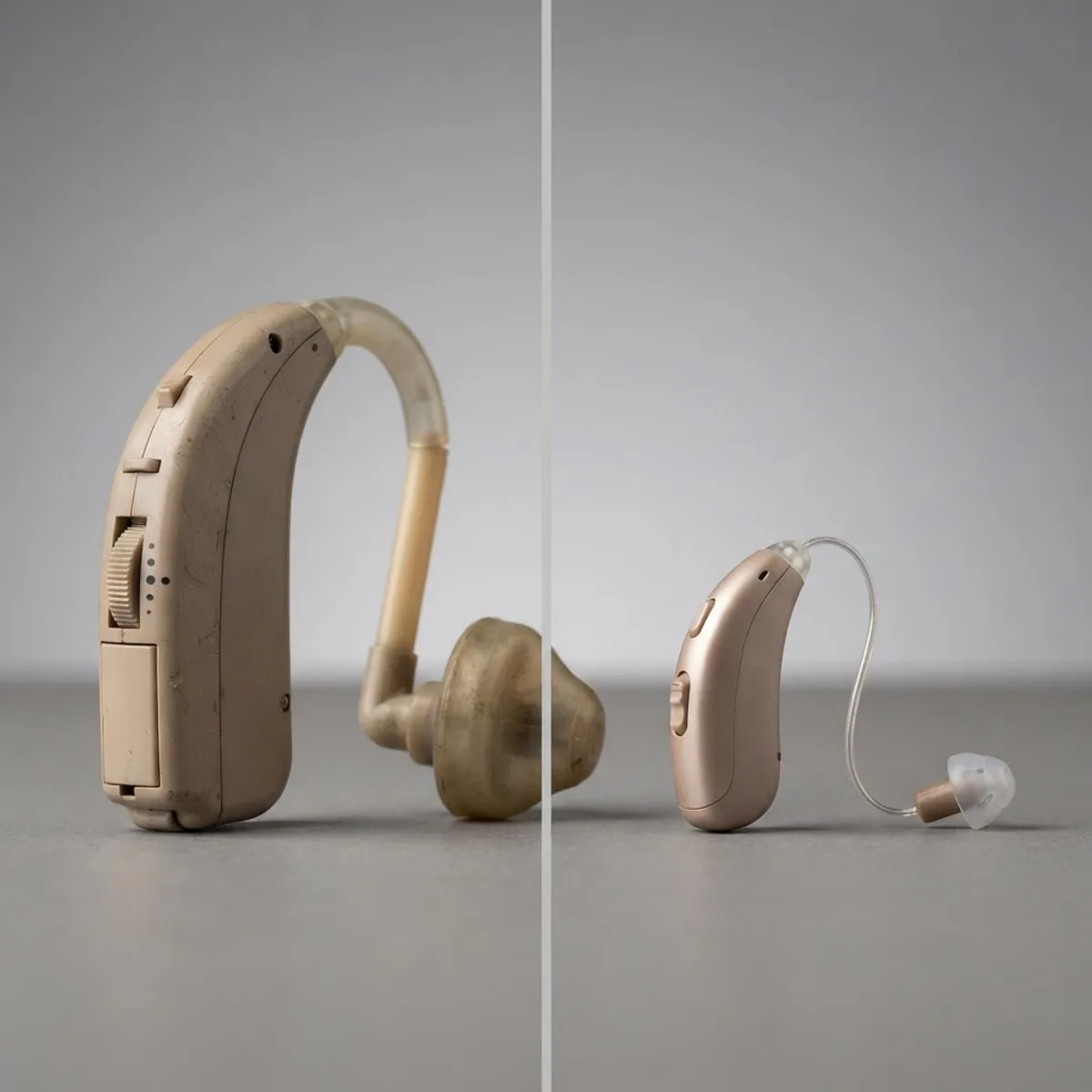
AI Hearing Aids vs Traditional Hearing Aids
| Capability | Traditional Digital Aid | AI Hearing Aid |
|---|---|---|
| Noise handling | Fixed rules, band attenuation | Trained model separates speech from noise |
| Program switching | Manual button or basic auto | Automatic scene classification, continuous |
| Directionality | Fixed or simple adaptive beam | Adaptive, aims to keep multiple speakers |
| Personalization | Clinic fitting, occasional tweaks | App-based learning from your own ratings |
| Extra sensors | Rare | Motion, heart rate, fall detection on some models |
| Firmware improvement | Almost never | Remote updates add features post-purchase |
| Typical premium price | Lower | Higher, narrowing each product cycle |
The practical takeaway is that AI features matter most in complex environments. If you spend your days in quiet rooms one to one, a well-fitted mid-tier device may serve you nearly as well for far less money. Fit quality outranks feature lists.
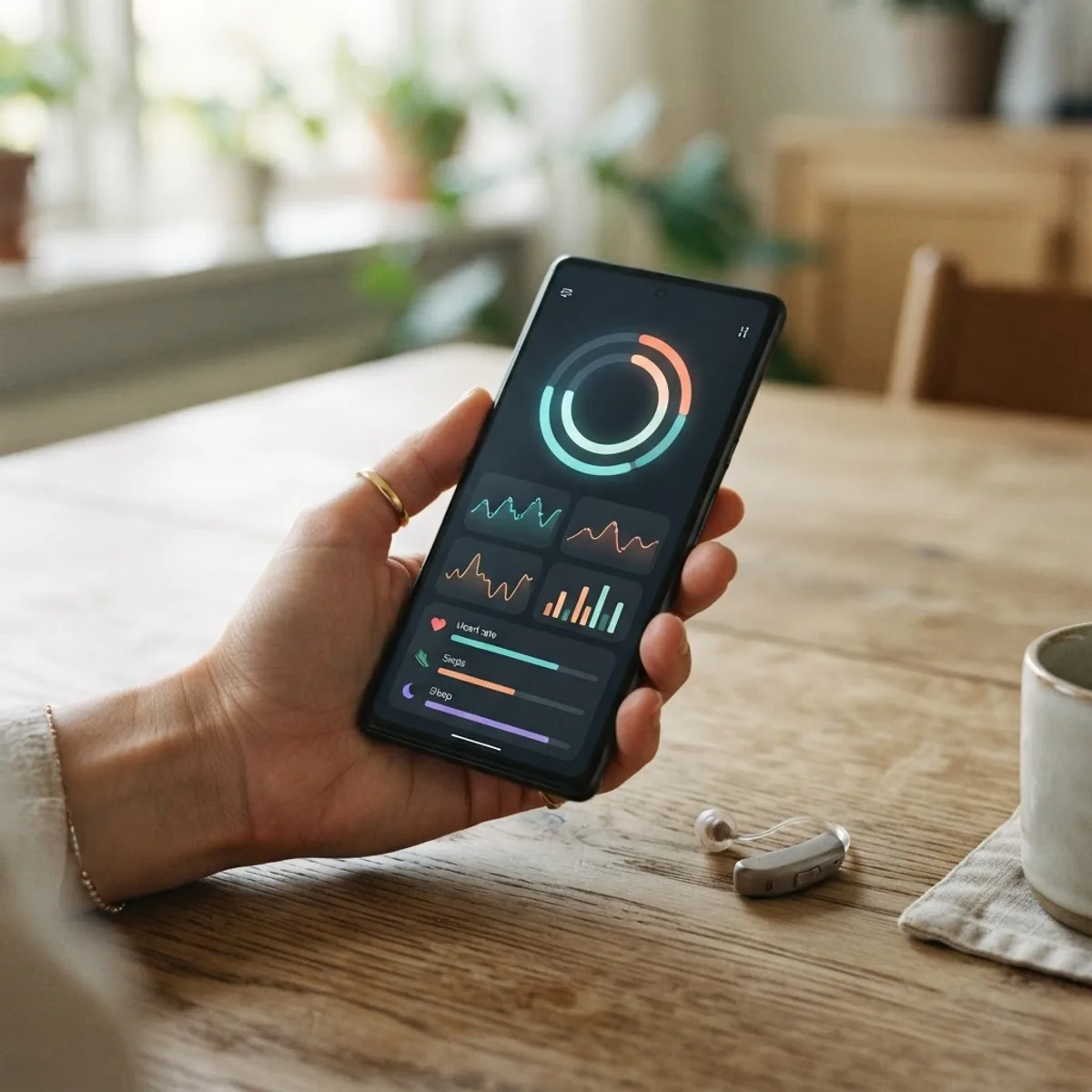
Health Tracking and the Ear as a Sensor
The ear is an unusually good place to measure a body. It is stable, close to major blood vessels, and already occupied by a device you wear all day. Manufacturers have used that to add motion sensors for step counting and fall detection, heart rate monitoring on some models, and social engagement metrics that estimate how much time you spend in conversation.
The clinical logic behind this is stronger than it looks. A widely cited 2020 Lancet Commission report identified hearing loss as one of the largest modifiable risk factors for dementia in midlife, and the World Health Organization estimates that over 430 million people currently need hearing rehabilitation, rising toward 700 million by 2050. Devices that quietly log engagement and mobility turn a single appliance into a longitudinal health record, which is why hearing care is becoming a data problem as much as an acoustic one.
That same pattern shows up in every industry building on trained models. Teams shipping this kind of product need reliable data pipelines, on-device constraints, and clear user reporting, which is the practical work behind custom AI models rather than the demo version of it. The same discipline applies whether the endpoint is an ear or a dashboard, and firms specializing in AI workflow solutions tend to treat measurement, not novelty, as the deliverable.

How to Choose AI Hearing Aids Without Overpaying
- Get a real audiogram first. A phone hearing test is a screening tool, not a prescription. Air and bone conduction results tell you whether your loss is even treatable with amplification.
- Match the device to your hardest listening situation. Buy for the restaurant, the meeting room, or the classroom, not for your living room.
- Ask what the noise reduction is trained to do. A useful answer describes speech separation and scene counts. A vague answer about smart sound is marketing.
- Insist on real-ear measurement. Verification with a probe microphone in your ear canal is the single strongest predictor of satisfaction, and many clinics still skip it.
- Confirm the trial and return terms in writing. Adaptation takes weeks. A trial shorter than 30 days is not long enough to judge.
- Check upgradability. Remote firmware updates and app support determine whether the device improves or stagnates over four to five years.
- Compare against over-the-counter options if your loss is mild to moderate. Since the United States FDA rule took effect on October 17, 2022, OTC devices are a legitimate entry point for that group, though they usually lack professional verification.
For a broader look at how applied machine learning is being deployed across consumer and medical hardware, the engineering write-ups from ZoneTechify are a reasonable starting point for non-specialists.
What AI Hearing Aids Still Cannot Do
Credible advice includes limits. These devices do not restore normal hearing, because damaged cochlear hair cells do not regenerate and no amount of processing recreates lost frequency resolution. They cannot fix severe distortion in very poor speech discrimination scores, where a cochlear implant evaluation is the appropriate step. They struggle with reverberant halls, wind, and rapid overlapping speech among several talkers. And they cannot compensate for a bad fit: an incorrectly programmed premium aid performs worse than a properly verified basic one.

Where This Goes Next
Three developments are worth watching. On-device speech enhancement models will keep getting larger as chip efficiency improves, closing the gap with what currently requires a phone or the cloud. Real-time translation and transcription, already appearing in earbud form, will migrate into medical-grade aids with clinician-controlled prescriptions. And self-fitting protocols driven by machine learning will let more people reach an accurate prescription without a clinic, which matters most in regions with almost no audiologists per million people.
The direction is consistent: less manual tuning, more inference, and a device that behaves less like a microphone and more like an attention filter.
Key Takeaways
- AI hearing aids run trained neural networks locally on the device, with latency kept near 10 milliseconds or less.
- Their main measurable benefit is speech understanding in noise, often reported as a few decibels of signal-to-noise improvement, where roughly 1 dB is clinically meaningful.
- The WHO estimates more than 430 million people need hearing rehabilitation today, projected to reach 700 million by 2050.
- The 2020 Lancet Commission listed hearing loss among the largest modifiable dementia risk factors, which is why early treatment matters.
- United States OTC hearing aids became legal on October 17, 2022, creating a lower-cost path for mild to moderate loss.
- Verified fitting with real-ear measurement predicts satisfaction better than any feature on the spec sheet.
Frequently Asked Questions (FAQ)
Are AI hearing aids actually better than regular hearing aids?
In noisy environments, yes, measurably so. Trained models separate speech from background noise more effectively than rule-based processing, which improves words understood in restaurants and meetings. In quiet one-to-one settings the difference is small, so the benefit depends heavily on where you spend your listening hours.
Do AI hearing aids need internet or a phone connection to work?
No. The neural network runs on a chip inside the hearing aid itself, because cloud processing would add too much delay for live conversation. A phone is only used for optional extras such as adjusting settings, streaming audio, running fitting apps, or installing firmware updates.
How much do AI hearing aids cost?
Premium prescription pairs commonly run several thousand dollars, typically bundled with fitting, verification, and follow-up care from a provider. Over-the-counter devices with lighter processing start in the low hundreds. Always ask which parts of the price are the hardware and which are the professional services.
Can AI hearing aids help with tinnitus?
Often, indirectly. Most modern aids include sound therapy features that generate customizable masking noise, and restoring normal ambient input alone reduces tinnitus awareness for many wearers. They do not cure tinnitus, so combine them with a clinical management plan rather than expecting the device to solve it.
How long do AI hearing aids last before they need replacing?
Plan on four to six years of reliable service. Rechargeable batteries degrade over roughly that period, waterproofing seals age, and firmware support eventually ends. Daily drying, wax filter changes, and annual professional cleaning meaningfully extend usable life and prevent most repair visits.
Will insurance or Medicare cover an AI hearing aid?
Original Medicare does not cover hearing aids, though some Medicare Advantage plans and private insurers offer partial allowances. Coverage varies widely by plan and country, so request a written benefit summary before purchase and ask the clinic to submit a pre-authorization where one is available.
If you take one thing away, make it this: the intelligence in these devices is real, but it only reaches your ear through an accurate prescription and a verified fit. Buy the fitting, then buy the features.