
A practical guide to how artificial intelligence is reshaping clinical data management, from automated query resolution and data cleaning to CDISC mapping and risk-based monitoring. Includes a realistic implementation roadmap and validation guidance.
Artificial Intelligence in Clinical Data Management
Clinical data management has quietly become one of the biggest bottlenecks in drug development. A single phase III oncology study can generate more than one million data points across dozens of sites, and every one of those points must be captured, validated, queried, reconciled and locked before a statistician can touch it. Data managers spend a disproportionate share of their working lives chasing discrepancies that a well-designed model could have flagged, ranked and pre-resolved in seconds.
This article looks at where artificial intelligence genuinely works in clinical data management today, where it fails, and how sponsors and CROs should sequence adoption without breaking regulatory compliance. It is written for data managers, clinical operations leads and technology teams who need specifics rather than promises.
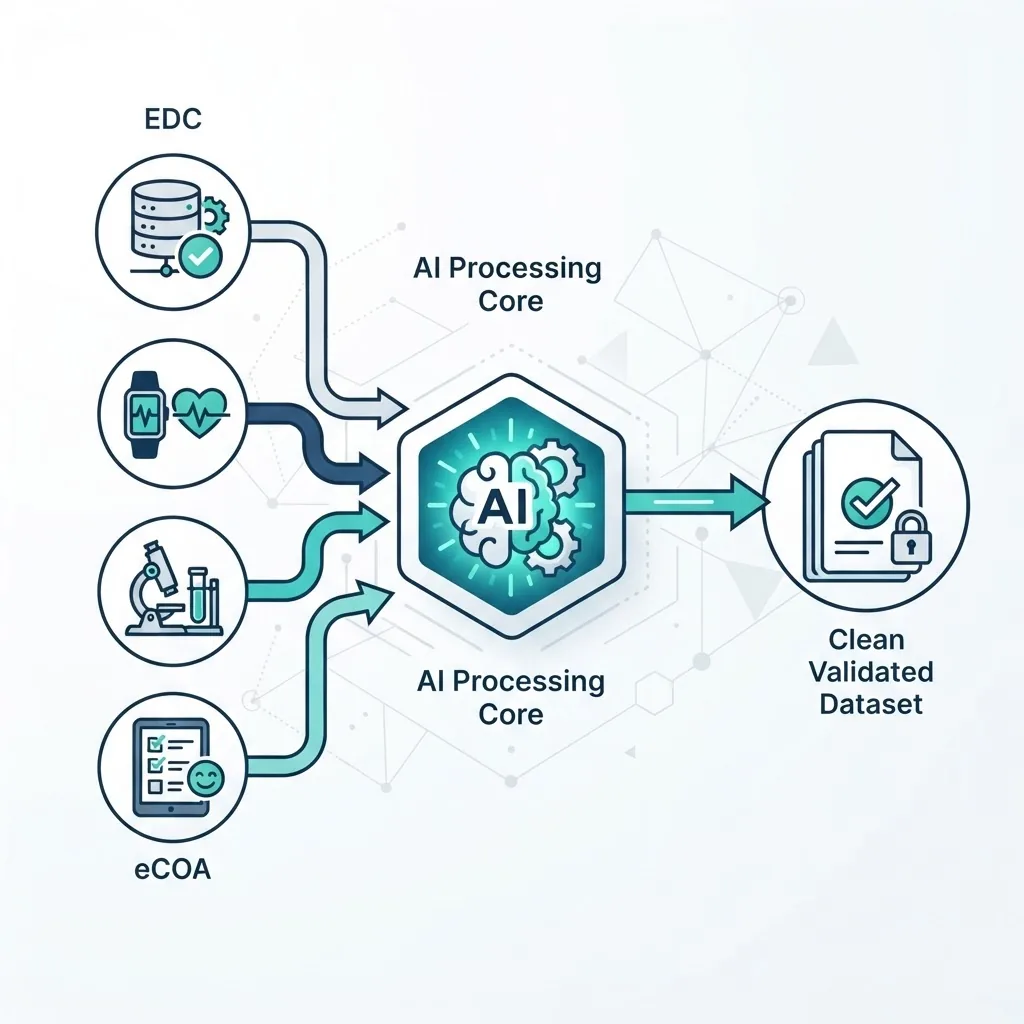
Quick Answer: Artificial intelligence in clinical data management uses machine learning and natural language processing to automate data validation, discrepancy detection, query prioritisation, medical coding and CDISC mapping. It reduces manual review effort, shortens database lock timelines and improves data quality, but requires validated systems, human oversight and full audit traceability.
What Clinical Data Management Actually Involves
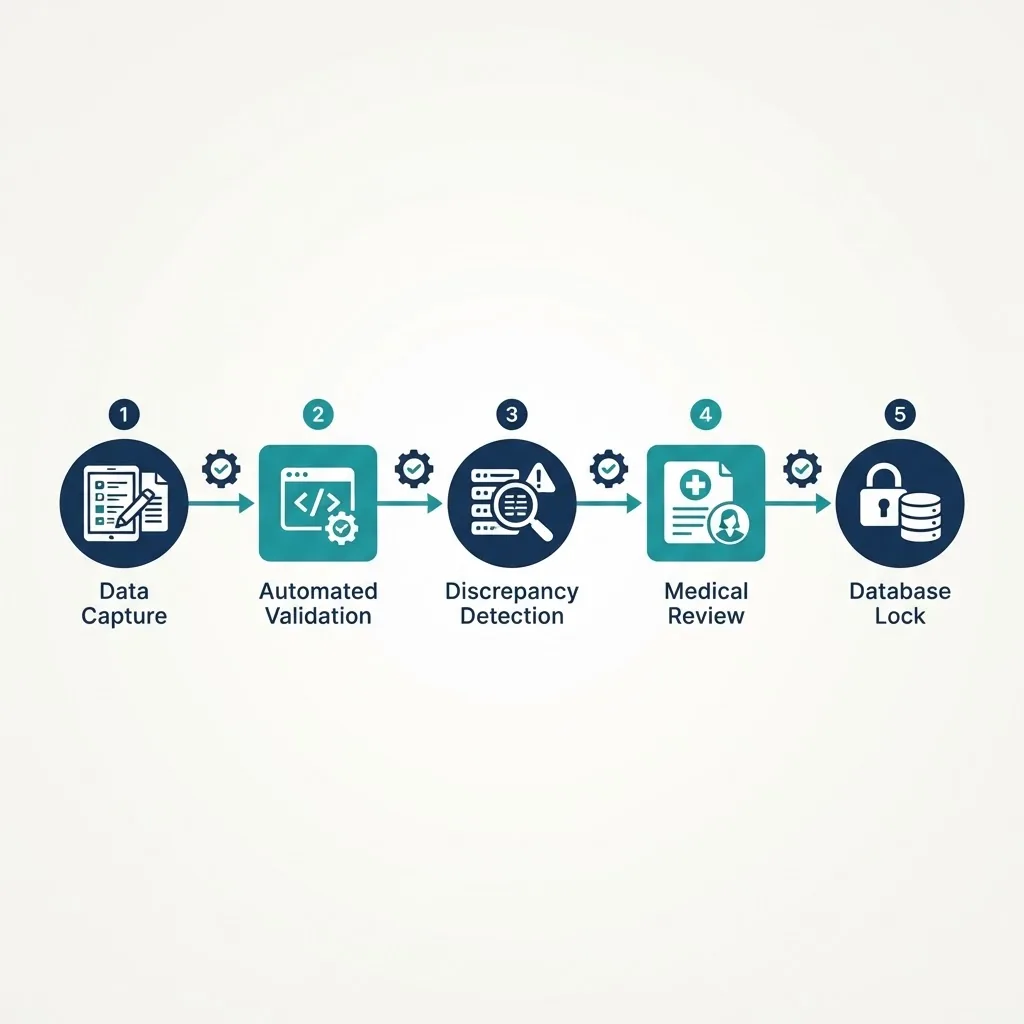
Clinical data management (CDM) is the discipline of collecting, cleaning and preparing trial data so that statistical analysis produces a defensible regulatory submission. It spans case report form design, electronic data capture (EDC) build, edit check programming, discrepancy management, external data reconciliation, medical coding, SAE reconciliation and database lock.
The cost pressure here is real. Industry benchmarking consistently places data management and monitoring among the largest line items in trial budgets, and the Tufts Center for the Study of Drug Development has reported average per-patient trial costs rising steadily over the past two decades while protocol complexity, measured by the number of endpoints and procedures per protocol, has roughly doubled. More endpoints means more forms, more edit checks and more queries. Headcount cannot scale linearly with that complexity, which is exactly why automation has moved from optional to structural.
Key Term Definitions
- Edit check: A programmed rule in EDC that fires a query when entered data violates expected logic, ranges or cross-form consistency.
- Query (discrepancy): A formal request to a site to clarify or correct a data point, tracked with a full audit trail.
- Risk-based quality management (RBQM): An ICH E6 (R2) aligned approach that concentrates monitoring and data review effort on the data and sites that carry the greatest risk to patient safety and result reliability.
- CDISC SDTM: The Study Data Tabulation Model, the standard structure regulators expect for submitted clinical trial data.
Where AI Delivers Measurable Value Today
The honest answer is that AI in CDM is not one capability but five distinct ones with very different maturity levels.
1. Anomaly and Outlier Detection
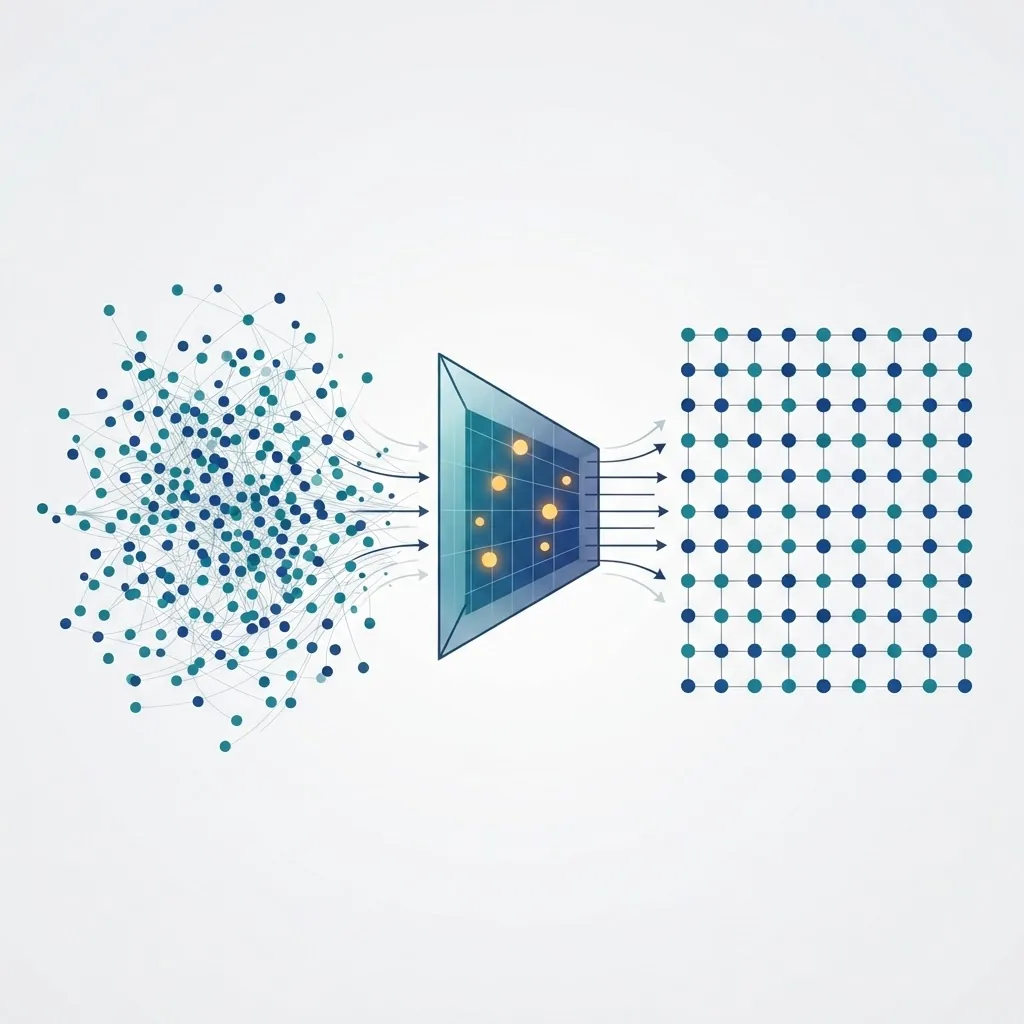
Traditional edit checks catch what you anticipated. Unsupervised models catch what you did not. Clustering and isolation-forest style approaches profile each site against the study population and surface patterns no rule anticipated: implausibly low variability in vital signs, visit dates that cluster unnaturally, lab values that drift in a direction inconsistent with the rest of the cohort. This is the single highest-return application because it addresses a gap that rules structurally cannot cover.
2. Query Prioritisation and Deduplication
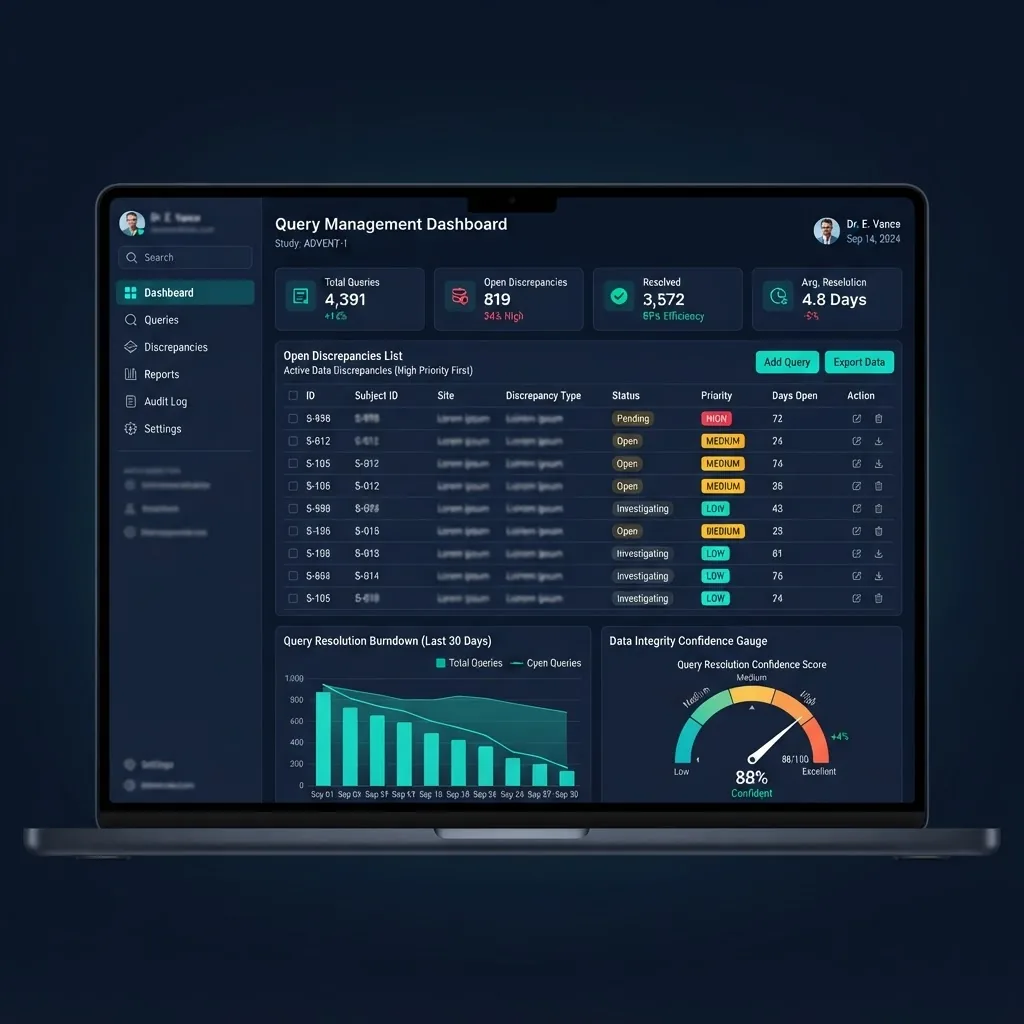
Most studies do not have a query shortage, they have a query triage problem. Models trained on historical query outcomes can predict which open discrepancies are likely to be closed with no data change, and which are likely to be genuine. Feeding that prediction into the data review workflow lets teams work the meaningful 20 percent first rather than the chronological queue.
3. Medical Coding Assistance
Autoencoding of verbatim adverse event and medication terms against MedDRA and WHODrug is the most operationally proven use case. Natural language processing handles spelling variants, abbreviations and site-specific shorthand far better than dictionary lookup alone. The correct design pattern is suggestion plus confidence score, with a coder reviewing anything below threshold. Coders stay accountable for the final term.
4. Automated Standards Mapping
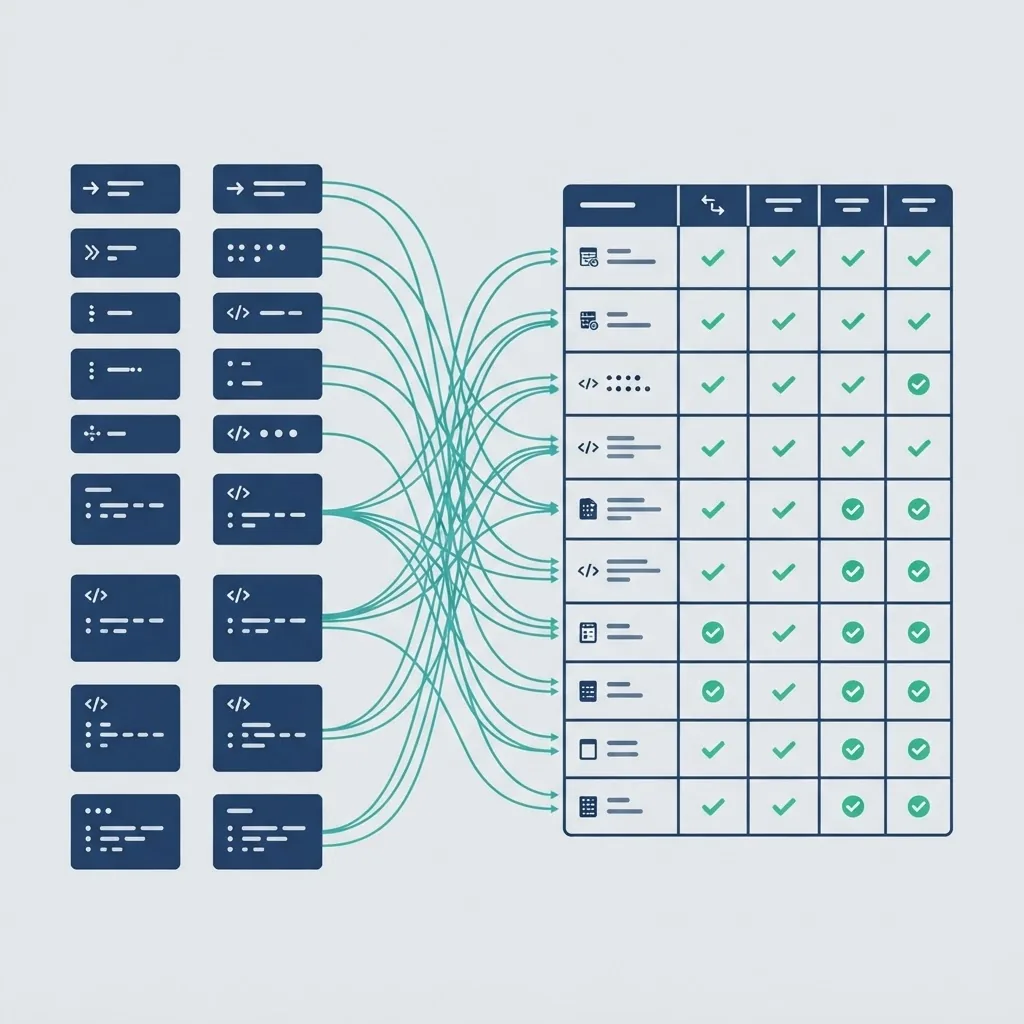
Mapping raw EDC datasets to CDISC SDTM is repetitive, rules-heavy and highly patterned, which makes it well suited to supervised learning trained on an organisation's own historical mapping specifications.
5. Unstructured Data Extraction
Large language models can extract structured values from scanned lab reports, imaging narratives and pathology text that previously required manual transcription. This is the newest area and the one demanding the strictest verification, because generative models can produce fluent, confident and wrong output.
Traditional CDM Versus AI-Augmented CDM
| Activity | Traditional Approach | AI-Augmented Approach | Human Role |
|---|---|---|---|
| Data validation | Pre-programmed edit checks only | Edit checks plus statistical anomaly models | Reviews and adjudicates flags |
| Discrepancy management | Chronological or site-based queue | Risk-scored and deduplicated queue | Decides and issues queries |
| Medical coding | Manual dictionary lookup | NLP suggestion with confidence score | Approves or overrides terms |
| SDTM mapping | Manual specification writing | Model-proposed mappings from history | Validates and signs off specs |
| Site monitoring | Fixed percentage source data verification | Predictive site risk scoring | Sets thresholds and visits sites |
| Database lock | Sequential manual reconciliation | Continuous automated reconciliation | Final review and approval |
The pattern across every row is identical. AI changes what the human reviews, not whether a human reviews. Any vendor claiming otherwise is describing a compliance problem, not a product.
Risk-Based Monitoring Is the Strongest Business Case
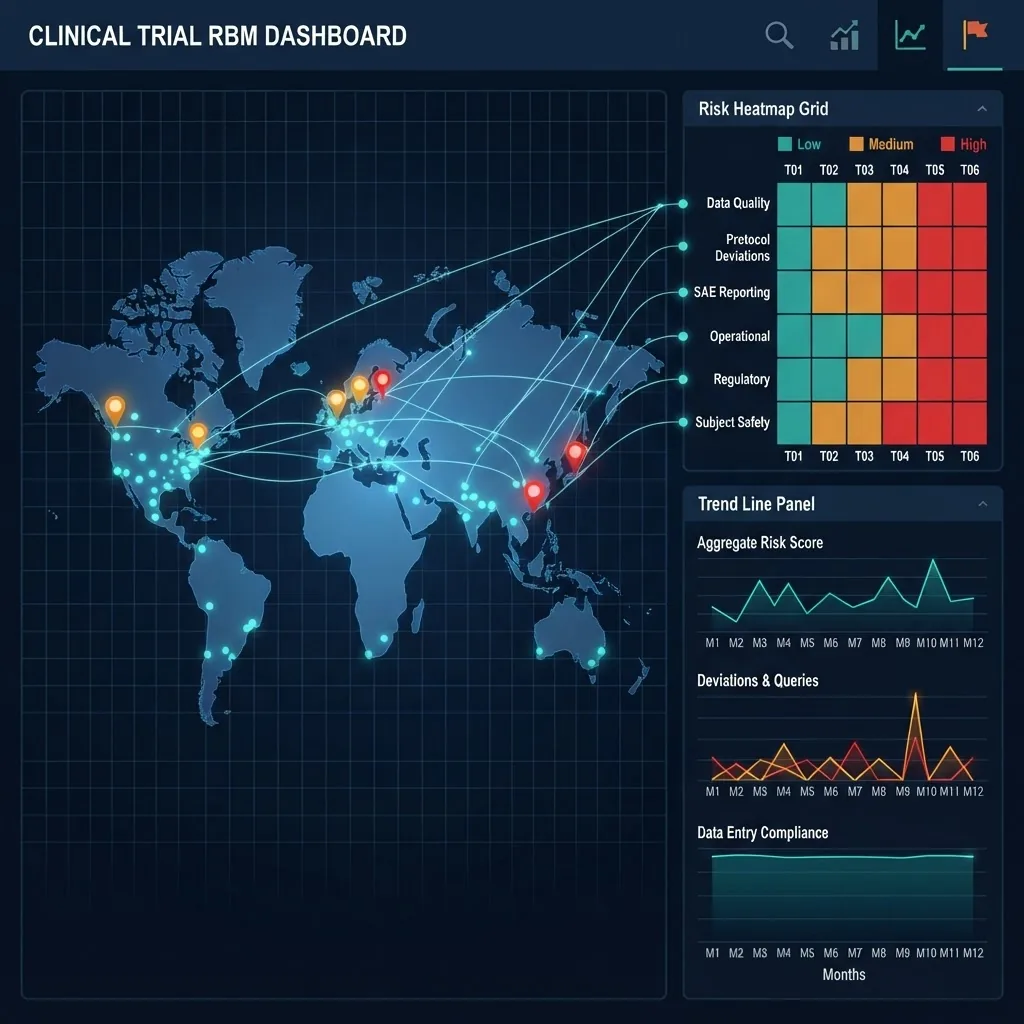
ICH E6 (R2) explicitly endorses risk-based approaches to monitoring, and this is where AI has the clearest regulatory footing. Rather than verifying a fixed percentage of source data at every site, teams score sites continuously on enrolment velocity, query rates, protocol deviation frequency, data entry lag and variability signatures, then direct on-site visits to the sites that score worst.
The economics are straightforward. On-site monitoring visits are among the most expensive activities in a trial. Reallocating even a modest share of those visits from low-risk to high-risk sites improves both cost efficiency and patient safety detection at the same time, which is rare in operational trade-offs.
One caveat teams routinely miss: a risk model trained on historical studies in a different therapeutic area will mis-rank sites. Site risk behaviour is therapy and geography specific. Retrain per programme, not once per company.
Validation, Compliance and Audit Readiness
This is where most AI pilots in clinical data management die, and it is entirely predictable. A model that influences data handling in a regulated trial is part of a computerised system subject to validation expectations under 21 CFR Part 11 and Annex 11.
Practical requirements to plan for from day one:
- Documented intended use. Define precisely what the model does and does not decide. Scope creep after validation invalidates the validation.
- Frozen, versioned models. A model that silently retrains in production cannot be validated. Version it, lock it, and treat retraining as a change control event.
- Complete audit trail. Every model-suggested action needs a record of the input, the output, the confidence, the human decision and the timestamp.
- Explainability at the record level. An auditor will ask why a specific data point was flagged or not flagged. "The model decided" is not an answer.
- Human accountability. A named qualified person signs off on data decisions. AI output is evidence, never authority.
- Bias and drift testing. Test model performance across sites, regions and demographic subgroups, not just in aggregate.
Teams building this kind of validated, traceable data tooling often need engineering depth alongside clinical process knowledge, which is where partnering with an experienced AI workflow solutions team shortens the distance between pilot and production system.
What AI Still Cannot Do in Clinical Data Management
An original observation from watching these programmes succeed and fail: the limiting factor is almost never model accuracy. It is data readiness and process design.
AI cannot fix a poorly designed case report form. If your CRF collects free-text where a coded list belonged, no model recovers the lost structure reliably. AI cannot resolve genuine clinical ambiguity, because deciding whether an event is a serious adverse event is a medical judgement with legal weight. AI cannot substitute for site training, since a site systematically misunderstanding a protocol procedure produces consistently wrong data that looks perfectly clean statistically. And AI cannot compensate for fragmented systems, because when EDC, laboratory, imaging and eCOA data live in silos with no common subject identifier strategy, integration work, not intelligence, is the bottleneck.
The implication is uncomfortable but useful. The organisations getting real value are the ones that fixed their data architecture first. Ones that bought a model to paper over process debt got a faster way to produce the same problems.
A Realistic Implementation Roadmap
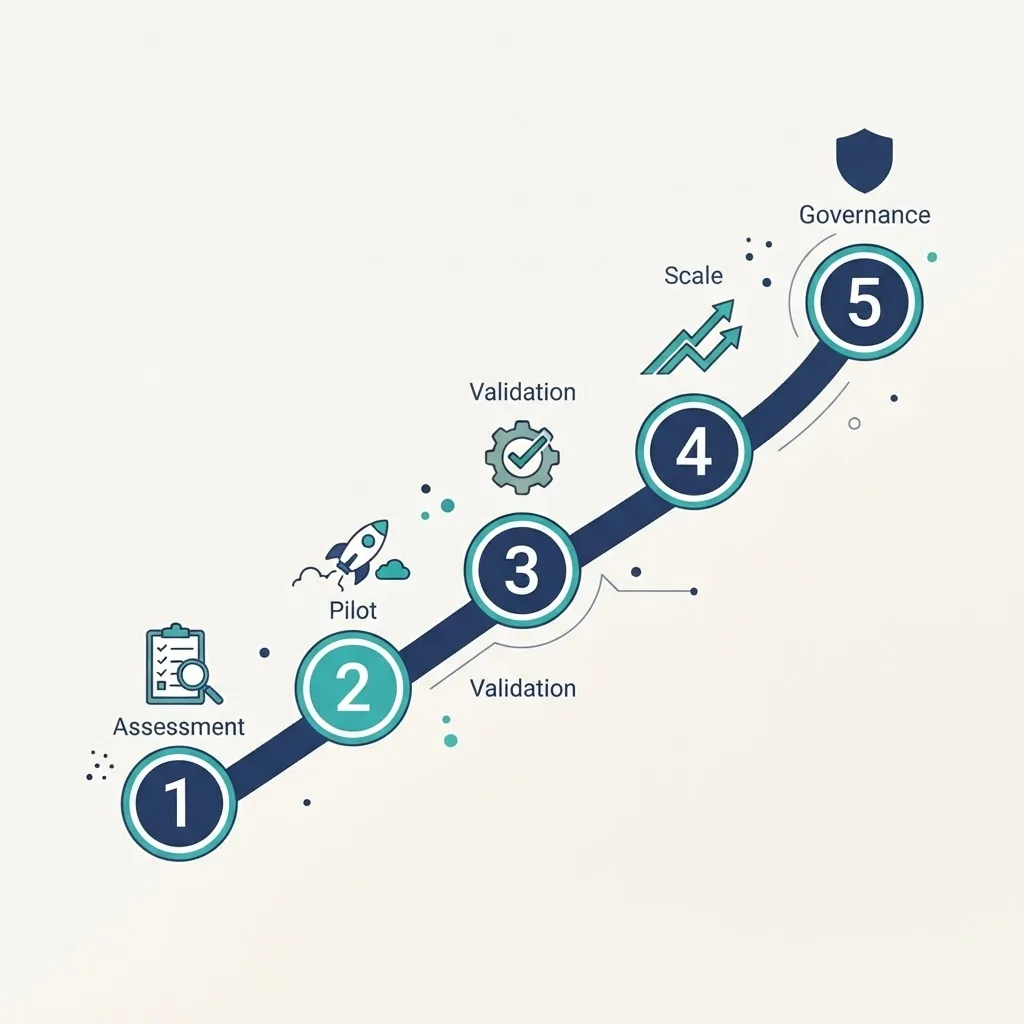
- Baseline your current state. Measure query volume per patient, average query resolution time, coding throughput and time from last patient last visit to database lock. Without baselines you cannot prove value.
- Pick one narrow, high-volume use case. Medical coding assistance or anomaly detection on a single ongoing study. Not a platform, not an enterprise transformation.
- Run it in shadow mode. Let the model produce output alongside the existing process for a full study period and compare. This generates your validation evidence at no clinical risk.
- Validate and document before go-live. Intended use, version lock, audit trail, explainability, sign-off authority.
- Scale by use case, not by ambition. Add the next narrow capability only after the first is stable and measured.
- Institutionalise governance. Standing review of model performance, drift, and human override rates. A rising override rate is your earliest warning signal.
Organisations that also need the surrounding digital layer built properly, from secure data portals to sponsor-facing dashboards, typically bring in a specialist team such as WebPeak Digital to handle the application engineering while clinical experts own the science.
Key Takeaways
- Artificial intelligence in clinical data management automates validation, discrepancy triage, medical coding, CDISC mapping and site risk scoring, but never removes human accountability for data decisions.
- Protocol complexity, measured by endpoints and procedures per protocol, has roughly doubled over the past two decades according to Tufts CSDD research, making manual-only data management economically unsustainable.
- Unsupervised anomaly detection is the highest-value entry point because it finds issues that programmed edit checks structurally cannot anticipate.
- ICH E6 (R2) explicitly supports risk-based monitoring, giving AI-driven site risk scoring the clearest regulatory foundation of any use case.
- Models influencing regulated data are computerised systems requiring validation under 21 CFR Part 11 and Annex 11, including version locking and record-level explainability.
- Data architecture readiness, not model accuracy, is the most common reason AI programmes in clinical data management stall.
- Rising human override rates are the earliest reliable indicator of model drift and should trigger formal review.
Frequently Asked Questions (FAQ)
How is AI used in clinical data management?
AI is used to detect data anomalies that edit checks miss, prioritise and deduplicate open queries, suggest MedDRA and WHODrug codes for verbatim terms, propose CDISC SDTM mappings, extract values from unstructured reports, and score site risk for monitoring. Humans review and approve every decision that affects trial data.
Does AI in clinical trials replace clinical data managers?
No. AI changes what data managers review rather than whether they review it. Regulatory frameworks require a named qualified person accountable for data decisions, so model output functions as evidence, not authority. In practice, data managers shift from processing queues toward oversight, exception handling and quality judgement.
Is AI in clinical data management compliant with FDA regulations?
It can be, when implemented as a validated computerised system. That means documented intended use, version-locked models, complete audit trails of inputs and human decisions, record-level explainability, and bias testing. Systems must satisfy 21 CFR Part 11 and EU Annex 11 expectations. Self-retraining production models are not validatable.
What is the fastest way to start using AI in clinical data management?
Start with one narrow, high-volume task such as medical coding assistance or anomaly detection on a single active study. Run it in shadow mode alongside your existing process for a full study period. That comparison produces validation evidence and measurable results with zero clinical risk.
How much time can AI save in clinical data cleaning?
Savings depend heavily on baseline data quality and CRF design. Teams commonly report meaningful reductions in query volume and coding turnaround, with the largest gains appearing in repetitive, high-volume tasks. Poorly structured forms and fragmented data systems will cap savings regardless of how strong the model is.
What data quality issues does AI struggle to fix?
AI cannot recover structure lost to badly designed free-text fields, resolve genuine clinical ambiguity such as serious adverse event adjudication, correct systematic errors caused by site misunderstanding a protocol, or bridge disconnected systems lacking a consistent subject identifier strategy. Those require design, training and integration work first.