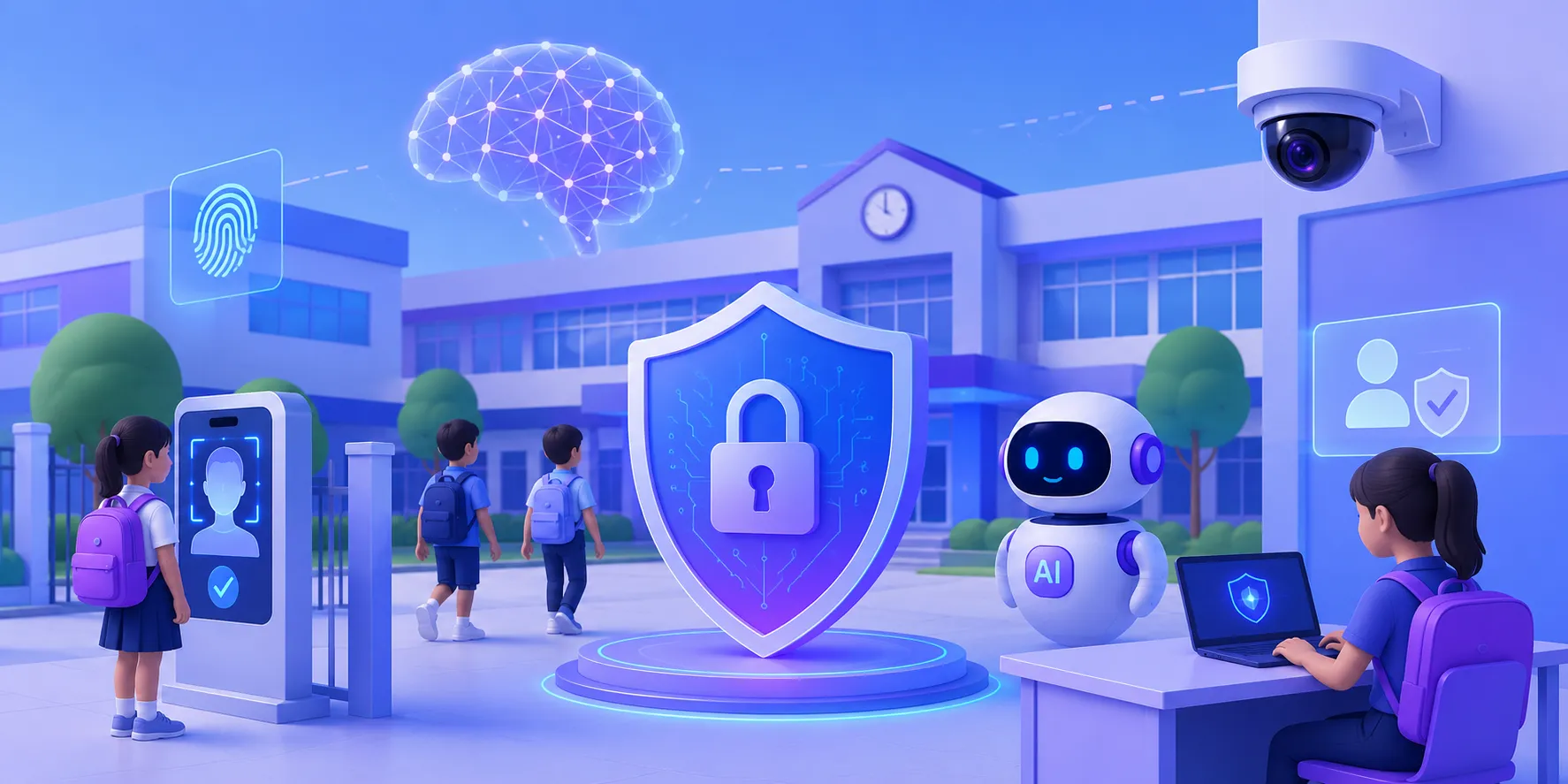
Artificial intelligence security in schools explained: real K-12 risks, student data privacy rules, vendor vetting steps and a 90-day district action plan.
Artificial Intelligence Security in Schools
Artificial intelligence arrived in classrooms faster than most districts could write a policy for it. Teachers use chatbots to draft lesson plans, students use them to draft essays, and administrative teams feed attendance, grading, and behavioral data into AI dashboards nobody has security-reviewed. That gap between adoption speed and governance speed is where school breaches happen.
This guide explains what AI security in schools involves, which risks are real, and what a district can do in the next 90 days. It is written for the people who carry the responsibility: IT directors, superintendents, technology coordinators, and the teachers who click the links.
Quick Answer: Artificial intelligence security in schools means protecting student data, school networks, and academic integrity from AI-related threats while safely using AI defensively. It requires vendor vetting, FERPA and COPPA compliance, staff training, clear AI use policies, and human oversight of every automated decision affecting a student.
What Artificial Intelligence Security in Schools Actually Means
AI security in schools is a two-sided discipline, and conflating the two sides is the most common mistake district leaders make.
Securing AI means controlling the tools your school uses: where student data goes, who trained the model, whether prompts are retained, and what happens when the tool is wrong. Security through AI means using machine learning to detect phishing, ransomware, and anomalous network behavior faster than a two-person IT team can manually.
A district that buys AI-powered security software while ignoring the thirty unvetted AI apps teachers installed last semester has secured nothing. Both sides need a policy.
Key Terms, Defined Plainly
- Shadow AI: any AI tool used for school work without district approval or a signed data agreement.
- Prompt leakage: sensitive information pasted into a public chatbot that becomes part of the vendor's retained data.
- Automated decision: any consequential outcome, such as a discipline flag or placement recommendation, produced without human review.
Why Schools Are High-Value Targets
Schools hold an unusually rich data set with unusually thin defenses. One student record can contain a legal name, date of birth, home address, health notes, disability status, guardian details, and a government identifier nobody will check for fraud for a decade.
The consequences are documented. The US Government Accountability Office reported that lost learning time after a significant school cyber incident ranged from three days to three weeks, with full recovery taking two to nine months. Sophos, in its 2024 education ransomware research, found roughly two-thirds of surveyed lower-education organizations had been hit by ransomware in the preceding year, above the cross-industry average.
AI changes the economics. Generative models let an attacker produce a grammatically perfect email mirroring a superintendent's writing style in seconds, removing the clumsy phrasing staff were trained to spot. Attempt volume rises while cost per attempt falls.
The Six AI Security Risks That Matter Most in K-12
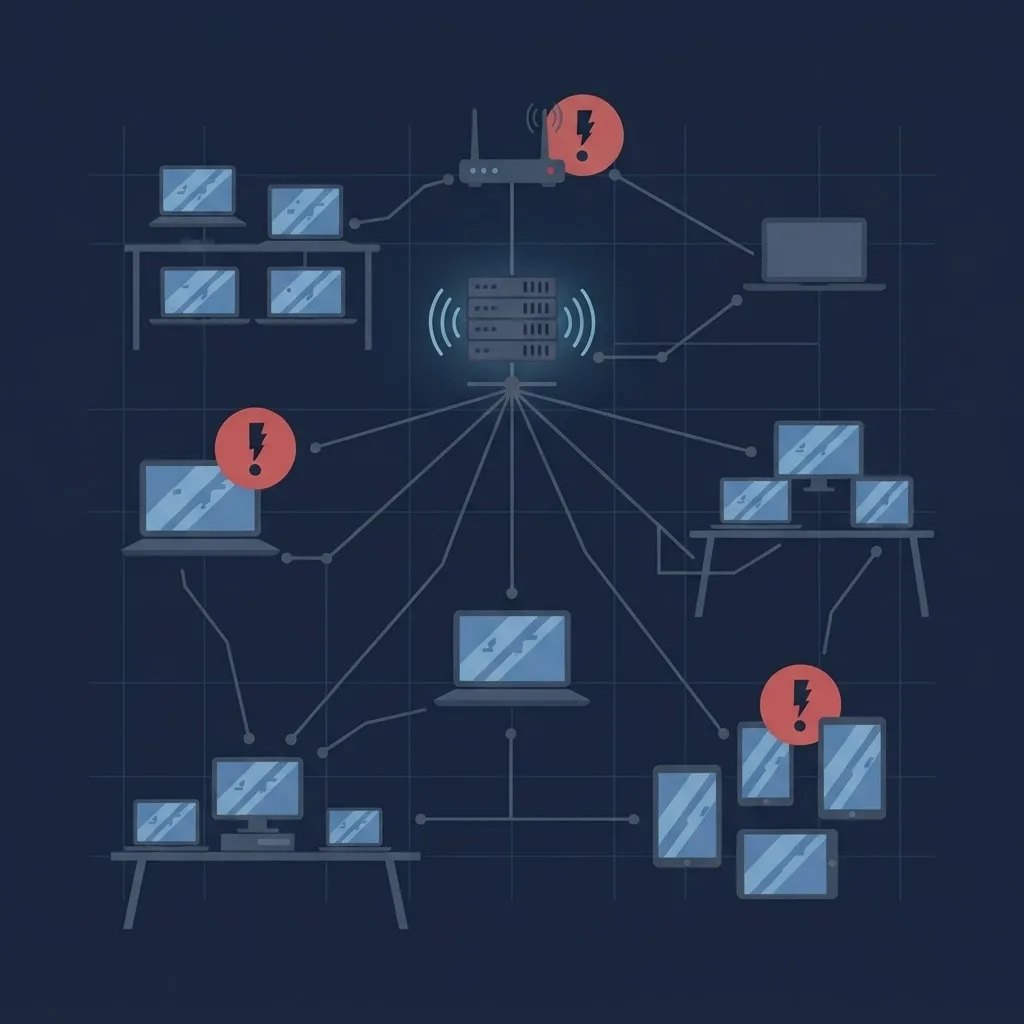
- AI-generated phishing and voice cloning. Business email compromise aimed at payroll and vendor payments is the highest-loss attack in education. Cloned audio of a principal requesting an urgent transfer is a live threat.
- Prompt leakage by staff. A counselor pasting a behavioral summary into a free chatbot to polish the wording has exported protected records to a third party with no agreement in place.
- Unvetted edtech AI features. Approved tools quietly ship AI add-ons. Yesterday's compliant gradebook becomes an undisclosed data processor after a routine update.
- Biased or opaque automated decisions. Proctoring, plagiarism detection, and risk-flagging systems produce false positives that fall unevenly across student groups.
- Over-collection through AI monitoring. Scanners that read every message a student writes create an archive that becomes a breach liability the moment it is stored.
- Credential reuse across AI accounts. Staff signing up with a district email and a reused password hand attackers a tested path into the identity provider.
Student Data Privacy: What AI Vendors Must Prove
Student data privacy is the legal floor of AI security, not an optional extra. In the United States, FERPA governs education records, COPPA governs data collected from children under 13, and state laws such as New York Education Law 2-d and California's SOPIPA add stricter vendor duties. In the EU and UK, GDPR requires a lawful basis and a data protection impact assessment for high-risk automated processing.

Do not accept a marketing page as evidence of compliance. Require written answers before any AI tool touches student data.
Five Contract Clauses to Demand
- No training on our data. The contract must state that student inputs are never used to train or fine-tune models.
- Defined retention and deletion. A specific retention window, plus verified deletion within 30 days of termination.
- Named subprocessors. A current list of every model provider and cloud host in the chain, with notice before changes.
- Breach notification timeline. Notice to the district within 72 hours of discovery, with a designated contact.
- Data residency and encryption. Where the data physically sits, and encryption in transit and at rest.
Districts customizing their own tooling should apply the same standard internally. When teams need help turning those clauses into working architecture, a specialist in AI automation services is usually faster and safer than assembling a pipeline from scratch.
Using AI to Defend the District
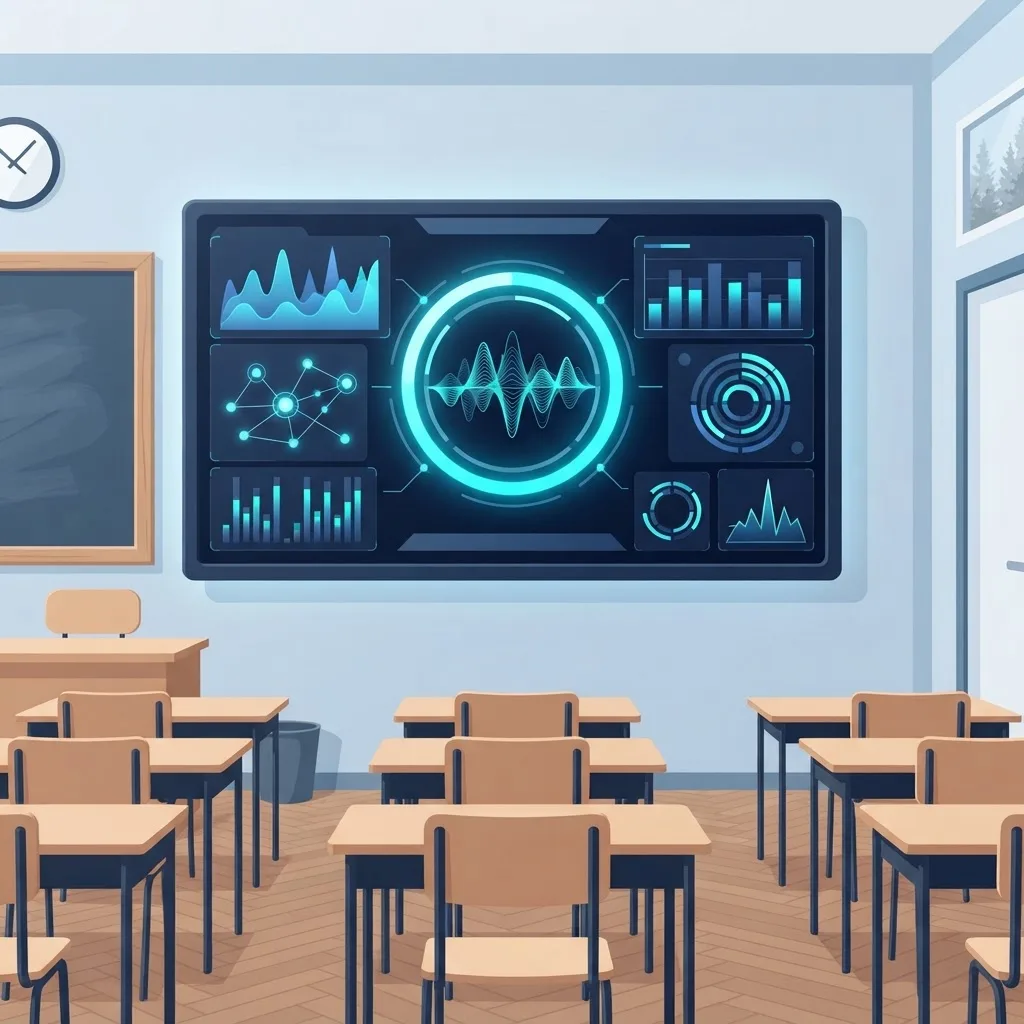
AI defense is where small school IT teams gain the most leverage, because the technology substitutes for headcount they will never be given. Anomaly detection can flag a compromised account logging in from two continents in ten minutes. Email security models catch impersonation that rule-based filters miss.
| Approach | Best For | Main Weakness | Human Oversight Needed |
|---|---|---|---|
| Manual review only | Very small schools with few systems | Misses fast and after-hours attacks | Constant |
| Rule-based filtering | Districts with stable, known tool sets | Blind to novel AI-generated variants | Moderate |
| AI-assisted detection | Districts with many devices and one-person IT | False positives, vendor dependency, cost | Targeted alert review |
The right answer for most districts is AI-assisted detection with a named human owner for every alert category. AI that nobody is assigned to read is decoration.
Building an AI Governance Framework in 90 Days
Governance does not require a consultant or a 40-page document. It requires a decision about who approves what.
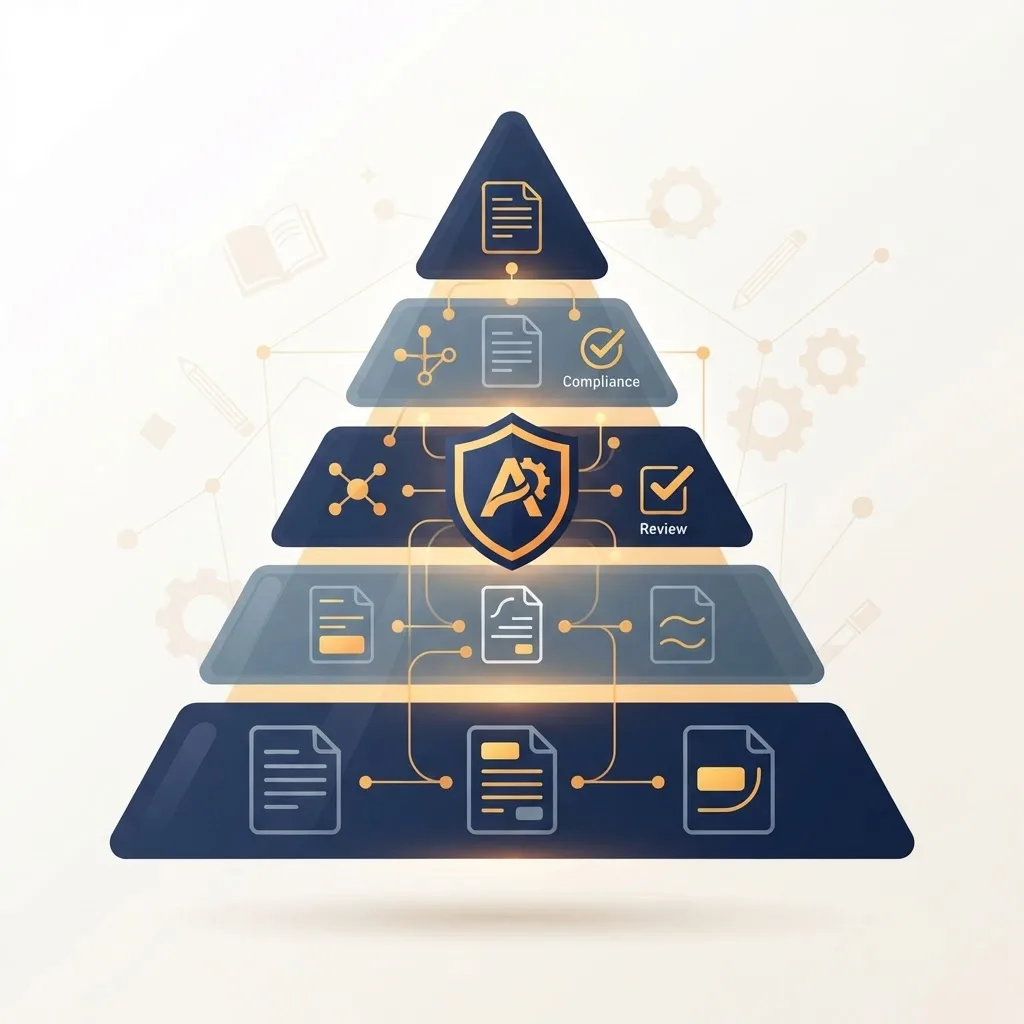
Days 1 to 30: inventory. List every AI tool in use, including free accounts teachers signed up for. Survey staff directly rather than relying on network logs, since much of this activity happens on personal devices. Most districts find three to five times more tools than expected.
Days 31 to 60: classify. Sort tools into three tiers: approved for student data, approved for non-student use only, and prohibited. Publish the list where teachers will find it, and name one person who can add to it.
Days 61 to 90: train and monitor. Run one focused staff session, enable multi-factor authentication on every account touching student records, and set a quarterly review date. Agencies that ship production systems under real deadlines, such as WebPeak Digital, succeed for the same reason: a short list of owners and a fixed cadence beat an elaborate plan nobody maintains.
AI Surveillance: Where Schools Overreach
The strongest argument in this field is that the biggest AI risk to students is not attackers, it is well-intentioned over-monitoring by the school itself.
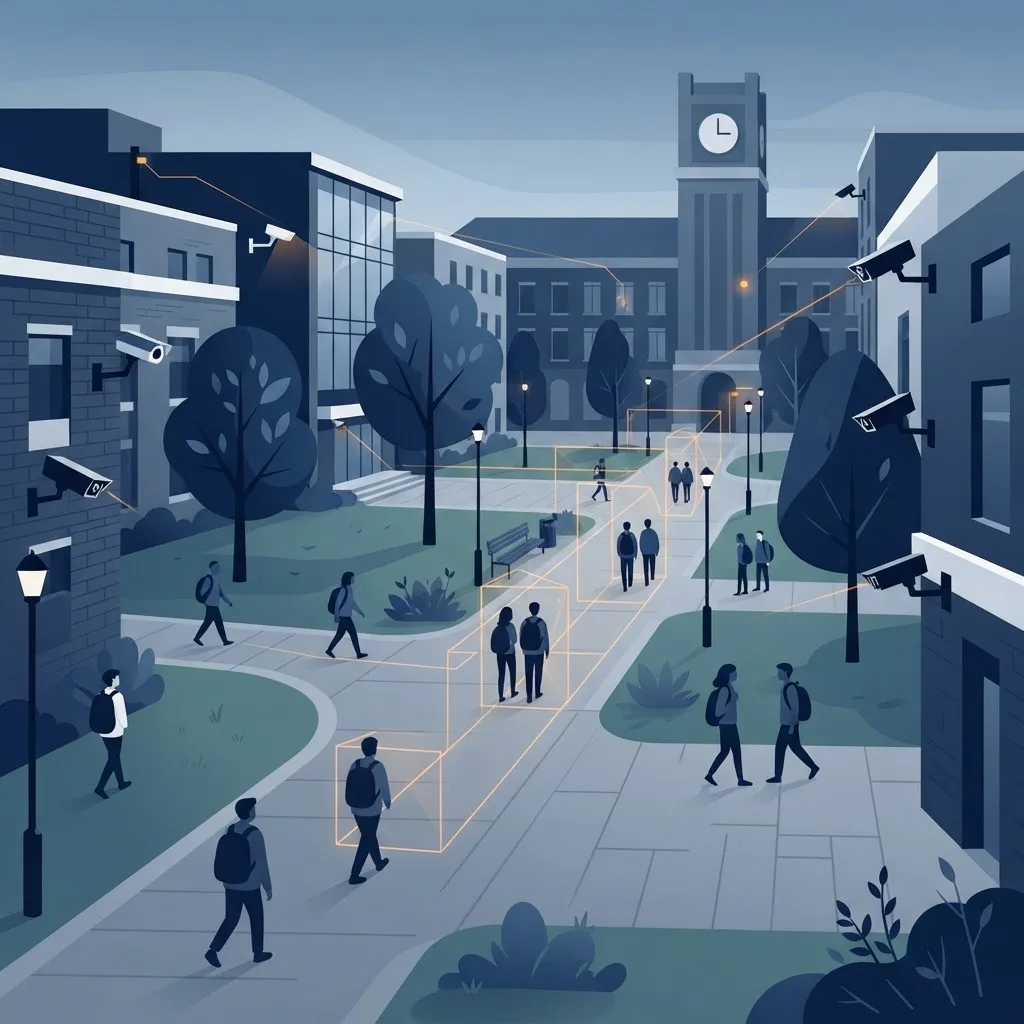
Tools that scan every document, message, and search a student produces are marketed as safety products, and they do occasionally surface genuine crises. They also create a permanent, searchable behavioral record of minors the district must defend forever. Every extra signal collected is extra liability.
Apply a proportionality test before deploying any monitoring system: What harm does this prevent? What is the false positive rate, and who reviews flags before action? How long is data kept? Are families told in plain language? If any answer is unavailable, the tool is not ready for your campus.
Training Staff and Students Without Fear Tactics
Training fails when it is a compliance video. It works when it is specific to the tools people actually use.
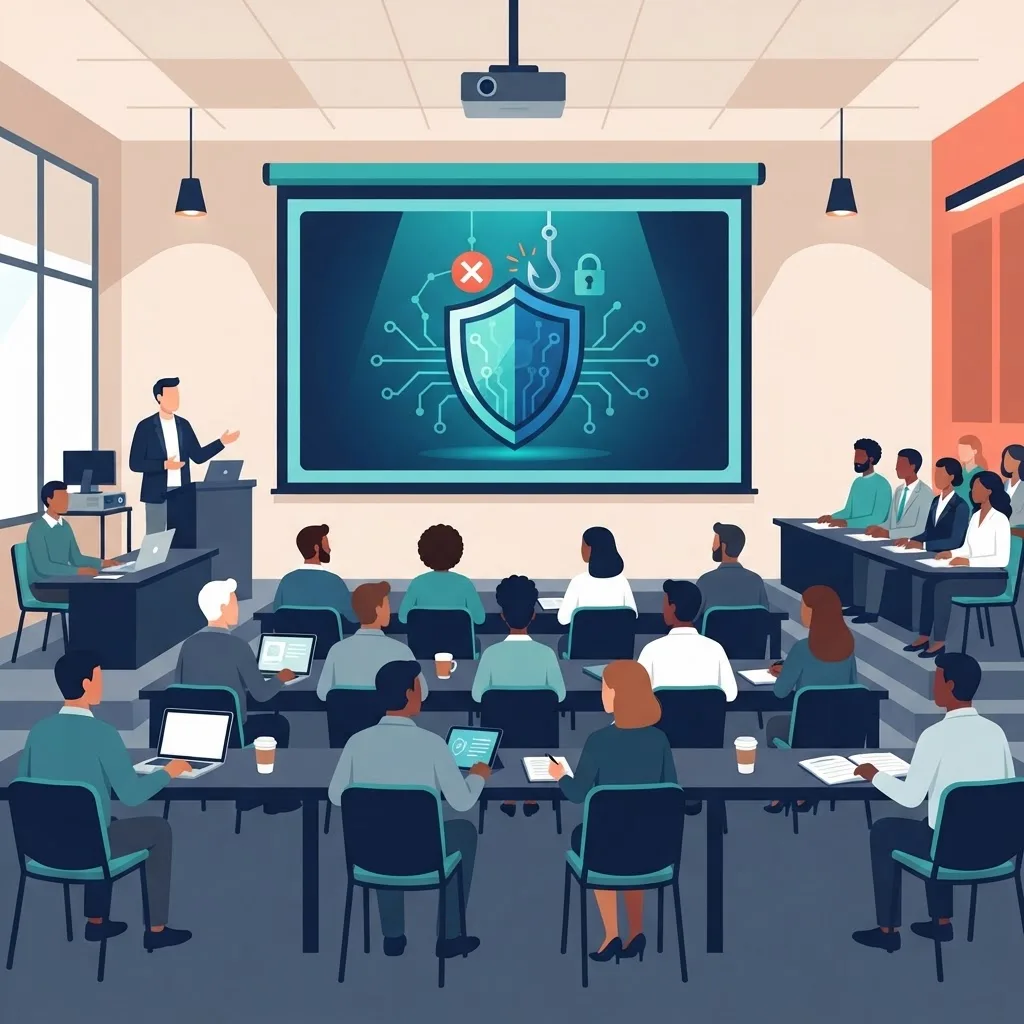
Effective sessions cover three things: what may never be pasted into a public AI tool, how to recognize an AI-generated request for money or credentials, and exactly who to contact within five minutes of a suspected mistake. That last point matters most, because breach cost scales with delay and staff who fear punishment stay silent.
Students need a parallel conversation framed around their own interests: their data, their reputation, their academic record. Districts that teach AI literacy as a skill rather than a prohibition see fewer covert workarounds. For teams comparing partners, seeing how intelligent automation specialists structure delivery is a useful benchmark for governance-ready deployment.
Key Takeaways
- AI security in schools has two halves: securing the AI you use and using AI to defend the network.
- The GAO documented three days to three weeks of lost learning after significant school cyber incidents, with recovery taking two to nine months.
- Sophos found roughly two-thirds of surveyed lower-education organizations were hit by ransomware in a single year.
- FERPA, COPPA, and state laws such as NY Education Law 2-d set the legal floor for AI tools handling student records.
- Demand five clauses: no training on your data, defined deletion, named subprocessors, 72-hour breach notice, stated encryption and residency.
- Shadow AI inventories typically surface three to five times more tools than administrators expected.
- Over-collection through AI monitoring is a liability, not a safeguard.
- Every AI alert and every automated student decision needs a named human reviewer.
Frequently Asked Questions (FAQ)
Is it safe for teachers to use ChatGPT for lesson planning?
Yes, for general lesson content with no student information in the prompt. It becomes unsafe the moment names, grades, disability details, or behavioral notes are pasted in. Districts should provide an approved AI tool with a signed data agreement so teachers have a compliant option instead of a workaround.
Does FERPA apply to AI tools used in schools?
Yes. If an AI tool processes education records it falls under FERPA, and the vendor typically operates as a school official with legitimate educational interest. That status requires a written agreement, direct district control over the data, and a prohibition on the vendor reusing student records for its own purposes.
How can schools detect AI written student work fairly?
Treat detector scores as one weak signal, never as proof. Current detectors produce false positives, particularly for multilingual students. Fairer approaches include process evidence such as drafts and revision history, in-class writing samples, oral follow-up questions, and assignments requiring personal or local context.
What is the first AI security step for a small district?
Run a shadow AI inventory. Ask every staff member which AI tools they use for school work, then enable multi-factor authentication on all accounts touching student data. These two steps cost nothing, take under two weeks, and remove more risk than any product purchase you could make first.
Should schools use AI surveillance to monitor students?
Only with strict limits. Require a documented harm it prevents, a known false positive rate, a named human reviewer before any action, a short retention period, and plain-language disclosure to families. If a vendor cannot supply those answers, the monitoring risk outweighs the safety benefit.
Who should own AI security in a school district?
One named person with authority to approve or block tools, usually the technology director, supported by a small committee including a teacher, a counselor, and a business office representative. Distributed ownership without a decision-maker is why most district AI policies stall after the first draft.
The Bottom Line
AI security in schools is not a product you buy once. It is a short list of habits: know what tools you run, put privacy terms in writing, give every alert a human owner, collect less data than you technically can, and train people on the mistakes they are likely to make. Districts that do those five things consistently are safer than districts with bigger budgets and no inventory.