Learn how artificial intelligence speech writing works, which steps to keep human, and how to brief, edit, and rehearse an AI drafted speech that lands.
Artificial Intelligence Speech Writing
Artificial intelligence speech writing has quietly become a standard part of how founders, executives, wedding hosts, and student speakers get from a blank page to a rehearsable draft. The models have improved fast. The failure mode has not changed: a speech that reads beautifully on a screen and dies in a room. A speech is heard once, in order, with no scroll bar and no second chance to re-read a clever sentence. That single constraint decides which parts of the process you can hand to a model and which parts you must keep. This guide walks through the workflow, the prompts, the editing passes, the ethics, and the measurement.
Quick Answer: Artificial intelligence speech writing uses large language models to research, outline, and draft spoken remarks that a human then edits for voice, timing, and truth. It works best as a first draft and structure tool. The speaker still supplies personal stories, verified facts, and delivery, because audiences respond to authenticity rather than fluency.

What Artificial Intelligence Speech Writing Actually Means
Artificial intelligence speech writing is the use of generative language models to produce spoken-word text, including keynotes, toasts, eulogies,投 investor updates, award acceptances, and internal all-hands remarks. It is not the same as text-to-speech, which converts finished words into synthetic audio, and it is not the same as autocue software, which only displays what you already wrote.
Key Terms Defined
- Large language model (LLM): a model trained on large text corpora that predicts the next token, which is why it produces fluent prose but cannot verify a claim on its own.
- Prompt brief: the structured instruction set you give the model, covering audience, occasion, length, tone, and forbidden content.
- Hallucination: a confidently stated fact, quotation, or statistic that the model invented. In speech work this is the highest risk item, because a misattributed quote spoken aloud cannot be quietly corrected later.
- Spoken register: sentence patterns built for the ear, meaning shorter clauses, repeated anchor phrases, and almost no parentheses or semicolons.
Why Speakers Are Adopting AI Drafting
Adoption is driven by drafting cost, not by quality claims. The 2024 Microsoft and LinkedIn Work Trend Index reported that 75 percent of surveyed knowledge workers were already using AI at work, with drafting and summarising as the leading tasks. Speech writing sits squarely inside that pattern, because it is a long-form writing job with a hard deadline and a visible audience.
The second useful number is arithmetic rather than survey based. Comfortable speaking pace for most presenters is roughly 130 to 150 words per minute, so a 20 minute keynote is about 2,600 to 3,000 words of finished script. Producing that from scratch typically takes several sessions. A model can produce a structured 2,800 word draft in under a minute, which moves the human effort from generation to judgement. That shift is the real benefit, and also the real trap, because judgement is the part most people skip when a draft already looks finished.
The Five Step Workflow That Produces Usable Speeches
Use the model in a fixed order. Skipping straight to a full draft request is the most common cause of generic output.
- Collect raw material first. Dump your own notes, three specific anecdotes, the numbers you can defend, and the one sentence you want the audience to repeat afterwards. Do this before you open any AI tool.
- Ask for structure, not prose. Request three competing outlines with different emotional arcs, then choose one. Outlines are cheap to reject and expensive to fix after drafting.
- Draft section by section. Generate the opening, then the body beats, then the close, each as a separate request. Section drafting keeps length control and prevents the model from smoothing your anecdotes into stock phrasing.
- Edit for voice and truth. Read every line aloud. Cut anything you would not say to a colleague. Verify every statistic, name, date, and quotation against a primary source.
- Rehearse with a timer. Time the actual delivery and cut to fit. Written length and spoken length diverge quickly once pauses and audience reaction are included.
How to Brief a Model for a Speech
The brief carries most of the quality. A weak prompt produces the recognisable AI keynote voice, full of balanced triads and phrases such as in today's fast-paced world.
A usable brief specifies eight things: the occasion, the audience and what they already know, the exact time slot in minutes, the single takeaway, two or three of your own stories in raw form, the tone in concrete terms such as dry and understated, the words and clichés you refuse to use, and the constraint that no statistics or quotations may be invented. Adding a 300 word sample of your own past writing so the model can mirror your syntax improves voice matching more than any adjective list. Teams that build repeatable briefing templates for this kind of work, rather than improvising each time, get far more consistent results, which is the same discipline the ZoneTechify Team applies to production content pipelines.
Audience Analysis Comes Before the First Prompt
A model cannot know who is in the room. Audience analysis is the input that most reliably separates a speech that connects from one that merely informs.
Write down four facts before drafting: what the audience already believes about your topic, what they are worried about that day, what they can actually do after listening, and what the previous speaker will likely have said. Feed those four facts into the brief as constraints. A quarterly update to engineers who have just absorbed a hiring freeze needs a different opening than the same content delivered to investors. The model will happily write both, but only if you tell it which room it is writing for.
Editing Is Where the Speech Becomes Yours
Treat the AI output as a structured first draft, never as a script. Run three distinct passes rather than one vague cleanup.
Pass one, truth. Highlight every factual claim, number, name, and quotation. Verify each one against a primary source and delete anything you cannot confirm. Models fabricate plausible attributions, and a fabricated quote delivered from a stage is a reputational event, not a typo.
Pass two, voice. Read aloud and mark every sentence you would not say naturally. Replace abstract nouns with concrete images. Cut adjective pairs down to one. Restore your own contractions and your own rhythm, including the slightly awkward phrasing that signals a real person.
Pass three, breath and time. Break any sentence you cannot finish in one comfortable breath. Insert deliberate pause marks after your strongest lines. Then read the whole thing against a stopwatch and cut to 90 percent of the allotted slot, which leaves room for laughter, applause, and the pace change that nerves cause.
Choosing an Approach: A Practical Comparison

| Approach | Best For | Main Strength | Main Risk |
|---|---|---|---|
| General chat model with a detailed brief | Most keynotes and internal talks | Flexible structure and fast iteration | Generic voice if the brief is thin |
| Model plus your own writing samples | Repeat speakers and executives | Strong voice matching | Needs a maintained sample library |
| Presentation tool with built-in AI | Slide-led talks | Slides and script stay aligned | Encourages bullet thinking, weak narrative |
| Human speechwriter with AI research support | High-stakes public remarks | Strategic judgement and accountability | Highest cost and longest lead time |
| No AI at all | Eulogies and personal toasts | Emotional truth is the whole point | Slower drafting, no structural prompt |
The practical rule: the more emotionally exposed the occasion, the less the model should touch the actual sentences. Use it for structure on a eulogy if you must, but write the memories yourself.
Rehearsal and Delivery Feedback Loops
AI helps after drafting too, in ways speakers routinely overlook.
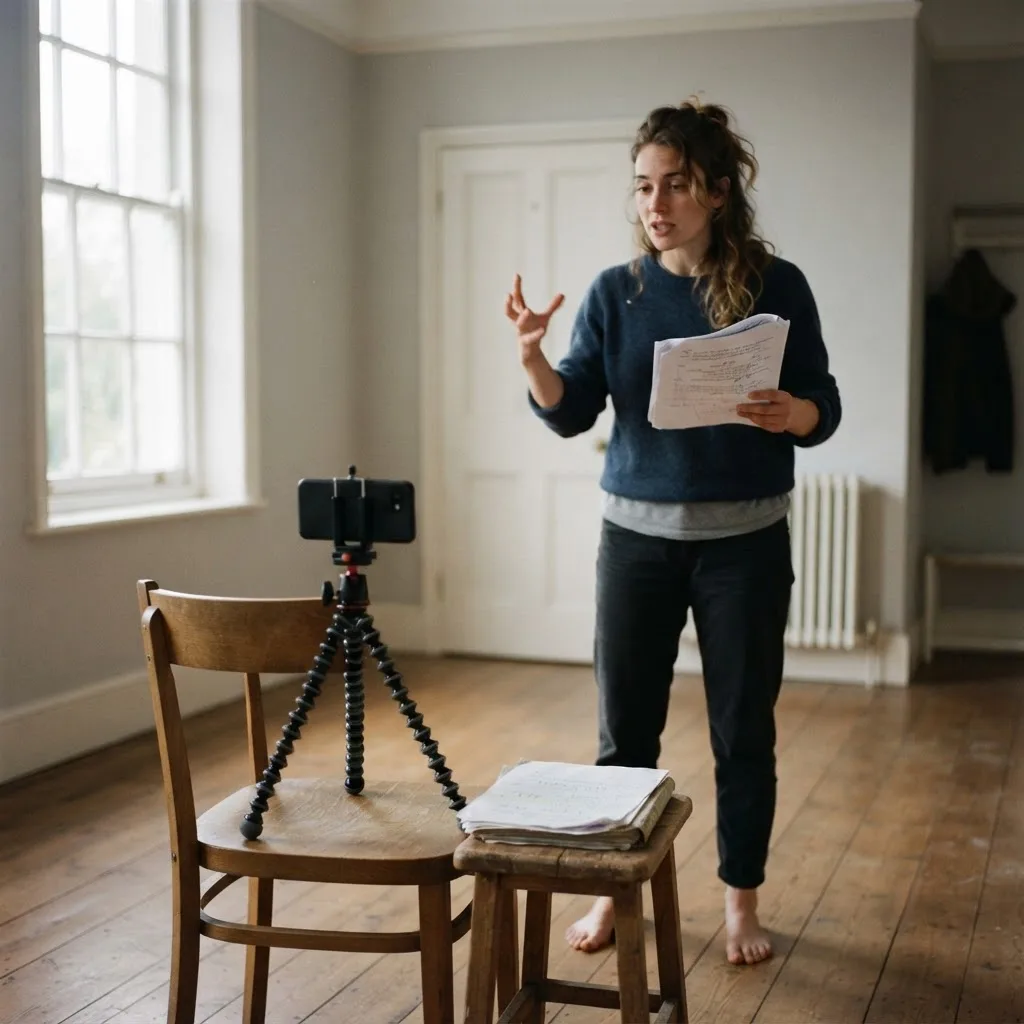
Record a rehearsal, transcribe it, and paste the transcript back into a model with two questions: which sentences did I change while speaking, and which sections lost momentum. The sentences you instinctively rewrote out loud are the ones the draft got wrong, and the transcript exposes them precisely. You can also ask for the five hardest questions an informed listener would ask, then prepare answers. Studios that build these feedback loops into client work, such as an AI-augmented development team, treat measurement as part of the deliverable rather than an afterthought.
Ethics, Disclosure, and Governance
Disclosure norms depend on whether the words claim to be personal testimony.

Human speechwriters have drafted political and corporate remarks for a century without individual credit, so AI assistance in the same category is a continuation of existing practice rather than a new deception. The line is crossed when the speech asserts lived experience the speaker did not have, when statistics are presented without verification, or when an academic or professional body has a rule requiring original authorship. Regulated sectors add another layer, since medical, financial, and legal claims spoken publicly carry compliance exposure regardless of who typed them. Organisations building this into policy usually pair a written disclosure standard with a mandatory human verification step, which is exactly how well governed AI workflow solutions are designed.
Measuring Whether the Speech Worked
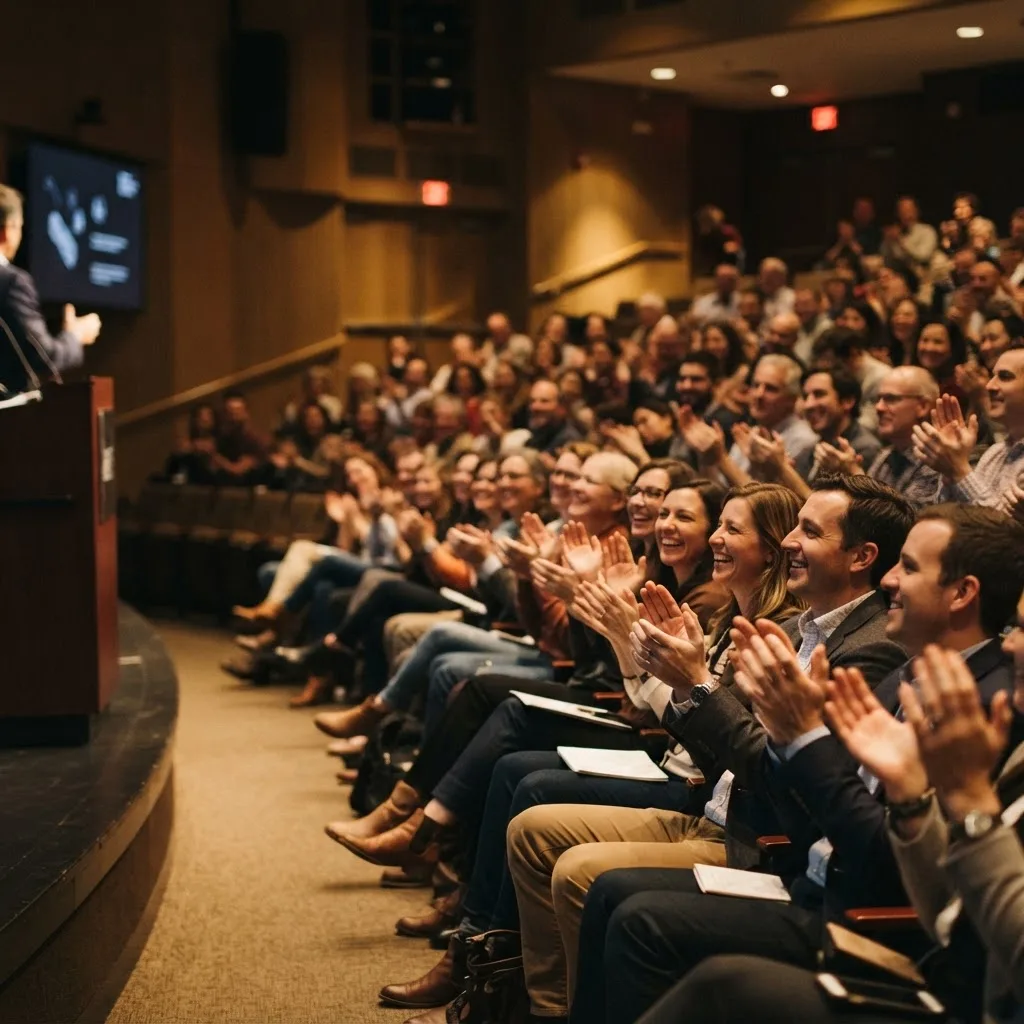
Applause is not a metric. Measure three things instead: how many audience members repeat your key sentence back to you afterwards, how many take the specific action you requested within a week, and how many questions you received that indicated genuine engagement rather than confusion. Track those across talks. Speeches drafted with AI and edited lightly tend to score well on comprehension and poorly on recall, because fluent prose is easy to follow and hard to remember. Concrete stories and one repeated anchor phrase are what fix recall, and both come from you.
Key Takeaways
- A 20 minute speech is roughly 2,600 to 3,000 words at a normal pace of 130 to 150 words per minute.
- The 2024 Microsoft and LinkedIn Work Trend Index found 75 percent of surveyed knowledge workers already using AI at work, mostly for drafting tasks.
- Use AI for research, outlining, and section drafting; keep stories, fact verification, and delivery human.
- Every statistic and quotation in an AI draft must be verified against a primary source before it is spoken.
- Cut the script to 90 percent of your time slot to absorb pauses and audience reaction.
- The more personal the occasion, the less the model should write the actual sentences.
Frequently Asked Questions (FAQ)
Can AI write a good speech on its own?
No. AI reliably produces a coherent, well-structured draft, but it cannot supply your memories, verify facts, or judge a specific room. Unedited AI speeches sound fluent and forgettable. Treat the output as a first draft and expect to rewrite roughly a third of it for voice and truth.
Is it cheating to use AI to write a speech?
It depends on the setting. Ghostwritten corporate and political remarks have been normal for decades, so AI assistance follows that precedent. It becomes dishonest when you claim experiences you never had, or when a school, awarding body, or professional code explicitly requires original authorship from you.
How long should an AI generated speech be?
Match your time slot at 130 to 150 words per minute, then trim. A five minute talk is about 700 words, ten minutes about 1,400, and twenty minutes about 2,800. Always cut to 90 percent of that target, because pauses, laughter, and nerves consume more time than rehearsal suggests.
What is the best prompt for writing a speech with AI?
There is no single prompt. The strongest briefs specify occasion, audience knowledge, exact minutes, one takeaway, your own raw anecdotes, a concrete tone, banned clichés, and a rule against invented facts. Adding a 300 word sample of your past writing improves voice matching more than any other instruction.
Can people tell if a speech was written by AI?
Audiences rarely identify the tool, but they notice the symptoms: balanced triads, abstract nouns, no specific detail, and stories that could belong to anyone. Adding two verifiable personal anecdotes and reading the script aloud to remove unnatural phrasing eliminates most of those signals.
Should I use AI for a eulogy or wedding toast?
Use it only for structure or for calming the blank page. The value of these speeches is the specific memory, the small detail, and the emotion in your own words. Ask a model for an ordering suggestion if helpful, then write every sentence yourself.