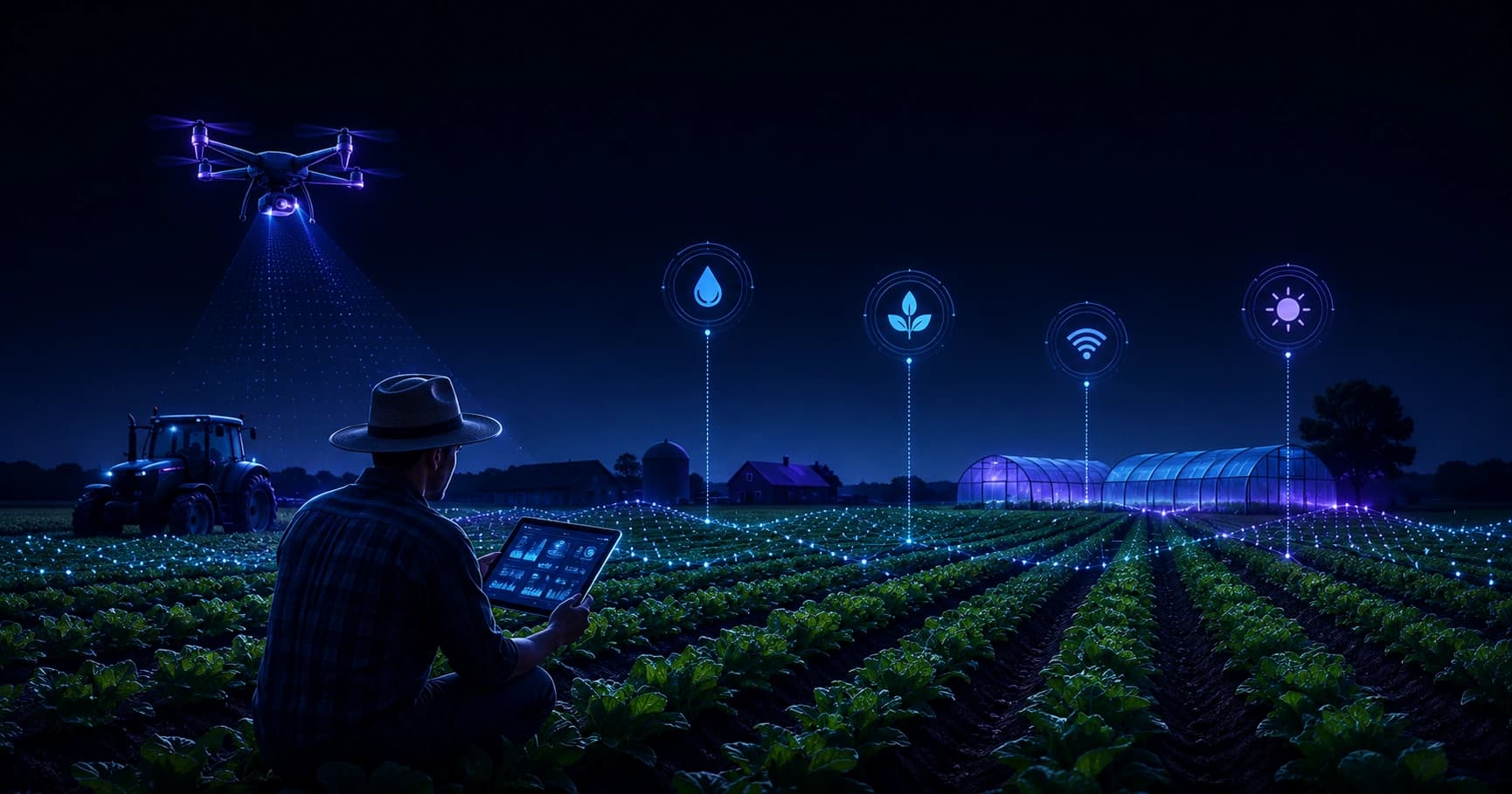
A practical, field-tested guide to adding sensors, drones, apps, and data to traditional farms without abandoning proven methods. Learn the exact order to adopt tools, what each costs, and how to measure real returns.
How to Integrate Technology With Traditional Farming
Traditional farming already works. Generations of farmers have built soil knowledge, seasonal timing, and crop-rotation instincts that no sensor can replicate. The mistake most technology adoption projects make is treating that knowledge as the problem to be replaced instead of the foundation to be strengthened. Integration succeeds when technology answers a question the farmer already has: how much water does this block actually need, which corner of the field is underperforming, and where is money leaking every season.
This guide walks through the practical sequence experienced farm advisors use, the realistic costs, and the mistakes that cause abandoned equipment to sit rusting in sheds.
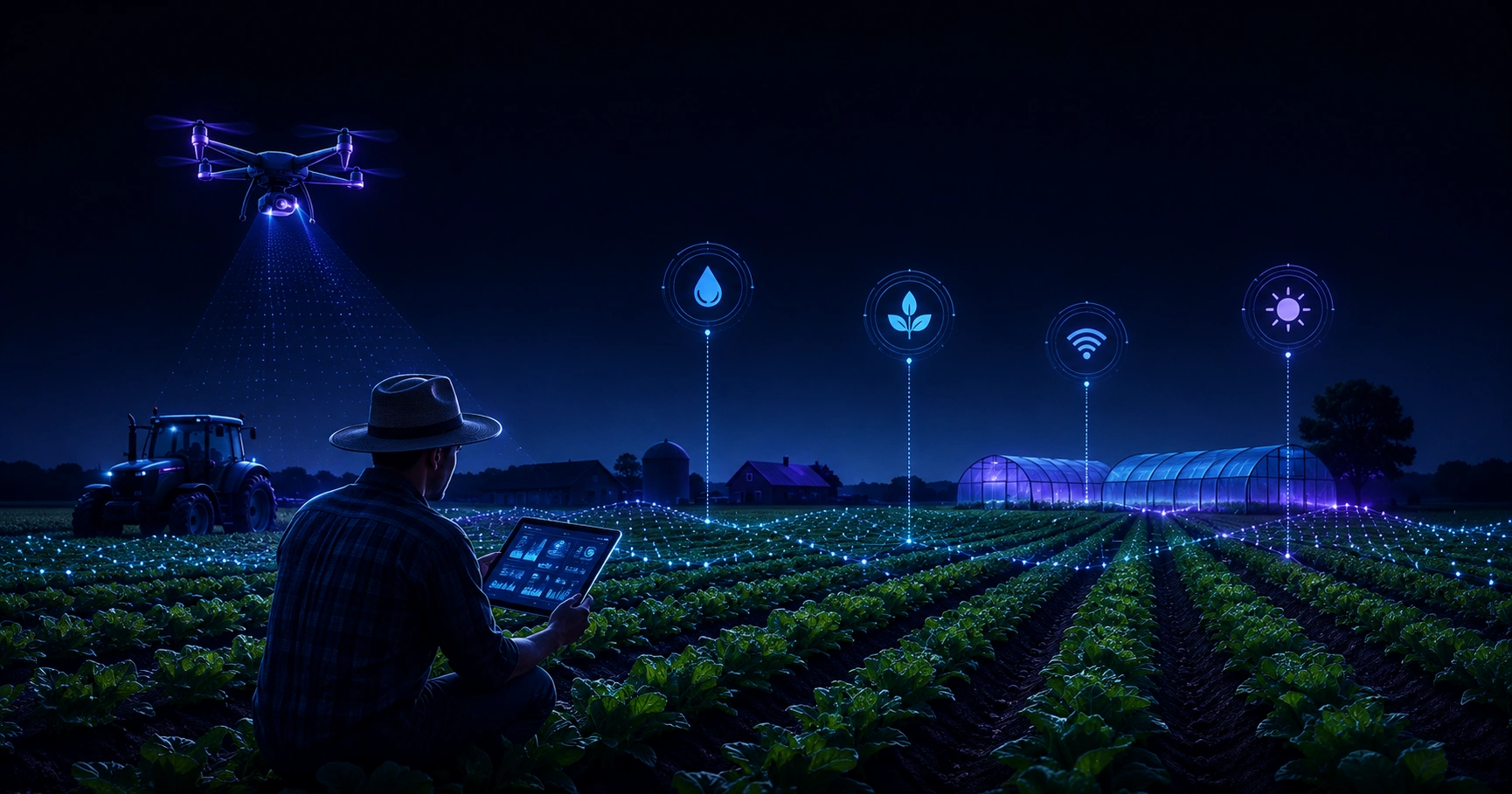
Quick Answer: Integrate technology with traditional farming by starting small: pick one costly problem, add one low-cost tool such as a soil moisture sensor or record-keeping app, measure results for a full season, then expand. Keep traditional practices as the baseline and let data refine timing, inputs, and irrigation instead of replacing farmer judgment.
What Does Technology Integration in Farming Actually Mean?
Definition: Technology integration in farming is the process of layering digital tools such as sensors, drones, mobile apps, and data analysis onto existing agricultural practices so decisions become measurable rather than guessed.
The key word is layering. A farmer who has hand-watered a vegetable plot for twenty years does not need a fully automated hydroponic tunnel. They need to know whether their instinct to irrigate on Tuesday morning matches what the soil profile at 30 cm depth is telling them. When those two agree, confidence grows. When they disagree, the farmer learns something worth money.
This is why integration is a different discipline from mechanization. Mechanization replaces labor. Integration improves precision. Both matter, but precision usually delivers a faster payback on small and mid-sized farms because it reduces waste on inputs you are already buying: water, fertilizer, fuel, and pesticide.
Why Bother? The Numbers That Justify the Effort
Agriculture faces a hard arithmetic problem. According to the United Nations Food and Agriculture Organization, global food production needs to rise significantly by 2050 to feed a projected population approaching 9.7 billion, while arable land per person continues to shrink. You cannot solve that with more acres. You solve it with more yield per acre and less waste per unit of input.
The efficiency gap is also well documented. The FAO estimates that agriculture accounts for roughly 70% of global freshwater withdrawals, and a large share of that water is lost to evaporation, runoff, and simple over-application. Sensor-guided irrigation directly attacks that loss, which is why it is almost always the highest-return first step on a traditional farm.
There is a second, less discussed benefit: record quality. Farms with clean digital records qualify more easily for loans, insurance, certification, and premium buyer contracts, because they can prove practices rather than describe them. That single change has converted more skeptical farmers than any yield chart.
Step 1: Diagnose Before You Buy Anything
Start with a written audit of one season. No equipment, no subscriptions. Record:
- Input costs per field — seed, fertilizer, fuel, water, labor, chemicals.
- Yield per field or per block — not just farm-wide totals.
- Losses and their causes — pest damage, disease, drought stress, spoilage, late harvest.
- Time sinks — which tasks consume the most hours for the least return.
- Decisions made on guesswork — every point where you were unsure and guessed.
That fifth item is your technology shopping list. Tools that remove guesswork pay for themselves. Tools that add features you never asked for become expensive shed decorations. In practice, most traditional farms discover their biggest guesswork clusters around irrigation timing, fertilizer rates, and pest emergence windows.
Step 2: Add Soil and Weather Sensing First
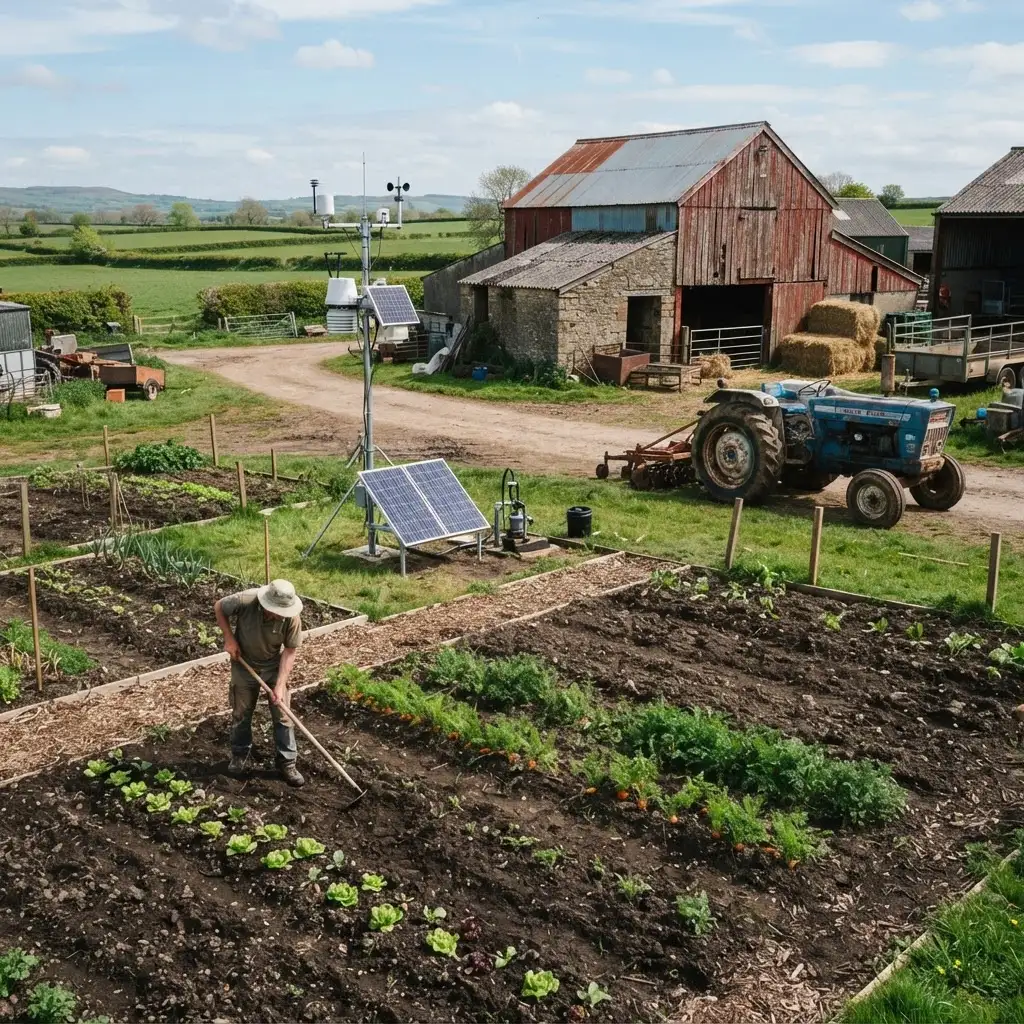
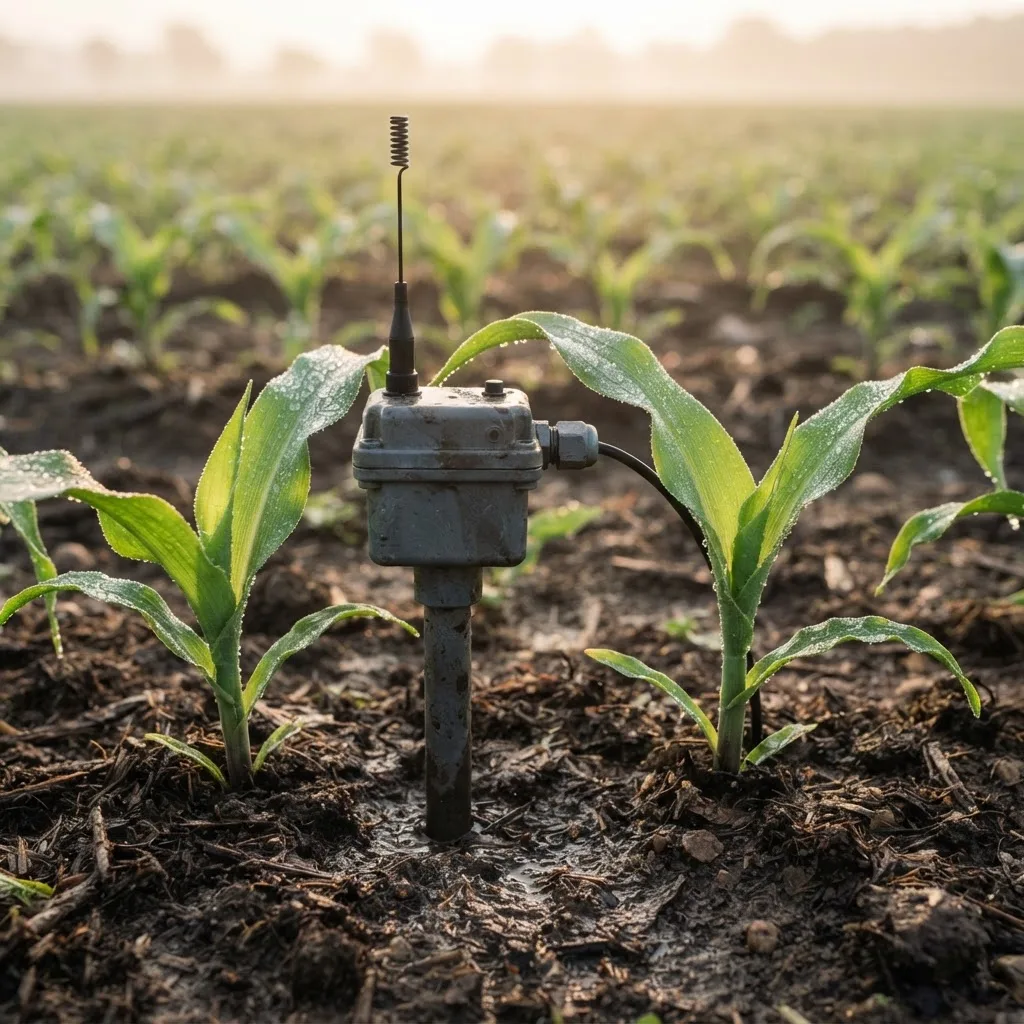
Soil moisture and temperature sensors are the cheapest entry point with the clearest payback. A basic capacitive probe with a solar-powered transmitter reports moisture at root depth to a phone app. The farmer keeps irrigating the way they always have, but now they can see whether water actually reached the root zone or ran past it.
Practical deployment advice learned the hard way:
- Place sensors in your worst field and your best field, not the average one. The contrast teaches more than a single reading.
- Install at two depths where possible, typically 15 cm and 40 cm, so you can see whether water is penetrating or perching.
- Pair sensors with a small on-farm weather station. Rainfall and evapotranspiration data turn moisture readings into an irrigation schedule instead of a number.
- Log everything for one full season before changing behavior. You need a baseline to prove improvement.
A farm-level weather station also solves a chronic problem: regional forecasts are often wrong by several degrees and many millimeters at field scale, especially in hilly or coastal terrain. Local data beats regional data every time.
Step 3: Use Drones for Scouting, Not Spectacle
Drones get oversold. Their genuinely useful job on a traditional farm is scouting: flying a field in ten minutes to spot problems that would take two hours to walk. A standard RGB camera already reveals gaps in emergence, waterlogged corners, lodging after storms, and uneven canopy growth. Multispectral cameras add early stress detection before symptoms are visible to the eye, but they cost several times more and require processing software.
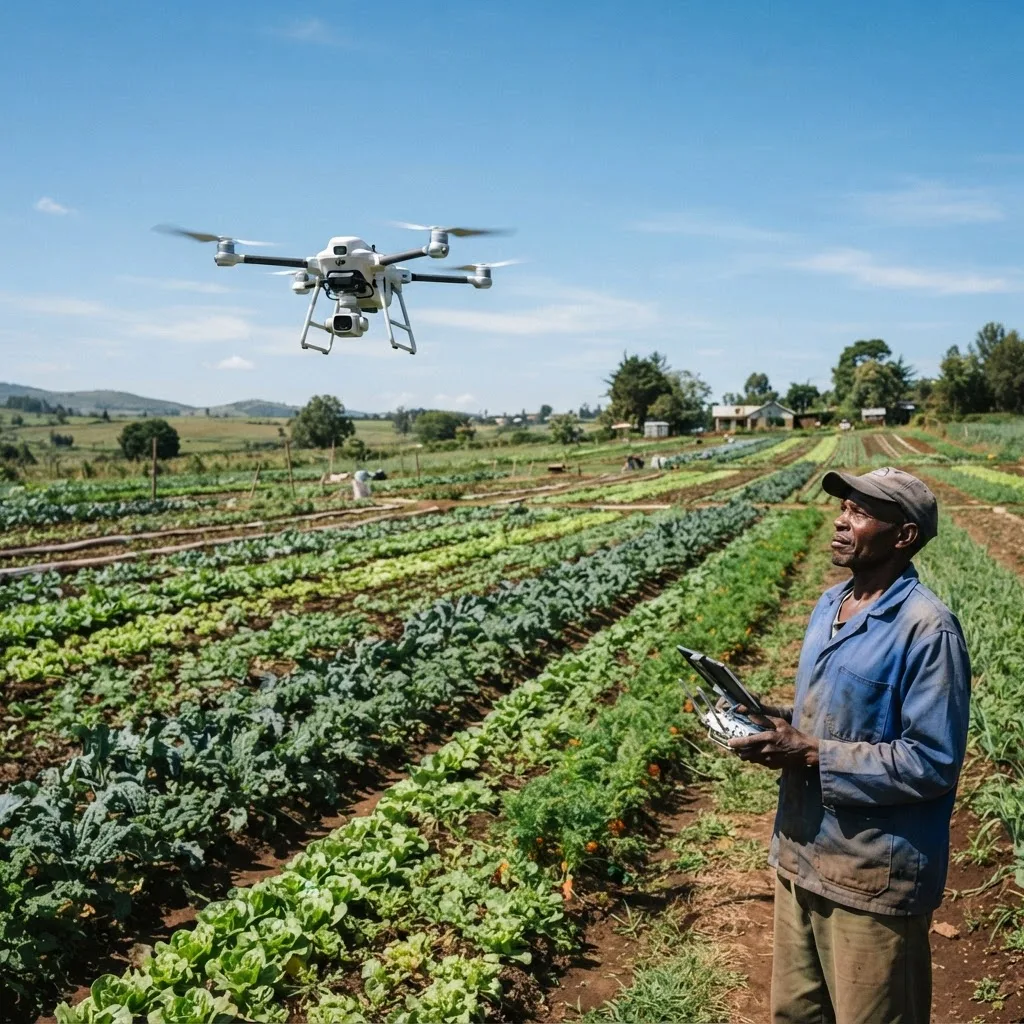
A realistic starting workflow: fly the same route at the same altitude every two weeks, save the images by date, and compare them. That simple habit creates a visual time series that explains yield differences at harvest. Many farms hire a local drone service for seasonal flights rather than buying hardware, which is often the smarter financial decision for farms under 50 hectares.
Step 4: Move Records From Paper to a Simple App
Spreadsheet or farm-management app, either works, but the data must leave the notebook. Field notes trapped in paper cannot be compared across seasons or shared with an agronomist.
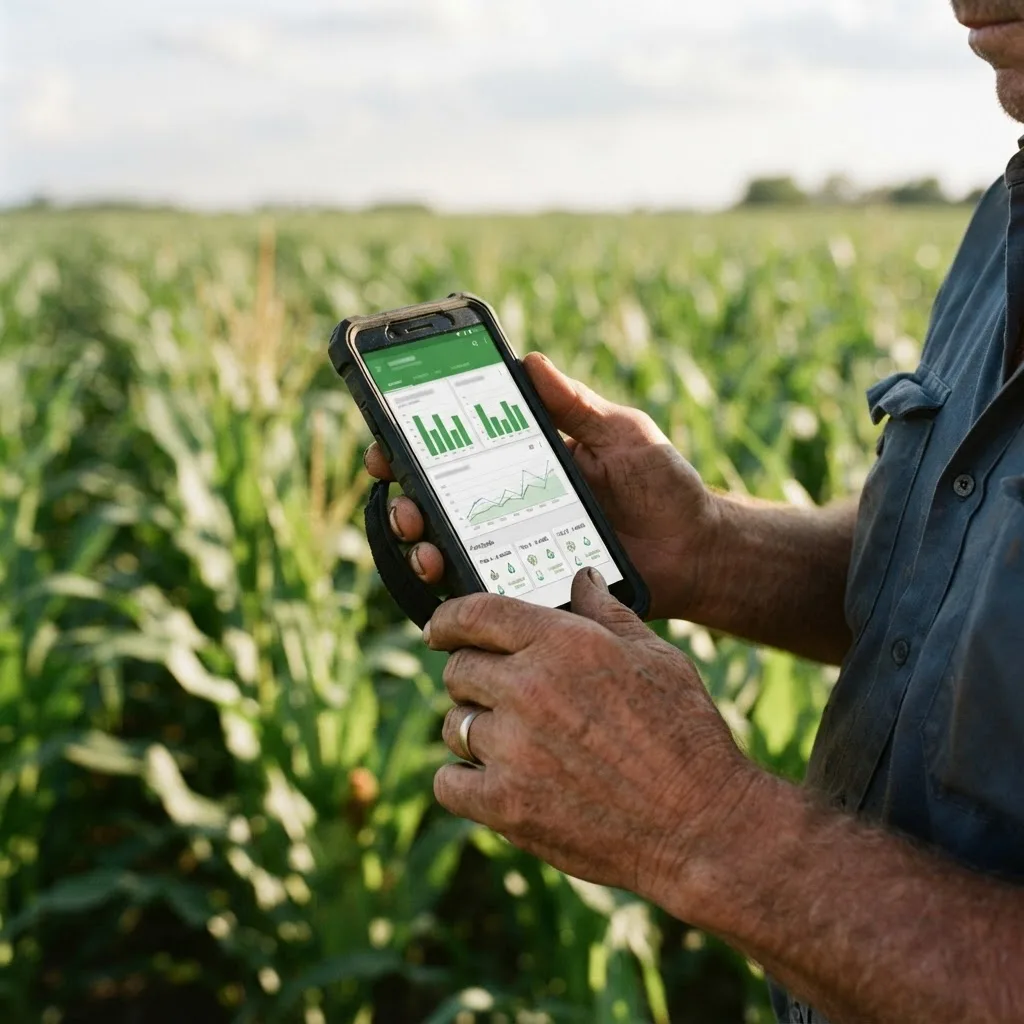
Choose software using these criteria, in order:
- Works offline and syncs later — field connectivity is unreliable everywhere.
- Data export in CSV so you are never locked in.
- Photo attachment per field entry — visual pest and disease records are enormously valuable.
- Simple enough for every worker to use without training beyond ten minutes.
- Local language support, which drives adoption more than any feature list.
If existing software does not fit your operation, a lightweight custom tool is often cheaper than forcing a mismatched platform. Teams such as ZoneTechify build purpose-fit farm dashboards and field-data apps, and their web application development service is the right route when your workflow does not match off-the-shelf products.
Step 5: Automate Irrigation Where Water Is the Constraint
Once sensors have proven where water is being wasted, automation converts insight into savings. Solar-powered drip irrigation with a timer or sensor-triggered valve is the workhorse of technology-enabled traditional farming: low cost, no grid dependency, low maintenance, and immediately visible results in water bills and plant uniformity.
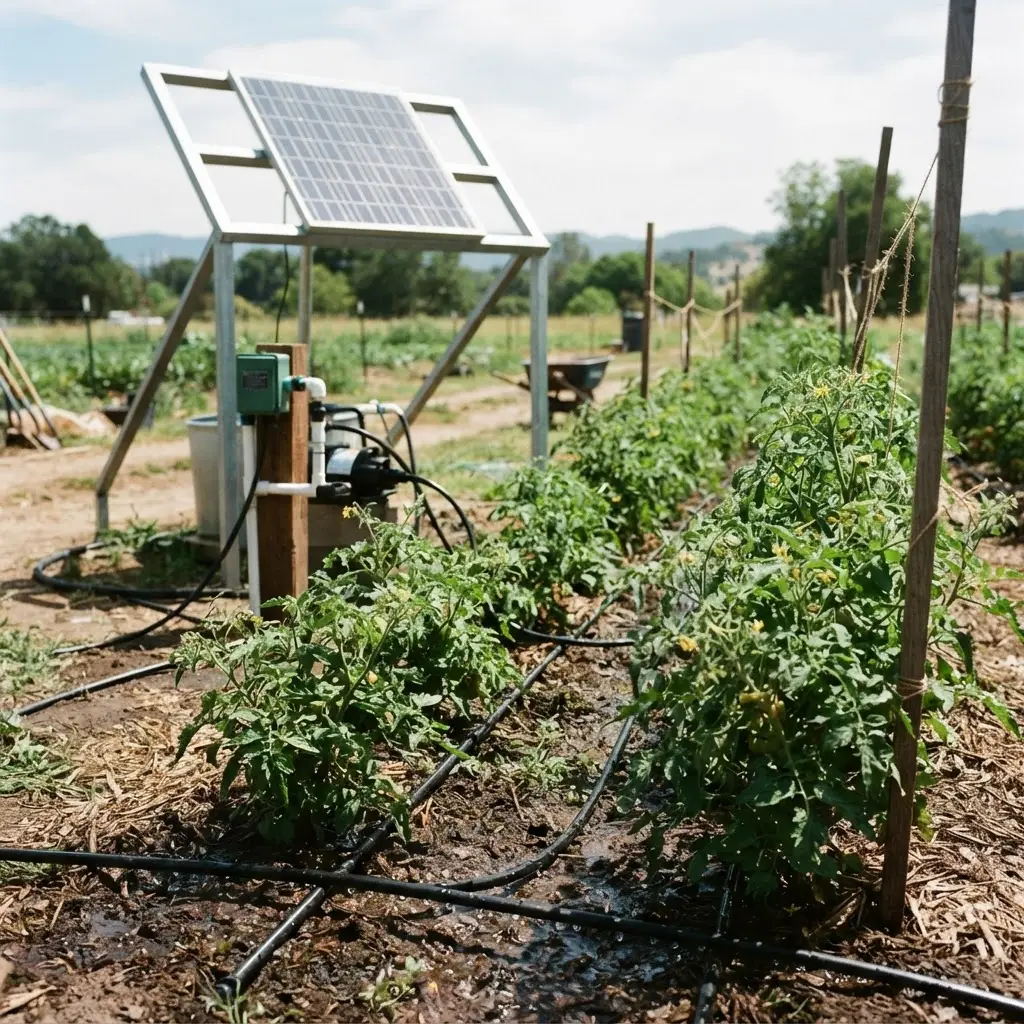
Start with a single block, typically half a hectare or less. Run it alongside your traditional irrigation on an adjacent block for one season and compare water use, labor hours, and yield. That side-by-side trial is the single most persuasive tool in farm technology adoption, because it produces evidence from your own soil rather than a brochure.
Step 6: Train People Before Adding More Equipment
Abandoned farm technology almost never fails for technical reasons. It fails because one person understood it and that person left, got busy, or lost interest.
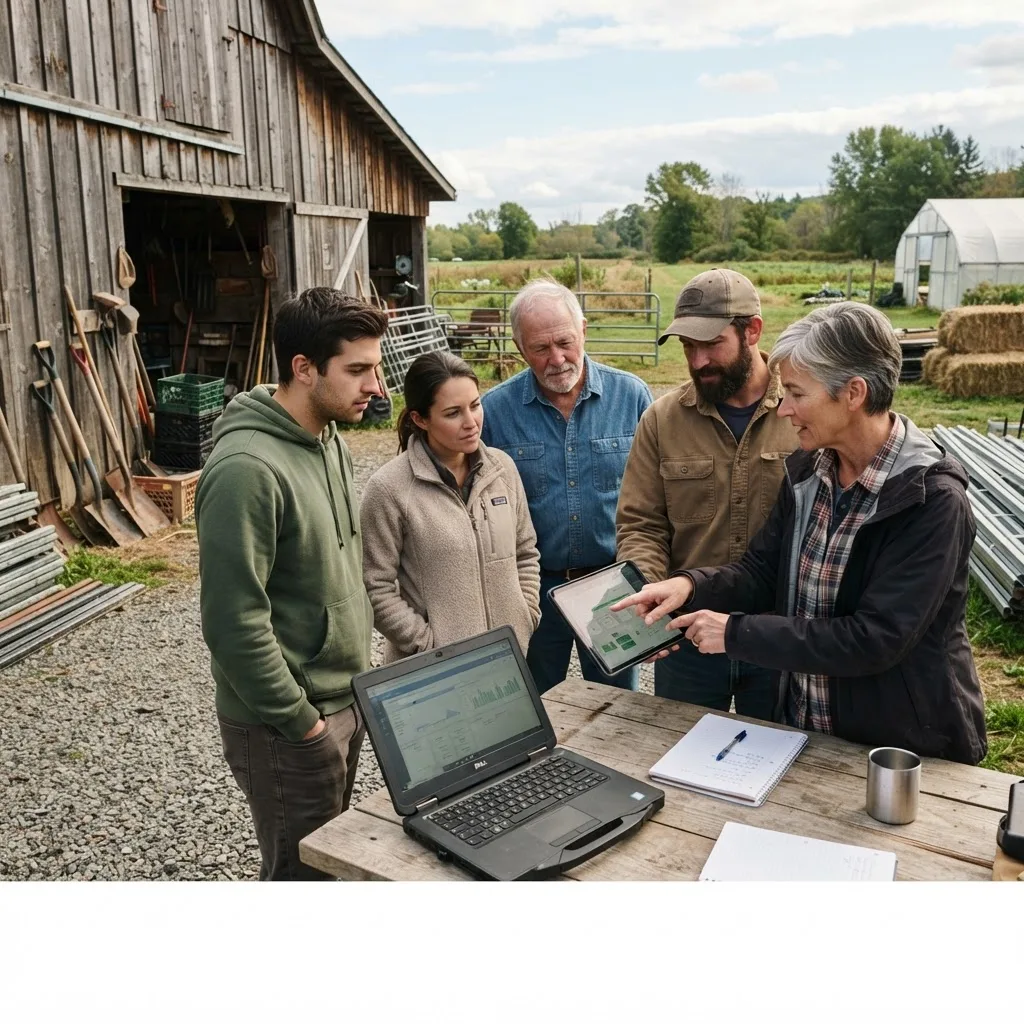
Build redundancy deliberately:
- Train at least two people per tool, including one younger family member or worker who is comfortable with phones.
- Write a one-page laminated guide for each device, in the language spoken in the field.
- Save supplier contact details and warranty dates in the same app you use for field records.
- Schedule a monthly ten-minute check of batteries, sensor calibration, and app sync status.
Comparison: Which Technology Should You Adopt First?
| Technology | Typical Entry Cost | Setup Difficulty | Payback Speed | Best First Choice For |
|---|---|---|---|---|
| Soil moisture sensors | Low | Easy | Fast (1 season) | Water-scarce or irrigated farms |
| On-farm weather station | Low to medium | Easy | Fast | Farms with unreliable forecasts |
| Farm record-keeping app | Very low | Very easy | Medium | Every farm, no exceptions |
| Solar drip irrigation | Medium | Moderate | Fast to medium | Vegetables, orchards, row crops |
| Drone scouting (hired) | Low per flight | Easy | Medium | Farms over 10 hectares |
| Drone ownership | High | Hard | Slow | Large farms, service providers |
| Automated fertigation | High | Hard | Slow | High-value cash crops only |
| AI yield prediction | Medium (software) | Moderate | Slow | Farms with 3+ seasons of data |
Read this table top to bottom. That order is the adoption sequence, not a menu. Each row generates the data or confidence needed for the row beneath it.
Step 7: Turn Data Into Decisions
Data that is never analyzed is just storage cost. At the end of each season, sit down with your records and answer four questions:
- Which field returned the least profit per hectare, and what did the sensors say about it?
- Where did input spend rise without a yield increase?
- Which problem was detected late, and what earlier signal existed in the data?
- What single change would you make with the evidence you now have?
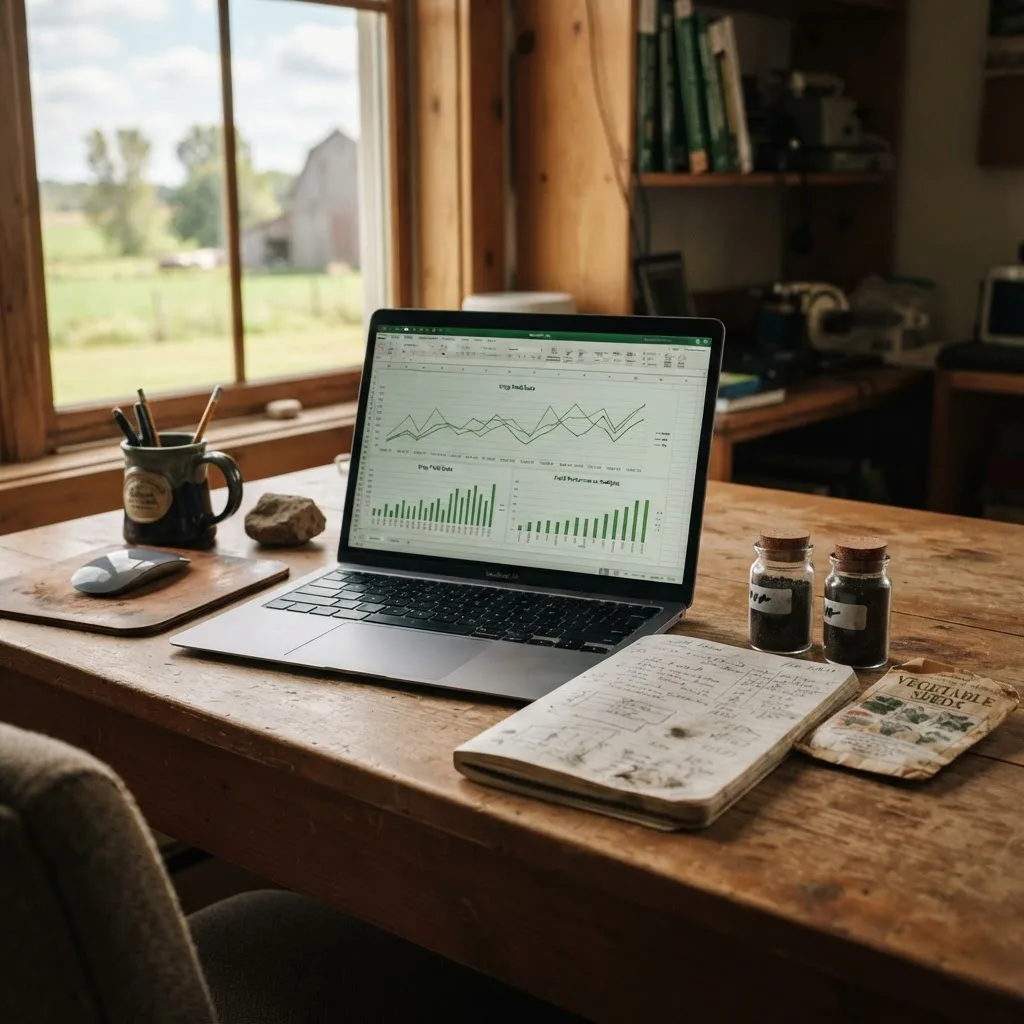
After three seasons of clean records, predictive tools become genuinely useful because they have real history to learn from. Before that, most AI recommendations are generic. Farms ready for that stage often work with specialists such as WebPeak to move from record-keeping into forecasting and automated alerts.
Common Mistakes That Waste Money
- Buying a full precision-agriculture package before understanding your own bottleneck. Modular purchases beat bundles.
- Ignoring connectivity reality. Confirm cellular coverage at the exact sensor location, not at the farmhouse.
- Skipping the control plot. Without an unchanged comparison block, you cannot attribute gains to the technology.
- Abandoning traditional observation. Sensors miss pests, smells, leaf texture, and animal behavior. Walk the field anyway.
- Choosing hardware with proprietary batteries or closed data. Both create dependency and eventual abandonment.
Key Takeaways
- Technology integration in farming means layering measurement onto existing practice, not replacing farmer knowledge.
- The FAO reports agriculture uses roughly 70% of global freshwater withdrawals, making sensor-guided irrigation the highest-return first investment.
- Global food production must rise substantially by 2050 for a population nearing 9.7 billion, and precision beats expansion as the practical path.
- Adopt in sequence: audit, sensors, weather data, digital records, irrigation automation, then analytics.
- Always run a side-by-side control plot for one full season to prove results with your own soil.
- Train two people per tool and keep a one-page written guide to prevent abandonment.
- Clean digital records improve access to loans, insurance, certification, and premium contracts.
Frequently Asked Questions (FAQ)
How do I start using technology on my farm if I have a small budget?
Start with a free record-keeping app and one soil moisture sensor placed in your most problematic field. Together these cost very little and target the two biggest sources of waste: guessed irrigation timing and untracked input spending. Expand only after one full season of measured results.
Will farm technology replace traditional farming knowledge?
No. Sensors measure moisture and temperature but cannot smell disease, read leaf texture, or judge harvest ripeness by feel. Technology narrows uncertainty around timing and quantity, while traditional knowledge supplies context, pattern recognition, and judgment. The strongest farms deliberately combine both rather than choosing one.
Do I need internet access to use smart farming tools?
Not constantly. Choose sensors that store readings locally and apps that work offline and sync later. Many devices use low-power networks or Bluetooth and only need connectivity when you walk within range. Always verify signal strength at the exact field location before purchasing any cellular device.
How long does it take to see a return on farm technology?
Irrigation sensors and drip systems typically show measurable water and labor savings within one growing season. Record-keeping apps pay back over two to three seasons through better input decisions. Drones and predictive analytics take longer, usually two to four seasons, because they depend on accumulated comparison data.
Which single technology gives small farms the biggest improvement?
Soil moisture sensing paired with drip irrigation delivers the most consistent gains for small farms. It reduces water use, cuts pumping and labor costs, improves plant uniformity, and lowers disease pressure from overwatering. The equipment is affordable, solar-powered options avoid grid dependence, and results appear quickly.
Can older farmers learn to use these tools successfully?
Yes, and adoption rates are high when tools are simple and locally supported. Success depends on interface simplicity, local-language instructions, and training at least two people per device. Farmers who have tracked their fields mentally for decades often become the most effective users because they immediately recognize when data contradicts expectation.
Final Word
The farms that integrate technology best are rarely the ones with the most equipment. They are the ones that identified a single expensive problem, measured it honestly for a season, changed one practice, and repeated the cycle. Traditional farming supplies the judgment. Technology supplies the evidence. Kept in that order, integration stops being a risk and becomes a compounding advantage.