A practical, field-tested framework for mapping executive job titles to the technology categories they actually control, so your B2B targeting reaches real budget owners instead of guesses.
How to Map Executive Titles to Technology Category
Most B2B targeting fails for a boring reason: teams assume a title implies purchasing authority. It does not. A "VP of Technology" at a 90-person logistics firm may personally approve cloud spend, while the same title at a 40,000-employee bank may own nothing but a roadmap. Mapping executive titles to technology categories is the discipline of resolving that ambiguity systematically, so every campaign, sales sequence, and data enrichment rule points at the person who genuinely controls the budget line.
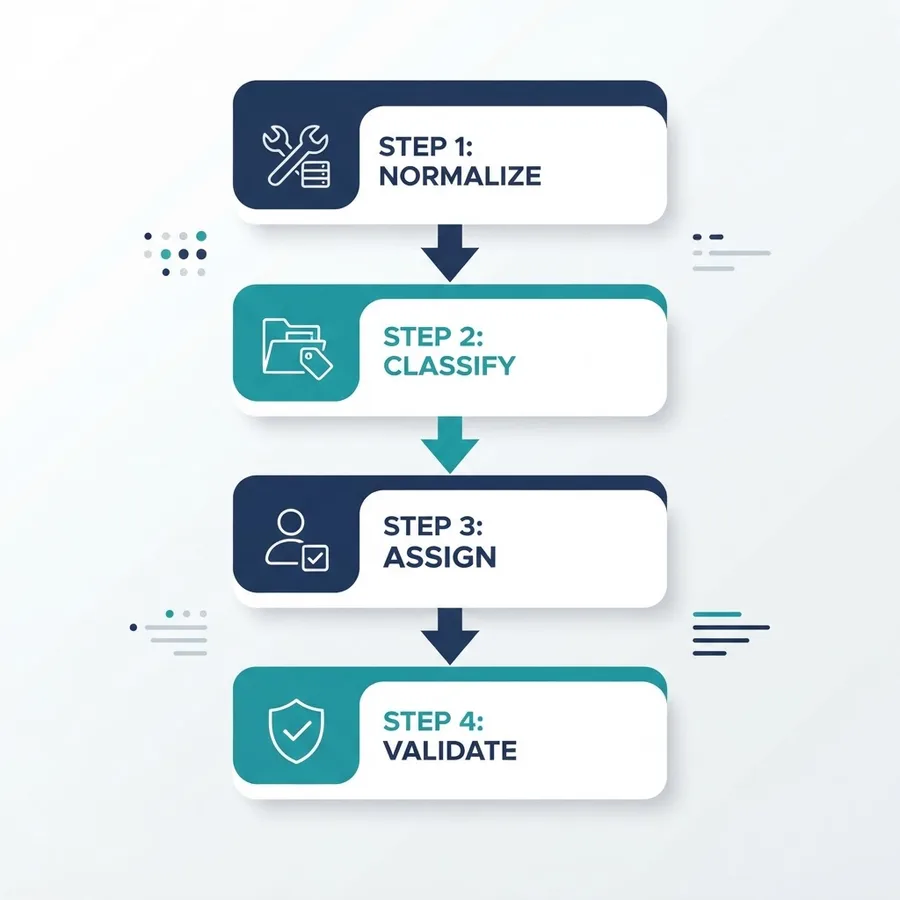
Quick Answer: Map executive titles to technology categories by normalizing raw title strings, extracting the functional domain (IT, security, data, marketing, product), scoring seniority separately from function, then assigning the technology categories that function actually owns. Validate the mapping against real closed-won deals and correct it quarterly.

What "Mapping Titles to Technology Category" Actually Means
Definition: Executive-title-to-technology-category mapping is the process of linking a normalized job title to the specific technology purchase categories that role influences, approves, or budgets for — such as cloud infrastructure, endpoint security, CRM, data warehousing, or observability.
The mapping is not a synonym list. It is a relationship model with three variables: function (what domain the person owns), seniority (how much approval power they hold), and company context (size, industry, and technical maturity). Change any one variable and the correct technology category changes with it.
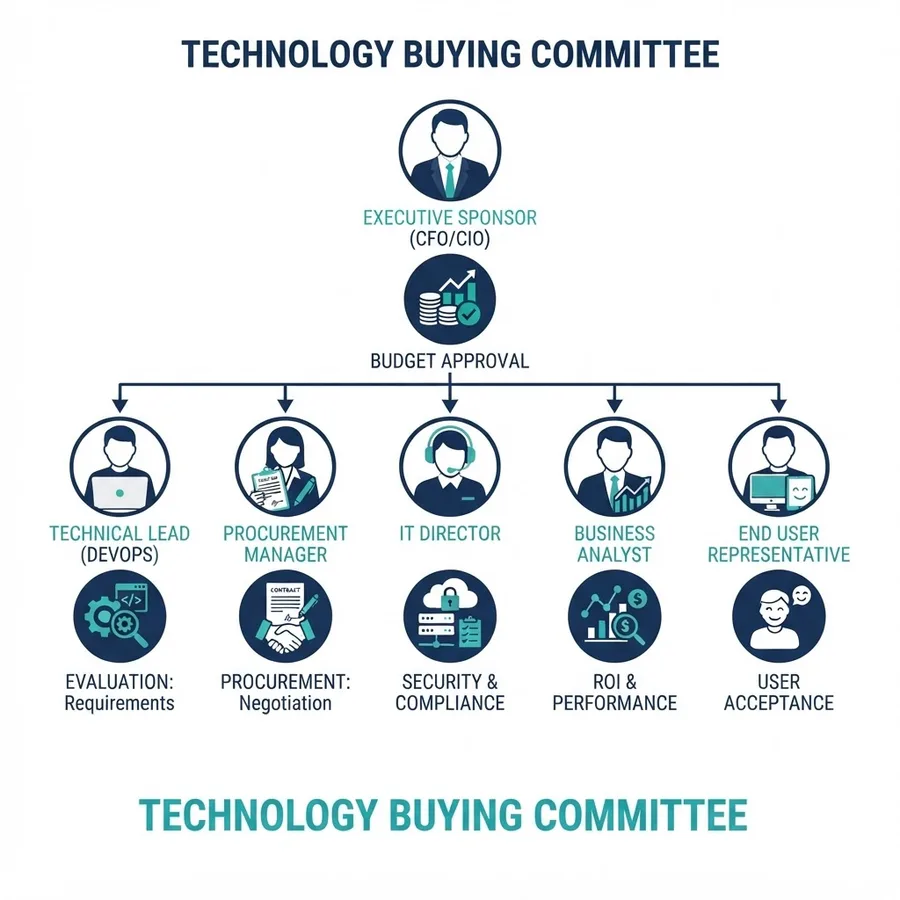
This matters commercially. Gartner has consistently reported that the typical B2B buying group for a complex solution involves six to ten decision makers, each arriving with independently gathered information. If your title mapping is wrong, you are not slightly off-target — you are addressing the wrong member of a ten-person committee with the wrong category message.
Why Title Mapping Breaks in Practice
Three failure patterns cause most of the damage, and all three are fixable.
- Title inflation and deflation. Startups hand out "Chief" titles early; enterprises bury real authority under "Director" and "Senior Manager." Seniority scoring must be normalized against company size.
- Function collision. "Head of Digital" can sit in marketing, IT, or a transformation office. Without a disambiguation rule, these records get scattered across categories.
- Non-English and regional variants. Titles such as "Directeur des Systemes d'Information" or "Geschaftsfuhrer IT" carry the same authority as a CIO but fail naive keyword matching entirely.
The Four-Step Mapping Framework
This is the sequence we use when building targeting datasets for clients at ZoneTechify, and it holds up across industries because each step isolates one variable.
Step 1: Normalize the Raw Title String
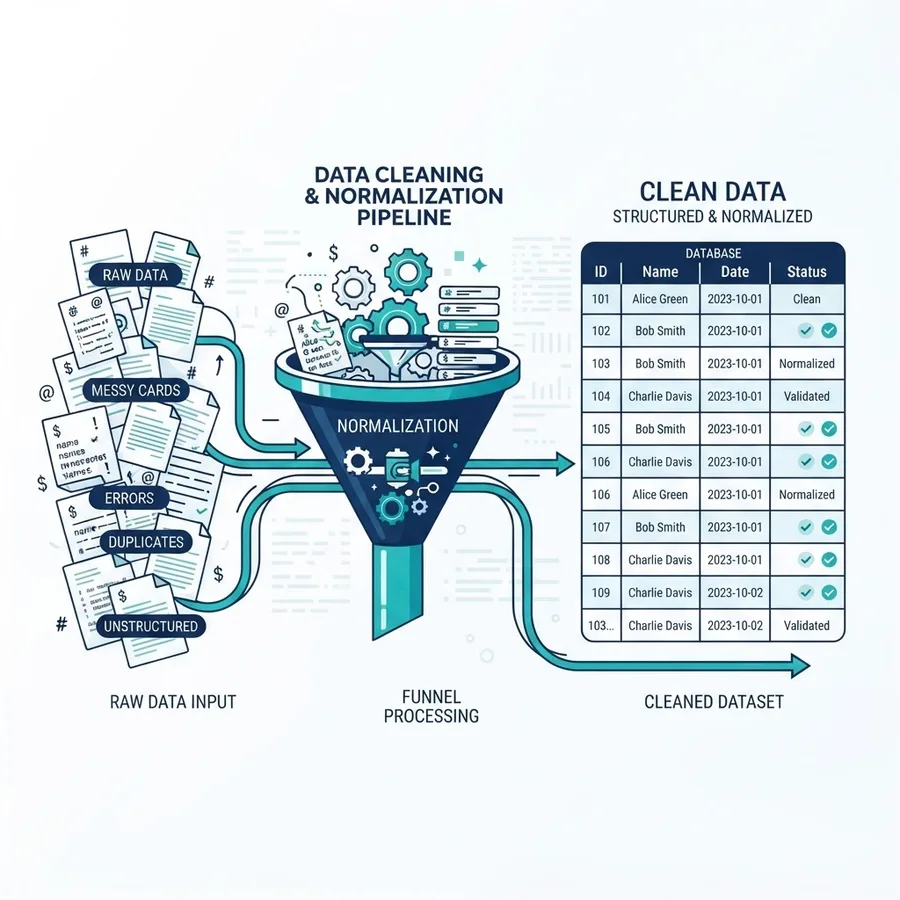
Strip everything that carries no signal before you classify anything. In real CRM data, roughly a third of title fields contain noise: certifications, regions, business units, and personal branding.
- Lowercase the string and remove punctuation, emoji, and pipe-separated fragments.
- Delete credential suffixes (MBA, PMP, CISSP, CPA).
- Strip geography and business unit qualifiers (EMEA, APAC, Retail Division) into separate fields — do not discard them, they inform context later.
- Expand abbreviations to canonical forms: "SVP" becomes senior vice president, "IT Ops" becomes information technology operations.
- Translate non-English titles into a canonical English equivalent before matching.
The output should be one clean phrase per record. Everything downstream depends on this step being boring and consistent.
Step 2: Extract Function Independently of Seniority
Parse the normalized title into two separate fields. Function answers "what domain?" and seniority answers "how senior?" Combining them early is the single most common modeling mistake, because it forces you to maintain a combinatorial explosion of rules instead of two small ones.
Useful function buckets for technology targeting:
- IT and infrastructure — CIO, VP IT, Head of Infrastructure, Director of Cloud
- Engineering and product — CTO, VP Engineering, Head of Platform
- Security and risk — CISO, VP Information Security, Head of GRC
- Data and analytics — CDO, VP Data, Head of Business Intelligence
- Marketing and growth — CMO, VP Demand Generation, Head of MarTech
- Operations and finance — COO, CFO, VP Business Operations
Step 3: Assign Technology Categories to the Function
Only now do you attach categories. Assign them with an explicit relationship type — owner, influencer, or approver — because the message you send differs sharply between the three. An owner wants implementation detail; an approver wants risk and cost framing.
Step 4: Validate Against Closed-Won Data
This is the step nearly everyone skips, and it is the only one that proves the model works. Pull the titles of the people who actually signed or championed your last 100 closed-won deals, run them through your mapping, and measure how often the predicted category matched the product they bought. Anything below 70 percent accuracy means your function rules need refinement, not your outreach copy.
The Core Mapping Table
Use this as a starting baseline, then adjust for your industry. The "Common Mismatch" column lists the error we see most often in client CRM data.
| Executive Title | Primary Function | Owns These Technology Categories | Common Mismatch |
|---|---|---|---|
| CIO / VP of IT | IT and infrastructure | Cloud infrastructure, ERP, networking, endpoint management, IT service management | Targeted for developer tools they do not evaluate |
| CTO / VP Engineering | Engineering and product | Developer platforms, APIs, observability, CI/CD, architecture tooling | Targeted for internal IT procurement |
| CISO / VP Security | Security and risk | Identity, SIEM, endpoint detection, compliance, cloud security posture | Confused with CIO in companies under 500 staff |
| CDO / VP Data | Data and analytics | Data warehouses, ETL, BI platforms, governance, machine learning tooling | Targeted for generic IT infrastructure |
| CMO / VP Marketing | Marketing and growth | CRM, marketing automation, CDP, analytics, content and SEO platforms | Targeted for core infrastructure decisions |
| COO / VP Operations | Operations | Workflow automation, RPA, field service, supply chain systems | Treated as a technical buyer |
| CFO | Finance | Finance systems, procurement, spend management, and final budget approval | Ignored entirely on large deals |
Resolving the Hardest Cases
CIO vs CTO
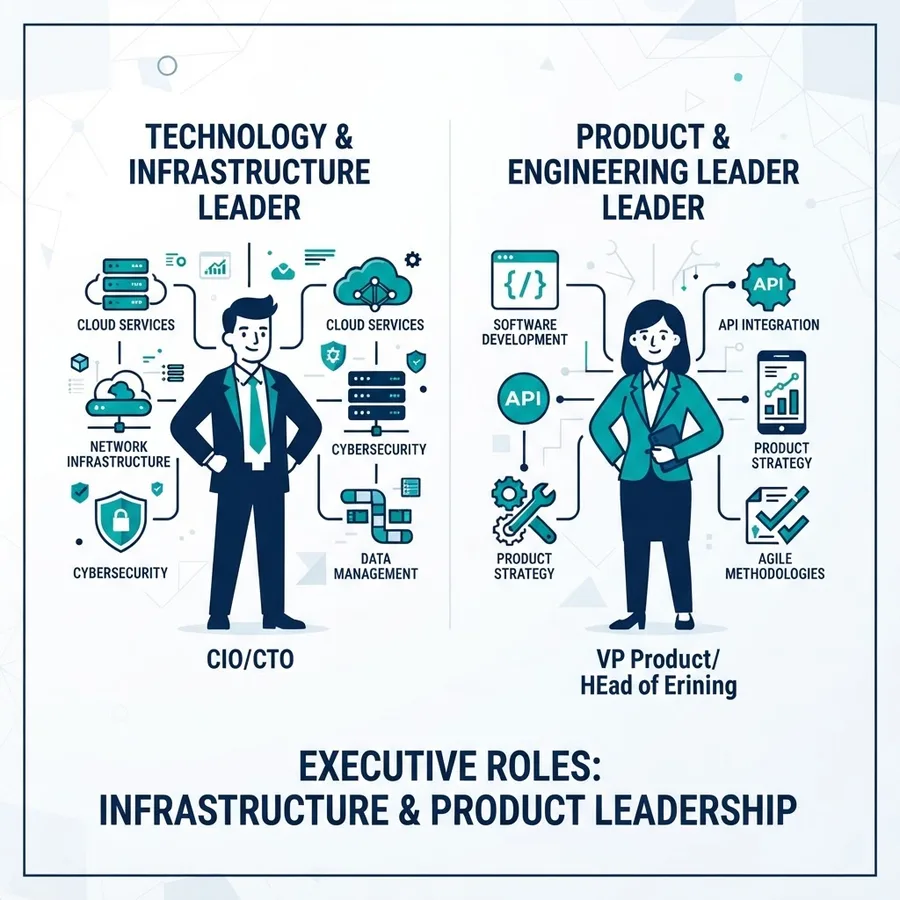
The reliable rule: CIOs buy technology the business runs on; CTOs build technology the business sells. In companies under roughly 500 employees the roles frequently merge, so treat both as candidates for infrastructure categories and let engagement data break the tie. In enterprises above 5,000 employees, keep them strictly separated — sending developer-platform messaging to an enterprise CIO wastes a high-value contact.
CISO Reporting Lines
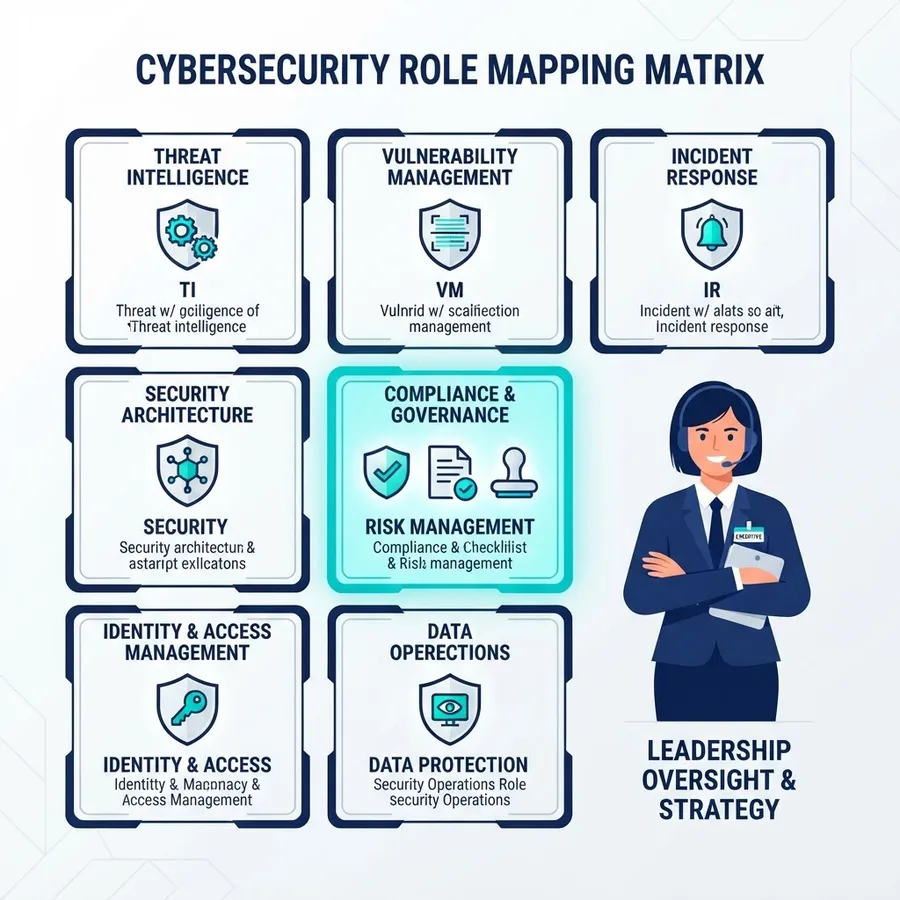
Security mapping depends on who the CISO reports to. A CISO reporting to the CIO usually influences rather than approves infrastructure-adjacent security spend. A CISO reporting to the CEO or board typically holds an independent budget for identity, detection, and compliance tooling. Capture the reporting line as a field, because it changes the relationship type from influencer to owner.
Marketing Technology Ownership
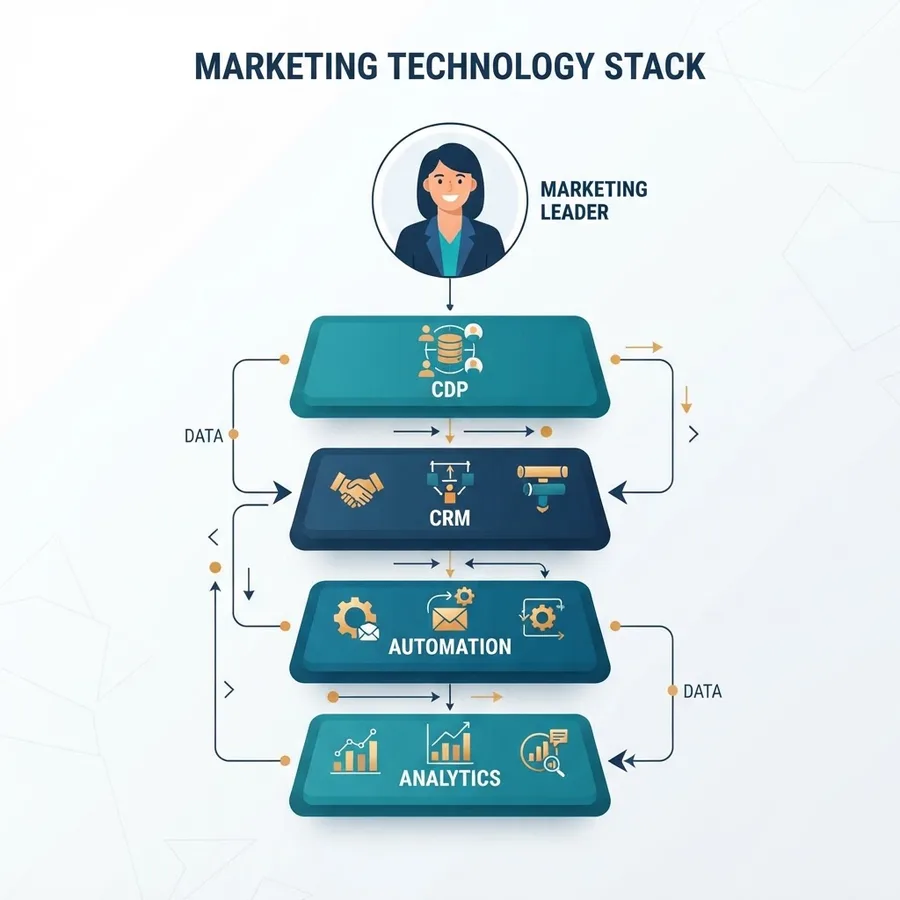
Marketing now controls a large and independent technology budget, and the MarTech landscape has grown past 14,000 catalogued tools — a scale that makes precise category mapping essential rather than optional. A CMO owns CRM and automation categories directly, but rarely owns the underlying data warehouse. Map "Head of Marketing Operations" and "MarTech Manager" as the true evaluation owners; they run the shortlists that CMOs approve. Teams building this layer of targeting into campaigns often pair it with structured digital marketing services so the segmentation actually reaches production.
Turning the Mapping Into Working Segments
A mapping table has no value until it drives a system. Implement it in this order:
- Store function, seniority, and category as separate structured fields in your CRM — never as a single free-text label.
- Add a confidence score to every mapping so low-confidence records route to manual review instead of automated sequences.
- Layer company context — headcount band, industry, and technographic signals — on top of the base mapping.
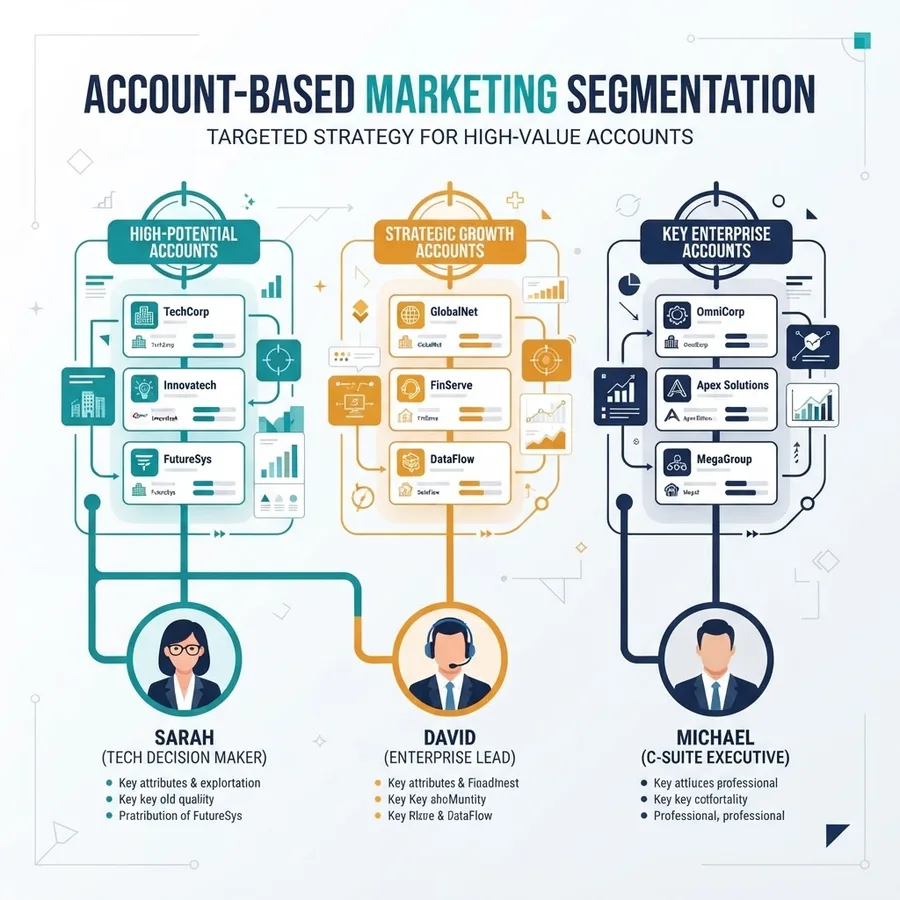
- Build segments from function plus category plus relationship type, not from title strings.
- Re-score quarterly, since roughly one in five senior technology contacts changes role or scope each year.
For a deeper technical treatment of enrichment pipelines and structured audience data, the engineering write-ups at WebPeak cover the tooling side of this workflow.
Key Takeaways
- Title mapping requires three variables: function, seniority, and company context. Modeling any one alone produces unreliable segments.
- Gartner reports typical B2B buying groups contain six to ten decision makers, so a single-title targeting strategy is structurally incomplete.
- Normalize title strings before classification; noise in raw CRM title fields is the leading cause of misclassification.
- Assign relationship types — owner, influencer, approver — because messaging differs materially between them.
- CIOs buy technology the business runs on; CTOs build technology the business sells.
- Validate mappings against closed-won deals and target at least 70 percent predicted-category accuracy before scaling spend.
- Re-score mappings quarterly to absorb role changes and title inflation.
Frequently Asked Questions (FAQ)
How do I know which executive actually approves a technology purchase?
Look for budget ownership rather than title seniority. The approver is usually the executive whose cost center absorbs the spend. For purchases above typical departmental thresholds, expect finance co-approval. Confirm by asking directly during discovery instead of inferring authority from the title string alone.
What is the difference between a CIO and a CTO for technology targeting?
A CIO owns internal systems the company operates on: cloud infrastructure, ERP, networking, and endpoint management. A CTO owns technology the company builds and sells: developer platforms, APIs, and architecture. In companies under 500 employees the roles often overlap, so target both and let engagement decide.
Should I map director-level titles or only C-suite executives?
Map both. Directors and heads of function typically run vendor evaluations and build shortlists, while C-suite executives approve. Excluding director level removes the people who do the actual technical assessment. Tag them as owners or influencers and send them implementation detail rather than executive summaries.
How often should executive title mappings be updated?
Re-score quarterly at minimum. Senior technology roles change scope frequently, companies reorganize, and new technology categories emerge continuously. A quarterly refresh cycle catches most drift. Also refresh immediately after any acquisition or leadership change at a target account, since ownership shifts fast.
Can title-to-category mapping be automated reliably?
Yes, for normalization and function extraction, which are rule-based and highly consistent. Category assignment benefits from automation plus a confidence score, with low-confidence records routed to human review. Fully automated mapping without validation against closed-won deals tends to drift and quietly degrade campaign performance.
What accuracy should I expect from a good mapping model?
A well-tuned mapping should predict the correct technology category for at least 70 percent of validated closed-won contacts. Above 85 percent is strong. Below 60 percent usually signals a normalization problem rather than a classification problem, so fix the title cleanup step first.