
A practical, experience-based guide to search engine optimization services: what they include, what they cost, how to measure ROI, and how to choose the right SEO partner.
Search Engine Optimization Services
Most businesses do not buy search engine optimization services because they want rankings. They buy them because revenue is flat, paid ad costs keep climbing, and they can see competitors sitting above them on the page. The problem is that "SEO services" is one of the most loosely defined products in digital marketing. Two agencies can quote the same price and deliver completely different work.
This guide breaks down what search engine optimization services actually include in practice, how deliverables differ by tier, what realistic timelines look like, and how to audit a provider before you sign. It is written from the perspective of teams who have run these engagements, not from a sales brochure.

Quick Answer: Search engine optimization services are professional efforts that improve a website's visibility in organic search results. They typically cover technical SEO, keyword research, on-page optimization, content strategy, link building, local SEO, and analytics reporting. Most engagements are monthly retainers and show measurable traction within three to six months.
What Search Engine Optimization Services Actually Include
Search engine optimization is the practice of improving a website so search engines can crawl, understand, and rank its pages for queries that matter to the business. A service engagement packages that practice into recurring, accountable work.
A complete engagement contains six working parts:
- Technical SEO — crawlability, indexation, site speed, structured data, and mobile rendering.
- Keyword and intent research — mapping real queries to the pages that should answer them.
- On-page optimization — titles, headings, internal links, and content depth.
- Content production — new pages built to satisfy uncovered demand.
- Off-page authority — earned links, digital PR, and brand mentions.
- Measurement — tracking, attribution, and reporting tied to business outcomes.
If a proposal is missing two or more of these, it is not a full SEO service. It is a single tactic being sold as a strategy.

Technical SEO: The Foundation Nobody Sees
Technical SEO makes a site legible to search engines. It is unglamorous and it is where the fastest wins usually hide.
A proper technical audit checks:
- Indexation — how many pages are indexed versus how many should be, and why the gap exists.
- Core Web Vitals — Largest Contentful Paint, Interaction to Next Paint, and Cumulative Layout Shift.
- Crawl waste — faceted URLs, parameters, and duplicates burning crawl budget.
- Structured data — Article, Product, FAQ, LocalBusiness, and Breadcrumb schema.
- Internal link architecture — whether important pages are more than three clicks from the homepage.
According to Google, sites should aim for a Largest Contentful Paint of 2.5 seconds or less for a good user experience. Google research has also shown that as page load time increases from one second to three seconds, the probability of a mobile visitor bouncing rises by 32 percent. Speed is not only a ranking signal; it is a conversion signal.
In practice, most sites older than three years carry accumulated technical debt: orphaned pages, redirect chains, and legacy templates that block rendering. Fixing these often produces visible movement before a single new article is published.

Keyword Research and Search Intent Mapping
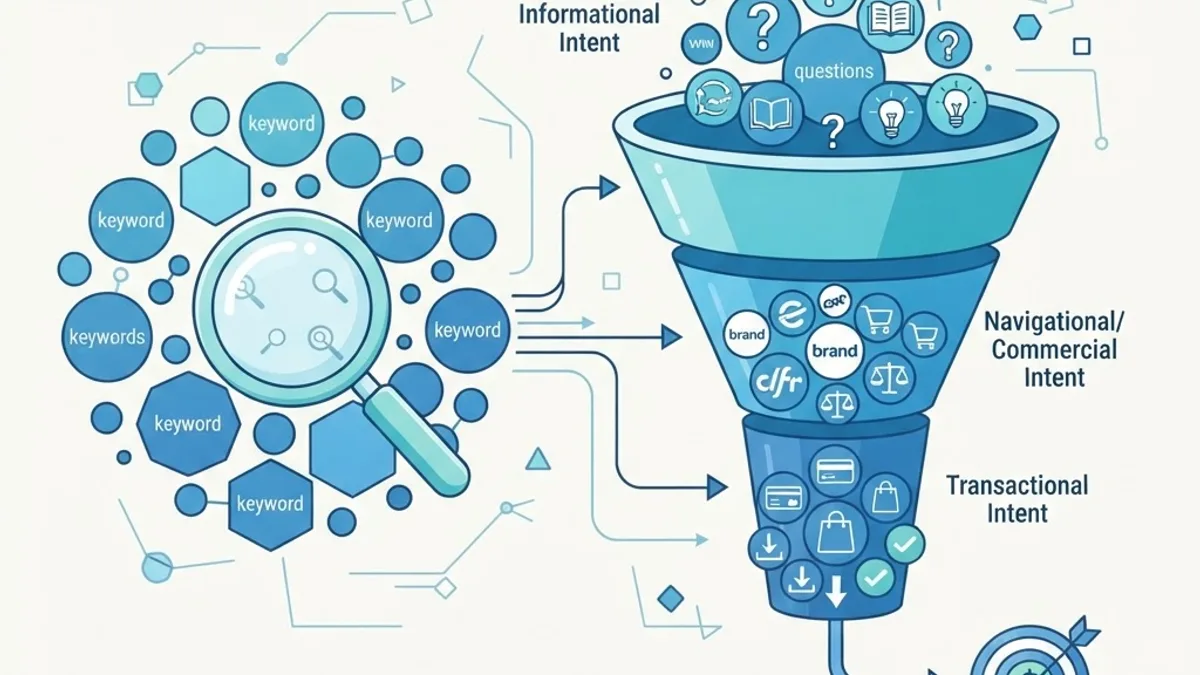
Keyword research fails when it stops at search volume. The stronger approach is intent mapping: grouping queries by what the searcher actually wants, then assigning each group to a single page type.
Four intent categories cover almost every query:
- Informational — "what is technical SEO" → blog or guide.
- Commercial — "best SEO agency for SaaS" → comparison page.
- Transactional — "hire SEO consultant" → service or pricing page.
- Navigational — brand-specific searches → homepage or product page.
Assigning two pages to the same intent creates cannibalization, where your own URLs compete and both underperform. A good service delivers a keyword-to-URL map that makes ownership explicit and flags overlaps before content is written.
A useful rule from real campaigns: a mid-sized site rarely needs a thousand keywords. It needs forty to eighty well-mapped clusters that cover the buying journey end to end.
On-Page Optimization and Content Depth
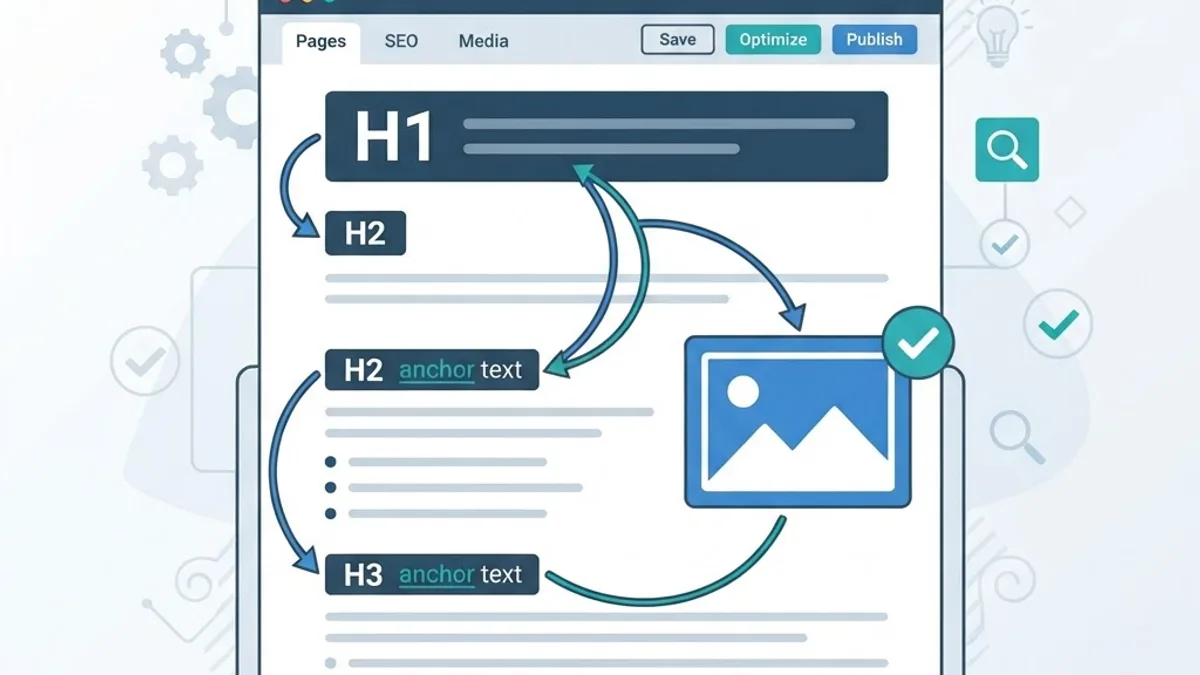
On-page optimization aligns each page with the intent it targets. That means one clear H1, descriptive H2 and H3 headings that mirror real subquestions, a title tag under roughly 60 characters, and a meta description that earns the click.
What separates ranking content from ignored content is coverage. If eight of the ten results for a query answer a specific subquestion and your page skips it, you are visibly incomplete. Content depth is not word count — it is question coverage.
Internal linking is the most underused on-page lever. Every new page should receive contextual links from at least two existing relevant pages, using descriptive anchor text. Teams that pair on-page work with structured content writing support tend to publish more consistently, and consistency compounds faster than any single optimization.
Local SEO Services for Location-Based Businesses
Local SEO targets geographically qualified searches and the Google map pack. It is a distinct discipline with its own ranking factors: proximity, relevance, and prominence.
Core local deliverables:
- A fully completed Google Business Profile with categories, services, hours, and photos.
- Consistent NAP (name, address, phone) data across major directories.
- Location-specific landing pages with genuinely unique content, not templated copies.
- An active review generation and response process.
- LocalBusiness schema markup on relevant pages.
Google reports that 76 percent of people who search for something nearby on their smartphone visit a related business within a day. For service-area businesses, local optimization frequently produces higher return than national keyword campaigns, because the traffic is closer to purchase.

Link Building and Authority Development
Off-page SEO builds the external signals that indicate your site deserves to rank. Links remain a primary trust signal, but the quality bar has risen sharply.
Methods that hold up over time:
- Digital PR — original data, surveys, or commentary that journalists cite.
- Resource link building — earning placement on genuinely curated industry lists.
- Guest contributions — expert-authored pieces on publications with real editorial standards.
- Unlinked mention reclamation — converting brand mentions into links.
- Broken link replacement — offering your resource where a dead one is referenced.
Avoid link networks, bulk directory packages, and any provider selling a fixed number of links per month at a suspiciously low price. Google's link spam policies treat manipulative link schemes as violations, and recovery from a manual action costs far more than the links ever did.

SEO Service Tiers Compared
Pricing varies widely, but deliverables cluster into recognizable tiers. Use this as a benchmark when comparing proposals.
| Service Element | Basic Tier | Growth Tier | Enterprise Tier |
|---|---|---|---|
| Technical audit | One-time | Quarterly | Continuous monitoring |
| Keyword clusters covered | 10 to 20 | 40 to 80 | 200 plus |
| Content produced monthly | 1 to 2 pages | 4 to 8 pages | 12 plus pages |
| Link acquisition | Minimal | Active outreach | Digital PR program |
| Local SEO included | Basic profile setup | Full local program | Multi-location management |
| Custom reporting dashboard | No | Yes | Yes |
| Dedicated strategist | No | Yes | Yes plus team |
| Typical time to traction | 6 to 9 months | 3 to 6 months | 3 to 4 months |
The pattern is consistent: cheaper tiers are not smaller versions of expensive ones, they are slower ones. Less content and fewer links mean a longer runway to results.
Measuring ROI: The Metrics That Matter
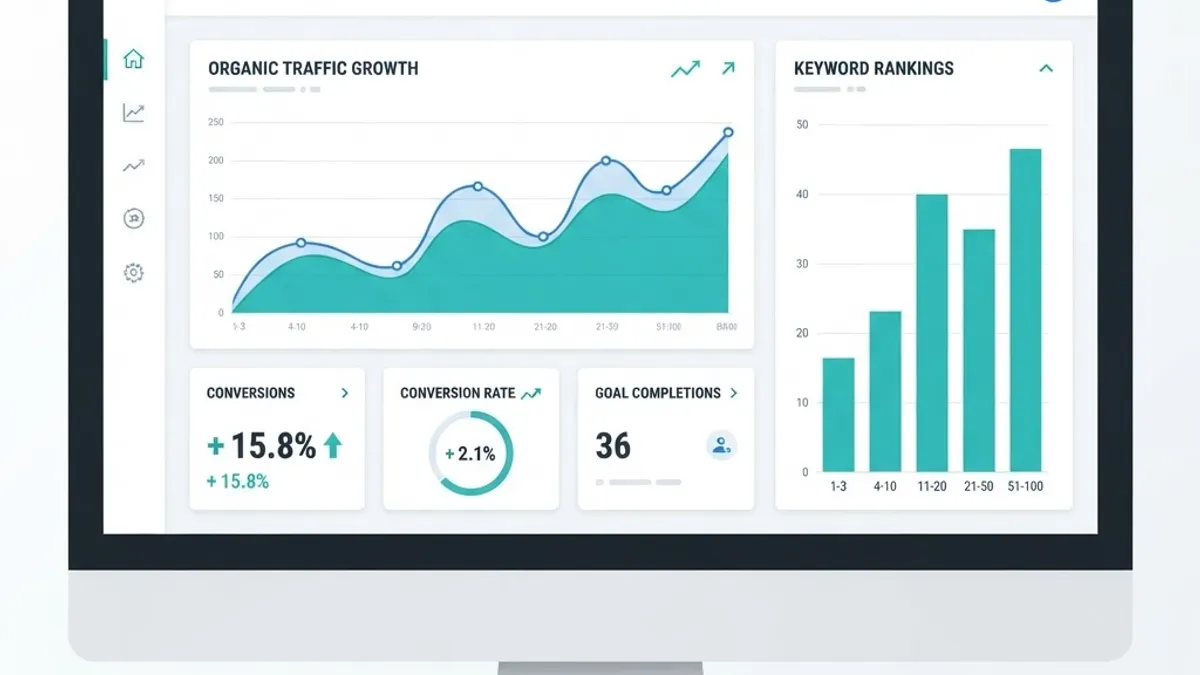
Rankings alone are a vanity metric. Personalization and location mean a single keyword position tells you very little.
Track these instead:
- Organic sessions to money pages — traffic to pages that convert, not blog traffic in aggregate.
- Assisted conversions — organic often initiates journeys that close through other channels.
- Share of voice — your visibility across a tracked keyword set versus competitors.
- Indexed page ratio — published pages versus indexed pages, a health indicator.
- Cost per organic acquisition — retainer divided by organic conversions, compared against paid CPA.
A credible reporting package shows month-over-month movement, states what was shipped, and explains what did not work. Reports that only show green arrows are marketing, not measurement. Agencies such as ZoneTechify and WebPeak that publish their working process make this level of accountability easier to verify before you commit.
How to Choose an SEO Provider
Ask these five questions before signing anything:
- What will you ship in the first 90 days? Vague answers signal vague work.
- Who writes the content, and are they briefed by a strategist? Unbriefed writing wastes budget.
- How do you acquire links? If they cannot describe the outreach process, walk away.
- What happens to the work if we leave? Content, accounts, and documentation should be yours.
- Can you show a campaign that underperformed and what you changed? Honest answers indicate real experience.
Guaranteed number-one rankings are the clearest red flag. Google explicitly states that no one can guarantee a top position in organic results.
Key Takeaways
- Complete SEO services cover six areas: technical, keyword research, on-page, content, off-page, and measurement.
- Google recommends a Largest Contentful Paint of 2.5 seconds or less; bounce probability rises 32 percent as load time goes from one to three seconds.
- 76 percent of nearby smartphone searches lead to a business visit within 24 hours, making local SEO high-return for service businesses.
- Intent mapping prevents keyword cannibalization better than volume-first research.
- Most engagements show meaningful traction in three to six months, not weeks.
- Measure organic conversions and cost per acquisition, not raw rankings.
Frequently Asked Questions (FAQ)
How much do search engine optimization services cost?
Most professional SEO retainers range from roughly 500 to 5,000 US dollars per month depending on scope, competition, and market size. Enterprise programs run higher. Pricing usually reflects content volume and link outreach effort. Extremely cheap packages typically cut content quality or use risky link tactics.
How long does it take for SEO services to work?
Expect early technical and on-page gains within four to eight weeks, and meaningful traffic growth in three to six months. Competitive industries and new domains take longer, often nine to twelve months. Timeline depends on site authority, publishing pace, and how much technical debt must be cleared first.
Is SEO better than paid ads?
They solve different problems. Paid ads deliver immediate traffic but stop the moment spending stops. SEO compounds and keeps producing after the work is done, but requires patience. Most growing businesses run both, using paid search to validate keywords before investing in organic content.
Can I do SEO myself instead of hiring a service?
Yes for basics like titles, meta descriptions, internal links, and a Google Business Profile. Technical audits, competitive content strategy, and link acquisition require tools and experience that take years to build. Many teams handle on-page work internally and outsource technical and off-page execution.
What are the signs of a bad SEO agency?
Watch for guaranteed rankings, secret methods they will not explain, reports showing only traffic with no conversion data, bulk link packages, and no named strategist on the account. Refusing to hand over content or analytics access after the contract ends is another serious warning sign.
Do SEO services still matter with AI search results?
Yes. AI overviews and chat assistants pull from indexed, well-structured web content. Clear headings, factual accuracy, schema markup, and strong topical authority increase the chance of being cited. The underlying work has not changed much; the surfaces where visibility appears have expanded.