
A graphic design major opens doors to branding, UX/UI, motion graphics, and marketing careers. Explore 12 real jobs, current salaries, and how to land them.
What Jobs Can You Get with a Graphic Design Major
If you are finishing a graphic design degree, or deciding whether to start one, the most practical question you can ask is what the job market actually pays for. The honest answer is encouraging: a graphic design major is no longer a single-track path to a print studio. It now feeds into branding, digital product design, motion graphics, marketing, and packaging teams across nearly every industry. Having hired and worked alongside designers at agencies and in-house teams through projects at ZoneTechify, we have watched the same degree launch wildly different careers depending on how graduates position their portfolios. This guide breaks down the specific jobs available, what each pays, and how to choose between them.
Quick Answer: A graphic design major qualifies you for jobs such as brand identity designer, UX/UI designer, marketing designer, motion graphics designer, packaging designer, web designer, art director, and production artist. Entry salaries typically range from $45,000 to $65,000 in the US, with UX and product design roles paying the most at every experience level.
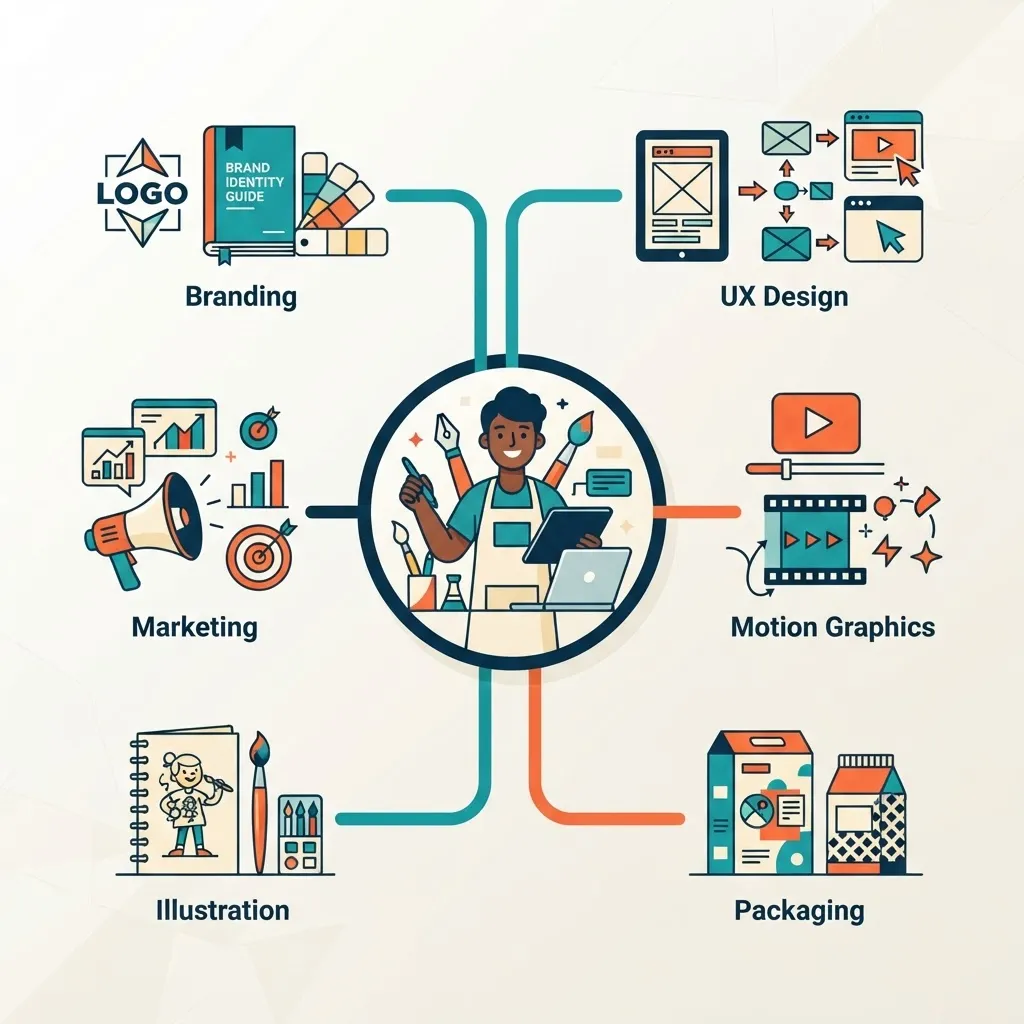
What a Graphic Design Major Actually Prepares You For
Graphic design is the practice of communicating ideas visually through typography, color, imagery, and layout. That definition matters because it explains why the degree transfers so widely: every company that communicates with customers needs someone who can do this well. A typical program teaches typography, composition, color theory, design software, and critique-based problem solving. Those fundamentals are the same ones used by UX designers building apps, motion designers animating ads, and brand designers shaping company identities.
The demand data supports this breadth. According to the U.S. Bureau of Labor Statistics, graphic designers held about 270,000 jobs in the United States, with a median annual wage of $61,300 as of May 2024. More telling is where adjacent roles are heading: the BLS projects employment for web developers and digital designers to grow 8% through 2033, roughly double the average for all occupations, driven by mobile commerce and digital product growth. In other words, the fastest-growing opportunities sit at the digital end of the design spectrum.
In-House and Agency Design Jobs
These are the classic destinations for design graduates, and they remain reliable first jobs because they build portfolio depth quickly.
Brand Identity Designer
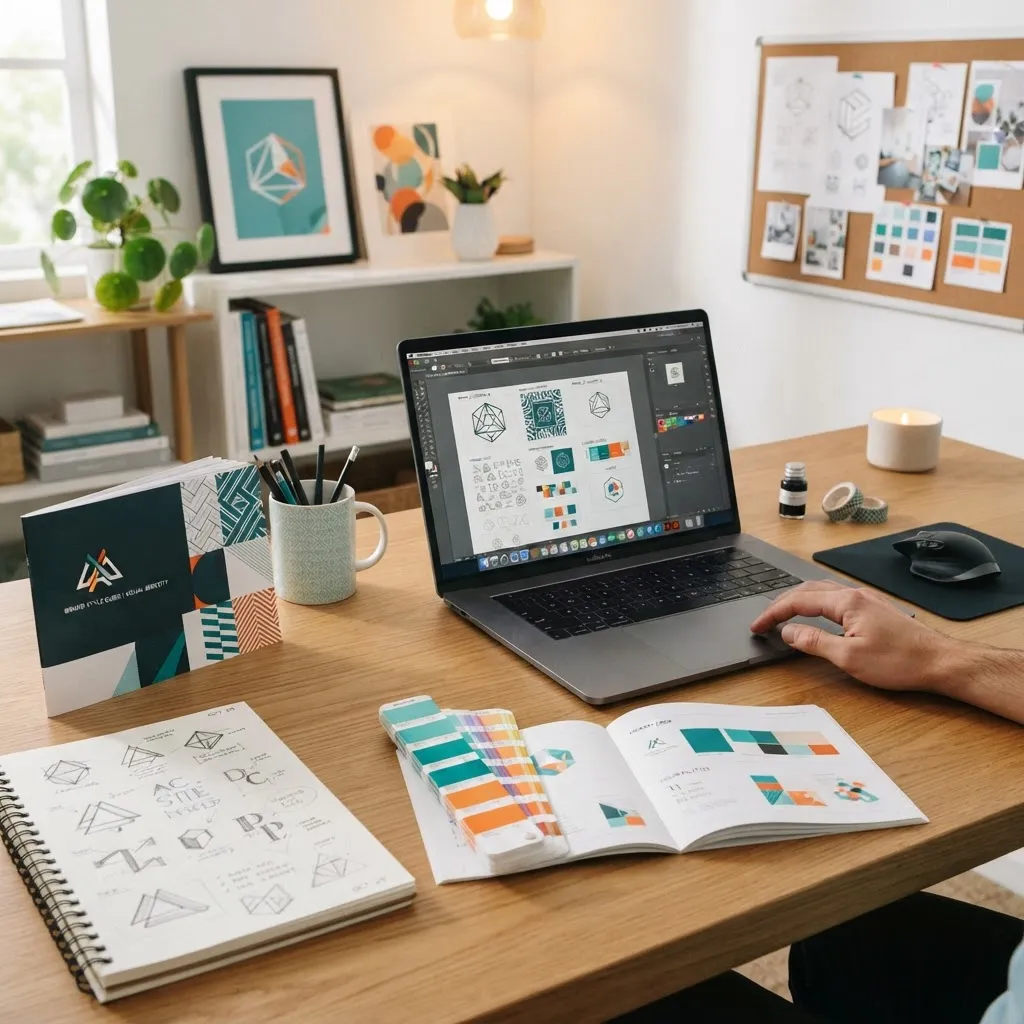
Brand identity designers create logos, color systems, typography standards, and brand guidelines that keep a company visually consistent everywhere it appears. This role rewards strong typography and systems thinking more than any other design job. Entry-level positions typically pay $48,000 to $60,000, and senior brand designers at agencies commonly reach $85,000 to $110,000. To break in, build two or three complete identity case studies, including the strategy behind each decision, not just the final logo.
Marketing and Visual Designer
Marketing designers produce the day-to-day assets that drive revenue: social media graphics, email campaigns, landing pages, ad creatives, and sales collateral. This is the most common first job for design graduates because nearly every company with a marketing team hires for it. The work is fast-paced and metrics-driven; designers who learn to read click-through and conversion data get promoted fastest. Expect $45,000 to $58,000 at entry level, rising to $70,000 or more with campaign ownership.
Packaging Designer
Packaging designers work at the intersection of graphic design and physical production, designing labels, boxes, and retail displays for consumer products. It is one of the few design fields where print production knowledge, including dielines, substrates, and CMYK proofing, remains a genuine competitive advantage. Consumer goods companies and dedicated packaging agencies hire steadily, with salaries from $50,000 at entry to $90,000 for senior specialists.
Production Artist
Production artists prepare final files for print and digital output, handling resizing, versioning, and technical quality control. It is often dismissed as unglamorous, but it teaches file discipline and production standards that make you dramatically more employable, and it is a proven stepping stone into art direction. Typical pay runs $42,000 to $58,000.
Digital and Tech-Focused Design Jobs
The highest salaries and strongest growth for graphic design majors are in digital product roles. The transition requires learning interaction design principles, but the visual foundation from a design degree gives you a real head start.
UX/UI Designer
UX/UI designers design the interfaces and user flows of websites and applications, combining visual design with usability research. This is the single most lucrative pivot available to a graphic design major: entry-level UX roles commonly start at $60,000 to $75,000, and mid-level designers earn $95,000 to $130,000. The gap between graphic design training and UX employment is usually one skill set: learning Figma deeply, understanding user research basics, and producing two case studies that show your process from problem to tested solution.

Web Designer
Web designers focus on the visual layer of websites: layout systems, responsive behavior, and design-to-development handoff. The role pairs naturally with a graphic design degree, and designers who pick up basic HTML and CSS become significantly more valuable to development teams. Agencies like WebPeak consistently see demand for designers who can bridge visuals and implementation. Salaries typically run $50,000 to $80,000 depending on technical depth.
Product Designer
Product designers own end-to-end design for a specific digital product, from research through interface polish, usually inside SaaS or tech companies. It is effectively a senior evolution of the UX role with broader ownership, and compensation reflects that: $90,000 to $150,000 is common at established tech companies. Most product designers start as UX/UI or visual designers first, so treat this as a three-to-five-year target rather than a first job.
Motion, Media, and Emerging Design Jobs
Motion Graphics Designer
Motion designers animate logos, explainer videos, social content, and title sequences using tools like After Effects. Demand has risen sharply because video dominates social platforms, and static-only designers increasingly lose briefs to those who can animate. The BLS projects 4% growth for special effects artists and animators through 2033, and motion specialists routinely command freelance rates of $50 to $100 per hour. Entry salaries range from $52,000 to $68,000.

Art Director and Creative Director
Art directors lead the visual execution of campaigns and manage designer teams; creative directors set the overall creative vision. These are destination roles reached after five to ten years, not entry points, but they define the ceiling of the field. Art directors earned a median of $111,040 in May 2024 according to BLS data, and creative directors at large agencies frequently exceed $150,000.
Illustrator and Environmental Graphic Designer
Two specialist paths deserve mention. Illustrators sell a distinctive personal style to editorial, publishing, and brand clients, usually freelance. Environmental graphic designers create wayfinding systems, signage, and branded physical spaces for airports, museums, and campuses, a niche with limited competition and steady institutional demand.
Graphic Design Job Salaries Compared
Here is how the major career paths compare on pay, growth, and freelance viability, based on BLS data and current US market ranges:

| Job Title | Entry Salary (US) | Mid-Career Salary | Growth Outlook | Freelance Friendly |
|---|---|---|---|---|
| Marketing Designer | $45,000-$58,000 | $65,000-$80,000 | Steady | Yes |
| Brand Identity Designer | $48,000-$60,000 | $75,000-$110,000 | Steady | Yes |
| Packaging Designer | $50,000-$62,000 | $70,000-$90,000 | Steady | Moderate |
| Web Designer | $50,000-$65,000 | $70,000-$95,000 | Strong (8%) | Yes |
| Motion Graphics Designer | $52,000-$68,000 | $75,000-$105,000 | Strong | Yes |
| UX/UI Designer | $60,000-$75,000 | $95,000-$130,000 | Strong | Moderate |
| Product Designer | $70,000-$90,000 | $110,000-$150,000 | Strong | No |
| Art Director | N/A (senior role) | $100,000-$140,000 | Steady | Moderate |
Freelance vs. Full-Time: Which Path Should You Take First?
Roughly one in five graphic designers is self-employed, per BLS estimates, so freelancing is a legitimate career structure rather than a fallback. Based on what we have seen work for early-career designers, here is a practical sequence:
- Take a full-time role for your first two to three years. You will absorb production standards, client communication, and feedback processes that are hard to learn alone.
- Freelance on the side in one niche. Specialists, such as a designer known for SaaS landing pages or food packaging, charge two to three times more than generalists.
- Go independent only when referrals exceed your capacity. That signal means your reputation, not a job board, is generating demand.
- Price by project value, not hours. A logo that anchors a funded startup is worth more than the hours it took.

The Skills That Actually Get Graphic Design Majors Hired
After reviewing hundreds of applicant portfolios across agency and in-house teams, the pattern is consistent: hiring decisions come down to a small set of demonstrable skills rather than the degree itself.
- Typography fluency. It is the fastest signal of training. Weak type kills otherwise strong portfolios.
- Figma proficiency. It has become the default tool for digital design collaboration across the industry.
- One motion skill. Even basic After Effects animation separates you from most graduates.
- Case-study writing. Employers hire problem solvers; show the brief, constraints, and reasoning, not just finals.
- Business literacy. Designers who connect work to conversion, retention, or brand recall get promoted first.
Professional teams, including the design group behind ZoneTechify's graphic design services, evaluate candidates on exactly these criteria, so building your portfolio around them directly mirrors how real hiring works.
Key Takeaways
- A graphic design major leads to at least a dozen distinct careers, spanning brand, marketing, packaging, web, UX/UI, motion, and art direction.
- US graphic designers earned a median of $61,300 in May 2024, while art directors earned a median of $111,040, per the Bureau of Labor Statistics.
- The strongest growth is digital: web and digital design roles are projected to grow 8% through 2033, roughly double the all-occupation average.
- UX/UI design is the highest-paying pivot for design graduates, with entry salaries of $60,000 to $75,000.
- About 20% of graphic designers are self-employed, making freelancing a viable structure, ideally after two to three years of full-time experience.
- Typography skill, Figma proficiency, motion basics, and clear case studies matter more to hiring managers than the diploma itself.
Frequently Asked Questions
Is a graphic design major worth it in 2026?
Yes, if you build digital skills alongside it. The degree provides typography and visual fundamentals that transfer into UX, motion, and brand roles. Graduates who add Figma proficiency and strong case studies consistently find work, while those relying on the diploma alone struggle. Treat the major as a foundation, not a finished product.
What is the highest-paying job for a graphic design major?
Product design and UX/UI design pay the most, with mid-career salaries of $95,000 to $150,000 at US tech companies. Among traditional paths, creative direction is the ceiling, often exceeding $150,000 at large agencies. Both require several years of experience, so plan them as five-to-ten-year targets.
Can I get a UX job with a graphic design degree?
Yes, and it is one of the most common transitions in the industry. Your visual training already covers interface aesthetics. Close the gap by learning Figma deeply, studying usability principles, and producing two UX case studies that document your research, wireframes, testing, and final designs. Many employers prefer this background over bootcamp-only candidates.
Do graphic designers still get jobs with AI tools everywhere?
Yes. AI tools accelerate production tasks like resizing and drafting, but employers still hire humans for brand strategy, taste, client judgment, and accountability. Designers who use AI to work faster are replacing designers who refuse to, not being replaced themselves. Demonstrating AI-assisted workflows in your portfolio is now an advantage.
How do I get my first graphic design job with no experience?
Build three to five complete portfolio projects, real or self-initiated, each presented as a case study with the problem, process, and outcome. Then target junior marketing designer or production artist roles, which hire the most graduates. Freelance projects for local businesses count as real experience and often convert into references.
Should I freelance right after graduating with a design degree?
Usually not. Two to three years in a full-time role teaches production standards, feedback handling, and client communication that are difficult to learn alone. Freelance on the side during that period, build a niche and referral network, and go independent once inbound demand exceeds your spare capacity.
Whichever path you choose, the pattern among successful design graduates is the same: pick a specialization early, build proof through case studies, and keep one foot in the digital side of the field where growth is strongest. For more career and industry guides, visit ZoneTechify and WebPeak.