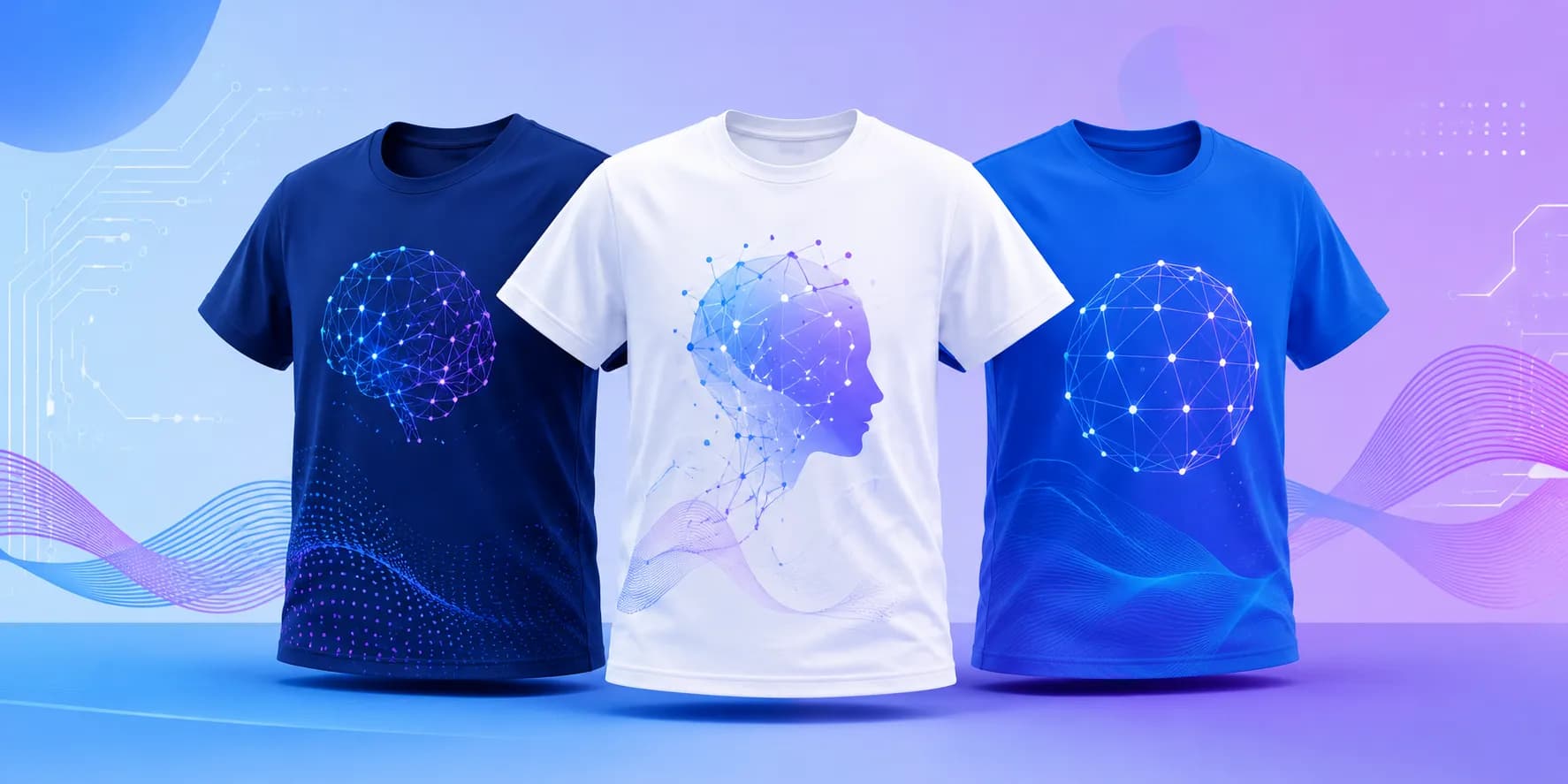
Artificial intelligence t-shirts explained: how AI design workflows, print quality, licensing rules, niche research and real margins decide what actually sells.
Artificial Intelligence T-Shirts
Artificial intelligence t-shirts moved from novelty to a real product category in under three years. Some shoppers searching the term want tees printed with AI-generated artwork. Others want shirts that celebrate machine learning culture: neural network diagrams, prompt humor, robot mascots. A much smaller group is looking for genuinely smart apparel with embedded sensors. This guide covers all three, but it focuses on what most readers need, which is how to design, print, price and legally sell AI-generated tees that people wear more than once. The advice below comes from print testing and store operations, not from theory.
Quick Answer: Artificial intelligence t-shirts are apparel featuring AI-generated artwork or AI-themed graphics, produced mostly through print on demand. Success depends far less on which image generator you use and far more on print-ready file preparation, a defined niche, honest licensing checks, and margins that survive platform fees and returns.
What Are Artificial Intelligence T-Shirts?
The phrase covers three distinct products, and confusing them wastes money.
AI-generated t-shirts are shirts whose graphic was created with a text-to-image model such as Midjourney, Stable Diffusion, DALL-E or Firefly. The AI touches the artwork only. The garment itself is ordinary cotton.
AI-themed t-shirts are shirts about artificial intelligence as a subject. The design may be drawn entirely by a human. These sell well to developers, data scientists, students and conference attendees who want in-group signaling.
Smart or connected t-shirts contain conductive thread, biometric sensors or NFC tags and pair with an app. These are engineering products with certification, washing and battery constraints, and they are not something a print on demand seller can produce.
Defining your product in one of these three buckets before you design anything determines your supplier, your price point and your customer.
Why AI T-Shirts Took Over Print on Demand
The economics changed, not the taste. Print on demand removed inventory risk, and generative models removed the illustration bottleneck. A seller who once paid a freelance illustrator per design can now test dozens of visual directions in an afternoon.
Two numbers give useful context. The global custom t-shirt printing market was valued in the low billions of dollars and is widely projected to grow at roughly a 9 to 11 percent compound annual rate through the end of this decade, driven mainly by on-demand personalization rather than bulk orders. Separately, the US Copyright Office confirmed in its March 2023 guidance that works produced purely by a machine without human authorship are not registrable, which reshaped how serious sellers document their design process.
The result is a market with a very low barrier to entry and a very high failure rate. Volume of designs is no longer a competitive advantage because everyone has it.
How AI Actually Fits Into the Design Workflow
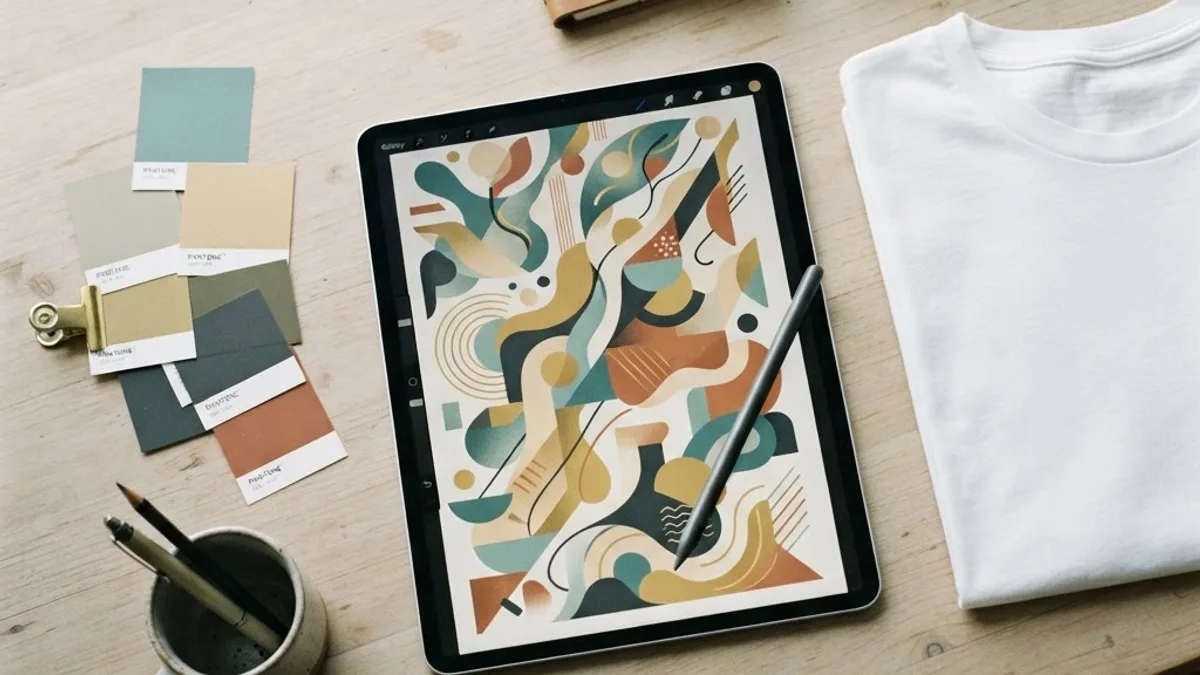
AI is a drafting tool, not a finishing tool. Every design that sells consistently goes through human editing after generation. Here is the sequence that holds up in production.
- Start from a customer sentence, not a prompt. Write the phrase your buyer would say out loud, for example "I want a shirt that tells people I train models for a living without being obvious." Design against that sentence.
- Generate wide, then narrow hard. Produce 20 to 40 rough concepts across different styles, then keep no more than three. Judge them at thumbnail size, because that is how they appear in search results.
- Rebuild the winner as vector art. Trace or redraw the chosen concept in Illustrator, Affinity Designer or Inkscape. This removes model artifacts, fixes broken symmetry and gives you infinite scaling.
- Reduce the palette. Cut the design to two to four flat colors. Fewer colors print cleaner, cost less on screen print and survive washing better.
- Export to spec. Transparent PNG at 300 DPI, sized to the real print area, usually about 12 by 16 inches for a front chest placement.
That human editing pass is also your strongest legal and quality argument, because it creates documented creative input.
Print Quality: Where Most AI Designs Fail
Raw generator output is almost never print ready. Screens are backlit and forgiving. Fabric is not.
Run every file against this checklist before uploading:
- Resolution: 300 DPI at final print size. A 1024 by 1024 image is only about 3.4 inches wide at 300 DPI, so upscaling is mandatory.
- Background: true transparency, not white. A white box on a black shirt is the single most common beginner mistake.
- Soft edges: direct to garment printing dithers soft gradients into visible noise. Harden the edges.
- Thin lines: anything under about 1.5 points can break up or disappear in the print.
- Contrast against garment color: test the same artwork on white, heather grey and black. Dark navy detail vanishes on a black tee.
- Text: never trust AI-rendered lettering. Retype all text with a real licensed font.
Order one physical sample of your best seller before scaling. A sample costs a few dollars and prevents a refund pattern that damages your seller rating permanently.
Choose a Niche Instead of Chasing Prompts
Generic AI art competes with everyone. Specific identity competes with almost no one.
Strong niches for this category include machine learning engineers, prompt engineering hobbyists, AI ethics and policy readers, robotics students, data analysts, and conference or hackathon merchandise. Each has vocabulary, in-jokes and visual references that outsiders cannot fake convincingly.
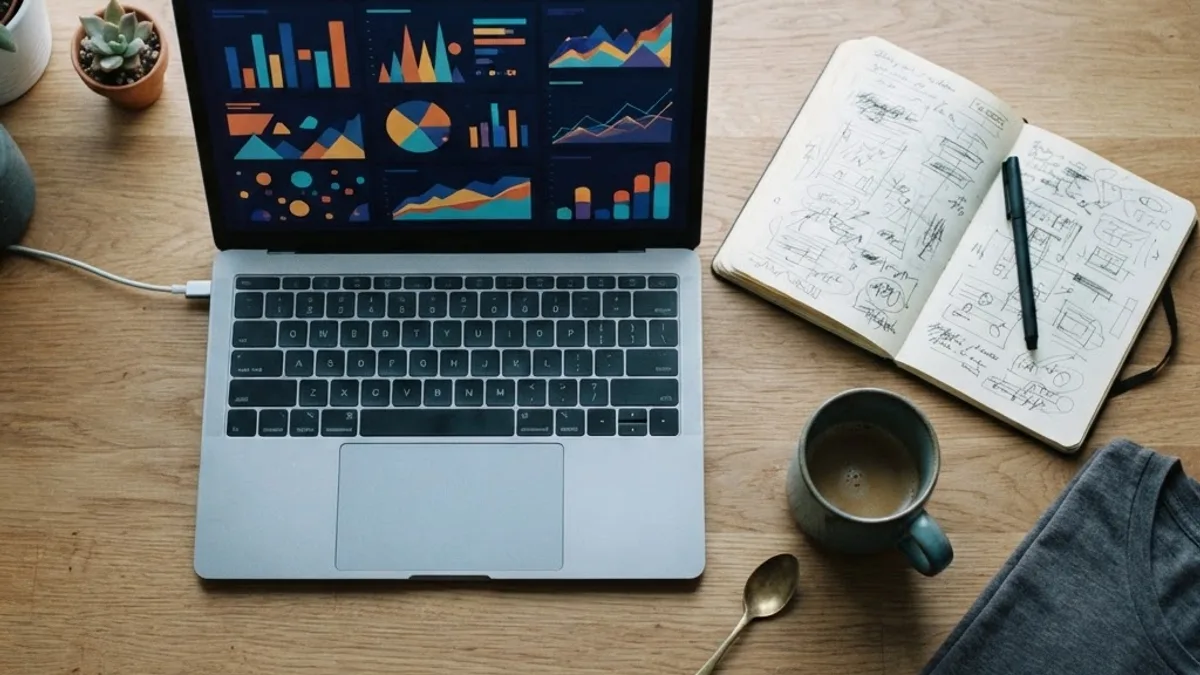
Validate demand before you print. Check search volume and seasonality with Google Trends, read the top 50 reviews of competing listings to find what buyers complain about, and search relevant subreddits and Discord servers for phrases people repeat. Complaints about fit, print cracking and washed-out color are your product roadmap.
Teams that treat this like a data project rather than an art project win more often, which is the same discipline behind well-run AI automation services in any other vertical.
AI Design Versus Traditional Design for Apparel
| Factor | AI-Generated Design | Traditional Human Design |
|---|---|---|
| Cost per concept | Very low, near zero after subscription | Moderate to high per illustration |
| Time to first draft | Minutes | Days |
| Style consistency across a range | Weak without heavy editing | Strong |
| Print-ready out of the box | Rarely | Usually |
| Copyright registration in the US | Only with documented human authorship | Yes |
| Best use | Rapid concept testing and volume | Flagship designs and brand identity |
The practical answer is a hybrid. Use AI to explore, use human craft to finish. Studios that build brand systems this way, including agencies like WEBPEAK Agency, keep the model in the ideation stage and keep the final asset under human control.
Copyright, Licensing and Trademark Reality
This is where sellers get suspended, so treat it as a checklist rather than an afterthought.
Ownership. Under current US guidance, purely machine-generated output has no human author and cannot be registered. Your registrable material is the human contribution: the vector redraw, the composition, the typography, the arrangement. Keep your working files as evidence.
Platform terms. Commercial rights differ by tool. Midjourney grants broad commercial use to paid subscribers, Adobe Firefly is trained on licensed and public domain material and is positioned for commercial safety, and open Stable Diffusion checkpoints vary by individual license. Read the license of the specific model you use, not a summary.
Trademark. Never generate or print recognizable characters, band logos, brand marks, sports team identities or celebrity likenesses. Model training data makes these easy to produce accidentally, and takedowns are automated.
Fonts. Desktop font licenses often exclude merchandise resale. Verify commercial merchandising rights separately.
Disclosure. Stating that artwork is AI-assisted is increasingly expected by marketplaces and builds trust with buyers instead of eroding it.
Pricing and Margins That Actually Survive
Model the full cost before you set a price. A typical print on demand unit economics breakdown looks like this: blank garment and printing between 9 and 14 dollars, platform or marketplace fee between 5 and 15 percent, payment processing near 3 percent, advertising cost per acquisition between 4 and 12 dollars for cold traffic, and a returns or reprint allowance of 2 to 5 percent.
At a 26 dollar retail price with a 12 dollar fulfillment cost, a 10 percent fee and 8 dollars of paid acquisition, you are close to break-even. That is why most AI t-shirt stores quietly fail. The fixes are structural, not cosmetic: raise average order value with bundles, sell into organic or community traffic instead of cold ads, and price premium garment options such as heavyweight or organic cotton at 32 to 45 dollars where the margin is real.
Track contribution margin per design, not store revenue. Kill anything below your threshold after 100 sessions.
Mockups, Photography and Listing Pages
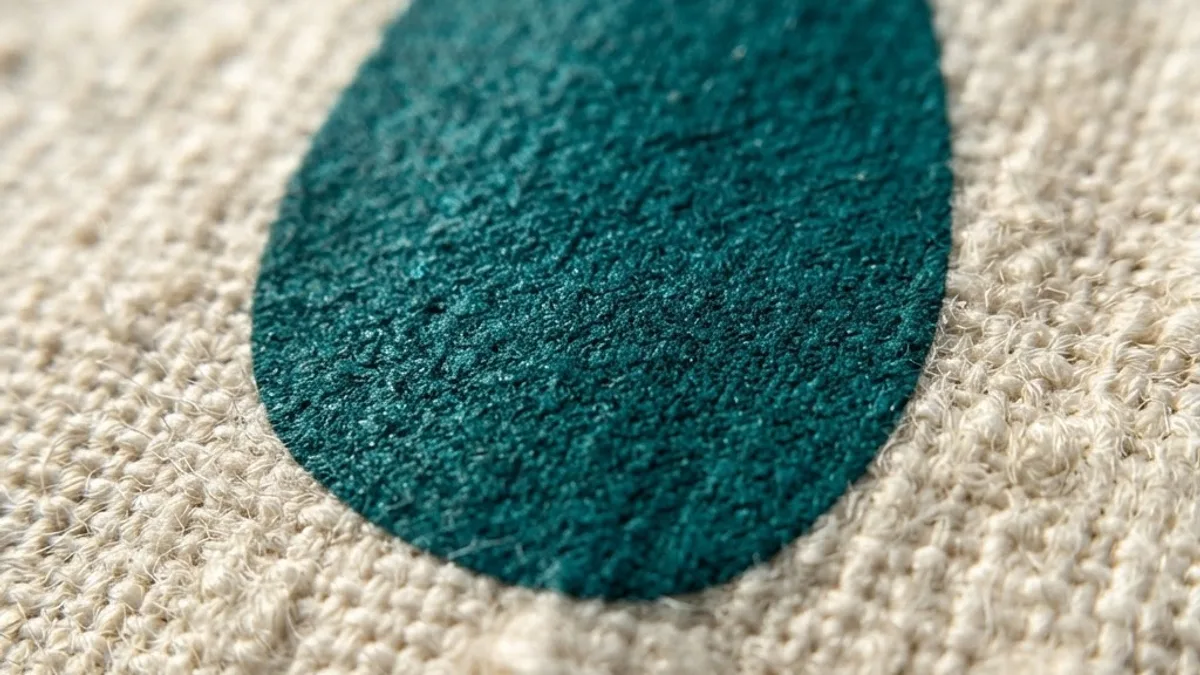
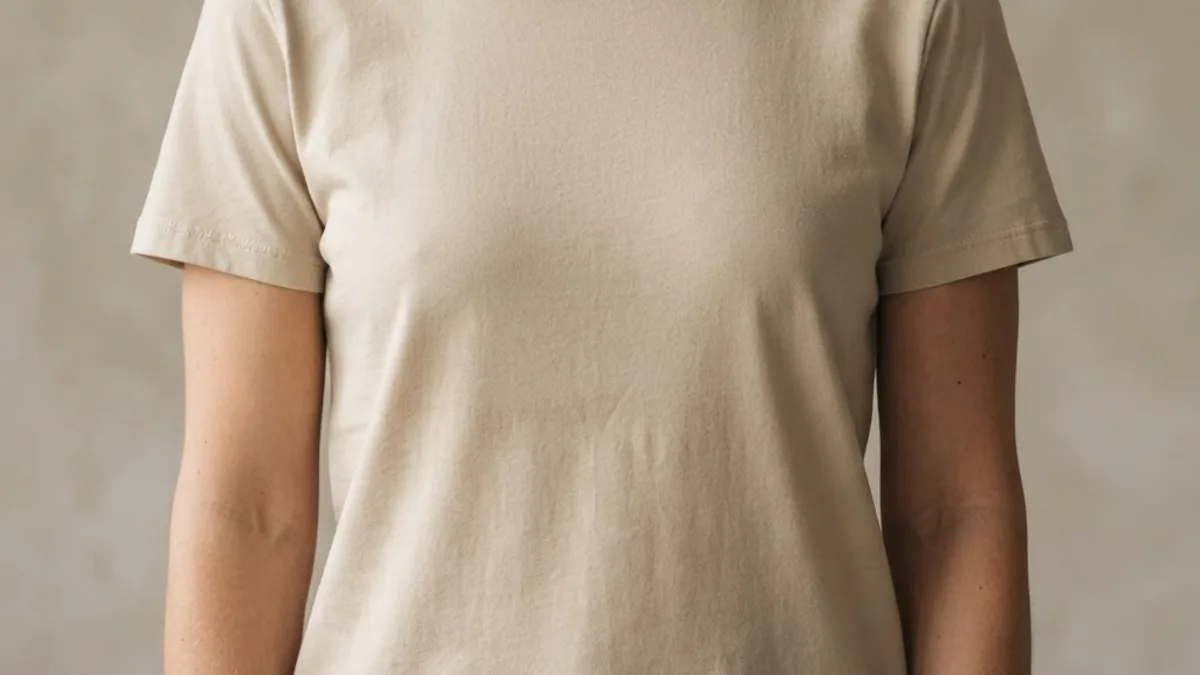
Buyers cannot feel the fabric, so the imagery is the product. Flat automated mockups convert worse than photographs of a real person wearing the shirt in natural light. Include at least one close-up of the actual print texture, one full garment shot, and a size reference. Write the description around fit, fabric weight in grams per square meter, shrinkage and care instructions, because those are the details returns are made of.
Building the Store and Fulfillment Stack
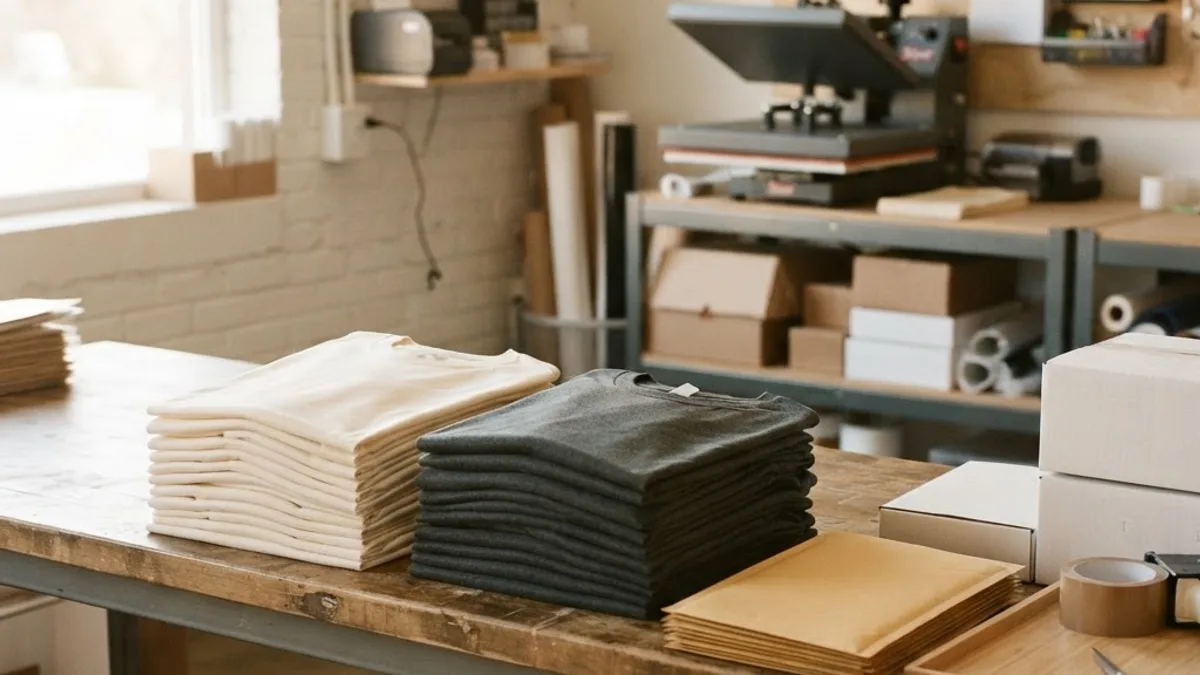
Keep the stack boring. Printful, Printify, Gelato and Cloudprinter all integrate with Shopify, WooCommerce or a custom storefront. Choose on print method, shipping origin and reprint policy rather than on catalog size. Direct to garment suits low volume and detailed art, screen print suits volume with flat colors, and direct to film handles synthetic blends well. For custom front ends and product configurators, teams such as ZoneTechify Team build the storefront and the automation layer together so design generation, mockup creation and listing publication stay one workflow instead of three manual steps.
Key Takeaways
- Artificial intelligence t-shirts split into AI-generated art, AI-themed graphics and sensor-based smart apparel. Pick one before designing.
- The US Copyright Office confirmed in March 2023 that purely machine-generated work is not registrable, so documented human editing protects you.
- Print files need 300 DPI at final size, transparent backgrounds, hardened edges and two to four flat colors.
- Custom t-shirt printing is projected to grow at roughly 9 to 11 percent annually, driven by personalization rather than bulk.
- Margin, not design volume, is the real constraint. Model fulfillment, fees, ads and returns before pricing.
Frequently Asked Questions (FAQ)
Can I sell t-shirts with AI-generated designs legally?
Yes, in most jurisdictions, provided your generator's license permits commercial use and your design does not reproduce trademarks, logos, characters or celebrity likenesses. Add meaningful human editing and keep your working files, since that human contribution is what gives you enforceable rights over the final artwork.
What resolution do AI images need for t-shirt printing?
You need 300 DPI at the final print size, which means roughly 3600 by 4800 pixels for a standard 12 by 16 inch front print. Most generators output far smaller files, so upscale with a dedicated tool or, better, rebuild the design as vector art before exporting.
Which AI tool is best for t-shirt designs?
Midjourney leads on style and composition, Adobe Firefly is the safest choice for commercial licensing because of its training data, and Stable Diffusion offers the most control for people who fine-tune models. None produce print-ready files directly, so the vector cleanup step matters more than the tool choice.
Do AI-generated t-shirts actually sell well?
They sell when they target a specific identity rather than showcasing generic AI art. Niche audiences such as machine learning engineers, robotics students and conference attendees convert far better. Undifferentiated abstract generator output competes with thousands of near-identical listings and rarely earns a profitable margin.
How much does it cost to start an AI t-shirt store?
Expect 100 to 400 dollars to start properly: a generator subscription, a domain, an ecommerce plan, and two to four physical samples. Print on demand removes inventory cost, so your real budget risk is customer acquisition rather than stock sitting in a warehouse.
Should I tell customers the design was made with AI?
Yes. Disclosure is increasingly expected by marketplaces and by buyers, and hiding it creates review and compliance risk. Framing it honestly, for example "AI-assisted concept, hand-finished by our designers," tends to increase trust and explains your pricing better than silence does.