
A transparent, expert breakdown of supply chain management software costs in 2026 — subscription pricing, implementation fees, hidden expenses, and real ROI benchmarks.
How Much Does Supply Chain Management Software Cost
Supply chain management (SCM) software pricing is one of the least transparent areas in enterprise technology. Vendors publish "Contact Sales" instead of numbers, quotes vary by 400% for the same feature set, and the license fee is rarely more than a third of what you actually pay in year one. After scoping, building, and integrating supply chain platforms for distributors, manufacturers, and 3PL operators, our team has seen the same pattern repeatedly: buyers budget for software and get invoiced for a project.
This guide gives you the real numbers — monthly ranges by company size, the cost lines vendors leave out of proposals, and a framework for calculating whether the spend pays for itself.

Quick Answer: Supply chain management software typically costs $100 to $500 per user per month for small businesses, $1,500 to $10,000 monthly for mid-market companies, and $100,000 to $500,000+ annually for enterprise suites. Implementation adds 1x to 3x the first-year license fee, making total year-one cost the number that matters.
What Is Supply Chain Management Software?
Supply chain management software is a platform that plans, executes, and monitors the movement of goods, information, and money from raw-material sourcing through final delivery. It usually bundles several functional modules — demand planning, inventory optimization, procurement, warehouse management (WMS), transportation management (TMS), and supplier collaboration — into a single data layer with shared master records.
The pricing consequence of that definition matters: SCM is modular, not monolithic. You are almost never buying "SCM software." You are buying three or four modules, and each one carries its own license line, its own implementation effort, and its own integration surface. This is why two companies of identical revenue can receive quotes of $40,000 and $260,000.
Supply Chain Software Cost by Company Size in 2026
Here are realistic total-cost-of-ownership ranges based on deals we have reviewed and vendor list pricing where published.
| Company Profile | Annual License / Subscription | Implementation (One-Time) | Realistic Year-One Total |
|---|---|---|---|
| Small business (5-25 users, 1 warehouse) | $6,000 - $30,000 | $3,000 - $20,000 | $9,000 - $50,000 |
| Lower mid-market (25-100 users, 2-4 sites) | $30,000 - $90,000 | $25,000 - $120,000 | $55,000 - $210,000 |
| Mid-market (100-500 users, multi-region) | $90,000 - $250,000 | $100,000 - $500,000 | $190,000 - $750,000 |
| Enterprise (500+ users, global network) | $250,000 - $1,500,000 | $500,000 - $5,000,000 | $750,000 - $6,500,000 |
| Custom-built platform (owned IP) | $12,000 - $60,000 hosting/maintenance | $60,000 - $400,000 build | $72,000 - $460,000 |
The most important column is the last one. Vendors sell against the first column; CFOs get surprised by the third.
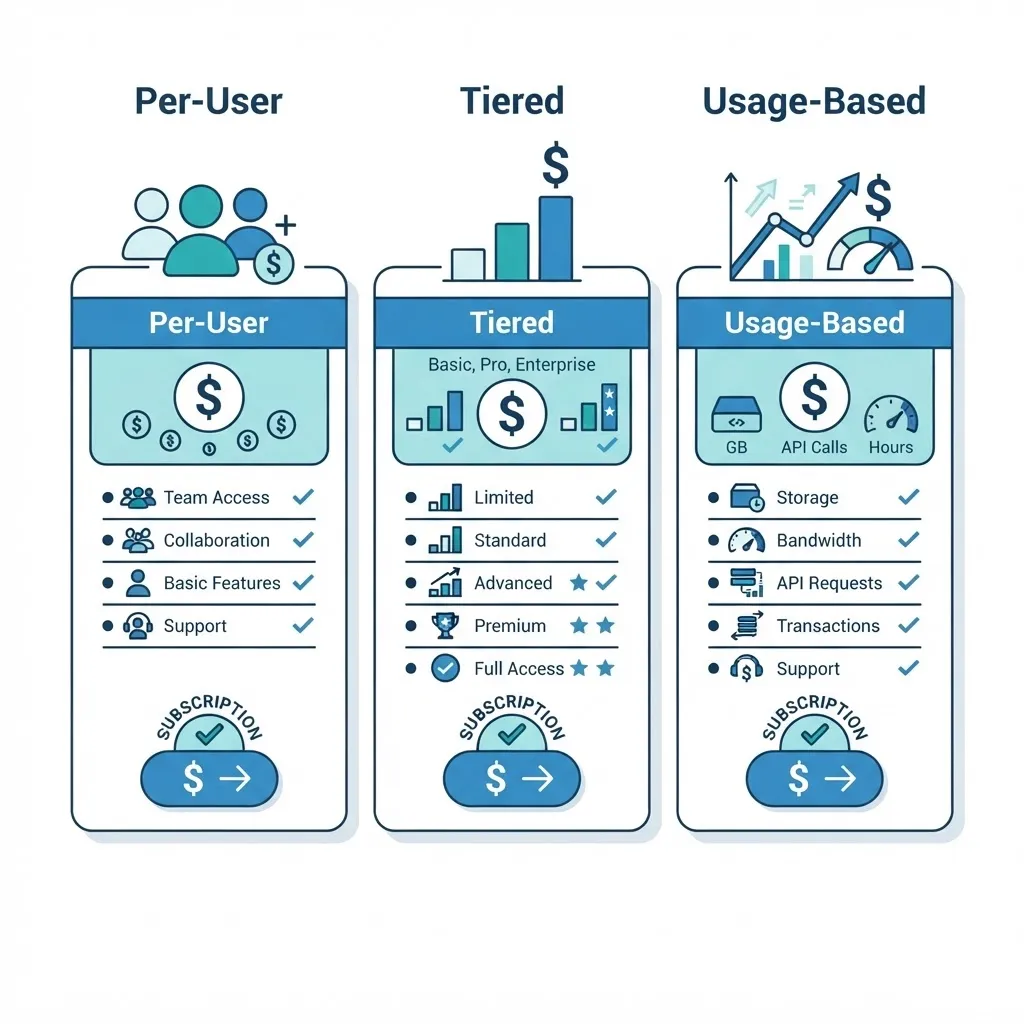
The Five Pricing Models You Will Encounter
Understanding the pricing model tells you where your bill will grow as the business grows.
- Per-user, per-month. The most common SaaS model, ranging from roughly $50 for light procurement tools to $500+ for full planning seats. Dangerous when warehouse staff, drivers, or seasonal workers need access — headcount spikes become cost spikes.
- Tiered feature bundles. Fixed monthly price per tier (for example $999, $2,499, $6,999). Predictable, but the feature you need is almost always one tier above your budget.
- Transaction or volume-based. Priced per order, shipment, SKU, or API call. Common in TMS and EDI tools. Excellent for seasonal businesses, punishing for high-volume low-margin operations.
- Percentage of freight or spend. Some TMS and freight-audit vendors charge 1% to 5% of managed spend. This can quietly become the largest line item in your entire tech stack.
- Perpetual license plus maintenance. Legacy on-premise model: a large upfront license (often $1,000 to $5,000 per seat) plus 18% to 22% annual maintenance. Still common in manufacturing.
Our practical rule: model every quote over three years, not one. A transaction-based tool that looks cheap at current volume often loses to a flat-tier competitor by year two if you are growing 30% annually.
What Drives the Price Up or Down
Six variables explain the majority of quote variance:
- Module count. Adding WMS or advanced demand planning to a procurement-only deployment routinely doubles license cost.
- Number of legal entities, warehouses, and currencies. Multi-entity configuration is billed as complexity, not features.
- Integration count. Each connection to an ERP, e-commerce platform, carrier API, or supplier portal adds real engineering hours.
- Data quality. Cleaning and migrating SKU, supplier, and location master data is the single most underestimated cost line we see.
- Forecasting and AI capability. Machine-learning demand forecasting is generally a premium tier, typically adding 20% to 40% to license cost.
- Contract length. Committing to 36 months instead of 12 commonly earns a 15% to 25% discount.
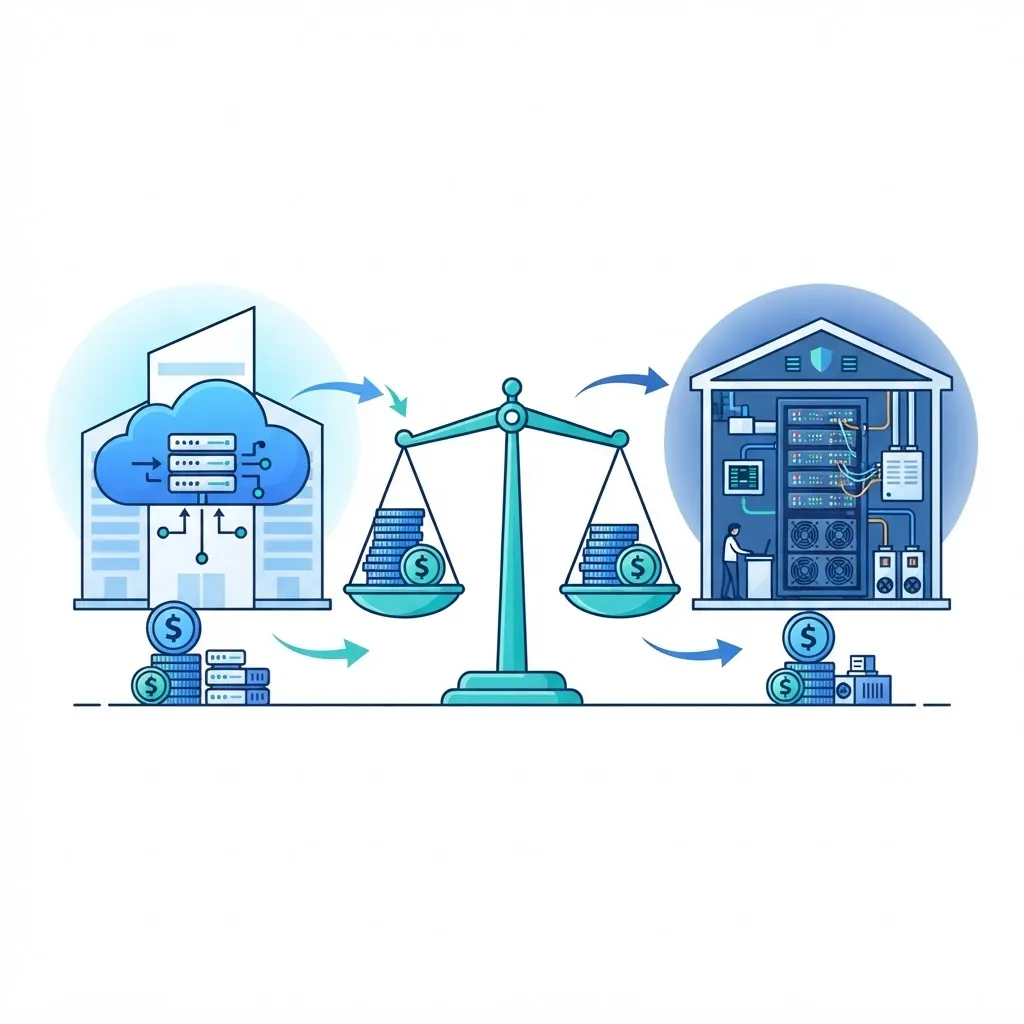
Cloud vs On-Premise: Which Actually Costs Less?
Cloud SCM software costs less upfront and more cumulatively; on-premise reverses that curve. Cloud deployment removes server hardware, database licensing, and infrastructure staffing, but you pay subscription fees indefinitely and lose leverage at every renewal. On-premise requires capital expenditure — hardware, DBA time, upgrade projects — but the license is an asset you own.
The crossover point in most models we have built sits between year five and year seven. Below that horizon, cloud wins on total cost. Above it, on-premise or a self-hosted custom platform can be cheaper — but only if you have internal IT capacity, which most mid-market companies do not.
A third path is increasingly common: a cloud-hosted custom application built on standard infrastructure. You own the code, avoid per-user penalties, and pay hosting rather than licensing. For companies whose competitive advantage lives in their logistics process, this is often the correct answer, and it is the model our web application development team most frequently recommends for operations that have outgrown generic tools.
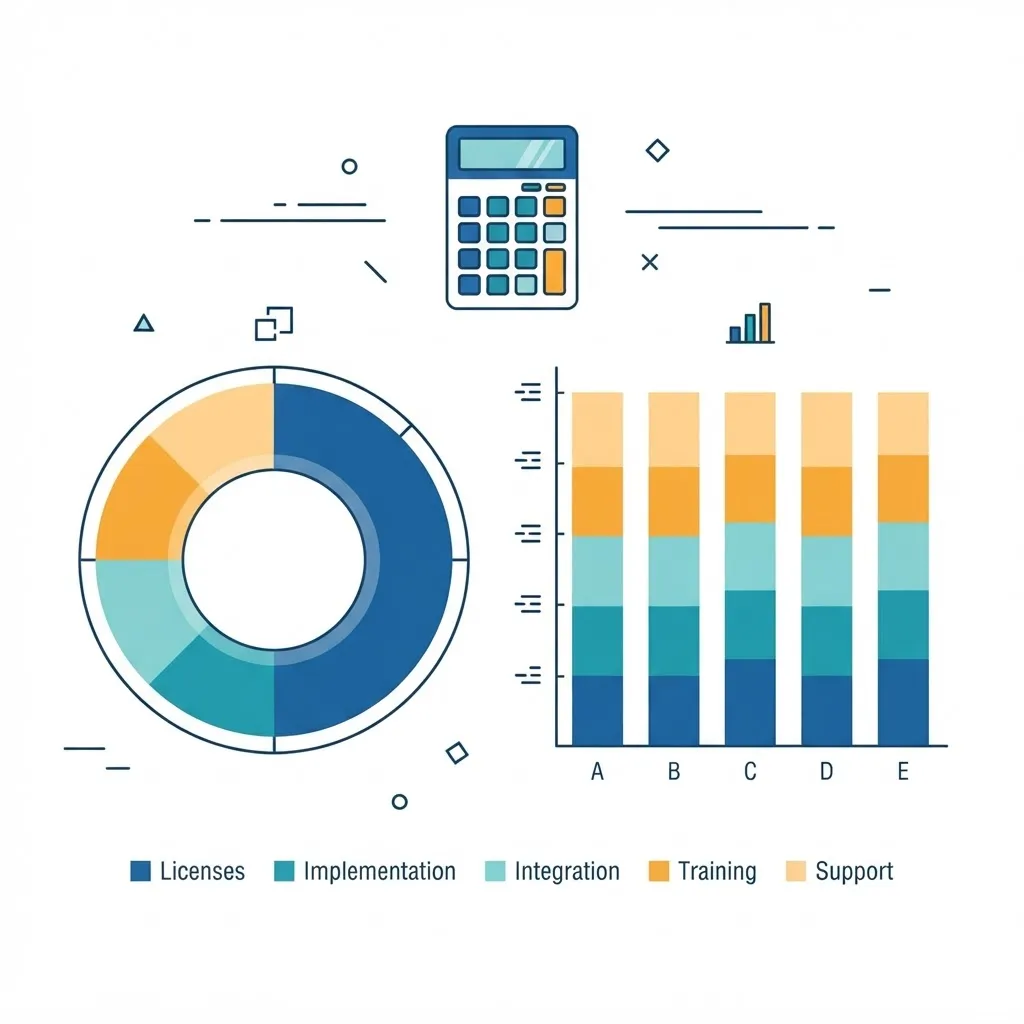
The Hidden Costs Vendors Leave Off the Quote
This is where budgets break. Plan for all seven of these lines explicitly.
1. Implementation and Configuration
Budget 1x to 3x your first-year license fee. Gartner research has long placed enterprise software implementation services at roughly one to three times license value, and SCM sits at the higher end because it touches physical operations.
2. Data Migration and Cleansing
Typically $5,000 to $75,000 depending on record volume and how many spreadsheets currently function as your system of record. Duplicate SKUs and inconsistent units of measure are the usual culprits.
3. Integrations
Expect $3,000 to $25,000 per non-standard integration. Pre-built connectors to major ERPs are cheaper; a 20-year-old on-premise system with no API is not.
4. Training and Change Management
Budget $500 to $2,000 per power user. Skipping this is the most expensive saving in enterprise software — an unused module still bills monthly.
5. Premium Support and SLAs
Standard support is included; guaranteed response times and a named account engineer typically add 15% to 25% of license cost.
6. Annual Price Escalation
Most SaaS contracts include a 3% to 8% yearly uplift. Cap it in writing before signing — it is one of the easiest concessions to win.
7. Internal Staff Time
A mid-market rollout consumes 200 to 800 internal hours. It never appears on an invoice and it is always real.

How to Calculate ROI Before You Sign
Justify the spend with operational math, not vendor marketing. Use four measurable levers:
- Inventory carrying cost reduction. Carrying cost typically runs 20% to 30% of inventory value annually. A 10% inventory reduction on $4 million of stock releases roughly $400,000 in working capital and saves $80,000 to $120,000 per year in carrying cost.
- Freight optimization. Consolidation, mode shifting, and rate shopping commonly cut freight spend 5% to 12%.
- Labor hours recovered. Automating manual purchase-order entry, tracking calls, and spreadsheet reconciliation often returns 15 to 40 hours per week across a mid-sized team.
- Stockout and expedite avoidance. Quantify lost margin from last year's stockouts and the premium paid on rush freight. This number is usually larger than expected and is the strongest single argument in a business case.
Add the four figures, divide by year-one total cost, and demand a payback period under 18 months. If the model cannot reach that without heroic assumptions, the software is not the bottleneck — the process is.

When Custom-Built Beats Off-The-Shelf
Buy standard software when your processes are standard. Build when they are not. Custom development makes financial sense in four situations:
- Per-user licensing has become the dominant cost because you need many light-touch users.
- Your differentiator is a workflow no vendor supports without heavy customization — and customization fees exceed a build.
- You need deep integration across several systems that no single vendor covers.
- You require data ownership and residency control that SaaS terms cannot guarantee.
A focused custom platform covering inventory visibility, supplier collaboration, and order orchestration typically runs $60,000 to $400,000 to build, then $12,000 to $60,000 annually to host and maintain. Against a $150,000-per-year enterprise subscription, the break-even often arrives in year two or three — and you keep the asset. Teams at ZoneTechify and WebPeak evaluate exactly this build-versus-buy math before writing a line of code.

Seven Ways to Reduce Your SCM Software Cost
- Phase the rollout. License one module, prove value, then expand with usage data as negotiating leverage.
- Buy at quarter or fiscal year end. Vendor discounting is measurably deeper against sales quotas.
- Negotiate the renewal terms upfront. Cap escalation and lock expansion-seat pricing in the original contract.
- Right-size seat types. Most vendors offer read-only or transactional seats at 30% to 60% less than full seats.
- Run implementation with a certified partner. Partner day rates are frequently 20% to 40% below vendor professional services.
- Clean your data before migration. Doing it internally costs staff time; paying a consultant to do it costs consultant rates.
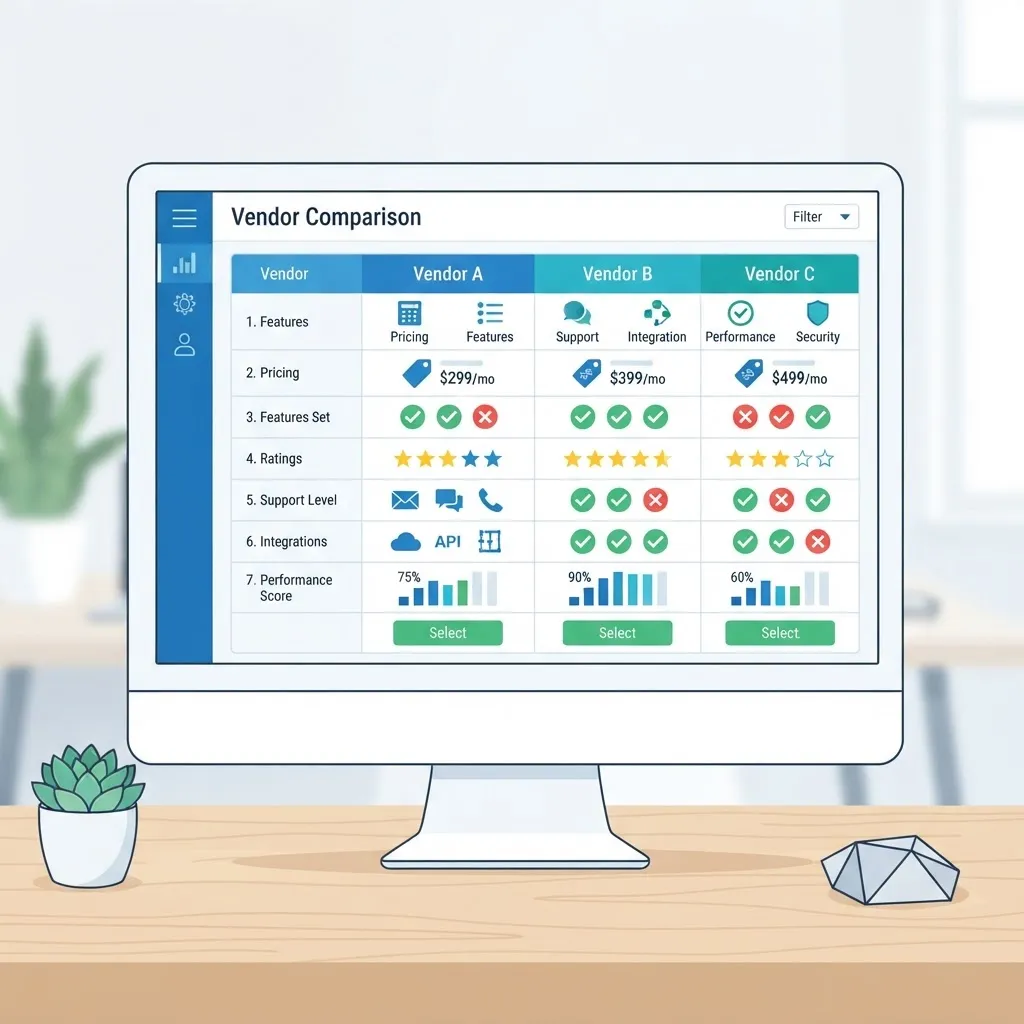
- Get three competitive quotes. Nothing moves price like a documented alternative.
Key Takeaways
- Small businesses realistically spend $9,000 to $50,000 in year one; mid-market companies spend $190,000 to $750,000.
- Implementation typically costs 1x to 3x the first-year license fee and is the largest source of budget overrun.
- Five pricing models dominate: per-user, tiered, transaction-based, percentage-of-spend, and perpetual license plus maintenance.
- Inventory carrying cost runs 20% to 30% of inventory value per year, making inventory reduction the strongest ROI lever.
- Cloud is cheaper below a five-to-seven-year horizon; on-premise or custom ownership can win beyond it.
- Always model three-year total cost of ownership, cap annual escalation contractually, and target payback inside 18 months.
Frequently Asked Questions (FAQ)
How much does supply chain management software cost per month?
Most small businesses pay $100 to $500 per user monthly, while mid-market companies spend $1,500 to $10,000 per month for a multi-module deployment. Enterprise suites commonly exceed $20,000 monthly. Always add implementation, integration, and training to get your true first-year monthly cost.
Is there free supply chain management software?
Yes, open-source options like Odoo Community and ERPNext offer free inventory and purchasing modules. However, you pay in hosting, configuration, and developer time — usually $10,000 to $50,000 to reach production readiness. Free licensing does not mean free ownership, especially without in-house technical staff.
Why do supply chain software vendors hide their pricing?
Pricing depends on modules, user counts, sites, transaction volume, and integration complexity, so a single published number would be misleading. Vendors also use discovery calls to qualify budget and tailor discounts. Requesting three competitive quotes is the fastest way to establish a fair market price.
How long does supply chain software implementation take?
A single-module small business rollout takes four to twelve weeks. Mid-market multi-module deployments run three to nine months, and global enterprise programs frequently take twelve to twenty-four months. Data quality and integration count influence timeline more than software complexity does in most projects.
Should I buy off-the-shelf or build custom supply chain software?
Buy off-the-shelf when your processes match industry standards and you need speed. Build custom when licensing costs scale badly with users, your workflow is a genuine differentiator, or you need full data ownership. Custom builds typically break even against enterprise subscriptions in year two or three.
What is the biggest hidden cost in SCM software projects?
Data migration and cleansing. Duplicate SKUs, inconsistent units of measure, and spreadsheet-based records regularly add $5,000 to $75,000 in unbudgeted work. Audit your master data before signing any contract — it is the cheapest risk reduction available in the entire buying process.