There is no single "1 crypto" price in rupees because every cryptocurrency has its own INR value. Here is how crypto-to-rupee pricing actually works.
How Much Is 1 Crypto in Rupees?
Ask a search engine "how much is 1 crypto in rupees" and you will get thousands of contradictory numbers. That is not because the internet is broken. It is because the question contains a hidden assumption: that "crypto" is one currency with one price. It is not. Crypto is a category that contains more than 17,000 tracked assets, and each one has its own rupee value that changes every second of every day.
This guide fixes the question before answering it. You will learn what "1 crypto" actually costs depending on which coin you mean, how INR prices are calculated behind the scenes, why the number on one Indian exchange differs from another, and what a rupee-denominated purchase really costs you after tax and fees. Everything here reflects how Indian crypto markets operate in practice, not theory.
Quick Answer: There is no single price for "1 crypto" in rupees because crypto is a category, not a currency. One Bitcoin trades in the tens of lakhs of rupees, one Ethereum in the lakhs, one XRP or Dogecoin in single or double-digit rupees, and stablecoins like USDT track roughly one US dollar. Always specify the coin.
Why "1 Crypto" Has No Fixed Rupee Price
The phrase "1 crypto" is like asking "how much is 1 fruit." A single grape and a single watermelon are both fruit, but nobody prices them together. The same logic applies to digital assets.
Key definition: A cryptocurrency is a digital asset recorded on a blockchain, whose price is set by open-market supply and demand across many independent exchanges rather than by a central authority. Because each blockchain has its own supply schedule, utility, and demand base, each coin carries its own independent price.
That means three things for anyone converting to rupees:
- The coin matters more than the quantity. Buying "one coin" of a cheap asset is not a better deal than buying a fraction of an expensive one. Price per unit tells you nothing about value.
- There is no official INR rate. Unlike the RBI-published reference rate for the US dollar, no Indian authority publishes an official crypto-to-rupee rate. Every price you see is an exchange or aggregator calculation.
- The number expires instantly. Crypto markets run 24 hours a day, 365 days a year, with no closing bell. A rupee quote is accurate for seconds, not days.
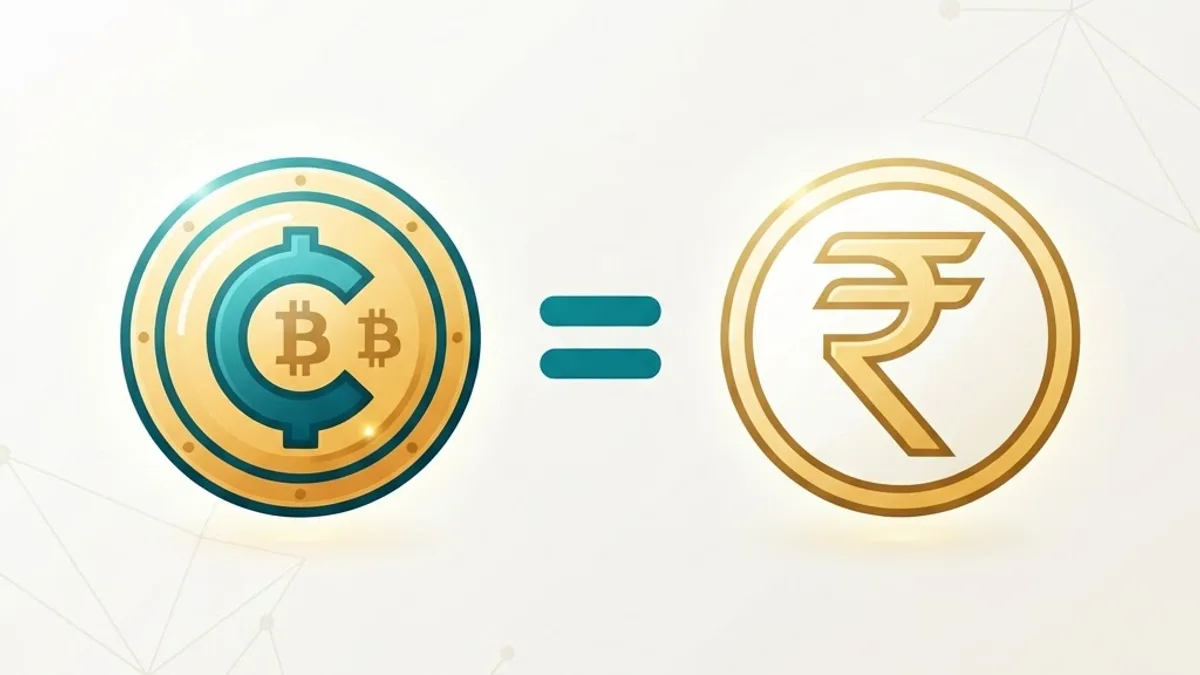
How Crypto to Rupee Prices Are Actually Calculated
Most INR prices you see are not quoted natively. They are derived. Understanding the chain of calculation explains almost every price discrepancy you will ever notice.
The Three-Step Pricing Chain
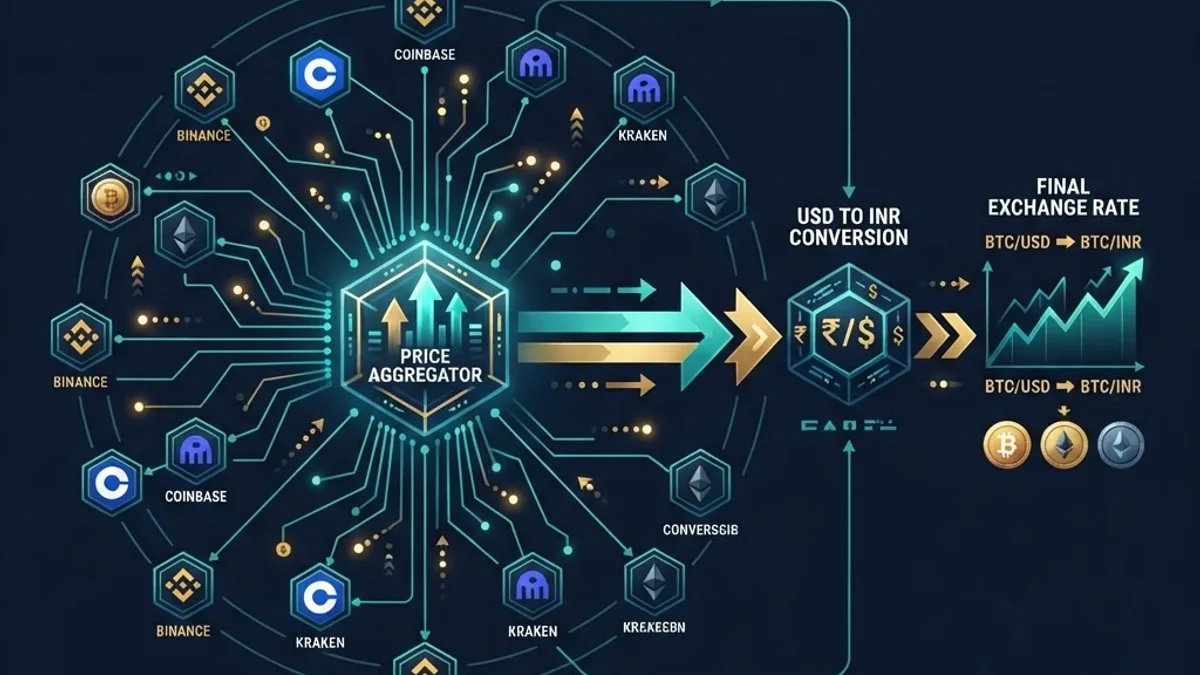
- Global price discovery in USD or USDT. The overwhelming majority of crypto trading volume happens in dollar-pegged pairs such as BTC/USDT. This is where the real price is set.
- Aggregation across exchanges. Price trackers compute a volume-weighted average across dozens of venues, so one thin market cannot distort the headline number.
- Conversion into rupees. That averaged USD figure is multiplied by the prevailing USD/INR foreign exchange rate to produce the rupee number on your screen.
This is why a coin can appear to rise in rupee terms on a day when its dollar price did not move. If the rupee weakens against the dollar, every crypto price in INR rises mechanically. Indian holders therefore carry two exposures at once: crypto volatility and currency risk.
The India Premium and Discount
Indian exchanges frequently quote prices a little above or below the globally converted figure. This gap, often between 0.5 percent and 3 percent, comes from local supply and demand, banking friction on deposits and withdrawals, and the cost of moving capital in and out of the country. When Indian buying demand spikes, a premium appears. When traders rush to exit, a discount appears.
Practical takeaway: Before any significant trade, compare the price on your chosen Indian exchange against the global converted price. If the gap exceeds roughly 2 percent, you are paying a hidden cost far larger than the visible trading fee.
Rupee Price Tiers: What Different Coins Actually Cost
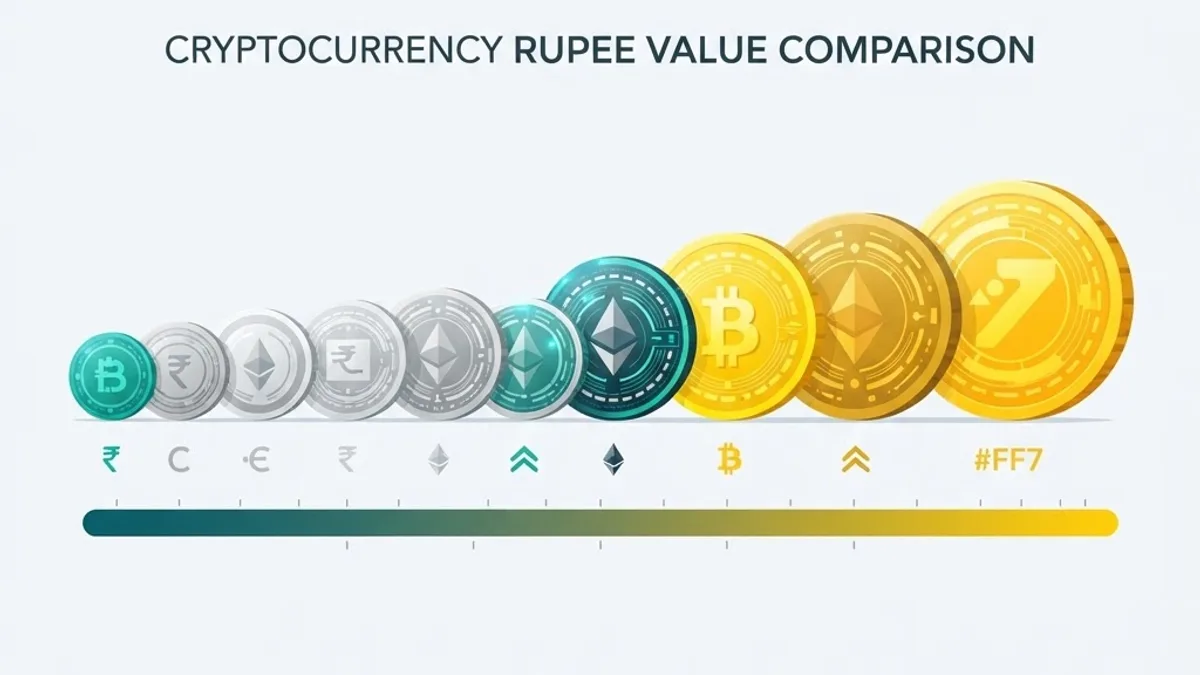
Rather than quoting numbers that will be stale within minutes, it is more useful to understand the price tiers that crypto assets fall into. These bands have remained structurally stable for years, even as absolute prices swing.
| Asset Tier | Example Assets | Typical Price Range per Unit (INR) | What Drives the Price |
|---|---|---|---|
| Ultra-high value | Bitcoin (BTC) | Tens of lakhs | Capped 21 million supply, institutional demand |
| High value | Ethereum (ETH), BNB | Tens of thousands to lakhs | Network usage, smart contract activity |
| Mid value | Solana (SOL), Litecoin (LTC) | Hundreds to thousands | Ecosystem growth, transaction throughput |
| Low value | XRP, Cardano (ADA), Dogecoin (DOGE) | Single to double digits | Very large circulating supply |
| Stablecoins | USDT, USDC | Roughly equal to one US dollar in rupees | Pegged reserves, tracks USD/INR |
The stablecoin row is the single most useful reference point on this table. Because USDT is designed to hold a one-dollar value, its rupee price is effectively a live USD/INR quote. If you want a quick sanity check on whether an exchange is pricing fairly, look at its USDT/INR rate first.
Why You Do Not Need to Buy a Whole Coin
One of the most persistent misconceptions among new Indian investors is that a high per-unit price puts an asset out of reach. It does not.
Bitcoin is divisible to eight decimal places. The smallest unit, one satoshi, equals 0.00000001 BTC. Ethereum divides even further, down to 18 decimals. Every major Indian exchange lets you place orders in rupee amounts rather than coin quantities, so a 500 rupee purchase is entirely normal.
A worked example: If Bitcoin trades at 50,00,000 rupees, then 5,000 rupees buys 0.001 BTC. Your percentage return is identical to someone who bought a full coin at the same moment. Ownership is proportional, not unit-based.
This is why the question "which coin can I afford?" is the wrong question. The right question is "which asset do I actually want exposure to, and how much rupee capital am I willing to risk?"
The Real Rupee Cost: Fees and Taxes in India
The screen price is never the price you pay. In India, the gap between quoted price and true cost is unusually wide because of a specific tax regime.
India's Crypto Tax Rules
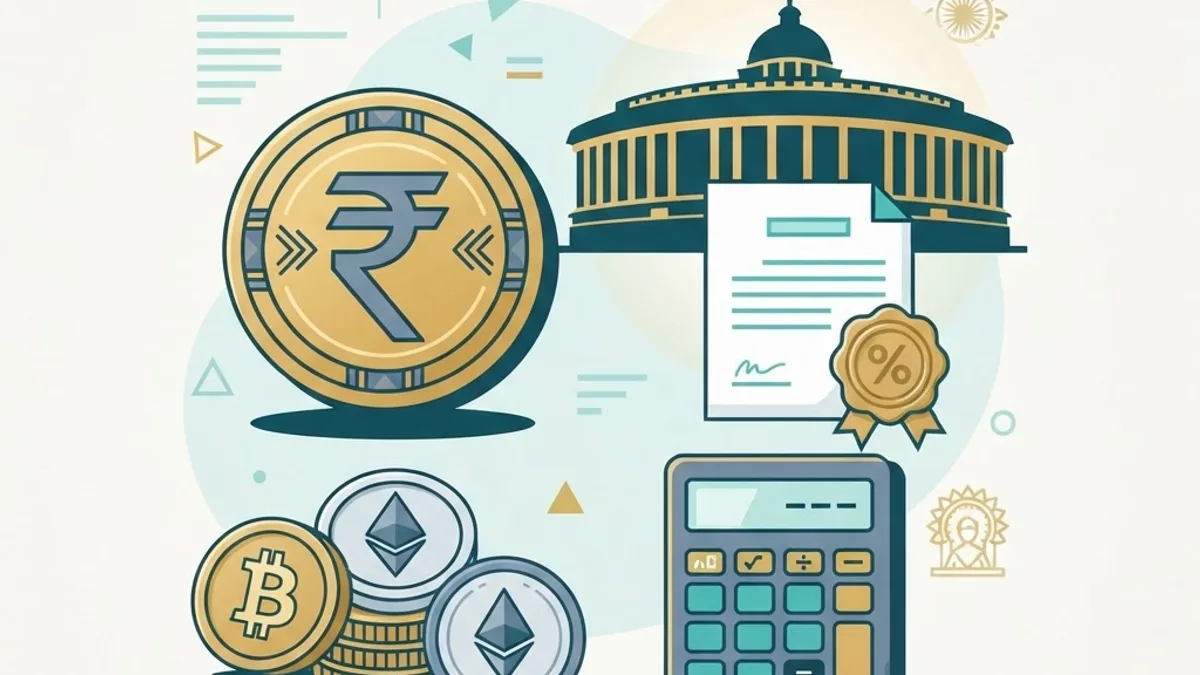
Under the Finance Act 2022, India introduced a dedicated framework for Virtual Digital Assets that took effect during the 2022-23 financial year. Two provisions dominate the economics:
- A flat 30 percent tax on gains from transferring virtual digital assets, plus applicable cess. Critically, no deduction is allowed except the cost of acquisition, and losses from one crypto asset cannot be set off against gains from another or carried forward.
- A 1 percent Tax Deducted at Source under Section 194S on the transfer value, deducted at the point of sale regardless of whether you made a profit.
That 1 percent TDS is the detail most people underestimate. It applies to turnover, not profit. A frequent trader cycling capital repeatedly through the market erodes it steadily even in flat conditions. This single rule makes high-frequency trading structurally unattractive in India and pushes rational participants toward longer holding periods.
Layered Costs to Budget For
- Trading fee charged by the exchange, commonly a fraction of a percent per order.
- Spread between the buy and sell price, which widens on illiquid coins.
- 1 percent TDS on the sale value.
- 30 percent tax plus cess on realised gains.
- Network or withdrawal fees if you move assets to a private wallet.
Rule of thumb from practice: Assume your effective break-even price is roughly 1 to 2 percent above your entry price before tax on gains. If a trade thesis only works on a sub-2-percent move, the maths does not survive Indian costs.
How to Check an Accurate Crypto Rupee Price Right Now
Accuracy is a process, not a single lookup. Follow this sequence.
- Name the exact asset and its ticker. "Bitcoin (BTC)" not "crypto." Ticker confusion is a common route to buying the wrong token.
- Check a major aggregator's INR display to establish the global reference price.
- Open your Indian exchange's order book and compare the live bid and ask, not the last traded price.
- Calculate the premium or discount between the two. Note it before ordering.
- Use a limit order, not a market order. On thinly traded pairs, a market order can fill several percent away from the price you saw.
- Screenshot or export the trade confirmation. You will need acquisition cost records at tax filing time, and exchanges do not always retain long histories.
Step six matters more than it looks. Because Indian rules permit only the cost of acquisition as a deduction, poor record-keeping directly inflates your taxable gain.

Building Products Around Live Crypto Rupee Data
If you are building rather than just buying, the pricing chain described above becomes an engineering problem. Teams that ship dashboards, portfolio trackers, or payment tools consistently hit the same three issues: rate-limited price feeds, stale cached values presented as live, and rounding errors that compound across many small conversions.
The fixes are well established. Cache aggressively but display the timestamp of the quote. Store amounts in the asset's smallest unit as integers rather than floating-point decimals. Separate the crypto-to-USD rate from the USD-to-INR rate in your data model so you can audit which one moved. Teams needing help with this kind of real-time financial interface work often bring in specialist partners such as ZoneTechify or WebPeak, and a purpose-built web application development approach tends to outperform bolting a price widget onto a marketing site.
Key Takeaways
- There is no single "1 crypto" price in rupees. Crypto is a category of more than 17,000 assets, each independently priced.
- INR prices are derived, not native. Most are computed from a USD or USDT price multiplied by the live USD/INR exchange rate.
- Indian holders carry dual risk: crypto volatility plus rupee-dollar currency movement.
- India taxes virtual digital asset gains at a flat 30 percent plus cess, with no deductions beyond acquisition cost and no loss set-off, under the Finance Act 2022.
- A 1 percent TDS under Section 194S applies to sale value, not profit, making frequent trading structurally expensive.
- Per-unit price is irrelevant to affordability. Bitcoin divides to eight decimals and Ethereum to 18, so rupee-denominated purchases of any size are standard.
- Stablecoin INR rates are the fastest fairness check on whether an exchange is pricing reasonably.
Frequently Asked Questions (FAQ)
How much is 1 crypto in Indian rupees?
There is no single answer because crypto is not one currency. One Bitcoin costs tens of lakhs of rupees, one Ethereum costs lakhs, and coins like Dogecoin or XRP cost single or double-digit rupees. Name the specific coin, then check a live exchange rate before buying.
Why do different websites show different crypto prices in rupees?
Each site uses a different source. Some average prices across many global exchanges, others show one exchange's last trade. They also apply different USD to INR conversion rates at different moments. Indian exchanges add a local premium or discount driven by domestic demand and banking friction.
Can I buy crypto with less than 1000 rupees in India?
Yes. Bitcoin is divisible to eight decimal places and Ethereum to 18, so exchanges let you place orders by rupee amount rather than coin quantity. Purchases of a few hundred rupees are common. Your percentage returns match those of larger buyers who entered at the same price.
How much tax do I pay on crypto profits in India?
Indian rules under the Finance Act 2022 apply a flat 30 percent tax plus applicable cess on gains from virtual digital assets, with no deduction other than acquisition cost. A separate 1 percent TDS under Section 194S is deducted on the transfer value whether or not you profit.
Which cryptocurrency is cheapest in rupees?
Many tokens trade for less than one rupee, but low price does not mean good value. Cheap coins usually have enormous circulating supplies or very thin liquidity, which widens spreads and increases risk. Judge an asset by its market capitalisation, liquidity, and real utility instead of unit price.
Is the crypto rupee price the same all day?
No. Crypto markets trade 24 hours a day, every day of the year, with no closing bell. Prices change every second. Rupee quotes shift for a second reason too: any move in the USD to INR exchange rate changes the INR price even when the dollar price is flat.