A practical, experience-based comparison of JavaScript and Python covering speed, hiring demand, learning curve, and which language fits your project goals.
JavaScript or Python
Developers ask this question more than almost any other, and the honest answer is that the two languages solve different problems well. JavaScript owns the browser. Python owns data, machine learning, and scripting. Both can build a backend API, both can pay a senior salary, and both will still be in heavy production use a decade from now. What changes the answer is what you intend to ship in the next twelve months.
This guide is written from the perspective of teams that maintain production code in both languages. We have shipped React and Node platforms that serve real traffic, and we have shipped Python services that run scoring models on a schedule. The trade-offs below are the ones that actually surface in code review and in sprint planning, not the ones that surface in language popularity arguments.
Quick Answer: Choose JavaScript if you are building websites, web apps, or anything that runs in a browser, since it is the only language browsers execute natively. Choose Python if your focus is data analysis, machine learning, automation, or scripting. For general backend work either language performs well, so pick the one your team already knows.
What Each Language Actually Is
JavaScript is a dynamically typed, single-threaded, event-driven language that every web browser runs natively. Since Node.js arrived in 2009, it also runs on servers, which makes it the only mainstream language capable of powering both the client and server of a web application with one codebase.
Python is a dynamically typed, general-purpose language designed around readability. Its indentation-based syntax and enormous scientific ecosystem, including NumPy, pandas, PyTorch, and scikit-learn, made it the default language of data work and AI research.
The practical consequence is that these languages are not really competitors in most decisions. They are competitors in exactly one zone: the backend API layer.
The Data: Popularity and Demand
Two figures are worth anchoring on. According to the Stack Overflow Developer Survey, JavaScript has been the most commonly used programming language among professional developers for more than ten consecutive years, used by roughly 62 percent of respondents. According to the TIOBE index, Python has held the number one position in overall language ratings since 2021, driven largely by AI and data science adoption.
Read together, these tell you something useful: JavaScript dominates what people are paid to maintain, while Python dominates what people are choosing to start. Neither number tells you which one to learn, but both confirm neither is a dead end.
GitHub's Octoverse report has also placed Python ahead of JavaScript in new repository contributions, largely because machine learning projects overwhelmingly start in Python. If your target work is model development, that concentration matters more than any survey ranking.
Side-by-Side Comparison
| Factor | JavaScript | Python |
|---|---|---|
| Runs natively in browsers | Yes | No |
| Primary strength | Web interfaces, real-time apps | Data, ML, automation |
| Raw execution speed | Faster (V8 JIT compiled) | Slower (CPython interpreted) |
| Syntax readability for beginners | Moderate | Excellent |
| Concurrency model | Event loop, non-blocking I/O | Threads limited by the GIL, asyncio available |
| Machine learning ecosystem | Limited | Industry standard |
| Mobile app development | Yes, via React Native | Rarely used |
| Typical backend frameworks | Express, NestJS, Fastify | Django, FastAPI, Flask |
| Static typing option | TypeScript | Type hints with mypy |
| Package registry size | npm, largest by volume | PyPI, large and curated |
When JavaScript Is the Right Answer
Pick JavaScript when the user interface is the product. Anything a person clicks, scrolls, or types into in a browser eventually becomes JavaScript, because that is the only language browsers execute. You can compile other languages to WebAssembly, but no serious team does that for standard product UI.

Specific cases where JavaScript wins clearly:
- Interactive web applications. Dashboards, editors, booking flows, and anything with complex client-side state.
- Real-time features. Chat, live collaboration, notifications, and presence indicators. Node's event loop handles thousands of open connections with low memory overhead.
- Full stack with one language. Next.js lets one developer own the database query, the server render, and the button click without switching mental models.
- Cross-platform mobile. React Native reuses JavaScript skills to ship iOS and Android from one codebase.
- Edge and serverless deployment. JavaScript runtimes start in milliseconds, which suits per-request billing models.
The hidden advantage is shared types. With TypeScript, a single interface definition can validate the API response on the server and the props in the component. That eliminates an entire category of integration bugs, and it is not available when the backend is Python and the frontend is TypeScript. Teams building this kind of unified stack are exactly who our web development services are structured around.
When Python Is the Right Answer
Pick Python when the value of the software comes from computation rather than interaction. If the hard part of your project is a model, a transformation, or a calculation, Python's ecosystem removes months of work.
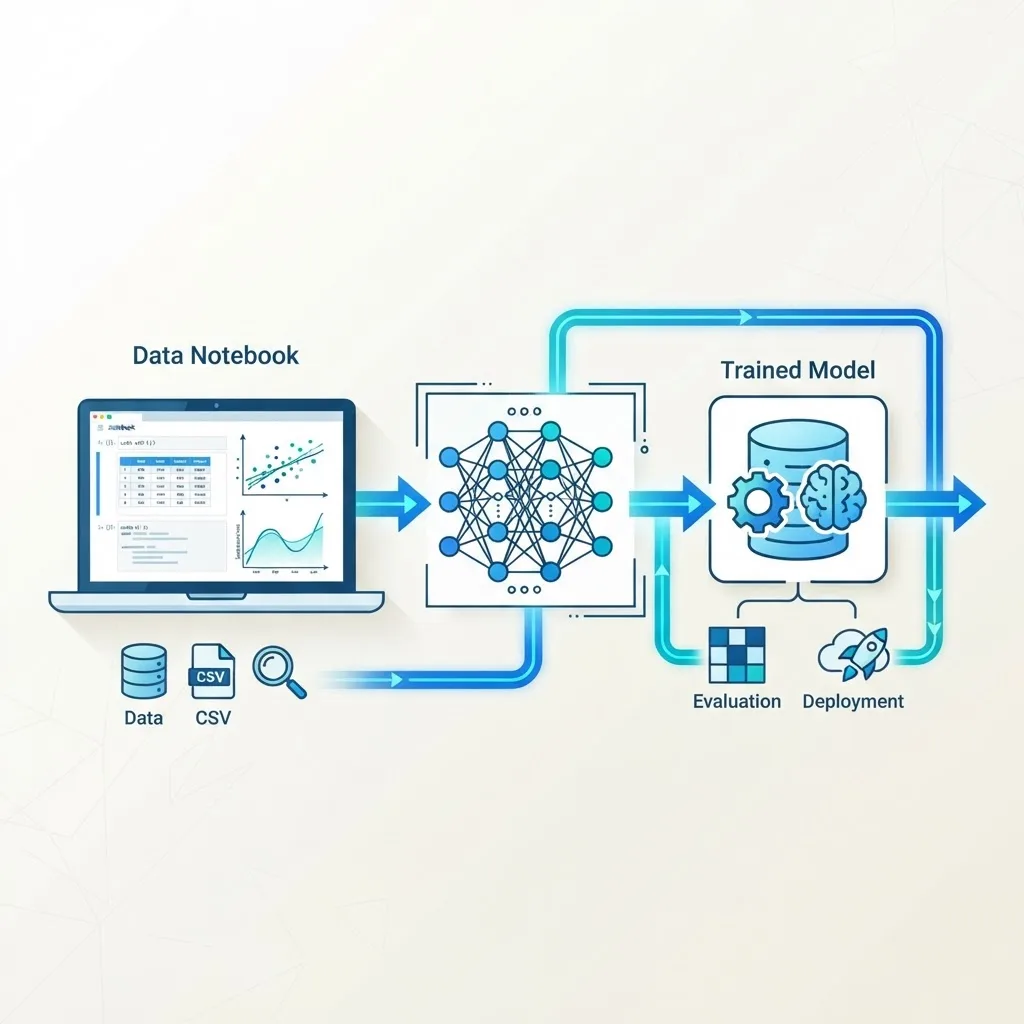
Specific cases where Python wins clearly:
- Machine learning and AI. PyTorch and TensorFlow are Python-first. Nearly every published research implementation ships as Python.
- Data analysis and engineering. pandas, Polars, and Jupyter notebooks make exploratory analysis fast and reproducible.
- Automation and scripting. A forty-line Python script can rename files, hit an API, and email a report with no build step.
- Scientific and numerical computing. NumPy and SciPy are backed by decades of optimized native code.
- Rapid API prototyping. FastAPI generates OpenAPI documentation and request validation from type hints automatically.
One caveat worth stating plainly: Python's speed reputation is misleading. CPython is slower than V8 at pure loops, but libraries like NumPy execute in compiled C, so numerical Python often outperforms hand-written JavaScript on the same math. Benchmark the actual workload rather than trusting a language-level generalization.
Performance: What Really Matters in Production
In practice, language speed rarely determines application speed. In most web applications, the dominant costs are unindexed database queries, oversized payloads, blocking third-party calls, and missing caching layers. A well-tuned Django app comfortably outperforms a poorly structured Node app, and the reverse is equally true.
Where the languages genuinely differ:
- Many concurrent I/O-bound connections. Node's non-blocking event loop is more memory-efficient than a thread-per-request Python setup, though ASGI frameworks with asyncio narrow the gap.
- CPU-heavy work in one process. Python's Global Interpreter Lock prevents true multi-threaded CPU parallelism, so teams use multiprocessing or push work to compiled libraries. JavaScript is also single-threaded and needs worker threads for the same problem.
- Cold starts. JavaScript runtimes initialize faster than Python in serverless environments, which affects latency-sensitive endpoints.
Learning Curve and Career Outcomes
Python is easier to learn first. Its syntax reads close to English, it has no build tooling requirement, and error messages are relatively clear. Beginners typically write working Python sooner than working JavaScript.
JavaScript is harder because you learn a language and a platform simultaneously. Asynchronous behavior, the DOM, bundlers, and framework conventions all arrive at once. That said, JavaScript gives faster visible feedback, since a change appears in the browser instantly, which sustains motivation.

On compensation, senior roles in both languages pay similarly within the same market and seniority band. Salary correlates far more with domain expertise than with syntax. A Python developer who understands production machine learning and a JavaScript developer who understands performance at scale both command premium rates.
Can You Learn Both?
Yes, and most working engineers eventually do. The efficient sequence is to learn one deeply first, reaching the point where you can debug unfamiliar code without help, then add the second. Concepts transfer almost completely: loops, functions, closures, HTTP, testing, and version control are shared. Only syntax and ecosystem differ.
A common professional profile is JavaScript and TypeScript for product surfaces plus Python for data pipelines and model serving, communicating over a documented HTTP or message-queue boundary. This is a mainstream architecture, not a compromise. Teams looking for help designing that boundary can review the engineering approach documented at WebPeak and the broader delivery capabilities at ZoneTechify.
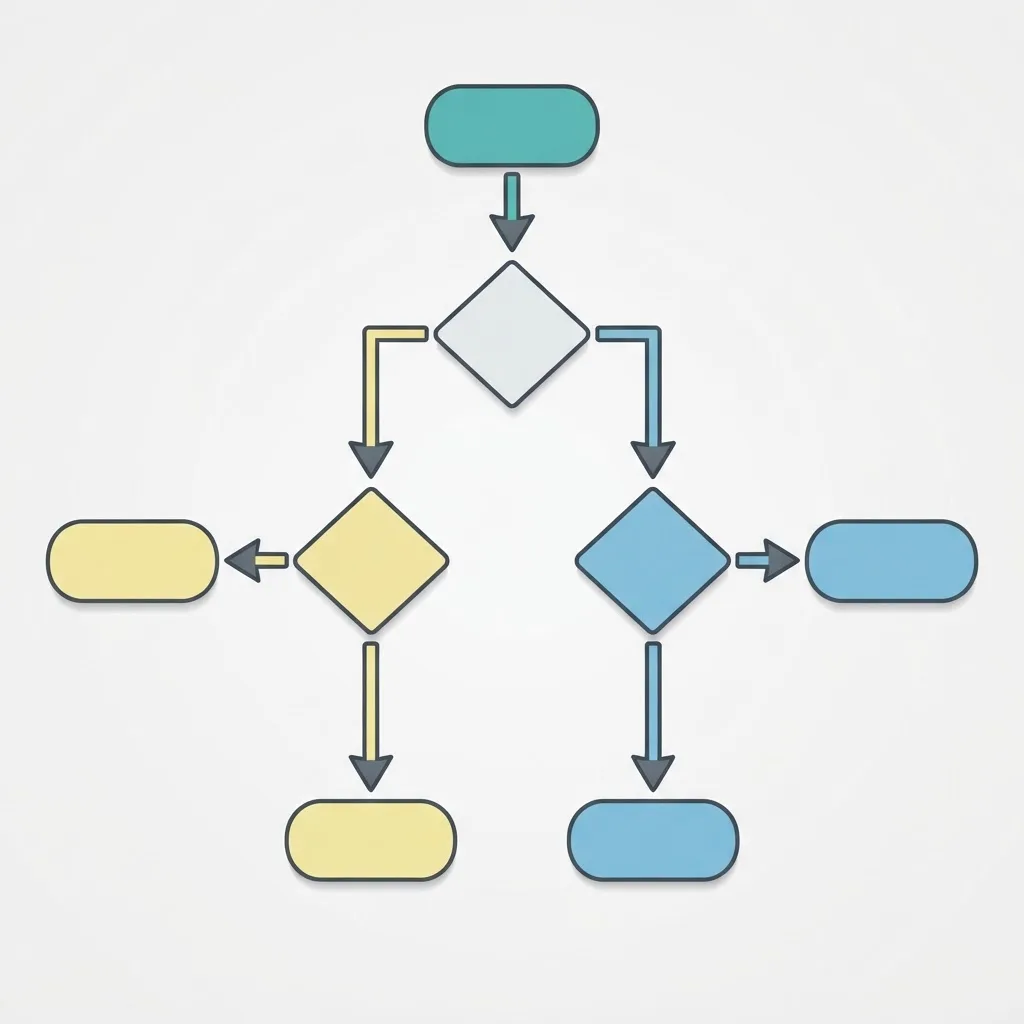
A Decision Framework You Can Apply Today
Answer these in order and stop at your first yes:
- Does it run in a browser? Choose JavaScript.
- Does it train, tune, or serve a machine learning model? Choose Python.
- Is it a one-off automation or data script? Choose Python.
- Is it a mobile app you want on both platforms cheaply? Choose JavaScript with React Native.
- Is it a backend API with no ML requirement? Choose whichever your team maintains best.
That final point deserves emphasis. The most expensive language decision is not the wrong language. It is a language nobody on your team can review confidently at two in the morning during an incident.
Key Takeaways
- JavaScript is the only language browsers execute natively, making it non-optional for web interfaces.
- Python is the industry standard for machine learning, data analysis, and scripting.
- JavaScript has been the most-used language in the Stack Overflow Developer Survey for over a decade at roughly 62 percent adoption.
- Python has ranked first in the TIOBE index since 2021, driven by AI adoption.
- Application performance is usually limited by databases, payloads, and caching rather than language choice.
- Python is easier to learn first; JavaScript offers faster visual feedback.
- Senior salaries are comparable, and domain expertise drives compensation more than language.
- Running both, with JavaScript on the frontend and Python for data work, is a standard production architecture.
Frequently Asked Questions (FAQ)
Should I learn JavaScript or Python first in 2026?
Learn Python first if you want gentler syntax or plan to work in data and AI. Learn JavaScript first if you want to build websites and web apps, since it is required for browser work. Both lead to strong careers, so match your choice to the projects you actually want to build.
Is Python faster than JavaScript?
No, not for general code. JavaScript's V8 engine uses just-in-time compilation and typically outperforms standard CPython on loops and string work. However, Python's numerical libraries run compiled C under the hood, so Python often wins on heavy math and data processing tasks. Always benchmark your specific workload.
Can Python replace JavaScript for web development?
Not on the frontend. Browsers only execute JavaScript and WebAssembly, so any interactive interface ultimately relies on JavaScript. Python is excellent for the backend using Django or FastAPI, but a Python backend still needs JavaScript on the client side for modern user interfaces and interactivity.
Which language pays more, JavaScript or Python?
Salaries are broadly comparable at the same seniority and location. Pay is driven by specialization rather than language, so machine learning engineers using Python and performance-focused platform engineers using JavaScript both earn premium rates. Choose based on the domain you enjoy, then deepen expertise to increase earnings.
Do I need to know both JavaScript and Python?
Not at the start, but most senior developers eventually use both. Learn one until you can debug unfamiliar code independently, then add the second. Programming fundamentals transfer directly, so the second language typically takes weeks rather than months to become productive in.
Which is better for AI projects?
Python, clearly. PyTorch, TensorFlow, and scikit-learn are Python-first, and most published research releases Python implementations. JavaScript can run inference in the browser through TensorFlow.js, but model training, experimentation, and data preparation remain firmly in Python's territory.