A practical guide to picking a strong AP Computer Science project theme this year, with rubric-aligned ideas, a build timeline, and submission checklists.
AP Computer Science Theme for AP Project This Year
Every year thousands of students freeze at the same moment: the teacher says "pick your project theme," and the blank document stares back. The theme you choose for your AP Computer Science project decides how enjoyable the next four weeks will be and, more importantly, how easily you can earn every rubric point. This guide is written from the perspective of people who review, mentor, and debug student projects, and it focuses on what actually scores well rather than what sounds impressive.
Quick Answer: There is no single official AP Computer Science theme each year. The College Board sets open-ended Create Performance Task requirements, so you choose the theme. The strongest themes are small, personally meaningful problems that require input, a list or collection, and a student-developed procedure with a clear algorithm.
Is There an Official AP Computer Science Theme This Year?
No. This is the single biggest misconception students bring into the project. The College Board does not publish an annual theme, prompt, or subject for the AP Computer Science Principles Create Performance Task. What it publishes are requirements: your program must include input, a list or other collection type used to manage complexity, a student-developed procedure with a parameter, a selection statement, and iteration, along with written responses and a video of your program running.
For AP Computer Science A, there is no submitted performance task at all. The exam is entirely multiple choice and free response Java. Any "AP project" in a CSA class is assigned by your teacher, not the College Board, which means the theme rules are local and usually more flexible.
So when someone searches for "the theme this year," the honest expert answer is: the theme is whatever problem you can defend in writing. That freedom is an advantage once you know how to use it.
What the Rubric Actually Rewards
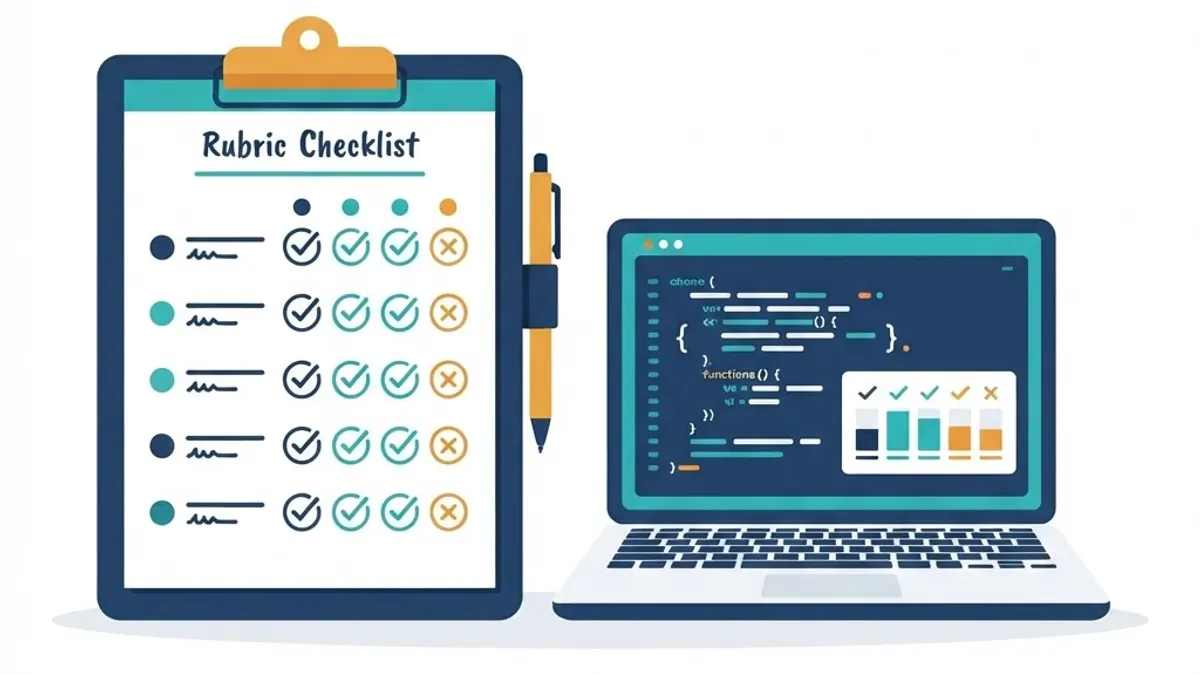
Scoring is mechanical, not artistic. Reviewers look for specific evidence, and a flashy theme with weak structure loses to a plain theme with clean structure every time.
The points cluster around five things:
- Program purpose and function — can a stranger understand what your program does and see it working in the video?
- Data abstraction — you must show a list (or similar collection) and explain how it manages complexity. A program with three hardcoded variables cannot earn this point.
- Managing complexity — you must argue why the list makes your code better than the alternative without it.
- Procedural abstraction — a student-developed procedure with at least one parameter that actually affects the result, plus a call to it.
- Algorithm implementation — your procedure needs sequencing, selection, and iteration working together.
Here is the practical filter we give students: if your theme cannot naturally produce a growing list of things, pick a different theme. A quiz app has a list of questions. A budget tracker has a list of transactions. A "calculator" has almost nothing, which is why calculator projects routinely lose two or three points.
According to College Board scoring distributions published in recent years, the data abstraction and managing complexity rows are among the lowest-scoring parts of the task, with a large share of submissions failing to earn full credit there. That is a theme-selection failure disguised as a coding failure.
How to Choose Your Theme in 20 Minutes

Use this sequence instead of brainstorming endlessly.
Step 1: List Three Real Frustrations
Write down three things that annoy you weekly. Forgetting practice times, splitting costs with friends, losing track of assignments, not knowing which bus is faster. Real friction gives you a purpose statement you can write honestly, and graders can tell the difference between a lived problem and a copied one.
Step 2: Test Each Idea Against the Collection Rule
Ask: does this need to store many similar items? If yes, keep it. If no, drop it. This one question eliminates most doomed projects.
Step 3: Shrink the Scope Until It Is Boring
Students lose projects to ambition, not laziness. "Social network for musicians" becomes unfinishable. "Practice log that tracks minutes per instrument and returns my weekly average" is finishable in a week and scores identically. The rubric never awards points for scale.
Step 4: Write the Procedure Before the Code
In one sentence, describe the procedure you will write and the parameter it takes. Example: "weeklyAverage(instrument) filters the practice log by instrument and returns the mean minutes." If you can write that sentence, your algorithm point is already designed.
Theme Categories That Consistently Score Well
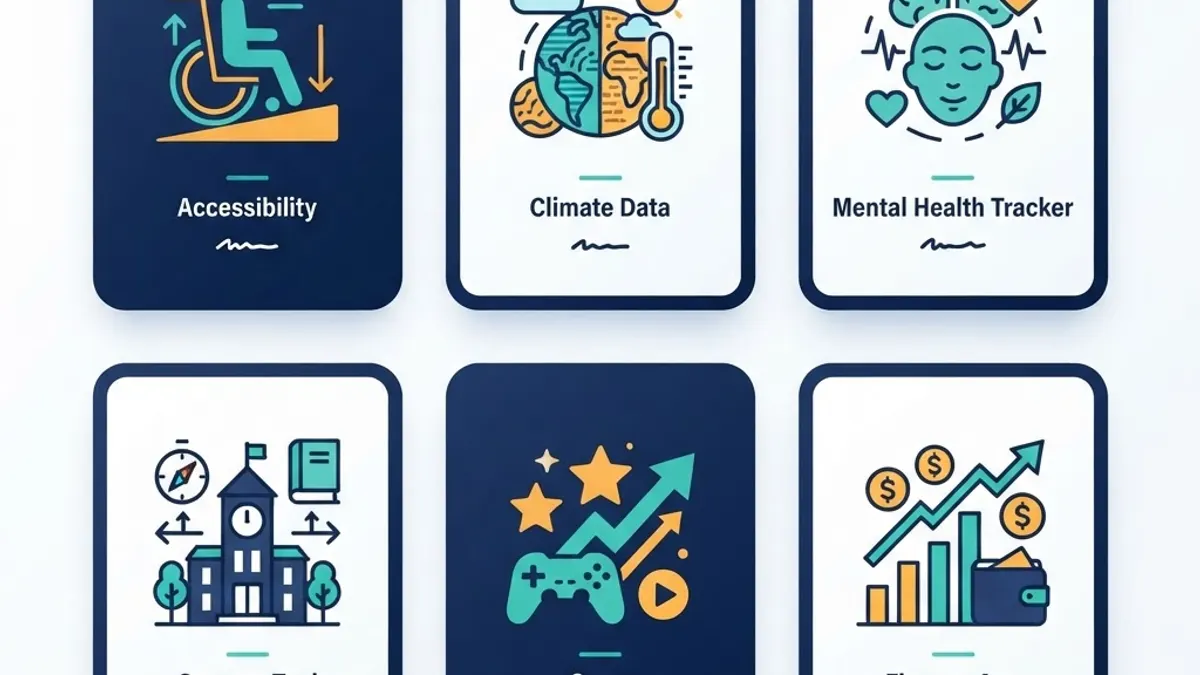
| Theme Category | Example Project | Collection Used | Difficulty | Rubric Fit |
|---|---|---|---|---|
| Personal tracking | Study or practice minutes log | List of session records | Low | Excellent |
| Accessibility | Text simplifier or contrast checker | List of words or color pairs | Medium | Excellent |
| School utility | Assignment prioritizer | List of tasks with due dates | Low | Excellent |
| Data awareness | Local air quality or water use viewer | List of readings | Medium | Strong |
| Games with state | Trivia or memory game with scoring | List of questions or cards | Medium | Strong |
| Finance | Trip cost splitter | List of expenses | Low | Strong |
| Simulation | Simple traffic or queue model | List of agents | High | Risky, time heavy |
The pattern is obvious once you see it: every strong option stores repeated items and computes something over them. That is the whole game.
Themes to Avoid
- Single-purpose calculators. No meaningful collection.
- Chatbots that only print canned replies. Selection without real data abstraction, and increasingly hard to defend as your own work.
- Anything requiring an external paid API. Network failures during video recording have ruined more projects than bad code.
- Cloned tutorial projects. Graders and teachers recognize them, and you cannot write authentic responses about design decisions you never made.
Building It: A Four-Week Plan That Works
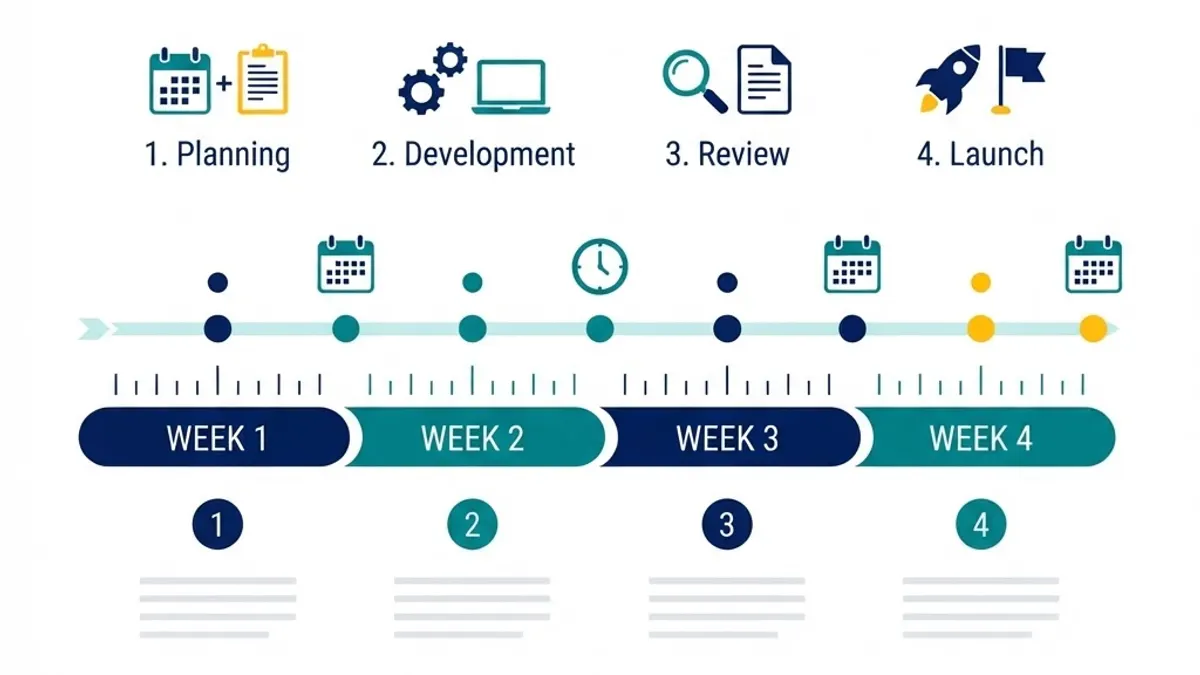
Most classes allocate roughly 12 hours of in-class time for the Create Performance Task. Treat that as a hard budget and plan backwards.
Week 1 — Define and sketch. Write your purpose statement, list the data you will store, and draw the screens or console flow on paper. Decide your one student-developed procedure now.
Week 2 — Build the core loop. Get input working, get items into your list, and display them. Do not style anything yet. A working ugly program beats a beautiful broken one.
Week 3 — Add the algorithm and test. Implement your procedure with sequencing, selection, and iteration. Test with an empty list, one item, and many items. Those three cases catch the majority of student bugs.
Week 4 — Record, write, submit. Record the video early enough to re-record. Write your responses while the code is fresh in your memory, not a month later.
If You Are in AP Computer Science A
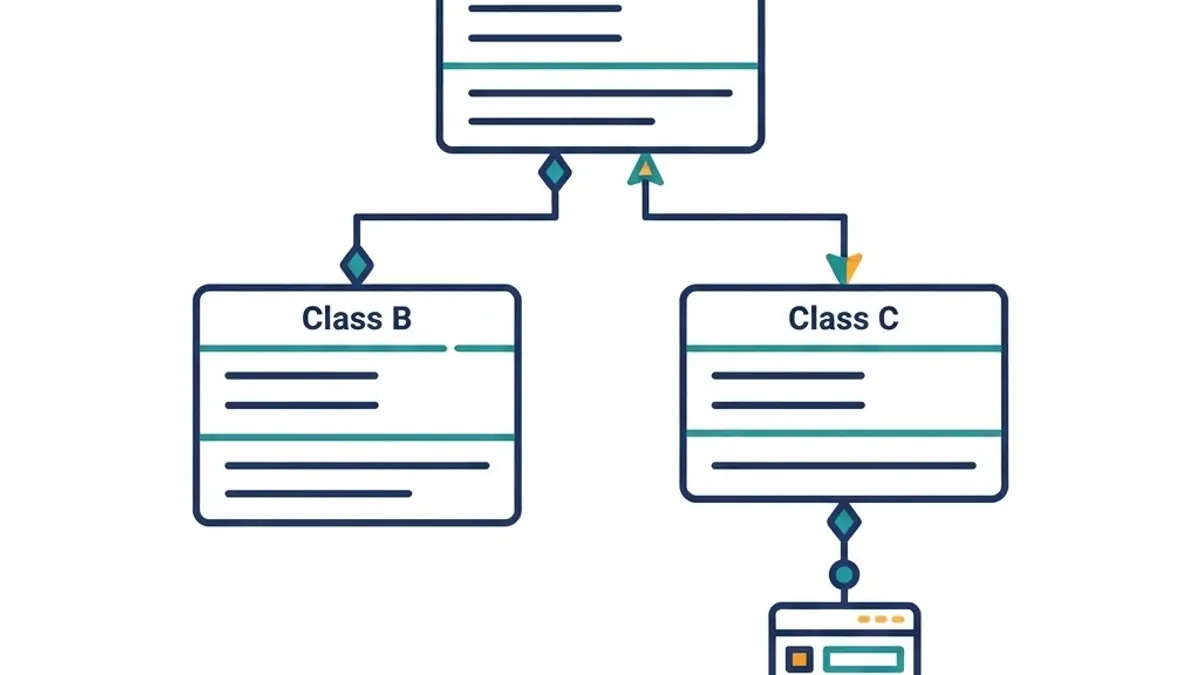
CSA projects are graded by your teacher, so the expectations shift toward Java fundamentals: class design, encapsulation, inheritance or interfaces where appropriate, ArrayList manipulation, and traversal logic. A safe structure is two or three classes — one data class, one manager class holding an ArrayList, and one runner class. Keep methods short and give them names that describe what they return. That structure demonstrates object-oriented understanding without inviting bugs you cannot fix before the deadline.
Testing and Debugging Without Panic
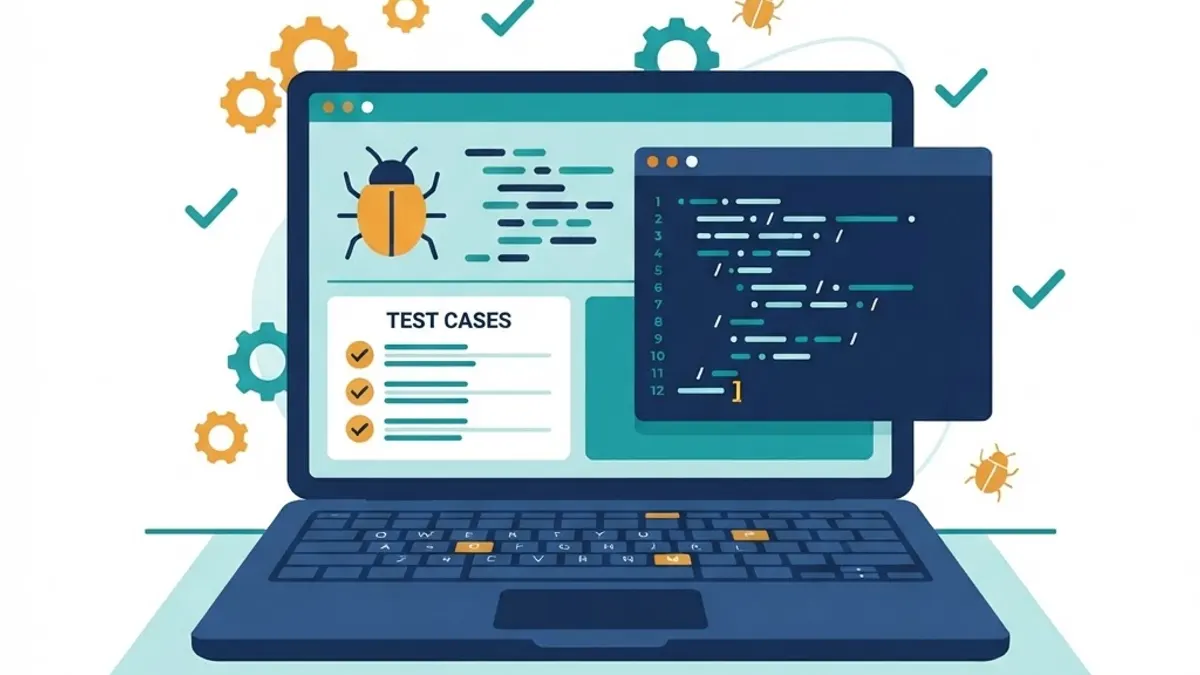
Test with intent rather than clicking around randomly. Run these five checks on any project:
- Empty state — what happens with zero items in the list?
- Boundary values — zero, negative numbers, and very large inputs.
- Wrong type input — letters where numbers belong.
- Duplicate entries — does your count or average break?
- Repeated actions — add and remove the same item ten times.
When something breaks, print the value of your list before and after the suspect line. This single habit resolves most student bugs faster than reading code silently. Keep a short log of the bugs you found and fixed; the written responses often ask you to describe a difficulty you overcame, and a real log makes that answer specific instead of generic.
Presenting and Submitting Your Project
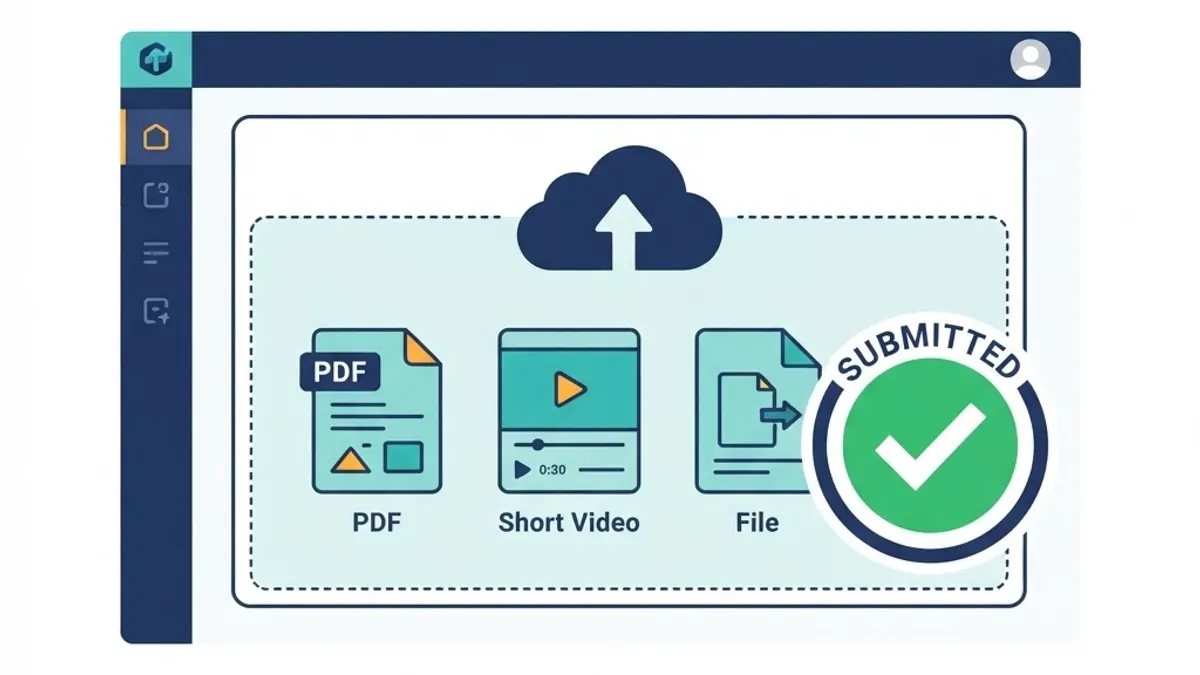
The submission is where careless students lose points they already earned.
- Keep the video under the required length and show input, processing, and output.
- No voice narration is permitted in the CSP video; use on-screen text if you need to explain a step.
- Export code as a PDF and confirm your procedure and list are clearly visible and readable.
- Verify file naming and that both the code and video uploaded successfully before the deadline.
- Re-read your written responses out loud once. Vague answers are the most common reason for lost points.
If your project has grown into something you want to keep building after the exam, turning it into a real deployed application is a natural next step. Teams like ZoneTechify and WebPeak work on exactly that transition from prototype to production, and studying how professional web application development projects are structured will make your next school project noticeably cleaner.
Key Takeaways
- The College Board does not set an annual AP Computer Science theme. Students choose their own, guided by fixed requirements.
- The Create Performance Task requires input, a collection, a student-developed procedure with a parameter, selection, and iteration.
- Data abstraction and managing complexity are historically the lowest-scoring rubric rows, and both depend on choosing a theme with a real list.
- Most classes allow roughly 12 hours for the task, so scope should be deliberately small.
- AP Computer Science A has no submitted performance task; any project is teacher-assigned and graded on Java fundamentals.
- Personal tracking, accessibility, and school utility themes score most reliably. Calculators and API-dependent apps are the riskiest.
Frequently Asked Questions (FAQ)
What is the AP Computer Science theme for this year?
There is no official annual theme. The College Board publishes technical requirements for the Create Performance Task instead of a subject prompt. You select your own topic, so choose a small real problem that stores a list of items and computes something useful from it.
How long should my AP Computer Science project be?
Length is measured in requirements, not lines. Most successful Create Performance Task programs run between 100 and 300 lines. Classes typically allow around 12 hours of work time, so aim for a program you can fully explain and demonstrate in a short video.
Can I use Python for my AP CSP project?
Yes. The Create Performance Task is language-agnostic, so Python, JavaScript, Java, Scratch, and block-based tools are all acceptable. Pick whichever language you can debug confidently under time pressure, because graders assess your reasoning and structure, not your language choice.
What are good AP Computer Science project ideas for beginners?
Start with a study-time tracker, an assignment prioritizer, a trip cost splitter, or a trivia game with scoring. Each naturally stores a list, needs one filtering or averaging procedure, and can be finished and tested within a normal class project window.
Can I use AI to help write my AP project code?
You must submit original work and be able to explain every line you wrote. Using AI to generate your submitted program risks a plagiarism violation. Using it to explain an error message or a concept you then implement yourself is far safer and more educational.
What happens if my program does not work on submission day?
Submit whatever runs. Partial credit exists for program purpose, procedure, and algorithm rows even when features are incomplete. Record a video of the working portion, describe the limitation honestly in your responses, and never submit nothing at all.