A developer-focused breakdown of how similar Python and JavaScript really are, covering syntax, typing, async models, ecosystems, and performance trade-offs.
How Similar Is Python to JavaScript
Python and JavaScript are the two most widely used programming languages on GitHub, and developers constantly ask whether learning one gives them a head start with the other. The honest answer is that they share more conceptual DNA than most comparisons admit, but they diverge sharply in the details that cause real bugs. This guide breaks down exactly where the overlap ends.
Quick Answer: Python and JavaScript are roughly 60 to 70 percent similar in core concepts. Both are dynamically typed, interpreted, garbage-collected, multi-paradigm languages with first-class functions and similar data structures. They differ significantly in syntax style, scoping rules, concurrency models, standard libraries, and primary deployment environments.
What Do Python and JavaScript Actually Have in Common?
Both languages sit in the same family: high-level, dynamically typed, interpreted, and garbage-collected. You never declare a variable's type ahead of time, you never manage memory manually, and you never compile to a binary before running code. That shared foundation is why experienced Python developers can usually read JavaScript code on day one and roughly follow the logic.
The deeper similarities are structural:
- First-class functions. Functions are values in both languages. You can assign them to variables, pass them as arguments, and return them from other functions. Callbacks, decorators, and higher-order functions all work on the same mental model.
- Closures. Inner functions capture variables from their enclosing scope in both languages, which makes patterns like function factories and memoization nearly identical.
- Dynamic objects. Python dictionaries and JavaScript objects both map string keys to arbitrary values, and both support runtime mutation of structure.
- Everything-is-an-object semantics. Numbers, strings, and functions all carry methods and attributes in both runtimes.
- Duck typing. Neither language cares what an object's declared type is, only whether it responds to the method you call.
- Exception-based error handling.
try/exceptin Python maps directly totry/catchin JavaScript. - Comprehensive package managers. pip and npm serve the same role, and both languages lean heavily on third-party libraries rather than large standard frameworks.
Where the Syntax Diverges Most
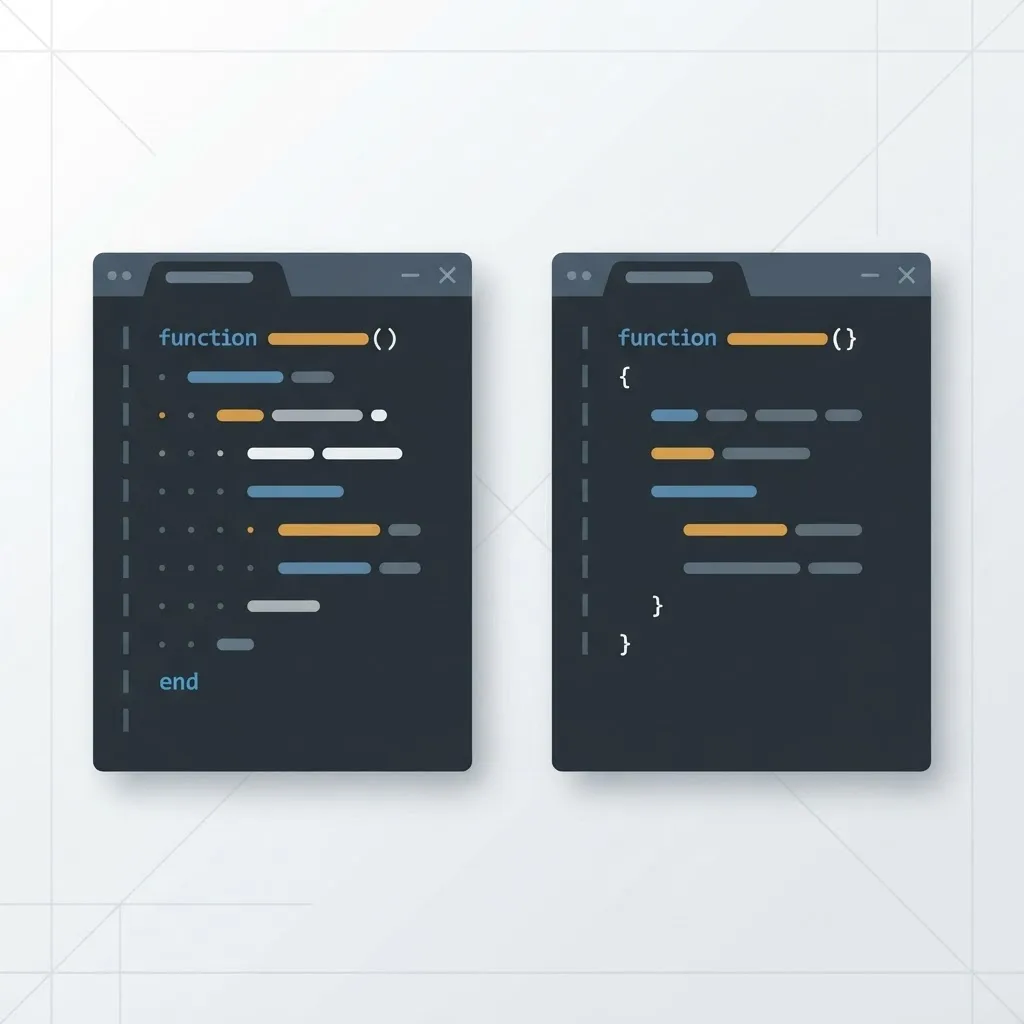
The most immediately visible difference is block structure. Python uses significant whitespace, meaning indentation defines code blocks. JavaScript uses curly braces and treats whitespace as cosmetic. This single decision changes how the two languages feel to write.
Other syntax differences that trip up developers moving between them:
- Boolean literals. Python uses
TrueandFalse; JavaScript usestrueandfalse. - Null values. Python has one,
None. JavaScript has two,nullandundefined, and they behave differently in comparisons. - Logical operators. Python spells them out as
and,or,not. JavaScript uses&&,||,!. - String formatting. Python f-strings and JavaScript template literals do the same job with different delimiters.
- Self versus this. Python requires an explicit
selfparameter in methods. JavaScript'sthisis determined by call site, which is a genuinely harder concept and a common source of bugs. - Comments.
#in Python,//and/* */in JavaScript.
The this binding issue deserves emphasis. In Python, the instance reference is passed explicitly and never surprises you. In JavaScript, this can point to the object, the global scope, or undefined depending on how the function was invoked, which is why arrow functions became so popular.
How Do Their Type Systems Compare?
Both languages are dynamically typed, but they handle type coercion very differently. Type coercion is the automatic conversion of a value from one type to another during an operation.
Python is strongly typed at runtime and refuses most implicit conversions. Adding a string to an integer raises a TypeError immediately. JavaScript is weakly typed and will coerce aggressively, so adding a number to a string silently produces a concatenated string. This is arguably the single biggest practical difference in day-to-day debugging.
Both ecosystems solved the same problem with optional static typing. Python added type hints in PEP 484, checked by tools like mypy and Pyright. JavaScript gained TypeScript, which compiles to plain JavaScript. According to the 2024 Stack Overflow Developer Survey, TypeScript is used by roughly 38 percent of professional developers, while Python remains among the top three most-used languages overall. The pattern is identical in both communities: dynamic by default, gradually typed in production codebases.
Python vs JavaScript: Direct Feature Comparison
| Feature | Python | JavaScript |
|---|---|---|
| Block syntax | Indentation | Curly braces |
| Typing | Dynamic, strong | Dynamic, weak |
| Optional static types | Type hints plus mypy | TypeScript |
| Concurrency default | Threads, asyncio, multiprocessing | Single-threaded event loop |
| Runs natively in browser | No | Yes |
| Integer precision | Arbitrary precision int | Float64, plus BigInt |
| Package manager | pip / uv | npm / pnpm |
| Primary strengths | Data science, ML, scripting, backend | Frontend, full stack, real-time apps |
| Mutable default collections | list, dict, set | Array, Object, Map, Set |
| Multiple inheritance | Yes | No, single prototype chain |
Are Their Concurrency Models Similar?
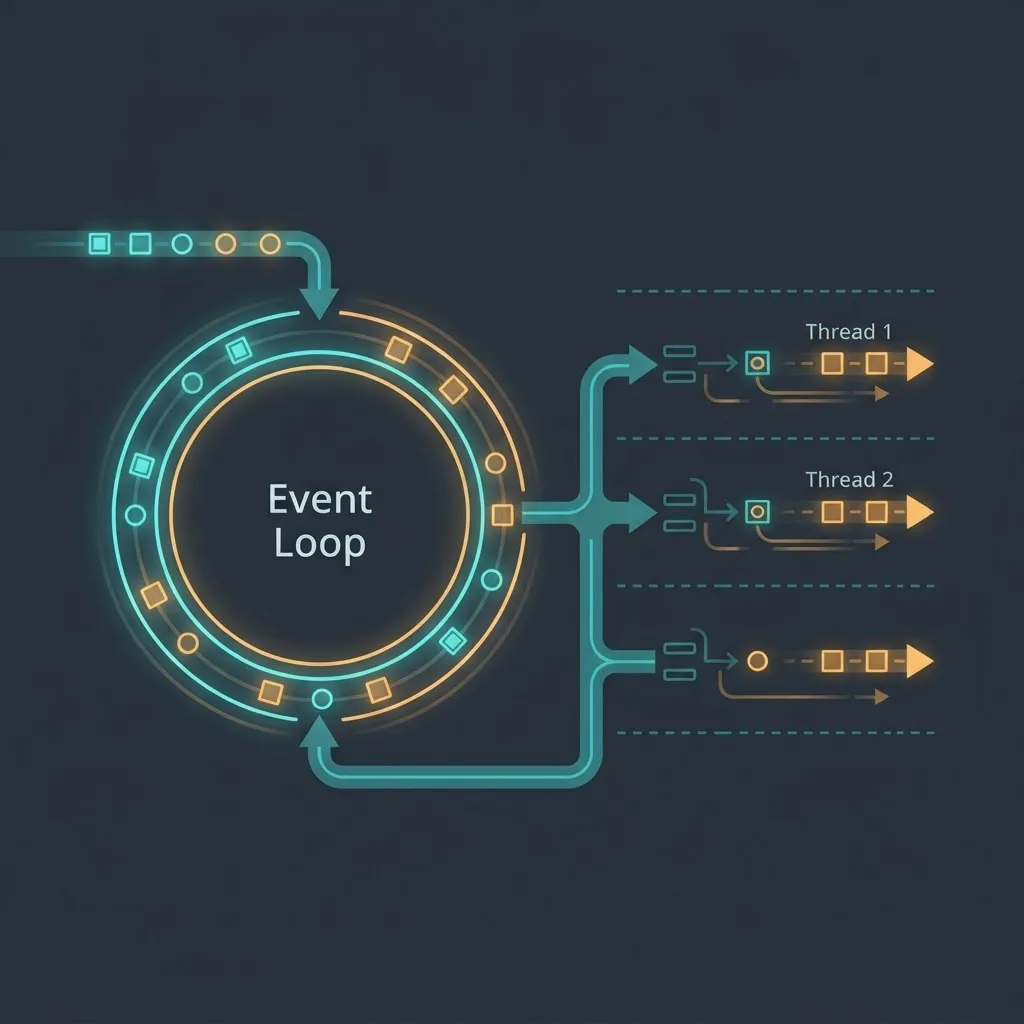
This is where the two languages differ most fundamentally. JavaScript is single-threaded by design and built around a non-blocking event loop. Every I/O operation is asynchronous by default, and the language has no true shared-memory threading in standard use.
Python supports real threads, processes, and an optional event loop through asyncio. However, the Global Interpreter Lock historically prevented CPU-bound threads from running in parallel. Python 3.13 introduced an experimental free-threaded build that disables the GIL, which is the biggest change to Python concurrency in decades.
The syntax overlap is real, though: both languages use async and await keywords with nearly identical semantics. A Python developer who understands asyncio.gather will immediately understand Promise.all. The keywords match; the runtime assumptions do not. In JavaScript, blocking the thread freezes the entire application. In Python, blocking one thread is often survivable.
Do the Ecosystems Overlap?
Barely, and this matters more than syntax when choosing a language for a project. Python dominates data science, machine learning, and scientific computing through NumPy, pandas, PyTorch, and scikit-learn. JavaScript dominates the browser, which is a monopoly no other language shares, and extends to servers through Node.js and edge runtimes.
The practical consequence: language similarity does not imply interchangeability. Teams building AI pipelines and data tooling reach for Python. Teams building interactive interfaces and full-stack products reach for JavaScript or TypeScript. Our engineering team at ZoneTechify routinely ships both in the same product, with Python handling model inference and data processing while JavaScript powers the user-facing layer, coordinated through well-defined APIs.
If you are choosing a stack for a production application rather than a learning exercise, the ecosystem question should carry more weight than syntax preference. Working with an experienced web development team shortens that evaluation considerably, and the technical breakdowns published at WebPeak cover the architecture trade-offs in more depth.

Which One Performs Better?
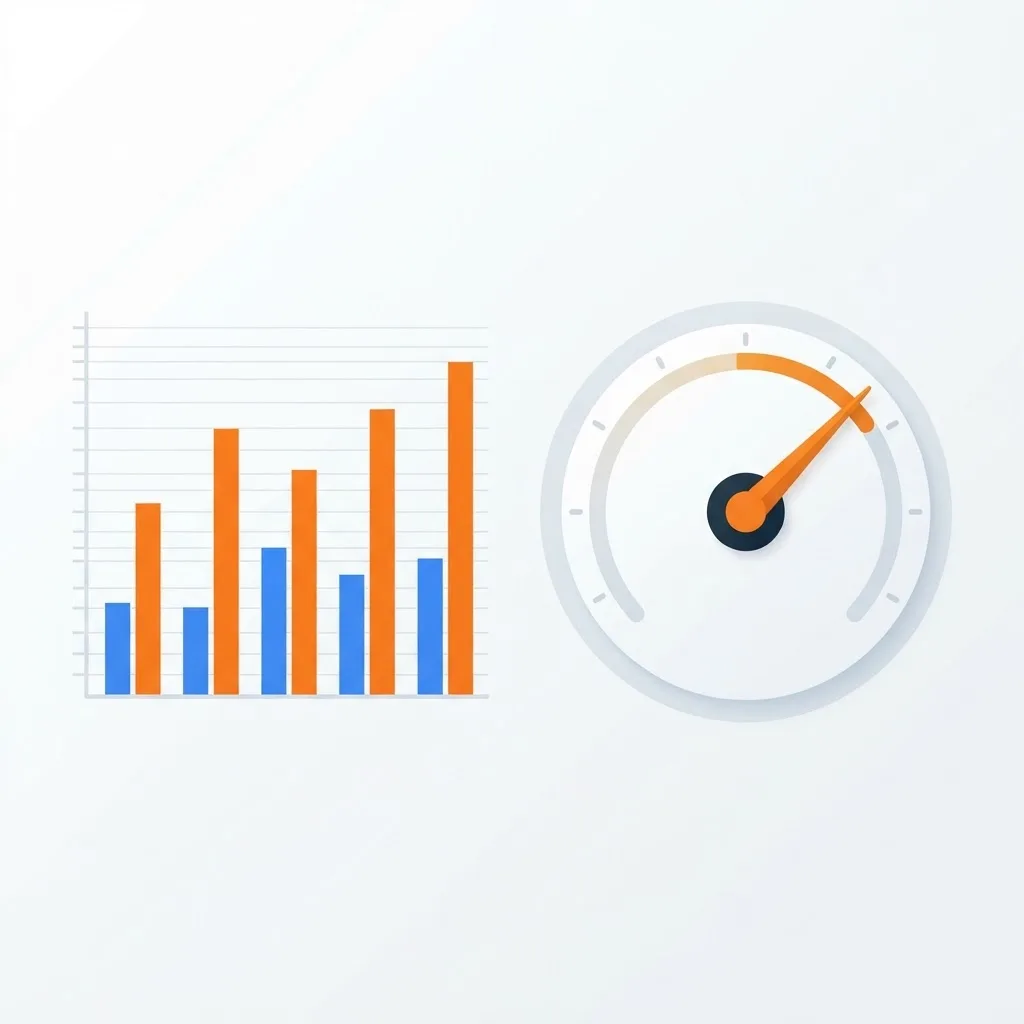
JavaScript is generally faster for raw execution because V8 uses just-in-time compilation aggressively. CPython is a bytecode interpreter and typically runs pure-language loops several times slower than V8 on equivalent workloads. Python 3.11 delivered documented speed improvements of 10 to 60 percent over 3.10 depending on the benchmark, and the Faster CPython project continues that work.
In practice, this rarely decides anything. Python's numerical workloads run in optimized C and Fortran libraries, so NumPy operations are not limited by interpreter speed. Most real applications are bound by network calls, database queries, and disk I/O rather than language execution speed.
How Fast Can You Learn One After the Other?
Based on onboarding developers across both stacks, transferring between them takes days rather than months for core competence. Roughly 60 to 70 percent of your knowledge transfers directly, including control flow, functions, closures, data structures, error handling, async patterns, and object-oriented design.
What you must actively relearn:
- Scoping and hoisting rules. JavaScript's
var,let, andconstbehave differently from Python's function-scoped names. - The
thiskeyword and prototype-based inheritance instead of classes with a method resolution order. - Equality operators. JavaScript's
==performs coercion; always use===. - The standard library. Python's batteries-included stdlib versus JavaScript's minimal built-ins plus npm.
- Tooling. Virtual environments and pip versus bundlers, transpilers, and node_modules.
- Number handling. JavaScript has no native integer type outside BigInt, which affects financial and ID-heavy code.

Key Takeaways
- Python and JavaScript are approximately 60 to 70 percent conceptually similar: both are dynamic, interpreted, garbage-collected, multi-paradigm languages with first-class functions and closures.
- Python is strongly typed at runtime and rejects implicit coercion; JavaScript is weakly typed and coerces silently, which is the most common source of cross-language bugs.
- Both languages added optional static typing: type hints with mypy for Python, TypeScript for JavaScript.
asyncandawaitsyntax is nearly identical, but JavaScript is single-threaded around an event loop while Python offers real threads, processes, and asyncio.- Python 3.13 introduced an experimental free-threaded build removing the GIL; Python 3.11 improved performance by 10 to 60 percent over 3.10.
- JavaScript is the only language that runs natively in browsers, and Python leads data science and machine learning, so ecosystems matter more than syntax when choosing.
Frequently Asked Questions (FAQ)
Is Python easier than JavaScript for beginners?
Yes, for most beginners. Python's indentation-based syntax, explicit error behavior, and single null value reduce cognitive load. JavaScript adds complexity through this binding, type coercion, hoisting, and the asynchronous browser environment. Beginners typically write correct Python faster, but JavaScript gives immediate visual feedback in a browser.
Can I learn JavaScript quickly if I already know Python?
Yes. Most Python developers become productive in JavaScript within one to two weeks. Control flow, functions, closures, loops, and error handling transfer almost directly. Focus your learning on this binding, prototype inheritance, let versus const scoping, strict equality with ===, and the event loop model.
Is Python or JavaScript better for backend development?
Both are production-proven. Choose Python with FastAPI or Django when your backend involves data processing, machine learning, or scientific computing. Choose Node.js when you want one language across frontend and backend, need high-concurrency I/O handling, or your team already writes TypeScript daily.
Do Python and JavaScript use the same syntax for async and await?
Essentially yes. Both use async to declare asynchronous functions and await to pause on pending operations. Python awaits coroutines while JavaScript awaits promises, and Python requires an event loop runner like asyncio.run. The mental model transfers cleanly between the two languages.
Can Python run in a web browser like JavaScript?
Not natively. Only JavaScript and WebAssembly execute directly in browsers. Tools like Pyodide and PyScript compile CPython to WebAssembly so Python can run client-side, but startup is slower and bundle sizes are much larger. For production frontend work, JavaScript remains the practical choice.
Which language pays more, Python or JavaScript?
Salaries are broadly comparable and depend more on specialization than language. Python roles in machine learning and data engineering often command premiums, while senior full-stack and TypeScript positions are equally competitive. Depth in one ecosystem plus system design skill affects compensation far more than the language itself.
Final Verdict
Python and JavaScript are similar enough that knowing one meaningfully accelerates learning the other, and different enough that you cannot treat them as interchangeable. Learn the shared 70 percent once, then invest deliberately in the remaining 30 percent, which is where every real production bug hides.