
A practical comparison of the best social media management software for banks, credit unions, and financial institutions, focused on compliance, archiving, approvals, and ROI.
Which Software Is Best for Banks to Manage Social Media
Banks do not have a social media problem. They have a social media governance problem. Any marketing intern can schedule a post on LinkedIn, but very few tools can prove to an examiner, eighteen months later, exactly who approved that post, what the original wording was, which disclaimer was attached, and how a customer complaint in the comments was resolved. That single requirement eliminates roughly 90% of the social media tools on the market for regulated financial institutions.
This guide compares the platforms that actually survive a bank procurement process, explains the compliance features that matter, and gives you a decision framework you can take into your next vendor call.

Quick Answer: For most banks, Hootsuite Enterprise or Sprinklr is the best social media management software, because both offer FINRA and FFIEC-aligned archiving, multi-step approval workflows, and role-based permissions. Smaller community banks and credit unions get better value from Sprout Social or Agorapulse paired with a dedicated archiving tool like Smarsh or Proofpoint.
What Makes Bank Social Media Software Different
Definition: Bank social media management software is a platform that publishes, monitors, and archives social content while enforcing approval controls and retention rules required by financial regulators such as FINRA, the FFIEC, the SEC, and the FCA.
A general-purpose scheduler solves publishing. A banking-grade platform solves publishing plus four extra jobs:
- Immutable archiving — every post, edit, deletion, comment, and direct message captured in a tamper-evident record, typically retained for 3 to 7 years depending on jurisdiction.
- Pre-publication approval — FINRA Rule 2210 treats most static social content as retail communication that requires principal approval before it goes live.
- Granular permissions — a branch manager should be able to draft but never publish; compliance should be able to block but never edit brand assets.
- Complaint detection — a public comment saying "my funds are missing" is a regulated complaint, not a customer service ticket, and it needs to be routed and logged accordingly.
In our experience auditing marketing stacks for financial clients at ZoneTechify, the failure point is almost never the scheduling feature. It is the missing audit trail after a post has been deleted.

The Short List: Best Social Media Software for Banks
1. Hootsuite Enterprise — Best Overall for Mid-Size and Regional Banks
Hootsuite remains the most common choice in banking because of its Amplify module for employee advocacy and its native integrations with archiving vendors including Smarsh, Proofpoint, and Global Relay. Custom approval chains can be up to three levels deep, which matches how most banks route content from branch to marketing to compliance.
Where it wins: distributed branch networks, loan officer advocacy programs, and organizations that need a compliance-approved content library that local teams can pull from rather than writing their own copy.
Where it struggles: reporting is functional but not deep. If your CMO wants attribution from a Facebook ad to a funded mortgage, you will need a BI layer on top.
2. Sprinklr — Best for Large and Multinational Banks
Sprinklr is a unified customer experience platform, not just a publishing tool. It handles social publishing, listening, paid media, and contact-center-grade case management in one system, with AI-driven risk scoring that flags a post before a human reviewer sees it.
Where it wins: institutions with 30 or more brand accounts, multiple languages, and a real social customer care team. Global banks pick Sprinklr because governance scales across regions without duplicating workflows.
Where it struggles: cost and implementation time. Expect a six-figure annual commitment and a multi-month rollout with a dedicated internal owner.
3. Sprout Social — Best for Community Banks and Credit Unions
Sprout Social offers the cleanest interface of the group, strong review management for branch Google Business Profiles, and approval workflows sufficient for a small marketing team. It is not, on its own, a records-retention solution — pair it with Smarsh or Hanzo for archiving.
Where it wins: teams of 2 to 10 people who need something staff will actually adopt without a training program.
4. Agorapulse — Best Budget Option With Real Approvals
Agorapulse offers shared inboxes, internal notes, and approval steps at a fraction of enterprise pricing. For a single-charter community bank running four channels, it is often enough.
5. Smarsh or Proofpoint — The Archiving Layer, Not a Replacement
These are not publishing tools. They are supervision and retention platforms that connect directly to social APIs and capture everything, including comments made by the public on your posts. Most examiners care more about this layer than your scheduler.
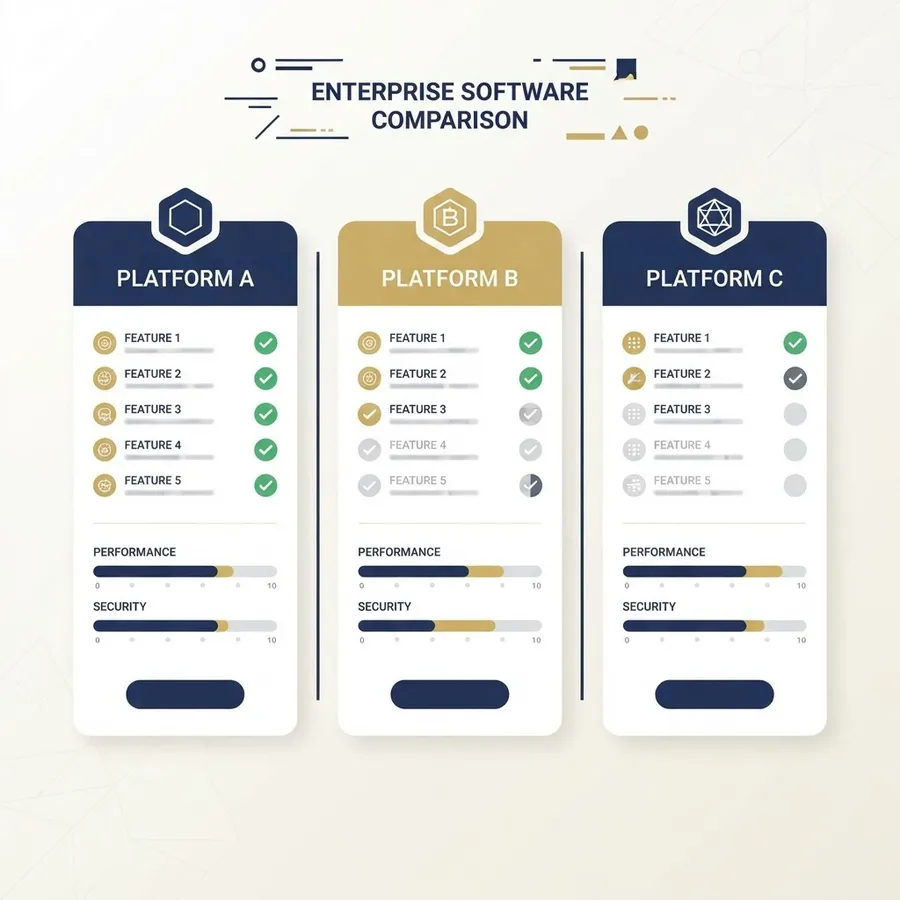
Comparison Table: Banking Social Media Platforms
| Platform | Best For | Native Archiving | Multi-Step Approvals | Social Listening | Typical Annual Cost |
|---|---|---|---|---|---|
| Hootsuite Enterprise | Regional and mid-size banks | Via integration | Yes, 3 levels | Yes | 15k to 60k USD |
| Sprinklr | Large and global banks | Yes | Yes, unlimited | Advanced AI | 100k+ USD |
| Sprout Social | Community banks, credit unions | Via integration | Yes, basic | Yes | 5k to 25k USD |
| Agorapulse | Small teams, tight budgets | No | Yes, basic | Limited | 1k to 6k USD |
| Smarsh or Proofpoint | Compliance and retention | Yes, core function | No, supervision only | No | 10k to 50k USD |
The Compliance Features You Must Verify Before Signing
Ask every vendor these seven questions in writing. We use this exact checklist during vendor selection engagements, and it consistently exposes gaps that sales decks hide.
- Do you capture third-party comments on our posts, or only content we publish?
- Are deleted posts retained in the archive with a deletion timestamp and actor?
- Can you export records in WORM-compliant format for an examiner?
- Does the approval log record the reviewer name, role, and timestamp per version?
- Can we enforce mandatory disclaimer text on specific content categories, such as deposit or lending offers?
- What is your data residency, and do you hold SOC 2 Type II certification?
- Can permissions be scoped per branch account, not just per user role?
If a vendor cannot answer question 1 or question 2 clearly, remove them from the shortlist. Public comments are the most frequently missed record in banking social media audits.

Why the Right Tool Actually Moves Revenue
Compliance is the entry ticket, not the business case. According to the FDIC National Survey of Unbanked and Underbanked Households, 48.3% of banked households used mobile banking as their primary account access method, up from 15.1% in 2017. When the primary relationship is digital, social becomes the highest-visibility trust signal a bank has.
Edelman research has repeatedly shown financial services ranking among the least trusted sectors globally, while employee voices are trusted more than corporate channels. That is precisely why employee advocacy features matter: a mortgage loan officer sharing compliance-approved content to their own network typically earns several times the engagement of the same post on the corporate page, because it comes from a person, not a logo.
A good platform turns that into a repeatable system: compliance approves once, 200 employees share safely, and every share is archived automatically. That is a revenue mechanism, not a marketing chore.

How to Choose: A Five-Step Selection Process
- Count your regulated surfaces. List every account, including branch pages, executive profiles, and recruiting accounts. Anything with your brand on it must be in scope.
- Decide archiving first. Choose your retention vendor before your publishing vendor, then confirm the integration exists, not that it is on the roadmap.
- Map your real approval chain. If compliance genuinely reviews everything, you need enforced blocking approvals, not notifications.
- Run a 30-day pilot on one product line. Publish, escalate a test complaint, delete a post, then export the audit record. If the export is incomplete, you have your answer.
- Budget for enablement. Software failure in banking is usually adoption failure. Allocate training time for branch staff, or the tool becomes a very expensive scheduler used by two people.
If your team lacks the internal bandwidth to run this evaluation and build the content engine behind it, a specialist partner such as WebPeak or a managed social media management service can operate the platform, maintain the approval workflow, and produce the compliance-ready content calendar on your behalf.

Common Mistakes Banks Make With Social Media Software
- Buying enterprise software for a two-person team. Unused seats and unconfigured workflows are the most common waste in bank marketing budgets.
- Treating direct messages as unregulated. DMs are records. Many teams archive posts but leave inboxes uncovered.
- Letting branches open their own accounts. Shadow accounts outside the platform are invisible to archiving and are a genuine examination risk.
- Ignoring review platforms. Google and Facebook reviews often contain complaints requiring formal response tracking.
- Skipping AI governance. If your team uses AI to draft captions, the approval log must show a human reviewed the output.

Key Takeaways
- Hootsuite Enterprise and Sprinklr lead banking social media management because they combine approvals, permissions, and archiving integrations at scale.
- Sprout Social and Agorapulse are strong, cost-effective picks for community banks and credit unions when paired with a dedicated archiving vendor.
- Archiving must capture third-party comments, deletions, and direct messages, not just published posts.
- FINRA Rule 2210 requires principal approval of retail social communications before publication, making enforced approval workflows non-negotiable.
- The FDIC reported 48.3% of banked households now use mobile banking as their primary access channel, making social a core trust surface.
- Choose your retention platform before your publishing platform, and validate the integration during a paid pilot.

Frequently Asked Questions (FAQ)
What is the best social media management software for banks?
Hootsuite Enterprise is the best all-round choice for most banks, offering three-level approvals, employee advocacy, and archiving integrations. Sprinklr suits large multinational banks needing AI risk scoring and unified customer care, while Sprout Social fits smaller community banks and credit unions with leaner marketing teams.
Do banks legally need to archive social media posts?
Yes. FINRA, SEC, and FFIEC guidance treat social media as business communication requiring retention, typically for three to seven years. Archiving must include published posts, edits, deletions, direct messages, and public comments on your content, stored in an exportable, tamper-evident format for examiners.
Can a bank just use free tools like Meta Business Suite?
Free native tools handle publishing but lack multi-step compliance approvals, cross-channel audit logs, and retention exports. A small bank can start there, but it should add an archiving platform immediately. Relying on native tools alone creates real gaps during regulatory examinations and complaint investigations.
How much should a bank budget for social media software?
Community banks typically spend 5,000 to 25,000 USD annually on publishing plus 10,000 or more for archiving. Regional banks generally land between 15,000 and 60,000 USD, and large institutions using Sprinklr often exceed 100,000 USD per year including implementation and support.
How do banks handle customer complaints posted publicly on social media?
Route them through the platform case management to your complaint-handling team, respond publicly without disclosing account details, then continue privately through a secure channel. Every step must be logged. Most regulators expect complaint records from social channels to match those from phone or branch interactions.
Does social media actually generate loans and deposits for banks?
Yes, primarily through employee advocacy and local targeting. Loan officers sharing pre-approved content to their own networks consistently outperform corporate pages on engagement, and branch-level review management directly influences local account openings. Track outcomes with UTM parameters tied to your CRM, not vanity metrics.