
A practical 2026 guide to Google AI Mode: how its query fan-out and synthesis work, what it changes about ranking signals, and the exact steps to keep your website visible and cited.
Complete Guide to Google AI Mode and How It Affects Website Rankings in 2026
Google AI Mode is no longer an experiment sitting behind a Labs toggle. It is a full search surface where Gemini-powered models read your page, decide whether it deserves to be part of an answer, and then either cite you or quietly leave you out. That single change reshapes what "ranking" means. You can hold position three for a keyword and still lose the click, because the answer above you already resolved the user's question using three other sources.
This guide explains exactly how AI Mode retrieves and selects content, which ranking signals gained weight in 2026, which ones lost it, and what to change on your site this quarter. Everything below reflects patterns we see repeatedly across client Search Console data at ZoneTechify and WebPeak: impressions climbing, click-through rate sliding, and conversion quality improving for the pages that got the structure right.
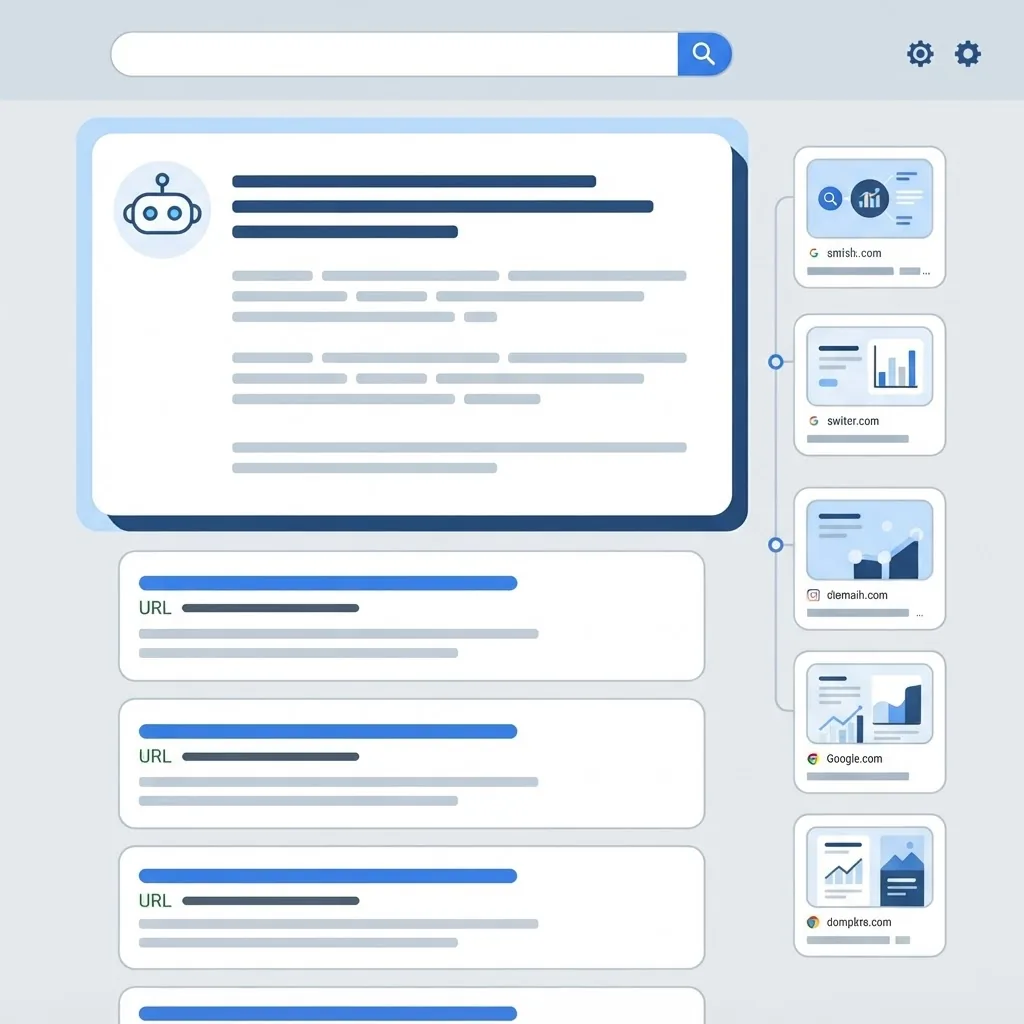
Quick Answer: Google AI Mode is a conversational search surface that breaks one query into many sub-queries, retrieves passages from multiple pages, and synthesizes a cited answer. It does not replace ranking signals, it layers passage-level selection on top of them, so sites lose clicks but gain citation visibility when content is structured, factual, and extractable.
What Google AI Mode Actually Is
Definition: Google AI Mode is a generative search experience inside Google Search that uses a custom Gemini model to answer a query directly, supported by inline links to the sources it drew from, with follow-up questions handled conversationally in the same session.
Three things distinguish it from the older AI Overviews block:
- It owns the whole result page, not a box at the top. Traditional organic listings appear below or in a side rail rather than as the primary answer.
- It holds context across turns. A user can ask "which is cheaper?" after "compare these two CRMs" without restating anything, so a single session can surface five to ten different source sets.
- It reasons over multiple documents. The model stitches a price from one page, a limitation from a second, and a verdict from a third.
That third point is the one most site owners underestimate. AI Mode does not need your whole article. It needs one paragraph that answers one sub-question better than anyone else's paragraph.
How AI Mode Retrieves and Ranks Content
Google has publicly described the mechanism it calls query fan-out: the system decomposes a single question into multiple related searches, runs them in parallel across its index, and then synthesizes the retrieved passages into one answer.
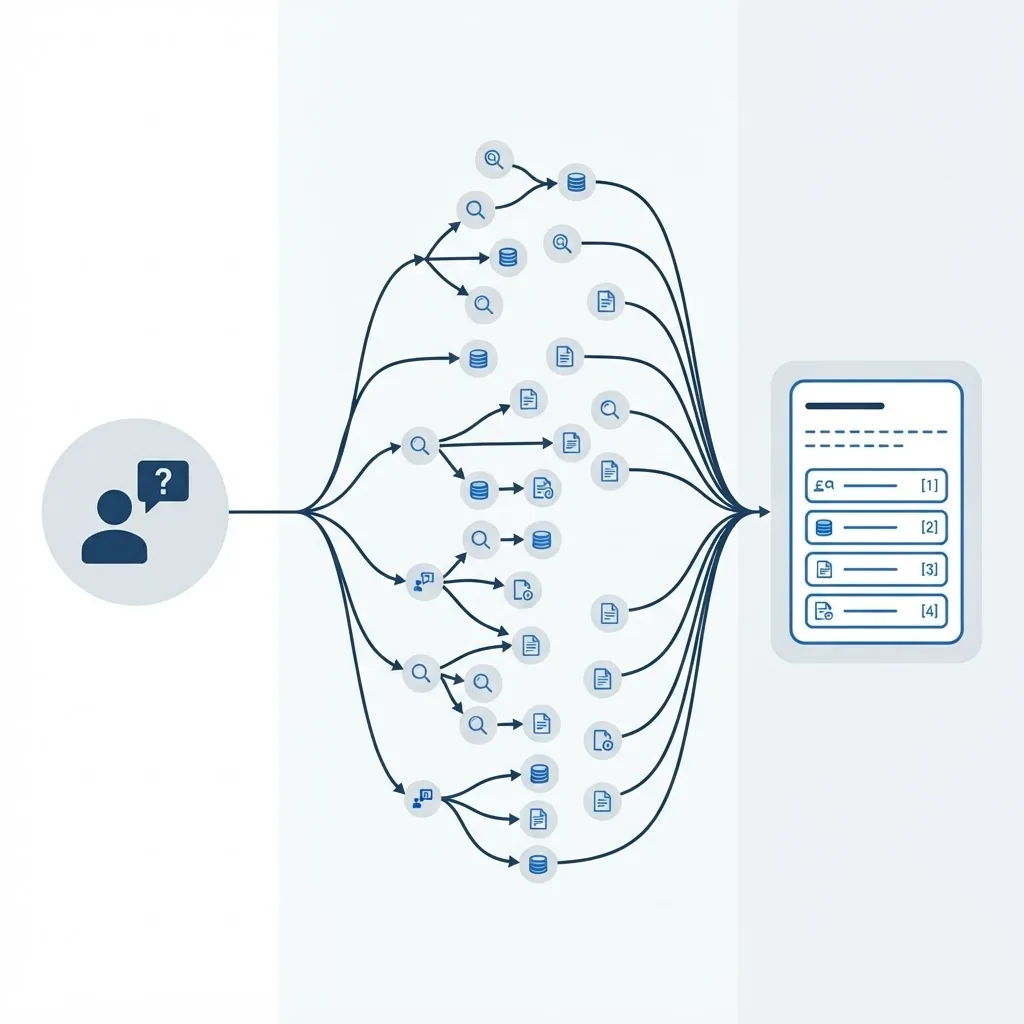
The practical chain looks like this:
- Decompose the query into sub-intents (definition, comparison, price, risk, alternative).
- Retrieve candidate passages for each sub-intent from the standard Google index, which still uses conventional ranking and quality systems as the first filter.
- Ground the draft answer against those passages so the model does not invent facts.
- Select citations, favouring passages that are self-contained and unambiguous.
- Synthesize the final response and attach source links.
Two consequences follow directly from that pipeline. First, classic SEO is still the entry ticket, because if a page cannot be retrieved for a sub-query it can never be cited. Second, passage quality now beats page quality at the selection stage. A 4,000-word guide with a vague middle section will lose a citation to a 600-word page that answers that exact sub-question in two clean sentences.
AI Mode vs Traditional Search Rankings
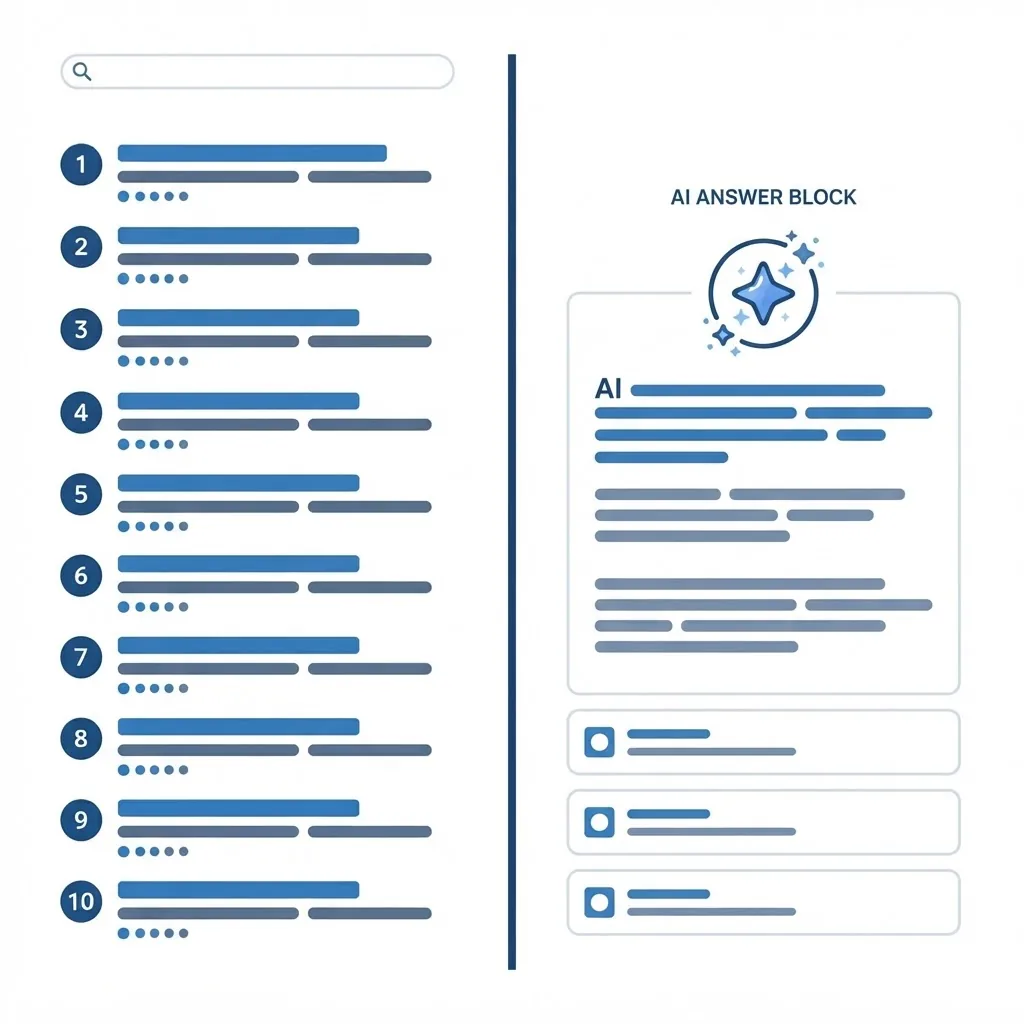
| Factor | Traditional Search | Google AI Mode (2026) |
|---|---|---|
| Unit of ranking | Whole page | Individual passage |
| Visible winners | Roughly 10 blue links | 3 to 8 cited sources |
| Query length | Short, keyword-led | Long, conversational, multi-part |
| Path to click | Title and meta description | Being cited, then offering depth the answer omitted |
| Value of position 1 | Very high CTR | Reduced, unless also cited |
| Best content shape | Comprehensive long form | Comprehensive plus extractable sub-answers |
| Brand mentions off-site | Indirect ranking effect | Direct influence on entity confidence |
| Measurement | Rank and CTR | Impressions, citation share, assisted conversions |
The row that costs businesses the most money is the last one. If your reporting still ends at average position, you will read an AI Mode shift as a catastrophe when it is often a redistribution.
What Actually Affects Rankings in AI Mode

1. Retrievability Before Anything Else
If Googlebot cannot render your content without executing client-side JavaScript, your passages are effectively invisible to the grounding step. Server-render or statically generate the text that carries your value. This is the single most common technical blocker we find on modern React and Next.js sites, and it is also the cheapest to fix.
2. Self-Contained Passages
Write sections that survive being lifted out of context. Replace "as mentioned above, this approach costs less" with "managed hosting costs roughly 30 to 40 percent more than self-hosted equivalents at comparable traffic." The second sentence can be cited. The first cannot.
3. Verifiable Specificity
AI Mode grounds answers in retrieved text, so numbers, dates, named versions, and stated methodology increase the chance your passage is chosen over a competitor's generality. Google's own guidance on helpful content emphasises first-hand experience and demonstrable expertise, and grounding rewards exactly that.
4. Entity Consistency
The model builds confidence about who you are from repeated, consistent signals: identical business name, consistent author bios with real credentials, matching details across your site, directories, and third-party mentions. Inconsistent entity data is a silent suppressor.
5. Structured Data
Schema markup does not force a citation, but Article, FAQPage, Product, Organization, and Person schema make relationships machine-unambiguous, which reduces the model's uncertainty about what your passage is describing.
6. Freshness Where Freshness Matters
For pricing, tooling, regulation, and anything versioned, an outdated page is a disqualified page. Genuinely revise rather than bumping the date, because AI Mode compares your claims against fresher competing passages.
The Real Traffic Impact, With Numbers
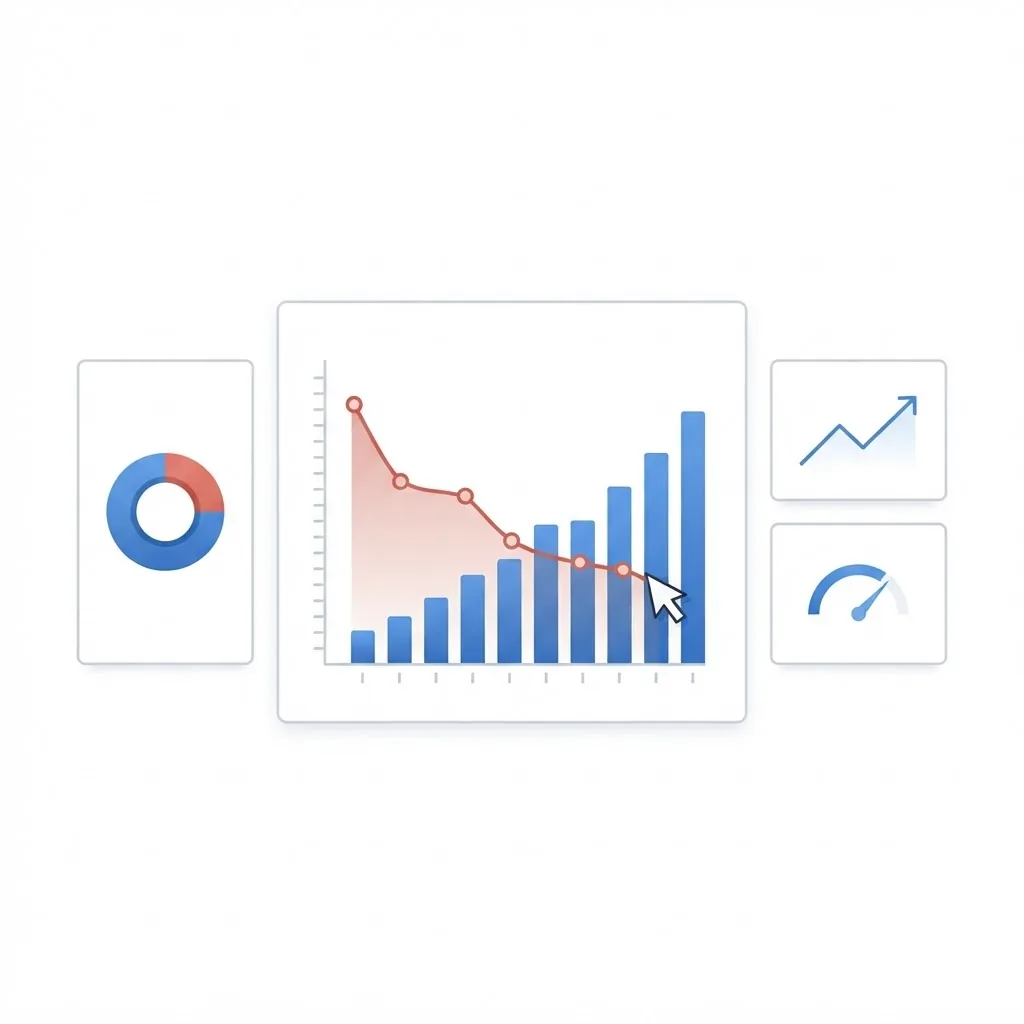
Two well-established data points frame the shift honestly.
- According to Google, 53 percent of mobile visitors abandon a page that takes longer than three seconds to load. In an AI Mode session, users arrive already partly informed and less patient, so slow pages fail at a higher rate than the same pages did in 2023.
- Pew Research Center's 2025 analysis of real browsing behaviour found that users clicked a traditional result on just 8 percent of visits to searches that included an AI summary, compared with 15 percent on searches without one. That is roughly a halving of onward clicks on affected queries.
What we consistently observe in client accounts matches that pattern with an important nuance: total impressions usually rise because conversational queries are longer and more varied, informational pages lose the most CTR, and pages built around comparisons, pricing, and specific implementation detail lose the least. The visitors who do arrive convert better, because the answer engine already filtered out the merely curious.
So the honest summary is not "AI Mode kills traffic." It is that AI Mode compresses low-intent informational traffic and rewards pages that offer something an answer cannot: proprietary data, tooling, pricing you must configure, and genuine expertise.
How to Optimize for AI Mode: A Practical Workflow
- Audit which queries already show AI answers. Segment those queries in Search Console and track them separately. Mixing them with unaffected queries hides the trend.
- Add a 40 to 60 word direct answer under every H2. Put the conclusion first, then the reasoning. This is the shape the model prefers to lift.
- Rewrite headings as real questions. Conversational queries match question-shaped headings far more reliably than noun-phrase headings.
- Convert prose comparisons into tables. Tables are unusually citation-friendly because each row is already an atomic, extractable fact.
- Publish something no model can synthesize. Original benchmarks, internal survey results, a calculator, annotated screenshots from work you actually did.
- Fix rendering and speed. Server-render key text, compress images, and target sub-2.5-second largest contentful paint.
- Strengthen author and organisation signals. Real names, real credentials, real bios, consistent everywhere.
- Build off-site mentions. Being described accurately on sites Google trusts raises entity confidence more efficiently than another on-page tweak.
- Change your KPIs. Track citation appearances, branded search volume, assisted conversions, and revenue per session alongside rank.
If your team lacks capacity to run this alongside normal publishing, structured content writing services built specifically around question-first architecture are usually the fastest route to a compliant content library.
Mistakes That Cost Rankings in AI Mode
- Blocking Google's AI crawlers to "protect" content. Restricting Google-Extended affects some AI training uses, but blocking Googlebot removes you from retrieval entirely, which removes you from citations.
- Publishing thin AI-generated summaries. Grounded synthesis is very good at detecting when a page adds nothing. Unoriginal pages get retrieved less over time.
- Chasing word count. Length without substance dilutes passage clarity and makes extraction harder.
- Ignoring the follow-up. Users ask second and third questions. If your page answers only the opening query, you exit the conversation early.
- Judging success by rank alone. You will misdiagnose healthy visibility as failure and cut budget from the pages that are actually working.
Key Takeaways

- Google AI Mode uses query fan-out: one query becomes many sub-queries, each answered by retrieved passages from different sites.
- Traditional ranking still gates retrieval, so technical SEO and quality content remain prerequisites rather than legacy work.
- Passage-level clarity now determines citation more than total page authority does.
- Pew Research Center found onward clicks fell from 15 percent to 8 percent of visits when an AI summary was present.
- Google reports 53 percent of mobile users abandon pages slower than three seconds, and AI Mode traffic is even less patient.
- Expect impressions up and CTR down; measure citation share, branded search, and revenue per session instead of rank alone.
- Original data, tools, and first-hand experience are the assets a generative answer cannot replace.
Frequently Asked Questions (FAQ)
Does Google AI Mode replace normal SEO?
No. AI Mode retrieves candidate passages from Google's standard index, so crawlability, page quality, internal linking, and site speed still decide whether you are eligible at all. AI Mode adds a passage-selection layer on top of conventional ranking rather than replacing it, so good SEO fundamentals matter more than before.
Will my website traffic drop because of Google AI Mode?
Informational pages typically lose click-through rate while impressions rise. Pew Research Center measured onward clicks falling from about 15 percent to 8 percent of visits on searches with AI summaries. Comparison, pricing, tooling, and implementation pages hold up far better and often convert at a higher rate.
How do I get my site cited in Google AI Mode?
Write self-contained passages that answer one specific question in 40 to 60 words, place them directly under question-shaped headings, include verifiable numbers and dates, add relevant schema markup, and make sure the text renders server-side. Citation follows extractability plus specificity more than raw word count.
Should I block Google's AI crawlers to protect my content?
Generally no. Blocking Googlebot removes you from retrieval and therefore from citations and rankings. You can restrict Google-Extended to limit certain AI training uses, but that trade-off reduces future visibility. Most publishers gain more from being cited than from being excluded.
What metrics should I track for AI Mode performance in 2026?
Track impressions and CTR separately for AI-affected queries, citation appearances for your key topics, branded search volume, assisted conversions, and revenue per session. Average position alone will mislead you, because you can rank well, lose clicks, and still be gaining qualified visitors and brand awareness.
How long does it take to see results after optimizing for AI Mode?
Technical fixes like server rendering and speed improvements can influence retrieval within a few weeks. Content restructuring and entity-consistency work typically show measurable citation gains over eight to twelve weeks, since Google needs to recrawl, reassess quality, and rebuild confidence in your updated pages.
Final Word
AI Mode did not break SEO. It moved the finish line from "be on page one" to "be the passage worth quoting." Sites that publish specific, verifiable, well-structured expertise are gaining citation visibility and higher-intent traffic right now, while sites recycling generic summaries are losing both. Audit your top twenty pages against the workflow above, start with rendering and answer structure, and measure citations rather than positions.