
A practical, tested breakdown of the 15 AI tools that actually move the needle for content, SEO, and marketing teams in 2026 — with pricing logic, use cases, and a comparison table.
Top 15 AI Tools for Content Creation, SEO, and Digital Marketing Every Business Should Use in 2026
Most businesses in 2026 do not have an AI problem. They have an AI stack problem. There are now more than 30,000 AI tools listed across public directories, and the average marketing team pays for six to nine of them while actively using two or three. That gap is where budget quietly disappears.
This guide fixes that. Below are 15 AI tools that survive real production use across content creation, SEO, and digital marketing — chosen based on how agencies and in-house teams actually deploy them, not on feature lists. Each entry explains what the tool is genuinely good at, where it fails, and who should skip it.
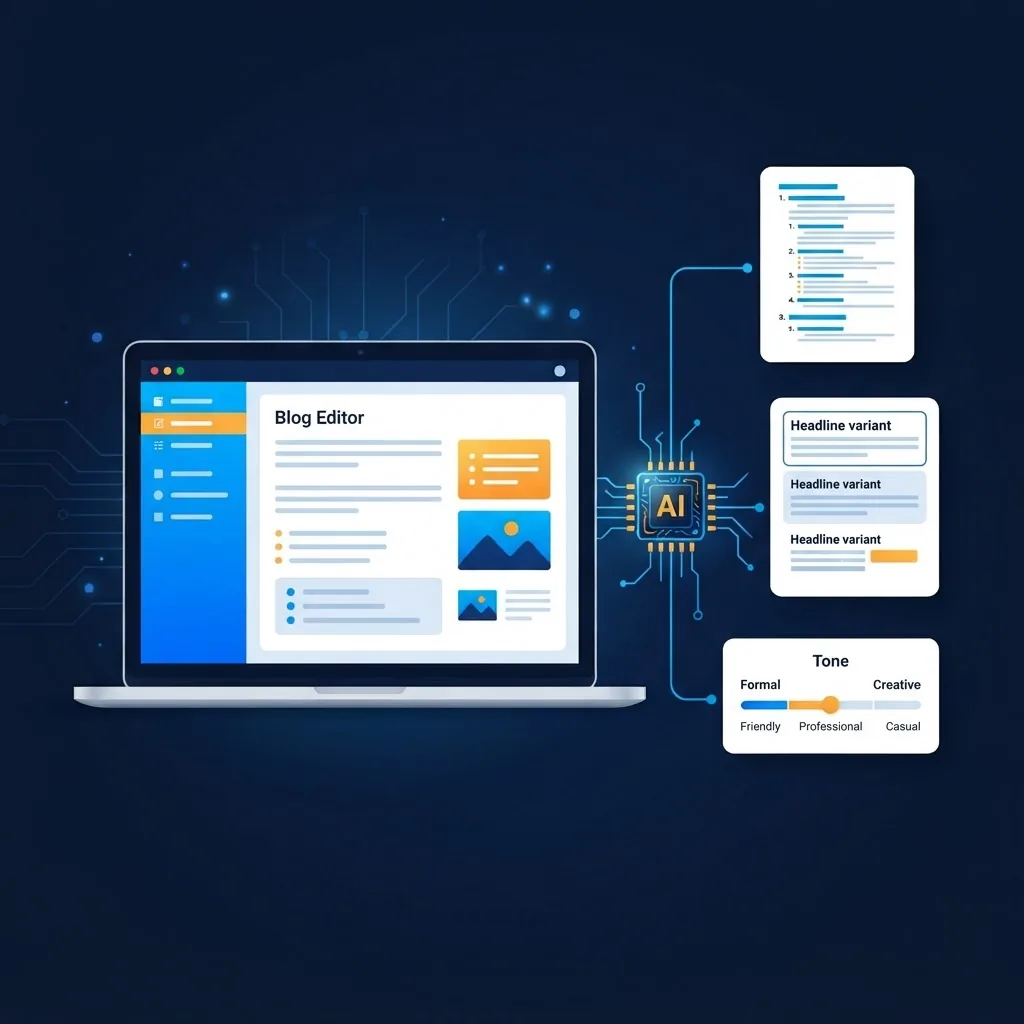
Quick Answer: The best AI tools for 2026 combine three layers: a reasoning model (ChatGPT, Claude, or Gemini) for thinking, a specialist SEO platform (Semrush, Ahrefs, or Surfer) for search data, and an execution tool (Canva, HeyGen, or Zapier) for output. Most businesses need only five to seven tools total, not fifteen.
How These 15 AI Tools Were Selected
The selection criteria were deliberately narrow. A tool made this list only if it met four conditions: it has been in market long enough to have a stable API, it produces output a professional would ship without rewriting from scratch, it integrates with at least two other tools in a normal marketing stack, and it survives the "cancel test" — meaning teams notice its absence within a week.
That filter eliminated dozens of popular tools that demo beautifully and get abandoned by month two. According to McKinsey's State of AI research, 78 percent of organizations now use AI in at least one business function, but adoption depth varies wildly — and the tools below are the ones that actually get used daily rather than trialled and forgotten.
The Three-Layer AI Stack Framework
Before listing tools, understand the architecture. An AI marketing stack has three layers, and buying two tools from the same layer is the single most common budget mistake.
- Reasoning layer — general-purpose models that plan, analyze, and draft. You need exactly one primary.
- Specialist layer — tools with proprietary data or models: SEO crawlers, keyword databases, video generators, ad optimizers.
- Execution layer — automation, scheduling, and design tools that ship the work.
Teams that skip layer one and buy five layer-two tools end up with expensive dashboards nobody reads. Teams that buy only layer one produce fast drafts with no distribution.
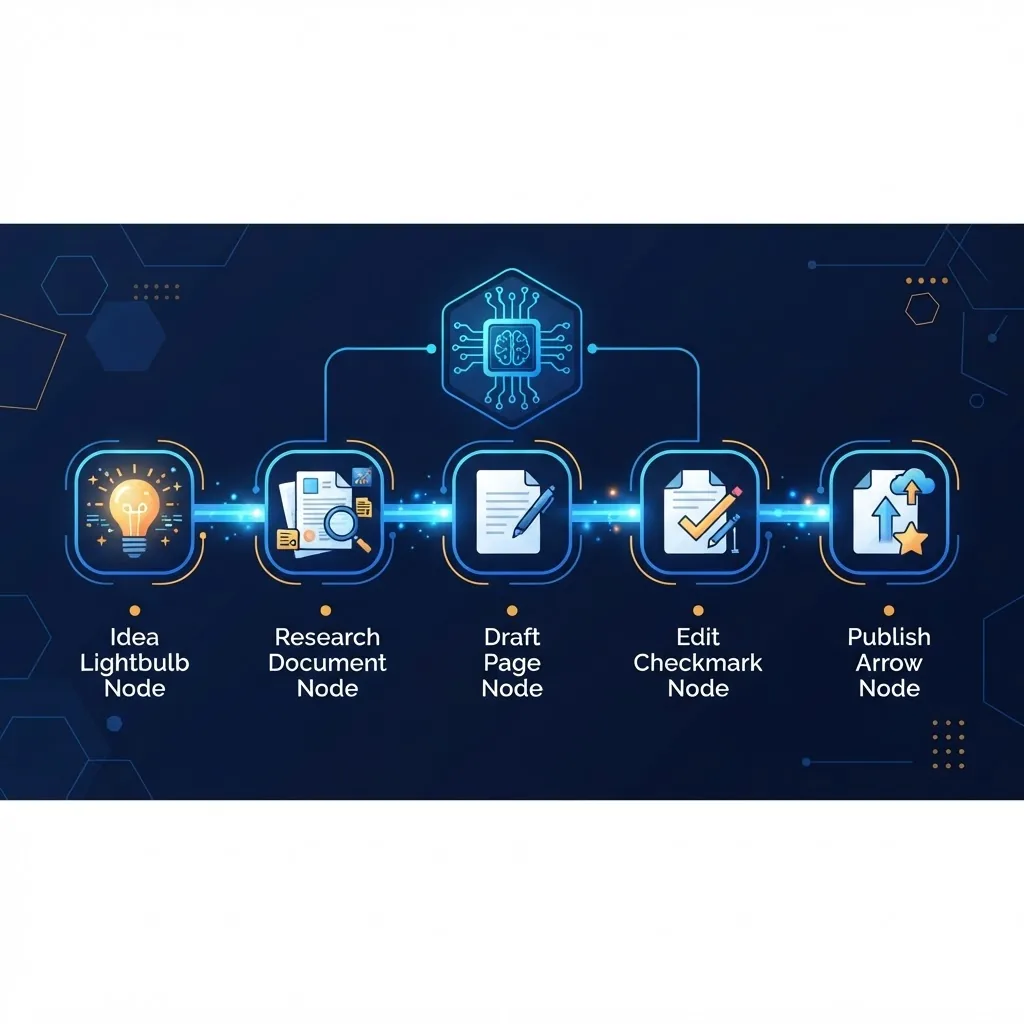
AI Tools for Content Creation
1. ChatGPT
Still the default reasoning engine for most teams. Its strongest 2026 use case is not writing final copy — it is structured thinking: turning a messy brief into an outline, stress-testing an argument, or converting a transcript into five distinct content formats. Custom instructions plus project-level memory make it a genuine team asset rather than a novelty chat window.
Where it fails: long-form brand voice consistency without heavy prompting scaffolding.
2. Claude
The better choice when document length and nuance matter. Claude handles 100,000-plus word contexts, which makes it the practical tool for auditing an entire content library, rewriting documentation, or analyzing a year of customer support tickets for content gaps. Writers consistently report its long-form prose needs less line-level editing.
Where it fails: it has no native image generation, so it is not a one-stop tool.
3. Gemini
Gemini earns its place through Google Workspace integration. If your team lives in Docs, Sheets, and Gmail, Gemini removes the copy-paste tax entirely — it reads the document you are already in. Its multimodal analysis of screenshots and video is also strong for competitive teardowns.
4. Jasper
Jasper is a brand-voice layer built on top of foundation models. It is worth paying for only in one specific scenario: multiple writers producing high volume for the same brand, where consistency matters more than raw quality. Brand Voice training plus campaign templates make it defensible for teams of five or more. Solo founders should not buy it.
5. Grammarly
Unglamorous and indispensable. In 2026, Grammarly functions less as a spell checker and more as a final-mile quality gate — tone detection, clarity rewrites, and plagiarism checks before publish. Its value is that it catches the errors AI drafts specifically produce: over-hedged sentences and inflated word counts.
6. Descript
Descript turned audio and video editing into text editing, and that is still its edge. Record once, delete filler words automatically, generate clips, and export a written transcript that becomes a blog post. For businesses repurposing podcasts or webinars, it collapses a three-person workflow into one. Teams that need this level of production polish often pair it with professional content writing services for the strategy layer.
7. Canva Magic Studio
The most under-rated AI purchase for small businesses. Magic Studio's value is not generating art — it is bulk resizing, background removal, and brand-kit-locked templates that let a non-designer produce 40 on-brand social assets in an afternoon.

AI Tools for SEO
8. Semrush
Semrush remains the broadest SEO platform, and its AI additions matter most in two places: keyword intent clustering and AI Overview tracking. Since Google began surfacing AI-generated answers, tracking whether your pages are cited — not just ranked — became a separate discipline. Semrush measures it.
9. Ahrefs
Buy Ahrefs for backlink data and Site Audit. Its crawler and link index are the reason it stays in stacks alongside Semrush at larger companies. The AI layer is thinner than competitors', which is arguably a feature: the data is the product.
10. Surfer SEO
Surfer is the on-page execution tool. It analyzes the top-ranking pages for a query and produces a concrete content brief: terms to include, target word count, heading structure. Used correctly it shortens the gap between "we wrote something" and "we wrote something competitive." Used lazily it produces keyword-stuffed pages that fail Google's helpful content standards.
11. Screaming Frog
The technical SEO workhorse. It crawls your site the way a search engine does and surfaces broken links, redirect chains, duplicate titles, and orphan pages. No AI polish, enormous practical value — and it pairs naturally with proper web development work when the fixes are structural rather than editorial.
12. Google Search Console
Free, first-party, and non-negotiable. According to Google, Core Web Vitals and mobile usability data reported here directly reflect the signals used in ranking evaluation. Every other SEO tool estimates; Search Console tells you what Google actually recorded.

AI Tools for Digital Marketing
13. HubSpot AI
HubSpot's advantage is that its AI sits on top of your own CRM data. Predictive lead scoring, email subject line generation, and automated follow-up sequences work because the model sees your actual pipeline. Standalone AI email tools cannot match that context.
14. HeyGen
AI video avatars and translation. The specific business case that works: taking one product explainer and producing it in eight languages with lip-synced delivery, at roughly one percent of the cost of reshooting. Localization is where AI video is genuinely production-ready in 2026.
15. Zapier
The glue layer. Zapier's AI agents can now read an incoming form submission, classify it, draft a reply, and route it — without a developer. Its role is not to be impressive but to remove the 20 small manual handoffs that slow every marketing team down.

AI Tool Comparison Table
| Tool | Primary Use | Stack Layer | Best For | Free Tier |
|---|---|---|---|---|
| ChatGPT | Reasoning and drafting | Reasoning | Every team | Yes |
| Claude | Long-form and analysis | Reasoning | Writers, researchers | Yes |
| Gemini | Workspace-native AI | Reasoning | Google-based teams | Yes |
| Jasper | Brand voice at scale | Specialist | Teams of 5+ | No |
| Grammarly | Editing and clarity | Execution | All writers | Yes |
| Descript | Video and podcast repurposing | Specialist | Media teams | Yes |
| Canva Magic Studio | Design and bulk assets | Execution | Small businesses | Yes |
| Semrush | Keyword and AI visibility | Specialist | SEO leads | Limited |
| Ahrefs | Backlinks and audits | Specialist | Agencies | Limited |
| Surfer SEO | On-page optimization | Specialist | Content teams | No |
| Screaming Frog | Technical crawling | Specialist | Developers, SEOs | Yes |
| Search Console | First-party search data | Specialist | Everyone | Yes |
| HubSpot AI | CRM-driven marketing | Execution | B2B sales teams | Yes |
| HeyGen | AI video and translation | Specialist | Global brands | Limited |
| Zapier | Workflow automation | Execution | Ops-heavy teams | Yes |
Key Definitions for 2026
Generative Engine Optimization (GEO): the practice of structuring content so AI answer engines can extract and cite it accurately, measured by citation frequency rather than blue-link position.
Answer Engine Optimization (AEO): optimizing for direct-answer surfaces — featured snippets, voice results, and AI summaries — using concise 40-to-60-word answers under clear headings.
AI visibility: the share of AI-generated answers in your category that mention or link your brand. It is now tracked as a distinct KPI alongside organic traffic.

How to Build Your Stack Without Overspending
Start with a 30-day audit rather than a shopping list.
- List every manual task your team repeats weekly and time it.
- Pick one reasoning tool and use it for 30 days before buying anything else.
- Add one specialist tool only when a specific metric is stuck — rankings, video output, email conversion.
- Automate last. Automating a broken process just makes it fail faster.
- Review quarterly and cancel anything with fewer than four logins per month.
Teams that follow this sequence typically run a functional stack for 200 to 400 dollars monthly instead of 1,200. For businesses that want the strategy layer built alongside the tooling, working with a specialist partner like ZoneTechify or WebPeak shortens the learning curve considerably.

The Mistakes That Waste AI Budgets
The most expensive error is treating AI output as finished work. Published, unedited AI content correlates strongly with traffic decline after helpful-content assessments, because it lacks the first-hand experience signals Google's guidelines explicitly reward.
The second error is buying overlapping tools across the same layer. The third is measuring the wrong thing: content volume instead of qualified traffic, or words produced instead of pipeline created.
Frequently Asked Questions (FAQ)
What is the best AI tool for content creation in 2026?
For most businesses, Claude produces the cleanest long-form drafts while ChatGPT is stronger for research, structuring, and multi-format repurposing. Choose one as your primary rather than paying for both, and add Grammarly as a final editing gate before publishing anything.
Do I really need 15 AI tools for my business?
No. Most businesses need five to seven: one reasoning model, one SEO platform, one design tool, one automation tool, and one specialist tool for their main channel. Buying more than that usually creates overlapping subscriptions that nobody logs into after the first month.
Will Google penalize content written with AI tools?
Google does not penalize AI use itself — it penalizes unhelpful, unoriginal content regardless of how it was produced. Content that adds real experience, verified data, and original analysis performs fine. Mass-published, unedited AI text reliably loses visibility over time.
How much should a small business budget for AI marketing tools?
A lean, effective stack costs roughly 200 to 400 dollars per month in 2026. That typically covers one premium reasoning model, one SEO platform, a design subscription, and an automation plan. Start with free tiers for 30 days before committing to any annual contract.
Which AI tools help my brand get cited by ChatGPT and Gemini?
Semrush now tracks AI Overview and answer-engine citations, and Search Console shows what Google actually indexed. Beyond tooling, citations come from clear definitions, concise answers, original data, and structured headings — the same practices that win featured snippets.
Can AI tools replace my marketing team?
No. AI compresses execution time but cannot set strategy, own relationships, or make judgment calls about brand risk. The realistic outcome is a smaller team producing significantly more output, with humans handling positioning, verification, and final quality control.
Key Takeaways
- More than 30,000 AI tools exist, but a functional business stack needs only five to seven.
- McKinsey reports 78 percent of organizations use AI in at least one function; depth of use, not adoption, now separates winners.
- Build in three layers: reasoning, specialist, execution — and buy only one tool per layer initially.
- Google penalizes unhelpful content, not AI-assisted content; editing and original insight are the deciding factors.
- Track AI citation visibility as a separate KPI from organic rankings starting in 2026.
- Audit quarterly and cancel any tool with fewer than four monthly logins.
The businesses winning with AI in 2026 are not the ones with the longest tool list. They are the ones who picked fewer tools, learned them properly, and kept a human in charge of judgment.