
An expert breakdown of the France healthcare artificial intelligence market: growth drivers, real use cases, regulation, key players, and where the sector is heading.
France Healthcare Artificial Intelligence Market

France has quietly become one of Europe's most serious players in medical AI. Between a nationalised healthcare system that generates vast structured data, a government pledging billions to artificial intelligence, and a dense cluster of research hospitals and startups, the country has the exact ingredients the technology needs. The France healthcare artificial intelligence market is no longer a research curiosity. It is shaping how radiologists read scans, how hospitals manage beds, and how new drugs reach trial faster.
This guide explains what is actually happening on the ground, backed by concrete numbers, real deployments, and the regulatory reality that determines what can and cannot ship. Whether you are an investor, a health-tech founder, or a clinician trying to separate hype from substance, you will leave with a clear picture of where the market stands and where it is going.
Quick Answer: The France healthcare AI market is a rapidly expanding sector, projected to grow at roughly 40% CAGR through 2030, driven by national data infrastructure like the Health Data Hub, strong public investment, and mature adoption in medical imaging, diagnostics, and drug discovery across French hospitals and startups.
Why France Is a Standout Market for Medical AI
France combines three advantages that most countries lack simultaneously. First, its universal healthcare system, Assurance Maladie, produces one of the largest and most consistent health databases in the world through the SNDS (Systeme National des Donnees de Sante), covering roughly 67 million people. AI thrives on volume and consistency, and few nations can match that scale of longitudinal, single-payer data.
Second, public investment is substantial and deliberate. Under the France 2030 plan, the government committed billions of euros to artificial intelligence and health innovation, with dedicated funding for AI-driven diagnostics and biocluster development. Third, France has world-class clinical research centres such as the Assistance Publique-Hopitaux de Paris (AP-HP), Europe's largest hospital group, which actively partners with AI vendors on validation studies.
The result is an environment where a promising algorithm can move from a research lab to a real clinical pilot faster than in more fragmented markets. Agencies building digital and AI strategy, including specialists like ZoneTechify and WebPeak, watch markets like France precisely because infrastructure maturity predicts adoption speed.
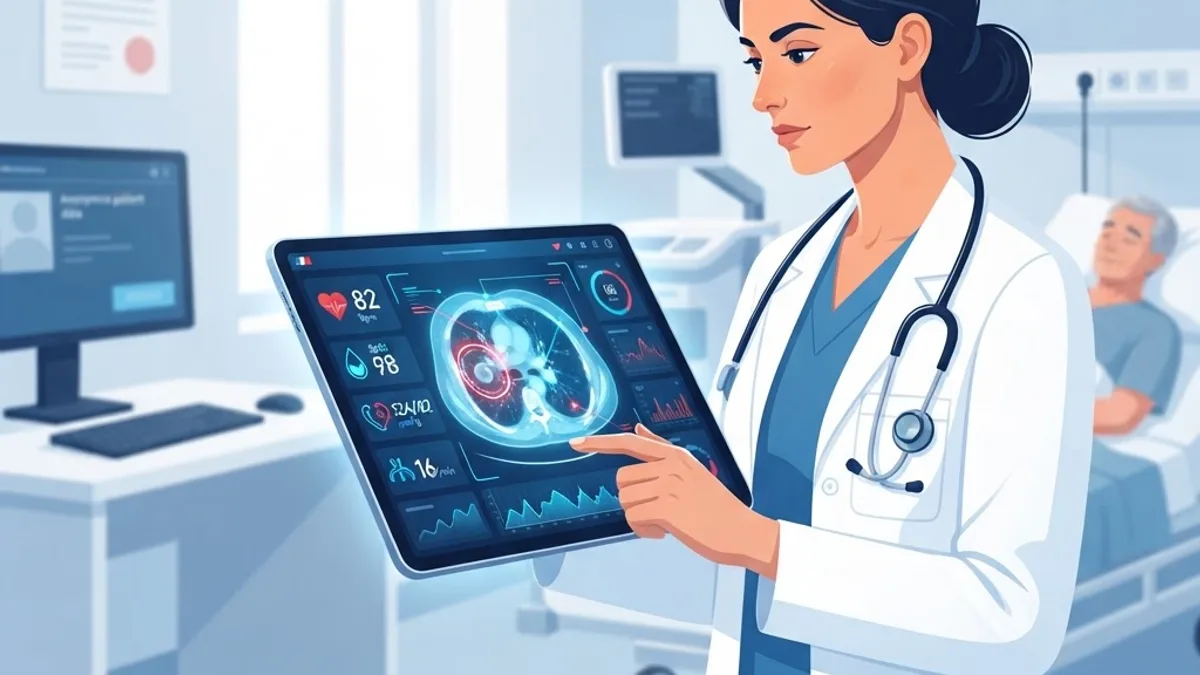
Market Size and Growth Outlook
The numbers tell a consistent story of acceleration. Global healthcare AI is expanding fast, and France captures an outsized share of the European segment. According to widely cited industry analyses, the global healthcare AI market is growing at more than 40% annually, and France ranks among the top three European contributors alongside Germany and the United Kingdom.
Several factors push French growth above the baseline. An ageing population increases demand for efficiency, clinician shortages create pressure to automate routine analysis, and reimbursement pathways are slowly opening for validated AI tools. According to Eurostat data, more than 21% of France's population is aged 65 or older, a demographic reality that makes productivity-enhancing AI a necessity rather than a luxury.

Key Growth Drivers at a Glance
- Public funding: France 2030 channels dedicated capital into health AI and biotech.
- Data availability: SNDS and the Health Data Hub provide rare, nationwide datasets.
- Clinical demand: Radiologist and specialist shortages accelerate tool adoption.
- Startup density: Paris and Lyon host a growing cluster of medical AI ventures.
- EU alignment: Regulatory clarity through the EU AI Act reduces investment uncertainty.
Where AI Is Actually Being Used in French Healthcare
The most mature adoption is in medical imaging. French startups such as Gleamer, which builds AI for bone-fracture detection on X-rays, and Therapixel, focused on breast cancer screening, have secured regulatory clearance and real hospital deployments. Radiology is a natural entry point because images are standardised, outcomes are measurable, and the shortage of radiologists is acute.
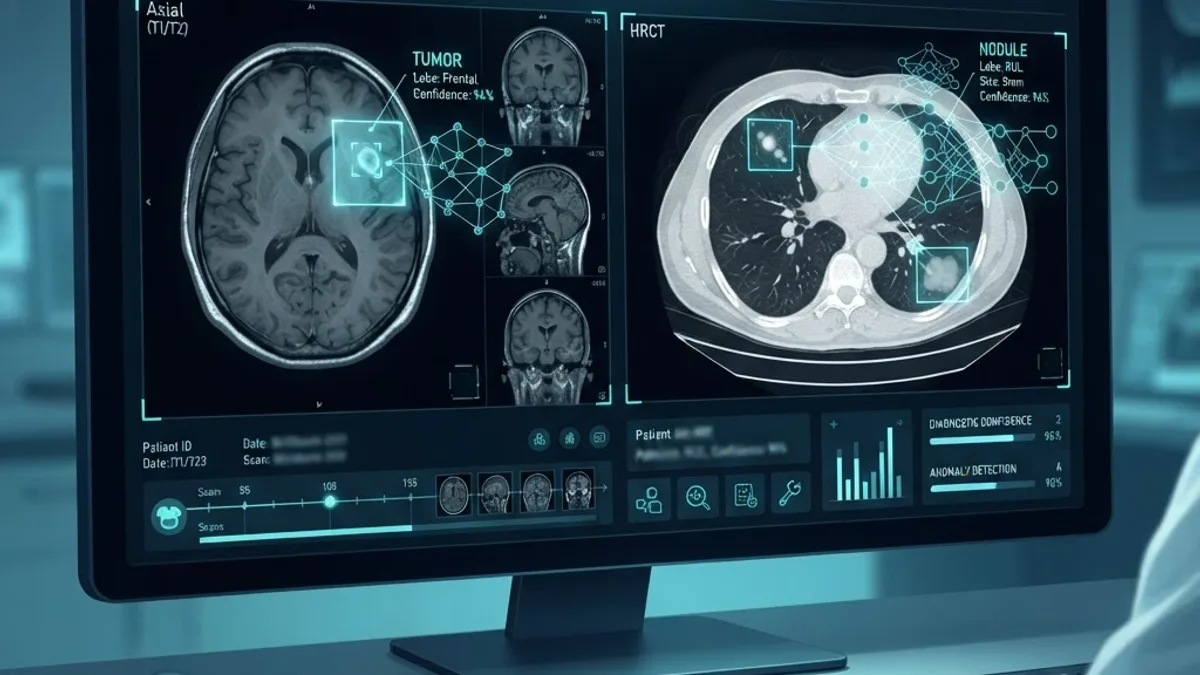
Beyond imaging, adoption spans several clear categories:
- Diagnostics and triage — algorithms flag urgent findings so clinicians prioritise the sickest patients first.
- Hospital operations — AP-HP has used predictive models to forecast admissions and manage bed capacity.
- Drug discovery — companies like Owkin apply machine learning to biomarker discovery and clinical trial optimisation.
- Remote monitoring — connected devices track chronic conditions and alert care teams to deterioration.
- Administrative automation — natural language processing reduces documentation burden for overworked staff.
AI Drug Discovery: France's Quiet Strength
Owkin, a Paris-founded company valued above 1 billion dollars, is emblematic of France's biotech-AI crossover. By training models on federated hospital data, it identifies which patients respond to specific treatments without moving sensitive records off-site. This federated approach is particularly well suited to France's privacy-first culture and is becoming a template other markets study.

The Health Data Hub: France's Central Nervous System
No discussion of the French market is complete without the Health Data Hub (HDH). Launched in 2019, the HDH consolidates health data to enable approved research and AI development under strict governance. It is arguably the single most important structural asset in the ecosystem because it lowers the biggest barrier medical AI faces: access to large, high-quality, consented data.

Definition — Health Data Hub: A national platform that centralises and secures French health data, granting vetted researchers and companies controlled access for AI, epidemiology, and public health projects under CNIL oversight.
The HDH has not been without controversy. Its initial reliance on a US cloud provider triggered debate over data sovereignty, prompting a shift toward European hosting solutions. This tension between innovation speed and sovereignty is a defining theme of the French market, and it directly shapes vendor selection and architecture decisions for any company entering the space.
Regulation: The EU AI Act and Medical Device Rules
Regulation is not an afterthought in France; it is central to whether a product can be sold. Two frameworks matter most. The EU Medical Device Regulation (MDR) classifies most diagnostic AI as a medical device requiring CE marking and clinical evidence. The EU AI Act, the world's first comprehensive AI law, designates most healthcare AI as high-risk, imposing strict requirements for transparency, human oversight, and risk management.
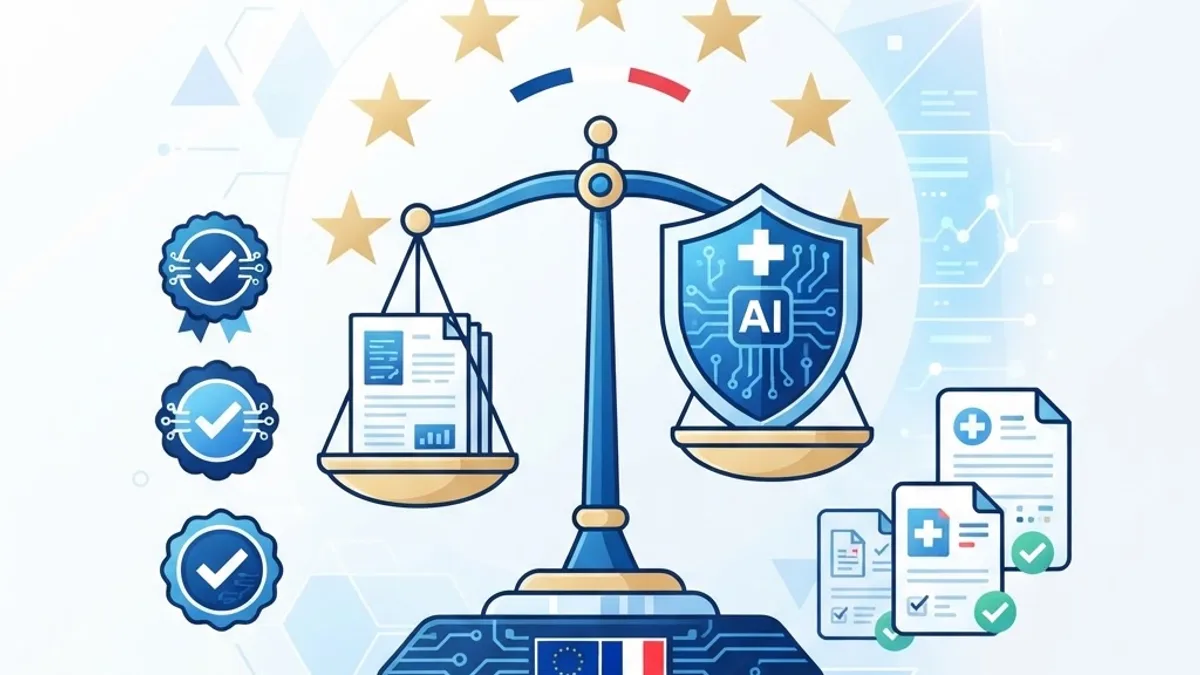
France's data protection authority, the CNIL, enforces GDPR rigorously, meaning any AI touching patient data must demonstrate lawful basis, minimisation, and security. For founders, this means compliance is a product feature, not paperwork. Teams that build AI systems with these rules in mind from day one, an approach reflected in specialist artificial intelligence services, reach market far faster than those retrofitting compliance later.
France Healthcare AI: Advantages vs Challenges
| Factor | Advantage | Challenge |
|---|---|---|
| Data access | SNDS and Health Data Hub offer nationwide datasets | Sovereignty and privacy concerns slow approvals |
| Funding | Strong public and France 2030 investment | Reimbursement pathways still maturing |
| Talent | Elite research and engineering pipeline | Competition from US and UK salaries |
| Regulation | Clear EU-wide framework reduces uncertainty | High-risk classification raises compliance cost |
| Clinical adoption | Large hospital groups pilot actively | Change management within hospitals is slow |
Key Players Shaping the Market
The ecosystem blends startups, hospitals, and global firms. On the startup side, Owkin, Gleamer, Therapixel, Cardiologs (acquired by Philips), and Incepto lead in specialised niches. On the institutional side, AP-HP, Institut Curie, and Gustave Roussy provide the clinical validation that turns prototypes into products. Global technology and pharmaceutical companies increasingly partner with these French players to access both talent and data.
What distinguishes the winners is not model sophistication alone. It is the combination of clinical validation, regulatory clearance, and integration into existing hospital workflows. An algorithm that cannot slot into a radiologist's PACS system, no matter how accurate, will not scale.
The Road Ahead: What to Expect Through 2030
Expect three shifts. First, reimbursement will formalise, giving hospitals financial incentive to adopt validated tools, which historically triggers a step-change in uptake. Second, generative AI will move into documentation and clinical decision support, reducing administrative load that consumes a large share of clinician time. Third, data sovereignty will drive European infrastructure, favouring vendors who host and process data within the EU.
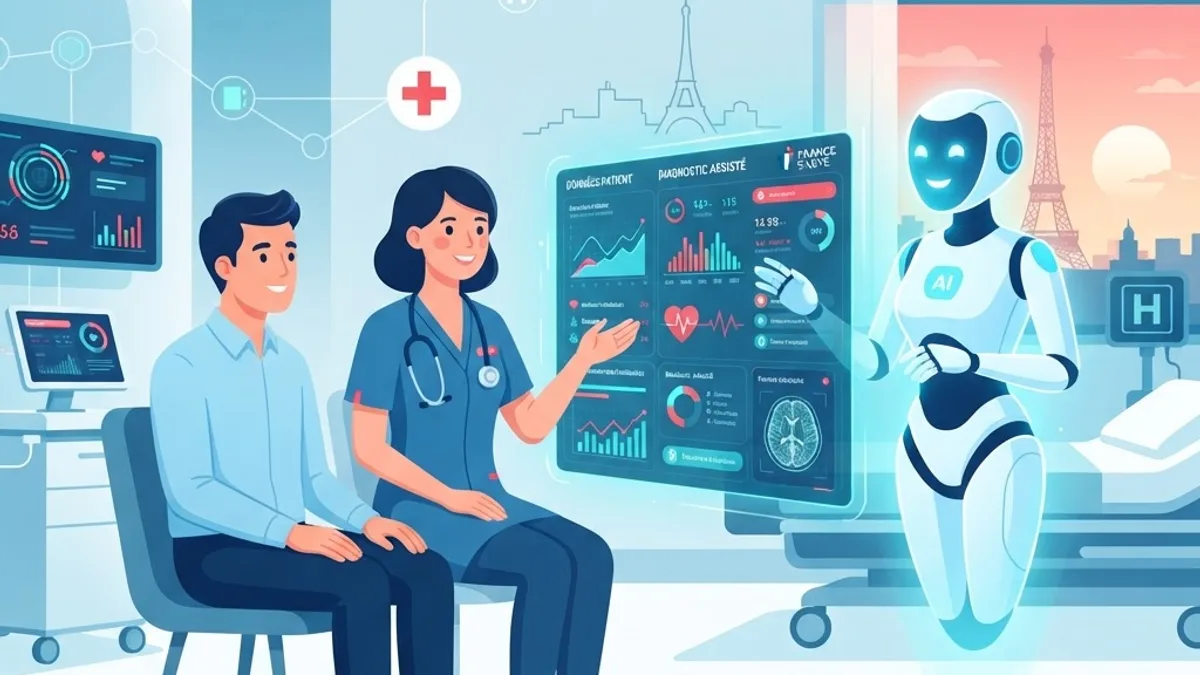
The overall trajectory is clear: France is positioning itself as the European testbed where regulated, trustworthy medical AI proves it can work at national scale.
Key Takeaways
- The France healthcare AI market is growing at roughly 40% annually and ranks among Europe's top three.
- The SNDS covers about 67 million people, giving France a rare data advantage for AI training.
- Medical imaging is the most mature use case, led by Gleamer and Therapixel.
- The Health Data Hub is the ecosystem's central asset but faces data-sovereignty scrutiny.
- The EU AI Act classifies most healthcare AI as high-risk, making compliance a core product requirement.
- Owkin exemplifies France's strength in federated, privacy-preserving drug discovery.
Frequently Asked Questions (FAQ)
How big is the healthcare AI market in France?
France is one of Europe's three largest healthcare AI markets, growing at roughly 40% per year in line with the global sector. Precise figures vary by source, but strong public funding through France 2030 and nationwide health data make it one of the continent's fastest-expanding segments.
What is the Health Data Hub in France?
The Health Data Hub is a national platform launched in 2019 that securely centralises French health data. It gives vetted researchers and companies controlled access for AI and public health projects under CNIL supervision, making it the single most important data asset in the French medical AI ecosystem.
Is AI legally allowed in French hospitals?
Yes, but under strict rules. Diagnostic AI usually qualifies as a medical device needing CE marking under EU MDR, and most healthcare AI is classified as high-risk under the EU AI Act. Tools must also comply with GDPR and CNIL requirements before clinical deployment.
Which French companies lead in medical AI?
Leading players include Owkin in drug discovery, Gleamer and Therapixel in medical imaging, and Cardiologs in cardiac diagnostics. Major hospital groups such as AP-HP, Institut Curie, and Gustave Roussy provide the clinical validation that turns these products into regulated, deployable tools.
What are the biggest challenges for healthcare AI in France?
The main challenges are data sovereignty concerns, immature reimbursement pathways, and the high compliance cost of high-risk AI classification. Slow hospital change management and international competition for talent also limit growth, even though France's data and funding advantages remain substantial.
Will AI replace doctors in France?
No. AI in France is designed to assist clinicians, not replace them. The EU AI Act mandates human oversight for high-risk medical systems, so tools flag findings, reduce administrative load, and speed analysis while final diagnostic and treatment decisions remain firmly with qualified doctors.