
A clear, expert guide to the Emirates Council for Artificial Intelligence and Digital Transactions, its mandate, its role in UAE AI Strategy 2031, and what it means for businesses.
Emirates Council for Artificial Intelligence and Digital Transactions
The United Arab Emirates has spent the last decade turning "AI-first government" from a slogan into public policy. At the center of that shift sits the Emirates Council for Artificial Intelligence and Digital Transactions, a federal body created to coordinate how the country adopts artificial intelligence, governs data, and runs secure digital services across every ministry. If you are trying to understand who actually steers the UAE's AI agenda, and why it matters for businesses operating in the region, this guide answers those questions directly.

Quick Answer: The Emirates Council for Artificial Intelligence and Digital Transactions is a UAE federal body that oversees national AI adoption, digital transactions, and data governance across government entities. It aligns projects with the UAE AI Strategy 2031, sets ethical standards, and drives the country's shift toward AI-powered, paperless public services.
What Is the Emirates Council for Artificial Intelligence and Digital Transactions?
The Council is a federal coordinating authority responsible for advancing artificial intelligence and secure digital transactions across UAE government bodies. In practical terms, it acts as the central brain that connects individual ministries, decides which technologies get prioritized, and ensures projects follow one national direction instead of dozens of disconnected pilots.
Its scope covers three linked pillars: adopting AI in public services, digitizing government transactions end to end, and governing the data that powers both. This structure reflects a simple truth the UAE understood early: you cannot deploy AI responsibly without also controlling the quality, security, and flow of the data behind it.
The Council reports into the broader federal government machinery and works closely with the Minister of State for Artificial Intelligence, a post the UAE created in 2017, becoming the first country in the world to appoint a dedicated AI minister. That milestone signaled long-term political commitment rather than a short-lived experiment.
Why the UAE Created the Council
The UAE built this body to remove friction. Before centralized coordination, each entity pursued technology independently, which created duplicated spending, inconsistent data standards, and uneven citizen experiences. A single council solves that by enforcing shared frameworks.
There is also a hard economic motive. According to PwC, artificial intelligence could contribute up to 14% of the UAE's GDP by 2030, equivalent to roughly 96 billion US dollars. A prize that large demands deliberate governance, not accidental adoption. The Council exists to capture that value while managing risk.
How the Council Fits Into the UAE AI Strategy 2031
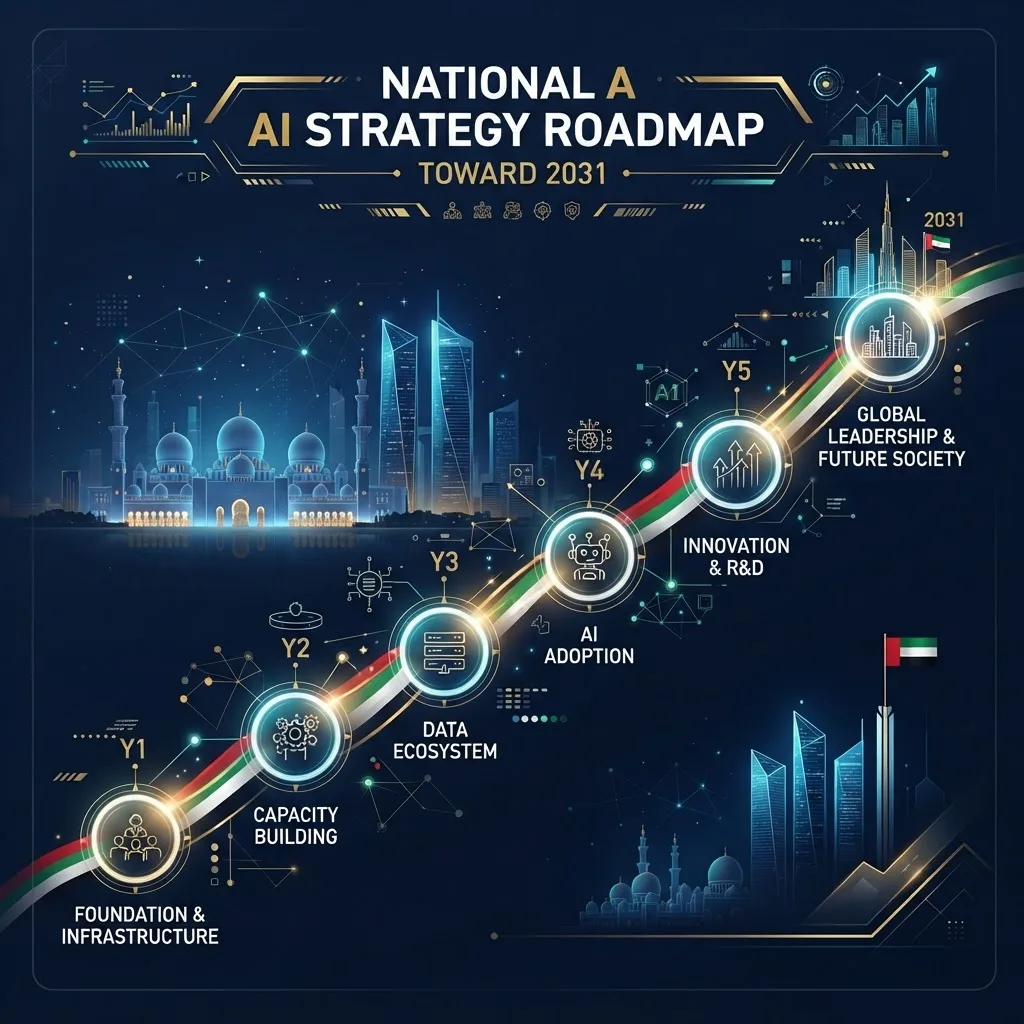
The Council is the operational engine behind the UAE Strategy for Artificial Intelligence, launched in 2017 as the first initiative of its kind in the region. The strategy's headline goal is to make the UAE a global leader in AI by 2031 while boosting government performance and cutting operational costs.
The strategy targets several concrete outcomes the Council helps deliver:
- Reducing government costs by billions of dirhams through automation and paperless processing.
- Cutting the time citizens spend on routine transactions like renewals and approvals.
- Building a skilled national AI workforce across public and private sectors.
- Positioning sectors such as transport, health, energy, and education as AI showcases.
By tying every project to these measurable targets, the Council keeps AI investment accountable. This is a deliberate contrast to markets where AI spending happens without clear success metrics.
Digital Transactions: The Council's Second Pillar
Artificial intelligence gets the headlines, but digital transactions are where citizens feel the impact daily. The Council pushes government entities toward fully digital, secure, and instant services, from business licensing to visa processing and utility payments.

The aim is a paperless government where a transaction that once required an in-person visit now completes in minutes on a phone. Secure digital identity, verified e-signatures, and encrypted payment rails are the plumbing that makes this trustworthy. Without strong governance of these transactions, AI-driven services would expose citizens to fraud and data misuse, which is exactly why the two mandates sit under one roof.
Key Term: Digital Transaction
A digital transaction is any exchange of value, data, or authorization completed electronically and verified through secure systems, replacing paper-based or in-person processes. Examples include online license renewals, e-payments, and digitally signed government approvals.
Core Responsibilities and Mandate
The Council's responsibilities are broad but focused. Understanding them clarifies why it holds so much influence over UAE technology policy.
- Setting national AI priorities: deciding which sectors and use cases receive investment first.
- Standardizing data governance: ensuring data is accurate, secure, interoperable, and ethically used.
- Coordinating government entities: preventing duplicated projects and enforcing shared platforms.
- Advancing AI ethics: promoting fairness, transparency, and accountability in automated decisions.
- Building capability: supporting training programs and attracting global AI talent to the UAE.
This mandate makes the Council both a strategist and a referee, shaping direction while keeping individual entities aligned.
AI Ethics and Trust: A Non-Negotiable Priority
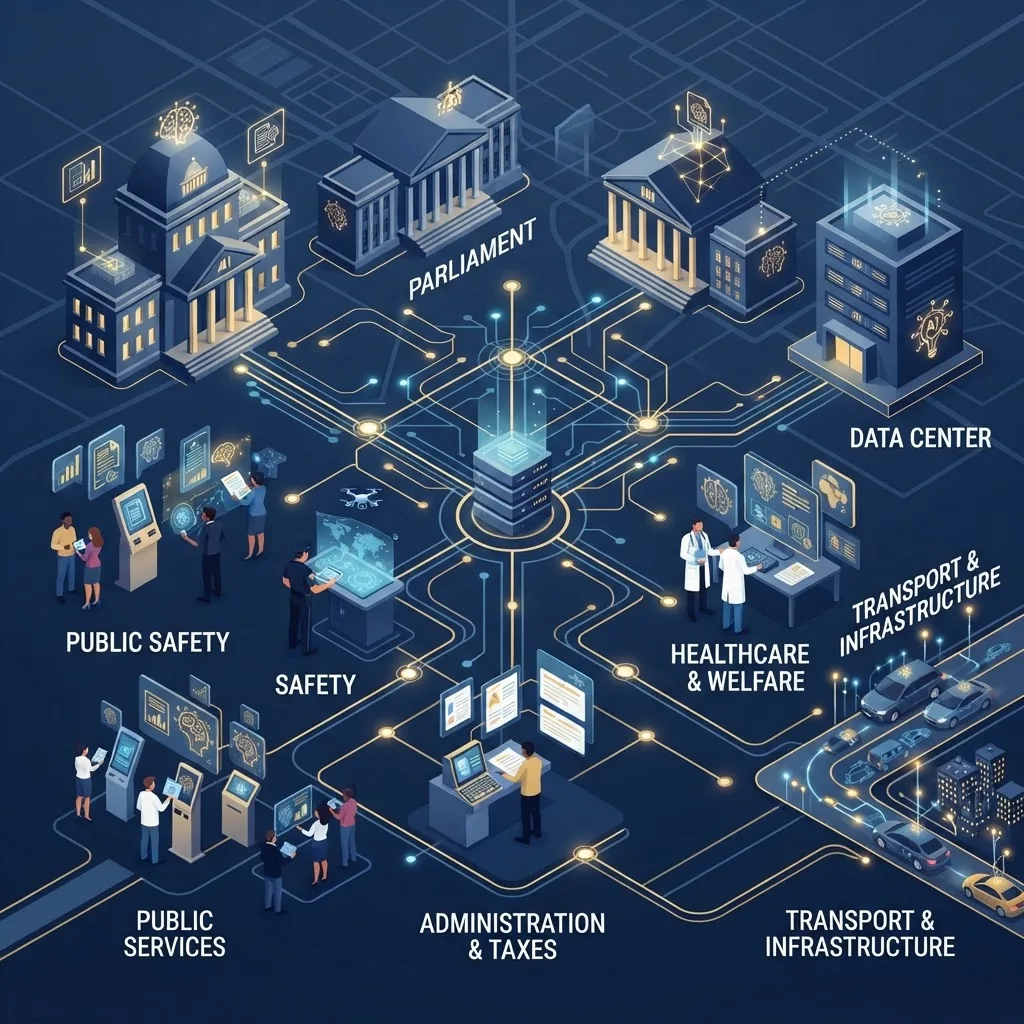
One feature that separates the UAE's approach from purely growth-driven models is its emphasis on responsible AI. The Council supports ethical guidelines that require AI systems used in government to be explainable, fair, and free from harmful bias.
This matters because public trust is fragile. A single flawed automated decision, such as an unfair benefit denial, can erode confidence in an entire digital government program. By embedding ethics into procurement and design standards, the Council treats trust as infrastructure rather than an afterthought.

How the UAE Model Compares to Traditional Government Tech
The difference between a coordinated national AI body and fragmented adoption is significant. The table below highlights the practical contrast.
| Factor | Coordinated Council Model (UAE) | Fragmented Adoption Model |
|---|---|---|
| Strategy alignment | Unified national roadmap to 2031 | Disconnected department projects |
| Data governance | Shared, standardized, secure | Inconsistent and siloed |
| Cost efficiency | High, through shared platforms | Low, due to duplication |
| AI ethics oversight | Centralized and enforced | Optional or absent |
| Citizen experience | Consistent and paperless | Varies by department |
This comparison explains why the UAE consistently ranks among the world's most advanced digital governments, and why other nations study its structure.
Real-World Impact on Businesses and Citizens
For citizens, the outcome is speed and simplicity: services that once took days now resolve in minutes, with fewer documents and fewer office visits. For businesses, the impact runs deeper.
Companies operating in the UAE increasingly interact with AI-driven licensing, automated compliance checks, and digital-first procurement. Firms that modernize their own systems to match this environment move faster and win more government-linked opportunities. Those clinging to manual processes fall behind. The Council's work effectively raises the baseline expectation for how technology-ready a business must be to compete.

How Businesses Can Align With the UAE AI Direction
If your organization operates in or sells into the UAE, aligning with this national direction is a competitive advantage, not just compliance. A few practical moves make the biggest difference.
- Digitize core workflows first. Replace paper and manual approvals with secure digital transactions before layering AI on top.
- Prioritize clean, governed data. AI only performs as well as the data feeding it, so invest in data quality and security early.
- Adopt responsible AI practices. Build transparency and bias checks into any automated system you deploy.
- Partner with specialists. Working with an experienced AI and digital transformation team accelerates results and reduces costly mistakes.
Businesses that want expert support building AI-ready systems can explore professional artificial intelligence services to bridge the gap between strategy and execution. For deeper technical AI capabilities, WebPeak's AI services offer another strong option. You can also learn more about both providers at ZoneTechify and WebPeak.

The Road Ahead
The Council's long-term influence will only grow as the UAE moves toward its 2031 goals. Expect deeper integration of AI into healthcare diagnostics, predictive transport, energy optimization, and proactive government services that act before citizens even file a request. The country's willingness to legislate, fund, and govern AI at a national level gives it a structural edge that is difficult to replicate quickly.
Key Takeaways
- The Emirates Council for Artificial Intelligence and Digital Transactions is the UAE's federal body coordinating national AI adoption, digital transactions, and data governance.
- It operationalizes the UAE AI Strategy 2031, launched in 2017, the region's first national AI strategy.
- The UAE appointed the world's first Minister of State for Artificial Intelligence in 2017, signaling long-term commitment.
- PwC estimates AI could add up to 14% to UAE GDP by 2030, roughly 96 billion US dollars.
- Ethics, data quality, and secure digital transactions are treated as core infrastructure, not optional extras.
Frequently Asked Questions (FAQ)
What does the Emirates Council for Artificial Intelligence and Digital Transactions do?
It coordinates the UAE's national AI adoption, secure digital transactions, and data governance across government entities. The Council sets priorities, enforces shared standards, promotes AI ethics, and ensures every project aligns with the UAE AI Strategy 2031 for consistent, efficient, and trustworthy public services.
When was the UAE's AI strategy launched?
The UAE Strategy for Artificial Intelligence was launched in 2017, making it the first national AI strategy in the region. That same year, the UAE appointed the world's first Minister of State for Artificial Intelligence, showing early and serious long-term commitment to leading in AI.
How does the Council affect businesses in the UAE?
It raises the baseline for digital readiness. Businesses increasingly face AI-driven licensing, automated compliance, and digital-first procurement. Companies that digitize workflows, maintain clean data, and adopt responsible AI move faster and win more opportunities, while those relying on manual processes gradually lose competitiveness.
What is meant by digital transactions in this context?
Digital transactions are electronic exchanges of value, data, or authorization completed and verified through secure systems, replacing paper-based or in-person steps. In government, this includes online license renewals, e-payments, digital identity verification, and digitally signed approvals that finish in minutes rather than days.
Why does the Council focus so heavily on AI ethics?
Because public trust depends on it. AI systems used in government must be explainable, fair, and free from harmful bias, since a single flawed automated decision can damage confidence in an entire program. Embedding ethics into design and procurement makes trust a permanent part of the infrastructure.
How can my company become AI-ready for the UAE market?
Start by digitizing core workflows, then invest in clean, secure, well-governed data before deploying AI. Add transparency and bias checks to automated systems, and partner with experienced AI and digital transformation specialists to accelerate results, reduce risk, and align with the UAE's national direction.