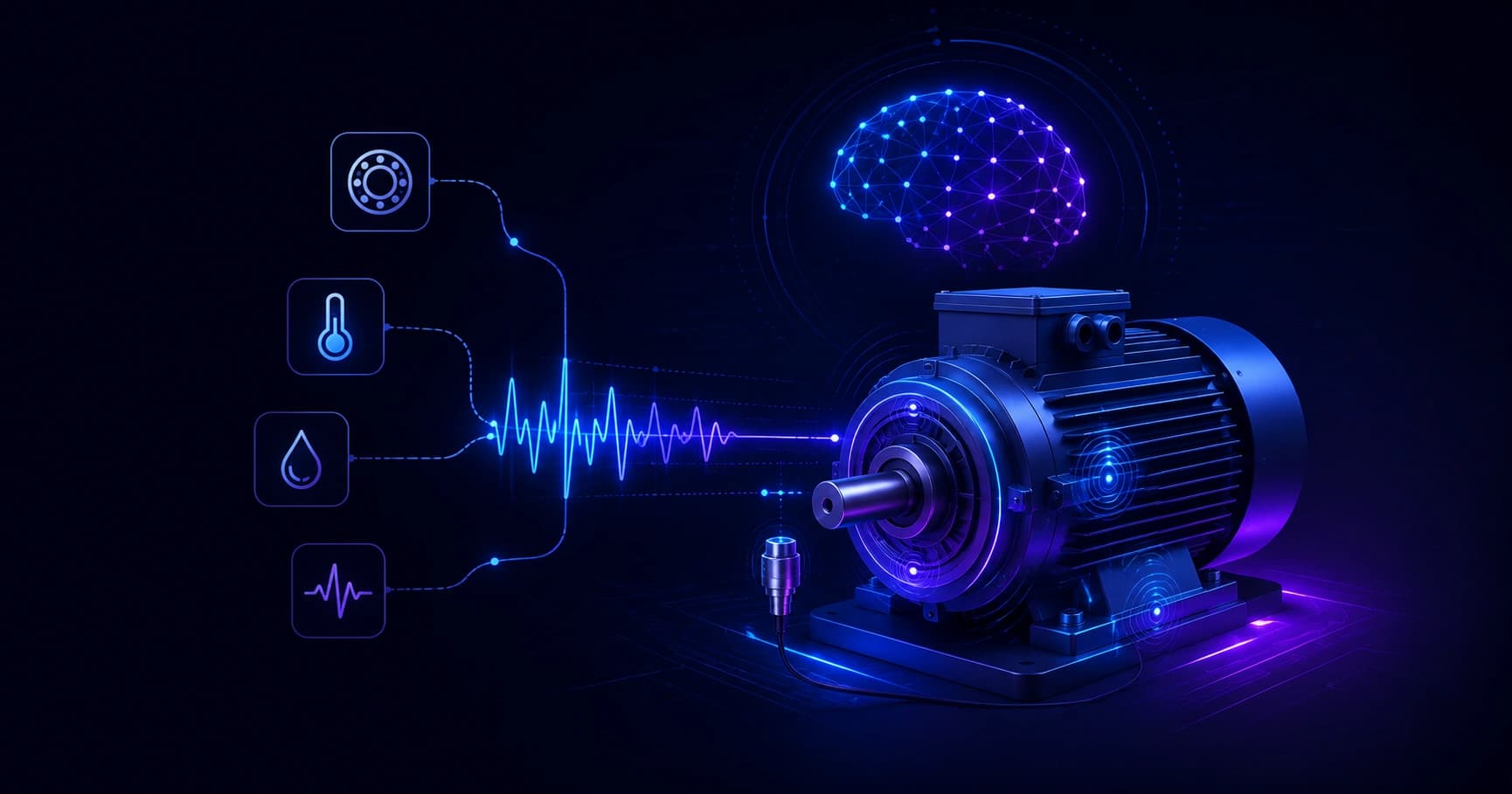
A practical, expert guide to condition monitoring artificial intelligence: how AI predicts equipment failures, cuts downtime, and powers smarter predictive maintenance.
Condition Monitoring Artificial Intelligence
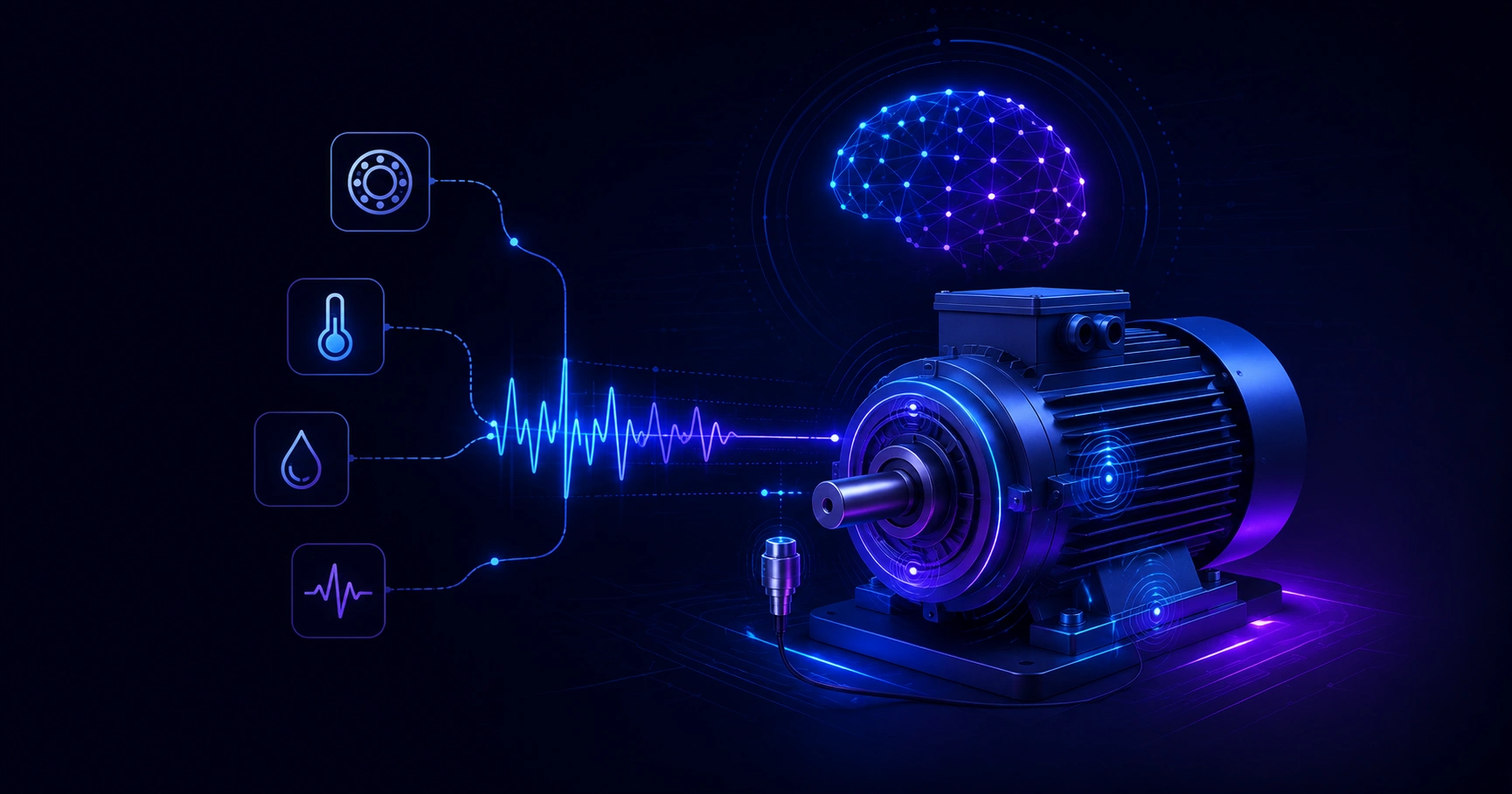
Condition monitoring artificial intelligence is changing how factories, utilities, and asset-heavy businesses keep machines running. Instead of waiting for a motor to overheat or a pump to seize, AI now listens to vibration, temperature, and current signals in real time and warns you days or weeks before failure. Having worked alongside maintenance teams deploying these systems, I can tell you the shift is less about fancy algorithms and more about catching small problems before they become expensive ones.
This guide explains exactly how condition monitoring AI works, where it delivers measurable value, and how to adopt it without wasting budget on tools you do not need.
Quick Answer: Condition monitoring artificial intelligence uses sensors and machine learning to analyze equipment data like vibration, temperature, and sound in real time. It detects abnormal patterns early, predicts failures before they happen, reduces unplanned downtime, and helps maintenance teams fix issues at the right time rather than too late.
What Is Condition Monitoring Artificial Intelligence?
Condition monitoring artificial intelligence is the use of machine learning models to continuously assess the health of physical equipment using sensor data. Traditional condition monitoring relied on technicians manually reading gauges or setting fixed alarm thresholds. AI removes that limitation by learning what "normal" looks like for each specific machine and flagging deviations automatically.
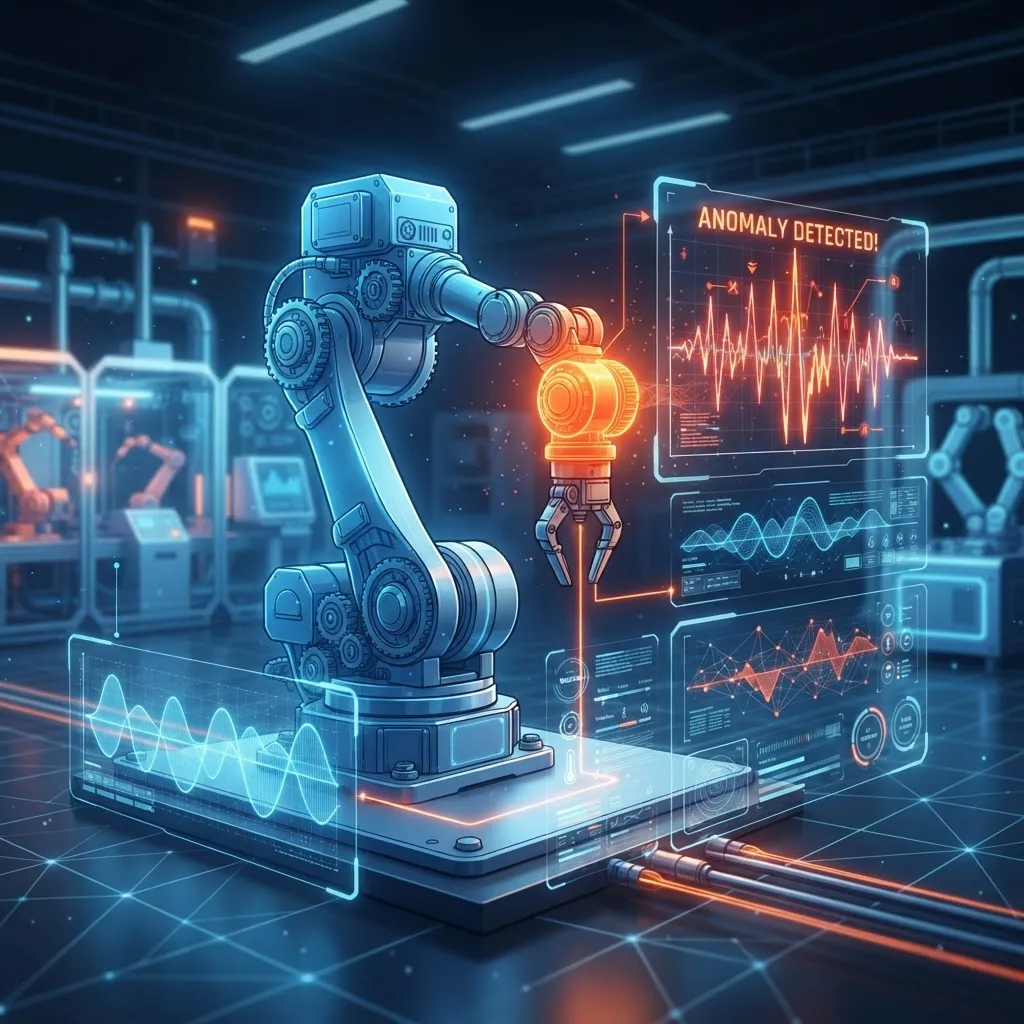
The core idea is simple: every machine has a healthy signature. A bearing spinning correctly produces a predictable vibration pattern. When wear begins, that pattern shifts subtly, often long before a human would notice. AI models detect these micro-changes and translate them into clear, actionable alerts.
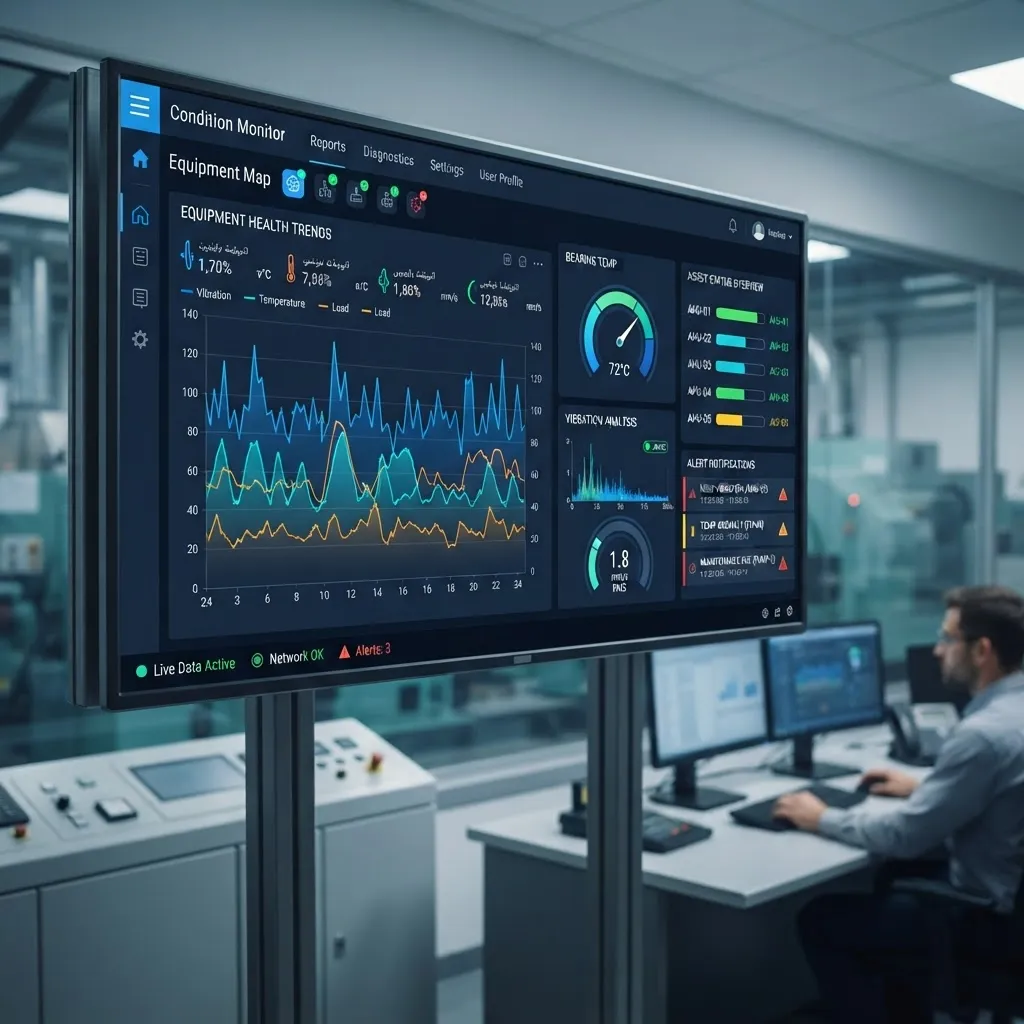
Key Terms Defined
- Condition Monitoring: The process of tracking a machine's health indicators to detect faults early.
- Predictive Maintenance: A maintenance strategy that uses data to predict when equipment will fail so repairs happen just in time.
- Anomaly Detection: An AI technique that identifies data points that differ significantly from learned normal behavior.
- Remaining Useful Life (RUL): An AI-generated estimate of how long a component will function before it fails.
Why AI Matters for Equipment Health
AI matters because unplanned downtime is one of the largest hidden costs in industrial operations. According to Deloitte, unplanned downtime costs industrial manufacturers an estimated $50 billion annually, and equipment failure causes roughly 42% of that downtime. Fixed-threshold alarms cannot catch the gradual degradation that leads to these failures, but machine learning can.
There is also a labor angle. Experienced maintenance engineers are retiring faster than they can be replaced. AI captures diagnostic expertise in software, letting a smaller team monitor more assets with greater accuracy. This is exactly why so many operations teams now treat AI-driven monitoring as core infrastructure rather than a nice-to-have.
According to McKinsey, predictive maintenance powered by AI can reduce machine downtime by 30 to 50% and increase machine life by 20 to 40%. Those are not marginal gains, they directly protect revenue and capital investment.
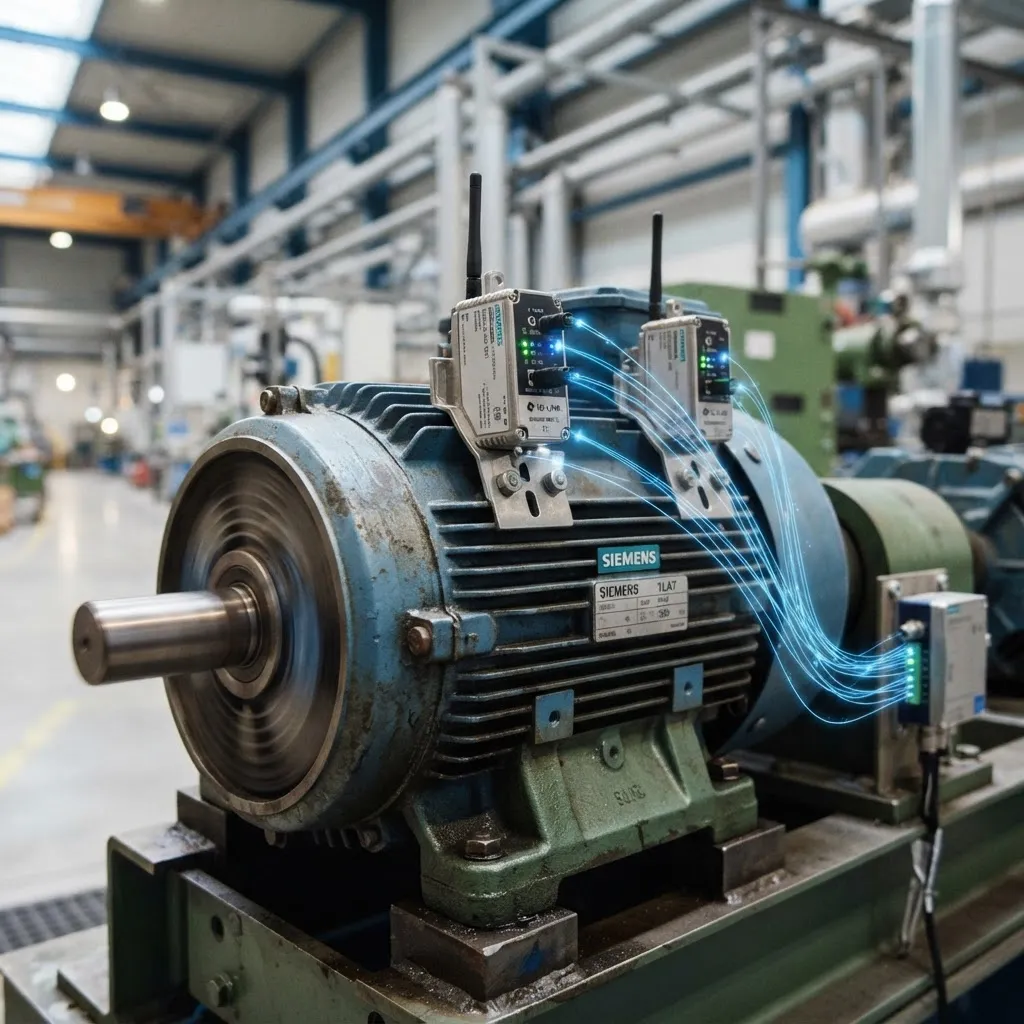
How Condition Monitoring AI Actually Works
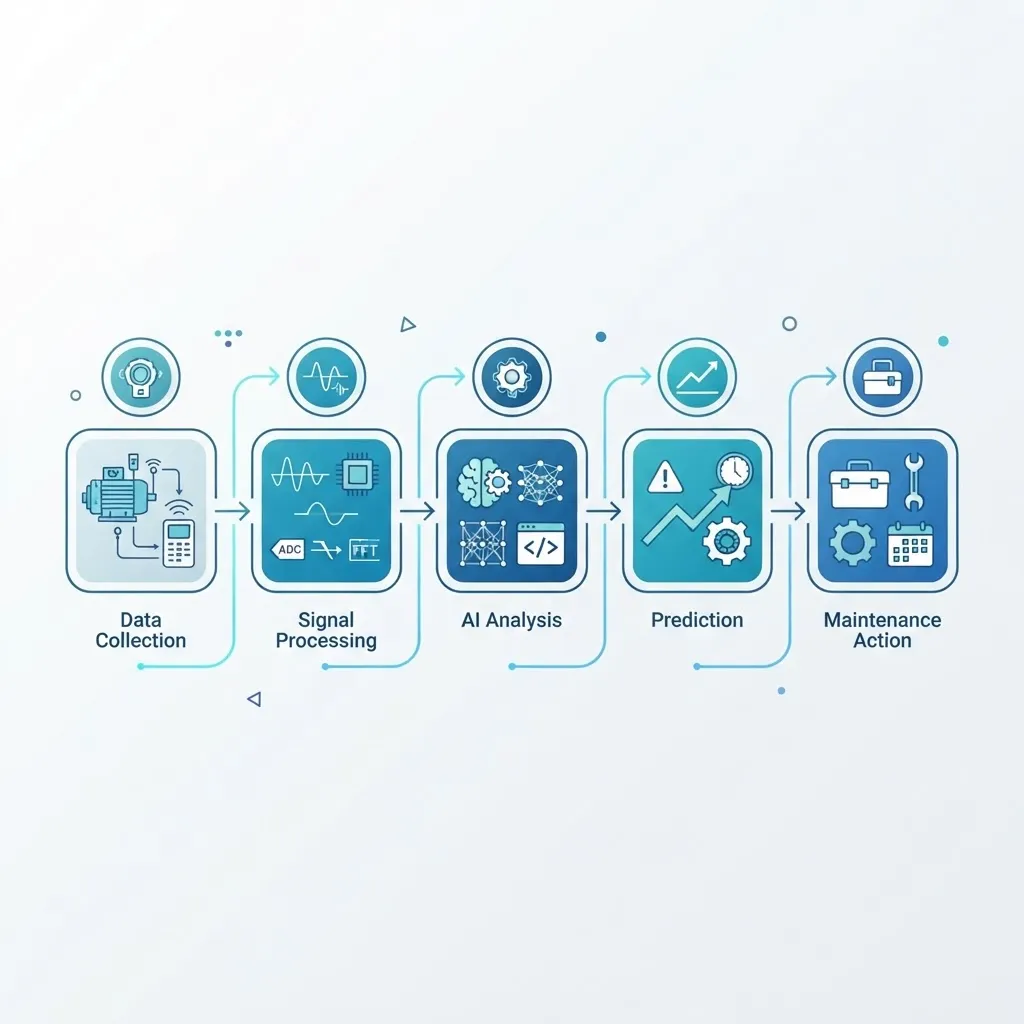
The process follows a clear, repeatable pipeline. Understanding it helps you evaluate vendors and avoid black-box solutions.
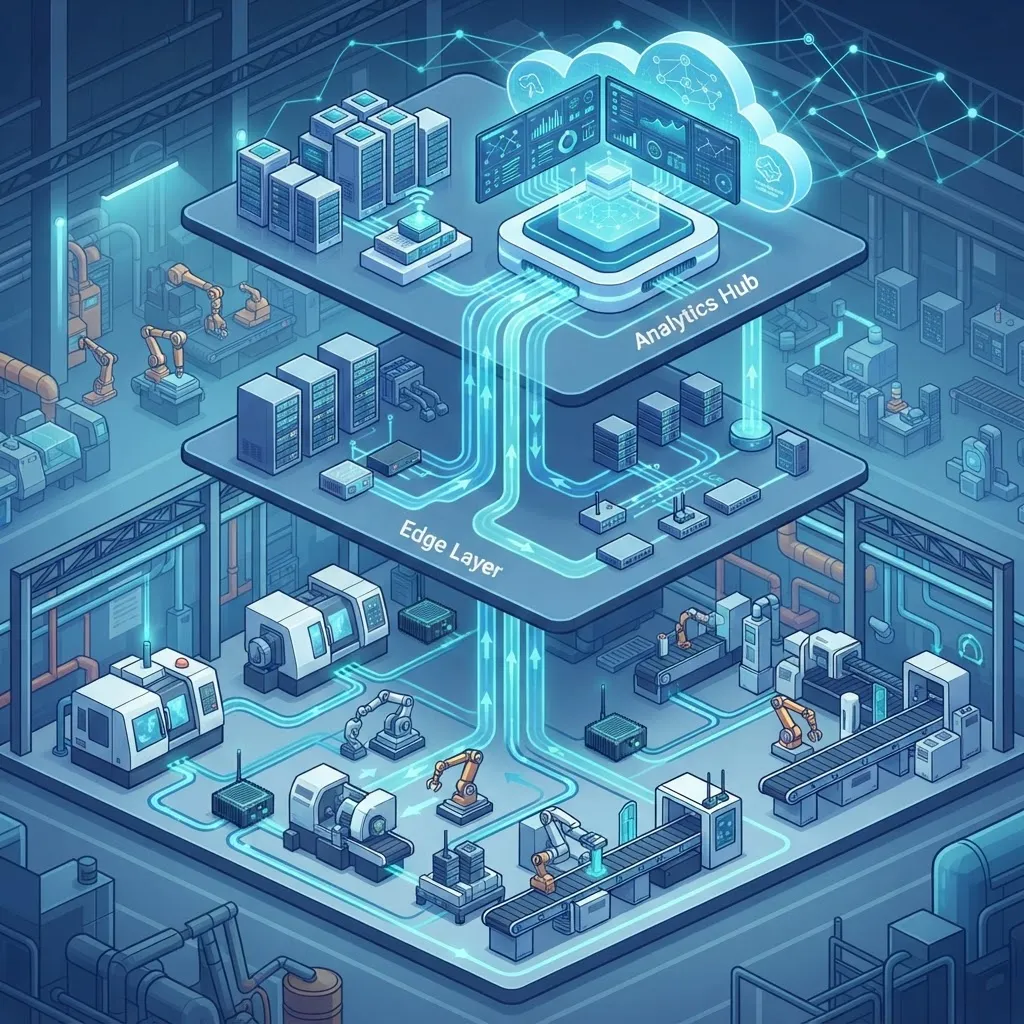
- Data collection: IoT sensors capture vibration, temperature, acoustic emissions, oil quality, and electrical current from equipment.
- Signal processing: Raw signals are cleaned, filtered, and transformed (for example, into frequency spectra) so patterns become visible.
- Model training: Machine learning models learn each asset's healthy baseline from historical data.
- Anomaly detection: The live data stream is compared against the baseline, and deviations are scored.
- Prediction: The system estimates fault type, severity, and remaining useful life.
- Action: Alerts trigger work orders, and technicians intervene at the optimal moment.

The Role of Vibration Analysis
Vibration analysis is the single most valuable data source in rotating equipment monitoring. Bearings, gearboxes, motors, and pumps all reveal their condition through vibration. AI excels here because it can separate meaningful fault frequencies from background noise, something that traditionally required a certified vibration analyst.
Types of Data AI Monitors
Different failure modes reveal themselves through different signals. A strong condition monitoring program combines several data streams so the AI has a fuller picture of asset health.
- Vibration: Detects imbalance, misalignment, bearing wear, and looseness.
- Temperature: Reveals friction, overload, and cooling failures.
- Acoustic/ultrasound: Catches early-stage bearing faults and compressed air leaks.
- Oil analysis: Identifies contamination and internal wear particles.
- Motor current signature: Detects electrical and mechanical faults in motors without extra sensors.
Traditional vs AI-Based Condition Monitoring
The difference between legacy monitoring and AI-driven monitoring becomes obvious when you compare them side by side.
| Factor | Traditional Monitoring | AI-Based Monitoring |
|---|---|---|
| Fault detection | Fixed thresholds | Learned patterns and anomalies |
| Timing | Detects late-stage faults | Detects early-stage degradation |
| Scalability | Limited by technician time | Scales across thousands of assets |
| False alarms | Frequent | Reduced through context learning |
| Failure prediction | Rarely available | Estimates remaining useful life |
| Expertise required | High, on-site | Embedded in the model |
The practical takeaway is that AI does not just replace manual checks, it detects problems earlier and across far more equipment than a human team ever could.
Real-World Applications
Condition monitoring AI delivers value in any operation where equipment failure is costly. Wind farms use it to monitor gearbox health on turbines that are expensive to access. Water utilities track pump performance to prevent service interruptions. Manufacturing plants monitor CNC spindles and conveyor motors to protect production lines.
One pattern I consistently see: the biggest wins come from focusing first on critical assets where downtime is most expensive, then expanding coverage once the team trusts the system. Starting small builds credibility and delivers fast ROI.
Businesses that want to build custom monitoring platforms or integrate AI models into existing operations often partner with specialists. Teams like ZoneTechify and WebPeak help organizations design and deploy these intelligent systems, and dedicated artificial intelligence services can bridge the gap between raw sensor data and production-ready predictive models.
How to Implement Condition Monitoring AI
Adopting condition monitoring AI works best as a phased rollout rather than a plant-wide overhaul.
- Identify critical assets: Rank equipment by failure cost and downtime impact.
- Install the right sensors: Match sensor types to likely failure modes.
- Collect baseline data: Let the system observe healthy operation for a meaningful period.
- Train and validate models: Confirm the AI catches known fault signatures.
- Integrate with workflows: Connect alerts to your CMMS or work-order system.
- Review and refine: Feed technician feedback back into the models to cut false alarms.
Common Mistakes to Avoid
- Deploying sensors everywhere at once instead of prioritizing critical assets.
- Ignoring data quality, which undermines even the best models.
- Treating alerts as noise instead of acting on them, which erodes trust.
- Skipping integration with maintenance workflows, leaving insights unused.
The Future of Condition Monitoring AI
The next wave is edge AI and self-learning models that adapt automatically. Instead of sending all data to the cloud, models increasingly run directly on sensors and gateways, delivering instant alerts with lower bandwidth costs. Generative AI is also emerging as a diagnostic assistant, letting technicians ask plain-language questions like "why did this pump alarm trigger?" and receive clear explanations.
Over the next few years, expect condition monitoring to merge with digital twins, creating live virtual replicas of equipment that simulate wear and test maintenance decisions before they happen in the real world.
Key Takeaways
- Condition monitoring AI analyzes sensor data to detect equipment faults early and predict failures.
- Deloitte estimates unplanned downtime costs manufacturers around $50 billion annually, with equipment failure driving 42% of it.
- McKinsey reports AI predictive maintenance can cut downtime 30 to 50% and extend machine life 20 to 40%.
- Vibration analysis is the most valuable data source for rotating equipment.
- The best rollouts start with critical assets, then scale once the team trusts the system.
Frequently Asked Questions (FAQ)
What is condition monitoring artificial intelligence?
It is the use of machine learning to continuously analyze equipment sensor data such as vibration, temperature, and current. The AI learns each machine's normal behavior, detects abnormal patterns early, and predicts failures before they cause unplanned downtime, helping maintenance teams act at exactly the right time.
How does AI predict equipment failure?
AI predicts failure by learning a machine's healthy baseline from historical sensor data, then continuously comparing live readings against it. When it detects gradual deviations that signal wear or damage, it scores the anomaly, identifies the likely fault, and estimates the remaining useful life so repairs happen before breakdown.
Is condition monitoring AI only for large factories?
No. While large factories were early adopters, affordable IoT sensors and cloud platforms now make condition monitoring AI accessible to small and mid-sized operations. Any business with critical rotating equipment, such as pumps, motors, or compressors, can benefit by starting with its most costly-to-fail assets first.
What data does condition monitoring AI use?
It primarily uses vibration, temperature, acoustic or ultrasound signals, oil analysis, and motor current data. Combining several data streams gives the AI a fuller view of asset health, because different failure modes reveal themselves through different signals, improving both detection accuracy and failure prediction confidence.
How is AI monitoring better than threshold alarms?
Threshold alarms only trigger after a value crosses a fixed limit, which usually means the fault is already advanced. AI learns context and detects subtle early-stage degradation, catches faults sooner, reduces false alarms, scales across thousands of assets, and estimates when a component will actually fail.