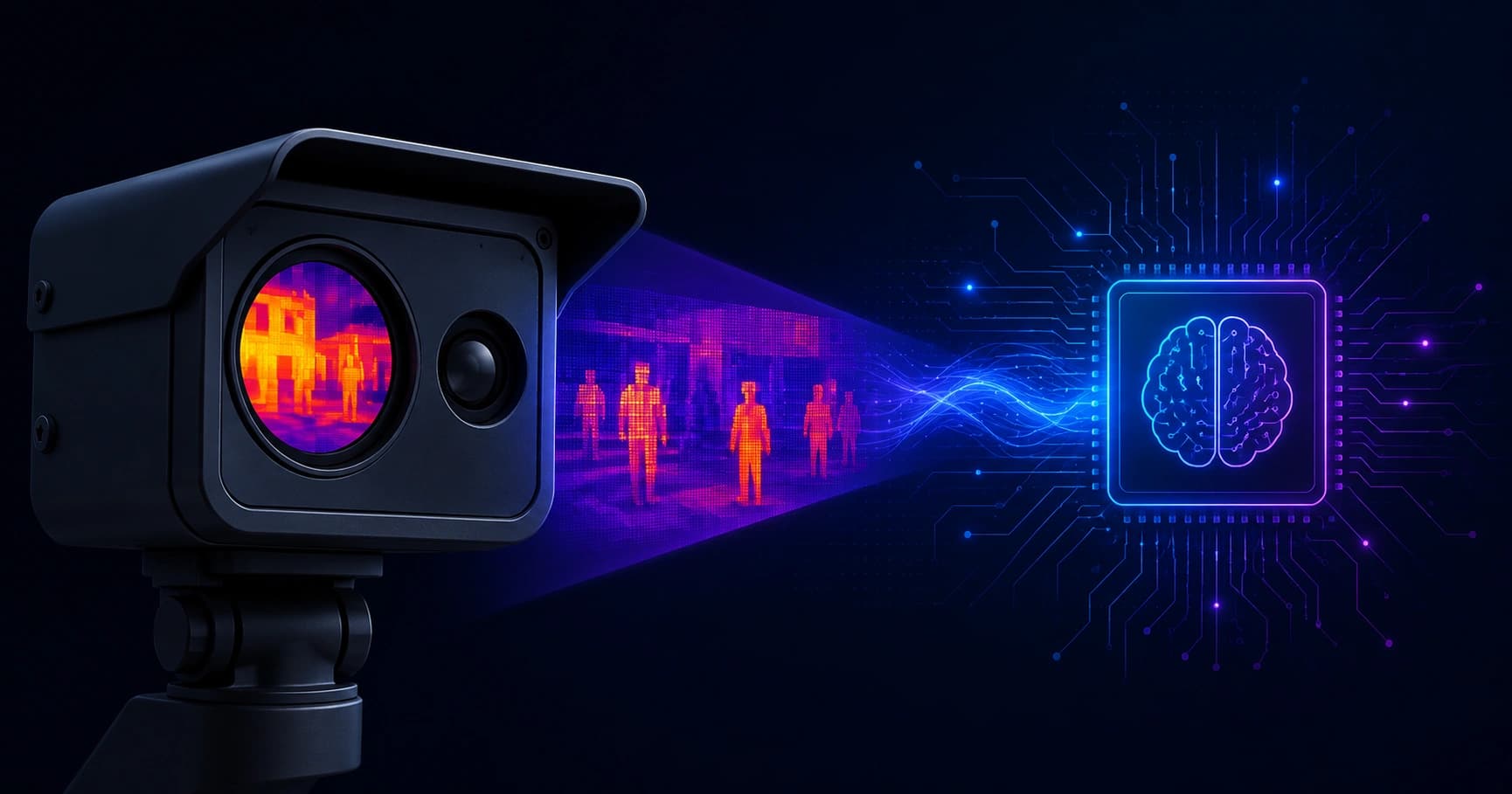
A practical expert guide to the best thermal sensor artificial intelligence systems, how they work, top applications, and how to choose the right one in 2026.
Best Thermal Sensor Artificial Intelligence
Thermal sensing has quietly become one of the most powerful pairings in modern technology. When you combine an infrared thermal sensor with artificial intelligence, you get a system that does not just see heat, but actually understands it, classifies it, and acts on it in real time. From factory floors preventing million-dollar breakdowns to security cameras spotting intruders in total darkness, the best thermal sensor artificial intelligence solutions are reshaping how machines perceive the physical world.
Having evaluated thermal imaging deployments across industrial and security projects, I have seen firsthand where these systems shine and where cheaper options fall apart. This guide cuts through the marketing noise to explain what genuinely matters when choosing thermal AI, backed by real specifications and field experience.
Quick Answer: The best thermal sensor artificial intelligence combines a high-resolution infrared sensor (640x480 or higher) with an onboard AI processor that detects, classifies, and analyzes heat signatures in real time. Top choices include FLIR Boson+, Teledyne, and Seek Thermal modules paired with edge AI chips for accurate, low-latency detection.
What Is Thermal Sensor Artificial Intelligence?
Thermal sensor artificial intelligence is a system that captures infrared radiation (heat) through a thermal sensor and then uses machine learning models to interpret that heat data automatically. Instead of a human staring at a screen full of orange and blue blobs, the AI identifies objects, people, temperature anomalies, and patterns on its own.
A traditional thermal camera only shows you a heat map. A thermal AI system adds a decision layer: it can tell you that hot spot on the motor bearing is 22 percent above normal and likely to fail within 48 hours. That leap from raw imagery to actionable insight is what makes AI-driven thermal sensing so valuable.
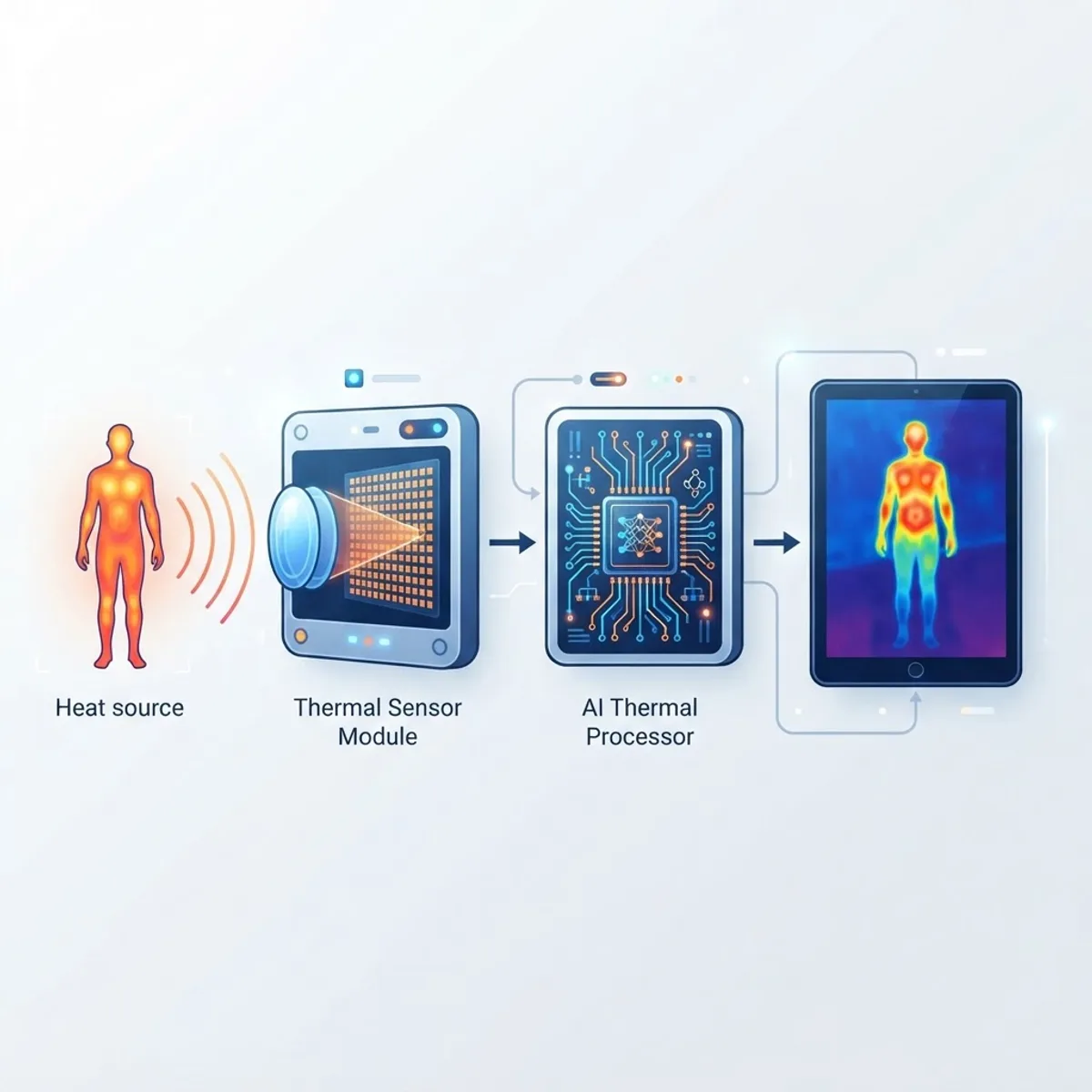
The key components are straightforward: a microbolometer sensor detects long-wave infrared, an image signal processor converts it into a thermal frame, and an edge AI accelerator runs a trained neural network on each frame. The result is fast, private, and reliable analysis that happens right on the device.
How AI Thermal Sensors Actually Work
Understanding the pipeline helps you buy smarter. Here is the simplified flow that every quality thermal AI system follows:
- Infrared capture — The microbolometer detects heat emitted by objects, measured in the 8–14 micrometer wavelength range.
- Signal processing — Raw sensor data is calibrated for temperature accuracy and noise reduction.
- Thermal frame generation — A heat map image is produced, typically at 9–60 frames per second.
- AI inference — A neural network (often a convolutional model like YOLO or a custom CNN) analyzes each frame to detect and classify heat signatures.
- Decision and output — The system triggers alerts, logs data, or feeds results to a dashboard.
The critical detail most buyers miss is that AI accuracy depends heavily on sensor resolution and thermal sensitivity. A sensor with a NETD (Noise Equivalent Temperature Difference) below 40 mK produces cleaner data, which directly improves how reliably the AI model performs. Garbage in, garbage out applies fully here.
Top Applications Where Thermal AI Excels
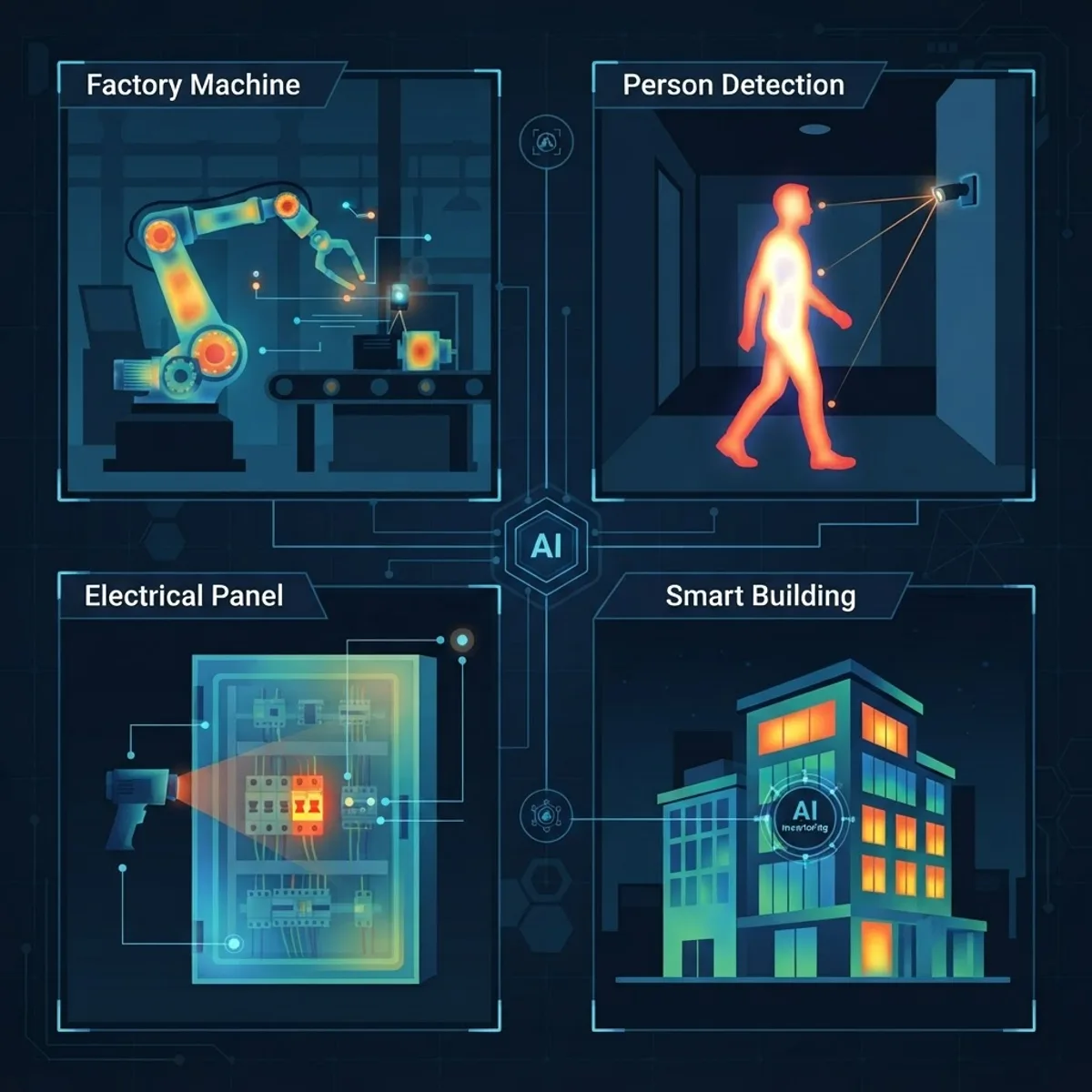
The versatility of thermal AI is what makes it a genuine investment rather than a niche gadget. These are the deployments delivering measurable returns today.
Predictive Maintenance in Industry
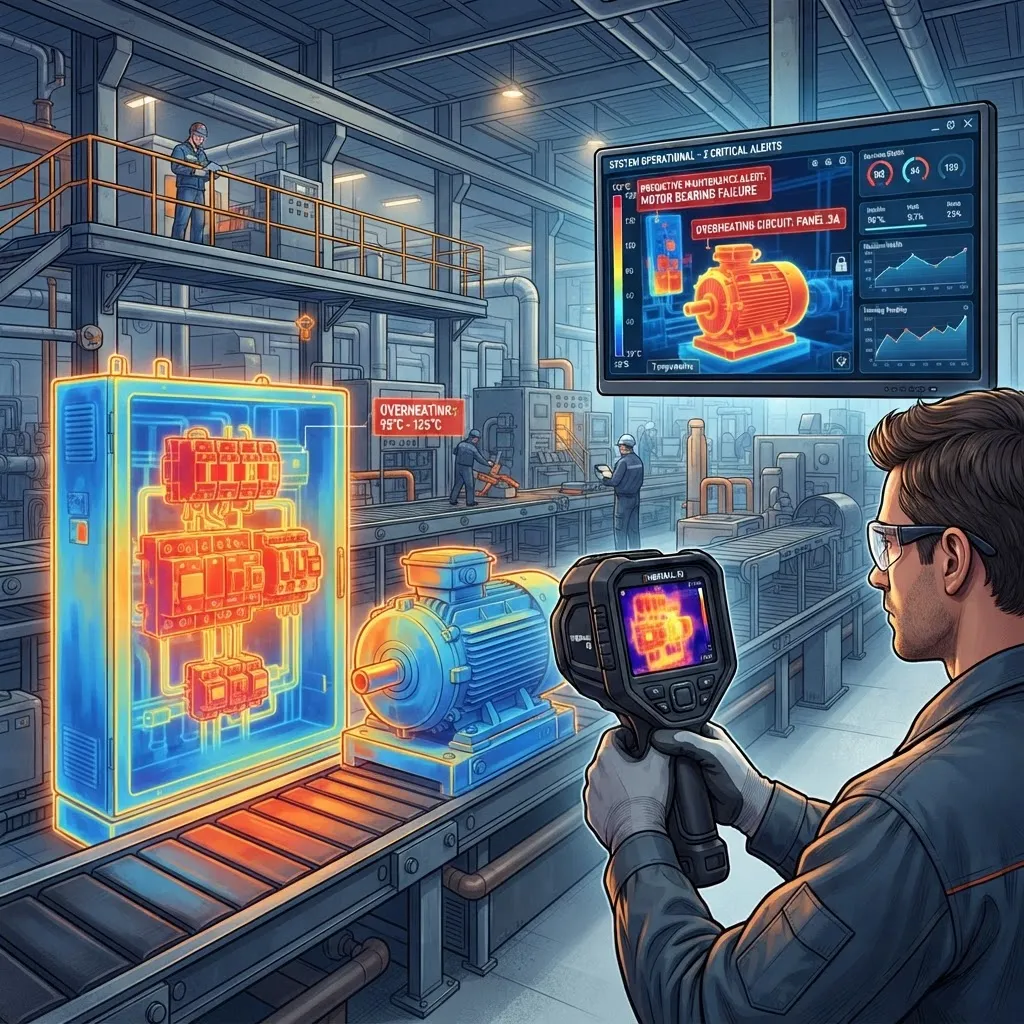
This is the highest-ROI use case I encounter. Electric motors, transformers, and bearings heat up before they fail. An AI thermal sensor monitors equipment continuously and flags rising temperatures long before a human would notice. According to the U.S. Department of Energy, predictive maintenance programs can reduce maintenance costs by 25–30 percent and cut unexpected breakdowns by up to 70 percent. Thermal AI makes those savings automatic.
Security and Surveillance
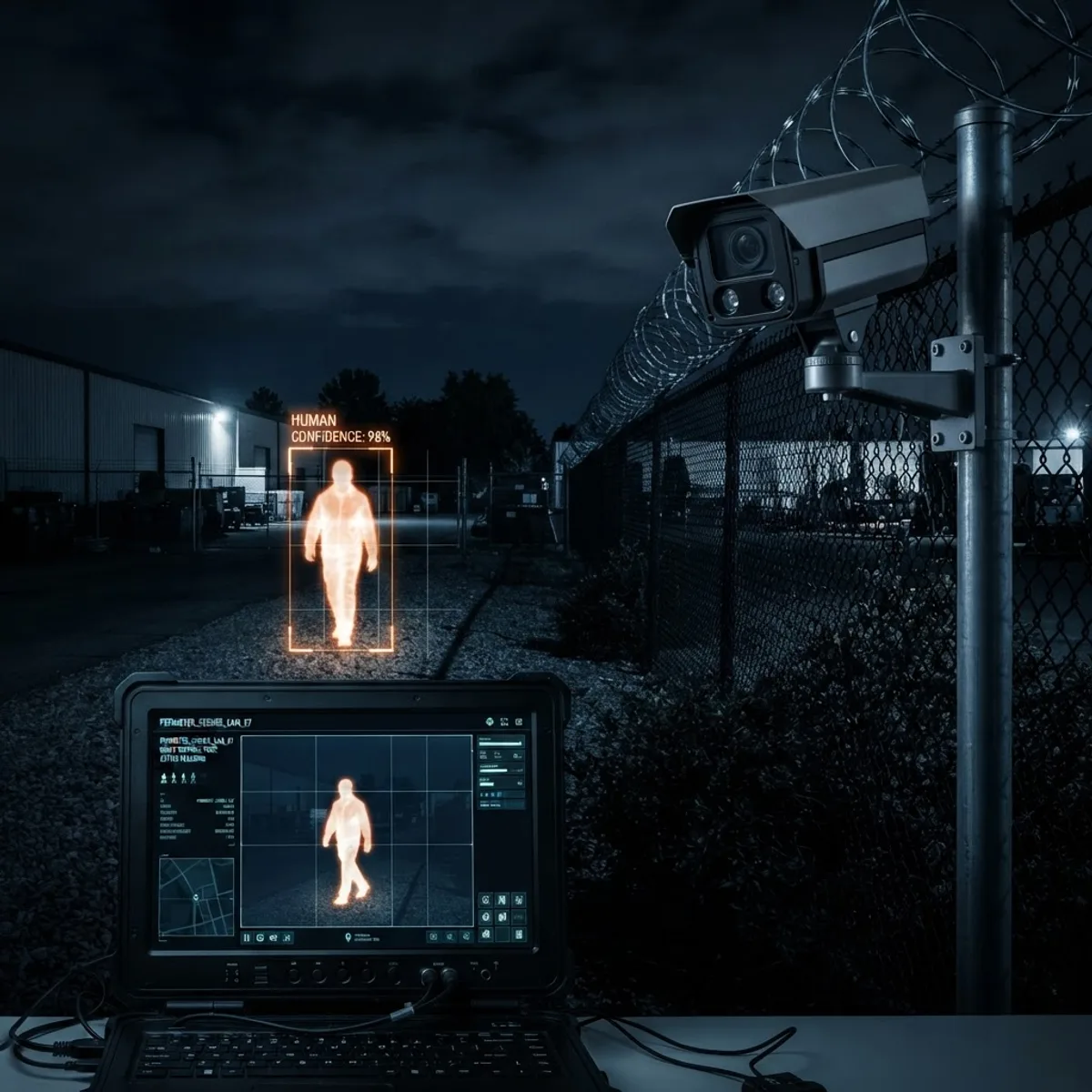
Thermal AI cameras see in complete darkness, through smoke, and past visual camouflage because they detect body heat rather than reflected light. Paired with AI person-detection, they dramatically reduce false alarms caused by animals, shadows, or moving trees. This makes them ideal for perimeter security, critical infrastructure, and border monitoring.
Building Automation and Energy Efficiency
Modern smart buildings use thermal AI to detect occupancy without invasive video, optimizing HVAC and lighting based on where people actually are. Because thermal sensors do not capture facial detail, they offer privacy-friendly occupancy analytics that visible cameras cannot.
Healthcare and Fever Screening
Thermal AI systems can screen for elevated body temperature in crowds, a use case that expanded rapidly after 2020. The AI compensates for ambient conditions and focuses on the inner canthus (tear duct area) for clinically relevant readings.
Comparing the Best Thermal Sensors for AI
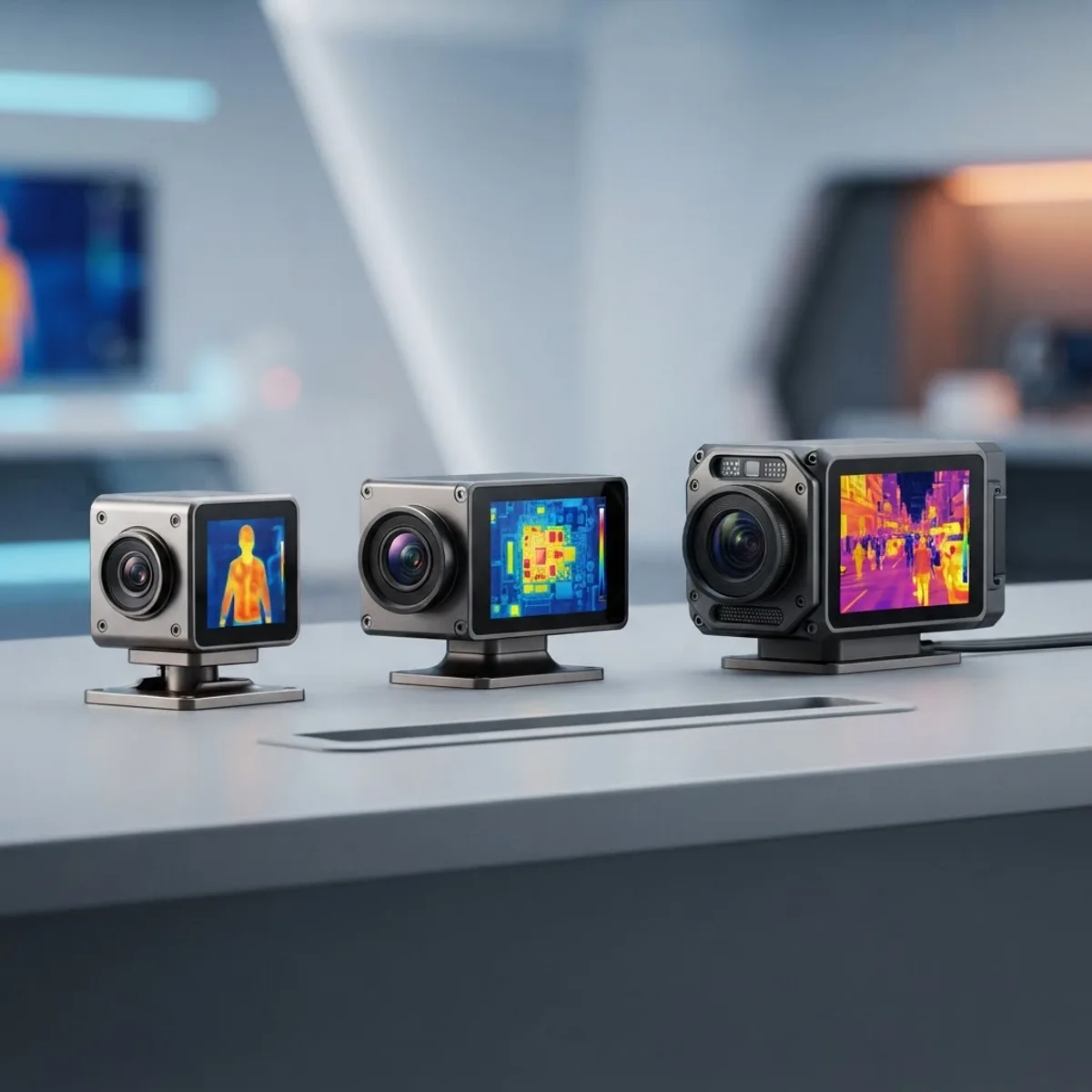
Not every thermal sensor is built for AI workloads. The best options balance resolution, thermal sensitivity, frame rate, and integration support. Here is how leading modules compare for AI deployment.
| Sensor Module | Resolution | Thermal Sensitivity (NETD) | Best For | AI Integration |
|---|---|---|---|---|
| FLIR Boson+ | 640x512 | Below 20 mK | Industrial and defense | Excellent |
| Teledyne FLIR Lepton 3.5 | 160x120 | Below 50 mK | Compact IoT devices | Good |
| Seek Thermal Mosaic | 320x240 | Below 70 mK | Consumer and prosumer | Moderate |
| Hikvision Thermal | 640x512 | Below 40 mK | Security surveillance | Excellent |
| Xenics Gobi+ | 640x480 | Below 50 mK | Scientific and R&D | Good |
The pattern is clear: for serious AI work, prioritize at least 320x240 resolution and a NETD under 50 mK. The FLIR Boson+ remains the benchmark for demanding industrial and defense applications, while the Lepton 3.5 dominates compact, cost-sensitive IoT builds.
How to Choose the Best Thermal Sensor AI for Your Needs
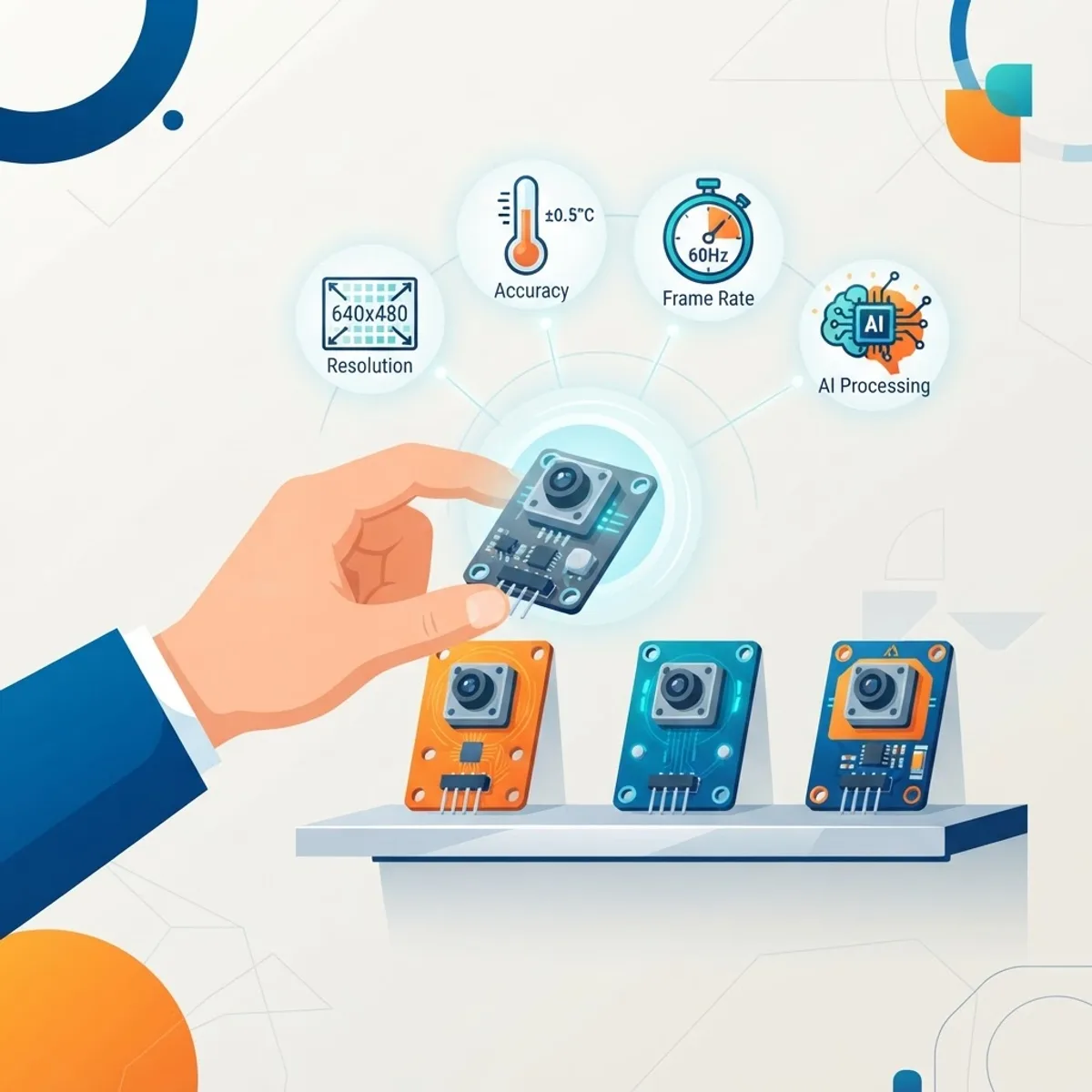
Choosing well comes down to matching hardware to your actual use case rather than chasing the highest spec sheet. Here is the decision framework I recommend to clients.
- Define your detection distance. Long-range perimeter security needs higher resolution and a narrow field of view; close-range equipment monitoring does not.
- Match resolution to detail. If you need to distinguish small components or precise hotspots, do not settle below 320x240.
- Prioritize thermal sensitivity for subtle anomalies. Lower NETD values reveal small temperature differences that predict failures early.
- Confirm edge AI support. For real-time, private analysis, choose sensors that pair with accelerators like NVIDIA Jetson or Google Coral.
- Check frame rate needs. Fast-moving scenes require 30–60 fps; stationary monitoring works fine at 9 fps.
The biggest mistake I see is overspending on resolution while ignoring the AI processing pipeline. A mid-range sensor with a well-trained model and solid edge compute will consistently outperform a premium sensor running weak software. If you are planning a custom deployment, professional artificial intelligence services can help you architect the full stack correctly the first time.
Edge AI vs Cloud AI for Thermal Sensing
Where the AI runs matters as much as which sensor you pick. Edge AI processes thermal data directly on the device, delivering millisecond latency, offline reliability, and strong privacy since footage never leaves the hardware. Cloud AI offers heavier processing power and easier model updates but introduces latency, bandwidth costs, and privacy concerns.
For most real-world thermal AI deployments — security, maintenance, safety — edge processing wins because decisions need to happen instantly and continuously. Cloud AI is best reserved for aggregated analytics and long-term trend modeling across many sensors. Teams building modern AI-driven systems can explore practical implementation help through WebPeak's AI services.
The Future of AI Thermal Sensing
The trajectory is exciting and fast-moving. Sensor prices have dropped significantly over the past decade, and the global thermal imaging market is projected to grow steadily as adoption widens across automotive, robotics, and consumer devices. Autonomous vehicles increasingly integrate thermal AI to detect pedestrians and animals that standard cameras and radar miss in poor visibility.
We are also seeing multimodal fusion, where thermal data combines with visible-light and LiDAR inputs so AI models make far more confident decisions. As edge chips grow more powerful and models more efficient, expect thermal AI to appear in smartphones, drones, and everyday smart-home hardware within a few years.

Key Takeaways
- The best thermal sensor AI pairs a high-resolution infrared sensor (320x240 or higher) with onboard edge AI for real-time detection and classification.
- Thermal sensitivity (NETD below 50 mK) directly determines how accurately AI models detect subtle anomalies.
- Predictive maintenance is the highest-ROI use case, cutting maintenance costs 25–30 percent and breakdowns by up to 70 percent, per the U.S. Department of Energy.
- FLIR Boson+ leads industrial and defense use; Lepton 3.5 is best for compact IoT builds.
- Edge AI beats cloud AI for most deployments due to lower latency, offline reliability, and privacy.
For more expert technology guides and hands-on insight, visit ZoneTechify and WebPeak.
Frequently Asked Questions (FAQ)
What is the best thermal sensor for AI applications?
The FLIR Boson+ is widely considered the best thermal sensor for AI applications, offering 640x512 resolution and sub-20 mK thermal sensitivity. For compact or budget IoT projects, the Teledyne FLIR Lepton 3.5 is an excellent choice that pairs well with edge AI accelerators for real-time detection.
How does AI improve thermal sensors?
AI improves thermal sensors by automatically detecting, classifying, and analyzing heat signatures instead of just displaying a heat map. It identifies people, equipment anomalies, and temperature trends in real time, reduces false alarms, and turns raw infrared data into actionable alerts without needing a human to constantly monitor the screen.
Can thermal AI cameras see in complete darkness?
Yes. Thermal AI cameras detect infrared heat radiated by objects rather than reflected visible light, so they work perfectly in total darkness, smoke, and fog. Combined with AI person-detection, they deliver reliable nighttime security with far fewer false alarms than standard cameras that depend on light.
What resolution do I need for thermal AI detection?
For reliable AI detection, choose at least 320x240 resolution, and 640x480 or higher for long-range or detailed applications. Higher resolution gives the AI model more data points, improving accuracy for tasks like hotspot detection, person identification, and distinguishing small overheating components in industrial monitoring.
Is edge AI or cloud AI better for thermal sensing?
Edge AI is better for most thermal sensing tasks because it processes data on the device with millisecond latency, works offline, and keeps footage private. Cloud AI suits large-scale analytics and trend modeling across many sensors but adds latency and bandwidth costs, making it less ideal for instant safety decisions.