Discover how artificial intelligence powers smart source-to-pay procurement software to cut costs, reduce risk, and automate the entire purchasing lifecycle.
Artificial Intelligence Smart Source to Pay Procurement Software
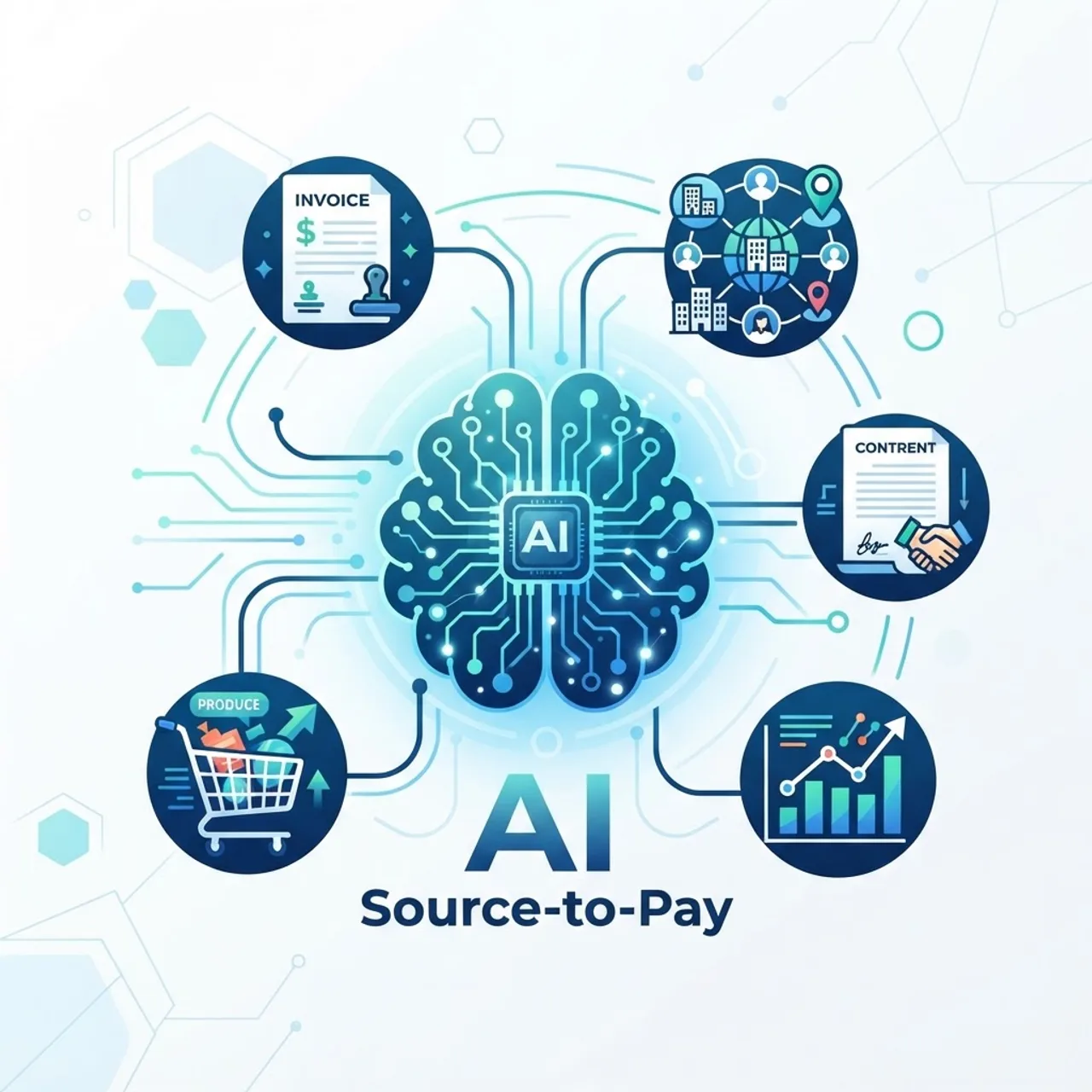
Procurement teams no longer buy software just to digitize purchase orders. They buy intelligence. Artificial intelligence has reshaped source-to-pay (S2P) procurement software from a passive record-keeping system into an active decision engine that recommends suppliers, flags risky contracts, predicts price changes, and pays invoices with minimal human touch. If you are evaluating whether an AI-powered S2P platform is worth the investment, this guide explains exactly how the technology works, what it delivers, and how to choose the right one.
We have implemented and audited procurement platforms across mid-market and enterprise environments, and the pattern is consistent: the organizations that treat AI as a workflow co-pilot, not a magic button, capture the biggest returns. Below is a practical, experience-based breakdown.
Quick Answer: AI smart source-to-pay software uses machine learning to automate and optimize the entire procurement cycle, from sourcing suppliers to paying invoices. It analyzes spend data, recommends vendors, detects risk and fraud, and speeds approvals, typically cutting processing costs and freeing teams for strategic work.
What Is AI Source-to-Pay Procurement Software?
Source-to-pay software manages the full procurement lifecycle, from finding and negotiating with suppliers (the "source" side) through requisitioning, purchasing, receiving, and paying invoices (the "pay" side). Adding artificial intelligence means the platform learns from historical transactions to make predictions and recommendations instead of only executing rules you define.
To be precise with terms:
- Source-to-Pay (S2P): The end-to-end process covering strategic sourcing, contract management, procurement, and accounts payable.
- Procure-to-Pay (P2P): A narrower subset focused only on the buying and paying stages.
- Smart / AI-driven: The system applies machine learning, natural language processing, and predictive analytics to automate judgment-heavy tasks.
The difference matters when comparing vendors. Many tools market themselves as "AI" but only offer basic rule automation. True intelligence shows up when the software improves its recommendations as more data flows through it.
Why AI Matters in Modern Procurement
Manual procurement is expensive and slow, and AI directly attacks both problems. According to research widely cited across the industry, processing a single invoice manually can cost between 10 and 15 US dollars and take days, while automated processing can drop that to a fraction of the cost in minutes. Multiply that across thousands of invoices and the savings become strategic, not cosmetic.
The second driver is data volume. A typical enterprise deals with hundreds of suppliers, thousands of contracts, and constant price fluctuation. Humans cannot monitor all of it. According to McKinsey analysis on AI adoption, organizations applying AI to core operational functions report meaningful cost reductions and revenue gains in the functions where it is deployed. Procurement is one of the clearest fits because it is data-rich and repetitive.
The practical payoff appears in three areas: lower operating cost, better spend visibility, and reduced risk. If your team spends more time chasing approvals than negotiating value, AI is the lever that reverses that ratio.
How Smart Source-to-Pay Automation Works
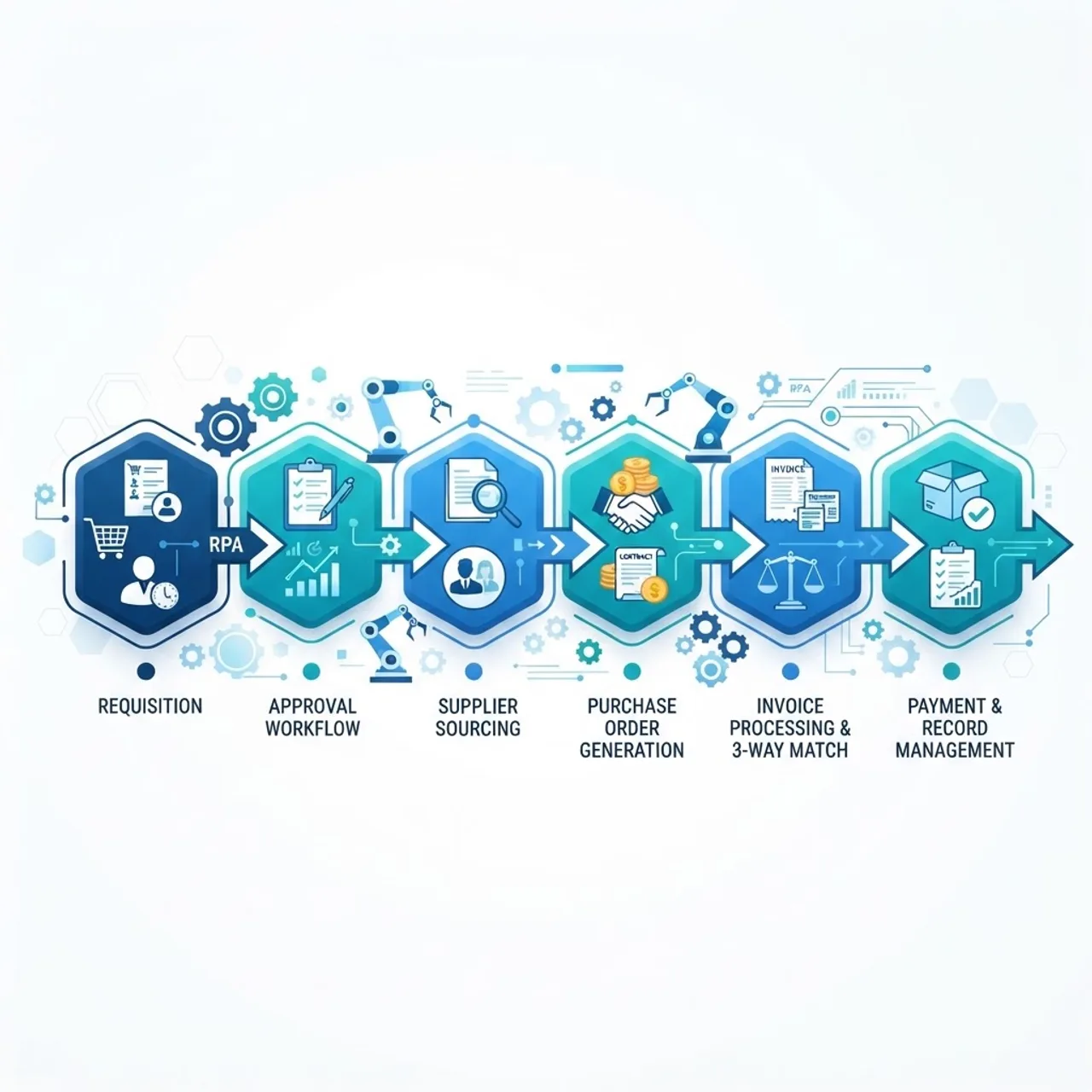
AI automates procurement by turning historical and real-time data into next-step recommendations and hands-free actions. Here is the workflow most modern platforms follow:
- Data ingestion: The system pulls in past purchases, supplier records, contracts, and ERP data.
- Pattern learning: Machine learning models identify normal spend patterns, seasonal demand, and price benchmarks.
- Recommendation: When a requisition is raised, the software suggests preferred suppliers, catalog items, and expected pricing.
- Automated matching: Incoming invoices are matched to purchase orders and receipts using intelligent document processing, even when formats differ.
- Exception handling: Only mismatches or anomalies are routed to a human, dramatically shrinking manual review queues.
The key distinction from old automation is adaptability. Rule-based systems break when an invoice arrives in an unexpected layout. Natural language processing reads the document contextually, so a new supplier format does not stall the pipeline. Businesses building this kind of intelligent automation often partner with specialists in artificial intelligence services to integrate models cleanly with existing ERP systems.
Core Features to Look For
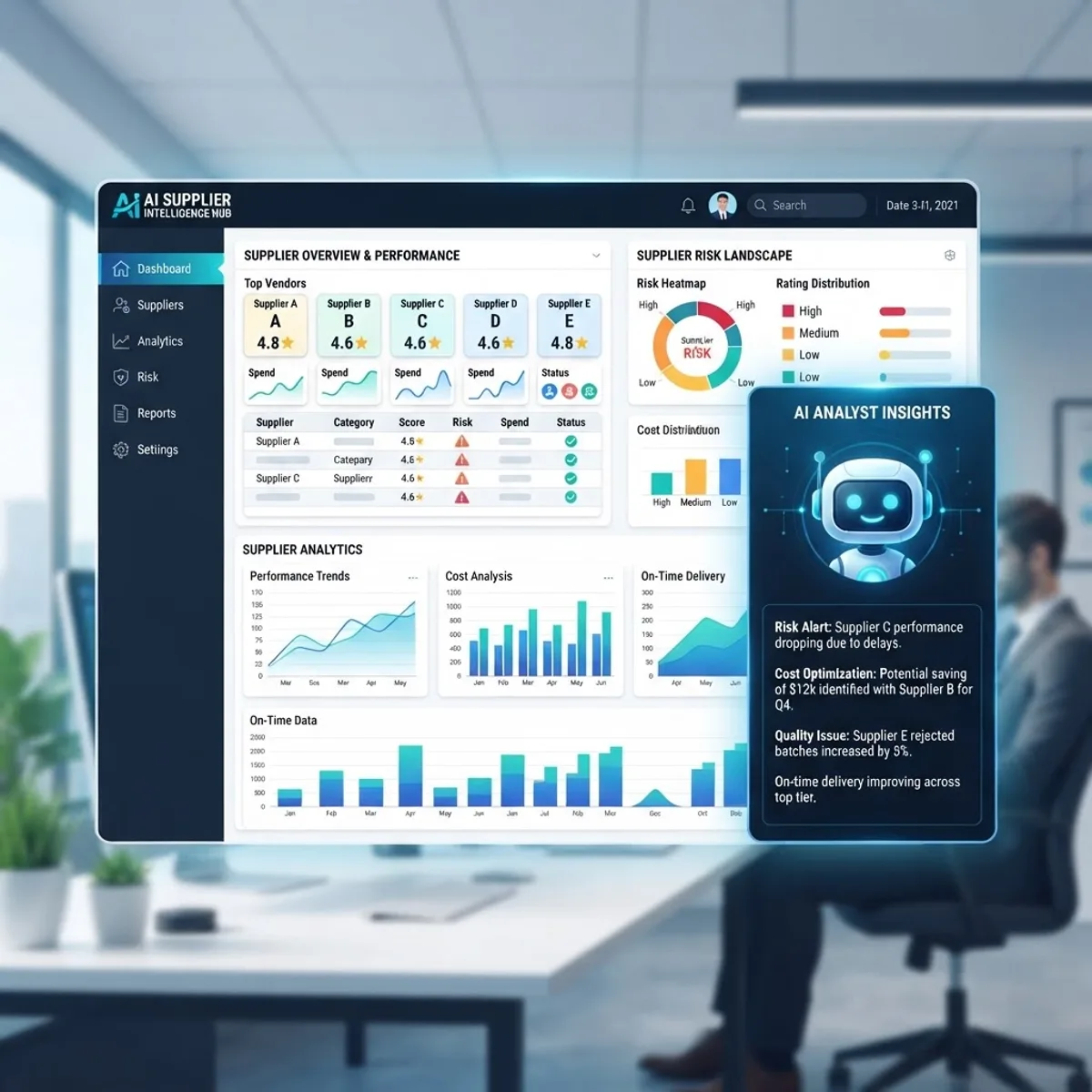
The best AI S2P platforms combine automation with transparency. When evaluating tools, prioritize these capabilities:
- Intelligent invoice capture: Extracts line items from PDFs, scans, and emails without manual entry.
- Supplier recommendation engine: Ranks vendors by price, reliability, and risk.
- Predictive spend analytics: Forecasts future spend and flags budget overruns early.
- Contract intelligence: Reads contracts to surface expiry dates, renewal clauses, and non-compliant terms.
- Fraud and anomaly detection: Catches duplicate invoices and unusual payment patterns.
- Guided sourcing: Walks buyers through compliant purchasing paths automatically.
A feature only matters if your team will use it. In our implementations, adoption climbs when the AI explains why it made a recommendation rather than presenting a black-box answer.
The Source-to-Pay Process Stages Explained
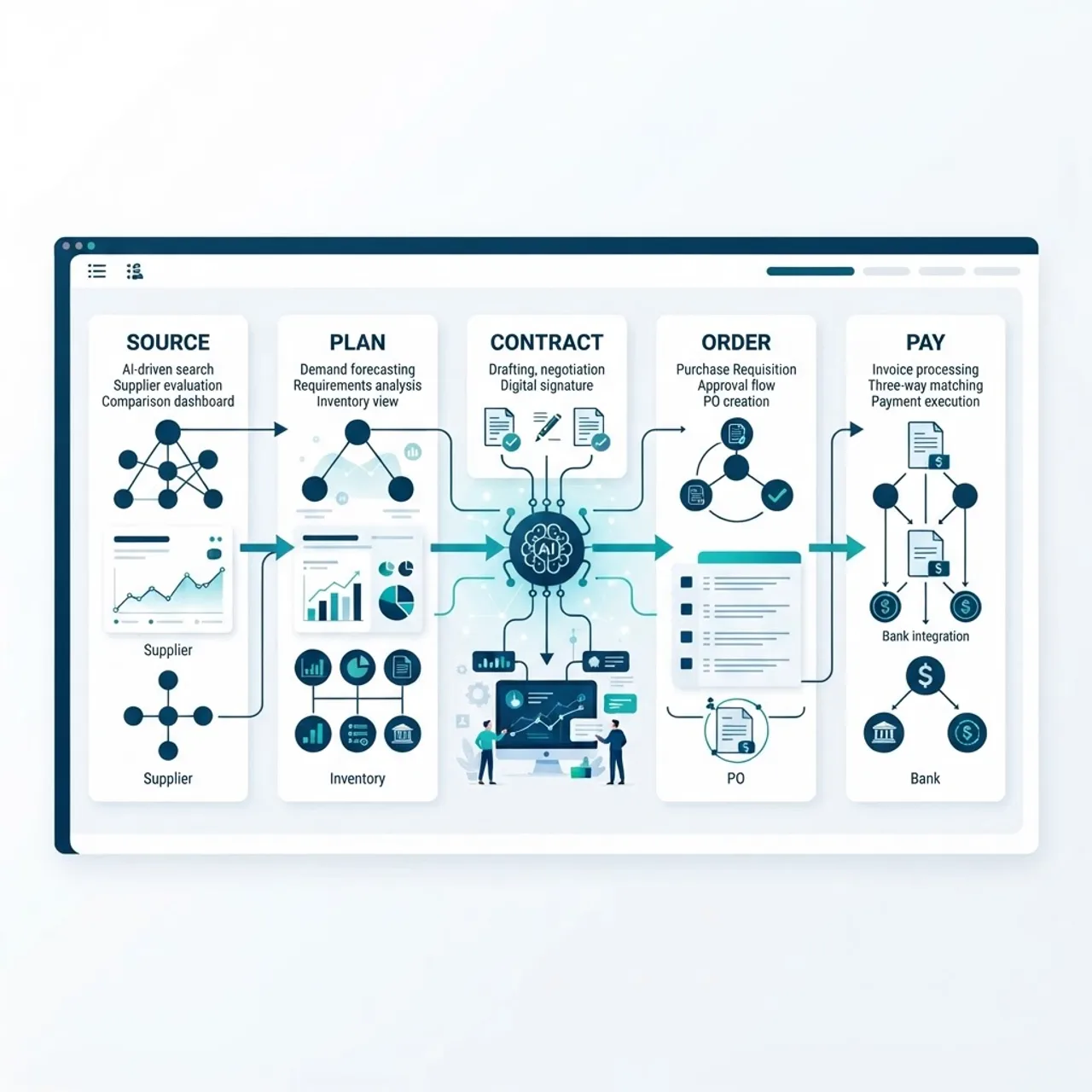
Understanding each stage clarifies where AI adds the most value. The lifecycle breaks into these phases:
- Strategic sourcing: Identifying and evaluating suppliers. AI benchmarks pricing and scores supplier risk.
- Contract management: Drafting and storing agreements. AI extracts key terms and monitors compliance.
- Requisition and purchasing: Requesting and ordering goods. AI guides buyers to preferred catalogs.
- Receiving: Confirming delivery. AI reconciles quantities against orders.
- Invoicing and payment: Matching and settling invoices. AI performs three-way matching and schedules payments.
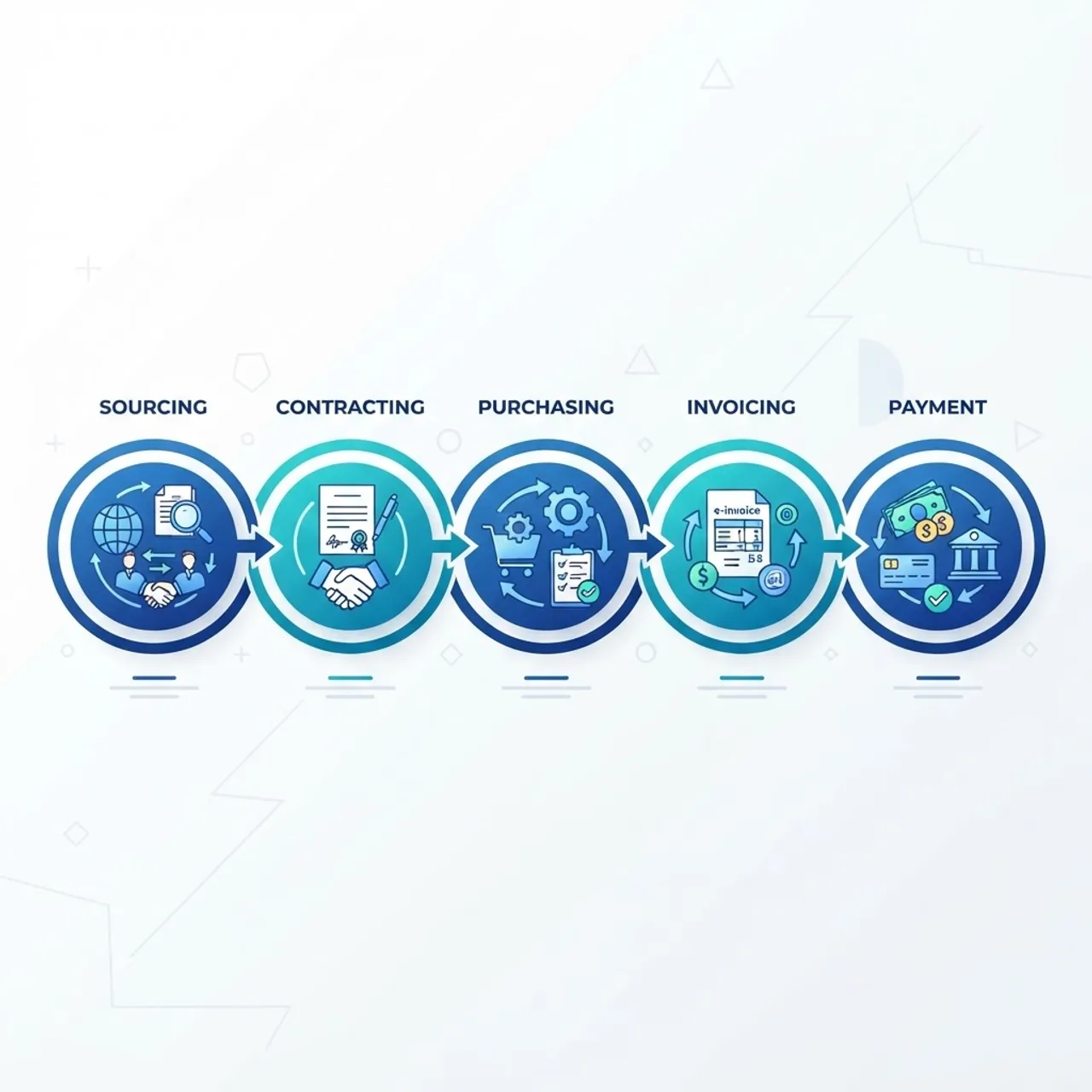
The highest-impact stages are usually sourcing and invoicing, because those involve the most repetitive analysis and the greatest financial exposure. Focus your rollout there first.
AI Procurement vs Traditional Procurement Software
The gap between AI-driven and conventional tools is widest in decision quality and speed. The comparison below highlights the practical differences.
| Capability | Traditional Software | AI Smart S2P Software |
|---|---|---|
| Invoice processing | Manual data entry | Automated capture and matching |
| Supplier selection | Static preferred lists | Dynamic risk and price scoring |
| Spend visibility | Historical reports only | Predictive forecasting |
| Fraud detection | Manual spot checks | Continuous anomaly detection |
| Exception handling | All items reviewed | Only outliers flagged |
| Improvement over time | None | Learns from every transaction |
Traditional systems execute what you tell them. AI systems tell you what you may have missed. That shift from reactive to proactive is the core reason procurement leaders are migrating.
Measurable Business Benefits
AI source-to-pay software delivers returns you can put on a spreadsheet. The most common gains our clients track include:
- Lower processing costs through automated invoice and PO matching.
- Faster cycle times, with approvals compressing from days to hours.
- Higher savings capture, because the system surfaces negotiated discounts and prevents maverick spend.
- Reduced compliance risk, thanks to automatic contract and policy checks.
- Better cash management, since predictive analytics improve payment timing.
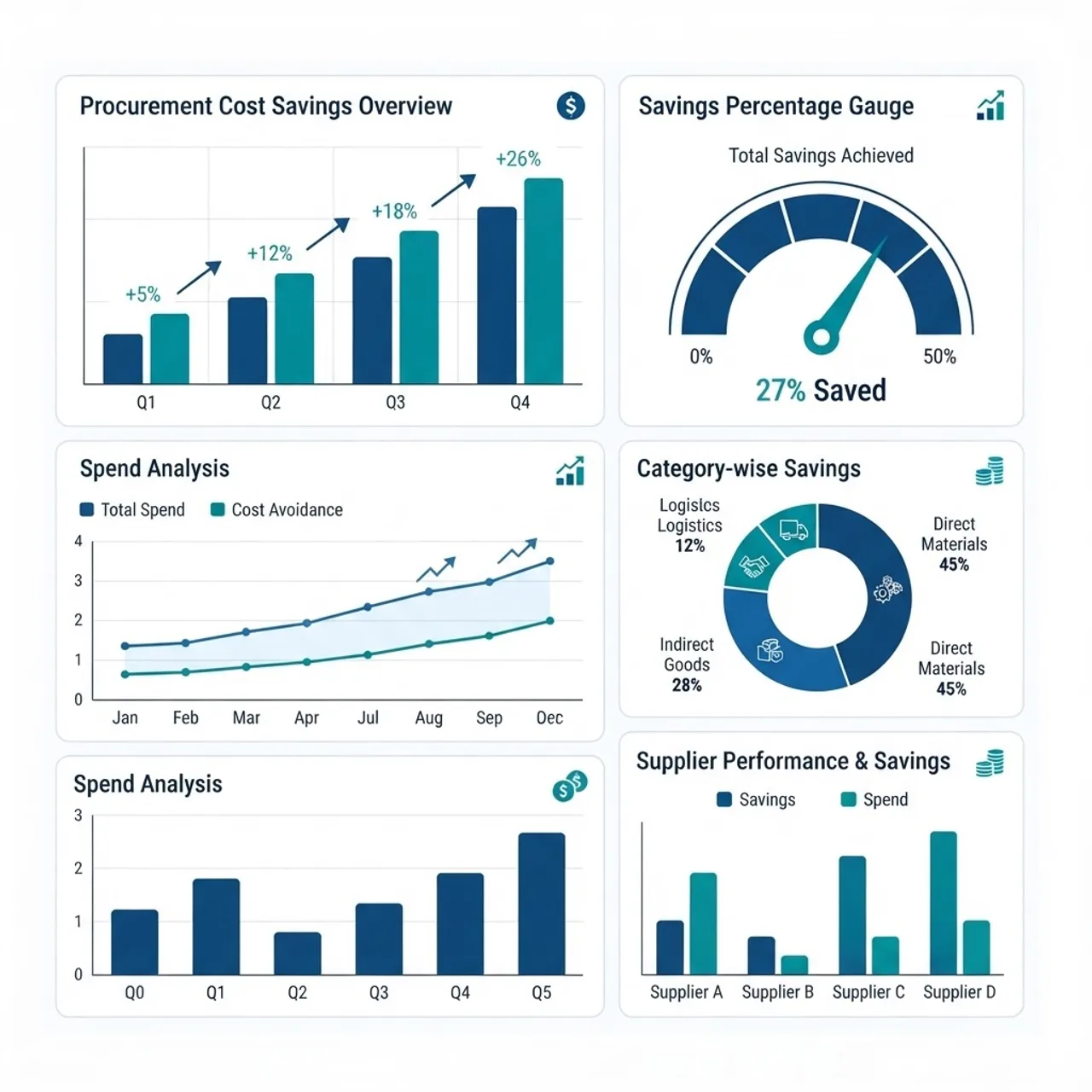
The honest caveat: benefits depend on clean data. If your supplier master and historical spend records are messy, budget time for data cleanup before expecting strong AI performance. Companies that skip this step often blame the software for what is actually a data problem.
How to Implement AI S2P Software Successfully
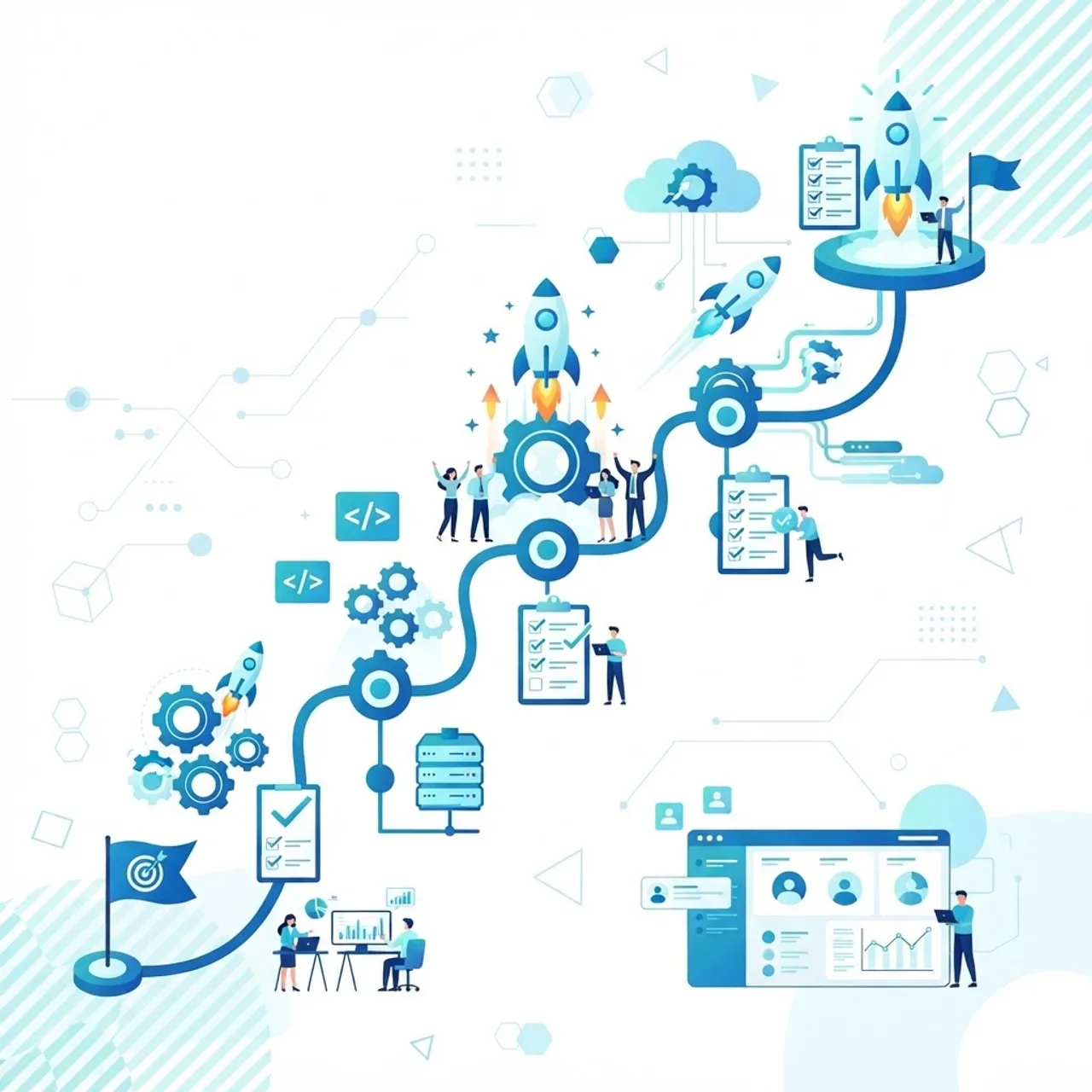
Successful adoption follows a phased roadmap, not a big-bang launch. Based on real deployments, this sequence works best:
- Audit current spend and data quality. Know your baseline before automating anything.
- Define clear KPIs. Target metrics like invoice cost, cycle time, and savings rate.
- Start with one high-volume category. Prove value quickly before scaling.
- Integrate with your ERP. Seamless data flow is non-negotiable.
- Train the team. Adoption fails when users do not trust or understand the tool.
- Measure and expand. Roll out to more categories once results are proven.
Expert integration support accelerates every step. Teams that need custom platform builds or ERP connections often work with dedicated web application development specialists to ensure the software fits their exact workflows rather than forcing the business to bend around rigid tooling. You can learn more about broader digital solutions at ZoneTechify and WebPeak.
The Future of AI in Procurement
Procurement is moving toward autonomous, agent-driven buying. The next wave features AI agents that negotiate routine renewals, reorder stock automatically based on demand forecasts, and continuously scan the supplier market for better terms. Generative AI is already drafting RFPs and summarizing complex contracts in seconds.
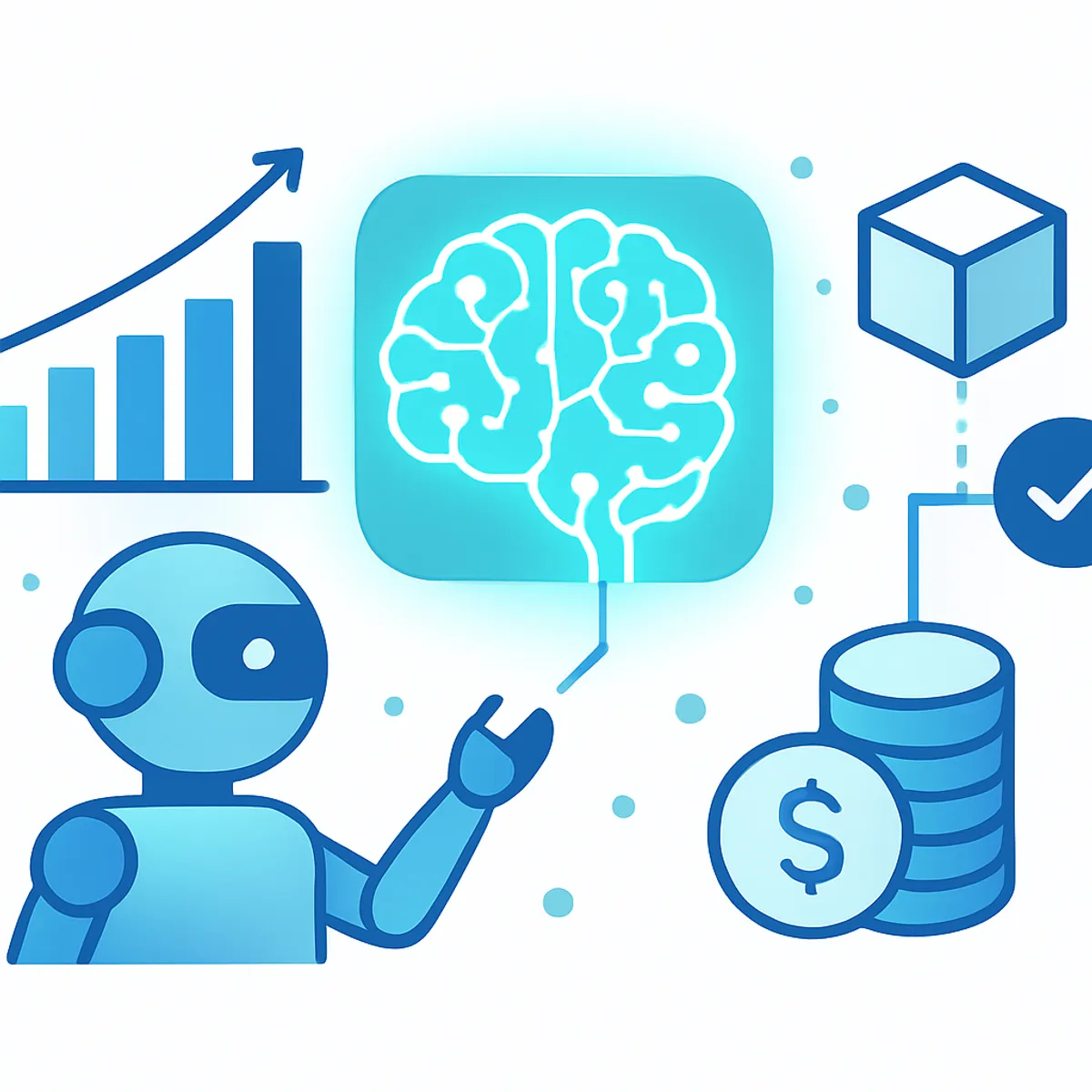
The realistic near-term future is augmentation, not replacement. Procurement professionals will shift from transaction processing to strategy, supplier relationships, and risk management, while AI handles the repetitive load. Organizations that build this foundation now will adapt fastest as autonomous procurement matures.
Key Takeaways
- AI source-to-pay software automates the full procurement lifecycle, from sourcing to payment, using machine learning and natural language processing.
- Manual invoice processing can cost 10 to 15 US dollars each; automation cuts this to a fraction and shrinks approval times from days to hours.
- The biggest value stages are strategic sourcing and invoicing, where repetitive analysis and financial exposure are highest.
- AI differs from traditional software by being proactive and self-improving, not just rule-based.
- Clean data and phased rollout are the two strongest predictors of successful implementation.
Frequently Asked Questions (FAQ)
What is AI source-to-pay procurement software?
It is a platform that manages the entire procurement cycle, from finding suppliers to paying invoices, using artificial intelligence. The software learns from your spend data to recommend vendors, automate invoice matching, detect risk, and speed up approvals, reducing both cost and manual effort.
How does AI reduce procurement costs?
AI cuts costs by automating repetitive tasks like invoice data entry and three-way matching, which lowers per-invoice processing expense. It also surfaces negotiated discounts, prevents unauthorized spending, and flags duplicate payments, so savings come from both efficiency and better financial control across every purchasing category.
Is AI procurement software only for large enterprises?
No. While enterprises adopted it first, many cloud-based AI S2P platforms now offer scalable pricing suitable for mid-market companies. If your business processes hundreds of invoices monthly or manages many suppliers, you can realize meaningful savings and time recovery regardless of company size.
What is the difference between source-to-pay and procure-to-pay?
Source-to-pay covers the complete process, including strategic sourcing and contract management, plus purchasing and payment. Procure-to-pay is narrower, focusing only on the buying and paying stages. Source-to-pay gives broader visibility, while procure-to-pay suits teams that only need transactional purchasing automation.
How long does it take to implement AI S2P software?
Implementation typically ranges from a few weeks to several months, depending on data quality, ERP integration complexity, and rollout scope. Starting with one high-volume spend category lets you prove value quickly, then expand. Clean supplier and spend data significantly shortens the timeline and improves early results.
Does AI procurement software replace procurement teams?
No, it augments them. AI handles repetitive transaction processing, freeing professionals to focus on supplier strategy, negotiation, and risk management. The realistic outcome is a smaller manual workload and a more strategic team, not job elimination, especially as autonomous buying features continue to mature.