How artificial intelligence is reshaping India's fashion industry in 2026 across design, retail, supply chains, and personalized shopping experiences.
Artificial Intelligence Fashion Industry India 2026
India's fashion industry is no longer just about tailors, textiles, and seasonal trends. In 2026, artificial intelligence sits at the center of how clothes are designed, priced, produced, and sold. From Surat's fabric mills to Bengaluru's D2C startups, AI has quietly become the most influential stylist, buyer, and planner in the room. Having advised Indian apparel brands on technology adoption, I have watched this shift move from experimental pilots to everyday operations.
This article breaks down exactly how AI is changing Indian fashion in 2026, where it delivers real value, and what brands must do to stay competitive. Whether you run a boutique label or a national retail chain, the insights here are practical and grounded in what is actually working today.
Quick Answer: In 2026, artificial intelligence powers India's fashion industry through AI design tools, virtual try-ons, demand forecasting, personalized recommendations, and smart manufacturing. It cuts waste, speeds up production, improves sizing accuracy, and helps brands respond to trends faster, making fashion cheaper, faster, and more sustainable across the country.
Why AI Matters for Indian Fashion in 2026
India's textile and apparel market is one of the largest in the world, and its e-commerce fashion segment is growing rapidly. According to industry estimates, India's e-commerce sector is projected to cross $325 billion by 2030, with fashion as one of its biggest categories. That scale creates a data problem that only AI can solve efficiently: millions of SKUs, unpredictable regional tastes, and razor-thin margins.
AI helps brands turn this complexity into an advantage. Instead of guessing what will sell in Chennai versus Chandigarh, brands now use machine learning models that read real purchase signals. This is the core reason AI adoption in Indian fashion accelerated so sharply heading into 2026.
What Is AI in Fashion?
AI in fashion refers to the use of machine learning, computer vision, and generative models to automate and improve tasks such as design, sizing, inventory planning, marketing, and customer service. In simple terms, it is software that learns from data to make better fashion decisions than manual methods allow.
AI-Powered Fashion Design and Creativity
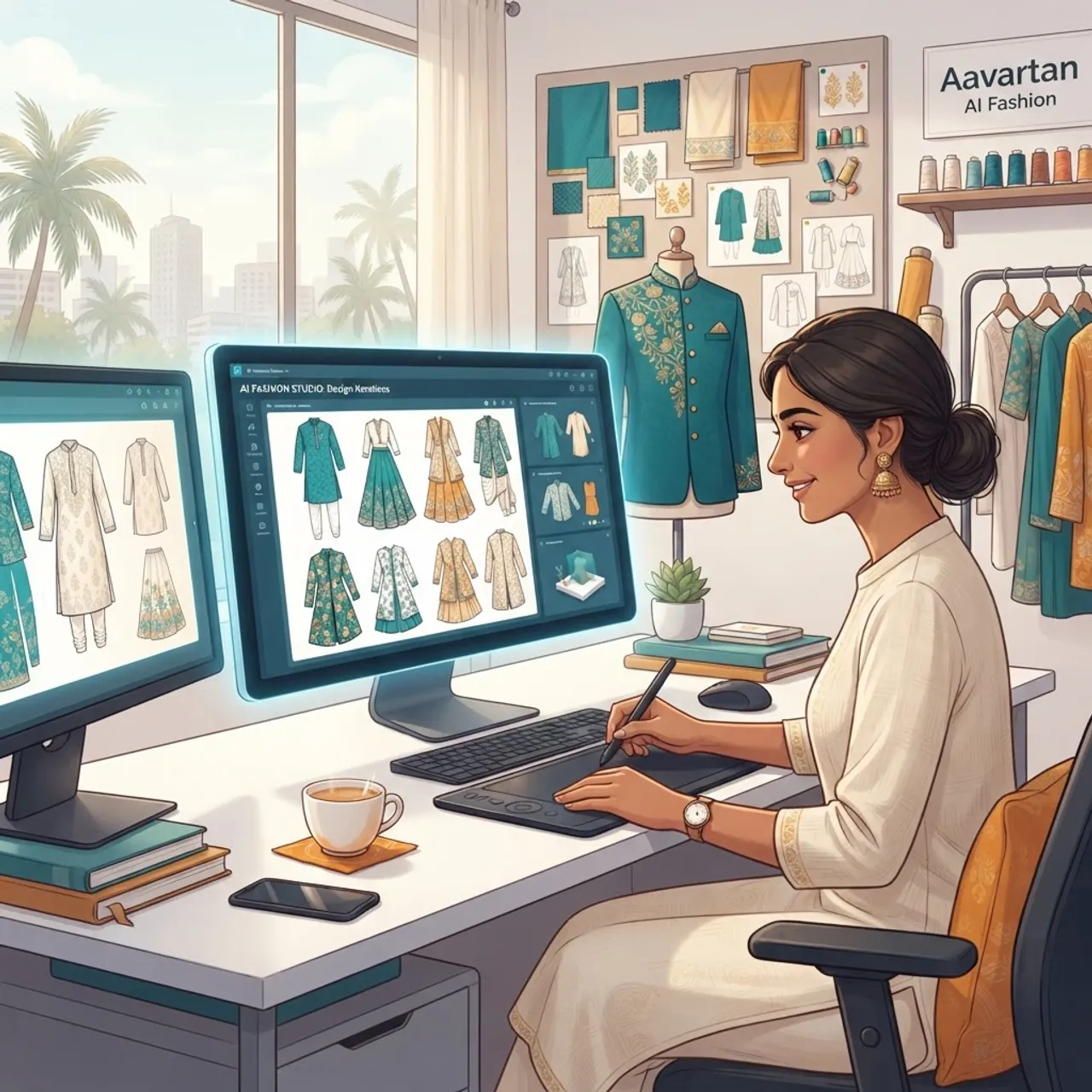
Design is where AI feels most futuristic and most useful. Generative AI tools now produce hundreds of print variations, silhouettes, and color palettes in minutes. Indian designers use these tools to blend traditional motifs like Bandhani, Ikat, and block prints with contemporary cuts, cutting the sketch-to-sample timeline dramatically.
The real expertise lies in curation, not generation. The best Indian design teams treat AI as a fast intern: it generates options, and human designers apply cultural nuance and taste. This partnership shortens the creative cycle from weeks to days, letting brands launch micro-collections aligned with festivals like Diwali, Eid, and wedding season with far greater precision.
Businesses building custom AI tools for design and automation often rely on specialized artificial intelligence services to integrate these models into existing creative workflows without disrupting their teams.
Virtual Try-Ons and the End of Sizing Guesswork
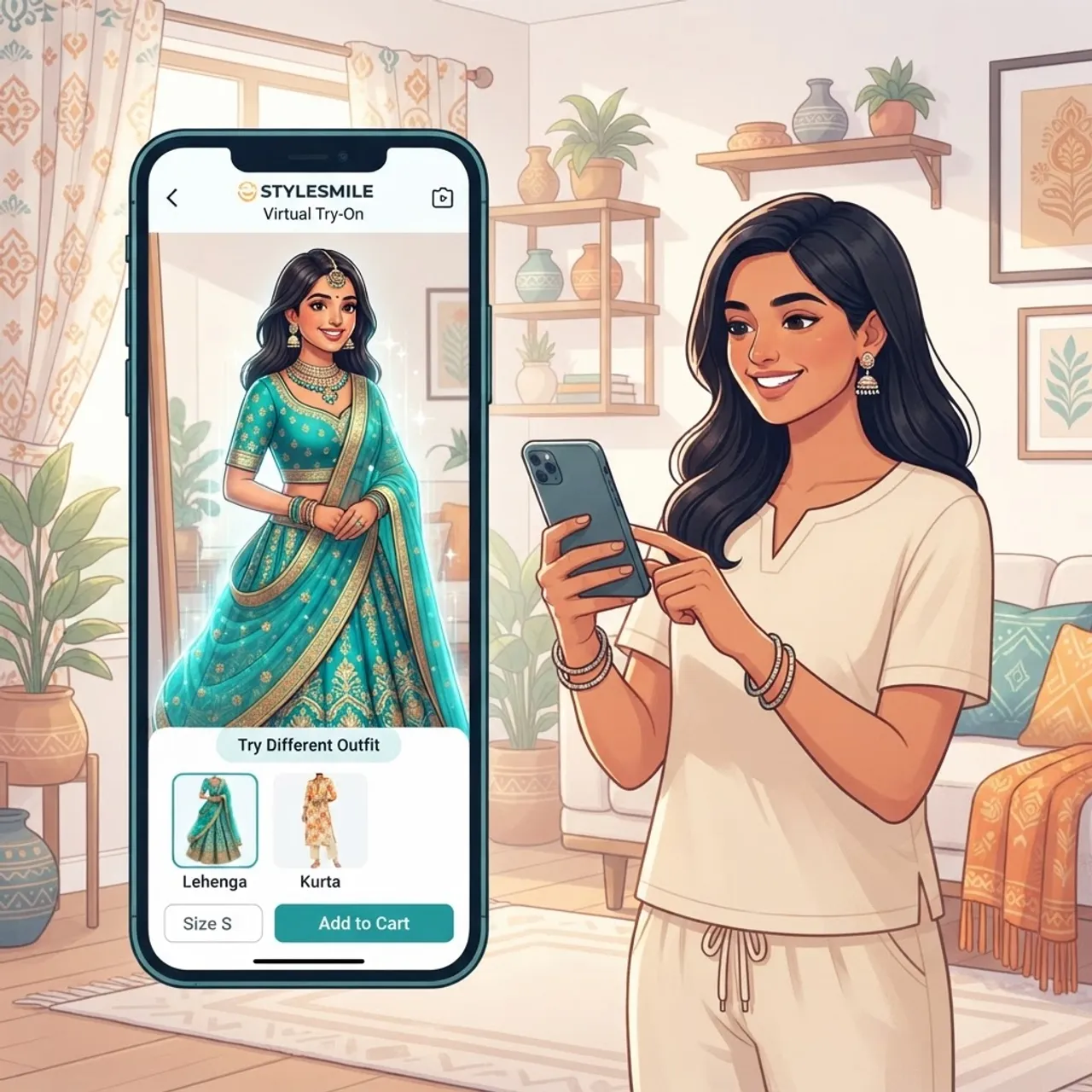
Returns are the silent profit killer of online fashion, and poor fit causes most of them. In 2026, AI-driven virtual try-on and body-measurement tools have become standard on leading Indian fashion apps. Shoppers point their phone camera, and computer vision maps their body to recommend the right size and show how an outfit drapes.
This matters enormously in India, where sizing varies wildly across brands and body types are diverse. According to widely cited retail research, roughly 30% of online clothing purchases are returned, and fit is the number one reason. AI try-ons directly attack this cost, improving both customer confidence and brand margins at the same time.
Smarter Supply Chains and Demand Forecasting
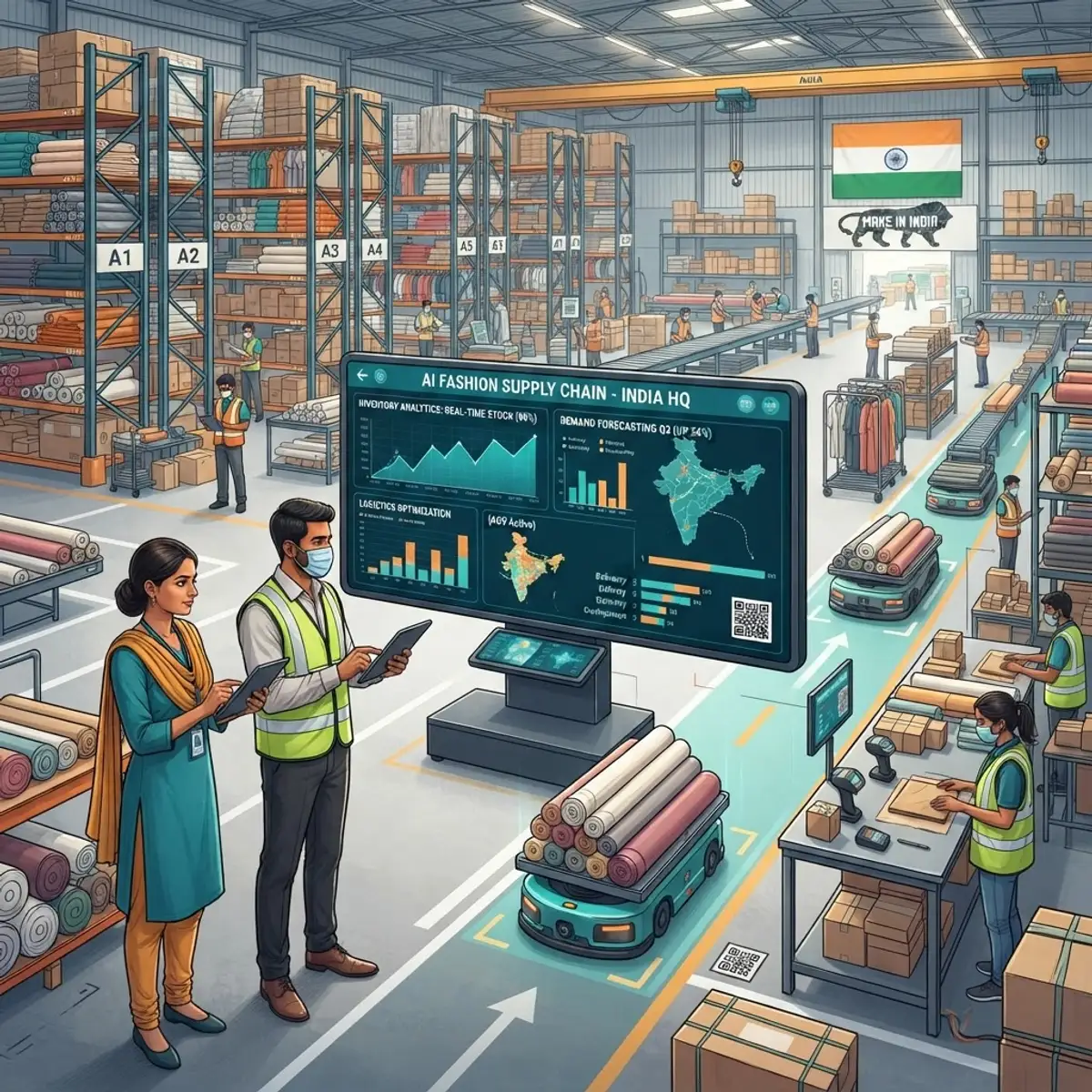
The least glamorous use of AI is arguably the most valuable. Demand forecasting models analyze past sales, weather, regional festivals, social media buzz, and even wedding-season calendars to predict what quantities to produce. This prevents the two classic fashion disasters: overstock that ends in deep discounting, and stockouts that lose sales.
Indian brands using AI forecasting report meaningfully lower dead inventory and tighter working capital. The models also optimize logistics, deciding which warehouse ships to which pincode fastest. For a country as geographically vast as India, this efficiency is a genuine competitive moat, not a nice-to-have.
How AI Reduces Fashion Waste
- Accurate forecasting limits overproduction of unpopular styles.
- Made-to-order models produce garments only after a confirmed sale.
- Fabric-cutting optimization reduces textile scrap during manufacturing.
- Dynamic pricing clears stock intelligently instead of blanket markdowns.
Personalized Shopping Experiences
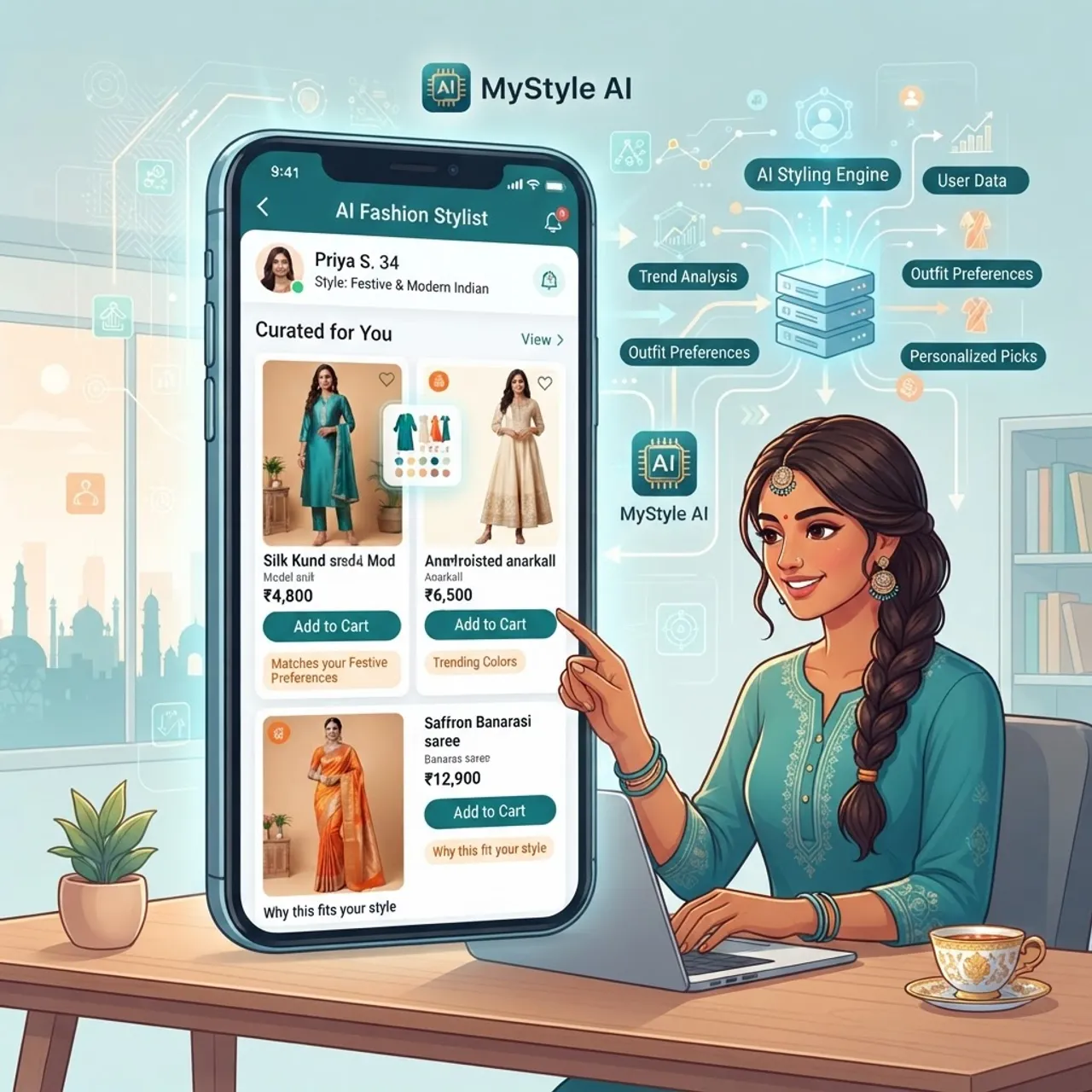
Personalization is where AI directly grows revenue. Recommendation engines study browsing history, past purchases, and style preferences to show each shopper a store tailored to them. According to McKinsey, personalization can lift revenue by 10 to 15% for retailers who do it well, and Indian fashion players are aggressively chasing that upside.
In practice, this means a shopper who buys ethnic wear sees curated festive collections, while a streetwear buyer sees drops matched to their taste. Chatbots powered by large language models now handle styling questions in Hindi, Tamil, and other regional languages, making the experience feel personal rather than automated.
AI in Fashion Manufacturing
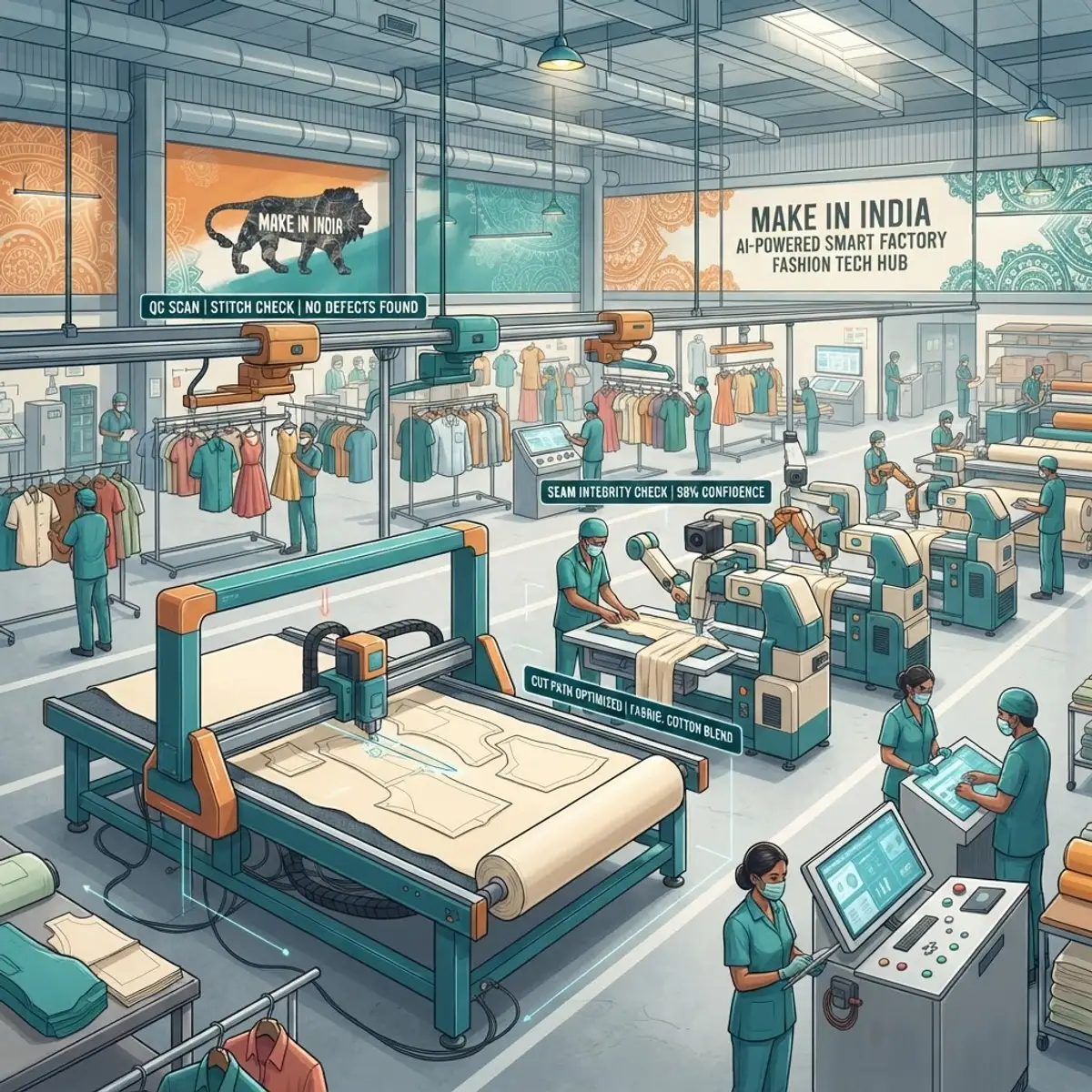
On the factory floor, AI-driven automation is modernizing India's massive garment manufacturing base. Computer-vision cameras inspect stitching and fabric for defects at speeds no human can match, improving quality consistency. Automated cutting machines guided by AI optimize how patterns are placed on fabric, squeezing out more garments per meter of cloth.
This does not eliminate India's skilled workforce; it augments it. Workers shift from repetitive checks to higher-value oversight roles. For export-focused manufacturers, AI quality control is increasingly a requirement to meet the strict standards of global buyers, making it essential rather than optional in 2026.
Traditional vs AI-Driven Fashion Operations
| Aspect | Traditional Approach | AI-Driven Approach (2026) |
|---|---|---|
| Design cycle | Weeks per collection | Days per micro-collection |
| Demand planning | Intuition and history | Predictive machine learning |
| Sizing | Fixed charts, high returns | Virtual try-on, lower returns |
| Personalization | Same store for everyone | Individually tailored feeds |
| Quality control | Manual sampling | Computer-vision inspection |
| Inventory risk | High overstock | Optimized, lean stock |
Challenges and Realistic Limitations
AI is powerful, but it is not magic. Indian brands face real hurdles: clean data is scarce, small businesses lack technical talent, and off-the-shelf models often miss local context like regional body types or festival-specific demand. Poorly trained models can amplify bias or recommend irrelevant products, damaging trust.
The honest advice from my experience is to start narrow. Pick one high-impact use case, such as demand forecasting or virtual try-on, prove ROI, then expand. Brands that chase every AI feature at once usually stall. Those that solve one expensive problem well build momentum and internal buy-in.
How Indian Fashion Brands Should Start With AI
- Audit your data first, because AI is only as good as the data feeding it.
- Choose one measurable use case with clear cost or revenue impact.
- Pilot with a small collection before rolling out company-wide.
- Blend AI with human judgment rather than replacing your team.
- Track results honestly and scale only what proves its value.
Brands that lack in-house engineering often partner with specialists. Resources like ZoneTechify and WebPeak help fashion businesses adopt AI-driven design, e-commerce, and automation systems without building an entire tech team from scratch.
The Future of AI in Indian Fashion Beyond 2026
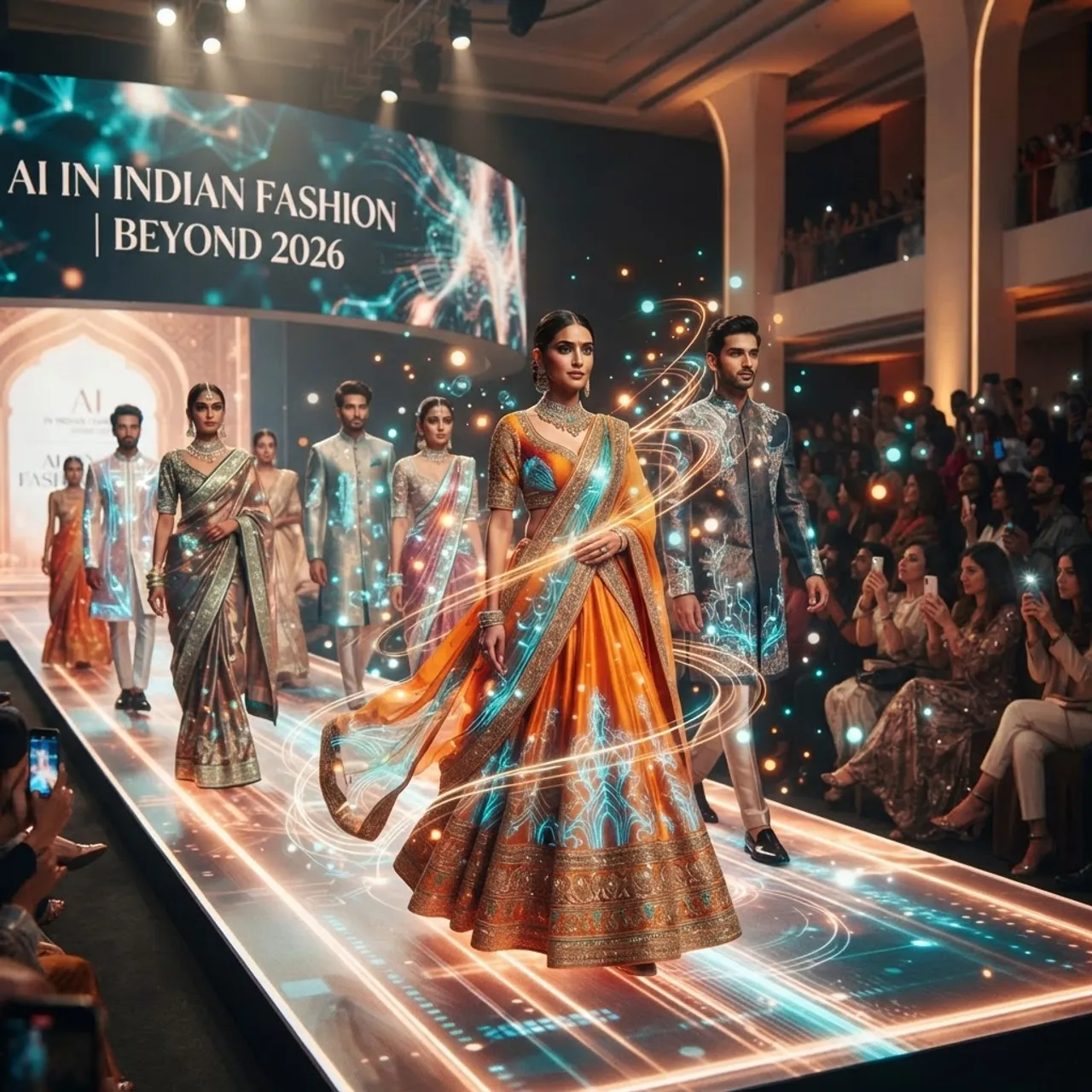
Looking ahead, expect hyper-personalized made-to-order fashion, AI stylists that understand your wardrobe, and fully traceable sustainable supply chains verified by AI. Regional language AI will make fashion e-commerce accessible to hundreds of millions of first-time online shoppers across Bharat, not just metro cities.
The brands that win will treat AI as core infrastructure, like electricity, not as a marketing gimmick. India's blend of deep textile heritage and fast-growing tech talent positions it uniquely to lead this transformation globally.
Key Takeaways
- AI powers India's fashion industry in 2026 across design, retail, supply chain, and manufacturing.
- India's e-commerce sector is projected to exceed $325 billion by 2030, with fashion a leading category.
- Around 30% of online clothing is returned, mostly due to fit, which AI virtual try-ons directly reduce.
- Personalization can lift retail revenue by 10 to 15%, according to McKinsey.
- Start with one high-impact use case, prove ROI, then scale AI adoption gradually.
Frequently Asked Questions (FAQ)
How is AI used in India's fashion industry in 2026?
AI is used across design, sizing, forecasting, and marketing. Indian brands use generative tools to create designs, virtual try-ons to reduce returns, machine learning to predict demand, and recommendation engines to personalize shopping. On factory floors, computer vision handles quality control, making fashion faster, cheaper, and less wasteful.
Will AI replace fashion designers in India?
No, AI will not replace designers; it augments them. Generative tools produce fast design options, but human designers apply cultural nuance, taste, and brand identity that AI cannot replicate. The strongest Indian design teams in 2026 treat AI as a creative accelerator, keeping final decisions firmly in skilled human hands.
How does AI reduce clothing returns in online fashion?
AI reduces returns through virtual try-ons and body-measurement tools using computer vision. Shoppers see how garments fit before buying, cutting size-related mistakes. Since fit causes most fashion returns, and roughly 30% of online clothing is returned, accurate AI sizing directly protects brand margins and improves customer satisfaction.
Is AI affordable for small Indian fashion brands?
Yes, AI is increasingly affordable through cloud-based tools and specialist partners. Small brands do not need to build their own models. They can start with one focused use case, like forecasting or personalization, using ready-made platforms, then expand gradually as they see measurable returns on their investment.
What is the biggest benefit of AI for Indian fashion?
The biggest benefit is reduced waste and smarter inventory. AI demand forecasting prevents overproduction and stockouts, freeing up working capital and lowering discounting. Combined with personalization that grows revenue and virtual try-ons that cut returns, AI improves profitability across the entire fashion value chain in India.