
Discover how artificial intelligence transforms ESG consulting with automated reporting, carbon tracking, risk analysis, and compliance-ready sustainability insights.
Artificial Intelligence ESG Consulting Solutions & Services

Environmental, Social, and Governance (ESG) reporting used to be a spreadsheet nightmare. Analysts spent weeks stitching together fragmented data from suppliers, utility bills, HR systems, and regulatory filings, only to produce a report that was outdated the moment it shipped. Artificial intelligence has changed that equation. Today, AI-powered ESG consulting turns messy, unstructured sustainability data into audit-ready insight in hours, not months. Having worked alongside sustainability teams navigating CSRD and SEC climate rules, I have seen where AI genuinely delivers value and where it is overhyped. This guide separates the two.
Quick Answer: Artificial intelligence ESG consulting uses machine learning to automate data collection, carbon accounting, risk scoring, and regulatory reporting. It helps organizations measure sustainability performance accurately, detect compliance gaps, benchmark against peers, and produce audit-ready ESG disclosures far faster than manual methods.
What Is AI-Powered ESG Consulting?
AI-powered ESG consulting is the practice of applying machine learning, natural language processing, and predictive analytics to environmental, social, and governance data to guide corporate sustainability decisions. Instead of consultants manually gathering emissions figures and diversity metrics, AI systems ingest data from ERP platforms, IoT sensors, supplier surveys, and public disclosures, then normalize it against reporting frameworks like GRI, SASB, and the EU's CSRD.
The consulting layer still matters. AI produces the numbers and flags the anomalies, but experienced advisors interpret materiality, set science-based targets, and translate findings into a credible strategy. The best engagements pair algorithmic speed with human judgment, which is exactly the model teams at ZoneTechify and WebPeak recommend for organizations starting their sustainability journey.
Key Terms Defined
- ESG: A framework measuring a company's environmental impact, social responsibility, and governance quality.
- Scope 1, 2, and 3 emissions: Direct emissions, purchased-energy emissions, and value-chain emissions respectively.
- Materiality assessment: The process of identifying which ESG issues most affect a business and its stakeholders.
Why AI Matters for ESG Right Now
Regulatory pressure is the single biggest driver. The EU's Corporate Sustainability Reporting Directive (CSRD) is expanding mandatory disclosure to an estimated 50,000 companies, each required to report hundreds of data points with limited assurance. According to the World Economic Forum, ESG assets are projected to exceed $50 trillion, representing more than a third of total global assets under management. That scale of capital demands data that is accurate, comparable, and verifiable, which is precisely where manual processes break down.

Manual ESG reporting also carries a hidden cost: inconsistency. When three analysts calculate a carbon footprint three different ways, investors lose trust. AI enforces a single, repeatable methodology across every reporting cycle, which is why assurance providers increasingly favor algorithmically generated disclosures.
Core AI ESG Solutions and Services
Modern AI ESG platforms bundle several distinct capabilities. Understanding each helps you scope an engagement that fits your maturity level.
1. Automated Data Collection and Cleansing
AI connectors pull data directly from accounting software, energy meters, travel systems, and supplier portals. Natural language processing extracts figures from PDF invoices and unstructured supplier emails, eliminating the copy-paste errors that plague manual entry. This alone can cut data-preparation time by well over half.
2. Carbon Accounting and Emissions Tracking

Calculating Scope 3 emissions, which often represent more than 70% of a company's total footprint, is notoriously difficult because it spans the entire supply chain. AI models apply emissions factors automatically, estimate missing data using industry averages, and update calculations continuously as new activity data arrives. This delivers a live carbon ledger instead of an annual snapshot.
3. Automated ESG Reporting

One of the highest-impact services is report generation. AI maps your raw data to specific framework requirements, drafts narrative disclosures, and formats output for GRI, TCFD, CSRD, or ISSB standards. Consultants then review and refine, turning a six-week writing marathon into a few days of expert editing.
4. ESG Risk Assessment

Predictive models scan news feeds, litigation records, and regulatory databases to flag emerging risks, such as a supplier facing labor violations or a facility in a water-stressed region. Early warning lets leadership act before a risk becomes a headline.
5. Supply Chain Monitoring
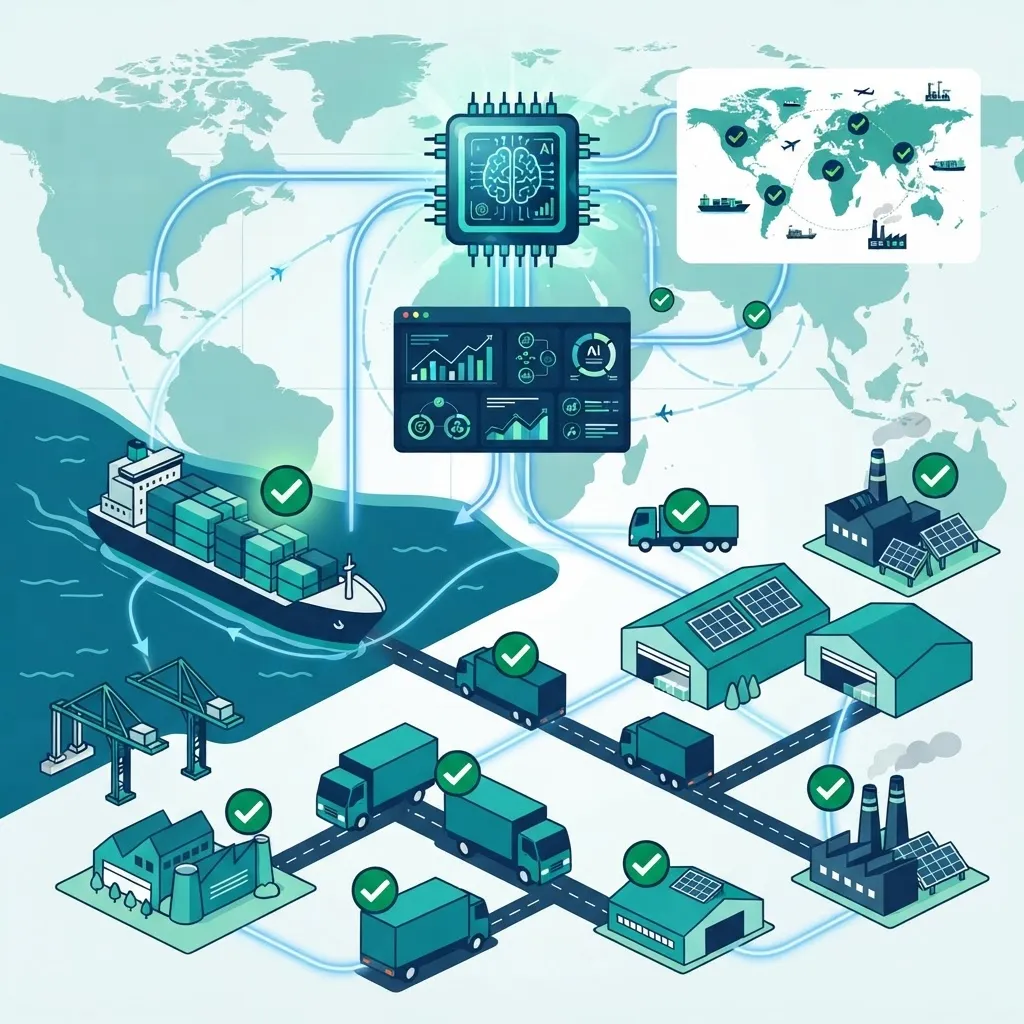
AI continuously screens thousands of suppliers against sustainability criteria, scoring each on emissions, labor practices, and governance. This transforms supplier due diligence from an occasional audit into ongoing, real-time oversight.
6. Compliance and Governance Frameworks
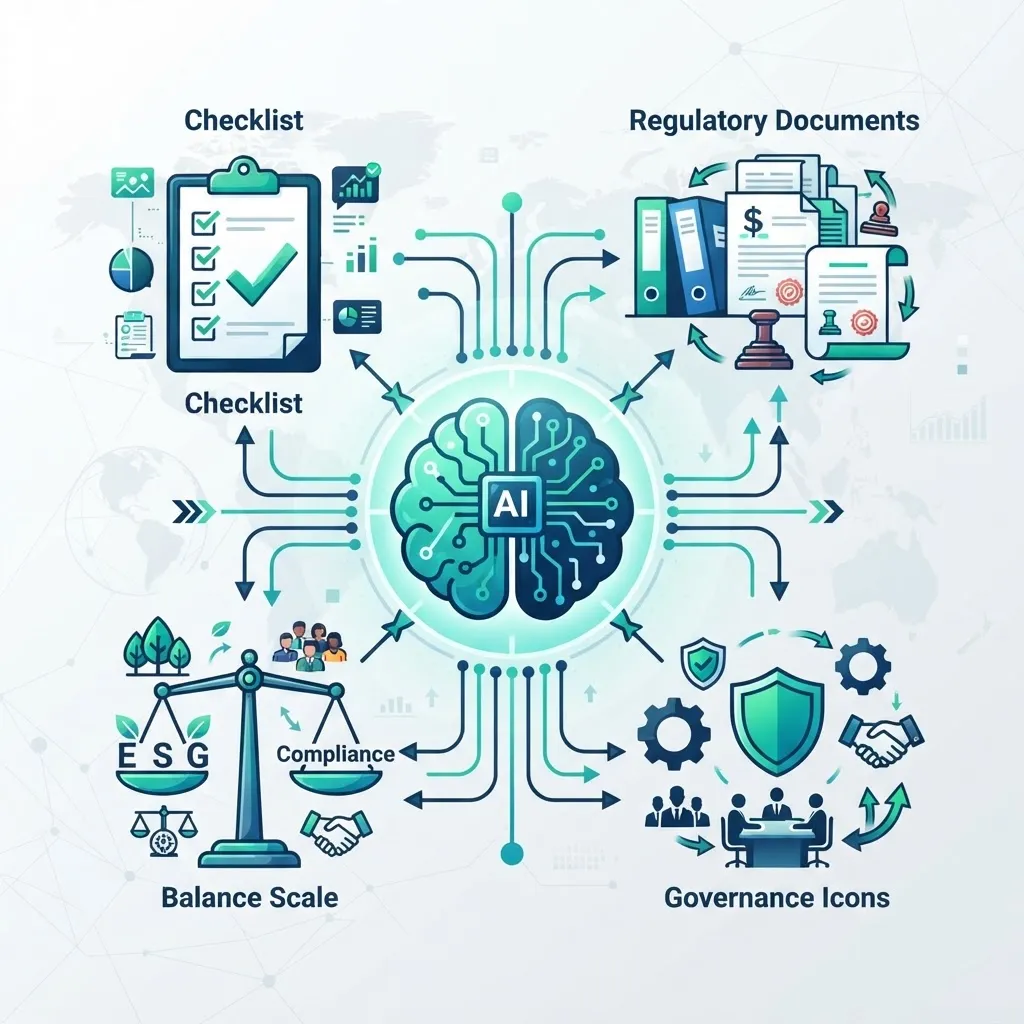
AI cross-checks your disclosures against evolving regulations, highlighting gaps before auditors or regulators do. It also maintains a defensible audit trail, documenting every calculation and data source, which is essential when disclosures require third-party assurance.
Manual vs. AI-Powered ESG Consulting
The difference becomes clear when you compare the two approaches side by side.
| Factor | Manual ESG Consulting | AI-Powered ESG Consulting |
|---|---|---|
| Data collection time | Weeks per cycle | Hours to days |
| Scope 3 accuracy | Often incomplete | High with estimation models |
| Real-time monitoring | No | Yes |
| Error rate | High (manual entry) | Low (automated validation) |
| Regulatory updates | Manual tracking | Automatic flagging |
| Cost at scale | Increases sharply | Scales efficiently |
| Audit trail | Fragmented | Fully documented |
The takeaway is not that AI replaces consultants. It is that AI removes the low-value manual work, freeing experts to focus on strategy, materiality, and stakeholder engagement, which is where they add the most value.
How to Implement AI ESG Solutions: A Practical Roadmap
Based on real deployments, a phased approach consistently outperforms a big-bang rollout. Follow these steps:
- Run a materiality assessment. Identify the 8 to 12 ESG issues most relevant to your industry and stakeholders before buying any software.
- Audit your data sources. Map where emissions, HR, and governance data actually live. Poor data readiness is the number one cause of failed ESG projects.
- Start with one framework. Pick the standard your investors or regulators demand most, and configure AI to that first.
- Automate data ingestion. Connect your primary systems and validate the AI's outputs against a known manual baseline.
- Layer in analytics. Add risk scoring and benchmarking once your core data pipeline is trusted.
- Keep humans in the loop. Every AI-generated disclosure should be reviewed by a qualified analyst before publication.
Organizations that need help executing this roadmap can explore dedicated artificial intelligence services from ZoneTechify or specialist AI services from WebPeak to build the data pipelines and models that power reliable ESG reporting.
Common Pitfalls to Avoid
From experience, three mistakes derail most AI ESG initiatives. First, treating AI as a magic box: if your source data is wrong, AI will confidently produce wrong answers faster. Second, ignoring explainability: regulators and auditors need to understand how a number was derived, so black-box models are a liability. Third, over-automating narrative disclosures without human review, which risks greenwashing accusations. Responsible AI ESG consulting always prioritizes transparency and verifiable methodology over speed alone.

The Future of AI in ESG Consulting
The next wave is agentic AI that not only reports on ESG performance but recommends and simulates specific interventions, such as modeling the emissions impact of switching a supplier or electrifying a fleet. Expect deeper integration with financial systems so sustainability and financial reporting converge, a shift regulators like the ISSB are actively encouraging. As data quality improves, AI-driven ESG scoring will become as standard as credit scoring is today.
Key Takeaways
- AI ESG consulting automates data collection, carbon accounting, risk scoring, and regulatory reporting, cutting reporting time from weeks to days.
- ESG assets are projected to exceed $50 trillion, and CSRD will bring an estimated 50,000 companies into mandatory disclosure.
- Scope 3 emissions often exceed 70% of a company's footprint and are where AI estimation models add the most value.
- AI enforces a single, repeatable, audit-ready methodology, which builds investor and assurer trust.
- Human oversight remains essential to avoid greenwashing and ensure explainable, defensible disclosures.
Frequently Asked Questions (FAQ)
What does AI ESG consulting actually do?
AI ESG consulting combines machine learning with expert advisory to automate sustainability data collection, calculate emissions, assess risks, and generate compliant reports. AI handles the heavy data work while consultants interpret results, set targets, and guide strategy, delivering faster, more accurate, and audit-ready ESG disclosures than manual methods.
Can AI replace human ESG consultants entirely?
No. AI excels at processing data, spotting anomalies, and drafting reports, but it cannot judge materiality, negotiate with stakeholders, or take accountability for disclosures. The most effective model pairs AI automation with experienced consultants who validate outputs, ensure explainability, and translate data into credible sustainability strategy.
How does AI improve carbon accounting accuracy?
AI applies emissions factors automatically, estimates missing supply-chain data using industry benchmarks, and updates calculations continuously as new activity data arrives. This is especially valuable for Scope 3 emissions, which are complex and often exceed 70% of a total footprint, producing a live carbon ledger rather than an outdated annual snapshot.
Is AI ESG reporting compliant with CSRD and other regulations?
Yes, when configured correctly. Leading AI platforms map data to frameworks like CSRD, GRI, TCFD, and ISSB, flag compliance gaps, and maintain a full audit trail. However, disclosures should always undergo human review to ensure they meet assurance requirements and remain defensible to auditors and regulators.
How long does it take to implement an AI ESG solution?
A focused deployment covering one framework and your primary data sources typically takes several weeks to a few months, depending on data readiness. Companies with clean, accessible data move fastest. Starting small with one standard and expanding gradually is far more successful than attempting a full rollout at once.