A practical 2026 guide to the best AI security cameras for businesses, covering top models, must-have features, pricing, and how to choose the right system.
Best Artificial Intelligence Security Camera for Businesses 2026
Choosing the right security camera used to mean picking the sharpest lens and the biggest hard drive. In 2026, that logic is outdated. The best artificial intelligence security cameras for businesses no longer just record footage, they understand it, flag real threats in real time, and cut down the hours your team wastes scrubbing through empty video. If you run a retail store, warehouse, office, or multi-site operation, an AI camera is now one of the highest-leverage security investments you can make.
This guide breaks down the top AI security cameras for businesses in 2026, the features that actually matter, realistic pricing, and a clear framework for choosing a system that fits your risk profile and budget.
Quick Answer: The best AI security cameras for businesses in 2026 combine on-device AI, accurate person and vehicle detection, license plate recognition, and cloud access. Verkada, Avigilon Unity, Rhombus, Reolink AI, and Hikvision AcuSense lead the market. Choose based on site size, integration needs, and total cost of ownership, not just camera resolution.
What Is an AI Security Camera?
An AI security camera is a surveillance device that uses onboard or cloud-based machine learning to analyze video as it is captured. Instead of simply recording pixels, it identifies objects, people, vehicles, and behaviors, then triggers alerts only when something relevant happens. This is called computer vision, and it is the core technology separating modern cameras from the motion-triggered systems of the past.
Traditional motion detection fires an alert every time a shadow, a bird, or a swaying tree crosses the frame. AI cameras filter that noise. They can tell the difference between a delivery driver and an intruder, a parked car and a loitering vehicle, or a customer browsing and someone tampering with a display. That distinction is what makes them genuinely useful for busy commercial environments.
Why Businesses Are Switching to AI Cameras in 2026
The shift to AI-powered surveillance is being driven by hard economics, not hype. Security teams are stretched thin, and manual monitoring simply does not scale.
According to a widely cited industry statistic, humans monitoring video feeds miss up to 95% of activity after just 20 minutes of continuous watching, because attention fatigue sets in quickly. AI never blinks, never tires, and reviews every frame with the same accuracy at hour eight as at minute one.
The market data backs this up too. According to research firm MarketsandMarkets, the global video surveillance market is projected to surpass $80 billion by the late 2020s, with AI-enabled analytics as the fastest-growing segment. Businesses are voting with their budgets because the return is measurable: fewer false alarms, faster incident response, and lower monitoring costs.
Having deployed and reviewed dozens of commercial systems, the single biggest complaint we hear about legacy cameras is alert fatigue. Staff stop responding to notifications because 99% are false. AI cameras solve that specific, expensive problem.
Best AI Security Cameras for Businesses in 2026
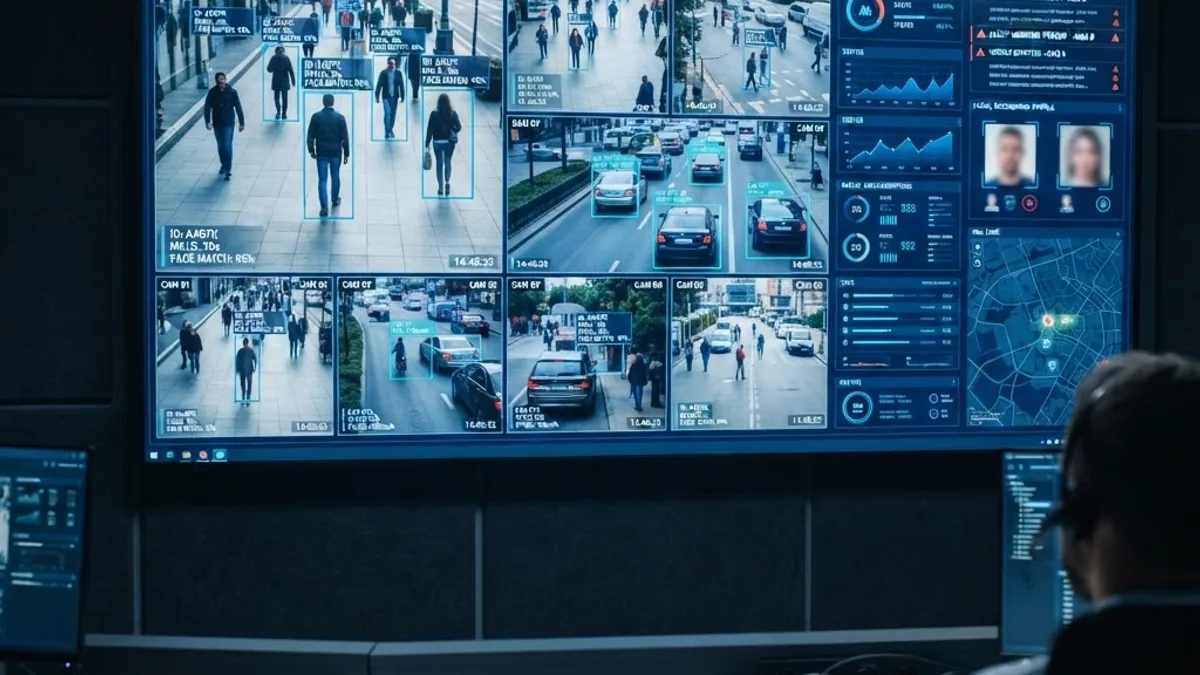
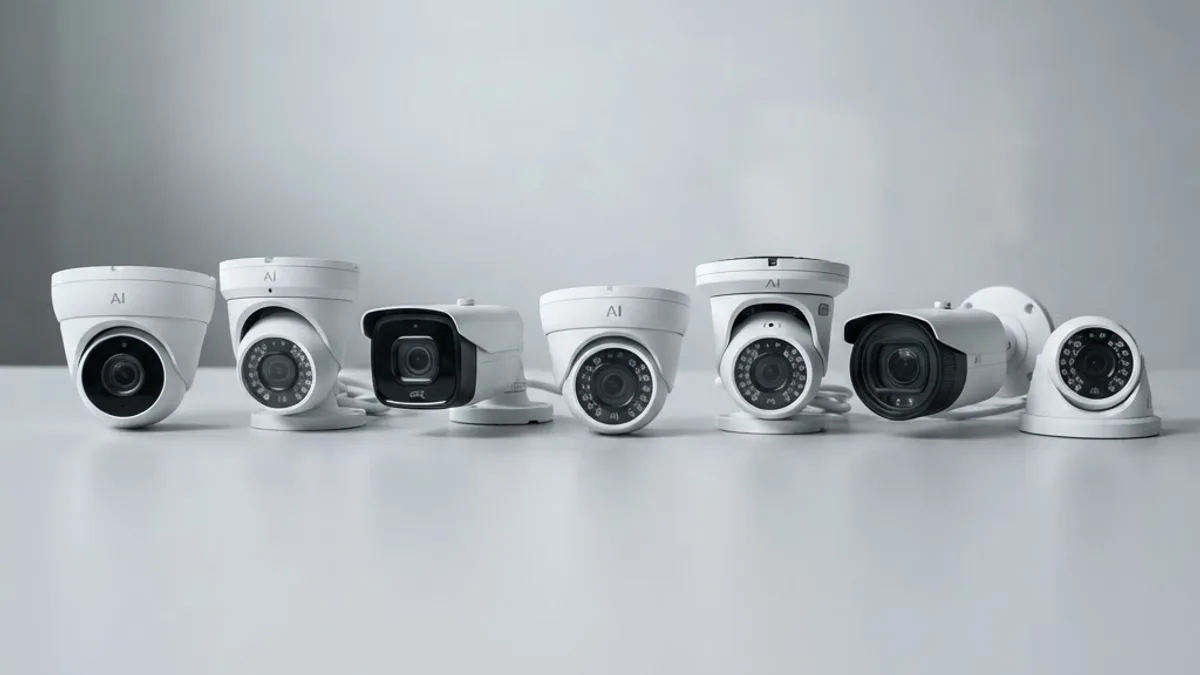
Below are the standout systems for commercial use this year, based on detection accuracy, scalability, integration options, and total cost of ownership.
1. Verkada
Verkada remains the go-to for mid-size and enterprise businesses that want a fully cloud-managed platform. Cameras process AI on-device, store footage locally, and stream to a clean browser dashboard. Its strengths are people search, license plate recognition, and effortless multi-site management. The trade-off is a premium price and mandatory licensing.
2. Avigilon Unity (Motorola Solutions)
Avigilon is built for high-security and large-scale deployments. Its self-learning video analytics and appearance search let investigators find a specific person across hundreds of hours of footage in seconds. Ideal for warehouses, campuses, and logistics hubs.
3. Rhombus
Rhombus offers a modern, API-friendly platform that appeals to tech-forward businesses. It combines cameras, environmental sensors, and access control under one system, with strong AI-based alerts and simple pricing tiers.
4. Reolink AI Series
For small businesses and single-location shops, Reolink delivers reliable person, vehicle, and pet detection at a fraction of enterprise pricing. It supports local storage with no forced subscription, making it the best budget-friendly AI option.
5. Hikvision AcuSense / Dahua WizSense
These lines provide strong on-camera AI at competitive hardware prices. They are popular for retail and hospitality, though buyers should confirm compliance and network security policies before large deployments.
AI Security Camera Comparison Table
| System | Best For | AI Processing | Cloud Option | Relative Cost |
|---|---|---|---|---|
| Verkada | Mid to enterprise | On-device | Yes (required) | High |
| Avigilon Unity | Large / high security | On-device | Optional | High |
| Rhombus | Tech-forward SMBs | On-device | Yes | Medium-High |
| Reolink AI | Small business | On-device | Optional | Low |
| Hikvision AcuSense | Retail / hospitality | On-device | Optional | Low-Medium |
Key Features to Look For
Not every AI feature is worth paying for. These are the ones that deliver real operational value for businesses.
Accurate Object and Person Detection
This is the foundation. A good system distinguishes people, vehicles, and animals, and lets you set alerts per object type. Look for detection accuracy above 95% in the manufacturer's independent testing, and test it yourself during a trial.
License Plate Recognition (LPR)
For businesses with parking lots, loading docks, or drive-throughs, LPR automatically logs vehicles entering and leaving. It is invaluable for investigating theft, managing access, and creating searchable vehicle records.
Smart Search and People Analytics
The ability to search footage by attributes, such as clothing color or the time a person appeared, turns hours of investigation into minutes. This is where AI pays for itself during an actual incident.
Loitering and Intrusion Detection
AI can flag someone lingering near an entrance after hours or crossing a virtual line into a restricted zone. These behavioral alerts catch threats before they escalate.
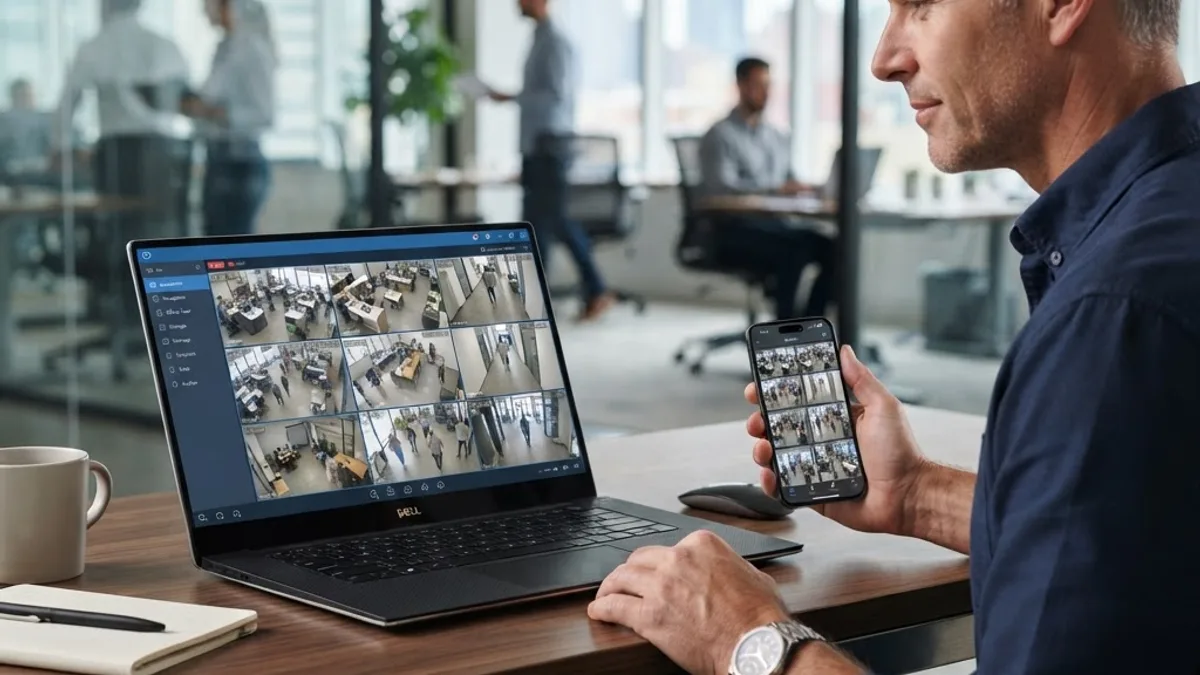
Cloud Access and Remote Monitoring
Modern businesses need to check any camera from a phone, anywhere. Prioritize systems with encrypted cloud access, mobile apps, and role-based permissions so managers see only what they should. Building this kind of intelligent monitoring often overlaps with broader automation work, and the artificial intelligence services offered by specialists can help integrate camera data with your existing business systems.
How to Choose the Right AI Security Camera
Use this step-by-step framework to avoid overspending or under-protecting your business.
- Map your risk zones. Identify entrances, cash areas, storage, parking, and blind spots. Your camera count and placement flow from this map, not from a sales quote.
- Decide on-device vs cloud AI. On-device processing means faster alerts and privacy; cloud adds remote power and easy scaling. Most 2026 systems blend both.
- Confirm integration needs. Should cameras talk to access control, alarms, or point-of-sale? Choose a platform with an open API if you plan to connect systems.
- Calculate total cost of ownership. Add hardware, licensing, storage, and installation over three years, not just the sticker price.
- Run a paid pilot. Test one or two cameras in your real environment for 30 days before committing to a full rollout.
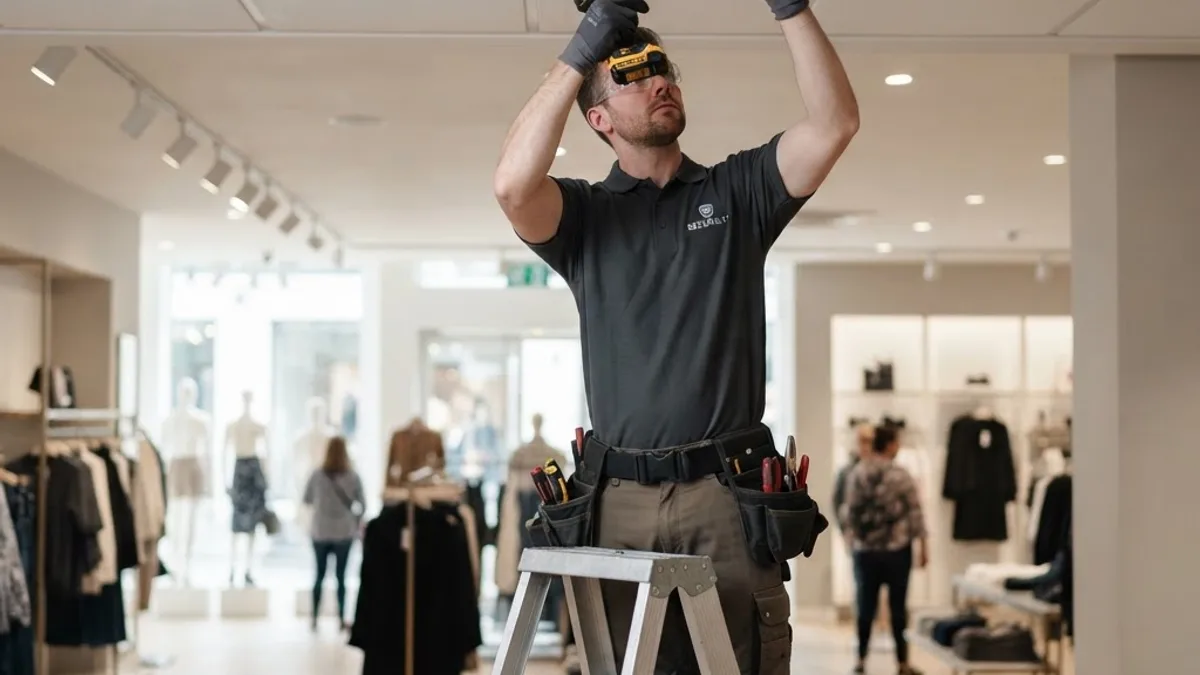
AI Threat Detection and Proactive Security
The biggest leap in 2026 is the move from reactive to proactive security. Older cameras helped you review a break-in after it happened. AI cameras help you prevent it.
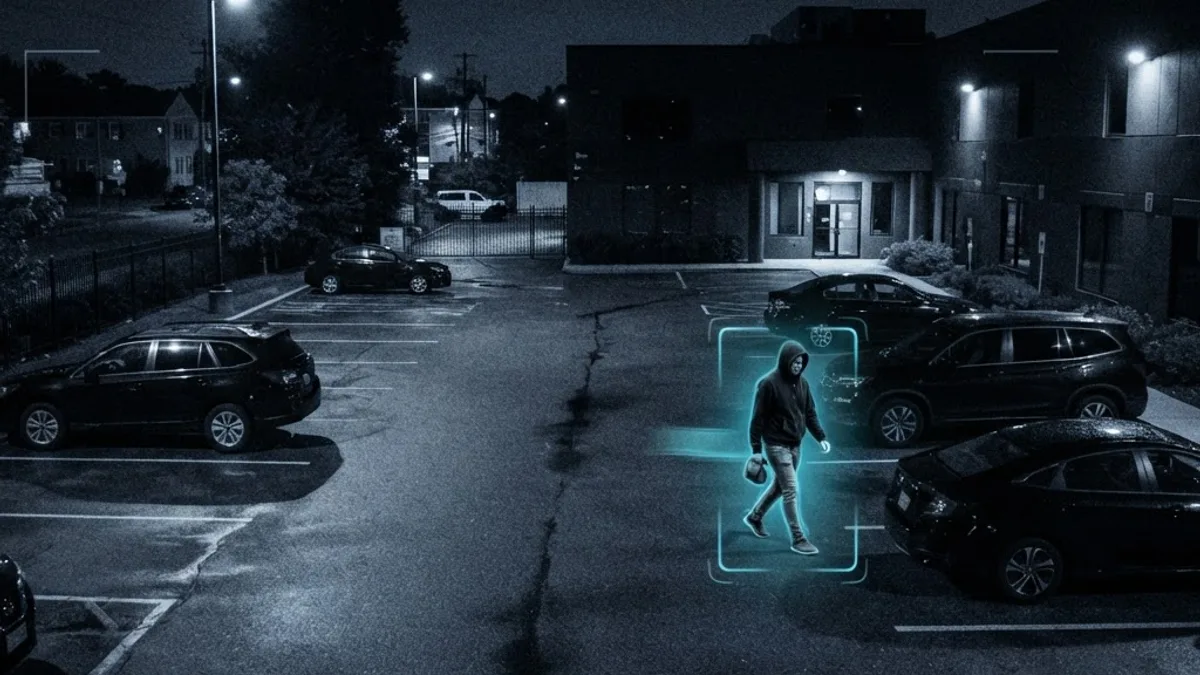
Behavioral analytics can detect an unfamiliar vehicle circling a lot at 2 a.m., a person testing door handles, or crowds forming where they should not. Combined with automated alerts, on-site staff or a monitoring service can intervene while the event is still unfolding. This proactive layer is why insurers increasingly favor AI-monitored premises, and why some offer premium reductions for verified systems.
What Does an AI Security System Cost?
Pricing spans a wide range. A small business can equip a single location with quality AI cameras for roughly $150 to $400 per camera, with optional low-cost or free local storage. Enterprise cloud platforms like Verkada or Avigilon typically run $1,000 or more per camera plus annual licensing, but include managed storage, updates, and support.
The smarter way to evaluate cost is by outcome. A system that prevents a single major theft, reduces false-alarm dispatch fees, or saves 10 staff hours a week on footage review often pays for itself within the first year. When you frame it as loss prevention plus labor savings, AI cameras are one of the rare security purchases with a clear, quantifiable payback.

Key Takeaways
- AI security cameras analyze video in real time, filtering false alerts and flagging genuine threats, unlike traditional motion-only systems.
- Verkada, Avigilon Unity, Rhombus, Reolink AI, and Hikvision AcuSense lead the 2026 market across enterprise and small-business needs.
- Humans miss up to 95% of screen activity after 20 minutes, which is why AI monitoring dramatically outperforms manual review.
- The most valuable features are accurate object detection, license plate recognition, smart search, and encrypted remote access.
- Evaluate cost by three-year total cost of ownership and measurable outcomes, not the per-camera sticker price.
Frequently Asked Questions (FAQ)
What is the best AI security camera for a small business in 2026?
For most small businesses, the Reolink AI series offers the best balance of price and performance, with accurate person and vehicle detection and no forced subscription. If you want cloud management and multi-site support, Rhombus is a strong step up without full enterprise pricing.
Do AI security cameras work without the internet?
Yes. Cameras with on-device AI processing detect people, vehicles, and events locally and store footage on-site, so they keep working during internet outages. You lose remote viewing and cloud backup until the connection returns, but core detection and recording continue uninterrupted.
How accurate is AI object detection in security cameras?
Top 2026 systems achieve detection accuracy above 95% for people and vehicles in good conditions. Accuracy drops in heavy rain, fog, or poor lighting, so choose cameras with strong low-light performance and always test detection in your actual environment before a full deployment.
Are AI security cameras worth the extra cost?
For most businesses, yes. AI cameras reduce false alarms, cut footage-review labor, and enable faster incident response. A single prevented theft or saved staff hours often covers the added cost within a year, making them a measurable loss-prevention investment rather than a luxury.
Can AI security cameras recognize faces and license plates?
Many enterprise systems support facial recognition and license plate recognition, but availability depends on the model and local privacy laws. Always confirm what your jurisdiction permits, post required notices, and enable role-based access so sensitive identification data stays restricted to authorized staff only.
Final Thoughts
The best artificial intelligence security camera for your business in 2026 is the one matched to your real risks, your site size, and your total budget, not simply the model with the highest resolution. Start by mapping your vulnerable zones, run a short pilot, and judge systems on detection accuracy and payback rather than specs alone.
If you want expert help selecting, installing, or integrating an AI-driven security setup with the rest of your technology stack, explore the solutions at ZoneTechify and WebPeak. Investing in intelligent surveillance today is one of the most reliable ways to protect your people, your property, and your bottom line tomorrow.