Discover how AI procurement portals with guided buying cut maverick spend, speed up purchasing, and steer employees toward approved vendors and smarter decisions.
Artificial Intelligence Procurement Portal Guided Buying
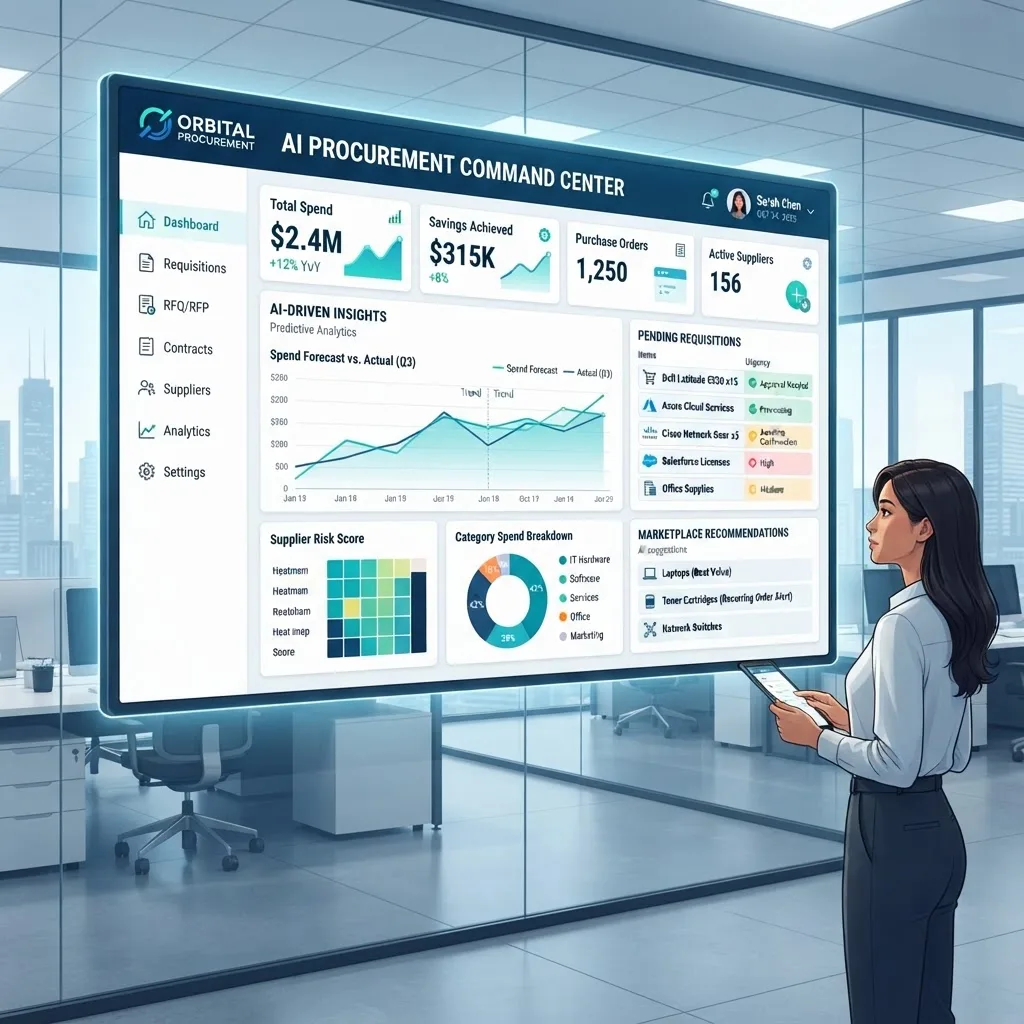
Procurement teams have spent decades fighting the same battle: employees who buy off-contract, approvals that stall for days, and spend data that only makes sense long after the money is gone. An artificial intelligence procurement portal with guided buying flips that dynamic. Instead of forcing staff to learn complex catalogs and policies, the system quietly guides every purchase toward the right vendor, the right price, and the right approval path in real time.
After helping mid-market and enterprise teams roll out these platforms, we have seen a consistent pattern: the technology succeeds not because it is clever, but because it removes friction at the exact moment a buyer is about to make a decision. This guide explains how guided buying works, why AI matters, and how to deploy it without disrupting the people who rely on it.
Quick Answer: An AI procurement portal with guided buying uses machine learning to steer employees toward approved vendors, contracted prices, and correct approval workflows as they shop. It reduces maverick spend, speeds up purchasing, and turns scattered buying activity into structured, auditable, data-driven decisions.
What Is Guided Buying in Procurement?
Guided buying is a purchasing experience that directs employees through pre-approved, compliant options instead of leaving them to search a raw catalog. Think of it as the consumer-grade shopping flow of Amazon, but with your company's contracts, budgets, and policies built into every recommendation.
When artificial intelligence sits underneath this experience, the portal does more than display a filtered list. It interprets intent, predicts what a buyer needs, flags policy risks before they happen, and routes requests to the right approver automatically. The goal is simple: make the compliant choice the easiest choice.
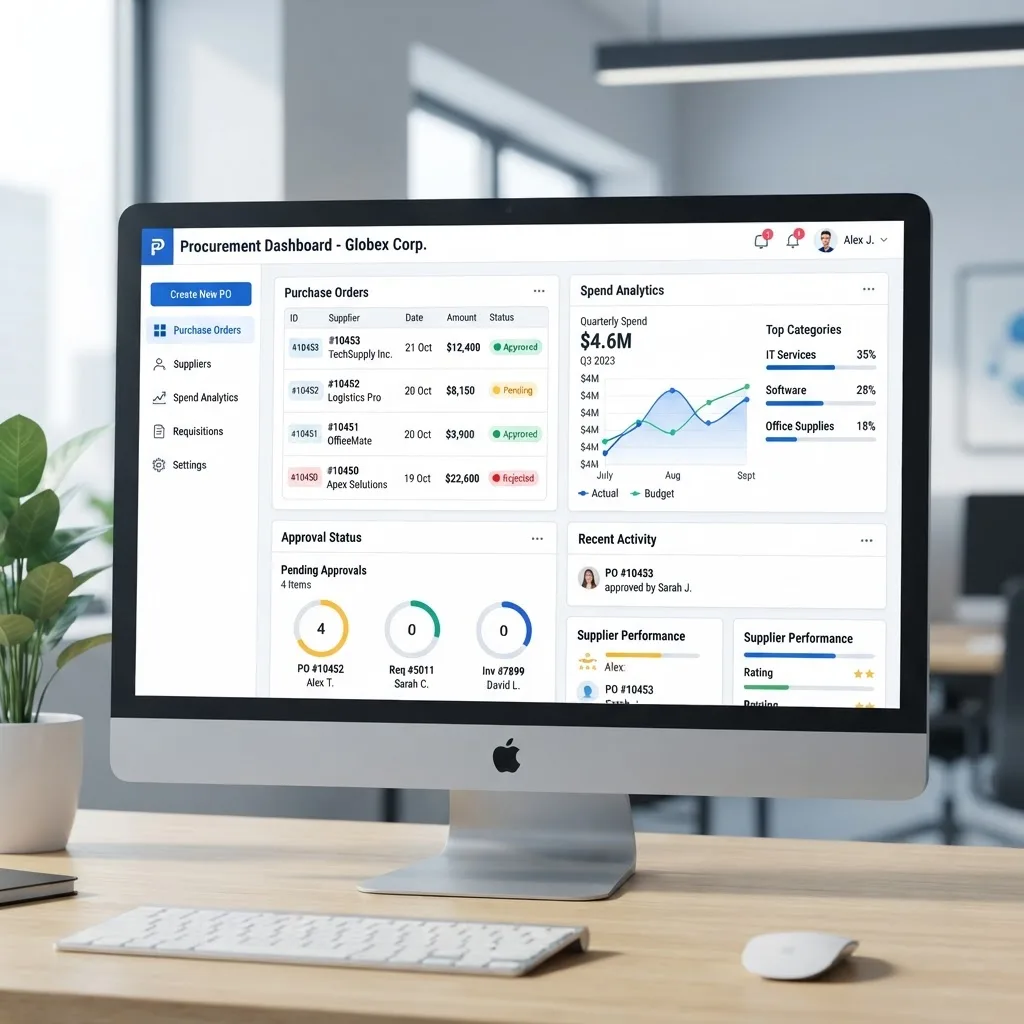
Guided Buying vs. Traditional Purchasing
Traditional purchasing assumes the buyer knows the rules. Guided buying assumes they do not, and protects them anyway. That distinction is why adoption rates for guided systems are so much higher among non-procurement staff who purchase only occasionally.
How AI Powers a Modern Procurement Portal
Artificial intelligence transforms a static catalog into an adaptive assistant. It analyzes historical spend, supplier performance, and contract terms to make recommendations that a human buyer would need hours to research. Below are the core capabilities that separate an AI-driven portal from a basic e-procurement tool.
- Intent recognition: Natural language search lets a user type "laptop for a new designer" and receive contract-compliant options instead of a keyword dump.
- Predictive recommendations: The system suggests items based on role, department, and past approved purchases.
- Dynamic policy enforcement: Spend limits, preferred suppliers, and approval thresholds apply automatically as the cart changes.
- Anomaly detection: Unusual quantities, duplicate orders, or off-contract pricing get flagged before submission.
- Smart routing: Requests move to the correct approver based on category, amount, and budget owner.
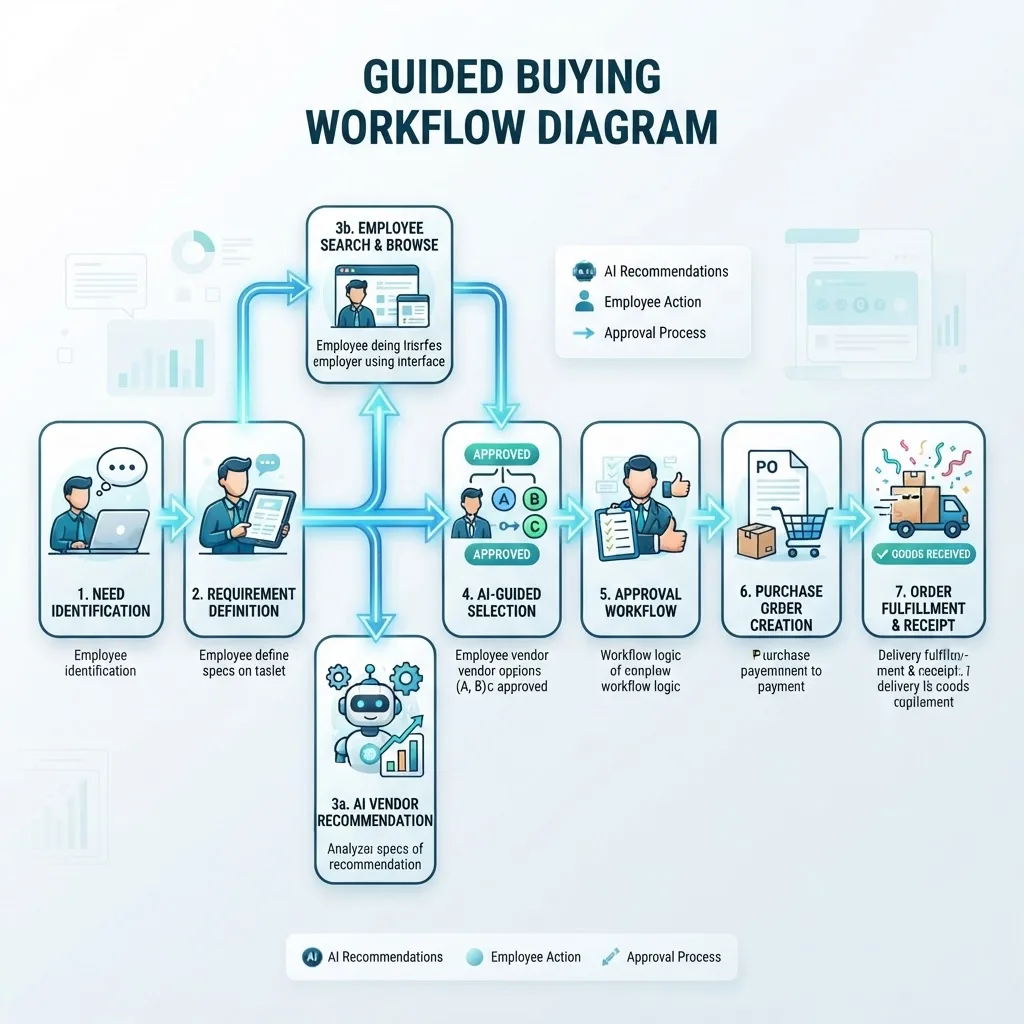
The practical result is that buyers stop guessing. According to Deloitte's Global CPO Survey, organizations that digitize procurement report significantly better spend visibility and compliance, and AI accelerates those gains by acting on the data instead of just displaying it. If your team is exploring machine learning for buying decisions, WebPeak's artificial intelligence services can help translate raw procurement data into working models.
The Business Case: Why Guided Buying Matters
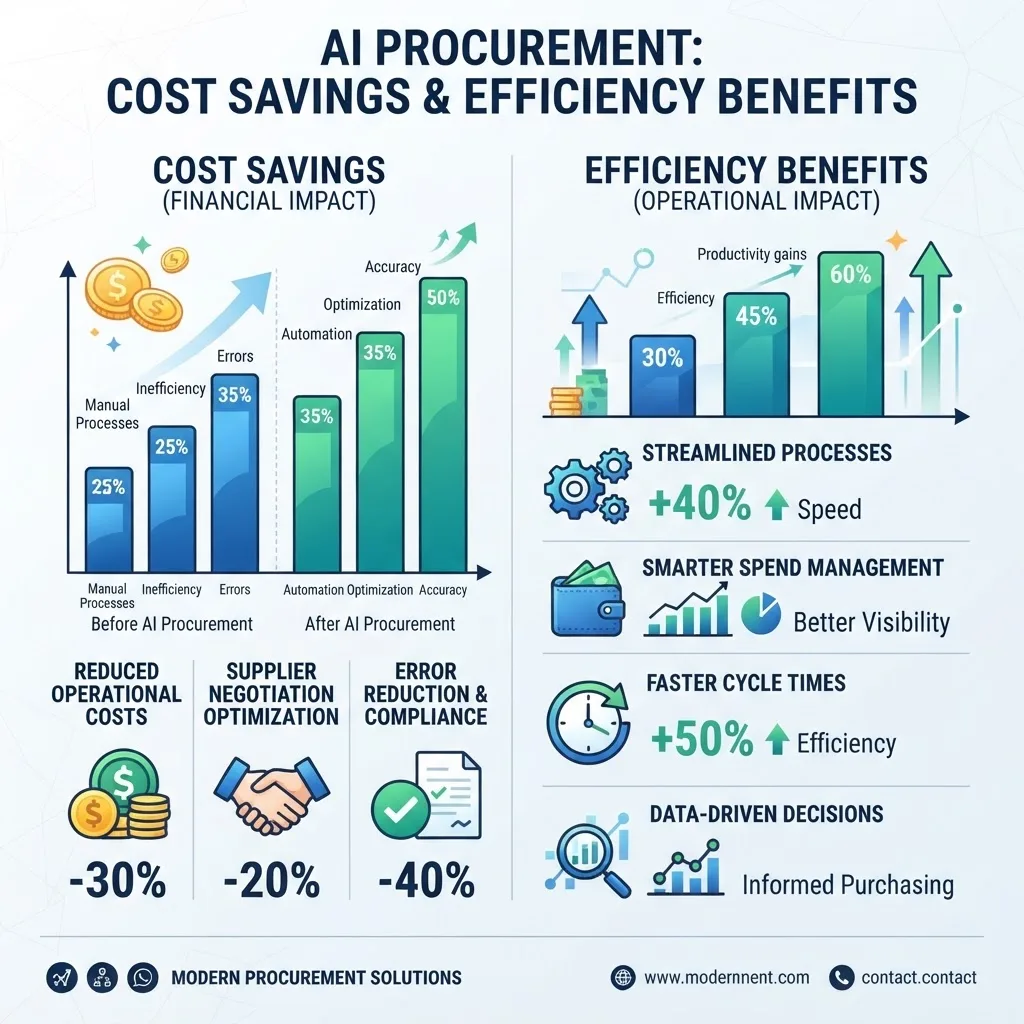
Maverick spend, purchasing that happens outside approved channels, is the silent tax on most organizations. Industry research consistently places off-contract spending between 20% and 40% of total indirect procurement, and every off-contract dollar erodes negotiated discounts and inflates risk.
A guided buying portal attacks this directly. When the compliant path is faster than going rogue, employees stop going rogue. That behavioral shift, not the software itself, is where the return on investment lives.
Measurable Benefits
- Lower maverick spend: Approved channels become the default, recapturing negotiated discounts.
- Faster cycle times: Automated routing cuts multi-day approvals down to hours.
- Better data quality: Structured purchases produce clean spend analytics.
- Reduced risk: Policy checks happen before purchase, not during an audit.
- Higher user satisfaction: A consumer-grade experience reduces support tickets and training needs.
AI Procurement Portal vs. Traditional E-Procurement
The difference between a legacy e-procurement tool and an AI-guided portal is not cosmetic. One catalogs your options; the other actively shapes decisions. The table below breaks down the practical contrast.
| Capability | Traditional E-Procurement | AI Guided Buying Portal |
|---|---|---|
| Search experience | Keyword catalog | Natural language and intent-based |
| Policy enforcement | Manual checks after submission | Automatic, real-time |
| Vendor selection | User must know preferred suppliers | AI recommends contracted vendors |
| Approval routing | Fixed, manual rules | Dynamic and context-aware |
| Maverick spend control | Limited | Strong, by design |
| Spend analytics | Delayed reporting | Continuous and predictive |
| User training required | High | Low |
How AI Automates Vendor Selection
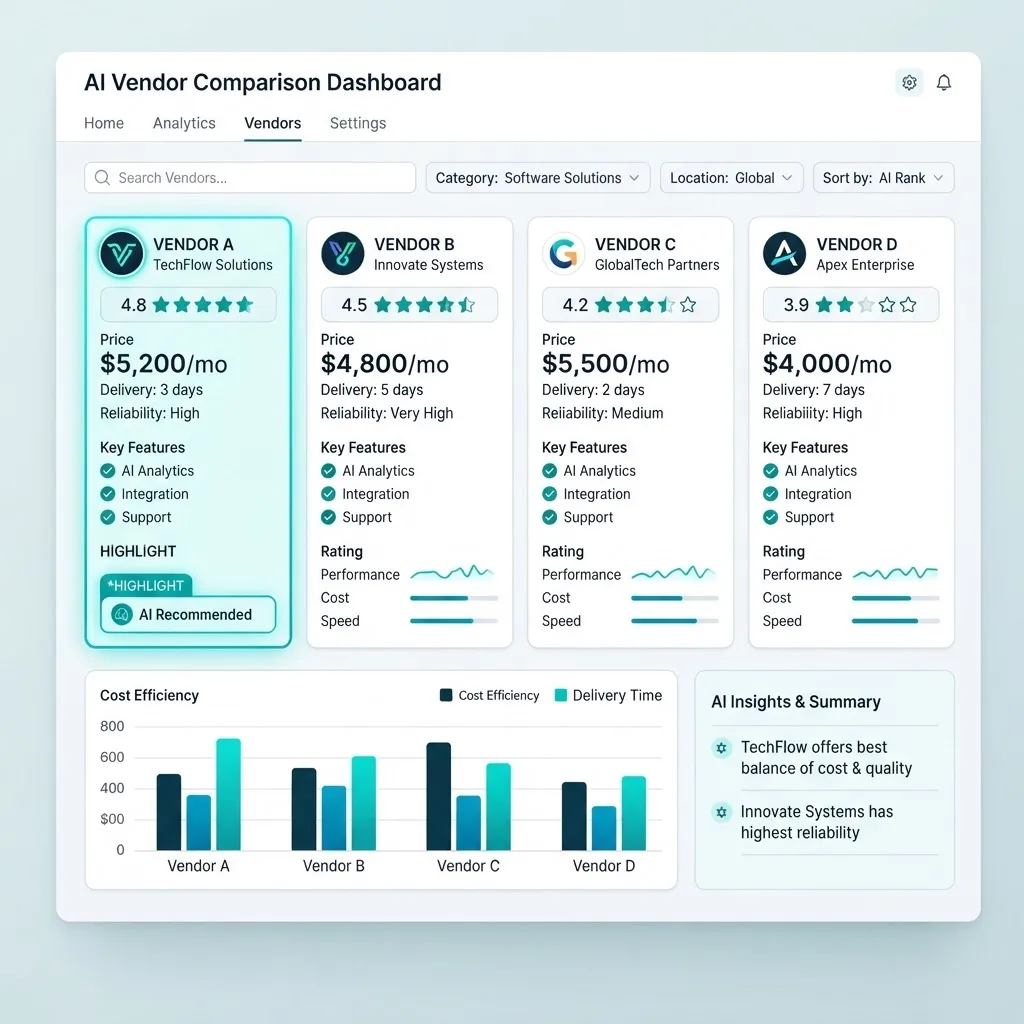
Choosing the right supplier is where guided buying earns its keep. Instead of relying on a buyer's memory or a spreadsheet of preferred vendors, the AI weighs contract terms, delivery performance, pricing, and risk scores to surface the best option first.
This matters because supplier decisions compound. A single poorly chosen vendor can create downstream delays, quality issues, and compliance gaps. By ranking suppliers on live performance data, the portal keeps buyers aligned with strategic sourcing goals without asking them to understand those goals.
Implementation: How to Roll Out Guided Buying
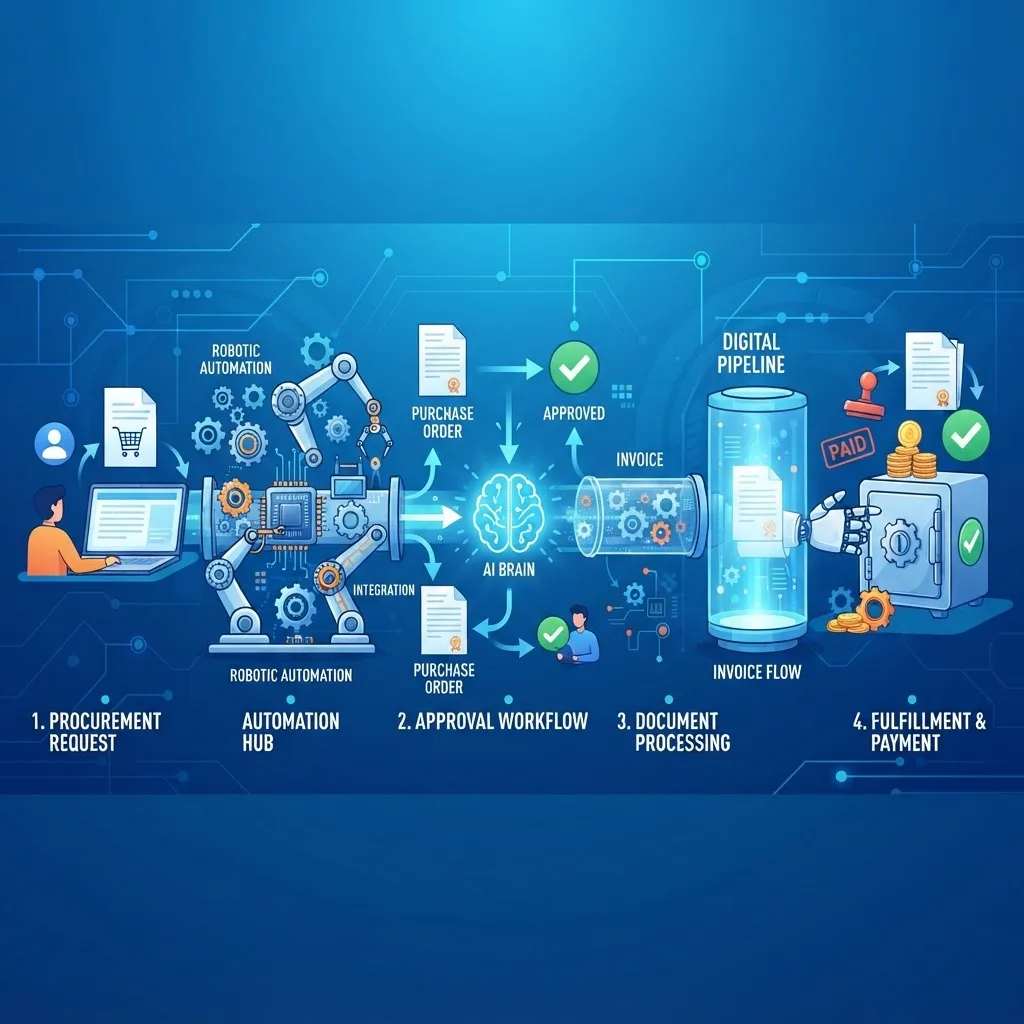
Deploying an AI procurement portal is as much a change-management project as a technical one. Based on real rollouts, the sequence below produces the smoothest adoption.
- Audit current spend: Identify your top categories and biggest sources of maverick spend before configuring anything.
- Clean your catalog data: AI recommendations are only as good as the product and contract data behind them.
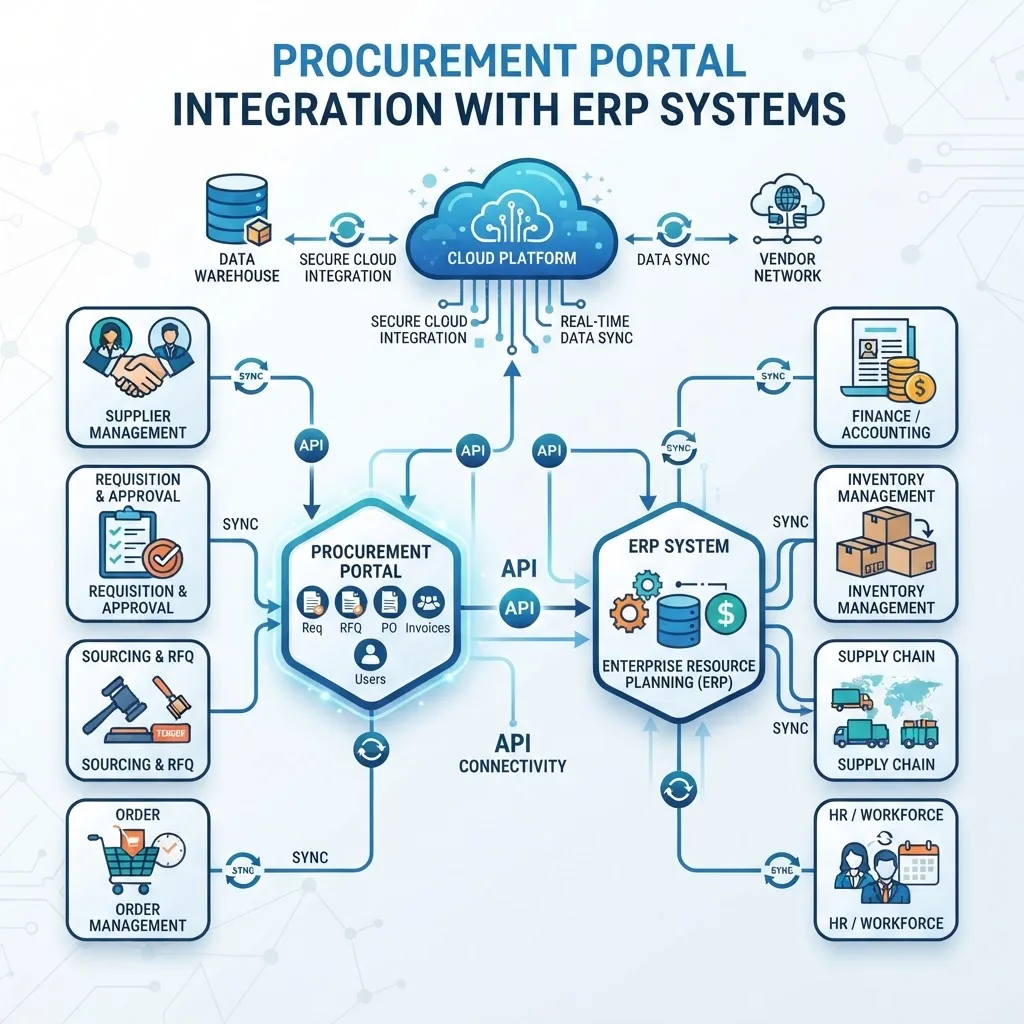
- Integrate core systems: Connect the portal to your ERP, finance, and supplier systems so data flows both ways.
- Configure policies as guardrails, not walls: Overly rigid rules push users back to workarounds.
- Pilot with one department: Prove value with a friendly team before company-wide launch.
- Train through the interface: The best guided buying tools teach users as they shop, minimizing formal training.
- Measure and iterate: Track cycle time, compliance rate, and user adoption monthly.
Integration Is the Make-or-Break Step
A portal disconnected from your ERP creates duplicate data and manual reconciliation, defeating the purpose. Prioritize clean, bidirectional integration early. Teams that need custom connectors or platform builds often partner with specialists like ZoneTechify and WebPeak to bridge procurement tools with existing enterprise systems.
Common Mistakes to Avoid
Even strong platforms fail when deployed poorly. The most frequent errors we see are treating guided buying as a pure IT project, ignoring change management, and configuring policies so strictly that employees route around the system entirely. Another mistake is launching with dirty catalog data, which produces irrelevant AI recommendations and quickly erodes user trust. Start small, keep the data clean, and let the AI prove itself before expanding scope.
The Future of AI in Procurement
Guided buying is the current standard, but autonomous procurement is emerging fast. The next wave uses AI agents that can reorder routine supplies, renegotiate simple contracts, and resolve invoice discrepancies with minimal human input. Gartner projects that autonomous and agentic capabilities will increasingly handle routine sourcing tasks, freeing procurement professionals to focus on strategy and supplier relationships.
The organizations preparing now, by cleaning data, integrating systems, and building trust in AI recommendations, will be the ones ready to hand off routine buying to intelligent agents with confidence.
Key Takeaways
- Guided buying steers employees toward compliant, contracted purchases by making the right choice the easiest one.
- AI adds intelligence through intent recognition, predictive recommendations, real-time policy enforcement, and smart approval routing.
- Maverick spend typically runs 20% to 40% of indirect procurement, and guided buying directly recaptures those losses.
- Integration with ERP and finance systems is the single most important success factor.
- Autonomous procurement is the next frontier, powered by AI agents handling routine buying tasks.
Frequently Asked Questions (FAQ)
What is an AI procurement portal with guided buying?
It is a purchasing platform that uses artificial intelligence to guide employees toward approved vendors, contracted prices, and correct approval workflows as they shop. It makes compliant buying intuitive, reduces off-contract spending, and turns everyday purchases into structured, auditable, data-driven decisions.
How does guided buying reduce maverick spend?
Guided buying reduces maverick spend by making the compliant purchasing path faster and easier than buying off-contract. The portal surfaces approved suppliers, applies negotiated pricing, and enforces policy automatically, so employees have no reason to go around the system to get what they need.
Do employees need training to use a guided buying portal?
Minimal training is needed because good guided buying tools teach users as they shop, similar to consumer e-commerce sites. Natural language search and clear recommendations mean occasional buyers can complete compliant purchases without memorizing catalogs, policies, or supplier lists, which dramatically lowers support demand.
How is AI procurement different from traditional e-procurement?
Traditional e-procurement displays a catalog and assumes buyers know the rules. AI procurement actively shapes decisions using intent recognition, predictive recommendations, and real-time policy checks. It recommends vendors, routes approvals dynamically, and flags anomalies before submission, delivering far higher compliance and better spend data.
Is guided buying only for large enterprises?
No. While large enterprises adopted guided buying first, cloud-based platforms now make it accessible to mid-market and growing companies. Any organization with recurring purchases, multiple approvers, or compliance requirements can benefit from steering buyers toward approved, cost-effective, and auditable purchasing decisions.