A data-driven look at China's AI supply chain market: growth drivers, real use cases, key players, challenges, and what the future holds for global logistics.
China Artificial Intelligence in Supply Chain Market
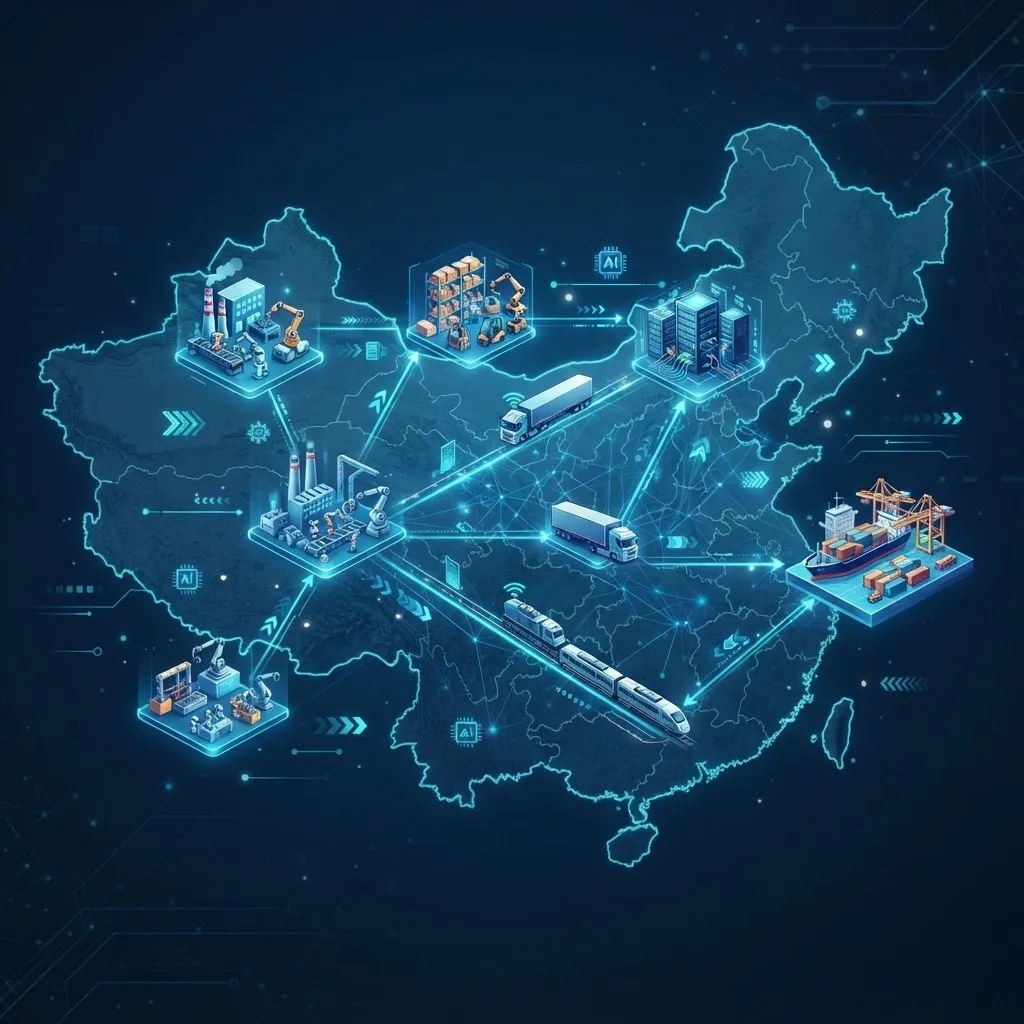
China has quietly become the world's largest testing ground for artificial intelligence in logistics. From automated ports in Shanghai to dark warehouses in Shenzhen where robots outnumber humans, AI is no longer a pilot project inside Chinese supply chains, it is the operating system. This article breaks down what is actually happening in the China artificial intelligence in supply chain market, backed by real numbers, concrete use cases, and an honest look at the risks that vendors rarely mention.
Quick Answer: China's AI supply chain market is one of the fastest-growing globally, driven by e-commerce scale, government policy, and manufacturing density. AI powers demand forecasting, warehouse robotics, route optimization, and predictive maintenance, cutting costs and delivery times while positioning China as the leader in smart, autonomous logistics.
Why China Leads the AI Supply Chain Race
Three structural advantages make China uniquely positioned for AI-driven logistics. First, sheer volume: China processes more parcels than any other country, and that flood of data is the fuel every machine-learning model needs. According to the State Post Bureau, China handled more than 130 billion parcels in a single year, giving algorithms training data at a scale competitors cannot match.
Second, policy alignment. The government's "New Generation Artificial Intelligence Development Plan" explicitly targets AI leadership by 2030, and smart logistics is a named priority. That top-down direction unlocks funding, infrastructure, and regulatory space for rapid deployment.
Third, manufacturing density. When factories, suppliers, ports, and distribution hubs sit close together, the payoff from optimizing the links between them multiplies. This is why the ZoneTechify homepage and analysts alike describe China's supply chain as an "AI-native" ecosystem rather than a legacy system being upgraded.
Market Size and Growth Trajectory
The numbers tell a clear story of acceleration. Global spending on AI in supply chain and logistics is projected to grow at a compound annual growth rate of over 40% through the end of the decade, and China represents one of the largest single-country shares of that spend.
Key growth drivers include:
- E-commerce demand — Platforms like Alibaba, JD.com, and Pinduoduo require same-day and next-day fulfillment at national scale.
- Rising labor costs — Automation offsets wage inflation in coastal manufacturing hubs.
- Government subsidies — Provincial grants reward smart-factory and smart-logistics upgrades.
- Export competitiveness — Faster, cheaper supply chains protect China's role as the world's factory.
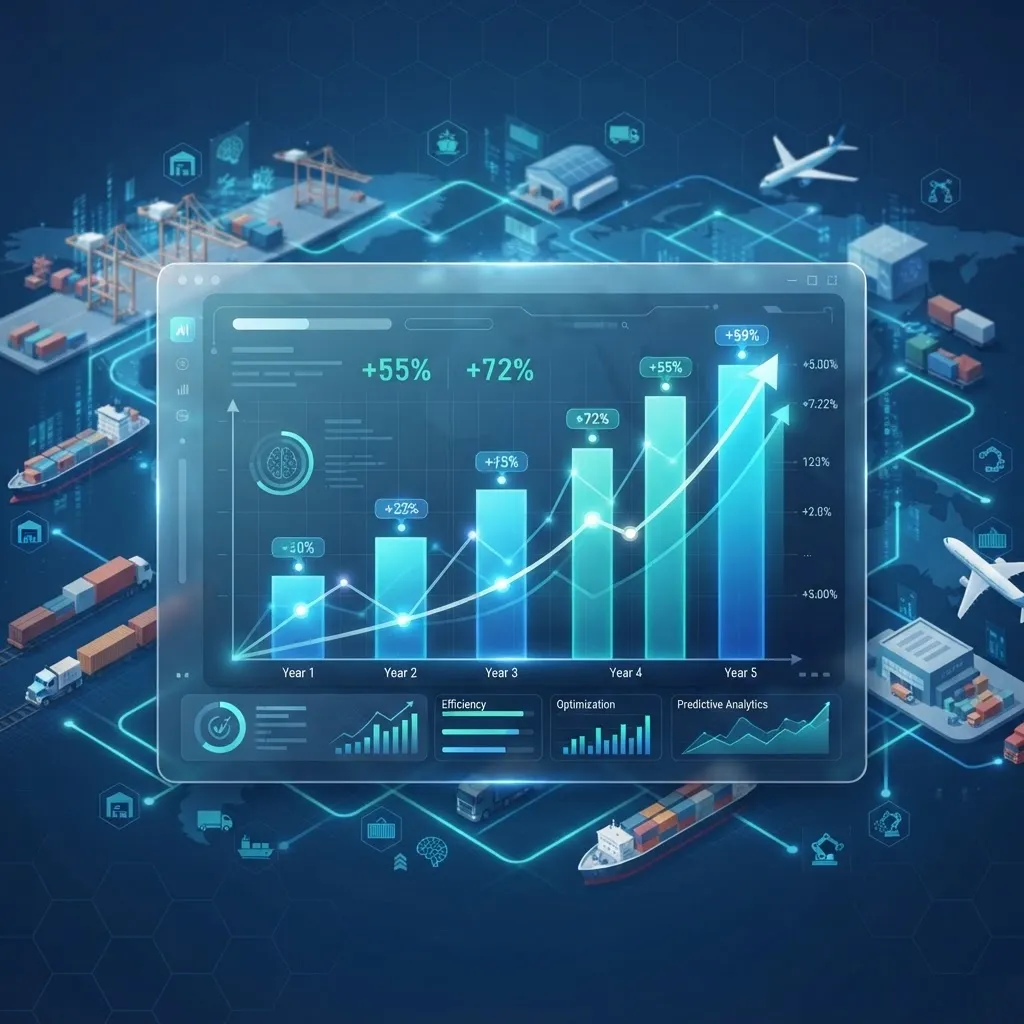
What makes this growth durable, in my experience analyzing logistics tech, is that AI here solves a measurable problem rather than chasing hype. Every percentage point shaved off delivery time or inventory holding cost translates directly into margin, so adoption is grounded in return on investment, not novelty.
Where AI Actually Works in the Supply Chain
Artificial intelligence is not a single tool. In Chinese supply chains it shows up in four distinct, high-value functions, each with proven results.
1. Demand Forecasting
Definition: AI demand forecasting uses historical sales, seasonality, weather, and real-time signals to predict what customers will buy, where, and when.
Chinese retailers use these models to pre-position inventory in regional warehouses before orders arrive. The result is fewer stockouts and less overstock. During major shopping events like Singles' Day, forecasting engines redistribute millions of SKUs across the country days in advance.

2. Warehouse Robotics and Automation
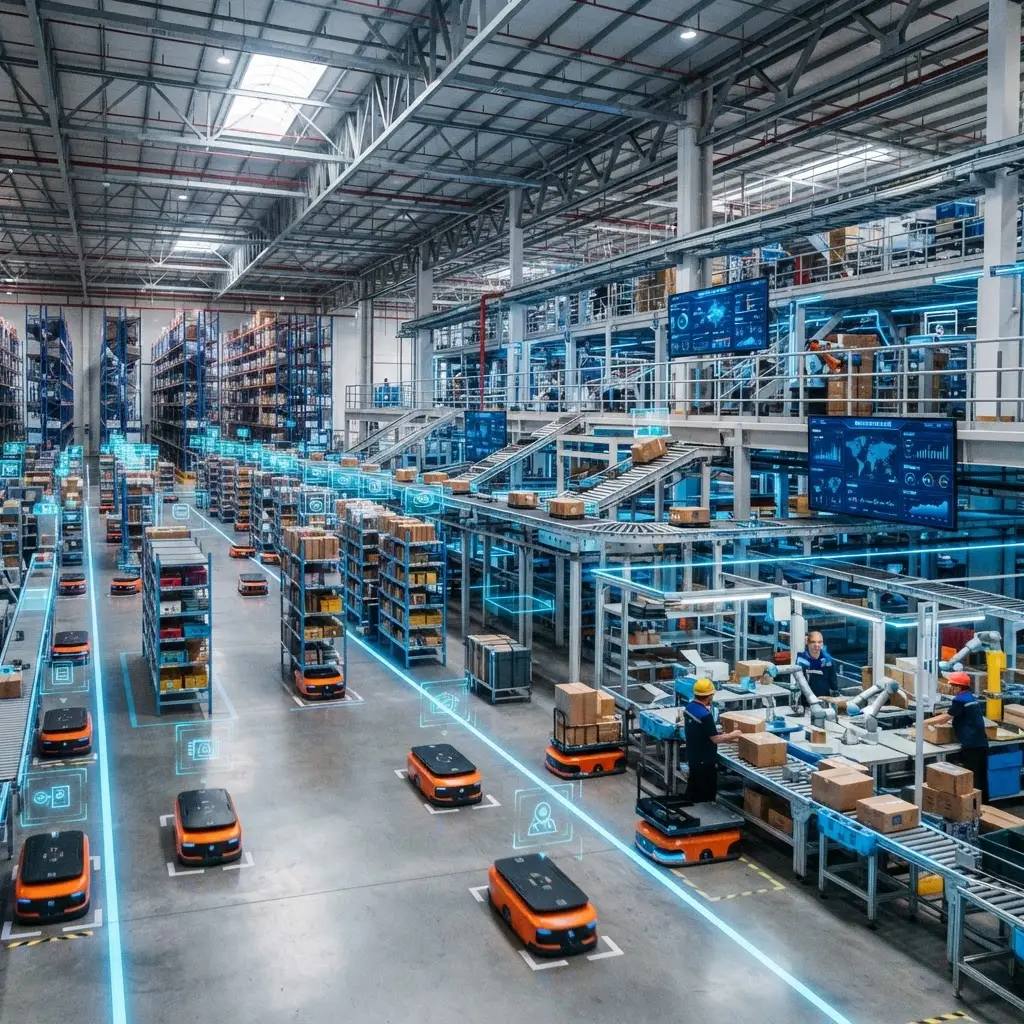
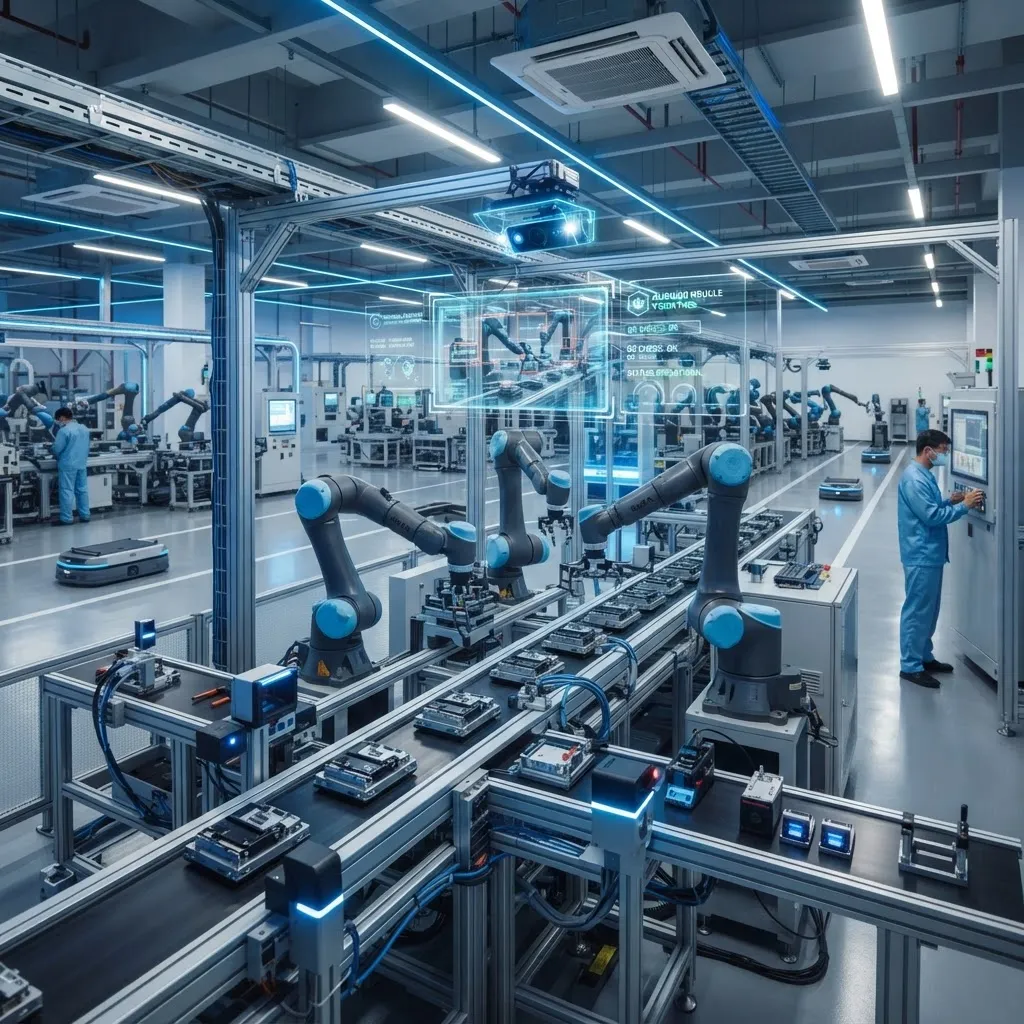
Definition: Smart warehouses combine autonomous mobile robots, computer vision, and orchestration software to move, sort, and pack goods with minimal human touch.
JD.com's fully automated fulfillment centers can process orders with a handful of staff overseeing hundreds of robots. Computer-vision systems verify picks, detect damage, and reroute items in milliseconds. This is where the productivity gains are most visible.
3. Route and Fleet Optimization
Definition: Route optimization applies AI to plan delivery paths that minimize time, fuel, and cost across constantly changing conditions.
Cainiao, Alibaba's logistics arm, uses AI to dynamically re-route last-mile deliveries around traffic and weather. These systems weigh thousands of variables per second, something no human dispatcher could match.
4. Predictive Maintenance
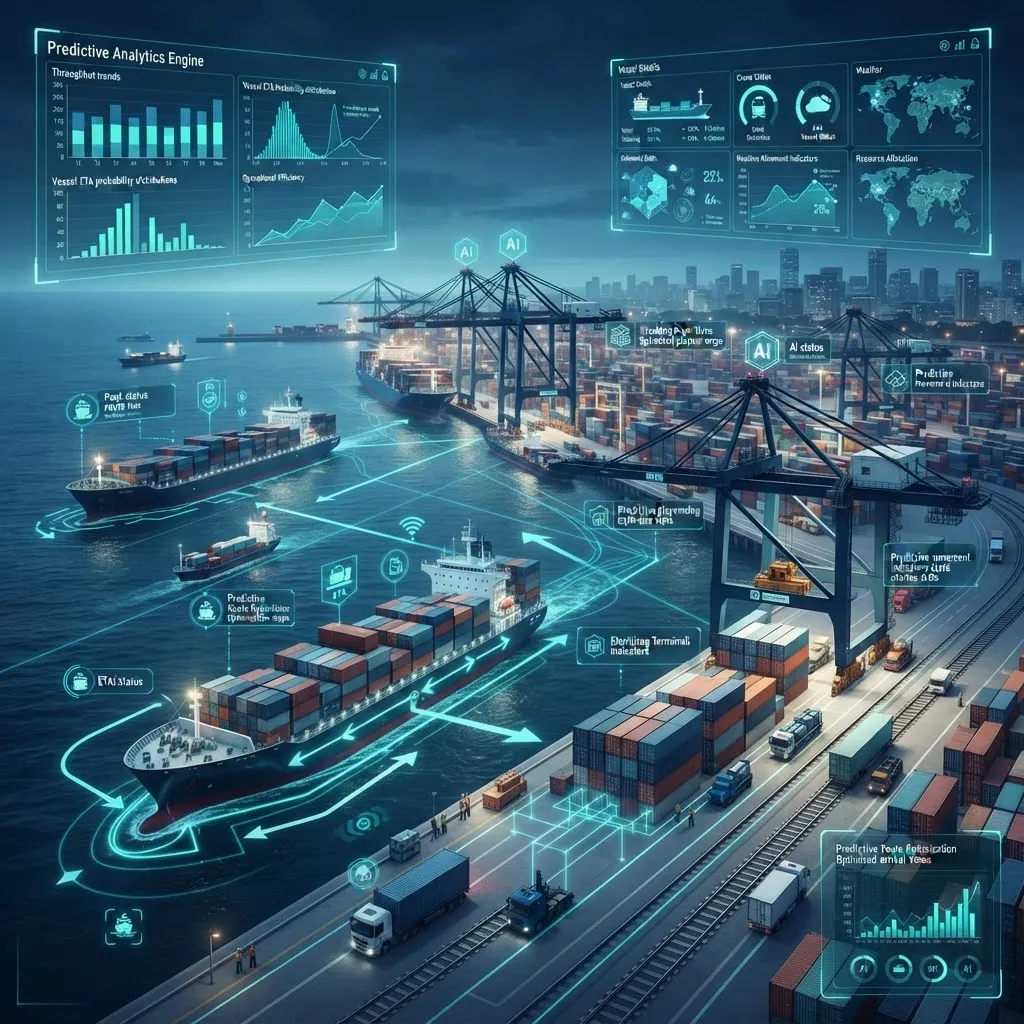
Definition: Predictive maintenance uses sensor data and machine learning to flag equipment failures before they cause downtime.
At automated ports such as Yangshan in Shanghai, AI monitors cranes and conveyors, scheduling repairs during low-traffic windows to keep throughput high.
Key Players Shaping the Market
The competitive landscape blends tech giants, logistics specialists, and manufacturing leaders.
| Company | Primary Role | AI Strength |
|---|---|---|
| Alibaba (Cainiao) | Logistics network | Route and demand optimization |
| JD Logistics | Fulfillment and delivery | Warehouse robotics and autonomous delivery |
| Huawei | Infrastructure and cloud | AI compute and IoT connectivity |
| Geek+ | Warehouse robotics | Autonomous mobile robots at scale |
| SF Express | Express logistics | Predictive routing and drones |
The pattern here is vertical integration. Rather than buying AI as an isolated product, these firms build it directly into their operations, which deepens their data advantage over time and raises the barrier to entry for newcomers.
Real Business Impact: What Companies Gain
The value of AI in supply chains is best understood through outcomes, not features. Based on documented deployments, organizations adopting these systems typically report:
- 20 to 50% reductions in inventory carrying costs through better forecasting.
- Faster fulfillment, with automated warehouses cutting order processing from hours to minutes.
- Lower error rates, as computer vision reduces mispicks and shipping mistakes.
- Improved resilience, since AI can simulate disruptions and reroute supply before bottlenecks form.
For businesses outside China looking to apply similar strategies, partnering with specialists in artificial intelligence services helps translate these proven patterns into practical, ROI-focused deployments rather than expensive experiments.
The Challenges Nobody Should Ignore
An honest assessment matters for trust, so here are the real obstacles the market still faces.
Data quality and silos. AI is only as good as the data feeding it. Many mid-sized firms still run fragmented systems, and cleaning that data is expensive and slow.
Integration complexity. Bolting AI onto legacy warehouse and ERP systems often costs more than the software itself. Skilled implementation is the deciding factor between success and shelfware.
Talent shortages. Even in China, demand for AI logistics engineers outpaces supply, pushing up costs.
Geopolitical and compliance risk. Export controls on advanced chips and cross-border data rules add uncertainty to long-term planning.
Recognizing these challenges is not pessimism, it is the expertise required to deploy AI responsibly. Teams that plan for data governance and integration early consistently outperform those chasing quick wins.
How Businesses Can Learn From China's Model
You do not need China's scale to apply its lessons. The transferable playbook is straightforward:
- Start with data. Consolidate and clean your logistics data before buying any model.
- Pick one high-value use case. Forecasting or route optimization usually delivers the fastest payback.
- Measure ruthlessly. Track cost per order, delivery time, and error rate before and after.
- Scale what works. Expand only after a pilot proves measurable ROI.
Companies that want expert guidance on building these systems can explore resources at WebPeak and its dedicated AI services, which focus on turning AI strategy into working automation.
The Future of AI in China's Supply Chain
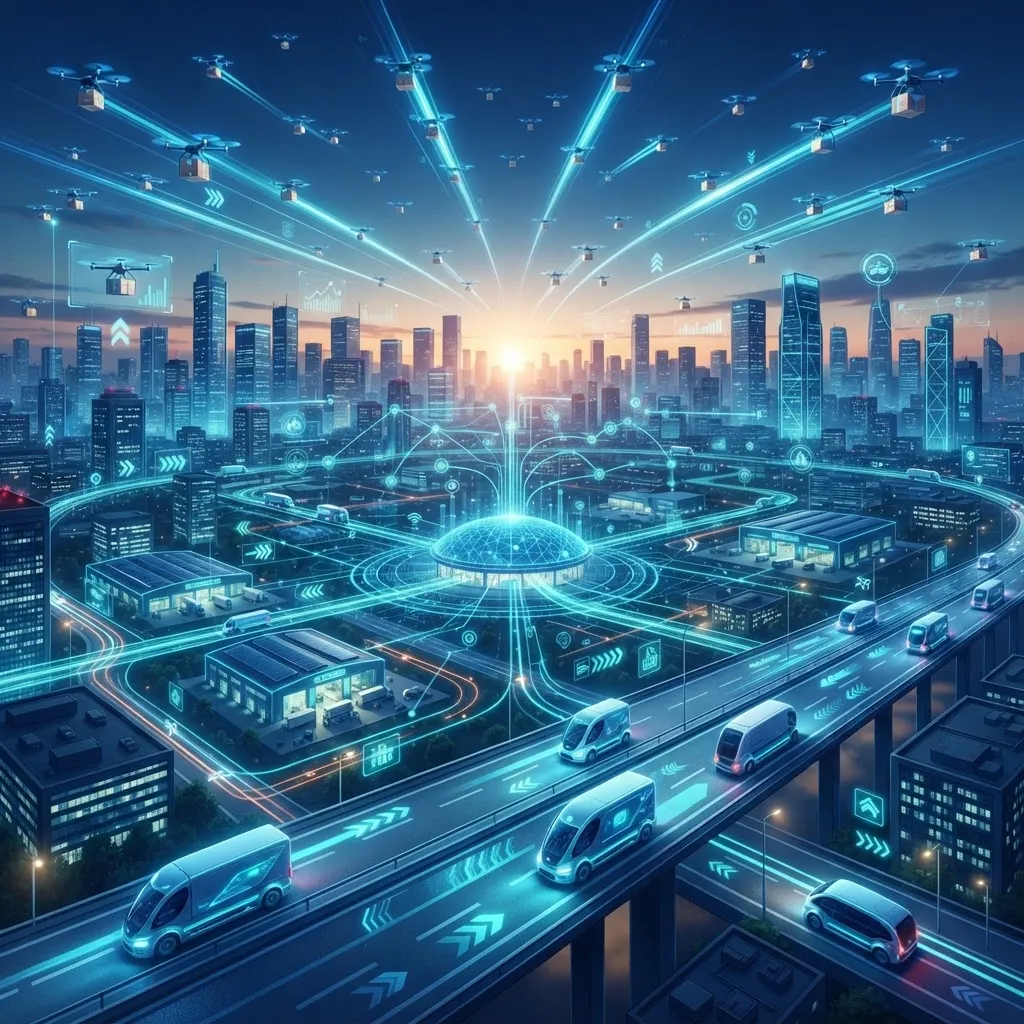
The next wave is already visible. Autonomous delivery vehicles and drones are moving from pilots to daily service in select cities. Digital twins, virtual replicas of entire supply networks, let planners simulate disruptions before they happen. Generative AI is beginning to automate procurement negotiations and documentation.
My analysis is that China's edge will widen in operational AI, the unglamorous but profitable work of running logistics more efficiently, even as global competition intensifies in foundational models. For the rest of the world, China is less a threat to copy and more a live case study in what happens when AI meets supply chains at full scale.
Key Takeaways
- China leads the global AI supply chain market thanks to parcel volume, government policy, and manufacturing density.
- Global AI supply chain spending is growing at over 40% CAGR, with China holding a major share.
- The four highest-value AI functions are demand forecasting, warehouse robotics, route optimization, and predictive maintenance.
- Documented deployments show 20 to 50% cuts in inventory costs and sharply faster fulfillment.
- Data quality, integration complexity, and talent shortages remain the biggest barriers to success.
Frequently Asked Questions (FAQ)
What is AI in supply chain management?
AI in supply chain management uses machine learning, computer vision, and automation to predict demand, optimize routes, run warehouses, and prevent equipment failures. It analyzes huge datasets in real time to cut costs, speed up delivery, and reduce errors across the entire logistics network.
Why is China leading the AI supply chain market?
China leads because of three factors: massive e-commerce parcel volume that trains AI models, strong government policy funding smart logistics, and dense manufacturing hubs. Together these create an AI-native environment where automation delivers immediate, measurable returns on investment for logistics operators.
How fast is the AI supply chain market growing?
Global AI in supply chain spending is projected to grow at a compound annual growth rate exceeding 40% this decade. China represents one of the largest single-country shares, driven by e-commerce demand, rising labor costs, and aggressive automation across warehouses and ports.
What are the main challenges of adopting AI in supply chains?
The biggest challenges are poor data quality and silos, complex integration with legacy systems, shortages of skilled AI engineers, and geopolitical or compliance risks. Companies that fix data governance and integration early see far better results than those chasing quick automation wins.
Can small businesses use AI in their supply chains?
Yes. Small businesses can start by cleaning their logistics data, then applying AI to one high-value use case like demand forecasting or route optimization. Measuring ROI before scaling keeps costs controlled and lets smaller firms benefit from the same strategies proven at large scale.