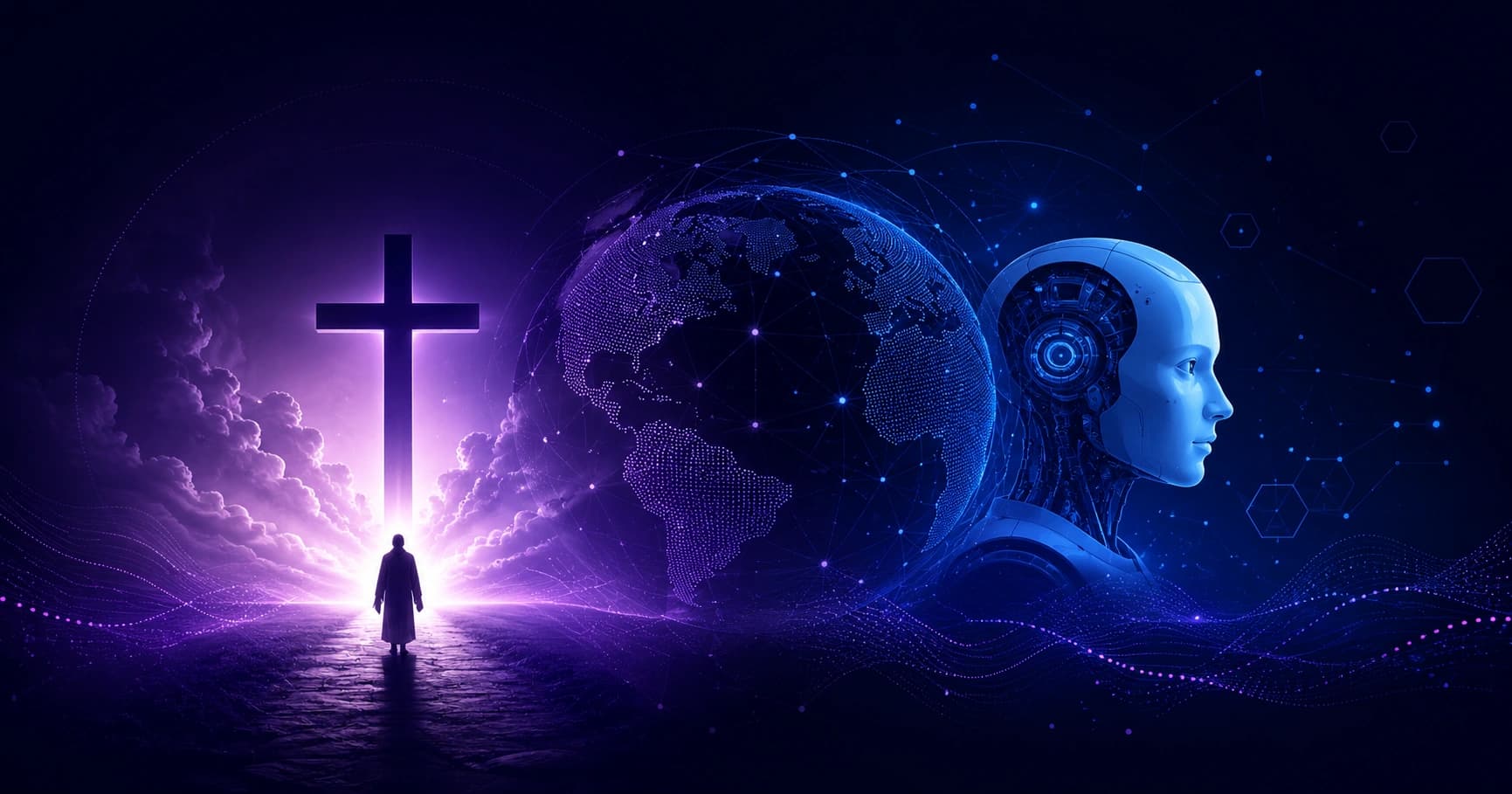
Explore the Christian eschatology of artificial intelligence: how the end times, prophecy, transhumanism, and hope shape a faithful Christian view of AI.
Christian Eschatology of Artificial Intelligence
Artificial intelligence now writes sermons, diagnoses illness, and steers cars—and it is pressing Christians to ask an ancient question in a new form: where is history heading, and what does God intend for a world increasingly shaped by machines? Christian eschatology, the study of "last things," has always wrestled with human ambition, judgment, and hope. Artificial intelligence simply hands that conversation a twenty-first-century vocabulary.
This article examines how the Christian doctrine of the end times interacts with AI—not as sensational prophecy-hunting, but as careful theology. We will define key terms, weigh the biblical themes at stake, compare rival visions of the future, and offer a grounded, faithful response that respects both Scripture and technological reality.
Quick Answer: Christian eschatology of artificial intelligence studies how AI relates to biblical teaching about the end times, judgment, and hope. It rejects treating AI as either a savior or the literal Antichrist, viewing it instead as a powerful human tool that raises genuine moral and spiritual questions God's people must discern with wisdom.
What Is Christian Eschatology?
Eschatology is the branch of Christian theology concerned with the "last things": death, final judgment, the return of Christ, bodily resurrection, and the renewal of creation. The term derives from the Greek eschatos, meaning "last" or "final." Every major Christian tradition affirms that history is not an endless loop but a story moving toward a purposeful conclusion under God's sovereignty.
This matters for the AI debate because eschatology answers a question technology cannot: what is the ultimate destiny of humanity? Silicon Valley often frames the future in terms of exponential progress, while Christian theology frames it in terms of redemption. The two stories can overlap, but they are not identical, and confusing them leads to serious error.
Key Terms Defined
- Eschatology — the theological study of final events and the ultimate destiny of humanity and creation.
- Parousia — the promised second coming of Jesus Christ in glory.
- Transhumanism — a movement seeking to transcend human biological limits through technology, including AI and machine enhancement.
- Antichrist — in Christian teaching, a figure and spirit that opposes and counterfeits Christ, especially in the last days.

Where Does Artificial Intelligence Fit in Biblical Prophecy?
Artificial intelligence is never mentioned in the Bible, and responsible theology should say so plainly. Scripture was written in and for a pre-digital world, so any attempt to find microchips in Ezekiel or neural networks in Daniel imposes modern anxieties onto ancient texts. Sound interpretation begins by respecting what the biblical authors actually intended to communicate.
That said, the Bible speaks directly to themes AI amplifies: human pride, the concentration of power, deception, idolatry, and the temptation to build a name for ourselves apart from God. The Tower of Babel in Genesis 11 is the clearest example—a technological project fueled by the desire to "make a name" and reach the heavens. AI can serve the very same impulse, promising god-like knowledge and control.
So the honest answer is nuanced. AI is not prophesied, but the human conditions that biblical prophecy addresses are timeless. Christians can therefore read AI through prophetic principles without claiming it is a coded end-times prediction.

Is AI the "Image of the Beast"? A Careful Reading of Revelation
Some popular teachers link AI to Revelation 13, where an "image of the beast" is given breath and speech and demands worship, alongside a "mark" required to buy or sell. The parallels feel striking: talking machines, digital payment systems, and biometric identification all seem to echo the imagery of the text.
Careful interpreters urge caution. Revelation is apocalyptic literature, rich in symbol, and its first-century audience understood the beast primarily as oppressive imperial power demanding ultimate allegiance. The enduring point is spiritual: any system—Roman, political, or technological—that claims the worship owed only to God participates in the "beastly" pattern John describes.
This reframes the question helpfully. Rather than asking "Is ChatGPT the Antichrist?" Christians should ask, "Where is technology demanding an allegiance, trust, or worship that belongs to God alone?" That question is both more biblical and more practically urgent for daily life.
Transhumanism vs. Christian Eschatological Hope
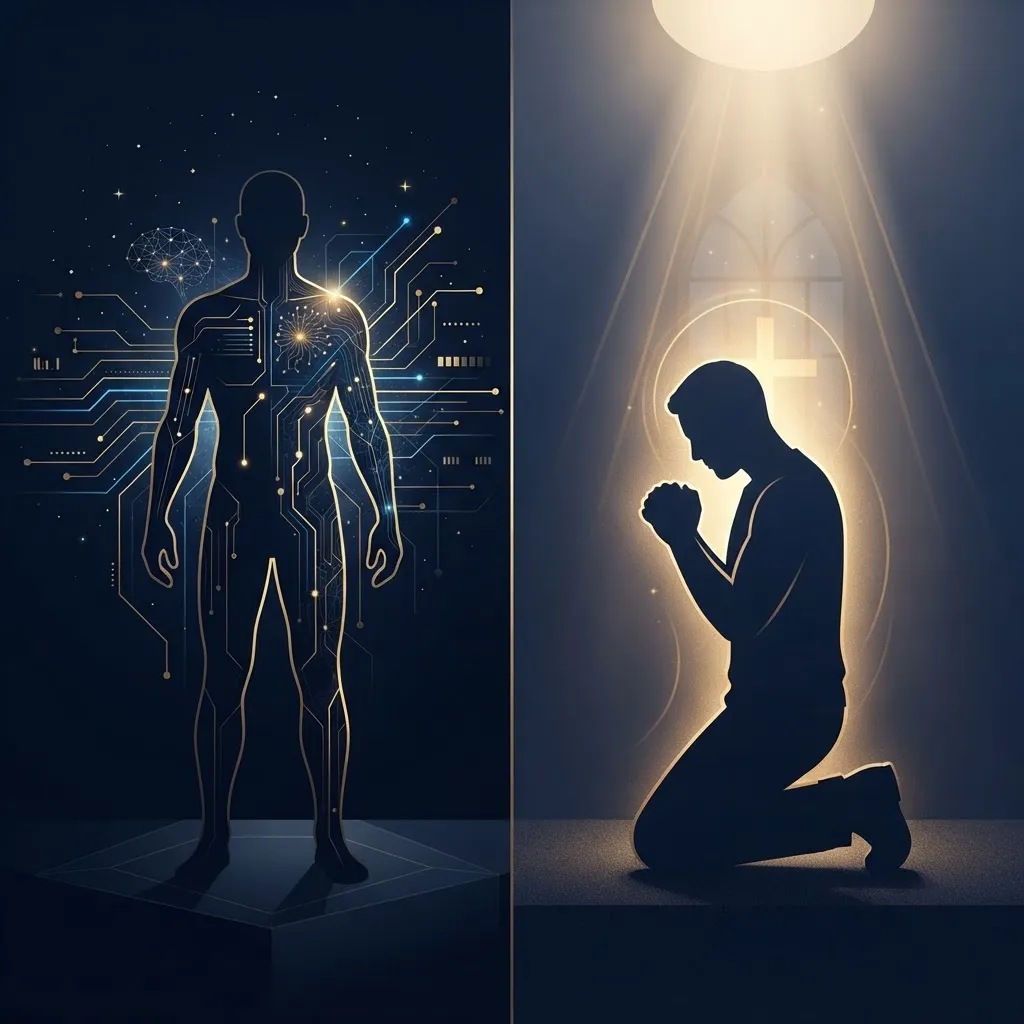
The deepest clash is not between faith and technology but between two rival eschatologies. Transhumanism offers a secular vision of salvation: through AI, mind-uploading, and radical life extension, humans will engineer their own immortality. Christian hope offers resurrection and new creation as gifts of grace, not achievements of engineering.
The comparison below clarifies the contrast:
| Question | Transhumanism | Christian Eschatology |
|---|---|---|
| Source of hope | Human technology | God's grace in Christ |
| Path to immortality | Engineering and AI | Bodily resurrection |
| View of the body | Obstacle to overcome | Good creation to be redeemed |
| Ultimate authority | Human intelligence | The sovereign God |
| End goal | Self-made utopia | Renewed creation |
The table shows why the two visions cannot simply merge. Transhumanism locates salvation inside human capability; Christianity locates it in the God who raises the dead. Recognizing this difference protects believers from quietly swapping the gospel for a technological substitute that cannot deliver what it promises.
Theological Concerns Christians Raise About AI
Thoughtful Christians are neither naive optimists nor reflexive doomsayers. Their concerns tend to cluster around a few clear issues:
- Idolatry — trusting AI for guidance, meaning, or certainty that only God can provide.
- Human dignity — the risk of reducing people, made in God's image, to data points or replaceable labor.
- Truth and deception — AI-generated misinformation and deepfakes eroding the trust healthy communities require.
- Justice — algorithmic bias and surveillance that can harm the vulnerable, whom Scripture commands us to protect.
- Spiritual atrophy — outsourcing prayer, study, and moral reasoning to machines until spiritual muscles weaken.
Public sentiment reflects this unease. According to the Pew Research Center, the share of U.S. adults who feel more concerned than excited about AI rose from 37% in late 2021 to 52% in 2023—a striking jump in barely two years. That growing caution mirrors the moral instincts many faith communities already hold.

How Should Christians Respond to Artificial Intelligence?
A faithful response avoids both panic and passivity. The following steps translate eschatological conviction into daily practice:
- Discern, don't dismiss. Evaluate each tool by its fruit—does it serve human flourishing and truth, or undermine them?
- Keep God central. Use AI as a servant, never as a substitute for prayer, worship, or dependence on God.
- Protect the vulnerable. Advocate for ethical AI that safeguards privacy, dignity, and justice.
- Stay rooted in Scripture. Let biblical wisdom, not tech headlines, shape your view of the future.
- Live in hope, not fear. Christian eschatology ends in resurrection, so believers can engage technology with confidence rather than dread.
Businesses and creators navigating this landscape need trustworthy technical partners alongside spiritual discernment; teams like ZoneTechify and WebPeak illustrate how technology can be built responsibly and transparently rather than deceptively.

The Future of Humanity: Faith in a Technological Age
Christian eschatology ultimately relocates the center of gravity. The future does not depend on whether humanity builds a superintelligence; it depends on the risen Christ who has promised to make all things new. This conviction frees believers to use AI's genuine benefits—medical breakthroughs, accessibility, and education—without surrendering to its inflated promises.
The Stanford AI Index has documented record levels of corporate AI investment in recent years, signaling that this technology is not a passing trend but a defining feature of the coming decades. Christians, therefore, cannot retreat from the conversation. They are called to be present, wise, and hopeful—salt and light in a digital world that is being reshaped faster than any generation before it.

Key Takeaways
- Christian eschatology studies the "last things" and frames history as moving toward redemption under God's sovereignty.
- The Bible never mentions AI, but it directly addresses pride, idolatry, and deception—themes AI amplifies.
- Revelation's "image of the beast" is best read as any power demanding the worship owed only to God, not a literal prediction of a specific machine.
- Transhumanism and Christianity offer competing eschatologies: self-made immortality versus grace-given resurrection.
- Pew Research found concern about AI rose from 37% in 2021 to 52% in 2023, echoing many believers' moral instincts.
Frequently Asked Questions (FAQ)
Is artificial intelligence mentioned in the Bible?
No, the Bible never mentions artificial intelligence, because it was written in a pre-digital era. However, Scripture speaks powerfully to the human tendencies AI magnifies—pride, idolatry, deception, and the desire for god-like power—so its principles remain deeply relevant to modern technology debates.
Is AI the Antichrist or the mark of the beast?
Most careful theologians say no. Revelation uses symbolic, apocalyptic language about powers demanding ultimate allegiance. The wiser question is whether any technology is claiming the trust or worship that belongs only to God, rather than identifying a single machine as the literal Antichrist of prophecy.
What is the Christian view of transhumanism?
Christianity generally rejects transhumanism's core claim that humans can engineer their own immortality. It affirms instead that eternal life is a gift of God's grace through Christ's resurrection, and that the human body is good creation to be redeemed, not a limitation to be discarded.
Can Christians use AI without compromising their faith?
Yes. Most Christian ethicists view AI as a tool that can serve good ends like medicine, education, and accessibility. The key is keeping God central, refusing to let AI replace prayer, discernment, or worship, and consistently evaluating each use by whether it honors human dignity and truth.
How does eschatology change how Christians see technology?
Eschatology gives Christians a hopeful, non-anxious posture. Because history ends in resurrection and renewed creation rather than technological utopia or catastrophe, believers can engage AI with confidence and moral clarity, using its benefits while refusing to place ultimate hope in human innovation.
Final Thoughts
The Christian eschatology of artificial intelligence is not about decoding machines in prophecy charts; it is about remembering where the story of the world is actually going. AI is a remarkable, morally weighty tool—but it is still a tool. The future belongs to God, and that truth lets Christians approach even the most disruptive technology with discernment, courage, and unshakable hope.