
An expert breakdown of the Europe artificial intelligence in manufacturing market, covering growth drivers, key use cases, leading countries, and what comes next.
Europe Artificial Intelligence in Manufacturing Market

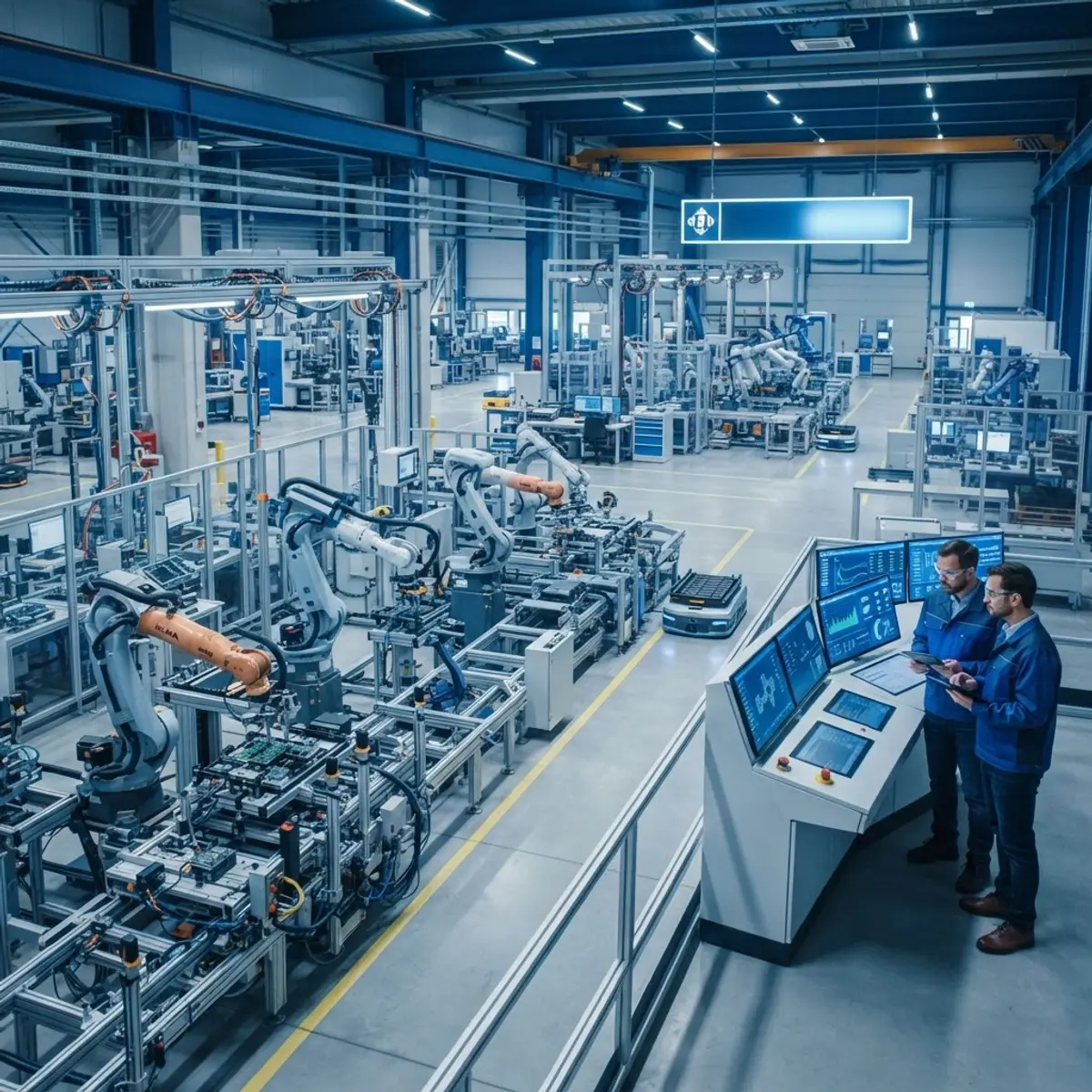
Europe's factories are quietly becoming some of the most intelligent production environments on earth. From German automotive plants to French aerospace lines and Italian precision engineering workshops, artificial intelligence is no longer a pilot project sitting in an innovation lab. It is now embedded in the daily rhythm of production, inspection, and logistics. The Europe artificial intelligence in manufacturing market has shifted from experimentation to measurable return on investment, and that shift is reshaping how the continent competes globally.
Having worked alongside manufacturers deploying AI on the shop floor, I can tell you the story is less about robots replacing people and more about data finally becoming useful. This article explains what is driving the market, where the real value sits, which countries lead, and what decision-makers should do next.
Quick Answer: The Europe artificial intelligence in manufacturing market is growing rapidly, driven by predictive maintenance, quality control, and automation. Germany, France, and the UK lead adoption. Analysts project double-digit annual growth as manufacturers use AI to cut downtime, reduce defects, and improve energy efficiency across production lines.
What Is AI in Manufacturing?
AI in manufacturing refers to the use of machine learning, computer vision, and predictive analytics to automate, optimise, and improve industrial production processes. Instead of relying only on fixed rules or human inspection, AI systems learn from sensor data, images, and historical records to make faster and more accurate decisions.
In practical terms, this means a machine that predicts its own failure before it breaks, a camera that spots a microscopic defect a human would miss, and a scheduling system that reorganises production in real time when demand changes. These are not future concepts in Europe; they are running today in thousands of facilities.
Why the European Market Is Accelerating
Europe has a unique combination of factors pushing AI adoption faster than almost anywhere else. The region hosts a dense concentration of advanced manufacturers, particularly in automotive, chemicals, machinery, and aerospace, where even small efficiency gains translate into significant financial impact.
Three forces stand out:
- Cost and labour pressure. Rising energy prices and skilled-labour shortages force manufacturers to do more with less, and AI directly targets both.
- Sustainability regulation. European Union climate and reporting rules push factories toward measurable efficiency, and AI optimises energy and material use.
- Industry 4.0 maturity. Years of investment in connected sensors and IoT infrastructure mean the data foundation for AI already exists.
According to the European Commission, industry accounts for roughly a quarter of the EU's total energy consumption, so any technology that trims waste has enormous appeal. AI sits precisely at that intersection of profitability and compliance.
The Highest-Value AI Use Cases on the Shop Floor
Not every AI project delivers equal value. Based on real deployments, the following use cases consistently produce the strongest returns for European manufacturers.
Predictive Maintenance
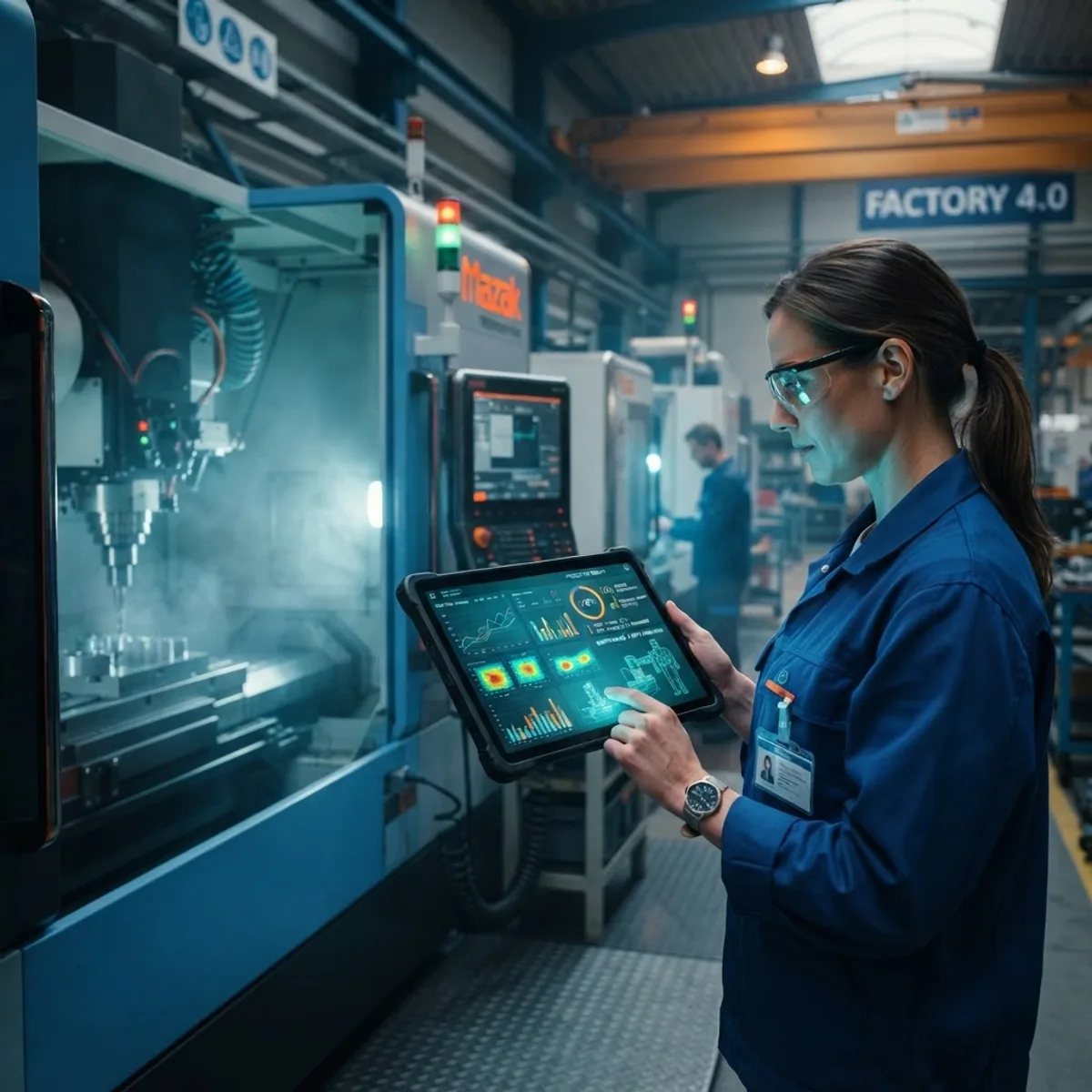
Predictive maintenance is the single most cited reason European manufacturers invest in AI. By analysing vibration, temperature, and acoustic data, models forecast equipment failure days or weeks in advance. According to McKinsey, predictive maintenance can reduce machine downtime by up to 50% and extend equipment life by years, which is transformational for capital-intensive plants.
AI-Powered Quality Control
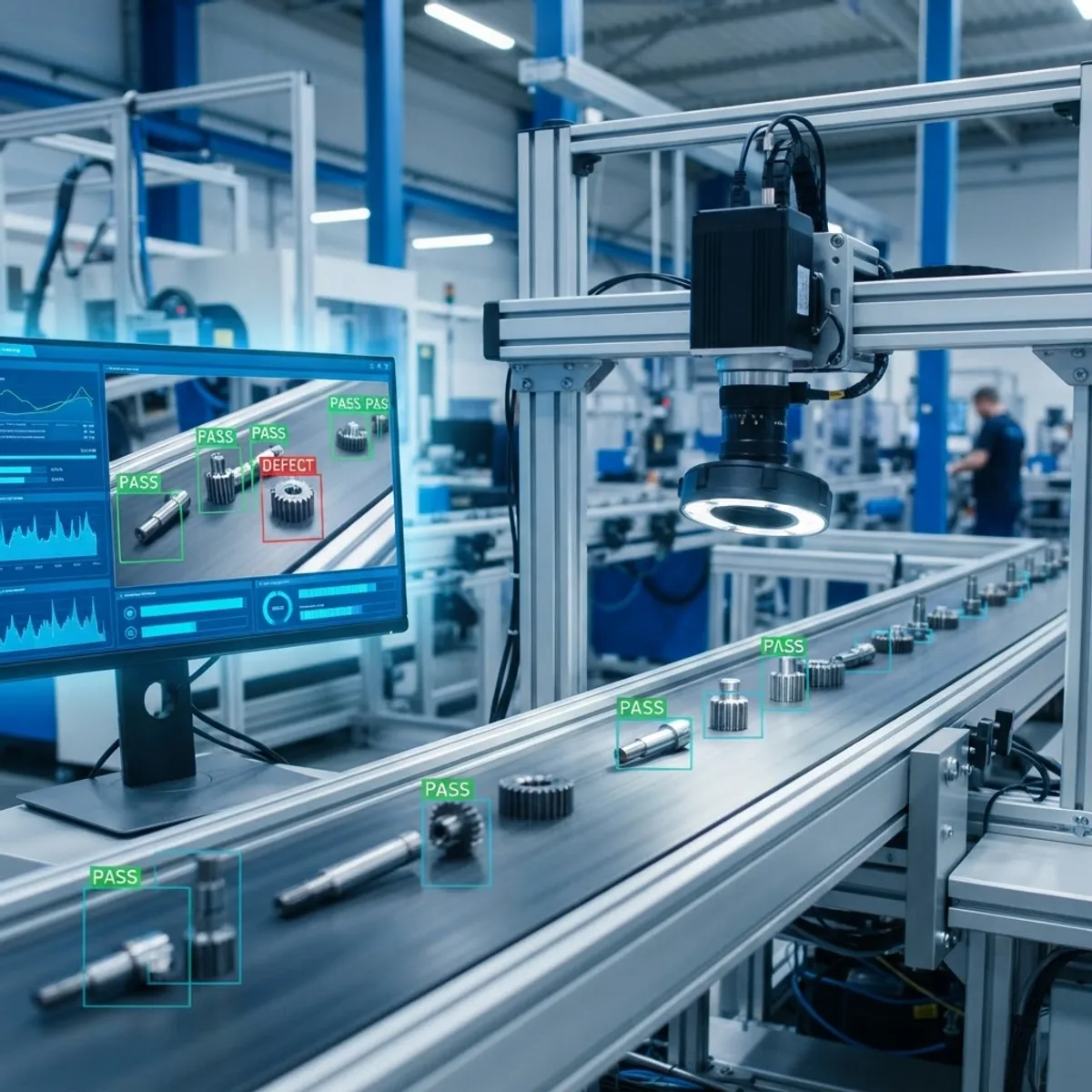
Computer vision has become the backbone of modern quality inspection. High-resolution cameras paired with deep-learning models inspect thousands of parts per hour, catching defects invisible to the human eye. This reduces scrap, warranty claims, and recalls, which matters enormously for regulated sectors like automotive and pharmaceuticals.
Intelligent Automation and Robotics
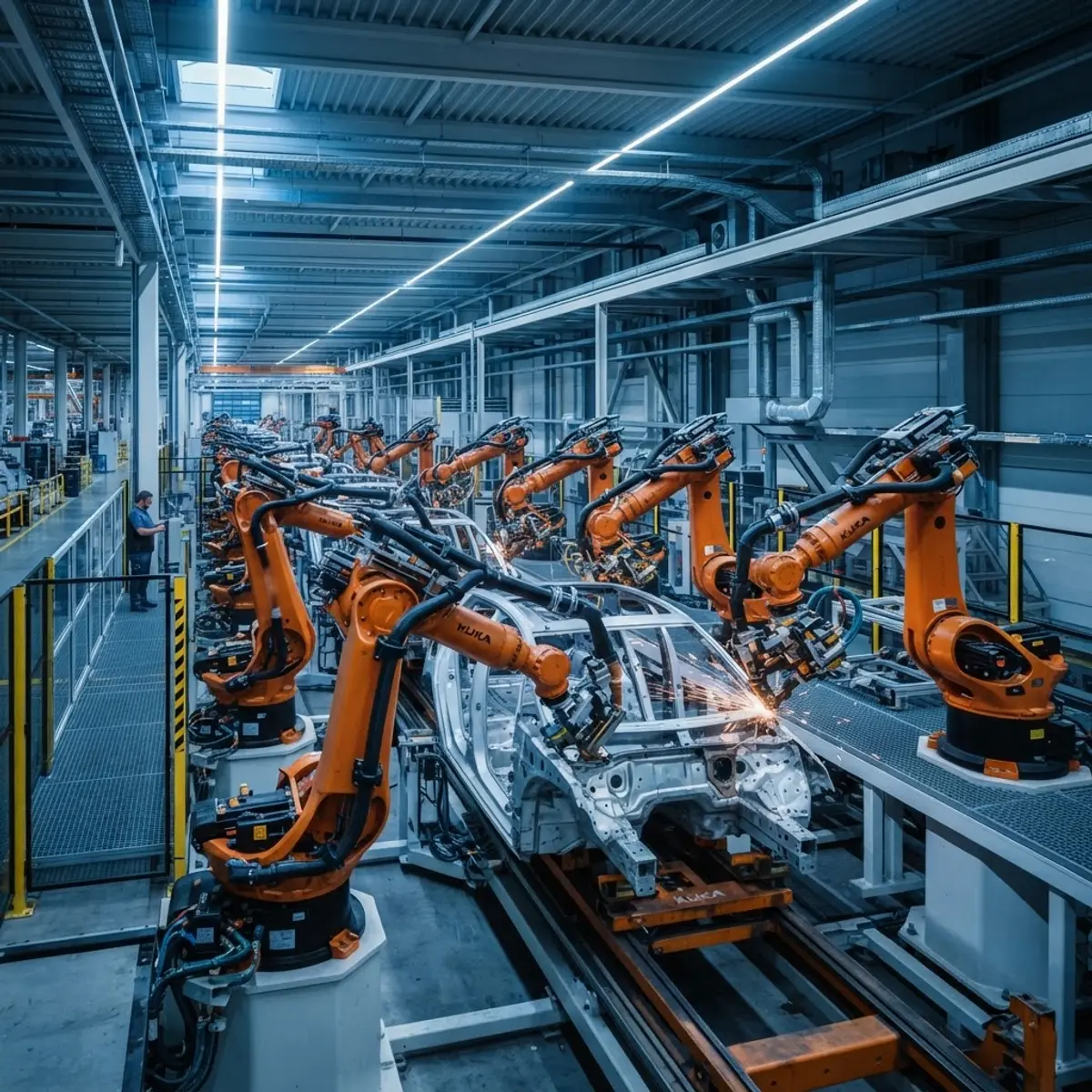
Europe is one of the most robot-dense regions globally. When AI is layered onto robotics, machines move from repeating fixed motions to adapting in real time, handling variation in parts, orientation, and workflow. This flexibility is essential for high-mix, low-volume European production.
Supply Chain and Production Optimisation
AI forecasting tools balance inventory, predict demand shifts, and reschedule production dynamically. After the supply shocks of recent years, European manufacturers now treat AI-driven resilience planning as a core requirement rather than a luxury.
Market Growth and Key Statistics
The numbers behind the Europe artificial intelligence in manufacturing market tell a consistent story of sustained expansion. Independent market research firms broadly agree the sector is growing at a strong double-digit compound annual growth rate, with most estimates placing annual growth well above 20% through the end of the decade.

Several data points give useful context:
- According to the International Federation of Robotics, Europe installed record numbers of industrial robots in recent years, creating the automation base that AI now enhances.
- Manufacturing is repeatedly ranked among the top three industries globally for AI investment, reflecting clear and measurable payback.
- European Commission research indicates that a large majority of manufacturers see digital and AI adoption as critical to remaining competitive.
The key takeaway is that growth is not speculative hype. It is anchored in proven cost savings, regulatory pressure, and existing infrastructure.
Which European Countries Lead AI Manufacturing?
Adoption is not evenly distributed across the continent. A handful of countries drive the majority of activity, though momentum is spreading quickly.

| Country | Strength Area | AI Maturity |
|---|---|---|
| Germany | Automotive, machinery, Industry 4.0 | Very High |
| France | Aerospace, energy, robotics | High |
| United Kingdom | AI research, pharma, electronics | High |
| Italy | Precision engineering, fashion tech | Growing |
| Nordics | Sustainability, process industry | Growing |
| Spain | Automotive, food processing | Emerging |
Germany remains the clear leader thanks to its Industry 4.0 heritage and the sheer scale of its automotive and machinery sectors. France and the UK follow closely, with strong government backing and research ecosystems. Southern and Nordic countries are scaling fast, often focusing on sustainability-driven use cases.
Challenges Slowing Down Adoption
Despite momentum, European manufacturers face genuine hurdles. Understanding them is essential for realistic planning.
- Data quality and silos. Many factories collect data but store it in disconnected systems, making it hard to train reliable models.
- Skills shortage. There is a persistent gap between demand for AI and data engineering talent and available specialists.
- Integration cost. Retrofitting legacy machinery with sensors and connectivity requires upfront capital.
- Regulatory clarity. The EU AI Act introduces risk-based obligations, and manufacturers must classify and document industrial AI systems correctly.
The most successful companies treat these not as blockers but as sequencing challenges, starting with one high-value use case, proving results, then scaling. Partnering with specialists in artificial intelligence services helps manufacturers bridge the skills gap without hiring an entire in-house data science team overnight.
How Manufacturers Should Start
For teams beginning their AI journey, a disciplined approach beats a broad, unfocused rollout. Based on repeated real-world outcomes, this sequence works best:
- Pick one measurable problem. Downtime, defects, or energy waste are ideal starting points.
- Audit your data. Confirm you have clean, connected data before building anything.
- Run a focused pilot. Prove value in a single line or cell within a defined period.
- Measure hard numbers. Track downtime hours, scrap rates, and cost per unit.
- Scale what works. Expand proven models across similar equipment and sites.
This method avoids the common trap of expensive, unfocused projects that never leave the pilot phase. You can explore more practical technology guidance at ZoneTechify and WebPeak, both of which focus on turning digital ambition into working systems.
The Future of AI Manufacturing in Europe
The next phase is defined by generative AI, digital twins, and autonomous decision-making. Digital twins, virtual replicas of physical production lines, let manufacturers simulate changes before touching real equipment. Generative AI is increasingly used to design components, generate maintenance instructions, and assist frontline workers in natural language.
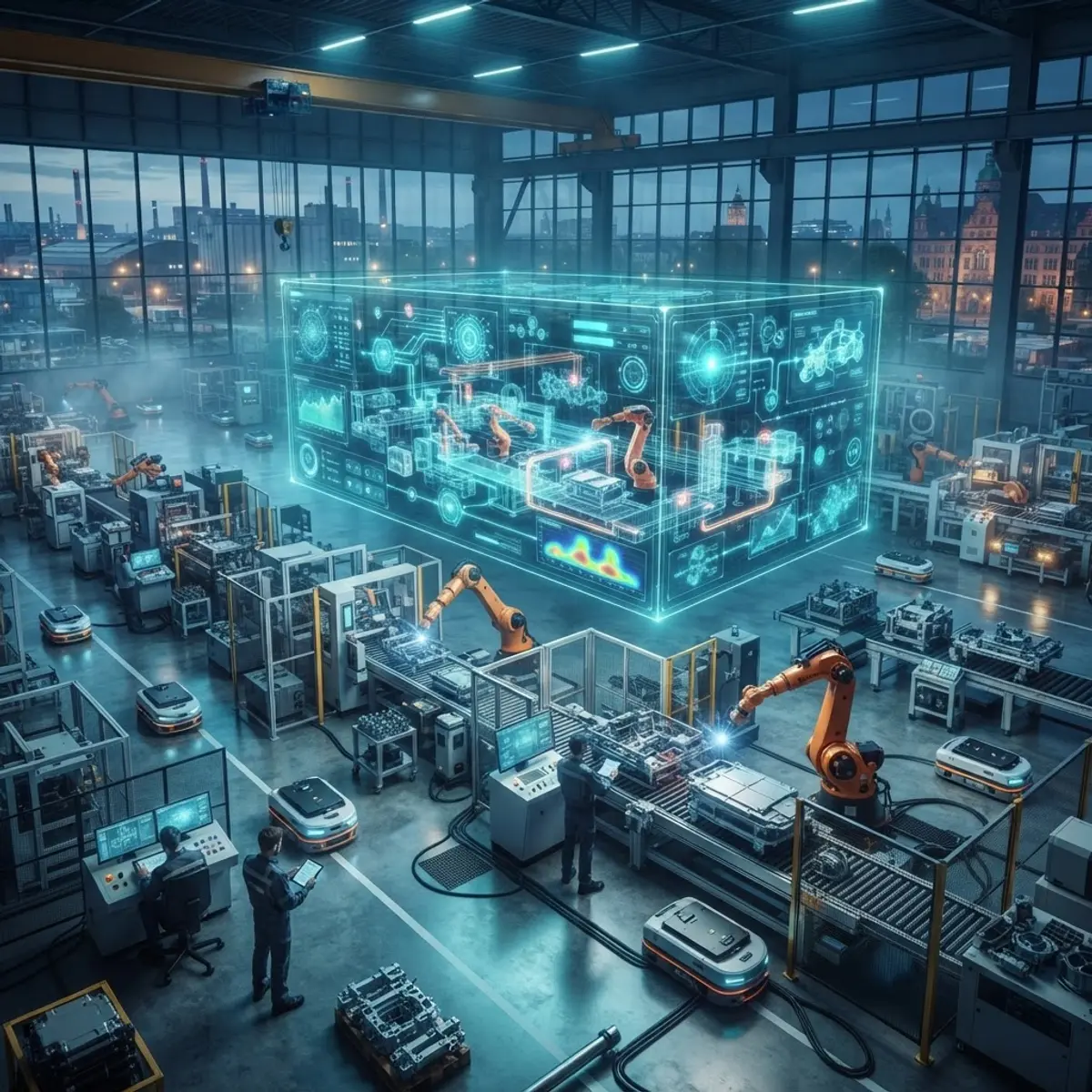
Expect three trends to dominate the coming years: deeper integration of AI copilots for engineers, wider use of energy-optimising AI to meet climate targets, and a shift toward semi-autonomous factories where AI handles routine decisions while humans focus on strategy and exceptions.
Key Takeaways
- The Europe artificial intelligence in manufacturing market is growing at strong double-digit rates, driven by clear, measurable ROI.
- Predictive maintenance and AI quality control deliver the fastest and most reliable returns.
- According to McKinsey, predictive maintenance can cut downtime by up to 50%, a core adoption driver.
- Germany, France, and the UK lead adoption, while Southern and Nordic countries scale rapidly.
- Data silos, skills gaps, and the EU AI Act are the main challenges to manage.
- Success comes from starting with one high-value use case and scaling what works.
Frequently Asked Questions (FAQ)
What is the Europe artificial intelligence in manufacturing market?
It is the sector covering AI technologies used in European factories, including predictive maintenance, computer vision quality control, robotics, and production optimisation. The market is expanding at strong double-digit annual growth as manufacturers adopt AI to cut costs, reduce downtime, and meet strict sustainability and efficiency requirements.
Which European country leads in AI manufacturing?
Germany leads the European AI manufacturing market, powered by its automotive sector, machinery industry, and mature Industry 4.0 infrastructure. France and the United Kingdom follow closely with strong aerospace, pharmaceutical, and AI research ecosystems. Italy, Spain, and the Nordic countries are scaling adoption quickly across their key industries.
How does AI actually help factories?
AI helps factories by predicting equipment failures before they happen, inspecting product quality with computer vision, optimising production schedules, and reducing energy waste. These capabilities lower downtime, cut defect rates, and improve output. The result is measurable cost savings and greater resilience against supply chain and labour disruptions.
Is AI in manufacturing expensive to implement?
Initial costs exist, mainly for sensors, connectivity, and integration, but focused projects often pay back quickly. Starting with one high-value use case such as predictive maintenance keeps costs contained. Many manufacturers work with external AI specialists to avoid the expense of building large in-house data science teams from scratch.
Will AI replace factory workers in Europe?
AI mainly augments workers rather than replacing them. It handles repetitive inspection, monitoring, and prediction tasks, freeing employees for higher-value work like problem-solving and strategy. Europe faces skilled-labour shortages, so AI often fills gaps rather than cutting jobs, while creating new demand for data and automation specialists.
How does the EU AI Act affect manufacturers?
The EU AI Act applies a risk-based framework to AI systems. Most industrial applications like quality inspection or maintenance are lower risk, but manufacturers must document, classify, and govern their systems responsibly. Compliance requires clear record-keeping, but it rarely blocks adoption when planned properly from the start.