An expert evaluation of Uniphore, the conversational AI company, focused on its voice AI capabilities, real strengths, limitations, pricing signals, and enterprise fit.
Evaluate the Conversational Artificial Intelligence Company Uniphore on Voice AI
Uniphore is one of the most talked-about names in enterprise conversational AI, and its voice AI capabilities are the reason most buyers put it on a shortlist. But hype rarely tells you whether a platform actually fits your contact center, your budget, or your compliance requirements. This evaluation cuts through the marketing to give you a practical, experience-based look at what Uniphore does well on voice, where it struggles, and who should genuinely consider it.
Quick Answer: Uniphore is a strong enterprise conversational AI company whose voice AI excels at real-time speech recognition, sentiment analysis, and agent assistance in contact centers. It suits large support-heavy organizations, but smaller teams may find it complex and costly compared with lighter voice AI alternatives.
What Is Uniphore and Why Does Voice AI Matter?
Uniphore is a global conversational AI company founded in 2008 that builds software to automate and augment customer conversations across voice and text. Its platform combines automatic speech recognition (ASR), natural language understanding (NLU), and emotion analytics to help enterprises understand and act on customer interactions in real time.
Voice AI is the branch of artificial intelligence that converts spoken language into structured, actionable data, then generates spoken or automated responses. In a contact center, this means transcribing calls, detecting customer intent and emotion, guiding agents live, and automating routine requests without a human.
This matters because voice is still the highest-stakes channel. According to Salesforce research, roughly 75% of customers expect consistent interactions across channels, and phone remains a top choice for complex or urgent issues. When voice AI works, it reduces handle time and improves satisfaction; when it fails, it frustrates customers at exactly the wrong moment. Businesses exploring practical AI adoption often start with these customer-facing use cases, which is why teams frequently review ZoneTechify's artificial intelligence services before committing to a large platform.
How Does Uniphore's Voice AI Actually Work?
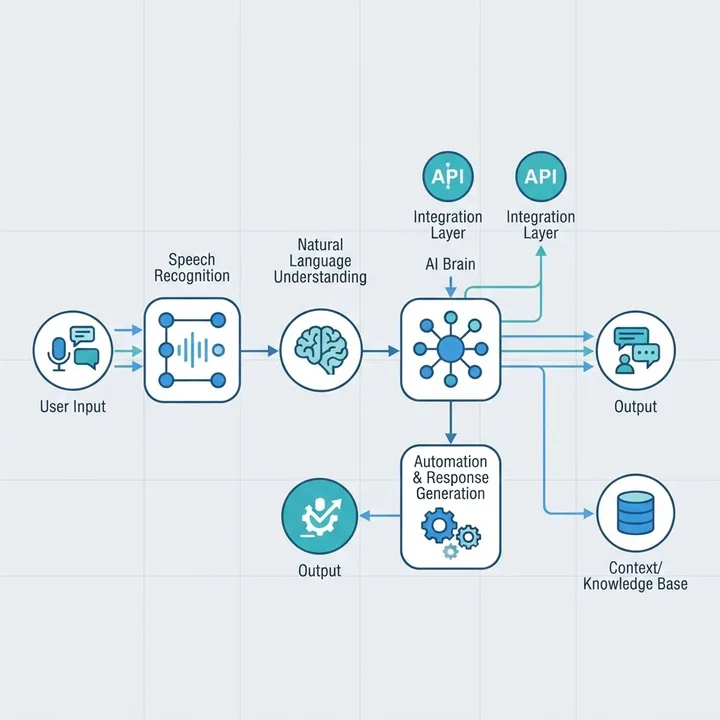
Uniphore's voice stack is built around capturing a live conversation and enriching it with layers of analysis. Rather than being a single product, it is a set of connected capabilities that work together during and after a call.
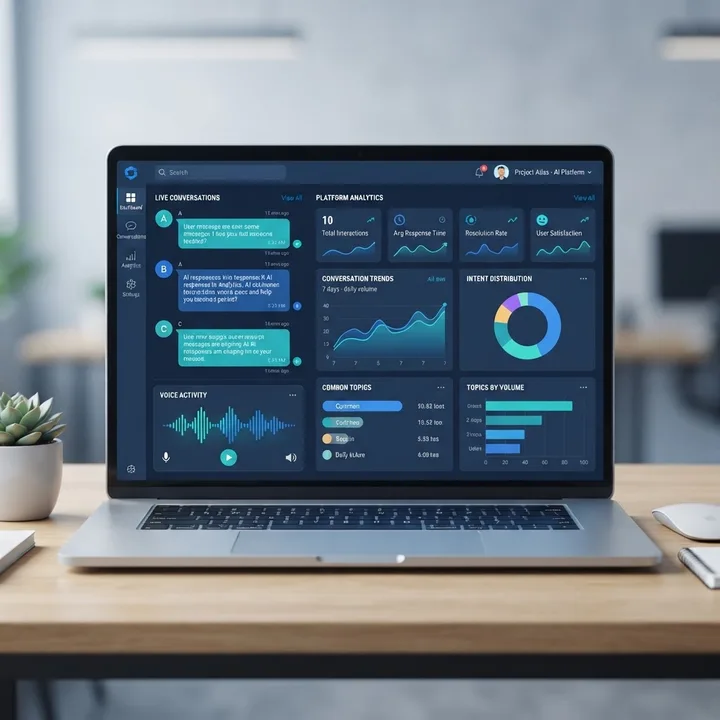
The core voice AI components include:
- Automatic Speech Recognition (ASR): Transcribes calls in real time across multiple languages and accents.
- Natural Language Understanding (NLU): Identifies intent, entities, and the reason behind a customer's request.
- Emotion and Tonal Analytics: Reads sentiment from words and acoustic signals like pitch and pace.
- Real-Time Agent Assist: Surfaces suggested answers, compliance prompts, and next-best actions while the agent talks.
- Conversational Automation: Handles repetitive voice interactions through virtual assistants and self-service flows.
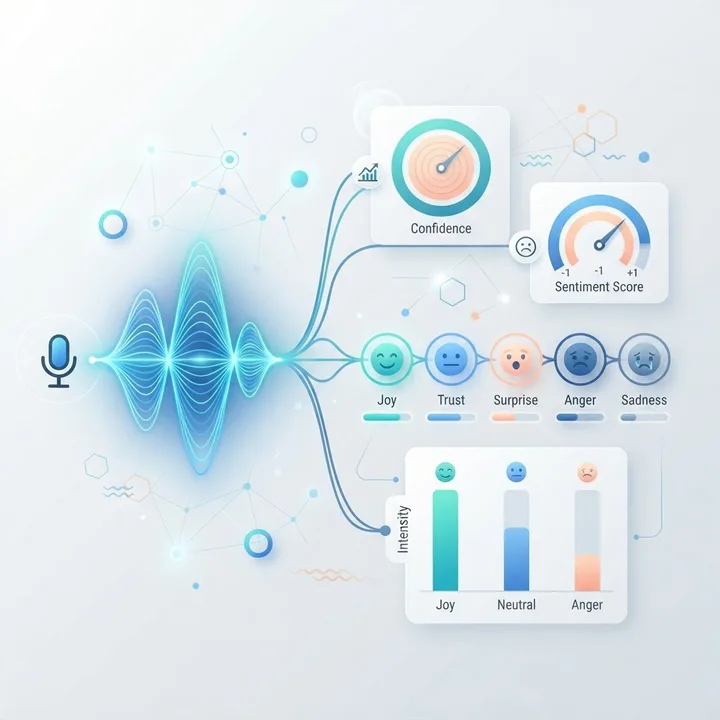
What sets Uniphore apart is the emphasis on emotion AI. Most voice platforms transcribe and route; Uniphore layers acoustic and behavioral signals on top, aiming to detect frustration or confusion before it escalates.
Where Uniphore's Voice AI Genuinely Excels
After reviewing enterprise deployments and vendor documentation, three strengths stand out consistently.
1. Real-time agent assistance. Uniphore shines when a human agent is on the line. Live transcription plus knowledge suggestions can meaningfully cut average handle time and reduce after-call work, because agents stop searching for answers mid-conversation.
2. Multimodal sentiment analysis. By combining what is said with how it is said, Uniphore gives supervisors a richer signal than keyword-based tools. This is valuable for quality assurance teams monitoring thousands of calls they could never manually review.
3. Scale and enterprise readiness. Uniphore is built for high call volumes, multiple languages, and integrations with major CRM and telephony systems. For a global bank or telecom, this maturity is a real advantage over startup tools.

The Honest Limitations You Should Weigh
No platform is perfect, and pretending otherwise helps no one. Based on common buyer feedback, here are the trade-offs to plan for.
- Implementation complexity: Uniphore is an enterprise platform, not a plug-and-play tool. Expect integration work, data mapping, and change management. Small teams often underestimate this.
- Pricing opacity: Uniphore does not publish transparent pricing. Costs are quote-based and typically scale with volume, which makes budgeting difficult for smaller organizations.
- Overkill for simple needs: If you only need basic call transcription or a simple IVR replacement, Uniphore's depth can be more than you need and more than you should pay for.
- Emotion AI accuracy debate: Acoustic emotion detection is powerful but not infallible. Accents, cultural differences, and noisy lines can affect reliability, so it should guide decisions, not make them alone.
How Uniphore Compares to Other Voice AI Options
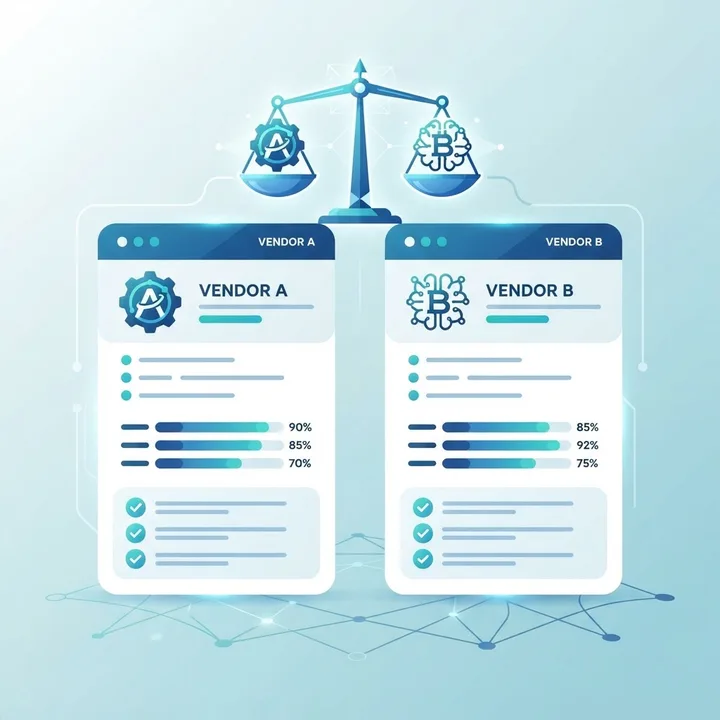
Choosing a voice AI vendor is rarely about one platform being universally best. It is about fit. The table below compares Uniphore against common alternatives on the dimensions buyers care about most.
| Factor | Uniphore | Cloud Provider Voice AI | Lightweight Voice AI Tools |
|---|---|---|---|
| Best for | Large contact centers | Custom builds and developers | SMBs and startups |
| Emotion analytics | Advanced | Basic to moderate | Rare |
| Real-time agent assist | Strong | Varies | Limited |
| Setup complexity | High | High | Low |
| Pricing transparency | Low (quote-based) | Moderate | High |
| Time to value | Slower | Slower | Faster |
The pattern is clear: Uniphore wins on depth and enterprise features, while lighter tools win on speed and simplicity. Cloud provider APIs sit in between but require engineering resources to assemble into a finished product.
Who Should Actually Choose Uniphore?
Uniphore is the right call for organizations that handle large volumes of voice interactions and treat the contact center as a strategic function. This typically includes banking, insurance, telecom, and healthcare providers where compliance, quality monitoring, and customer retention justify the investment.

You are likely a strong fit if:
- You run hundreds or thousands of agents and need consistent quality at scale.
- Compliance and call auditing are business-critical.
- You want to augment human agents rather than fully replace them.
- You already have CRM and telephony infrastructure to integrate with.
You are probably a poor fit if you are a small business wanting a quick, affordable voice assistant, or if your primary channel is chat rather than voice. In those cases, a lighter tool or a custom build using cloud APIs will deliver value faster and cheaper.
How to Evaluate Uniphore Before You Buy
Treat any voice AI purchase like a structured pilot, not a leap of faith. A disciplined evaluation protects your budget and reveals real-world performance.
- Define measurable goals. Decide upfront whether you are optimizing handle time, CSAT, compliance, or automation rate.
- Run a scoped pilot. Test on a single team or call type with your actual audio, accents, and jargon, not a vendor demo.
- Validate accuracy on your data. Measure transcription and intent accuracy on your own calls, since results vary by industry and language.
- Stress-test emotion analytics. Confirm sentiment signals align with human QA reviewers before trusting them operationally.
- Model total cost of ownership. Include integration, training, and internal management time, not just license fees.
If you want expert help scoping this kind of AI evaluation or building surrounding automation, the team at WebPeak and their AI services regularly guide businesses through vendor selection and integration.
Key Takeaways
- Uniphore is a mature enterprise conversational AI company whose voice AI leads on real-time agent assist and multimodal emotion analytics.
- Its biggest differentiator is emotion AI that blends spoken content with acoustic tone signals.
- Pricing is quote-based and opaque, and implementation is complex, making it best for large, voice-heavy organizations.
- Smaller teams often get faster value from lightweight voice AI tools or cloud provider APIs.
- Always evaluate with a scoped pilot on your own call data before committing to a contract.
Frequently Asked Questions (FAQ)
What does Uniphore's voice AI do?
Uniphore's voice AI transcribes calls in real time, detects customer intent and emotion, and assists live agents with suggested answers and compliance prompts. It also automates routine voice interactions, helping enterprises reduce handle time, improve quality monitoring, and deliver more consistent customer service across large contact centers.
Is Uniphore good for small businesses?
Uniphore is generally not ideal for small businesses. It is an enterprise platform with quote-based pricing, complex setup, and features designed for high call volumes. Small teams usually get faster, cheaper value from lightweight voice AI tools or cloud provider APIs that require less integration and internal management.
How much does Uniphore cost?
Uniphore does not publish public pricing. Costs are quote-based and typically scale with call volume, number of agents, and the specific modules you deploy. Because of this opacity, you should request a detailed quote and model total cost of ownership, including integration and training, before committing.
How accurate is Uniphore's emotion AI?
Uniphore's emotion AI is advanced because it combines spoken words with acoustic signals like tone and pace. However, accuracy can vary with accents, background noise, and cultural differences. It works best as a supporting signal for human quality reviewers rather than as a fully autonomous decision-making system.
What are the best alternatives to Uniphore?
Alternatives depend on your needs. Cloud provider voice APIs suit teams with engineering resources who want custom builds, while lightweight voice AI tools fit small businesses wanting speed and low cost. Uniphore remains strongest for large enterprises needing deep emotion analytics and real-time agent assistance at scale.
Final Verdict
Uniphore is a genuinely strong voice AI company for the right buyer. If you operate a large, voice-heavy contact center and value emotion analytics and live agent assistance, it earns its place on your shortlist. If you are smaller or simpler, look lighter. Either way, evaluate with your own data before you sign. For more practical technology guidance, visit ZoneTechify.