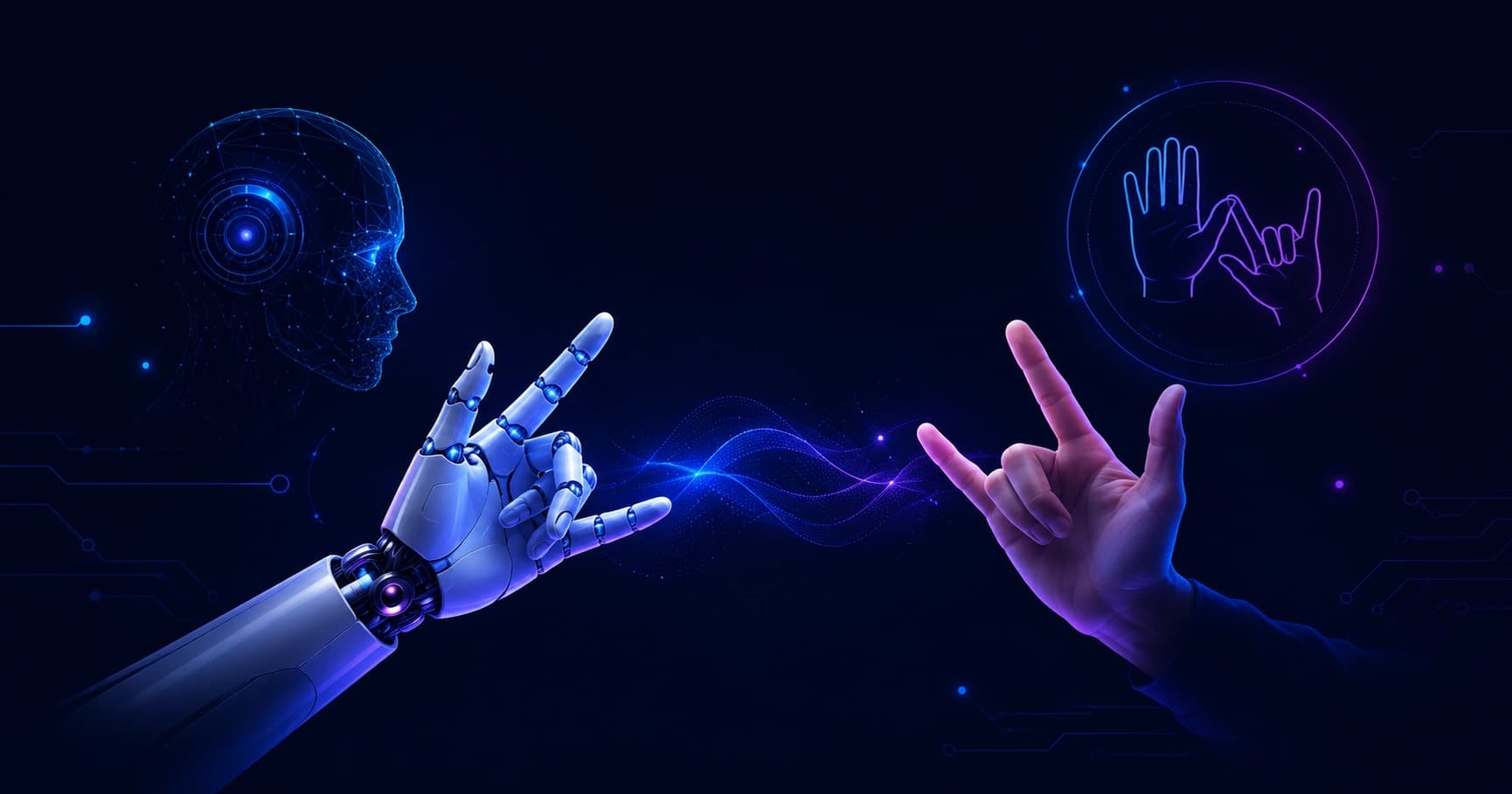
Discover how artificial intelligence is transforming American Sign Language recognition, translation, and accessibility for the Deaf and hard-of-hearing community.
Artificial Intelligence ASL
Artificial intelligence is reshaping how the world communicates, and one of its most meaningful frontiers is American Sign Language (ASL). For millions of Deaf and hard-of-hearing people, signing is a primary, rich, and expressive language. Yet the hearing world has long lacked easy ways to understand it in real time. AI is closing that gap. By teaching machines to see, interpret, and respond to hand shapes, facial expressions, and motion, artificial intelligence is making ASL more accessible than ever. At ZoneTechify and WebPeak, we follow this technology closely because it represents AI used for genuine human good.
This guide explains how AI understands ASL, the models and tools behind it, where it already works well, and what the future holds. Whether you are a developer, an educator, or simply curious, you will leave with a clear, practical picture of the field.
Why AI and ASL Matter Together
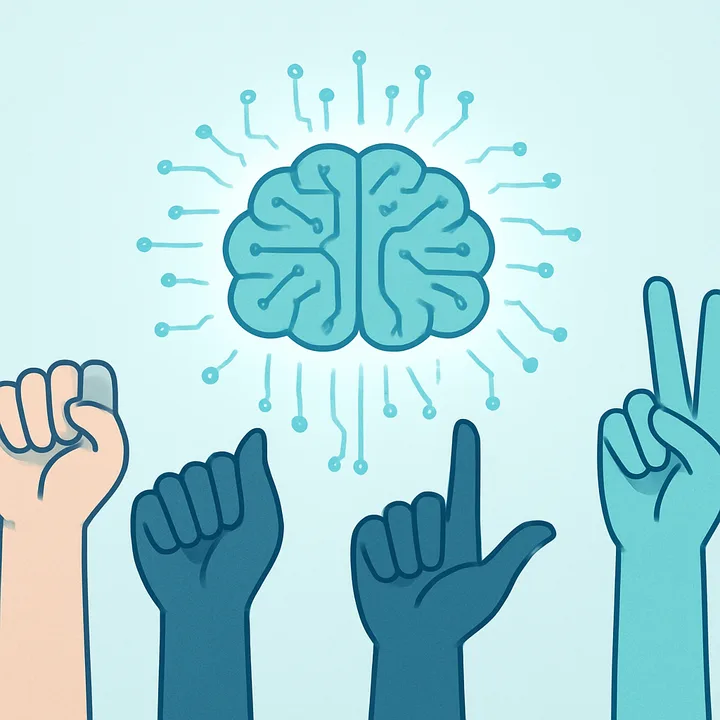
ASL is not simply English translated into hand gestures. It is a complete language with its own grammar, syntax, regional dialects, and non-manual markers like eyebrow movement and head tilts. A raised eyebrow can turn a statement into a question. A facial expression can change the intensity of a word. This complexity is exactly why earlier rule-based software failed: you cannot hard-code every nuance of a living language.
Modern artificial intelligence succeeds where older systems struggled because it learns from examples rather than fixed rules. When a model is shown thousands of video clips of people signing, it begins to recognize patterns in movement, timing, and expression. The result is software that can interpret signing the way it actually happens, with all of its subtlety.
The payoff is significant. Real-time ASL interpretation can help a Deaf customer order at a counter, a student follow a classroom lecture, or a patient communicate with a doctor without waiting for a human interpreter. AI does not replace human interpreters, who remain essential for nuanced and high-stakes settings, but it dramatically expands access in everyday moments.
How AI Recognizes Sign Language
At the heart of AI-driven ASL is computer vision, the field that allows machines to interpret images and video. When you sign in front of a camera, the system performs several steps in sequence.
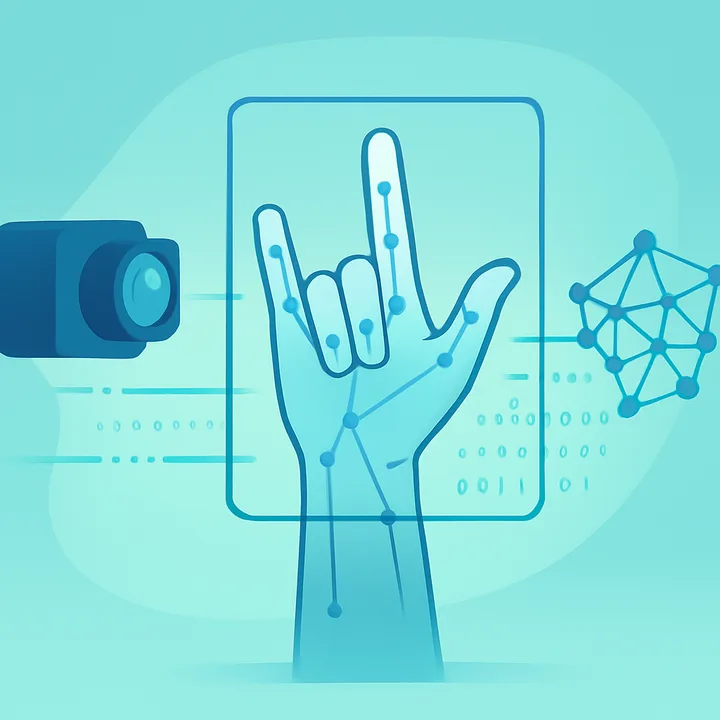
First, the software detects the hands and body, often using pose-estimation tools that map key points such as fingertips, knuckles, wrists, and shoulders. These points form a digital skeleton that tracks how the hands move through space. Second, the system analyzes the sequence of movements over time, because a sign is rarely a single frozen pose. Third, it factors in facial cues and body orientation, which carry grammatical meaning. Finally, it matches the combined pattern against what it has learned and outputs a word, phrase, or sentence.
The key challenge is that signs unfold over time. A still photo cannot capture motion, so AI for ASL must understand sequences. This is why temporal models, which process video frame by frame while remembering what came before, are so central to accurate recognition.
The Machine Learning Models Behind ASL
Several types of models power ASL recognition, and most modern systems combine them.
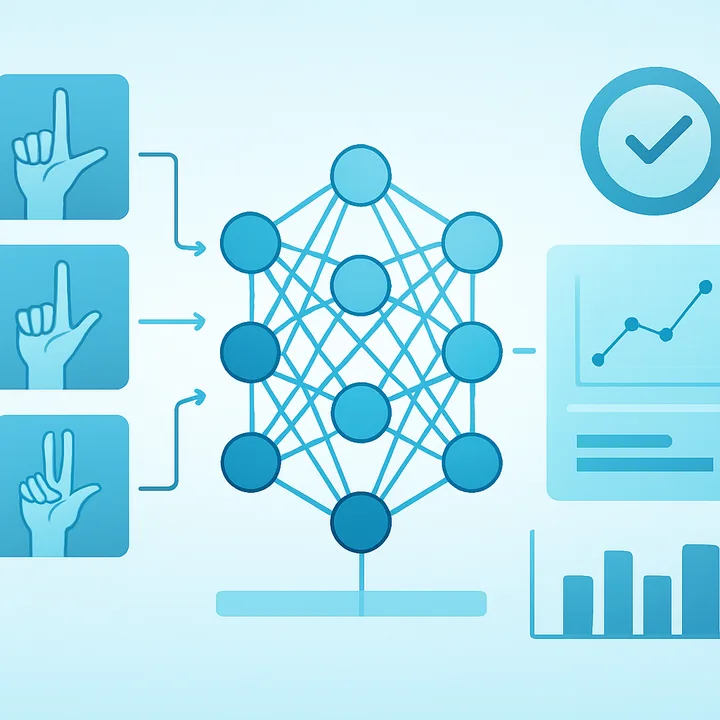
Convolutional neural networks (CNNs) excel at understanding the content of a single image, such as the shape of a hand at one moment. Recurrent neural networks (RNNs) and their variants handle sequences, remembering earlier frames so the model understands motion. More recently, transformer models, the same architecture that powers large language models, have proven powerful for sign language because they capture long-range relationships across an entire signed phrase.
A typical pipeline might use a pose estimator to extract skeleton data, feed those coordinates into a transformer or sequence model, and then pass the recognized signs into a language model that smooths the output into natural, grammatically correct text. Building these systems well requires deep expertise in data, modeling, and deployment, which is exactly the kind of work covered by professional artificial intelligence services.
The table below summarizes the common building blocks.
| Model Type | Main Strength | Role in ASL |
|---|---|---|
| CNN | Image understanding | Reads hand shape per frame |
| RNN / LSTM | Sequence memory | Tracks motion over time |
| Transformer | Long-range context | Interprets full phrases |
| Language Model | Fluent text | Cleans up final output |
From Recognition to Translation
Recognizing individual signs is only the first step. True usefulness comes from translation, converting fluid signing into readable text or spoken audio, and ideally the reverse as well.
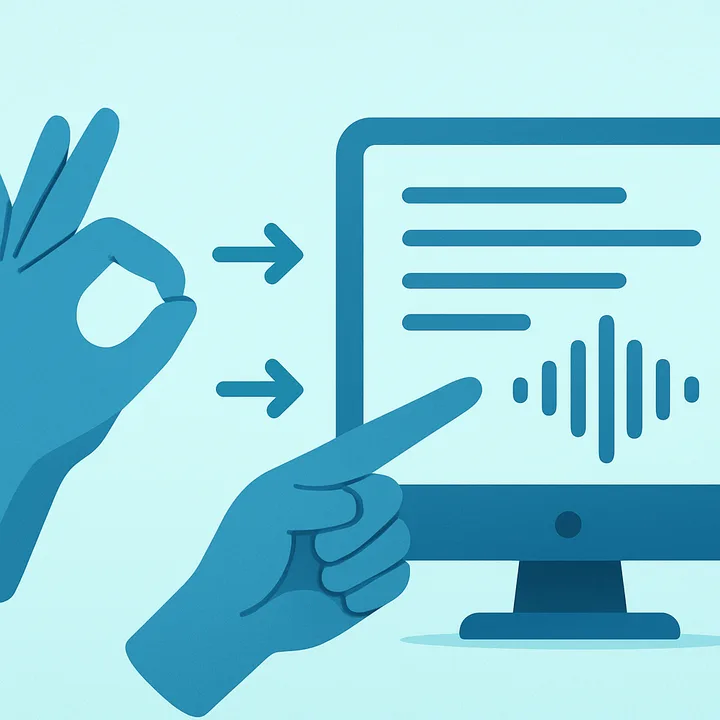
Translation is harder than recognition because ASL grammar differs from English. A signer might express "Are you going to the store?" in an order and structure that does not map word for word onto English. The AI must therefore reorder, infer, and rephrase, much like translating between any two spoken languages. This is where language models add tremendous value, taking a rough sequence of recognized signs and producing natural sentences.
Reverse translation, turning text or speech into signing, is also advancing. Some systems use animated avatars that perform signs, giving Deaf users a visual response rather than only text. While avatar signing still lacks the full expressiveness of a human, it is improving quickly and already helps with simple, structured information like announcements and instructions.
Real-World Accessibility Tools
The most exciting part of AI and ASL is how it shows up in daily life. Practical, affordable tools are reaching real users.
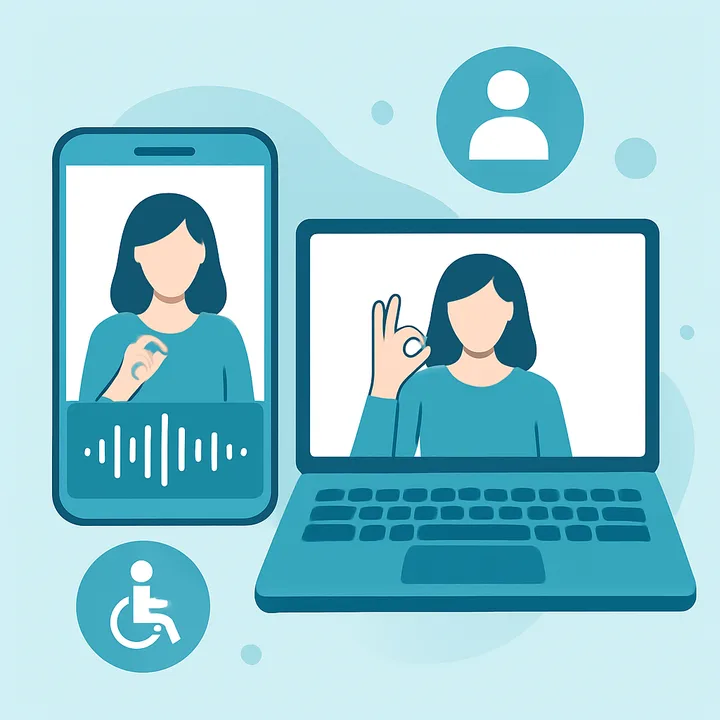
Mobile apps can now use a phone camera to recognize basic signs and display text, helping in quick exchanges. Educational platforms use AI to teach ASL, giving learners instant feedback on whether their hand shapes are correct, much like a pronunciation coach for spoken language. Video conferencing tools are beginning to add live captioning for signers, opening up remote work and online learning.
Businesses are paying attention too, since accessibility is both an ethical priority and a legal expectation in many regions. Companies that build inclusive digital products, often with help from dedicated AI development services, reach wider audiences and serve customers more fairly. Accessibility built in from the start is far better than accessibility added as an afterthought.
Real-Time Communication Breakthroughs
Speed is everything in conversation. A translation that arrives several seconds late breaks the natural rhythm of communication. This is why real-time, low-latency processing is a major focus of research.
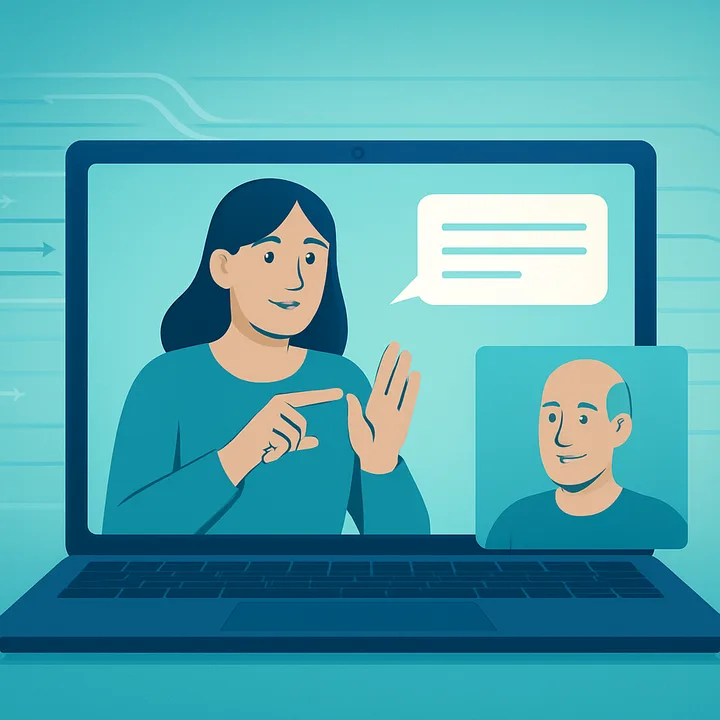
Running models efficiently, sometimes directly on a phone or laptop rather than a distant server, reduces delay and protects privacy because video never has to leave the device. Advances in lightweight models mean that capable ASL recognition can now run on consumer hardware. In live settings, this allows captions to appear almost instantly as a person signs, supporting fluid back-and-forth exchanges in meetings, classrooms, and customer service.
There are still hurdles. Lighting, camera angle, background clutter, and individual signing styles all affect accuracy. Regional and personal variation in signing is wide, so a model trained mostly on one group may struggle with another. Building diverse, representative datasets, with the consent and involvement of the Deaf community, is essential for fair and reliable systems.
Challenges and Responsible Development
No technology is perfect, and AI for ASL carries real responsibilities. The biggest risk is exclusion through poor data. If models are trained on a narrow slice of signers, they will work poorly for everyone else, reinforcing the very barriers they aim to remove. Diverse data, collected ethically, is non-negotiable.
Privacy matters deeply too, because sign language recognition relies on video of people's faces and hands. Systems should minimize data collection, process on-device where possible, and be transparent about how footage is used. Finally, developers must avoid overpromising. AI is a powerful assistant, not a full replacement for skilled human interpreters in medical, legal, or emotionally sensitive situations.
The best path forward is collaboration. When engineers work directly with Deaf signers, educators, and interpreters, the resulting tools are more accurate, respectful, and genuinely useful.
The Future of AI and ASL
The road ahead is bright. As models grow more capable and hardware shrinks, we can expect ASL recognition to become a standard accessibility feature rather than a specialized add-on.
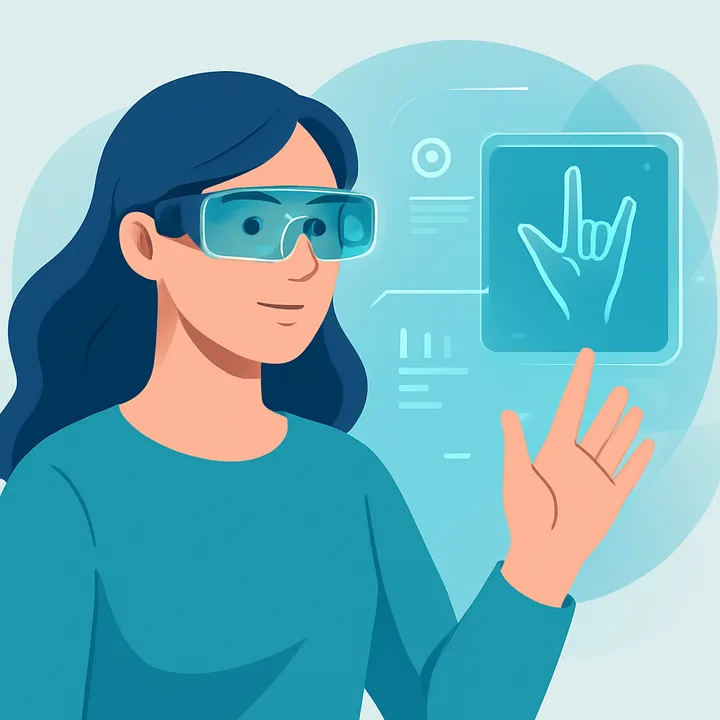
Imagine augmented reality glasses that display live translations as someone signs, or smart assistants that respond to signing as naturally as they respond to voice. Picture classrooms where every lecture is instantly accessible, and workplaces where signed and spoken languages flow together without friction. These are not distant fantasies; the foundational technology already exists and is improving year over year.
The most important measure of success will not be technical benchmarks but human impact: more conversations, more inclusion, and more dignity for people who use sign language every day. Artificial intelligence, thoughtfully built and responsibly deployed, can help deliver exactly that.
Conclusion
Artificial intelligence is unlocking a new era of communication for the Deaf and hard-of-hearing community. By combining computer vision, sequence modeling, and language understanding, AI can recognize and translate American Sign Language with growing accuracy and speed. The technology is not flawless, and it works best alongside human expertise and diverse, ethically gathered data, but its trajectory is genuinely hopeful. As tools become faster, more inclusive, and easier to use, AI-powered ASL will move from research labs into everyday life. To explore how thoughtful AI can serve real people, visit ZoneTechify and WebPeak and start building a more accessible future.