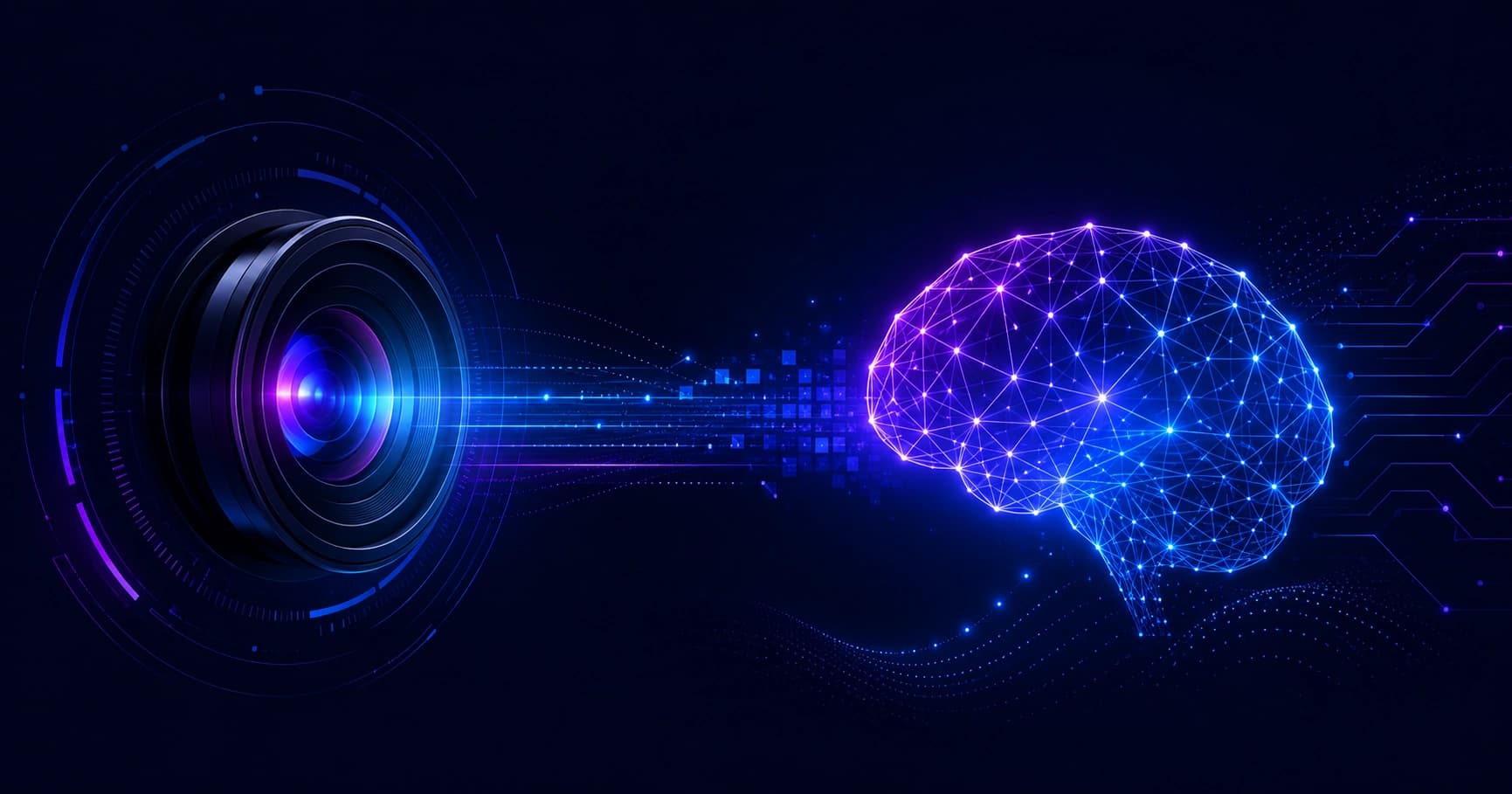
Discover how optical artificial intelligence uses light instead of electricity to power faster, cooler, and more energy-efficient AI computing.
Optical Artificial Intelligence
Artificial intelligence has grown faster than almost any technology in modern history, but the hardware running it is hitting hard physical limits. Traditional electronic chips struggle with heat, power consumption, and data bottlenecks as models grow larger. This is where a quiet revolution is taking shape: optical artificial intelligence, a new approach that uses light instead of electricity to perform computations. By replacing electrons with photons, optical AI promises dramatic gains in speed and efficiency that could redefine how machines think.
At ZoneTechify and WebPeak, we follow these breakthroughs closely because they shape the future of intelligent software and the infrastructure behind it. In this guide, we break down what optical AI is, how it works, where it is used, and why it matters for the next decade of computing.
What Is Optical Artificial Intelligence?
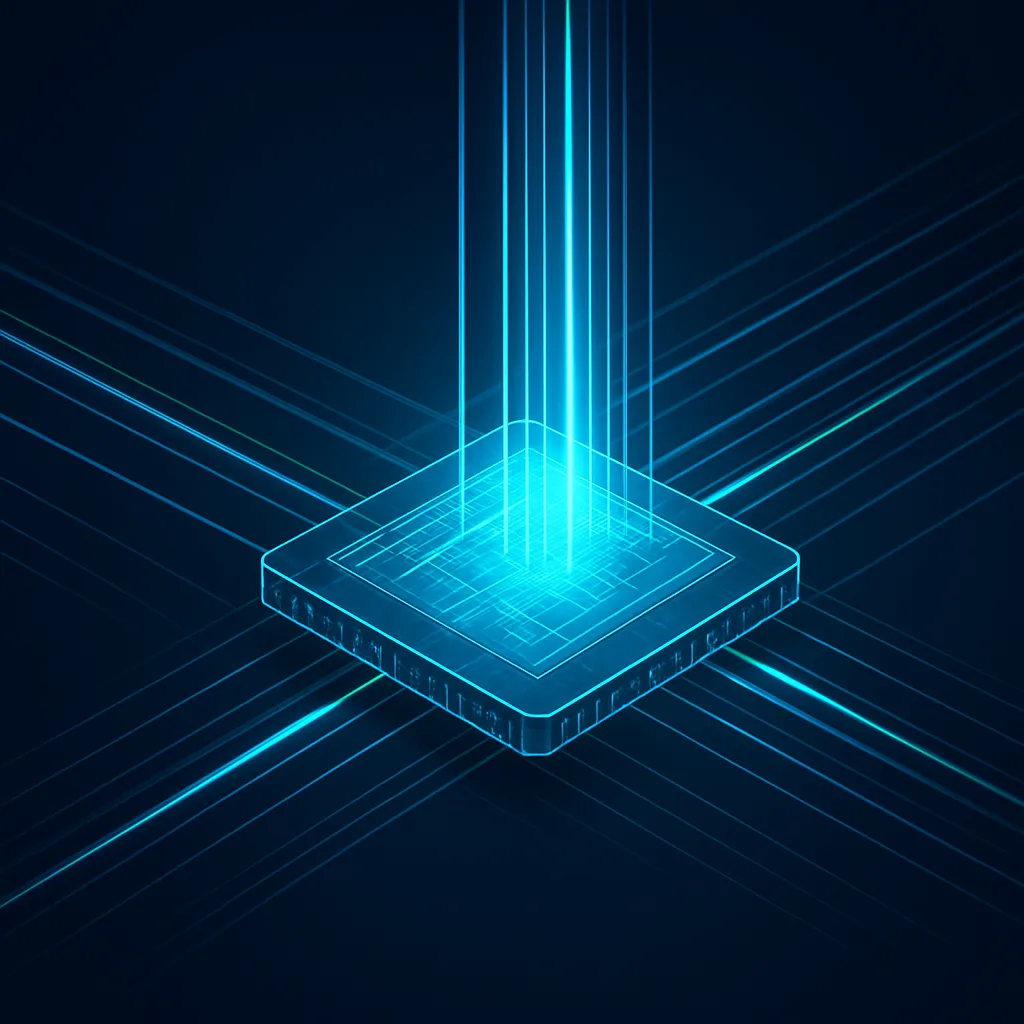
Optical artificial intelligence refers to AI systems that perform some or all of their calculations using light rather than electrical signals. Instead of pushing electrons through silicon transistors, optical computing manipulates beams of light through components like lasers, lenses, modulators, and waveguides.
The key insight is that many AI operations, especially the matrix multiplications at the heart of neural networks, can be expressed as physical interactions of light. When light passes through carefully designed optical structures, it naturally performs these mathematical operations at the speed of light, with almost no heat generated in the process.
This is not science fiction. Research labs and startups are already building photonic processors that can run real neural networks. The goal is not necessarily to replace electronic computers entirely, but to offload the heaviest, most repetitive AI workloads to light-based hardware that does them far more efficiently.
How Optical AI Actually Works
To understand optical AI, it helps to picture how a neural network computes. Every layer of a model multiplies input values by a set of weights, sums them, and passes the result forward. In electronic chips, this requires billions of tiny switches flipping on and off, consuming power and producing heat.
In optical systems, the same math happens differently. Input data is encoded into the intensity or phase of light beams. As that light passes through an array of optical components, the beams interfere, split, and combine in ways that physically carry out multiplication and addition. The output light is then measured by detectors and converted back into digital values.
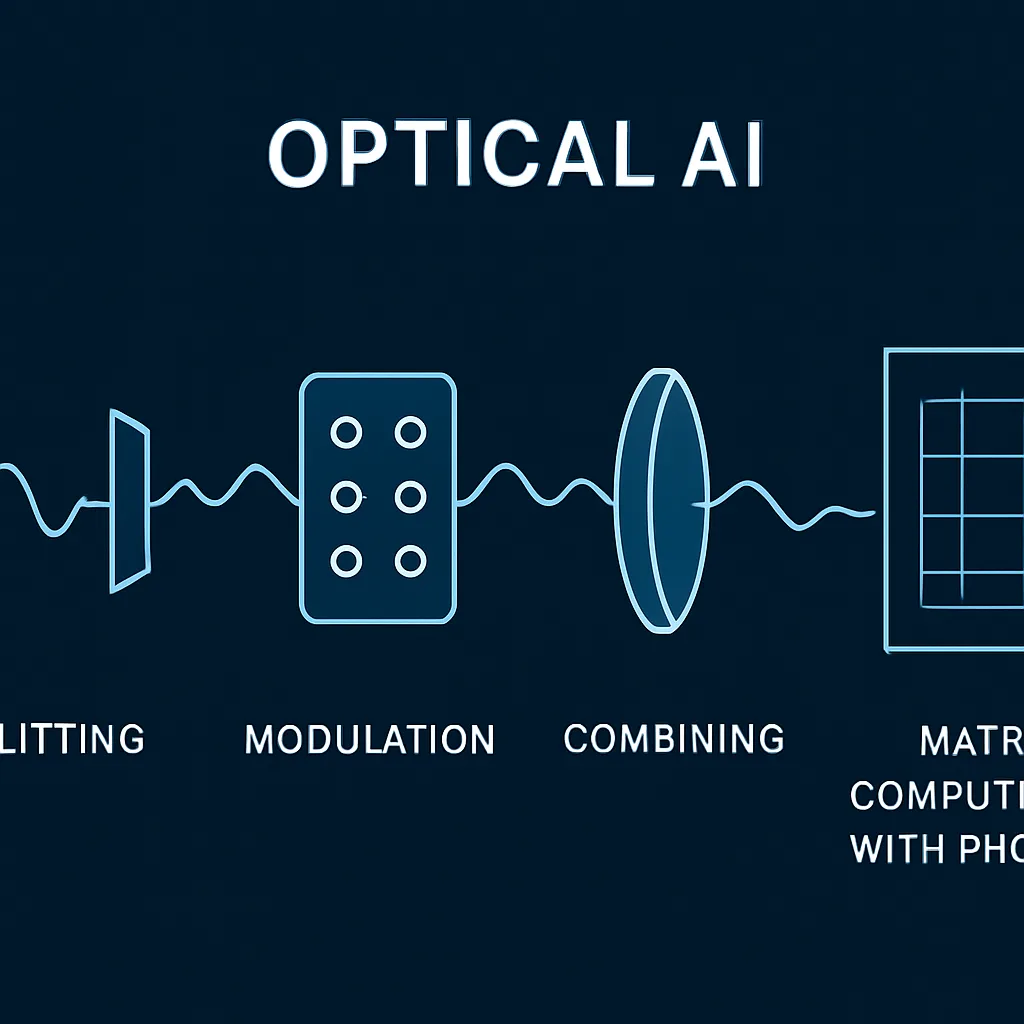
Because light can travel through these structures in parallel and at incredible speed, a single optical pass can replace what would take many electronic clock cycles. There is also no resistance heating the way there is when current flows through wires, which is a major reason optical systems can be so energy efficient.
The typical optical AI pipeline looks like this:
- Encoding digital data into optical signals using lasers and modulators.
- Processing that light through photonic circuits that perform matrix operations.
- Detecting the resulting light with photodetectors.
- Converting the signal back to digital form for the next stage.
Photonic Chips: The Hardware Behind Optical AI
The physical engine of optical AI is the photonic integrated circuit, often called a photonic chip. These chips look similar to traditional silicon chips but are engineered to guide light through microscopic channels called waveguides instead of routing electrical current.
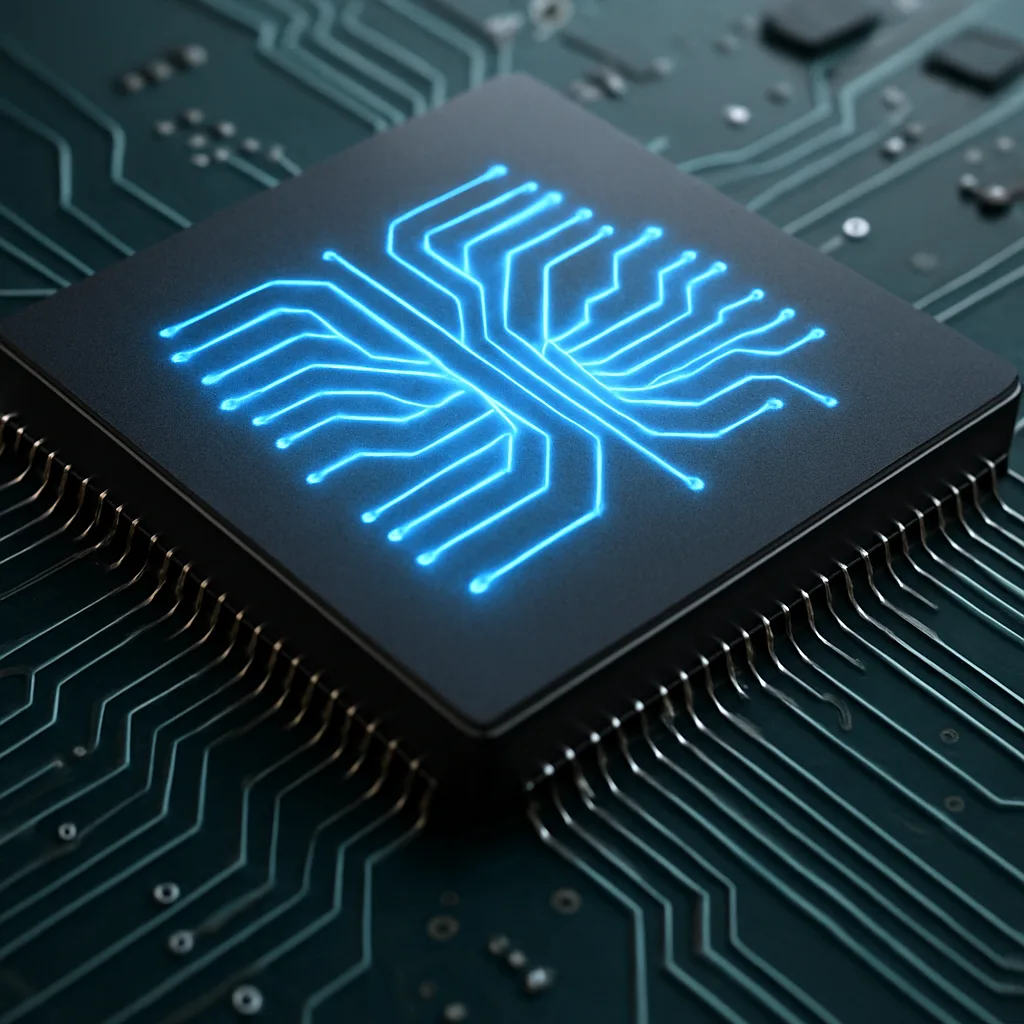
Photonic chips combine several specialized components. Lasers act as light sources, modulators encode information onto the beams, interferometers perform calculations through wave interference, and detectors read the final output. Many of these chips are built using the same manufacturing processes as conventional semiconductors, which makes them easier to scale and commercialize.
What makes photonic hardware compelling is bandwidth. A single optical channel can carry many wavelengths of light at once, a technique called wavelength multiplexing. This means one physical path can process multiple data streams simultaneously, multiplying throughput without adding more wires or transistors. For AI workloads that move enormous amounts of data, this parallelism is transformative.
Real-World Applications of Optical AI
Optical AI is moving from the lab into practical use across several industries. Its strengths in speed and efficiency make it especially attractive wherever large volumes of data must be processed quickly.

Data centers are a prime target. As AI models balloon in size, the energy bills and cooling demands of training and serving them have become unsustainable. Optical accelerators can handle inference and certain training tasks while drawing a fraction of the power, easing both cost and environmental pressure.
Telecommunications networks already rely on light through fiber optics, so adding optical AI for routing, signal processing, and traffic prediction is a natural fit. Autonomous vehicles benefit from optical sensors and processors that can interpret lidar and camera data with ultra-low latency, which is critical for safety. In healthcare, optical computing speeds up medical imaging analysis and complex pattern recognition.
Businesses building intelligent products can tap into these advances through specialized artificial intelligence services that help integrate cutting-edge AI capabilities into real applications, whether the underlying hardware is electronic or photonic.
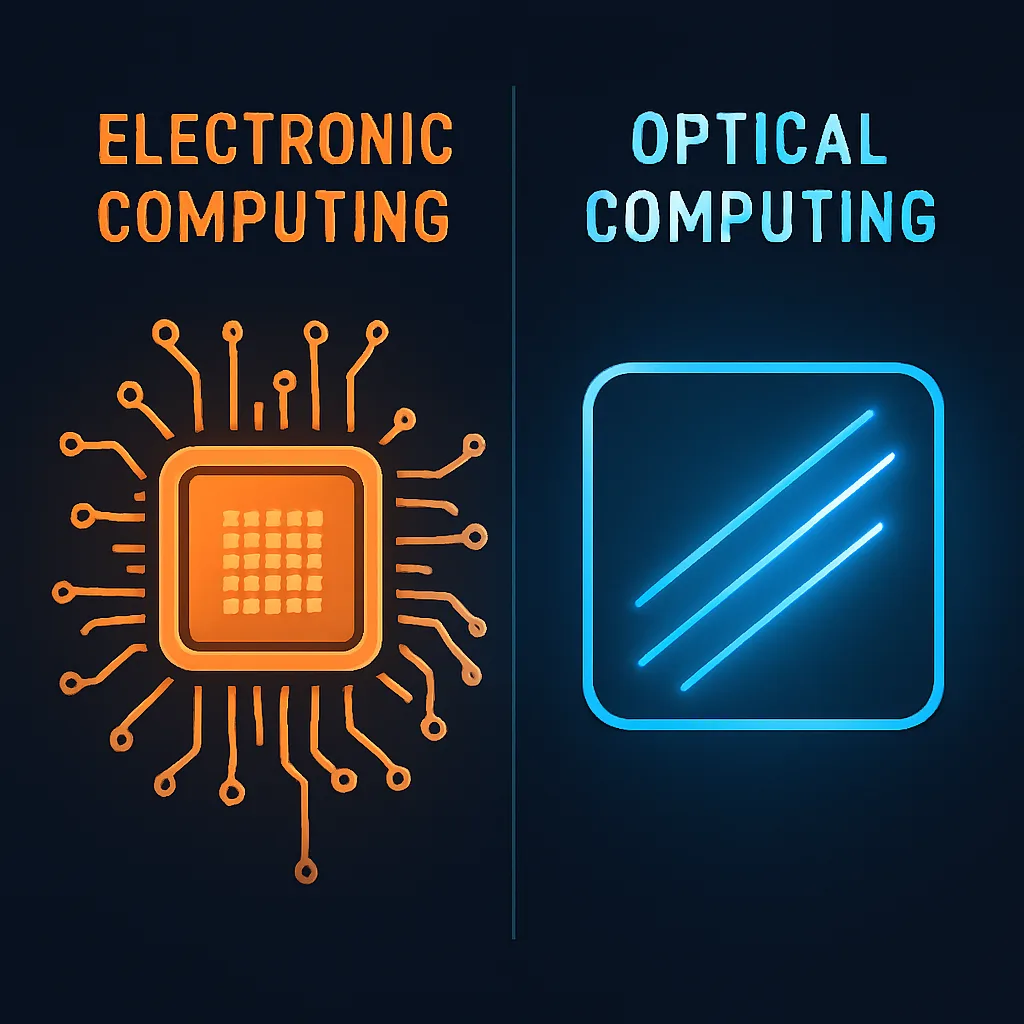
Optical AI vs Electronic Computing
It is important to understand how optical computing compares to the electronic systems we use today. Each has clear strengths, and the future likely belongs to hybrid systems that combine both.
| Factor | Optical AI | Electronic Computing |
|---|---|---|
| Speed | Operates at the speed of light | Limited by clock cycles |
| Energy use | Very low, minimal heat | High, significant heat |
| Parallelism | Massive via wavelengths | Limited by core count |
| Maturity | Emerging, early stage | Mature, decades proven |
| Flexibility | Best for fixed math operations | Highly general purpose |
| Cost today | High, specialized | Low, mass produced |
Electronic chips remain unbeatable for general-purpose logic, branching, and the flexible control that software requires. Optical systems shine at the repetitive, high-volume linear algebra that dominates neural networks. The smartest architectures use light for the heavy number crunching and electronics for control and decision-making.
The Key Benefits of Optical AI
The excitement around optical AI comes down to a few powerful advantages that address the biggest pain points in modern computing.
Speed. Light travels faster than any electrical signal, and optical operations happen almost instantly. For latency-sensitive tasks, this is a game changer.
Energy efficiency. Because photons do not generate resistive heat the way electrons do, optical processors can perform calculations using dramatically less power. As AI energy consumption becomes a global concern, this benefit alone could justify the entire field.
Bandwidth. Wavelength multiplexing lets optical systems move and process huge amounts of data in parallel, far beyond what packed electronic wiring can achieve.
Scalability. As models keep growing, optical hardware offers a path to scale performance without proportionally scaling power and cooling costs. This makes large-scale AI more sustainable and accessible.
These benefits matter not just to researchers but to any organization that depends on AI. Companies that build modern, data-driven platforms with help from teams offering artificial intelligence solutions will be well positioned to adopt optical acceleration as it matures.
Challenges Still to Overcome
Optical AI is promising, but it is not without obstacles. Manufacturing photonic chips with consistent precision is difficult, and integrating them with existing electronic systems adds complexity. Converting signals between optical and electronic forms introduces overhead that can erode some of the speed gains if not carefully managed.
There is also a software gap. Decades of tools, frameworks, and developer experience are built around electronic hardware. Optical computing needs its own ecosystem of compilers, libraries, and design tools before it can be adopted widely. Accuracy and noise are additional concerns, since analog optical computations can be sensitive to small physical variations.
None of these challenges are fundamental dead ends. They are engineering problems, and history shows that focused investment tends to solve such problems over time, just as it did for early electronic computers.
The Future of Optical Artificial Intelligence
The trajectory of optical AI points toward a hybrid future. Rather than replacing electronics overnight, photonic accelerators will increasingly sit alongside conventional processors, handling the workloads they do best. Cloud providers and data centers are likely to be the first large-scale adopters, driven by the urgent need to cut energy use and boost throughput.

Over the coming years, expect to see more startups and established chipmakers releasing commercial photonic AI products, better software tools that make these systems easier to program, and tighter integration between light-based and electronic components. As the technology matures, optical AI could become a standard part of the computing stack, much like graphics processors became essential for deep learning.
For businesses, the message is clear: the AI hardware landscape is evolving fast, and efficiency will be the defining competitive advantage. Staying informed about innovations like optical computing helps organizations make smarter long-term technology decisions.
Conclusion
Optical artificial intelligence represents one of the most exciting frontiers in computing. By harnessing light to perform calculations, it offers a path to faster, cooler, and far more energy-efficient AI at a moment when the industry desperately needs it. While challenges in manufacturing, integration, and software remain, the fundamental advantages of speed, bandwidth, and efficiency make optical AI a technology worth watching closely.
Whether you are a developer, a business leader, or simply curious about the future, understanding optical AI gives you a glimpse of how the next generation of intelligent machines will be built. To explore more insights and AI-driven solutions, visit ZoneTechify and WebPeak, where we help turn emerging technology into real-world results.