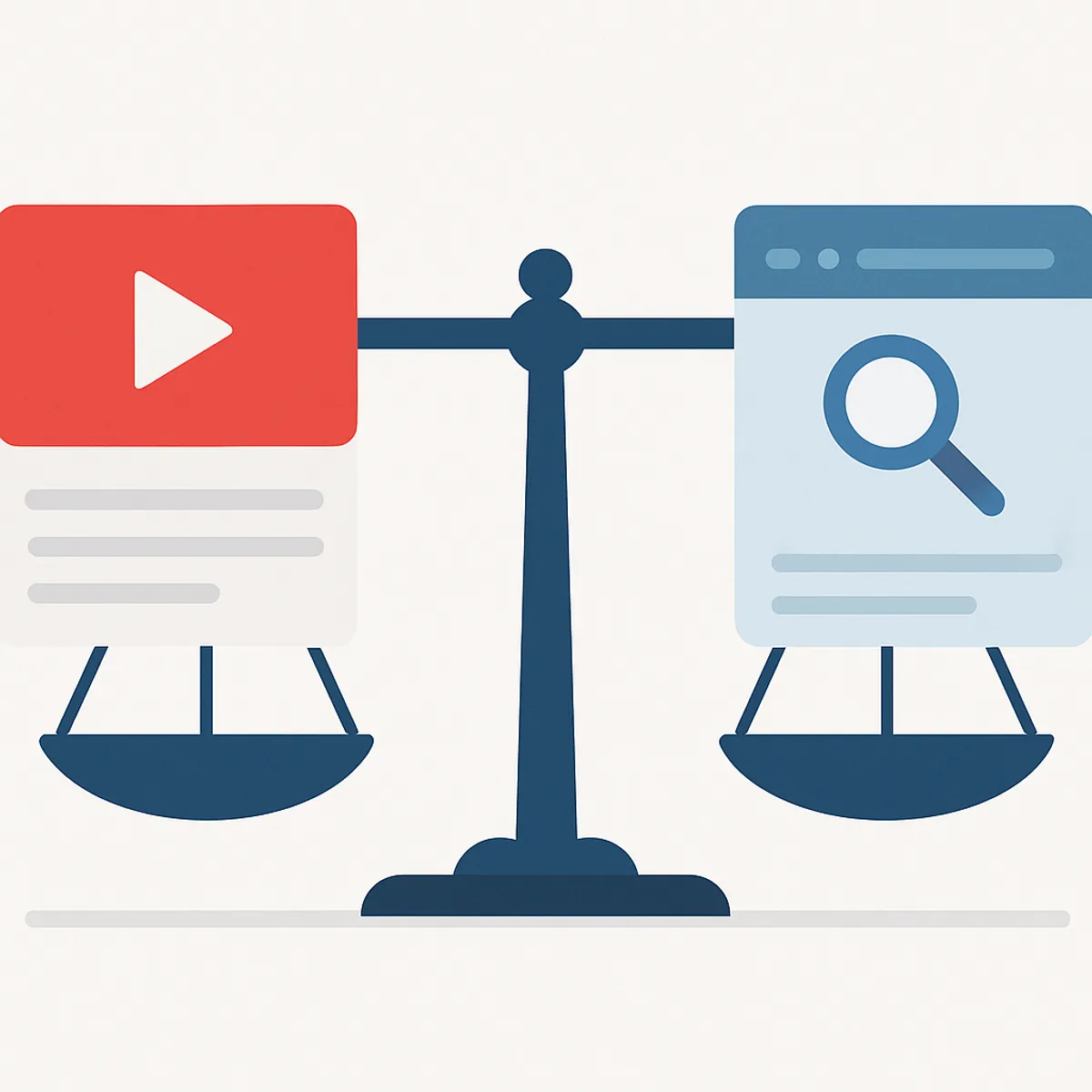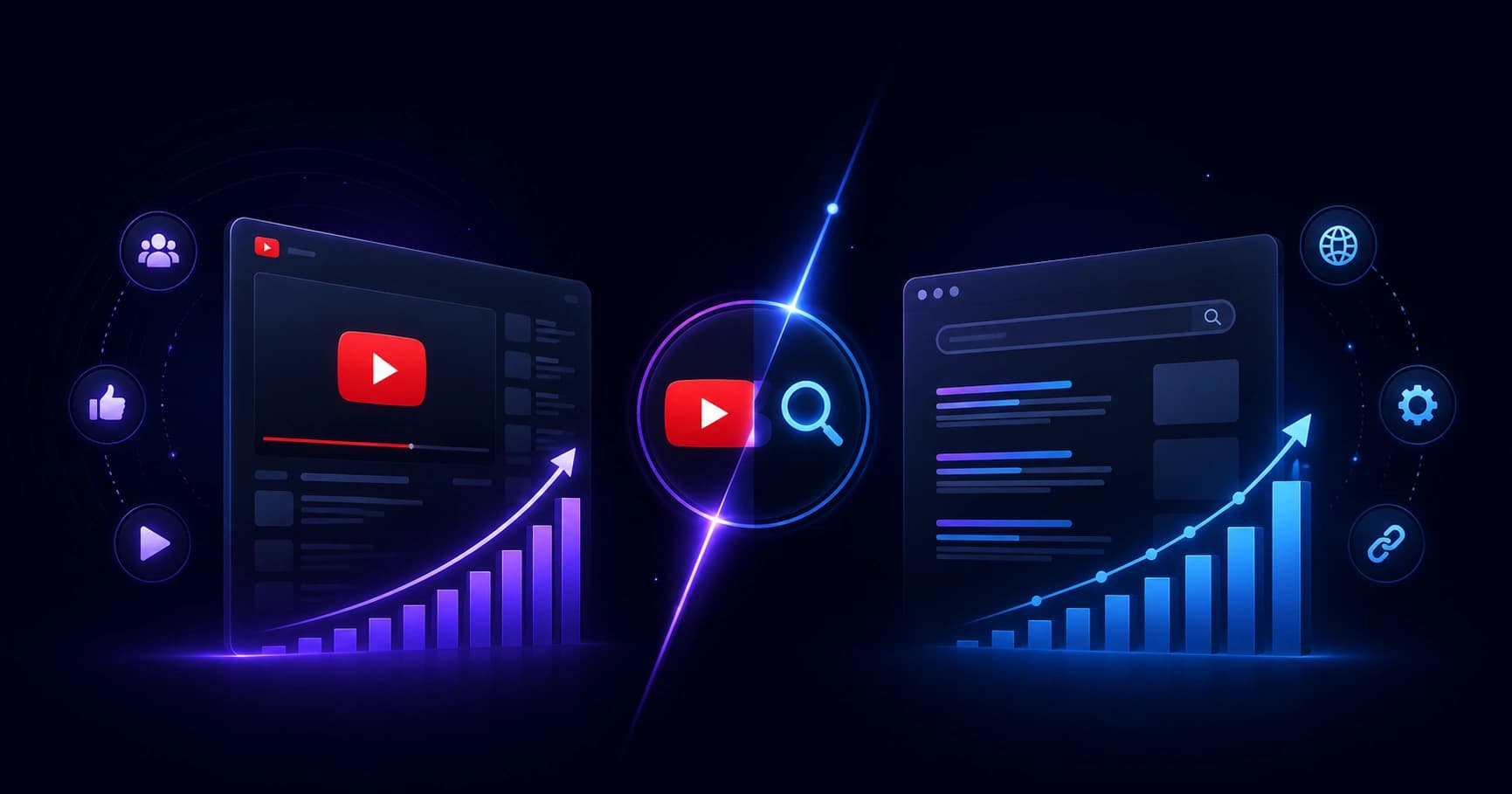
A practical breakdown of YouTube SEO vs traditional SEO, how each drives visibility, and which approach fuels real channel and website growth.
YouTube SEO vs Traditional SEO Channel Growth Visibility
Search is no longer a single battlefield. People look for answers on Google, but they also type questions directly into YouTube, treating it as the world's second-largest search engine. That split has created two distinct disciplines: YouTube SEO and traditional SEO. Both aim to win visibility, yet they reward very different signals. Understanding the gap between them is the difference between a channel that quietly stalls and one that compounds in reach month after month.
In this guide we break down how each system works, what actually moves the needle for growth, and how to combine both for maximum visibility. Whether you run a brand channel, a personal blog, or a full content operation through ZoneTechify, the strategy you choose should match how your audience really searches.

What YouTube SEO Really Means
YouTube SEO is the practice of optimizing your videos and channel so they surface in YouTube search, suggested videos, the home feed, and even Google's video carousels. Unlike a web page that mostly competes on text, a video competes on a blend of metadata and behavior. YouTube reads your title, description, tags, captions, and thumbnail, then watches how real viewers respond.
The platform's recommendation engine is its core. It tracks click-through rate, watch time, average view duration, and session length. A video that keeps people on the platform longer is rewarded with more impressions. This is a crucial distinction: on YouTube, engagement is ranking fuel, not just a vanity metric. You can have a perfectly keyword-optimized title and still sink if viewers click away in the first thirty seconds.
That behavioral layer makes YouTube SEO feel more like audience psychology than technical optimization. You are not just answering a query; you are holding attention.
How Traditional SEO Works
Traditional SEO targets text-based search results on Google, Bing, and similar engines. It rests on three pillars: technical health, on-page relevance, and off-page authority. Search crawlers index your pages, evaluate how well your content matches a query, and weigh signals like backlinks, site speed, mobile usability, and structured data.

The payoff of traditional SEO is durability. A well-ranked article can deliver steady organic traffic for years with minimal upkeep. Authority compounds slowly through quality backlinks and consistent publishing, but once earned, it is hard for competitors to dislodge. This is why content-driven brands invest heavily in evergreen pages, internal linking, and topical clusters.
Traditional SEO is patient by nature. Rankings rarely spike overnight; they climb as trust accumulates. If you want a deeper, ongoing strategy for organic visibility, a specialized digital marketing approach can connect content, links, and analytics into one engine.
The Core Differences at a Glance
Both disciplines chase visibility, but the levers differ sharply. The table below summarizes the most important contrasts.
| Factor | YouTube SEO | Traditional SEO |
|---|---|---|
| Primary signal | Watch time and engagement | Backlinks and content relevance |
| Content format | Video plus metadata | Text, images, structured data |
| Speed of results | Can spike quickly | Builds gradually |
| Lifespan | Strong early, then tapers | Long, compounding |
| Discovery | Suggested feed and search | Search results pages |
| Key metric | Average view duration | Organic ranking position |
The headline takeaway: YouTube favors momentum and audience retention, while Google favors authority and relevance over time.

Visibility: Two Very Different Funnels
Visibility on YouTube is largely algorithmic and social. When a video performs well with its first audience, YouTube pushes it to similar viewers through suggestions and the home feed. This means a single strong video can reach far beyond your subscriber base almost immediately. The flip side is volatility: if engagement drops, distribution cools just as fast.
Visibility in traditional search is intent-driven and stable. Someone types a specific query, and your page either matches it or it does not. There is no viral feed lifting you to new audiences, but there is also far less decay. A page ranking for a high-intent keyword keeps capturing qualified traffic day after day.
This difference shapes strategy. YouTube rewards consistent output that feeds the algorithm fresh signals. Traditional SEO rewards depth, structure, and authority that accumulate quietly in the background.
Channel Growth: Speed vs Sustainability
For creators focused on channel growth, the contrast becomes practical. YouTube SEO can accelerate subscriber gains because the platform actively promotes content it believes will retain viewers. A breakout video can add thousands of subscribers in days. But growth tied to the feed is sensitive to consistency, trends, and viewer fatigue.

Traditional SEO grows an audience more slowly, but the foundation is sturdier. A blog that ranks for dozens of relevant keywords builds an email list, repeat visitors, and brand searches that no algorithm can take away overnight. The smartest brands treat these as complementary: video captures attention and emotion, while written content captures intent and converts it.
The practical lesson is to avoid betting everything on one channel. Diversified visibility protects you from any single algorithm change.
Keyword Strategy Across Both Worlds
Keyword research underpins both disciplines, but the language differs. YouTube searches lean conversational and how-to driven, often phrased as spoken questions. Viewers want demonstrations, reviews, and walkthroughs. Your titles should mirror that natural phrasing while front-loading the main keyword.
Traditional SEO keywords skew toward precise, intent-rich phrases. A query like "best budget laptop 2026" signals a buyer ready to compare options, so your page must satisfy that intent thoroughly with specs, comparisons, and clear recommendations.
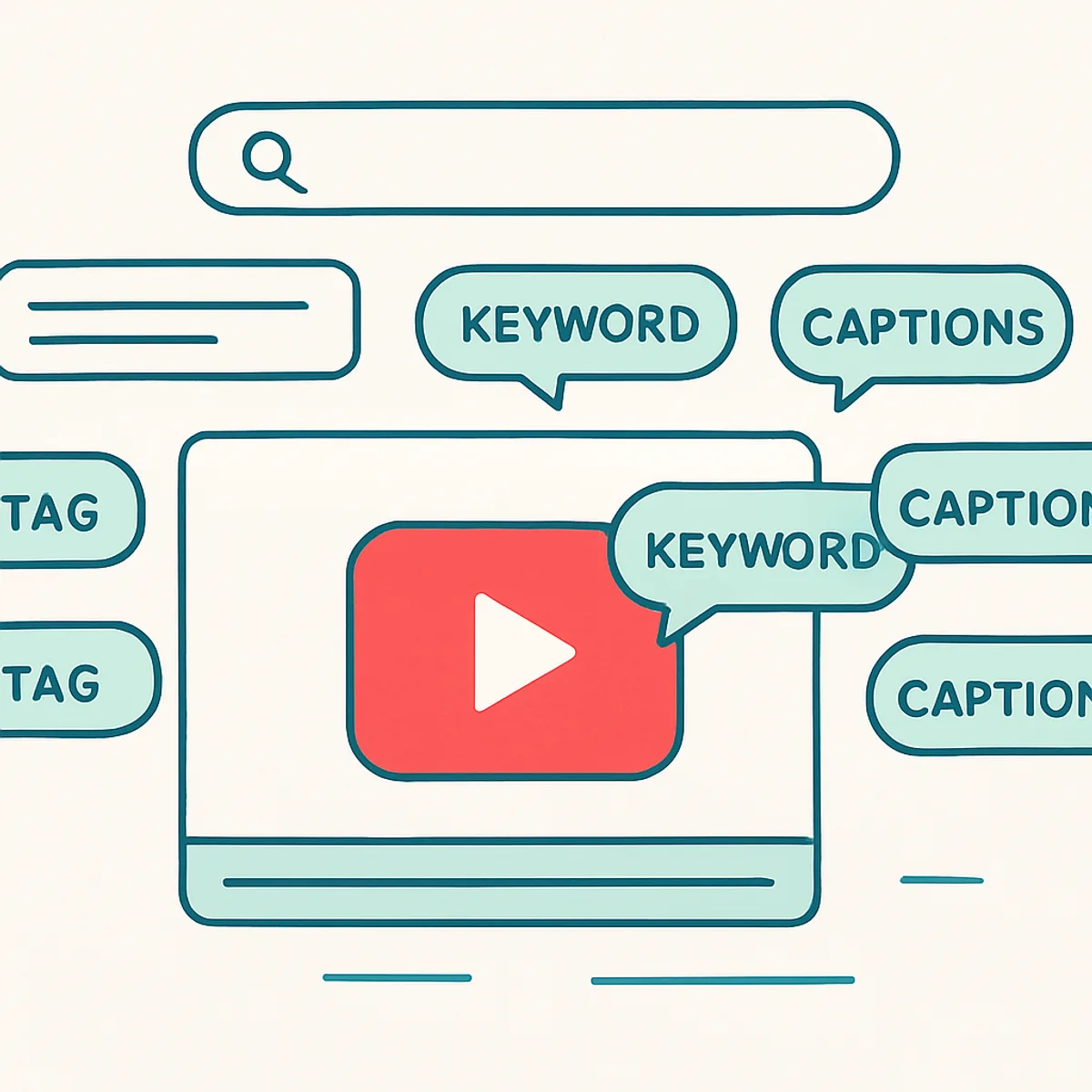
A unified approach works best. Use the same topic across both formats: publish a detailed article and a companion video, then link them. The video earns engagement on YouTube, the article earns authority on Google, and each reinforces the other. Captions and transcripts also let search engines read your video content, giving it a foothold in text search too.
On-Page and On-Video Optimization
For YouTube, prioritize the elements viewers see before they click. The thumbnail and the first few words of the title decide your click-through rate, which then decides distribution. Write descriptions that summarize the value, include relevant keywords naturally, and add timestamps to improve retention. Pinned comments and end screens keep sessions going.
For web pages, prioritize structure. Use clear H1, H2, and H3 headings, descriptive meta titles, and internal links to related content. Optimize images, compress files, and ensure mobile responsiveness. Schema markup helps search engines understand your content and can earn rich results that boost visibility. Brands that handle this well, like the team behind WebPeak, treat technical hygiene as the baseline rather than an afterthought.
Measuring What Matters
The metrics you watch should match the platform. On YouTube, average view duration and click-through rate tell you whether your content earns distribution. Subscriber conversion rate shows whether viewers value your channel enough to return. Impressions reveal how aggressively the algorithm is promoting you.
In traditional SEO, organic ranking position, click-through rate from search, and time on page matter most. Backlink growth and domain authority indicate long-term trajectory, while conversions tie traffic to business results. The danger is judging one system by the other's yardstick. A video with modest total views but high retention may be outperforming a high-traffic page that fails to convert.
Clear, platform-specific reporting prevents you from optimizing for the wrong outcome.
When to Prioritize Each Approach
Choose YouTube SEO when your topic is visual, demonstrable, or personality-driven. Tutorials, product reviews, unboxings, and storytelling thrive on video. If your audience prefers watching over reading, meet them there.
Lean into traditional SEO when intent is high and answers are detailed. Comparison guides, documentation, in-depth research, and local service pages convert best as text. If your goal is qualified leads who are actively searching to solve a problem, written content captures them efficiently.
Most growing brands need both. The combined strategy creates a loop: a video introduces your brand to a broad feed audience, and a search-optimized article captures the ones who later look you up by name.
Building a Combined Visibility Engine
The strongest results come from integration, not isolation. Start with one core topic, then produce a flagship article and a companion video. Embed the video in the article to boost dwell time, and link the article in the video description to send engaged viewers to deeper content. Repurpose long videos into short clips for additional discovery, and turn article sections into video chapters.

Looking ahead, the line between the two continues to blur. Google increasingly surfaces video in standard results, and AI-driven search is rewarding genuinely helpful, original content across every format. The brands that win will be those that produce trustworthy answers wherever their audience searches, then connect those assets into one coherent presence.
Final Thoughts
YouTube SEO and traditional SEO are not rivals to choose between; they are two engines pointed at the same goal of visibility. YouTube rewards momentum, retention, and emotional connection, delivering fast reach through its recommendation feed. Traditional SEO rewards authority, structure, and relevance, delivering durable traffic that compounds for years.
The creators and businesses that grow fastest stop treating them as separate projects. They map a single message across both platforms, measure each with the right metrics, and let video and text reinforce one another. Match your format to how your audience searches, stay consistent, and visibility on both fronts becomes a matter of when, not if.