
A practical guide to evaluating Java development companies, including engagement models, cost benchmarks, technical vetting criteria, and red flags to avoid before signing a contract.
Java Development Companies
Choosing among Java development companies is one of the highest-stakes technical decisions a business makes, because Java projects are rarely short-lived. A Spring Boot platform built today will likely still be running in seven years, maintained by engineers who were not in the room when the first commit was made. That longevity is exactly why Java remains dominant in banking, insurance, logistics, telecom, and healthcare, and why picking the wrong vendor is so expensive to unwind.
This guide is written from the perspective of teams who have inherited, rescued, and rebuilt Java codebases. It covers how these firms actually differ, what to ask during technical vetting, realistic cost benchmarks, and the specific warning signs that predict a failed engagement.

Quick Answer: Java development companies are software firms specializing in building, modernizing, and maintaining applications on the Java platform, typically using Spring Boot, Jakarta EE, and cloud infrastructure. The best ones prove senior engineering depth, show real architecture decisions, own testing and CI/CD, and offer transparent long-term maintenance terms.
What Exactly Is a Java Development Company?
A Java development company is a software services firm whose core delivery capability is the Java Virtual Machine ecosystem, meaning Java itself plus JVM languages like Kotlin and Scala, applied to backend services, APIs, data pipelines, and enterprise integrations.
The distinction matters. Many general-purpose agencies list Java on a services page but staff projects with generalists who last touched it in a university course. A genuine Java firm has opinions about connection pool sizing, garbage collector selection, transaction boundaries, and how to avoid the N+1 query problem in Hibernate. Those opinions only come from production scar tissue.
Why Businesses Still Build on Java in 2026
Java's staying power is measurable, not sentimental. According to the 2024 Stack Overflow Developer Survey, roughly 30% of professional developers report working with Java, keeping it among the most widely used languages worldwide, which directly translates into a deep, replaceable hiring pool. Oracle's own developer research has repeatedly found that the majority of Java applications in enterprises are backend and business-critical systems rather than experimental projects.
For a CTO, that means three concrete advantages: you can hire replacements, the security patching ecosystem is mature, and the JVM's performance profile is well understood under load.

The Four Types of Java Development Companies
Not all Java vendors solve the same problem. Matching the type to your situation prevents most mismatches.
- Boutique specialists (5 to 30 engineers). Deep senior talent, direct access to the people writing code, strong for greenfield product builds and complex architecture work. Limited capacity for parallel workstreams.
- Mid-size product agencies (30 to 200 engineers). Balanced: they can staff a full squad with a tech lead, QA, and DevOps. Best fit for most funded startups and mid-market modernization projects.
- Large offshore delivery firms (500 or more engineers). Cost-efficient at volume, strong process maturity, but quality varies sharply by team. Insist on interviewing the actual assigned engineers, not the pre-sales architect.
- Staff augmentation providers. They supply Java developers into your existing team and process. Cheapest per head, but you own architecture, code review, and delivery risk.

Engagement Model Comparison
| Model | Best For | Typical Cost | You Own Architecture? | Delivery Risk |
|---|---|---|---|---|
| Boutique specialist | Complex greenfield builds | High | No | Low |
| Mid-size agency squad | Modernization, product scale-up | Medium-High | Shared | Low-Medium |
| Large offshore firm | Long-running maintenance at volume | Low-Medium | Shared | Medium |
| Staff augmentation | Filling a known skill gap | Low | Yes | High |
| In-house hire | Permanent core product team | Highest upfront | Yes | Low long-term |
How to Technically Vet Java Development Companies
The single most useful vetting technique is to stop asking what they have built and start asking why they built it that way. Vendors rehearse portfolio answers; they cannot rehearse architectural reasoning.
Nine Questions That Separate Real Engineers From Sales Decks
- Which Java version do you default to for new projects, and why? A confident answer names a current Long-Term Support release and explains the upgrade path. Vagueness here signals legacy-only experience.
- Show me how you handle database transactions across service boundaries. Look for discussion of sagas, idempotency, and eventual consistency, not just transactional annotations sprinkled everywhere.
- What is your test coverage policy, and what do you deliberately not test? Mature teams have a philosophy. Immature teams quote a percentage.
- Walk me through your CI/CD pipeline for a Java service. Expect Maven or Gradle builds, containerization, automated static analysis, and staged deployments.
- How do you diagnose a memory leak in production? Heap dumps, profiling tools, and GC log analysis should come up naturally.
- Who reviews the code, and what happens when reviewers disagree? This reveals whether real engineering culture exists.
- How do you handle dependency vulnerabilities? Java's dependency trees are deep, and Log4Shell taught the industry that transitive dependencies are a security surface.
- What documentation will I own at handover? Architecture decision records and runbooks are the difference between an asset and a hostage situation.
- Which engineers will actually be assigned, and can I interview them? Refusal is a decisive red flag.

The Technical Stack You Should Expect to Hear
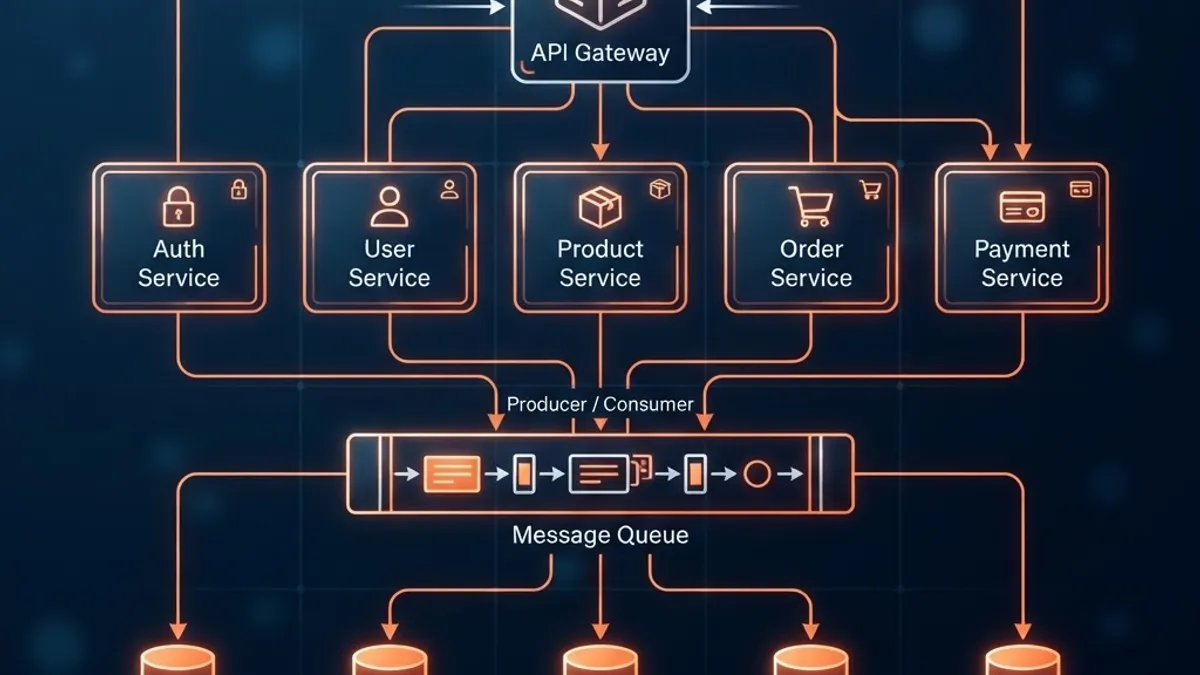
A current Java delivery team should be fluent across a recognizable modern stack: Spring Boot for services, Hibernate or JPA with query tuning awareness, PostgreSQL or Oracle, Kafka or RabbitMQ for messaging, Docker and Kubernetes for runtime, JUnit 5 and Testcontainers for testing, and observability through OpenTelemetry-compatible tooling.
If a vendor pitches only Java EE application servers with no cloud-native story, they are likely a maintenance shop rather than a build partner. That is fine if maintenance is what you need. Teams that combine backend depth with modern delivery practice often overlap with broader web development capability, which matters when your Java backend must serve a fast, accessible frontend.
What Java Development Actually Costs
Rates vary primarily by geography and seniority, not by technology. Based on published industry rate surveys and typical outsourcing benchmarks, a realistic 2026 planning range for senior Java engineers is:
- North America and Western Europe agencies: roughly 100 to 200 USD per hour
- Eastern Europe: roughly 45 to 85 USD per hour
- Latin America: roughly 40 to 75 USD per hour
- South and Southeast Asia: roughly 25 to 55 USD per hour
The more useful number is total cost of ownership. A cheap build that ships without tests, migrations, or documentation typically costs more within two years, because every future change requires archaeology first. In practice, rescue engagements on undocumented Java codebases routinely consume 30% to 50% of the original build budget before a single new feature ships.
Fixed Price Versus Time and Materials
Fixed price works when scope is genuinely frozen: a well-specified integration, a defined migration, a compliance report. Time and materials works when discovery is ongoing, which describes most product development. Vendors who insist on fixed price for exploratory work usually protect themselves through change orders, and you pay anyway with added friction.

Red Flags That Predict a Failed Engagement
Every difficult Java project shares a subset of these early signals:
- No named technical lead. Accountability diffuses instantly without one.
- Estimates without questions. Anyone who quotes a large Java build after one call is guessing.
- A portfolio of screenshots but no code discussion. Ask about a hard bug they fixed. Silence is informative.
- Repository access withheld during the project. You should see commits as they happen, in a repo you own.
- Testing described as a final phase. In Java projects, tests written after the fact rarely get written at all.
- Reluctance to discuss the handover plan. A partner confident in their work is comfortable explaining how you would leave.

A Practical Selection Process That Works
This five-step process consistently surfaces the right partner without dragging on for months.
- Write a one-page problem brief, not a specification. Describe the business outcome, constraints, integrations, and expected load. Let vendors propose the architecture, because their proposal is the real interview.
- Shortlist three firms of the same type. Comparing a boutique against a 2,000-person offshore vendor produces noise, not insight.
- Run a paid discovery sprint with your top two. One or two weeks of real work reveals more than any reference call. You end up owning an architecture document either way.
- Verify references on maintenance, not delivery. Ask past clients what happened in month twelve, when the original team had rotated.
- Negotiate exit terms before signing. Repository ownership, credential transfer, documentation deliverables, and a defined transition period should be contractual.
Teams evaluating both engineering capability and search visibility for the resulting application will find useful groundwork on technical performance and discoverability at WebPeak, while broader delivery capability across engineering and digital execution is covered at ZoneTechify.

Key Takeaways
- Java remains among the most used professional languages, reported by roughly 30% of developers in the 2024 Stack Overflow survey, which guarantees a replaceable hiring pool for long-lived systems.
- Java development companies fall into four distinct types, boutique, mid-size agency, large offshore, and staff augmentation, and each carries a different distribution of delivery risk.
- Senior Java rates in 2026 span roughly 25 USD per hour offshore to 200 USD per hour onshore, and total cost of ownership matters more than rate.
- Architectural reasoning is the strongest vetting signal. Ask why, not what.
- Contractual exit terms, repository ownership, and documentation deliverables should be settled before the first sprint, not after a dispute.
Frequently Asked Questions (FAQ)
How do I know if a Java development company is actually experienced?
Ask them to explain a specific architectural decision from a past project and its trade-offs. Experienced teams discuss transaction boundaries, caching strategy, and failure handling naturally. Sales-led firms redirect to portfolio screenshots. Also request to interview the exact engineers who will be assigned to your project.
Is Java still a good choice for new projects?
Yes, particularly for backend systems that need long-term stability, high throughput, strong typing, and a large hiring pool. Java is the pragmatic choice for financial services, logistics, healthcare, and enterprise integrations. For lightweight prototypes or content-driven sites, a lighter stack often ships faster.
How much should I budget for a Java application?
Budget by team composition and duration rather than feature count. A senior squad of four engineers plus a lead typically costs between 25,000 and 90,000 USD monthly depending on region. Most meaningful enterprise Java builds need at least four to six months before production readiness.
Should I hire offshore or a local Java company?
Offshore teams offer significant cost advantages and strong talent, especially in Eastern Europe and Latin America. Local firms reduce timezone friction and simplify contracts. The deciding factor is your internal capacity to manage delivery, because weaker internal oversight favors a local, fully accountable partner.
What should be included in the final handover?
Insist on repository ownership, architecture decision records, environment setup instructions, deployment runbooks, credential transfer, a test suite that runs on a clean machine, and a defined support window. Without these, you own code you cannot safely modify or operate.
How long does it take to onboard a Java development company?
Expect two to four weeks before meaningful output. The first week covers environment access, domain context, and codebase orientation. Productive delivery usually begins in week three. Vendors promising immediate full velocity are either overselling or skipping the discovery that prevents rework later.