A practical guide to finding a front end developer certificate near you, comparing local colleges, bootcamps, and online programs, plus what employers actually verify before hiring.
Front End Developer Certificate Near Me
Searching for a "front end developer certificate near me" usually means one of two things: you want a credential you can finish quickly, or you want structured, in-person accountability instead of another unfinished online course. Both are valid. What most search results fail to tell you is that the certificate itself is rarely what gets you hired — the projects you build while earning it are. This guide explains how to evaluate local options honestly, what they cost, what employers verify, and how to turn a certificate into a first paid role.
Quick Answer: The best front end developer certificate near you is usually a community college web development certificate, a local coding bootcamp, or an accredited continuing-education program at a nearby university. Search your city plus "web development certificate," verify accreditation and job outcomes, and prioritize programs that require a portfolio of real projects.

How to Actually Find a Front End Certificate in Your Area
Start with institution types rather than course names, because local programs are named inconsistently — "Web Design Certificate," "Front End Web Development," "Full Stack Certificate," and "Interactive Media" can all cover the same HTML, CSS, and JavaScript core.
Search these five sources in order:
- Community colleges — Search "[your city] community college web development certificate." These are the cheapest accredited option and often run evening classes.
- University continuing education departments — Look for "extension" or "professional studies" programs, which admit adults without a degree requirement.
- Local coding bootcamps — Search your metro area plus "coding bootcamp in person." Verify they publish a Council on Integrity in Results Reporting (CIRR) style outcomes report.
- Workforce development boards — Many U.S. counties fund tech training through WIOA grants, which can cover tuition entirely for eligible residents.
- Public library and nonprofit programs — Free or low-cost cohorts exist in most mid-size cities and are underused.
When you find a program, call the department directly and ask one question: "What does a graduate's final project look like?" If they can't send you three examples of student work, the credential is unlikely to help you.
Why In-Person Programs Still Work
Completion rate is the hidden variable. Self-paced online courses have notoriously low completion — research on massive open online courses has repeatedly found completion rates in the single digits, often cited around 3 to 6 percent. A scheduled local class with a physical room, a cohort, and a deadline changes your odds dramatically, not because the material is better but because you show up.

In our experience reviewing junior developer portfolios, the strongest candidates almost always came from programs with live code review. Being told in person that your CSS is unmaintainable is uncomfortable and enormously effective. A recorded video cannot do that.
What a Front End Developer Certificate Actually Is
Definition: A front end developer certificate is a non-degree credential awarded after completing a defined curriculum in client-side web development — typically HTML, CSS, JavaScript, responsive layout, version control, accessibility, and at least one framework such as React. It is not a professional license, and no government body regulates it.
That last sentence matters. Because the field is unregulated, the certificate's value comes entirely from three things: curriculum depth, the reputation of the issuing institution in your local hiring market, and the portfolio you leave with.
Local vs Online: An Honest Comparison

Most people don't need a purely local program — they need accountability plus local hiring connections. Here is how the main paths compare.
| Option | Typical Cost | Duration | Accredited | Local Hiring Network | Best For |
|---|---|---|---|---|---|
| Community college certificate | 1,500 - 6,000 USD | 2 - 4 semesters | Yes | Moderate | Budget-conscious career changers |
| In-person coding bootcamp | 9,000 - 20,000 USD | 12 - 24 weeks | Usually no | Strong | Fast full-time career switch |
| University extension program | 4,000 - 12,000 USD | 6 - 12 months | Yes | Moderate | Working professionals needing a recognized name |
| Online provider certificate | 0 - 600 USD | Self-paced | No | None | Self-motivated learners and skill top-ups |
| Employer apprenticeship | Paid to you | 6 - 24 months | No | Strongest | Anyone who can get accepted |
The pattern is clear: local programs buy you network and structure, online programs buy you flexibility and low cost. The highest-return strategy for most readers is a low-cost accredited local certificate combined with free online practice platforms.
What Local Certificates Really Cost

Tuition is only part of the number. Budget for these line items before enrolling:
- Tuition and fees — Ask for the per-credit-hour rate, not the advertised total.
- Hardware — A laptop capable of running a modern editor, browser dev tools, and Node.js. Refurbished business laptops are perfectly adequate.
- Lost income — The real cost of a full-time bootcamp is tuition plus the salary you forgo for three to six months.
- Domain and hosting — Roughly 15 to 60 USD per year to host your portfolio, which is non-negotiable.
Ask the financial aid office specifically about Pell Grant eligibility for certificate programs and about state workforce grants. Many applicants assume short certificates don't qualify for aid, and many do.
The Curriculum Checklist to Demand
Before paying anything, request the syllabus and check that it covers all eight items below. If three or more are missing, the program is outdated.
- Semantic HTML and document structure
- Modern CSS layout — Flexbox and Grid, not floats
- JavaScript fundamentals including asynchronous code and fetch
- Git and GitHub with real branching workflows
- Responsive and mobile-first design
- Web accessibility against WCAG guidelines
- One component framework, most commonly React
- Core Web Vitals and basic performance measurement
That last point is more commercially important than most curricula admit. Google's own research on mobile behavior found that 53% of mobile site visits are abandoned if a page takes longer than three seconds to load. A junior developer who can explain and improve Largest Contentful Paint is immediately more valuable than one who cannot. Performance is also central to how modern web development teams are evaluated by clients.
Your Portfolio Matters More Than Your Certificate
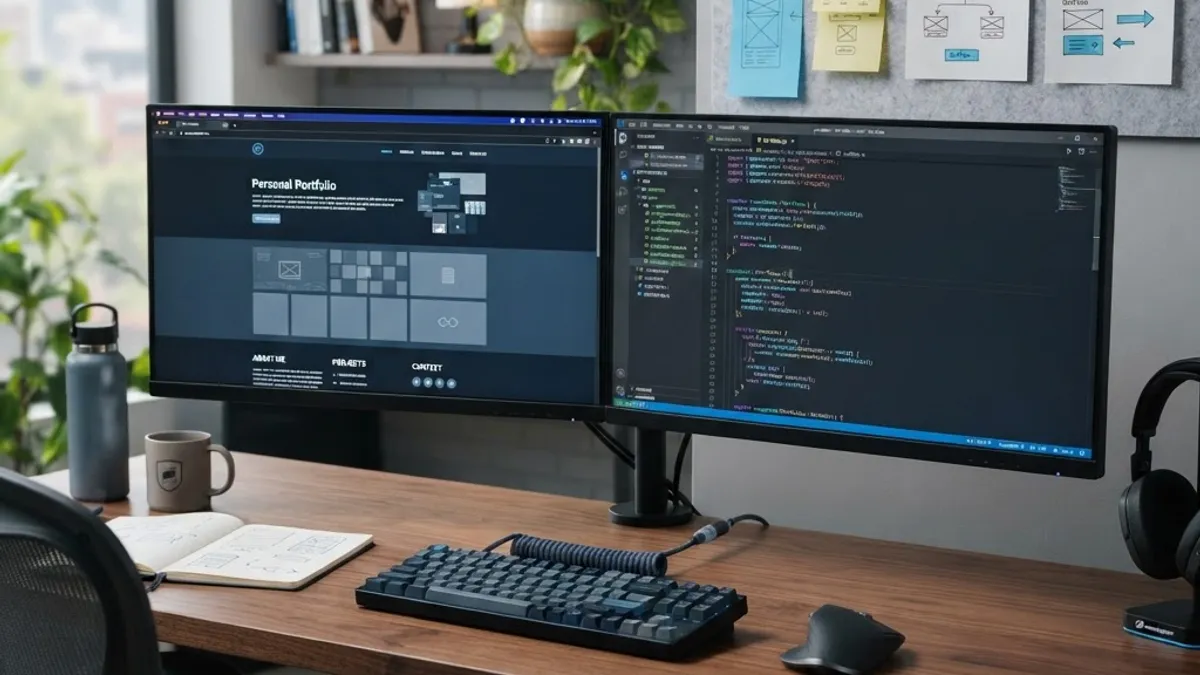
Hiring managers open your GitHub before they read your credential line. Graduate with four projects that prove distinct skills rather than eight identical tutorial clones.
- A responsive marketing site — Proves layout, typography, and accessibility discipline.
- An API-driven app — Proves asynchronous JavaScript, loading states, and error handling.
- A stateful interactive tool — A budget tracker or scheduler that proves you can manage state without chaos.
- A real project for a real person — A local business, nonprofit, or club. This is the single most persuasive item you can own, because it proves you handled requirements and feedback from a non-technical stakeholder.
Write a clear README for each: the problem, your approach, the tradeoffs, and what you would change now. Teams at agencies like ZoneTechify and analysts publishing at WebPeak consistently weigh documented reasoning above raw code volume, because reasoning is what predicts on-the-job performance.
Does the Institution's Name Matter Locally?
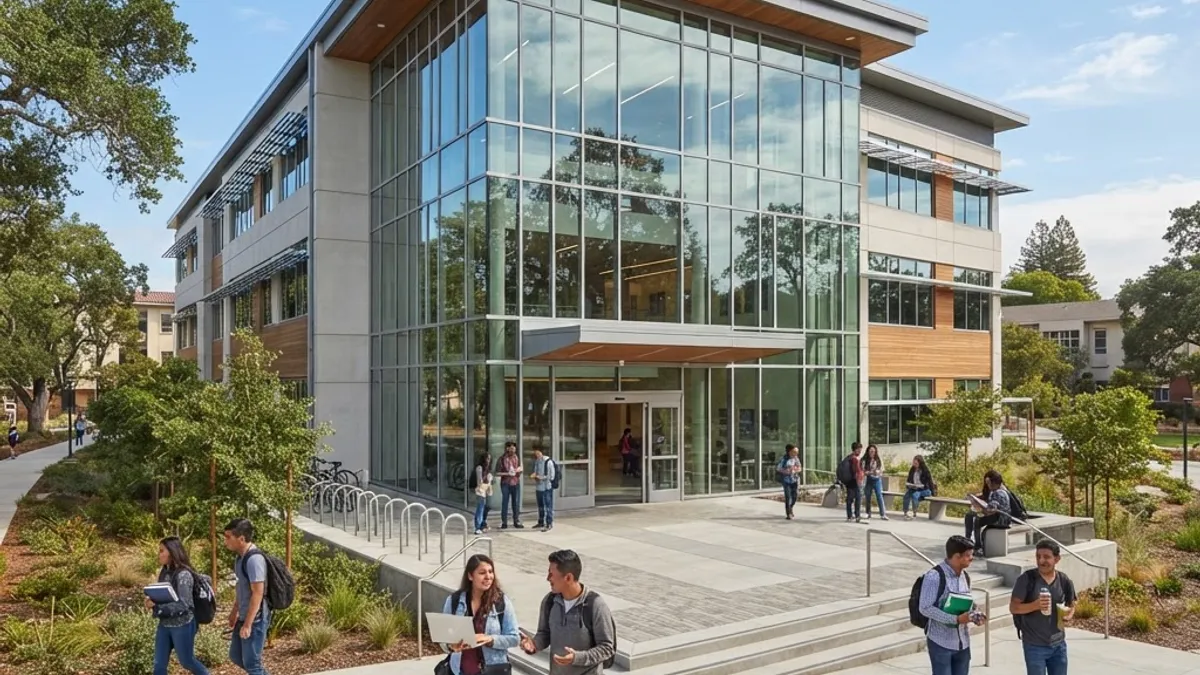
Yes, but narrowly. A certificate from a community college in your metro area carries recognition with local small and mid-sized employers who already hire from that school. That same certificate means little to a remote-first company in another country, which will judge you purely on your portfolio and interview performance.
So choose based on your target market. If you want to work for businesses within driving distance, local accreditation and alumni networks are genuinely valuable. If you intend to work remotely, spend less on credentials and more time building public work.
Turning the Certificate Into a Job Offer

A certificate opens a conversation; it does not close a deal. Do these five things during the program, not after:
- Attend local meetups monthly. Front end and JavaScript meetups exist in most cities and are where junior roles get referred before they are posted.
- Ship publicly every week. A visible commit history over months signals consistency better than any grade.
- Do one free or cheap client project. Real constraints teach scope management fast.
- Practice explaining your code out loud. Most junior interviews are lost on communication, not syntax.
- Apply before you feel ready. Job descriptions overstate requirements; apply at roughly 60% match.
The U.S. Bureau of Labor Statistics projects employment for web developers and digital designers to grow about 8% from 2023 to 2033, faster than the average for all occupations — steady demand, but competitive at the entry level. That competition is decided by evidence of ability, which is exactly what your project work supplies.
A Realistic 6-Month Plan

- Months 1-2: Enroll in the local certificate. Master HTML, CSS, and Git. Publish your portfolio site on day 30, unfinished and all.
- Months 3-4: JavaScript fundamentals plus your API project. Attend two meetups. Start writing one short technical post per month.
- Month 5: Learn React and rebuild one earlier project as components. Add accessibility fixes and measure performance.
- Month 6: Complete a real client project, polish all READMEs, and apply to 10 roles per week while finishing coursework.
This sequencing works because you build proof and network in parallel with the credential rather than waiting for graduation day.
Key Takeaways
- Community colleges are the cheapest accredited path to a front end certificate, typically 1,500 to 6,000 USD; in-person bootcamps cost 9,000 to 20,000 USD.
- No government body regulates front end certificates, so value comes from curriculum depth, local reputation, and portfolio output.
- Google research shows 53% of mobile visits are abandoned after a three-second load, making performance skills a hiring differentiator.
- The BLS projects roughly 8% growth for web developers and digital designers from 2023 to 2033.
- Local programs are worth the premium if you want local employment; remote job seekers should invest in portfolio work instead.
- Four well-documented projects, including one for a real client, outperform any certificate line on a resume.
Frequently Asked Questions (FAQ)
Where can I find a front end developer certificate near me?
Check your local community college first, then nearby university extension programs and in-person coding bootcamps. Also contact your county workforce development board, which may fund tuition through federal grants. Search your city name plus "web development certificate" and always request the syllabus and student project examples before enrolling.
Can I get a front end developer job with just a certificate?
Yes, though the certificate alone rarely does it. Employers hire based on demonstrated ability, so you need three to four polished projects on GitHub, including one built for a real client. The certificate provides structure and local credibility; your portfolio and interview performance secure the offer.
How long does a front end developer certificate take?
Community college certificates usually take two to four semesters part-time, roughly nine to sixteen months. Full-time in-person bootcamps run twelve to twenty-four weeks. Self-paced online certificates vary widely because completion depends entirely on your discipline, with many learners taking six to twelve months.
Is a local bootcamp better than an online course?
A local bootcamp is better if you struggle with self-directed study or want regional hiring connections, since cohorts and live code review dramatically improve completion. Online courses are better for budget, flexibility, and topping up specific skills. Many successful developers combine a structured local program with free online practice.
Do employers verify front end certificates?
Rarely in detail. Most employers glance at the credential, then focus on your GitHub, portfolio, and technical interview. Some verify accredited college certificates during background checks. Because verification is light, never overstate a credential, and let your documented project work carry the weight of your application.
What should I learn before starting a certificate program?
Spend two weeks on free HTML and CSS tutorials before enrolling. Arriving able to build a simple static page means you spend class time on harder concepts like JavaScript logic and accessibility instead of basics. It also helps you confirm you genuinely enjoy front end work before paying tuition.