Extreme Programming (XP) is the software development methodology created in 1996 by Kent Beck. Here is how it started, what it changed, and why its practices still run modern engineering teams.
Software Development Methodology Created in 1996
If you have ever searched for the software development methodology created in 1996, you are almost certainly looking for Extreme Programming (XP) — the methodology formalized by Kent Beck while leading the Chrysler Comprehensive Compensation (C3) payroll project. XP was named and codified in 1996, published as a book in 1999, and it went on to donate most of the engineering practices that modern teams now treat as ordinary: automated testing, continuous integration, refactoring, and short release cycles.
This matters more than trivia. Almost every CI/CD pipeline, every test-first workflow, and every two-week release train in use today traces back to decisions made on that one project. Knowing where those ideas came from helps you apply them correctly instead of cargo-culting them.
Quick Answer: The software development methodology created in 1996 is Extreme Programming (XP), developed by Kent Beck on the Chrysler C3 payroll project. XP introduced test-driven development, pair programming, continuous integration, refactoring, and short release cycles — practices that later shaped Agile and modern DevOps engineering workflows.
Why 1996 Is the Answer
The year 1996 is specific: that is when Kent Beck joined the struggling Chrysler C3 project as a consultant, restarted it, and assembled the practices he had been experimenting with into a single named system. Beck has stated that the project's official start date under the new approach was March 1996. Ron Jeffries and Ward Cunningham were closely involved, and the team's internal wiki culture is a big reason the practices spread so quickly.
A few other methodologies sit nearby on the timeline, which is why this question causes confusion:
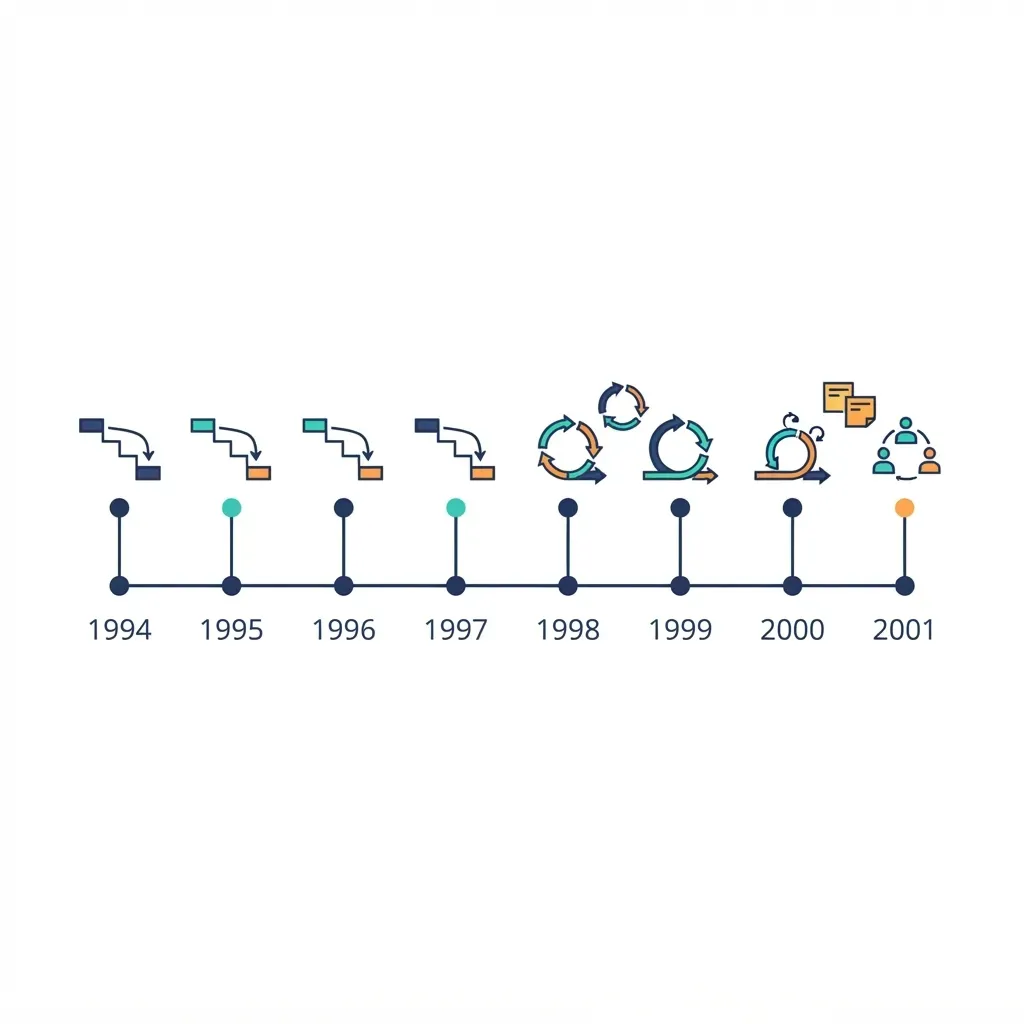
- DSDM (Dynamic Systems Development Method) — 1994
- Scrum — first presented publicly in 1995 by Ken Schwaber and Jeff Sutherland
- Extreme Programming (XP) — created in 1996
- Crystal methods — described by Alistair Cockburn in the mid-1990s, published later
- Feature-Driven Development — 1997
- The Agile Manifesto — February 2001
So if a quiz, certification exam, or interview asks for the methodology created in 1996, the expected answer is Extreme Programming. If it asks for the one created in 1995, the answer is Scrum. If it asks about 2001, that is the Agile Manifesto, not a methodology at all.

What Problem XP Was Actually Built to Solve
XP was a direct response to the cost-of-change curve. Under waterfall thinking, the cost of changing a requirement rises exponentially the later it is discovered — a defect found in production can cost far more to fix than the same defect caught during design. Traditional methods responded by trying to lock requirements down earlier. Beck's insight was the opposite: flatten the curve instead of fighting it.
If you can change code safely and cheaply at any moment, you no longer need to predict the future. That single reframing produced everything else in XP. Automated tests make change safe. Refactoring keeps the design cheap to modify. Continuous integration keeps the change window small. Short releases keep feedback fast enough that being wrong is inexpensive.
This is still the most useful lens for evaluating any engineering process today: does it reduce the cost of changing your mind, or does it just add ceremony?
The 12 Original XP Practices
Beck's 1999 book Extreme Programming Explained defined twelve practices grouped around four values: communication, simplicity, feedback, and courage. The original twelve were:
- The Planning Game — customers and developers plan scope together each iteration
- Small Releases — ship working software in weeks, not years
- Metaphor — a shared story that explains how the system works
- Simple Design — build the simplest thing that passes today's tests
- Testing — write automated unit and acceptance tests first
- Refactoring — improve structure continuously without changing behaviour
- Pair Programming — two developers, one workstation
- Collective Ownership — anyone can change any code
- Continuous Integration — integrate and build many times a day
- 40-Hour Week — sustainable pace, no chronic overtime
- On-Site Customer — a real user available to answer questions
- Coding Standards — one consistent style across the codebase

Which Practices Survived and Which Did Not
In our experience delivering software projects at ZoneTechify, the survival rate is uneven and predictable. Testing, continuous integration, refactoring, small releases, and coding standards became industry defaults — most teams now do them without calling them XP. Pair programming, the on-site customer, and the system metaphor are far rarer, mainly because distributed teams and product-manager proxies replaced the co-located setup XP assumed.
The sustainable pace practice is the one most often abandoned and most often regretted. It was the only practice in the original twelve that treated developer capacity as a finite resource rather than a variable to squeeze.
XP vs Scrum: A Practical Comparison
The two most cited pre-Agile methodologies are frequently confused. XP prescribes how you write code; Scrum prescribes how you organize work. This is why so many high-performing teams run Scrum ceremonies with XP engineering practices underneath.
| Aspect | Extreme Programming (1996) | Scrum (1995) |
|---|---|---|
| Primary focus | Engineering practices and code quality | Team process and delivery management |
| Iteration length | 1 to 2 weeks | 2 to 4 week sprints |
| Prescribes technical practices | Yes | No |
| Mid-iteration scope change | Allowed if a story is swapped out | Discouraged during a sprint |
| Defined roles | Coach, customer, developer, tracker | Product Owner, Scrum Master, Developers |
| Test-first required | Yes | No |
| Pair programming required | Yes | No |
| Works without the other | Yes | Often needs XP practices to sustain quality |
Test-Driven Development: XP's Biggest Export
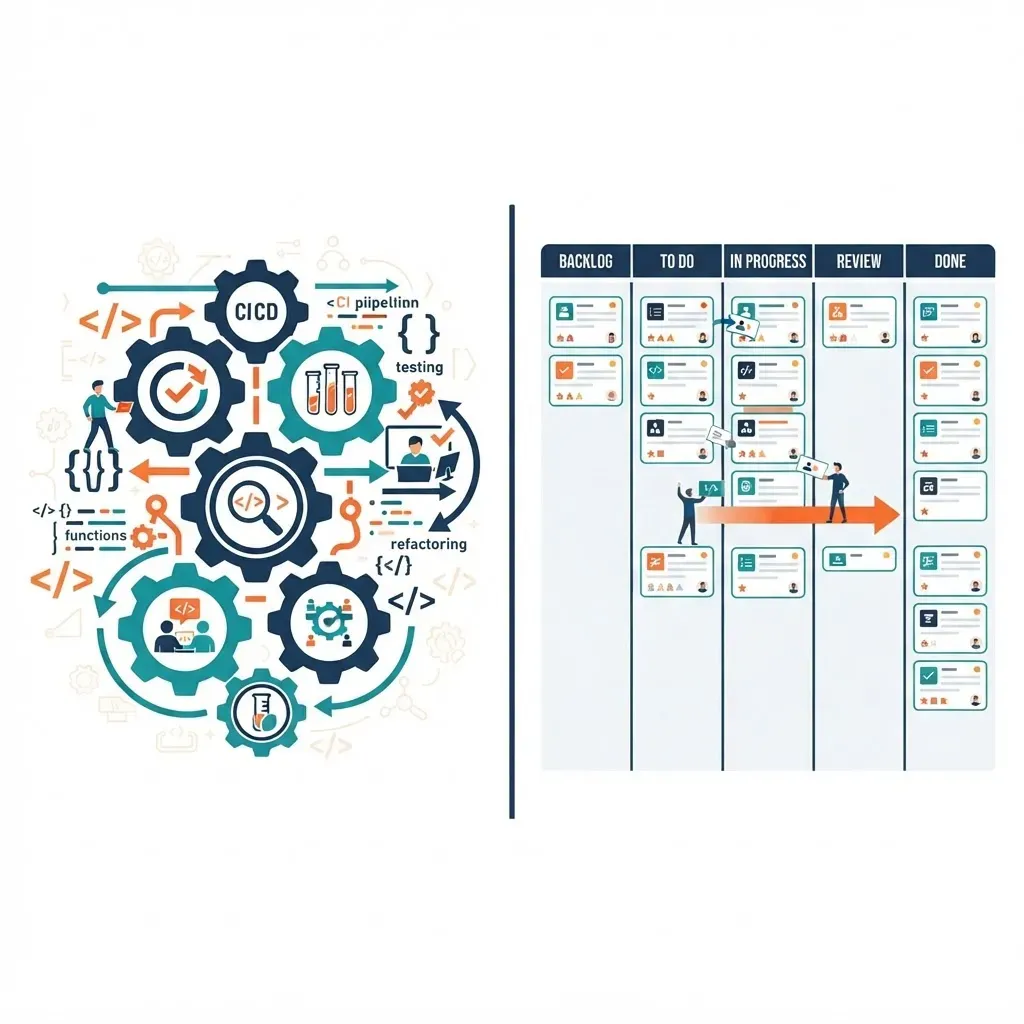
Test-driven development is the single most influential idea to come out of 1996-era XP. Definition: TDD is a workflow where you write a failing automated test before writing the production code that makes it pass, then refactor while keeping the test green. The loop is red, green, refactor.
The research supports the intuition. A widely cited Microsoft and IBM case study by Nagappan et al. found that teams using TDD produced code with 40 to 90 percent lower pre-release defect density than comparable non-TDD teams, at the cost of roughly 15 to 35 percent longer initial development time. That trade — more time upfront, dramatically fewer defects later — is exactly the cost-of-change curve XP set out to flatten.
Practical guidance we give clients:
- Apply TDD hardest to business logic, pricing rules, permissions, and calculations
- Do not chase 100 percent coverage; chase coverage of the code that would be expensive to get wrong
- Keep unit tests fast enough to run on every save, otherwise nobody runs them
- Write the test name as the requirement, so the suite doubles as documentation

Is Extreme Programming Still Relevant in 2026?
Yes — but mostly in absorbed form. XP as a branded methodology is rarely adopted wholesale, yet its practices are now infrastructure. According to the DORA State of DevOps research programme, the strongest predictors of elite software delivery performance are continuous integration, comprehensive automated test suites, trunk-based development, and small frequent releases. Every one of those was an XP practice in 1996, roughly a decade before the tooling made them easy.
Where XP still gets adopted deliberately, three situations dominate:
- Rescue projects — legacy systems with no tests, where refactoring plus a test harness is the only safe path forward
- High-risk domains — payments, healthcare, compliance, where defect cost is severe
- Small senior teams — five to ten engineers who can genuinely hold collective code ownership
Teams building modern web platforms benefit most from combining XP's technical discipline with current tooling. If you are planning a build and want that discipline applied from day one, our web development services are structured around short iterations, automated test coverage, and continuous deployment. Teams focused on search performance and technical audits can also review the methodology guides published at WebPeak.

How to Adopt XP Practices Without Rewriting Your Process
You do not need to declare an XP transformation. Adopt in this order, because each step makes the next one cheaper:
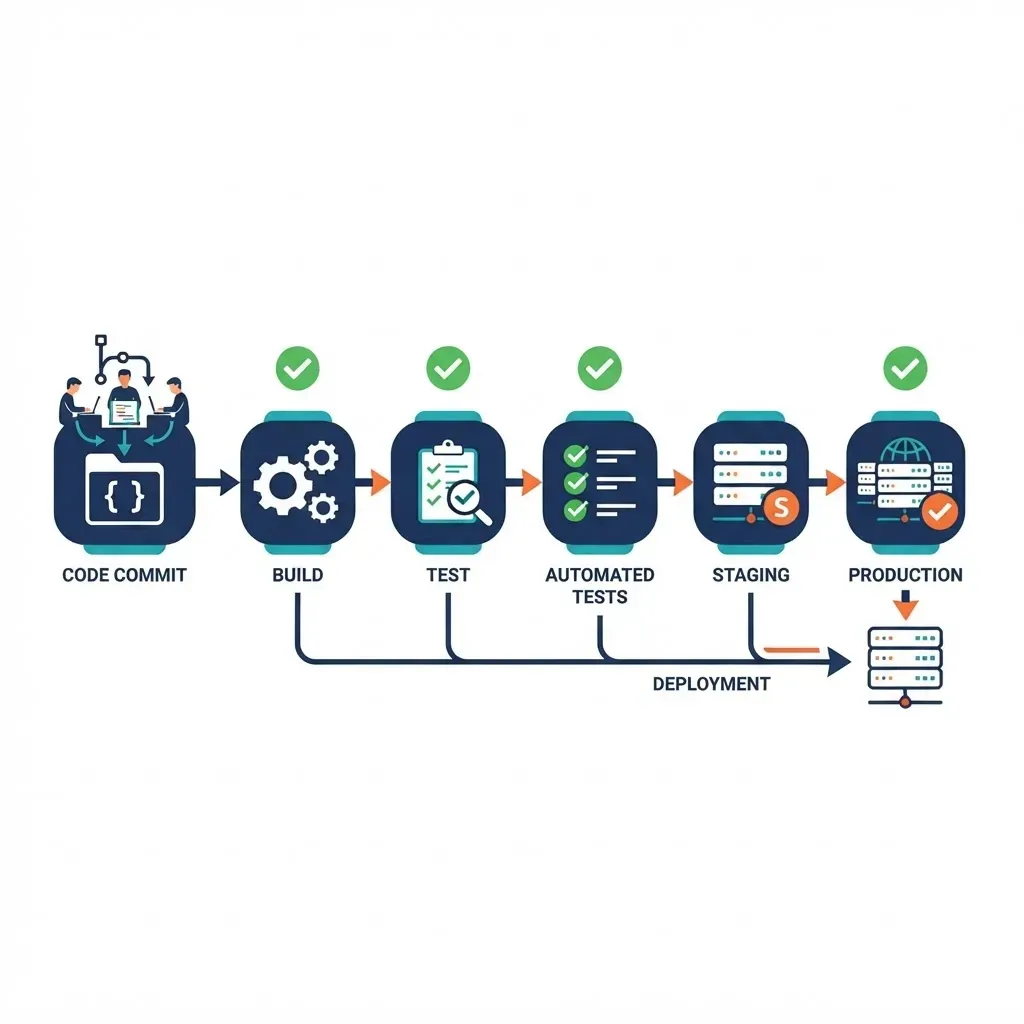
- Add continuous integration first. Every commit builds and runs tests automatically. Without this, nothing else holds.
- Write tests for new code only. Do not attempt a retroactive test suite. Cover what you touch.
- Shorten your release cycle. Move from monthly to weekly, then to on-demand. Smaller batches expose problems earlier.
- Refactor inside normal work. Treat cleanup as part of the change, not a separate ticket that never gets prioritized.
- Introduce pairing selectively. Use it for onboarding, tricky bugs, and high-risk modules rather than mandating it all day.
- Protect a sustainable pace. Track overtime honestly; sustained crunch reverses every quality gain above.
Key Takeaways
- The software development methodology created in 1996 is Extreme Programming (XP), created by Kent Beck on the Chrysler C3 project.
- Scrum predates it (1995); the Agile Manifesto came later (February 2001). XP is a methodology, the Manifesto is a set of values.
- XP defined 12 practices across four values: communication, simplicity, feedback, and courage.
- XP's core economic argument was flattening the cost-of-change curve rather than freezing requirements early.
- Research by Nagappan et al. found TDD teams cut pre-release defect density by 40 to 90 percent with 15 to 35 percent longer initial development time.
- DORA research links elite delivery performance to continuous integration, automated testing, and small releases — all XP practices from 1996.
- XP prescribes engineering practices; Scrum prescribes process. Most strong teams combine both.
Frequently Asked Questions (FAQ)
What software development methodology was created in 1996?
Extreme Programming (XP) was created in 1996 by Kent Beck during the Chrysler Comprehensive Compensation payroll project. It introduced test-driven development, pair programming, continuous integration, refactoring, and short release cycles, and was formally published in Beck's 1999 book Extreme Programming Explained.
Who invented Extreme Programming?
Kent Beck created Extreme Programming, with major contributions from Ward Cunningham and Ron Jeffries. Beck formalized the practices in 1996 while leading the Chrysler C3 project, then documented the twelve practices and four values in his 1999 book, which brought XP to a wide industry audience.
Is Extreme Programming the same as Agile?
No. Extreme Programming is a specific methodology created in 1996 with prescribed technical practices. Agile is a broader set of values published in the 2001 Agile Manifesto, which Kent Beck co-signed. XP predates Agile and is considered one of the methodologies that shaped it.
Was Scrum created before or after XP?
Scrum came first. Ken Schwaber and Jeff Sutherland presented Scrum publicly in 1995, one year before Extreme Programming was formalized in 1996. Scrum focuses on managing work and team process, while XP focuses on engineering practices like testing, refactoring, and continuous integration.
Do companies still use Extreme Programming today?
Few companies brand their process as XP, but most use its practices daily. Continuous integration, automated testing, refactoring, and frequent small releases are now industry standards. XP is still explicitly chosen for legacy rescue work, high-risk domains like payments and healthcare, and small senior teams.
What are the four values of Extreme Programming?
The four original XP values are communication, simplicity, feedback, and courage. Communication keeps teams aligned, simplicity avoids speculative design, feedback shortens the learning loop through tests and short releases, and courage enables teams to refactor, delete code, and change direction when evidence demands it.
Which XP practice has had the biggest long-term impact?
Test-driven development, closely followed by continuous integration. TDD changed how developers think about design by making testability a design constraint, and continuous integration made frequent safe releases practical. Together they form the technical foundation of modern DevOps and CI/CD pipelines used across the industry today.