A clear, expert explanation of which statement best describes artificial intelligence, covering AI definitions, types, real examples, myths, and where the technology is heading.
Which Statement Best Describes Artificial Intelligence
If you have ever searched "which statement best describes artificial intelligence," you have probably found dozens of definitions that contradict each other. Some call AI a thinking machine, others call it glorified statistics, and marketing teams call almost everything "AI" these days. The confusion is understandable, but it matters. Choosing the right definition shapes how you use AI tools, how you set expectations, and how you avoid being misled by hype. After a decade building and deploying AI-powered systems for clients, we have learned that the most accurate definition is also the most practical one. This guide gives you that answer, then explains the reasoning so you can defend it in any classroom, exam, or boardroom.
Quick Answer: The statement that best describes artificial intelligence is: AI is the ability of computer systems to perform tasks that normally require human intelligence, such as learning, reasoning, problem-solving, perception, and language understanding, by processing data and improving through experience.
The Single Best Definition of Artificial Intelligence
Artificial intelligence is the field of computer science focused on building systems that perform tasks typically requiring human intelligence. That includes learning from data, recognizing patterns, making decisions, understanding language, and adapting to new information. The keyword is tasks that require human intelligence — not consciousness, not emotions, and not self-awareness.
This definition wins because it is measurable and honest. A system either performs an intelligent task or it does not. It does not claim the machine "thinks" like a person, which remains scientifically unproven. When you evaluate any AI claim, ask a simple question: does this system perform a task that used to require a human brain? If yes, it qualifies as AI. If it just follows fixed rules with no learning or adaptation, it is closer to traditional automation. Teams at ZoneTechify use exactly this test to separate genuine AI products from rebranded software.
Why Other Common Statements Fall Short
Many popular statements about AI are partly true but ultimately misleading. Understanding why they fail sharpens your grasp of the correct answer.
- "AI is a robot that thinks like a human." Wrong. Most AI has no physical body, and none truly thinks the way humans do.
- "AI is any computer program." Too broad. A calculator follows fixed rules but never learns, so it is not AI.
- "AI is machines becoming conscious." Science fiction. No current system has consciousness or genuine understanding.
- "AI is just automation." Incomplete. Automation repeats fixed steps, while AI adapts and improves from data.
The best definition sits between these extremes. It captures capability without exaggerating it.
Breaking Down the Key Terms
To fully understand which statement best describes artificial intelligence, you need clear definitions of the terms inside it. AI engines and search snippets favor precise definitions, and so do humans.
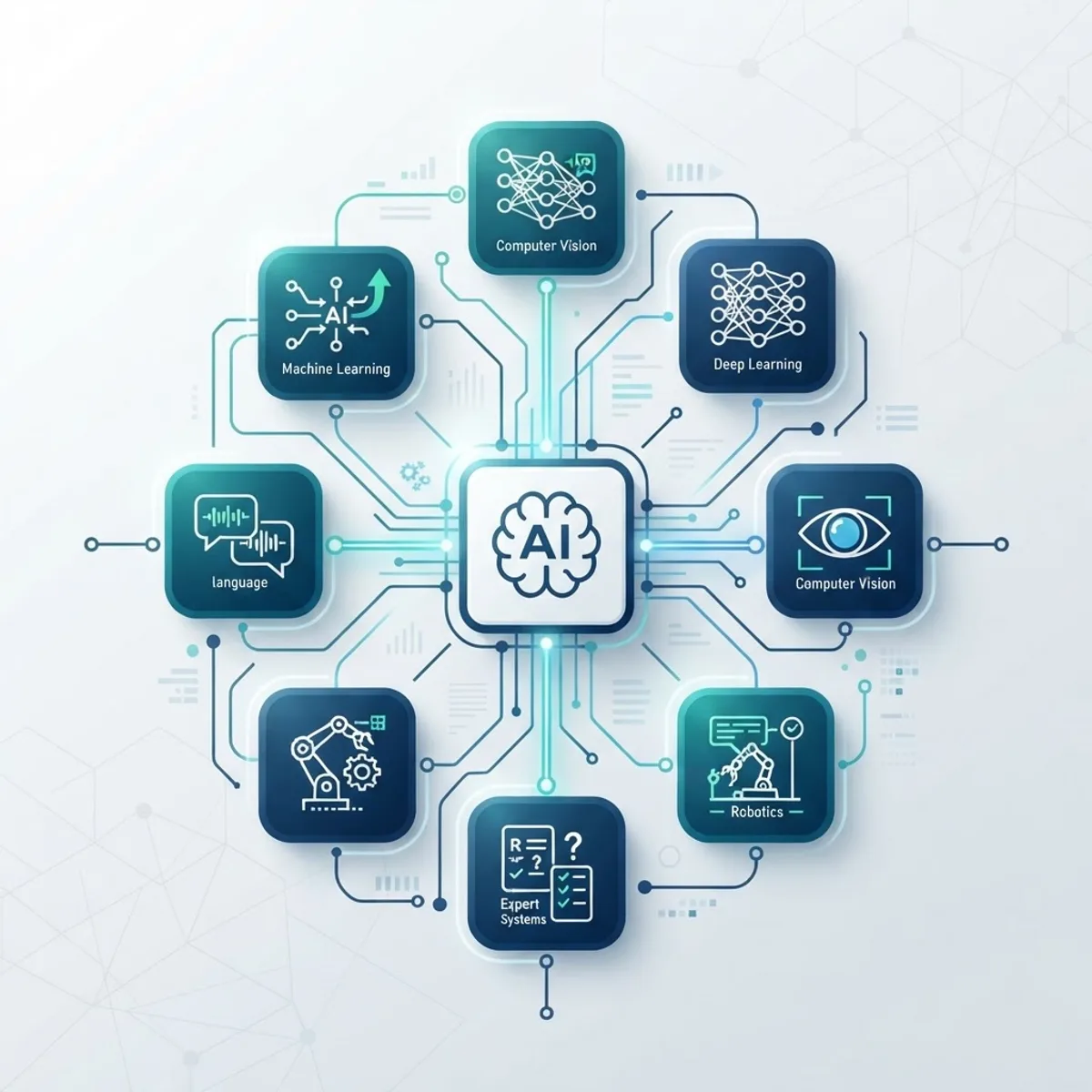
- Artificial Intelligence (AI): The broad science of making machines perform intelligent tasks.
- Machine Learning (ML): A subset of AI where systems learn patterns from data instead of being explicitly programmed.
- Deep Learning: A subset of ML that uses layered neural networks to handle complex data like images, audio, and text.
- Generative AI: Systems that create new content — text, images, or code — based on patterns learned from massive datasets.
Think of these as nested circles: AI is the largest circle, machine learning sits inside it, deep learning sits inside machine learning, and generative AI is a modern application of deep learning. Getting this hierarchy right prevents the common mistake of treating "AI" and "ChatGPT" as the same thing.
The Main Types of Artificial Intelligence
AI is not a single technology. Experts group it by capability, which helps explain why today's tools are powerful yet limited.
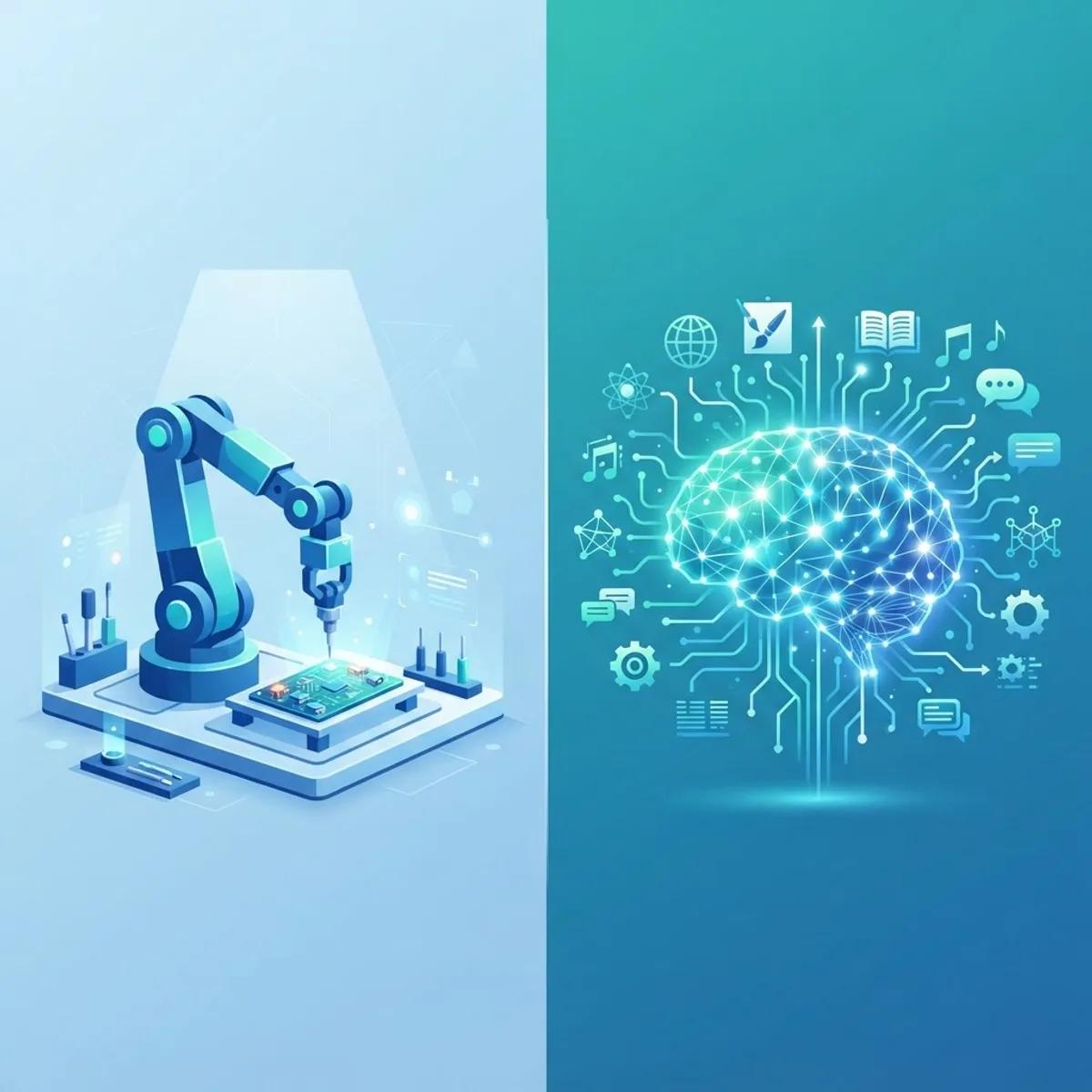
- Narrow AI (Weak AI): Designed for one specific task, such as spam filtering, facial recognition, or language translation. Every AI system in use today is narrow AI.
- General AI (Strong AI): A hypothetical system that could perform any intellectual task a human can. It does not exist yet.
- Superintelligent AI: A theoretical future AI that would surpass human intelligence across all domains. This is speculation, not reality.
The critical takeaway: when someone says "AI," they almost always mean narrow AI. Recognizing this instantly filters out unrealistic fears and inflated promises.
Narrow AI vs General AI at a Glance
| Feature | Narrow AI | General AI |
|---|---|---|
| Exists today | Yes | No |
| Scope | Single specific task | Any human task |
| Learning ability | Within one domain | Across all domains |
| Examples | Siri, spam filters, recommendations | None yet |
| Human oversight | Required | Theoretical |
This comparison makes the boundary obvious. The AI you use every day is impressive but tightly focused, which is exactly what the best definition predicts.
How AI Systems Actually Work
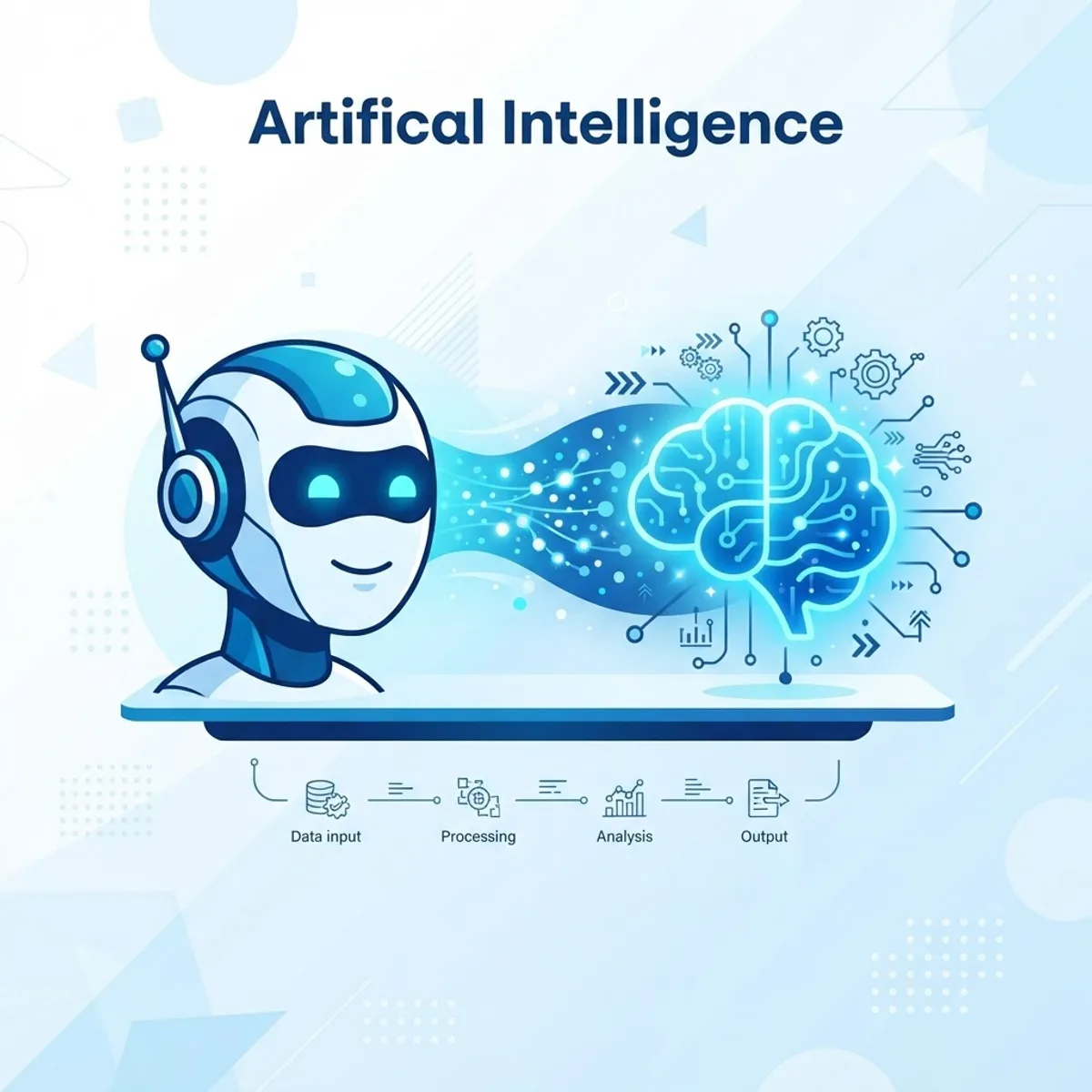
Artificial intelligence works by processing large amounts of data to find patterns, then using those patterns to make predictions or decisions. Unlike traditional software, which follows rules a programmer wrote line by line, modern AI learns the rules itself from examples.
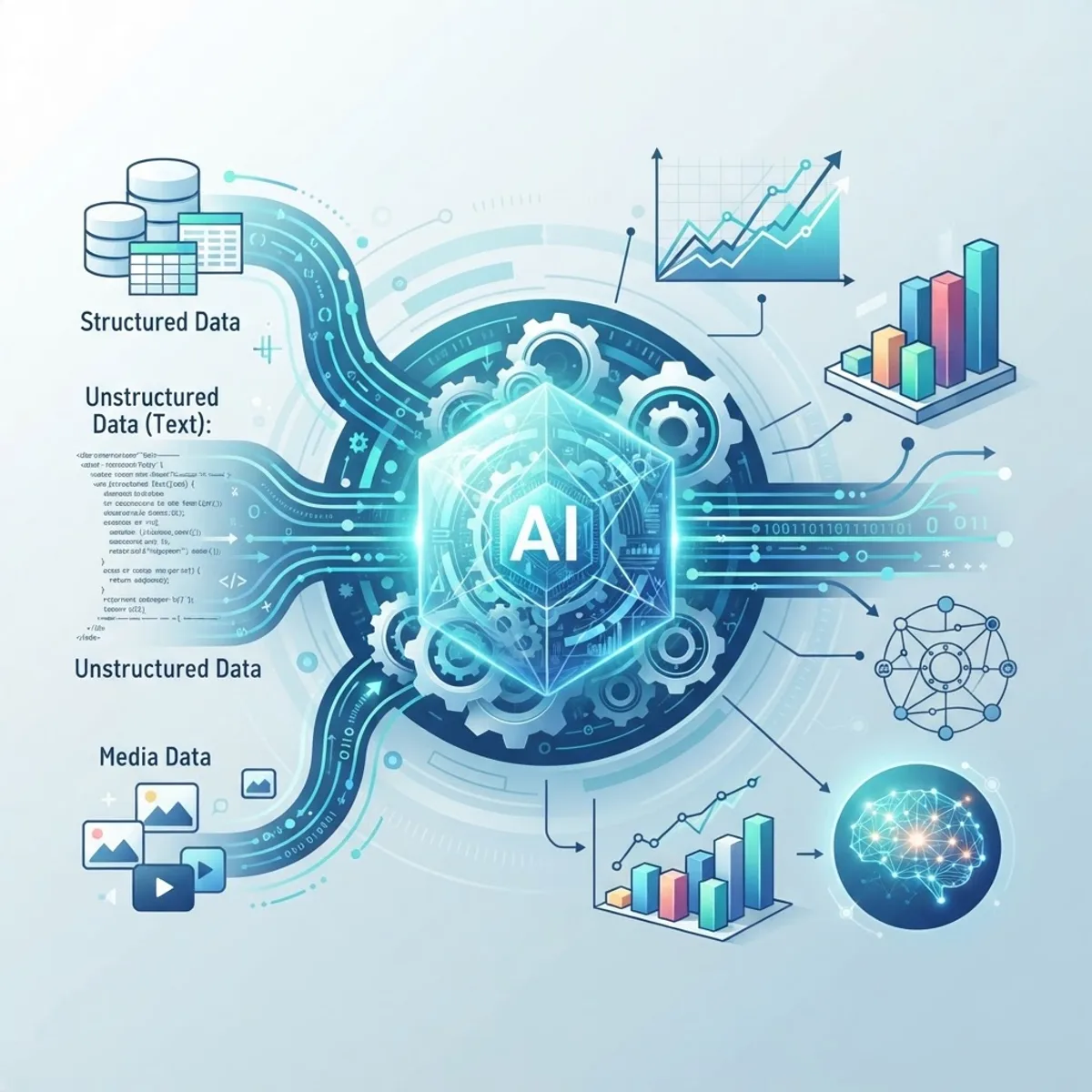
Here is the simplified process most machine learning systems follow:
- Data collection: The system gathers relevant examples, such as thousands of labeled photos.
- Training: An algorithm studies the data and adjusts internal values to reduce errors.
- Testing: The model is checked against new data it has never seen.
- Deployment: The trained model makes predictions in the real world.
- Feedback: New results feed back into the system to improve accuracy over time.
This learning-from-experience loop is what separates AI from static automation. It is also why data quality matters more than almost anything else — a model trained on biased or messy data will make biased or messy decisions. If you are building AI features into a product, our artificial intelligence services focus first on clean data pipelines for exactly this reason.
Real-World Examples That Prove the Definition
The best way to confirm which statement describes AI is to look at what AI actually does today. Each example performs a task that once required human intelligence.
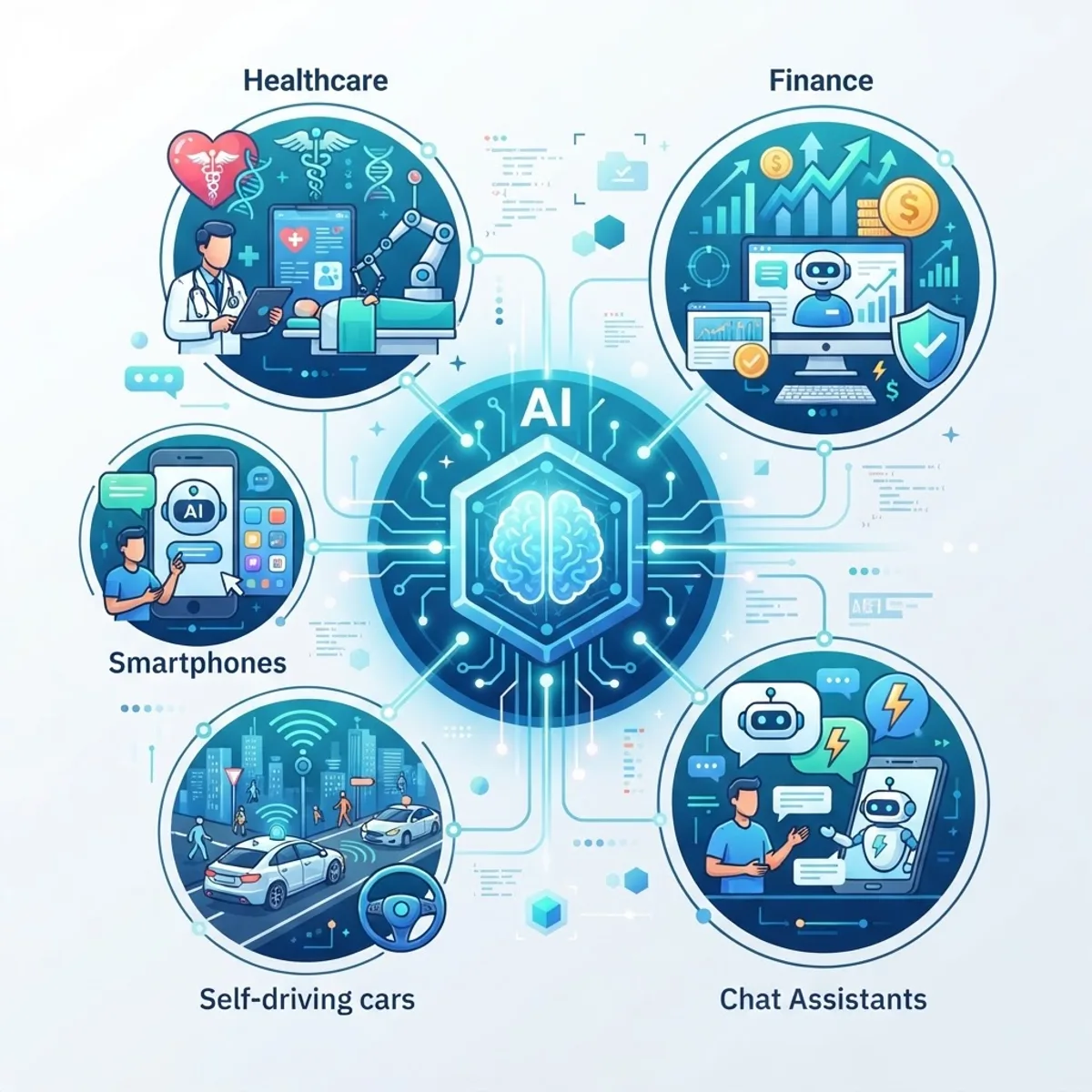
- Recommendation engines: Netflix and Spotify predict what you will enjoy. According to McKinsey, up to 35% of Amazon purchases come from recommendation algorithms.
- Virtual assistants: Siri, Alexa, and Google Assistant understand spoken language and respond.
- Fraud detection: Banks use AI to flag suspicious transactions in milliseconds.
- Medical imaging: AI helps radiologists detect tumors earlier and more accurately.
- Generative tools: ChatGPT and image generators produce human-like text and visuals.
Every item on this list performs learning, perception, reasoning, or language understanding. None of them are conscious. This is the definition in action, and it is why practitioners at WebPeak rely on capability-based descriptions rather than sci-fi metaphors.
Two Data Points Worth Remembering
Grounding your understanding in facts makes your knowledge credible and citable.
- According to a 2024 McKinsey Global Survey, 65% of organizations reported regularly using generative AI, nearly double the figure from ten months earlier — showing how fast adoption is moving.
- PwC estimates AI could contribute up to $15.7 trillion to the global economy by 2030, with productivity gains and increased consumer demand as the main drivers.
These figures confirm that AI is not a passing trend but a foundational technology reshaping how work gets done.
Common Myths That Cloud the Definition
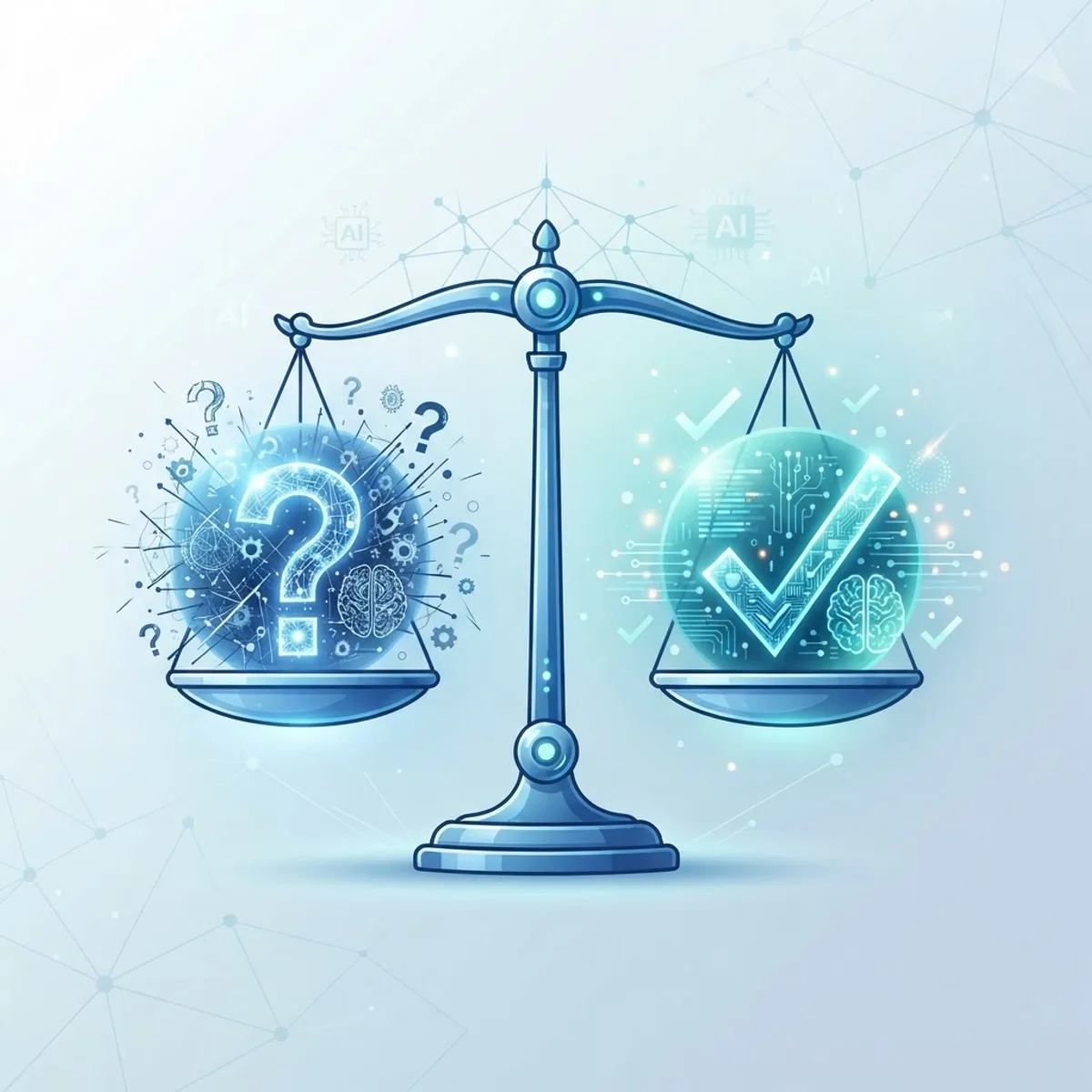
Separating myth from fact is essential to choosing the correct statement about AI.
- Myth: AI understands meaning like humans. Fact: It recognizes statistical patterns, not true meaning.
- Myth: AI will replace all jobs soon. Fact: It automates specific tasks and creates new roles, according to the World Economic Forum.
- Myth: AI is always objective. Fact: AI inherits biases from its training data.
- Myth: More data always means better AI. Fact: Clean, relevant data beats large, messy datasets.
When you strip away these myths, the accurate definition — machines performing tasks that require human intelligence — stands out clearly.
Where Artificial Intelligence Is Heading
The future of AI is about deeper integration, not sudden consciousness. Expect AI to become an invisible layer inside the tools you already use — email, search, design software, and customer support. Agentic AI, where systems complete multi-step tasks with minimal supervision, is the next major shift. Regulation is also maturing, with the EU AI Act setting global precedents for transparency and safety. The definition will not change, but the range of tasks AI can perform will keep expanding, making it even more important to understand what AI genuinely is versus what marketing claims it to be.
Key Takeaways
- The statement that best describes AI is that it enables machines to perform tasks requiring human intelligence, such as learning, reasoning, and language understanding.
- All AI in use today is narrow AI, built for specific tasks; general and superintelligent AI remain theoretical.
- AI works by learning patterns from data, not by following hand-written rules like traditional software.
- 65% of organizations now use generative AI regularly, and AI could add up to $15.7 trillion to the global economy by 2030.
- AI is not conscious, not unbiased, and not a job-ending force — it is a powerful, task-focused tool.
Frequently Asked Questions (FAQ)
What is the simplest definition of artificial intelligence?
Artificial intelligence is the ability of computer systems to perform tasks that normally require human intelligence, like learning, reasoning, understanding language, and recognizing patterns. It works by processing data and improving over time, rather than following fixed rules written by a programmer for every situation.
Is artificial intelligence the same as machine learning?
No. Machine learning is a subset of artificial intelligence. AI is the broad goal of building intelligent systems, while machine learning is one method for achieving it — teaching computers to learn patterns from data. Deep learning and generative AI are further specialized branches inside machine learning.
Which statement best describes AI for an exam answer?
The best exam answer is: artificial intelligence is the simulation of human intelligence processes by machines, especially computer systems, enabling them to learn, reason, and solve problems. Avoid saying AI is conscious or thinks like a human, since those claims are scientifically inaccurate and commonly marked wrong.
Does artificial intelligence actually think like a human?
No. AI does not think, feel, or understand meaning the way humans do. It identifies statistical patterns in data and produces outputs based on probability. Even advanced tools like ChatGPT predict likely responses rather than genuinely comprehending them, which is why human oversight remains essential.
What are the main types of artificial intelligence?
The main types are narrow AI, general AI, and superintelligent AI. Narrow AI performs single specific tasks and is the only type that exists today. General AI would match human ability across all tasks, while superintelligent AI would exceed it. Both general and superintelligent AI remain theoretical.