
White label SEO reporting turns invisible search work into proof clients can act on. Here is why it protects retention, pricing power, and agency credibility.
Why White Label SEO Reporting Is Important
SEO is the only service most agencies sell where the client cannot see the work happening. A logo redesign is visible. A paid ads dashboard shows spend in real time. But technical fixes, internal link restructures, and link acquisition all happen quietly in the background, often for 90 to 180 days before revenue moves. White label SEO reporting is the mechanism that makes that invisible labour visible, branded, and defensible. Agencies that treat reporting as an afterthought lose accounts they were actually winning.
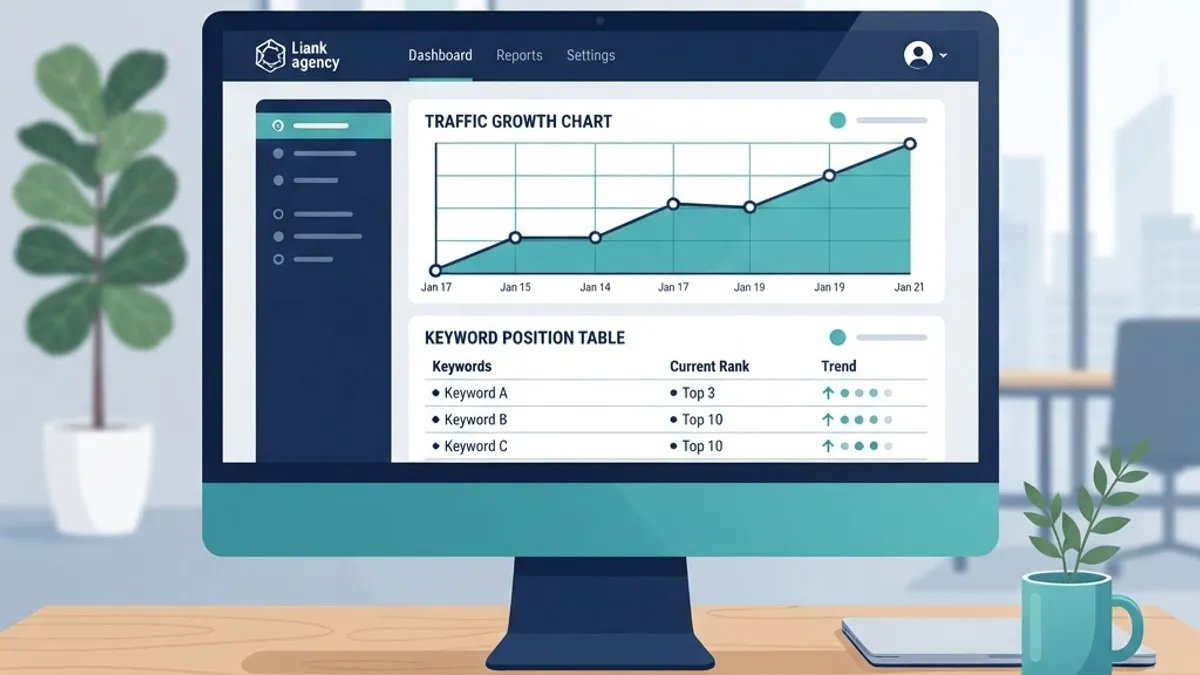
Quick Answer: White label SEO reporting is important because it proves the value of work clients cannot see, keeps your agency brand at the centre of the relationship, and shortens the gap between effort and perceived results. Clear, branded, recurring reports reduce churn, justify retainer pricing, and give clients defensible data for internal decisions.
What White Label SEO Reporting Actually Means
White label SEO reporting is the practice of delivering SEO performance data to a client under your own agency brand, even when the underlying work or tooling is performed by a third-party partner. The client sees your logo, your commentary, and your recommendations. The fulfilment partner stays invisible by design.
That definition matters because two things are being white labelled at once: the work and the narrative. Many agencies outsource the work correctly and then fail at the narrative, forwarding a raw tool export with a partner watermark still on page one. If you are new to the delivery model itself, you can learn more about how white label SEO fulfilment is structured before you design your reporting layer on top of it.
The Three Layers of a Real Report
- Data layer: rankings, organic sessions, impressions, clicks, crawl health, backlinks acquired.
- Interpretation layer: what changed, why it changed, and what it means for the client's revenue.
- Decision layer: the specific next actions and what you need from the client to execute them.
Most agency reports contain only the first layer. The first layer is the least valuable of the three, because tools already provide it for free.
Why Reporting Decides Whether Clients Stay
SEO retainers are lost during the lag period, not during the failure period. Google's own documentation states that it typically takes four months to a year to see measurable results from SEO improvements. Meanwhile, agency retention research consistently places average client tenure in the range of one to two years, which means the reporting window and the churn window overlap almost perfectly.

The practical implication is uncomfortable: your client is deciding whether to renew before your strategy has had time to fully compound. The only asset you control during that window is the quality of your reporting. A report that shows crawl errors dropping from 412 to 18, non-branded impressions rising 34 percent, and three new referring domains from industry publications tells a client the engine is running, even when revenue has not caught up yet.
The Leading Indicator Principle
During months one through four, report leading indicators. During months five onward, report lagging indicators. Leading indicators include indexation coverage, impression growth, average position for target clusters, Core Web Vitals pass rates, and referring domain velocity. Lagging indicators include organic revenue, qualified leads, and assisted conversions. Agencies that report only lagging indicators in month two are effectively reporting failure.
Brand Equity: Whose Agency Is the Client Buying?
Every report is a branding event. When a client opens a document with your colours, your tone, and your analyst's name on it, the strategic relationship stays with you. When they open a generic tool export, the value transfers to the tool, and the client quietly starts wondering whether they could just buy that tool themselves.
This is the strongest commercial argument for white labelling the reporting layer specifically. Fulfilment can be delegated. Perceived expertise cannot be, without cost. Teams at ZoneTechify Team and delivery-focused partners like best SEO agency build reporting templates as brand assets, not administrative exports, because that document is often the only touchpoint a busy stakeholder reads all month.
The Metrics That Belong in Every White Label Report
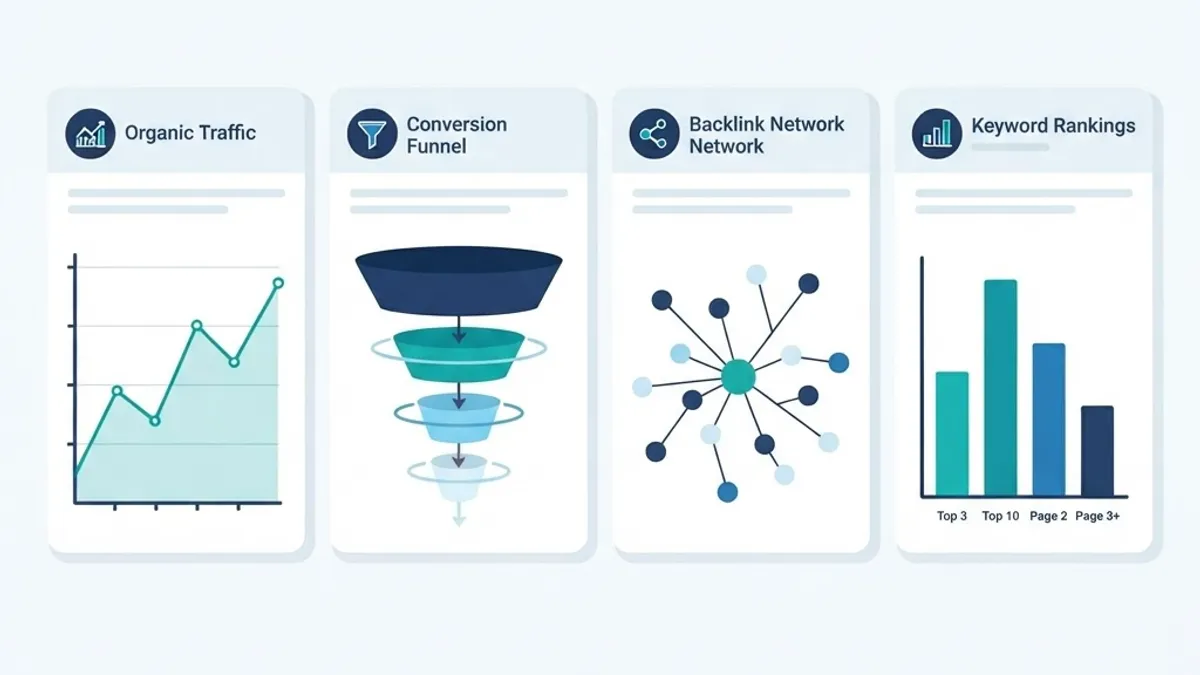
Include fewer metrics than you think. A report with 40 charts communicates less than a report with eight, because the client cannot tell which number is the story.
| Report Section | Metric to Include | Why It Earns Its Place |
|---|---|---|
| Visibility | Non-branded impressions and clicks | Separates real SEO gains from existing brand demand |
| Rankings | Position movement for priority clusters only | Prevents vanity keyword padding |
| Technical | Indexed pages vs submitted, crawl errors, CWV pass rate | Shows structural work the client cannot see |
| Authority | New referring domains and their topical relevance | Quality of links, not raw count |
| Content | Pages published, refreshed, and their entry traffic | Ties output to outcome |
| Business | Organic leads, calls, or revenue | Connects SEO to the client's actual scoreboard |
| Next Steps | Owner, action, deadline | Converts a report into a working document |
The final row is the one agencies skip and clients value most. A report without assigned next actions asks the client to do the interpretation work you are being paid for.
Reporting Frequency and Format
Monthly is the correct default for retainers under enterprise scale. Weekly reporting on SEO creates noise, because ranking data fluctuates naturally and Google confirms it rolls out thousands of changes to search each year, many of which cause short-term volatility unrelated to your work. Quarterly reporting is too slow to prevent churn.
A reliable cadence looks like this:
- Monthly written report: eight to twelve pages, branded, delivered on a fixed date.
- Monthly or bi-monthly call: 25 minutes, walking the client through interpretation, not data.
- Live dashboard access: always on, for stakeholders who want to check between reports.
- Quarterly strategy review: what we learned, what we are changing, what we are dropping.
Fixed delivery dates matter more than report length. A report that arrives on the third business day every month builds trust through predictability. A brilliant report that arrives whenever it is ready signals disorganisation.
Automation Without Losing the Human Layer
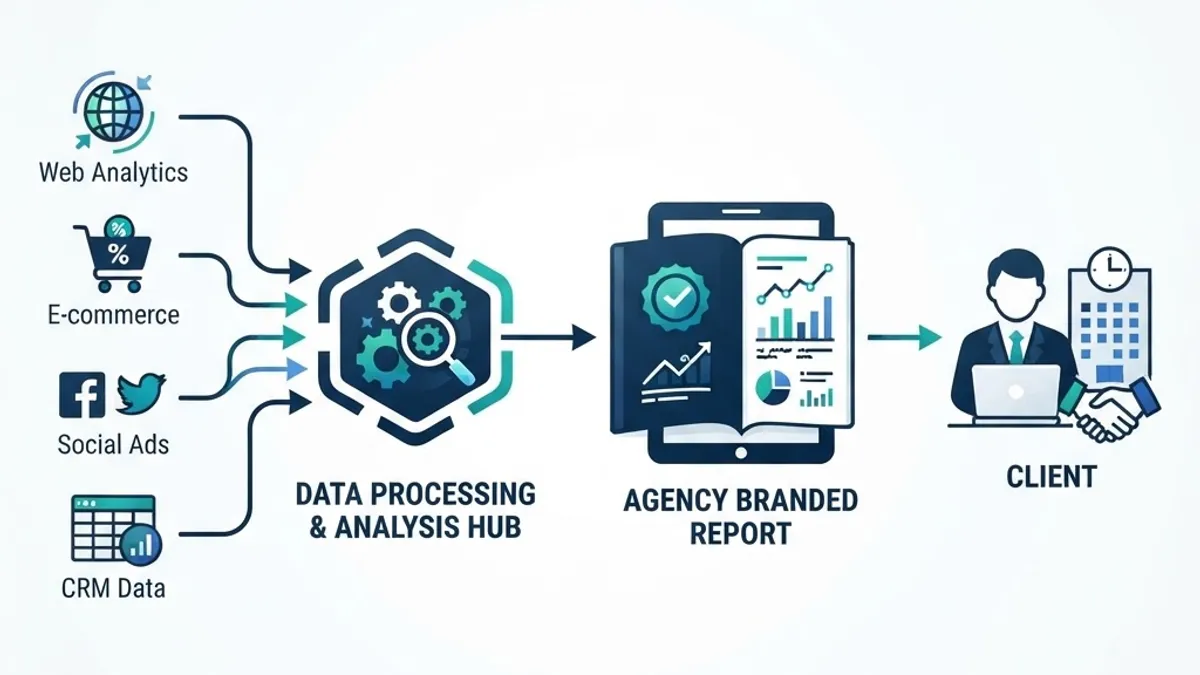
Data collection should be automated. Interpretation should never be. Connect Search Console, Analytics, your rank tracker, and your backlink source into a single branded template, then have a strategist write 200 to 400 words of commentary per report. That commentary is the product.

The operational win is real. Agencies that automate data assembly typically recover several hours per client per month, and that time is better spent on execution than on copying numbers between spreadsheets. If you want the reporting layer and the fulfilment layer designed together rather than bolted on afterwards, working with a partner that offers structured technical SEO services removes the most common failure point, which is inconsistent data definitions between months.
A Rule for Report Commentary
Every commentary block should answer three questions in order:
- What moved, in numbers?
- Why did it move, based on evidence rather than assumption?
- What are we doing next because of it?
If a sentence does not answer one of those three, delete it.
Common White Label Reporting Mistakes

These are the errors that cost agencies accounts most often:
- Leaving partner branding in the file. Check PDF metadata, footers, and chart watermarks before sending.
- Changing metric definitions between months. If month one measured sessions and month three measures users, your growth story becomes unverifiable.
- Reporting only wins. Clients who never see a problem in your reports stop believing the reports.
- Sending data with no owner. Unassigned recommendations never get implemented, then get blamed on SEO.
- Hiding algorithm impact. Naming a confirmed update and explaining your response builds more credibility than silence.
- Writing for specialists. The person renewing your contract is often a founder or finance lead, not a marketer.
How Better Reporting Compounds Into Revenue

Retention is the highest-leverage number in an agency P and L. Extending average client tenure from 12 months to 18 months increases lifetime value by 50 percent with zero additional acquisition spend. Reporting is one of the cheapest levers available to move that number, because it costs template design time once and commentary time monthly.
Strong reporting also unlocks pricing. Agencies that can demonstrate contribution to pipeline in clear language defend higher retainers and win more upsell conversations, because the client already has the evidence in front of them. Weak reporting forces price defence on trust alone.
Key Takeaways
- White label SEO reporting makes invisible technical and off-page work visible under your own brand.
- Google states SEO results typically take four months to a year, which overlaps directly with the churn window.
- Report leading indicators early and lagging indicators later to match the delivery timeline.
- Eight focused metrics outperform 40 unfocused charts for stakeholder comprehension.
- Automate data collection, never interpretation; commentary is the billable value.
- Fixed monthly delivery dates build trust faster than longer reports.
- Extending tenure from 12 to 18 months raises client lifetime value by roughly 50 percent.
Frequently Asked Questions (FAQ)
What is white label SEO reporting in simple terms?
It is an SEO performance report delivered under your agency's brand, even when a third-party partner does the fulfilment. The client sees your logo, analysis, and recommendations. The partner remains invisible, so your agency keeps the strategic relationship and the perceived expertise.
How often should I send white label SEO reports to clients?
Monthly is the right default for most retainers, delivered on a fixed date each month. Add an always-on dashboard for stakeholders who check between reports, and a quarterly strategy review. Weekly SEO reporting usually creates noise, because ranking data fluctuates naturally.
What should a white label SEO report include?
Include non-branded impressions and clicks, priority keyword movement, technical health such as crawl errors and Core Web Vitals, new referring domains with relevance context, content published, business outcomes like leads, and a next-steps table with named owners and deadlines.
Can clients tell that SEO work is outsourced?
Not if the reporting layer is built properly. Problems appear when partner branding survives in PDF metadata, footers, or chart watermarks, or when commentary reads generically. Always review the final file yourself and write the interpretation section in your own voice.
Does better reporting really reduce client churn?
Yes, because SEO clients usually cancel during the lag period before results compound, not after a failure. Reports that show credible leading indicators prove the engine is working. Extending tenure from 12 to 18 months lifts lifetime value by roughly 50 percent.
Should I automate SEO reporting completely?
Automate data collection, never interpretation. Pull Search Console, Analytics, rank tracking, and backlink data into one branded template automatically, then have a strategist write 200 to 400 words explaining what moved, why it moved, and what happens next month.