
A practical, experience-based guide to improving search rankings for e-commerce stores, covering keyword intent, product page optimization, site architecture, speed, authority and measurement.
How to Improve E-Commerce Rankings

Most store owners treat e-commerce ranking as a keyword problem. It is actually an inventory-of-pages problem. A typical online store has one homepage, twenty category pages and two thousand product pages, and search engines will only rank the ones that are crawlable, unique, fast and clearly matched to a buying intent. Improving rank means fixing the system that produces those pages, not writing better copy on one of them.
This guide walks through the exact sequence that moves e-commerce rankings, in the order that produces results fastest: intent mapping, category and product page quality, technical crawl health, page experience, authority, then measurement. Each section includes what to change and how to verify it worked.
Quick Answer: To improve e-commerce rank, map keywords to category and product pages by buying intent, write unique product and category content, add valid Product and Review schema, fix crawl waste from filters and duplicates, pass Core Web Vitals on mobile, and earn links to category pages rather than the homepage.
Why E-Commerce Ranking Is Different From Blog Ranking
E-commerce SEO fails for structural reasons, not creative ones. Content sites rank by publishing depth. Stores rank by resolving conflicts between commercial templates and search engine crawling.
Three structural differences drive everything else:
- Templated content at scale. Product pages share a layout, so thin or duplicated descriptions multiply across thousands of URLs instead of appearing once.
- Faceted navigation. Filters for size, color, price and sort order generate near-infinite URL combinations that consume crawl budget and split ranking signals.
- Inventory volatility. Products go out of stock and get discontinued, so URLs that once ranked start returning errors or empty pages.
Google's own documentation on faceted navigation is explicit that uncontrolled filter URLs can cause crawling issues and duplicate content, which is why URL parameter control belongs in the first phase of any ranking project rather than the last.
Definition: E-Commerce SEO
E-commerce SEO is the practice of making category, product, brand and informational pages of an online store discoverable, crawlable and relevant enough to rank for the queries shoppers use at each stage of purchase intent, while protecting crawl efficiency across a large URL set.
Step 1: Map Keywords to Page Types by Buying Intent
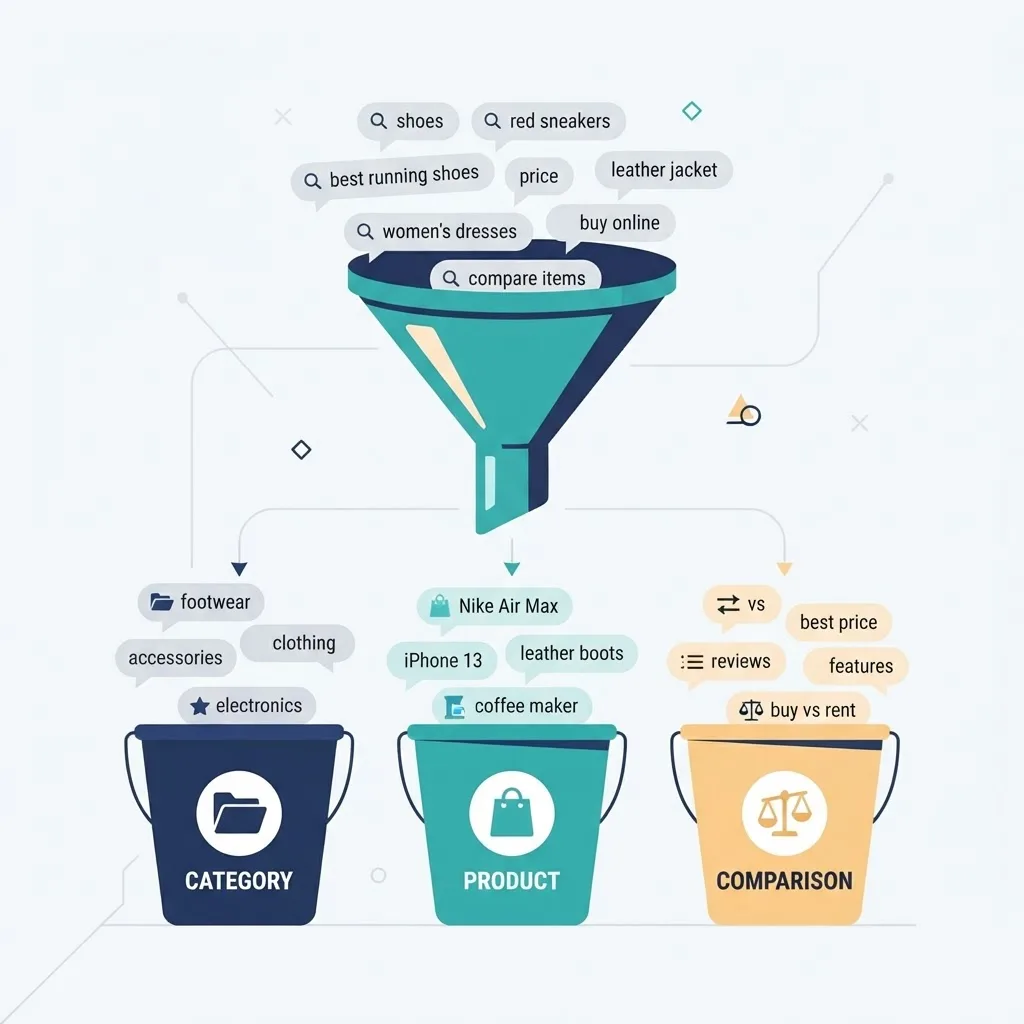
Ranking improves fastest when the right page type targets the right query type. Most stores lose rankings because they point product pages at category-level queries, or build blog posts for terms that only commercial pages can win.
Use this mapping as a working rule:
| Query Type | Example Pattern | Correct Page Type | Primary Goal |
|---|---|---|---|
| Broad commercial | running shoes for women | Category page | Rank plus browse depth |
| Attribute filtered | waterproof running shoes size 9 | Curated subcategory or facet page | Long-tail capture |
| Branded product | brand model X review | Product page | Conversion |
| Comparison | product A vs product B | Comparison or buying guide | Assisted conversion |
| Informational | how to choose running shoes | Blog or guide | Top-funnel plus internal linking |
Practical method that works on any catalog size:
- Export your Search Console queries for the last twelve months and group them by the page type currently receiving impressions.
- Flag every query where impressions are high but the ranking URL is the wrong page type. These mismatches are the cheapest wins available.
- Assign one primary query and two secondary queries per category page, and stop optimizing product pages for anything except branded and model-specific terms.
The reason this ordering matters is simple: category pages accumulate internal links, so they carry the authority needed to compete for broad terms, while product pages rarely do.
Step 2: Make Product Pages Genuinely Unique
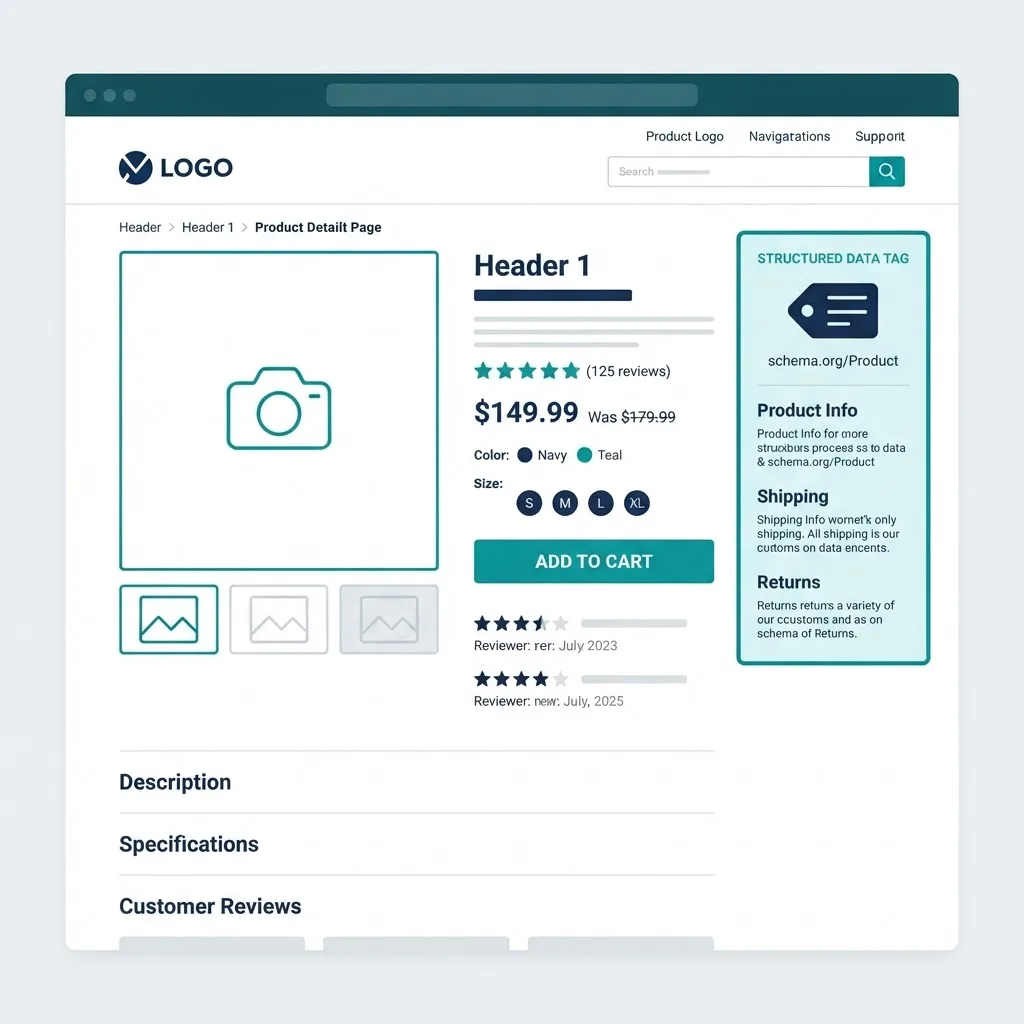
Manufacturer descriptions are the single most common cause of flat product page rankings. If your description matches fifty other retailers, there is no reason for a search engine to prefer your URL.
What to include on every product page that competitors usually omit:
- A specification table with the attributes shoppers filter by, written as text rather than an image.
- Two hundred to four hundred words of original description answering fit, compatibility, materials and use cases in plain language.
- Real customer reviews on the page itself, not loaded from a source search engines cannot render.
- Answered questions pulled from actual support tickets, which is the fastest source of genuine, experience-based content.
- Valid Product structured data including price, availability and aggregate rating so eligible rich results can appear.
Structured data is the highest-leverage technical item here. Google's search gallery documentation confirms that Product markup can make listings eligible for price, availability and review star treatment in results, which raises click-through rate on positions you already hold. That matters because organic click-through rate declines steeply after the first few results, so improving the appearance of a position four listing often produces more traffic than a marginal ranking gain.
For out-of-stock products, keep the URL live, mark availability correctly and recommend alternatives. Deleting the page discards accumulated links and rankings you will need again when stock returns.
Step 3: Fix Site Architecture and Crawl Waste
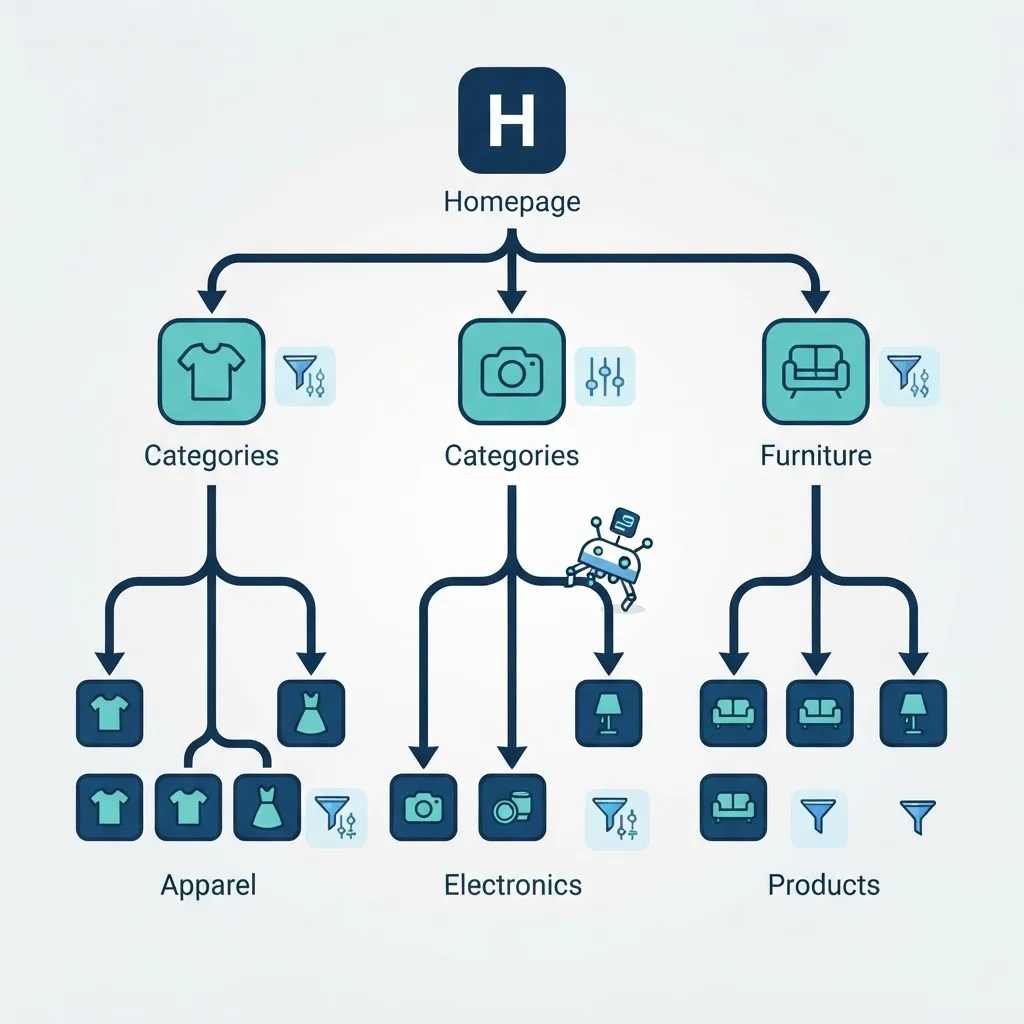
Crawl efficiency is the invisible ranking factor in e-commerce. If a crawler spends its budget on sorted, filtered and paginated duplicates, your new products get discovered slowly and your important categories get revisited less often.
A reliable architecture checklist:
- Keep every product within three clicks of the homepage through category and subcategory links.
- Allow indexing only for facet combinations with real search demand, such as brand plus category, and block or canonicalize the rest.
- Use canonical tags to consolidate sort and view parameters so signals concentrate on one URL.
- Keep pagination crawlable with plain links, never with script-only load-more buttons as the sole path.
- Return correct status codes: 301 for merged or renamed products, 410 for permanently discontinued items with no replacement.
- Maintain a clean XML sitemap that includes only indexable, canonical, in-stock URLs.
Internal linking deserves specific attention. Add contextual links from your best-performing guides and blog posts into the category pages you want to rank, using descriptive anchor text. This is the mechanism that transfers top-funnel authority into commercial pages, and it is where teams like the ZoneTechify Team typically find the largest untapped gains during a store audit.
If you are unsure whether e-commerce SEO belongs under marketing or operations in your own planning, the breakdown in this detailed category guide clarifies where the function sits within standard e-commerce taxonomy.
Step 4: Win on Page Experience and Mobile Speed

Page experience will not rescue irrelevant pages, but it decides close contests, and in e-commerce nearly every contest is close. Speed also compounds directly into revenue because slow product pages lose shoppers before they reach the cart.
Target these thresholds on mobile, measured with field data rather than lab scores:
- Largest Contentful Paint under 2.5 seconds, usually achieved by serving the main product image in a modern format at the correct size with high priority.
- Interaction to Next Paint under 200 milliseconds, achieved by deferring third-party scripts such as chat widgets, review loaders and analytics stacks.
- Cumulative Layout Shift under 0.1, achieved by reserving explicit dimensions for images, banners and promotional bars.
Two changes deliver most of the improvement on typical platforms: converting product imagery to compressed modern formats with explicit width and height, and auditing every third-party tag against the revenue it actually produces. Stores commonly run six or more marketing scripts, and removing the unused ones improves interaction responsiveness immediately.
For teams rebuilding storefronts rather than patching them, working with a specialist performance marketing partner keeps speed, tracking and content decisions aligned instead of competing with each other.
Step 5: Build Authority That Points at Commercial Pages
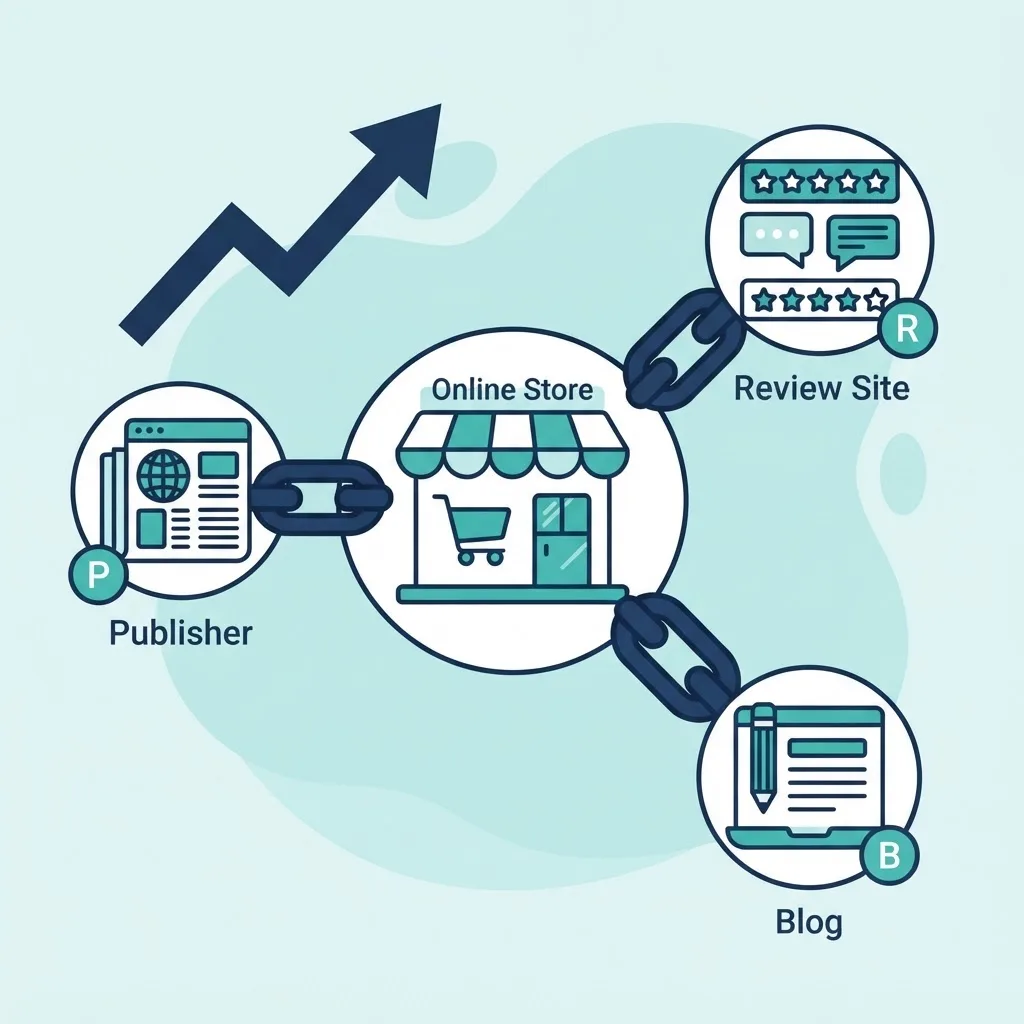
Authority determines which of the many technically sound stores actually ranks. The distinguishing factor is not total link count but where those links point.
Tactics that consistently earn links to commercial pages:
- Original data assets. Publish sizing, pricing or durability data from your own order and returns history. Proprietary numbers are cited, opinions are not.
- Supplier and manufacturer listings. Ask brands you stock to list you as an authorized retailer, linking to the relevant brand category page.
- Buying guides that deserve citation. A genuinely thorough guide earns links, then passes that value internally to categories.
- Digital public relations tied to real expertise. Offer product specialists as sources for journalists covering your niche.
Avoid paid link networks and mass guest posting. Beyond the policy risk, these links almost always point to the homepage, where they do the least good for category rankings.
Step 6: Measure the Right Outcomes
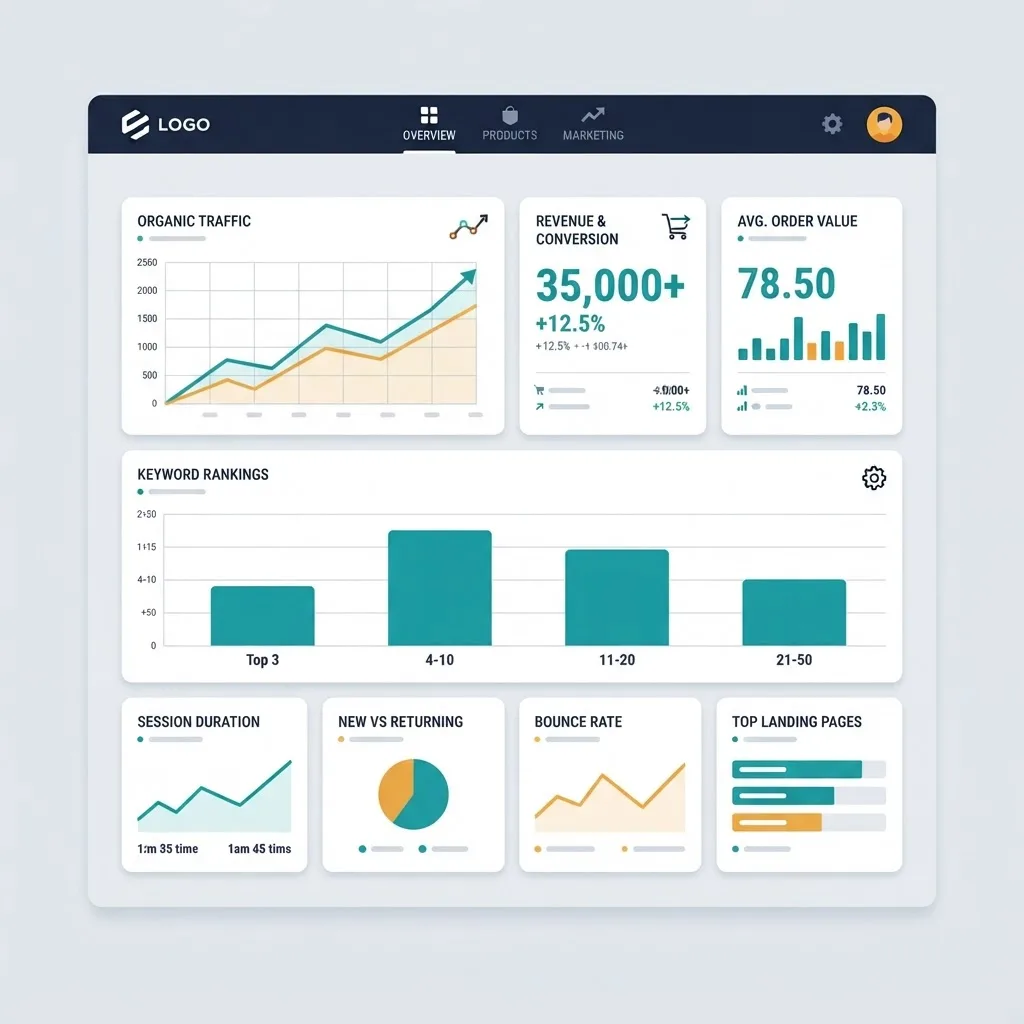
Ranking positions alone will mislead you, because e-commerce results vary by location, device and personalization. Measure the outputs that connect to revenue.
Track these five metrics monthly:
- Indexed versus submitted URLs in Search Console, which reveals crawl and quality problems early.
- Impressions and clicks segmented by page type, so you can tell whether category or product pages are improving.
- Non-branded organic sessions, the honest measure of SEO growth versus brand demand.
- Organic revenue per landing page, which identifies which categories deserve further investment.
- Core Web Vitals field data, reviewed after every template or script change.
Expect meaningful movement in eight to sixteen weeks for technical and on-page work, and longer for authority-driven gains on competitive commercial terms. Anyone promising faster results on high-competition category terms is describing an exception, not a plan.
Key Takeaways
- E-commerce ranking is primarily a page-inventory and crawl-efficiency problem, not a copywriting problem.
- Category pages should target broad commercial queries; product pages should target branded and model-specific queries.
- Unique specifications, on-page reviews and valid Product structured data separate your product URLs from identical competitor listings.
- Uncontrolled faceted navigation causes duplicate content and wasted crawl budget, which Google documents explicitly.
- Mobile targets to hold: LCP under 2.5 seconds, INP under 200 milliseconds, CLS under 0.1.
- Links pointing at category pages influence commercial rankings far more than homepage links.
- Judge progress by non-branded sessions and organic revenue per landing page, not by average position alone.
Frequently Asked Questions (FAQ)
How long does it take to improve e-commerce rankings?
Technical fixes and product page improvements usually show measurable movement within eight to sixteen weeks. Competitive category terms driven by authority often take six to twelve months. Timelines depend on catalog size, existing crawl health, and how many competitors already hold the positions you want.
Should I optimize category pages or product pages first?
Optimize category pages first. They attract broad commercial searches, receive the most internal links, and remain stable even when individual products sell out. Once categories rank, fix product pages for branded and model-specific queries, where unique specifications and genuine reviews decide which retailer wins.
Do product reviews actually help e-commerce rankings?
Yes, in two ways. Reviews add original, regularly refreshed text that differentiates your page from retailers using identical manufacturer copy. With valid review structured data, they can also make listings eligible for star ratings, which typically lifts click-through rate at your existing position.
How do I stop filter and sort URLs from hurting my SEO?
Allow indexing only for filter combinations with real search demand, such as brand plus category. Canonicalize sort, view and pagination variants to the main URL, block low-value parameters from crawling, and keep them out of your sitemap. This preserves crawl budget for products and categories.
What should I do with out-of-stock product pages?
Keep the URL live, mark availability accurately in your structured data, and show related or replacement products. Deleting the page discards its links and rankings. Use a 301 redirect only when a direct replacement exists, and a 410 when the product is permanently gone.
Is site speed really a ranking factor for online stores?
Speed rarely outranks relevance, but it decides close matchups and directly affects conversions. Prioritize mobile field data: compress and size product images correctly, defer non-essential third-party scripts, and reserve space for banners so layout does not shift during loading.