A complete, expert guide to pursuing a PhD in Artificial Intelligence in India, covering eligibility, top institutes, admissions, funding, and career paths.
PhD in Artificial Intelligence in India
Artificial Intelligence has moved from research labs into hospitals, banks, farms, and courtrooms across India. That shift has created strong demand for people who can build, question, and govern these systems at the deepest level. A PhD in Artificial Intelligence in India is now one of the most future-proof academic routes available, blending rigorous research with real industry pull. Having advised students and reviewed research proposals for AI programs, I have seen how the right choices in eligibility, institute, and funding can shape an entire career.
This guide answers the questions that actually matter: who qualifies, where to study, how admissions work, what stipends to expect, and which careers open up afterward. Everything below is written to help you make a confident, informed decision.
Quick Answer: A PhD in Artificial Intelligence in India typically takes 3 to 5 years and requires a relevant master's degree, a valid GATE or entrance score, and a research proposal. Top options include the IITs, IISc Bangalore, and IIITs, most offering monthly stipends and strong industry and academic career outcomes.
What Is a PhD in Artificial Intelligence?
A PhD in Artificial Intelligence is a doctoral research degree focused on advancing knowledge in areas like machine learning, deep learning, natural language processing, computer vision, robotics, and AI ethics. Unlike a taught master's, the core of a PhD is original research that produces new methods, models, or theoretical insights, usually published in peer-reviewed venues and defended in a thesis.
In India, most AI doctorates are housed within Computer Science, Electrical Engineering, or dedicated AI and Data Science departments. You work under a faculty supervisor, complete a small set of coursework, clear a comprehensive exam, and then spend the majority of your time on research. The end goal is not just a title but the ability to independently define and solve problems that no one has solved before.
Why Pursue an AI PhD in India Right Now?
India is one of the fastest-growing AI ecosystems in the world, which makes doctoral research here unusually well-timed. According to NASSCOM, India's AI market is projected to grow rapidly through the coming decade, and the country consistently ranks among the top nations for AI talent concentration. This means research is closely tied to funded projects, startups, and government missions like the IndiaAI initiative.
There are three concrete reasons to consider India specifically:
- Cost efficiency: Tuition at public institutes is low, and most PhD scholars receive a stipend that covers living expenses.
- Research relevance: Problems studied here, such as low-resource language models and affordable healthcare AI, have global significance.
- Industry access: Proximity to hubs like Bangalore and Hyderabad creates internship and collaboration opportunities with leading labs.
Businesses building on this momentum often partner with specialists such as ZoneTechify and WebPeak to turn research-grade AI into deployable products.
Eligibility Criteria for a PhD in AI in India
The standard eligibility for an AI PhD in India is a master's degree in a relevant field with a strong academic record, though several institutes now admit exceptional B.Tech graduates directly. Understanding these requirements early prevents wasted application cycles.
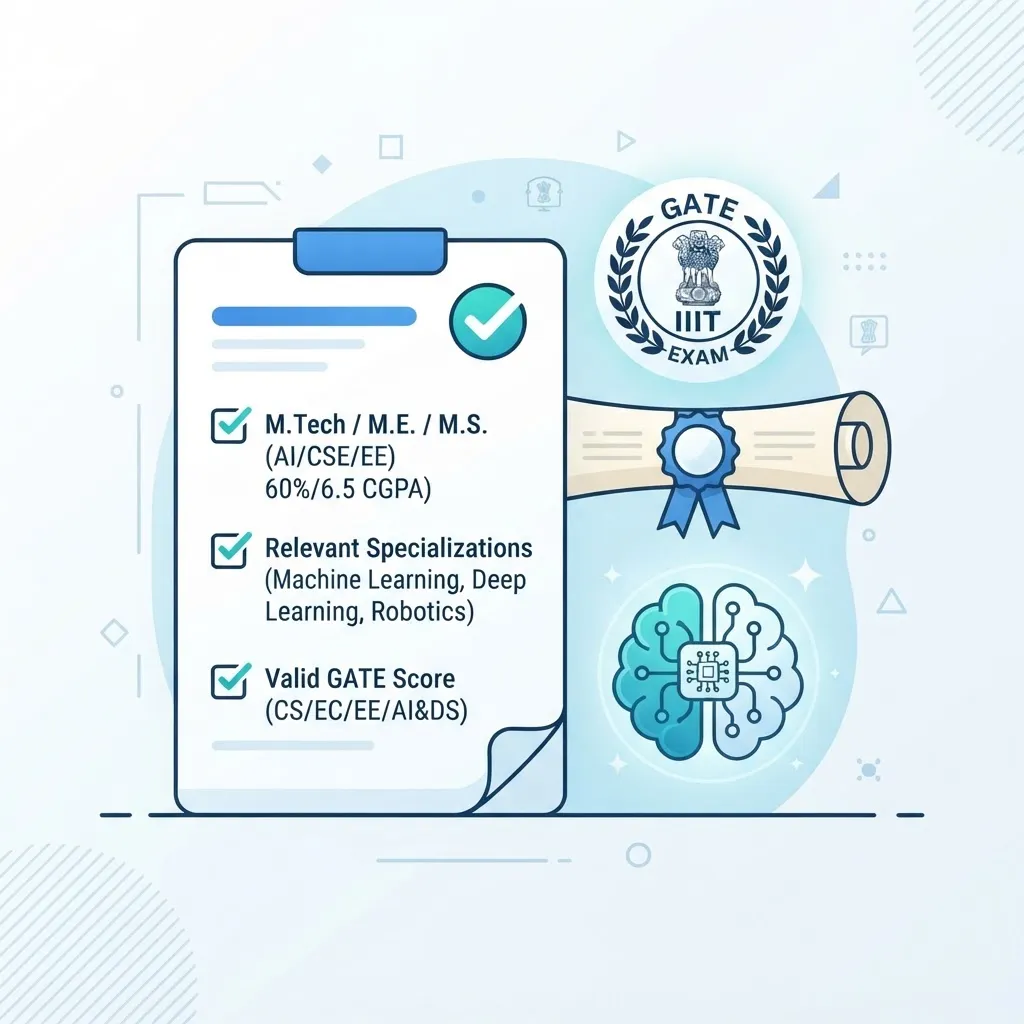
Most programs expect the following:
- Academic qualification: M.Tech, M.E., M.Sc, MCA, or equivalent in CS, IT, Electronics, Mathematics, or Statistics, usually with at least 60 percent marks or a 6.5 CGPA.
- Entrance score: A valid GATE score, or a qualifying score in national tests like UGC-NET, CSIR-NET, or institute-specific exams.
- Direct PhD route: Outstanding B.Tech graduates from reputed institutions may be admitted directly at some IITs and IISc.
- Research aptitude: A clear statement of purpose and, increasingly, a short research proposal.
For international or self-funded applicants, requirements can differ, so always confirm with the specific department before applying.
Top Institutes Offering a PhD in Artificial Intelligence
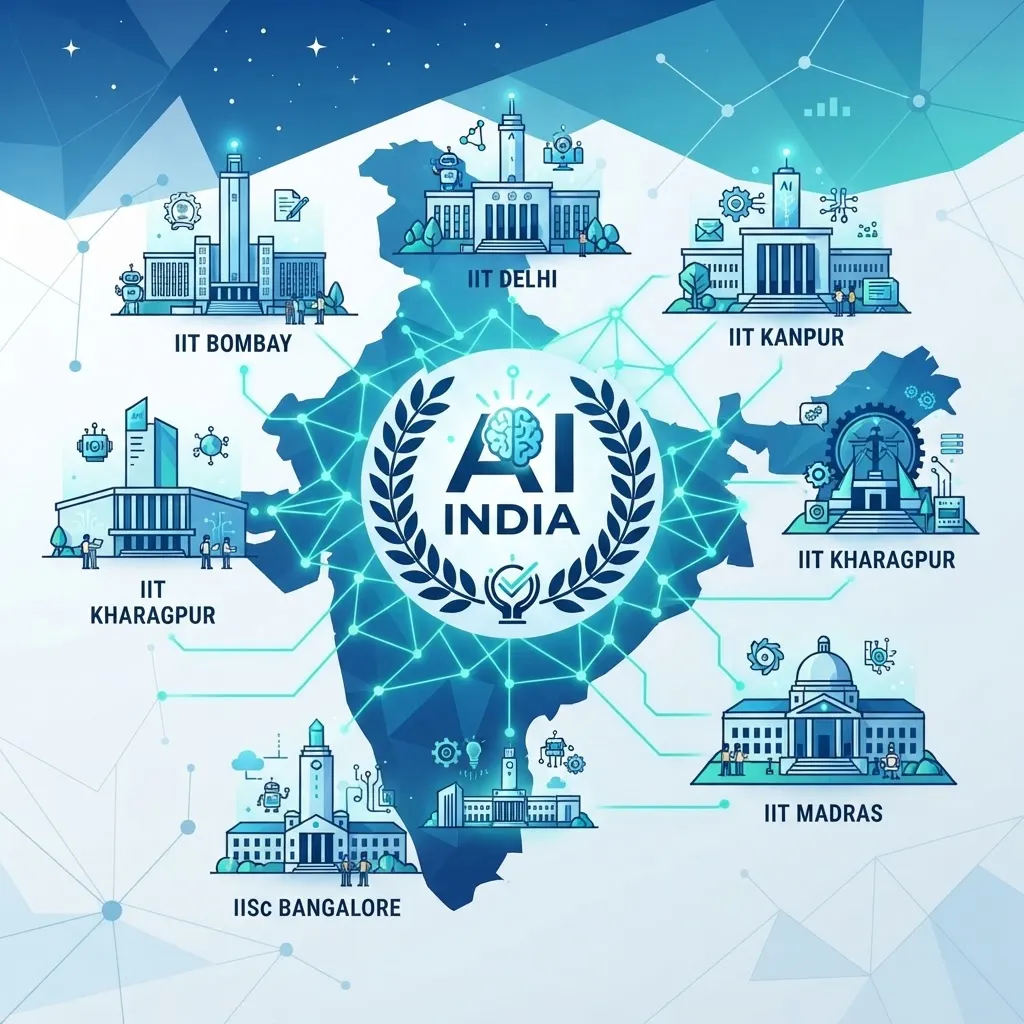
The strongest AI doctoral programs in India are concentrated in the IITs, IISc Bangalore, IIITs, and a few leading private universities. Choosing the right institute depends less on rankings and more on faculty whose research aligns with your interests.
| Institute | Known Research Strengths | Funding Availability |
|---|---|---|
| IISc Bangalore | Machine learning, computer vision, AI theory | Yes |
| IIT Bombay | NLP, deep learning, AI systems | Yes |
| IIT Madras | Robotics, reinforcement learning, data science | Yes |
| IIT Delhi | Vision, healthcare AI, ML systems | Yes |
| IIIT Hyderabad | NLP, vision, speech, cognitive science | Yes |
My consistent advice to applicants is to read recent publications from a department, shortlist two or three potential supervisors, and email them a concise note about shared research interests before applying. Supervisor fit is the single biggest predictor of a smooth, productive PhD.
The Admission Process Step by Step
The AI PhD admission process in India generally follows a written-test-plus-interview model, and knowing the sequence helps you prepare with less stress. While details vary by institute, the core stages are remarkably consistent.
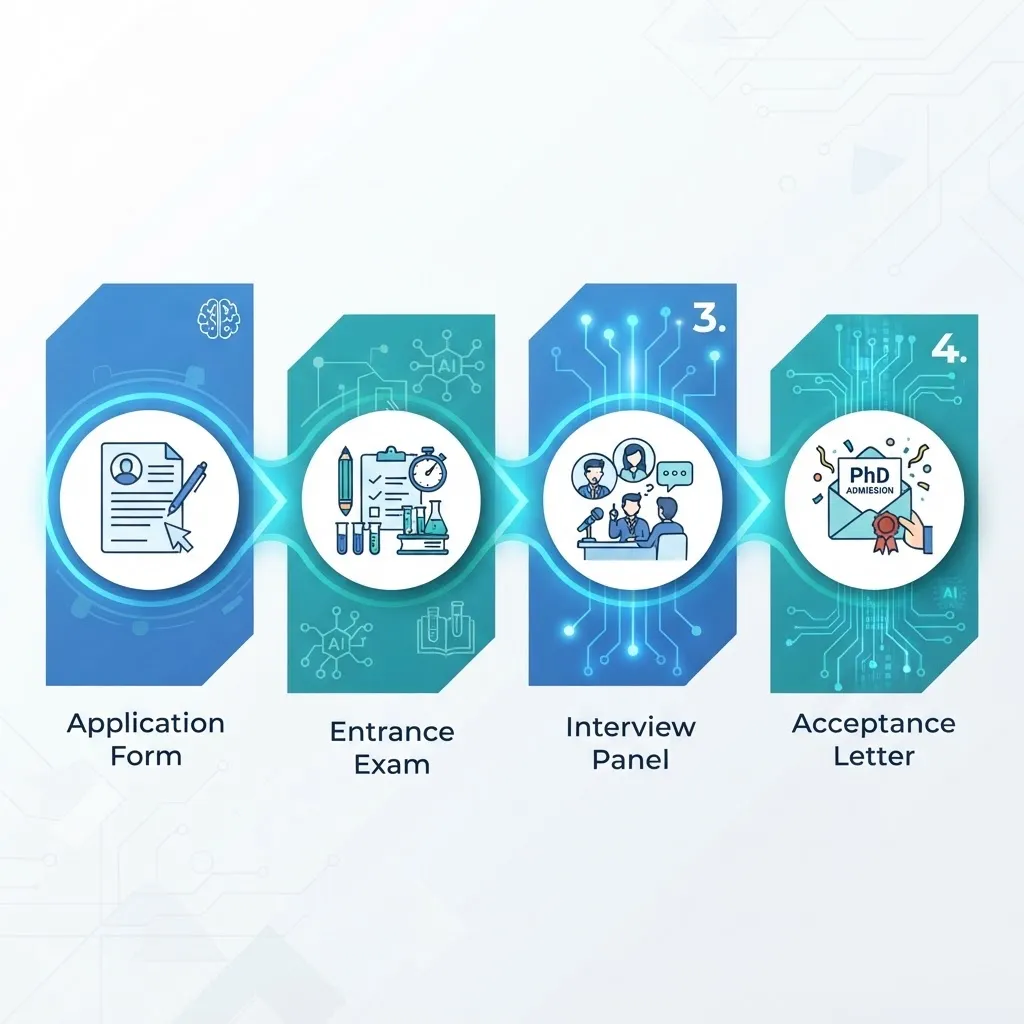
- Application: Submit the online form with academic transcripts, GATE or NET scores, and a statement of purpose.
- Shortlisting: Departments screen candidates on academics, test scores, and research fit.
- Written test: A subject test covering mathematics, algorithms, probability, and core AI concepts.
- Interview: A technical panel assesses your fundamentals, research thinking, and area of interest.
- Offer and supervisor allocation: Selected candidates receive an offer and are matched with a supervisor.
Preparation should center on strong fundamentals in linear algebra, probability, and machine learning, plus the ability to discuss a research idea clearly. Panels care far more about how you think than how much you have memorized.
Funding, Stipends, and Fellowships
Most full-time AI PhD scholars in India receive a monthly stipend, which is one of the biggest advantages of studying at public institutes. This makes doctoral research financially sustainable rather than a burden.
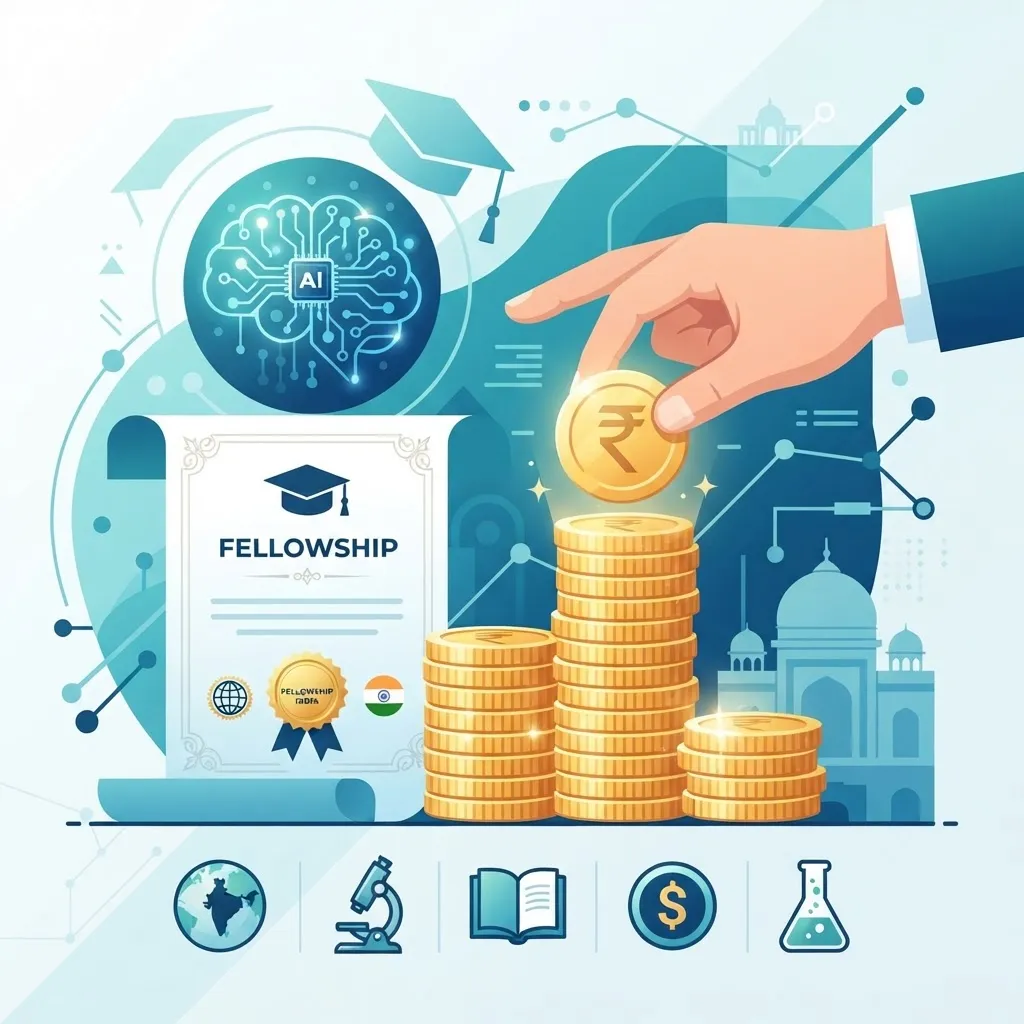
Common funding sources include:
- Institute assistantships: Standard monthly stipends for teaching or research assistance, often revised upward periodically.
- Prime Minister's Research Fellowship (PMRF): A prestigious, higher-value fellowship for exceptional scholars at eligible institutes.
- CSIR and UGC fellowships: National fellowships awarded through qualifying exams.
- Industry-sponsored positions: Projects funded by companies that also provide real-world datasets.
Beyond the stipend, scholars usually get contingency grants for conferences and equipment. Always ask a department about the exact current stipend and duration of support, since these figures are periodically updated by the government.
Career Opportunities After an AI PhD
An AI PhD opens doors to high-impact roles in academia, corporate research labs, deep-tech startups, and public policy. The degree signals that you can lead research, not just implement it, which commands both responsibility and strong compensation.
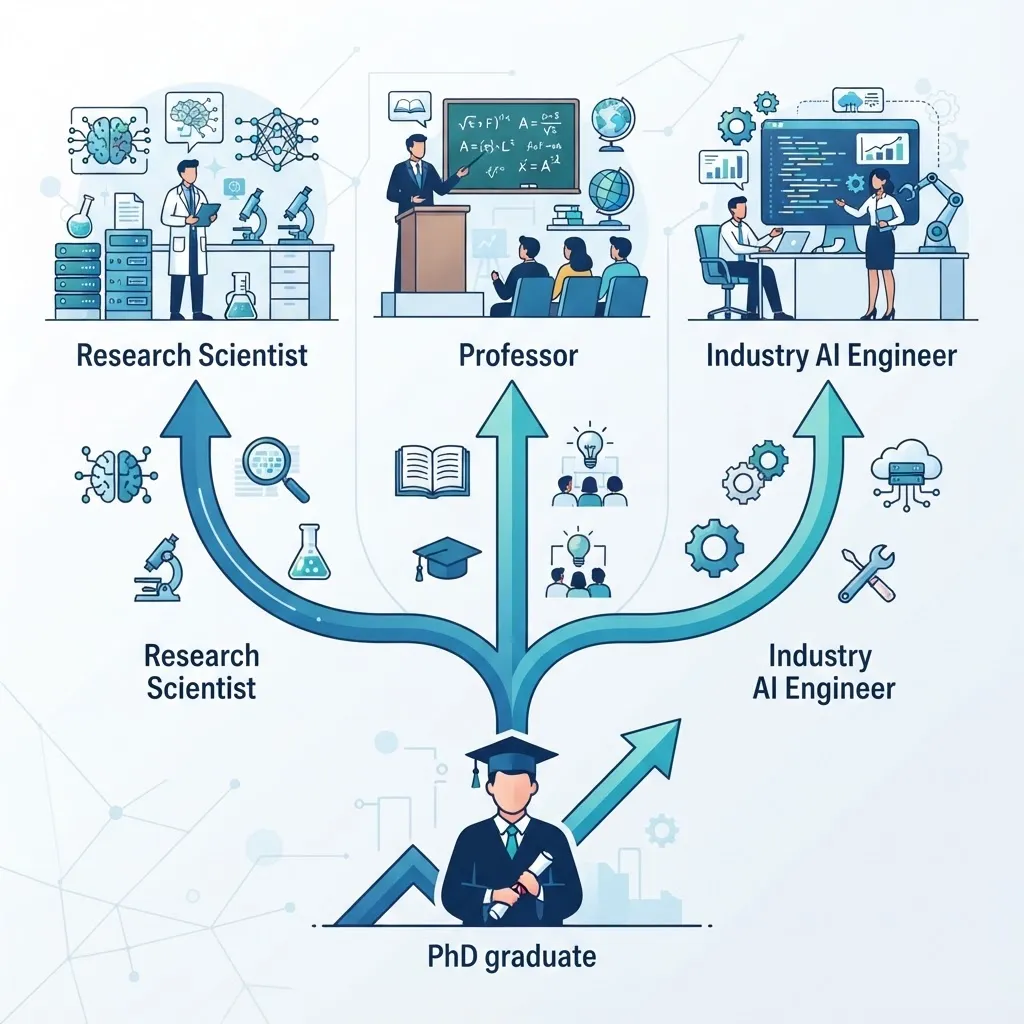
Typical paths include:
- Research scientist: Working in corporate AI labs on cutting-edge models and applications.
- Professor or academic researcher: Teaching and running your own research group.
- Applied AI lead: Guiding machine learning strategy at product companies and startups.
- AI policy and governance specialist: Shaping responsible AI standards for governments and organizations.
Organizations increasingly seek doctoral talent to lead specialized teams, and firms offering artificial intelligence services actively recruit researchers who can translate advanced methods into reliable production systems.
Common Mistakes to Avoid
Many talented applicants stumble not on ability but on strategy. Based on real application reviews, the most frequent mistakes are choosing an institute purely by ranking, ignoring supervisor fit, and submitting a vague research statement. A PhD is a multi-year commitment, so alignment with your supervisor's work matters more than prestige.
Other avoidable errors include underestimating the mathematics involved, applying without reading recent departmental research, and neglecting to plan finances despite available stipends. Treat your application like a research project: specific, evidenced, and clearly reasoned.
The Future of AI Research in India
AI research in India is set to expand sharply as government missions, private investment, and academic capacity grow together. According to Stanford's AI Index, global investment in AI has surged over the past decade, and India is capturing a rising share of that talent and funding.

Emerging focus areas include multilingual language models for Indian languages, AI for agriculture and healthcare, and trustworthy, explainable AI. Doctoral scholars entering now are positioned to shape these domains rather than simply follow them, making this an exceptional moment to begin.
Key Takeaways
- A PhD in Artificial Intelligence in India usually takes 3 to 5 years and requires a relevant master's degree plus a valid GATE or NET score.
- IISc Bangalore, the IITs, and IIIT Hyderabad are among the strongest institutes, but supervisor fit matters more than rankings.
- Most full-time scholars receive a monthly stipend, with premium options like the PMRF for top candidates.
- Career paths span research science, academia, applied AI leadership, and AI policy.
- India's growing AI ecosystem makes doctoral research here both affordable and globally relevant.
Frequently Asked Questions (FAQ)
How long does a PhD in Artificial Intelligence in India take?
Most AI PhDs in India take between 3 and 5 years to complete. The timeline depends on your research area, publication requirements, and progress through coursework, comprehensive exams, and thesis writing. Full-time scholars generally finish faster than part-time candidates balancing jobs alongside their doctoral work.
Can I do a PhD in AI without an M.Tech?
Yes, several IITs and IISc admit exceptional B.Tech graduates directly into PhD programs. You typically need a strong academic record and a valid GATE score. Candidates with an M.Sc, MCA, or master's in mathematics or statistics are also eligible at many institutes, so verify requirements before applying.
Do AI PhD students in India get paid?
Yes, most full-time AI PhD scholars receive a monthly stipend through institute assistantships or national fellowships. Prestigious options like the PMRF pay significantly more. Stipends usually cover living costs, and scholars also receive contingency grants for conferences, travel, and research equipment during their program.
Which is the best institute for an AI PhD in India?
There is no single best institute; it depends on your research interest. IISc Bangalore, IIT Bombay, IIT Madras, IIT Delhi, and IIIT Hyderabad are all outstanding. Choose based on faculty whose work matches your goals, since supervisor alignment strongly influences your research experience and outcomes.
Is a PhD in AI worth it in India?
For those passionate about research, yes. India's AI sector is expanding quickly, creating demand for doctoral talent in labs, academia, and deep-tech startups. The degree offers financial support through stipends, strong career prospects, and the chance to work on globally significant, high-impact AI problems.