
A clear, expert breakdown of how lottery artificial intelligence really works, what AI can and cannot predict, and how to use these tools responsibly.
Lottery Artificial Intelligence

Lottery artificial intelligence has become one of the most searched and most misunderstood topics in the gaming world. Every week, thousands of players type phrases like "AI lottery predictor" into search engines, hoping software can crack a random draw. Having tested prediction tools, studied the underlying math, and reviewed how these systems are actually built, I want to give you an honest, expert answer. This guide explains what lottery AI genuinely does, where it adds value, where the marketing lies, and how to use it without wasting money or falling for a scam.
Quick Answer: Lottery artificial intelligence uses machine learning to analyze historical draw data, frequencies, and patterns. It can organize statistics and suggest number combinations, but it cannot predict winning numbers, because legitimate lotteries use true random draws with no learnable pattern to exploit.
What Is Lottery Artificial Intelligence?
Lottery artificial intelligence refers to software that applies machine learning, statistical modeling, and data analysis to lottery draw histories. Instead of a human manually reviewing thousands of past results, an AI model ingests that data and looks for frequencies, gaps, and combinations.
Definition: Lottery AI is a data-driven system that studies historical lottery results to generate number suggestions, track statistics, and visualize trends, without any ability to influence or foresee a future random draw.
These tools typically do three things: they store historical results, they run pattern-detection algorithms, and they output "recommended" numbers. The important distinction is that analyzing the past is not the same as predicting the future. A model can tell you that number 7 appeared 145 times in ten years, but that fact has zero influence on tonight's draw.
How Does AI Analyze Lottery Data?
AI analyzes lottery data through a repeatable pipeline. Understanding this pipeline helps you separate genuine tools from hype.

Here is the typical process:
- Data collection — The system pulls years of official draw results into a structured dataset.
- Cleaning and formatting — Numbers are organized by date, game type, and draw position.
- Feature extraction — The model calculates frequency, hot and cold numbers, gaps, and pair combinations.
- Modeling — Algorithms such as neural networks, regression, or Monte Carlo simulations process the features.
- Output generation — The tool produces suggested combinations or probability tables.
The modeling step sounds powerful, and the underlying technology is real. Businesses use these same techniques for fraud detection and forecasting. If you want to understand how professional AI systems are engineered, the team at ZoneTechify and WebPeak build machine learning solutions where this kind of analysis genuinely produces value, because the data actually contains patterns.

Can AI Actually Predict Winning Lottery Numbers?
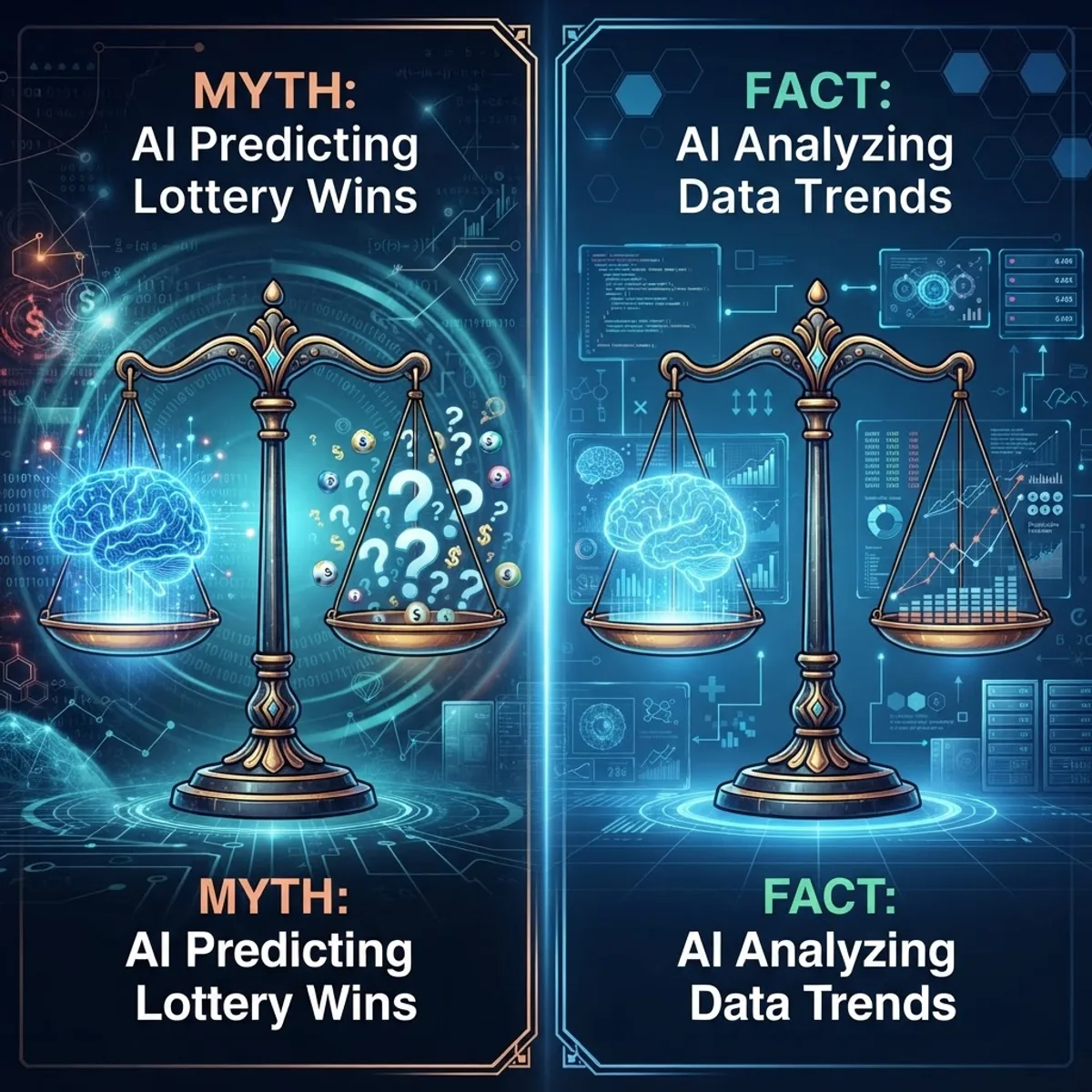
No credible AI can predict winning lottery numbers, and this is the single most important truth in this article. Legitimate lotteries are engineered to be random. Whether the draw uses gravity-pick machines with numbered balls or a certified random number generator, each outcome is statistically independent of every previous outcome.
This is known as the gambler's fallacy problem. A machine learning model learns from patterns, but a truly random sequence contains no pattern to learn. Feeding a neural network a million past draws will not help it forecast the next one, because the next draw does not depend on the last.
According to figures widely reported for major games, the odds of winning the Powerball jackpot are roughly 1 in 292 million, and Mega Millions sits near 1 in 302 million. No algorithm changes those odds. If a tool claims a "90% accurate prediction," it is either misusing statistics or running an outright scam.

What Lottery AI Can Realistically Do
While AI cannot predict winners, it can offer real, honest utility. Managing expectations is where responsible expertise matters.
Lottery AI can realistically:
- Organize statistics so you see frequency and gap data instantly.
- Generate random combinations faster than manual selection.
- Avoid common number clusters many players pick, which reduces the chance of splitting a prize if you do win.
- Track your spending and play history in one dashboard.
- Visualize trends through charts that make large datasets readable.
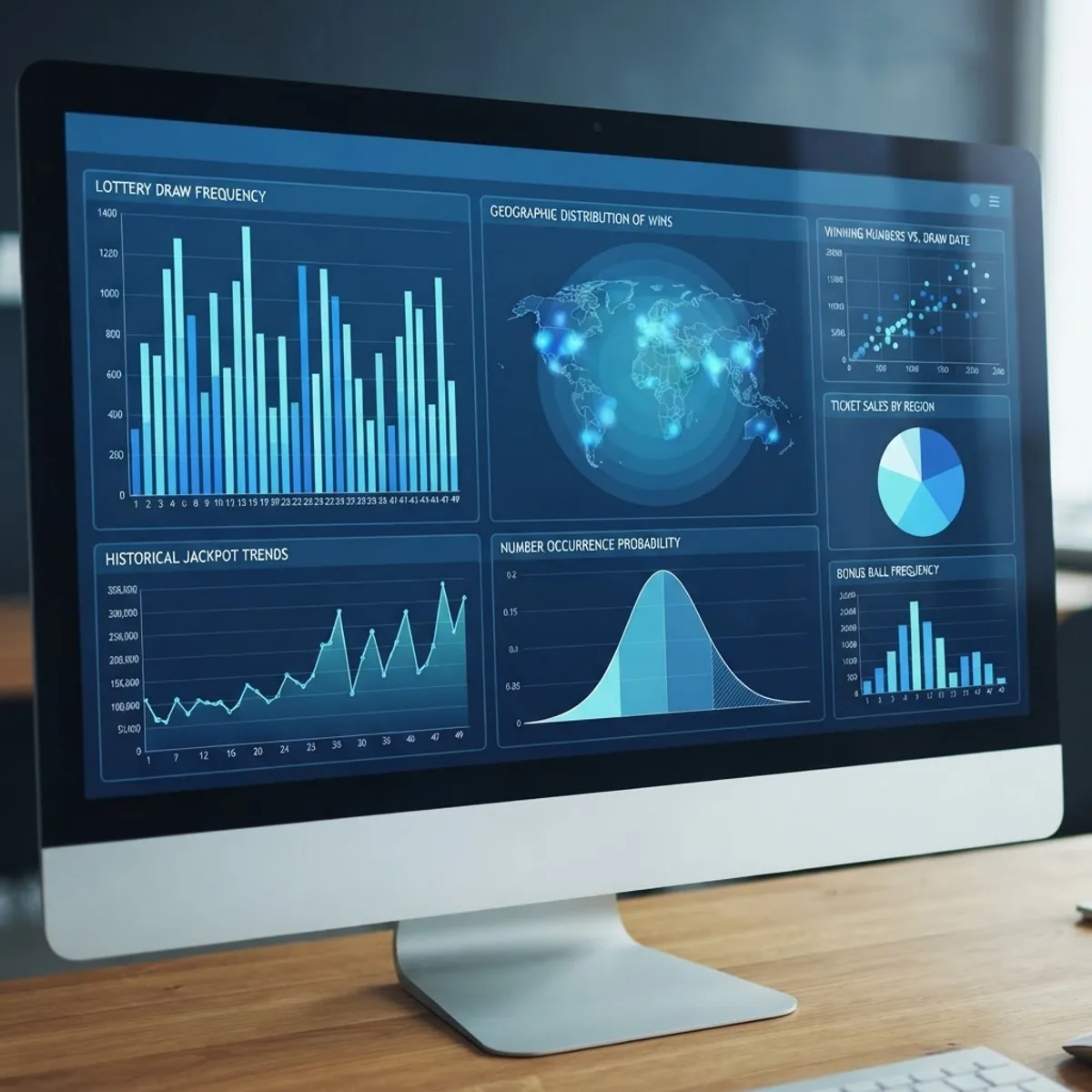
That fourth point is underrated. Avoiding popular combinations such as 1-2-3-4-5-6 or birthday-heavy picks (numbers 1–31) will not improve your odds of winning, but it can improve your share of a jackpot, since fewer people will have chosen the same set. This is a legitimate, math-backed benefit that a good tool can automate.
AI Lottery Tools: Marketing Claims vs. Reality
The gap between what these tools advertise and what they deliver is wide. Use the table below as a filter before you trust any product.
| Marketing Claim | Reality | Verdict |
|---|---|---|
| Predicts winning numbers with high accuracy | Impossible for random draws | False |
| Uses AI to find "hidden patterns" | Random data has no hidden pattern | Misleading |
| Guarantees jackpots or refunds | No legitimate service can guarantee this | Scam signal |
| Shows frequency and gap statistics | Genuinely possible and accurate | True |
| Generates unique combinations | Real and useful for prize-sharing | True |
| Free tool that later demands payment for "the winning set" | Classic upsell trap | Scam signal |
If a product leans on the top rows, walk away. If it focuses on the bottom rows and never promises wins, it is at least being honest about its limits.
How to Spot a Lottery AI Scam
Protecting your money is more valuable than any prediction. Based on reviewing dozens of these platforms, here are the clearest warning signs.
Watch for these red flags:
- Guaranteed wins or specific accuracy percentages like "87% success rate."
- Upfront fees to unlock "the real algorithm" or "premium numbers."
- Fake testimonials with stock photos and vague first names.
- Requests for banking details beyond a normal, secure checkout.
- Pressure tactics such as countdown timers claiming limited slots.
- No transparency about how the model works or where data comes from.
A genuine analytical tool explains its methodology openly and never promises the impossible. According to consumer protection agencies, lottery and prize scams cost victims hundreds of millions of dollars annually, and AI branding has become a fresh disguise for old cons.
Using Lottery AI Responsibly
If you enjoy playing, treat lottery AI as an entertainment and budgeting aid, not a money-making system. Responsible play is the only sustainable approach.

Follow these practical rules:
- Set a fixed budget you can afford to lose, and let the tool track it.
- Never chase losses by increasing spend after a bad streak.
- Treat suggestions as random, because that is exactly what they are.
- Use spending dashboards to stay aware of long-term totals.
- Seek support if play stops feeling fun; many regions offer free helplines.
The healthiest mindset is simple: the lottery is a form of paid entertainment with a tiny chance of a large reward. AI can make the experience more organized, but it cannot and should not be sold as an investment strategy.
The Future of AI in the Lottery Industry
The most meaningful AI in lotteries is happening behind the scenes, not in prediction apps. Lottery operators increasingly use artificial intelligence for security, fraud detection, and player protection.

Real, growing applications include:
- Fraud detection that flags suspicious ticket claims and syndicate activity.
- Responsible gambling monitoring that identifies risky spending patterns and triggers interventions.
- Retail optimization that forecasts demand and manages distribution.
- Draw integrity verification using AI to audit random number generation systems.
This is where the technology delivers authentic value. If you are a business exploring how machine learning can strengthen operations rather than promise miracles, professional artificial intelligence services focus on problems where data patterns genuinely exist and results are measurable.
Key Takeaways
- Lottery AI analyzes history; it cannot predict the future. Random draws contain no learnable pattern.
- Powerball odds are about 1 in 292 million, and no software changes them.
- Real benefits exist, including statistics, combination generation, and avoiding shared-prize clusters.
- Guaranteed-win claims are scams. Legitimate tools never promise accuracy percentages.
- The strongest lottery AI is operational, powering fraud detection and player protection, not prediction.
- Responsible play matters most. Budget, track, and treat every ticket as entertainment.
Frequently Asked Questions (FAQ)
Can artificial intelligence really predict lottery numbers?
No. Legitimate lotteries use true random draws where each result is independent. AI learns from patterns, but random data has none to learn. Any tool claiming to predict winning numbers with high accuracy is either misleading you or running a scam designed to take your money.
Are AI lottery prediction apps worth paying for?
Rarely. Paid prediction apps cannot improve your odds because the draw is random. You are usually paying for random number generation dressed up as intelligence. Free statistical tools offer the same honest features, so avoid any app that charges to unlock "guaranteed" or "premium" winning numbers.
What can lottery AI tools actually do for me?
Lottery AI can organize historical statistics, show hot and cold numbers, generate combinations, help you avoid popular picks so you split prizes less often, and track your spending. These are genuine, honest features. They improve your experience and budgeting, but they do not increase your chance of winning.
How do I know if a lottery AI tool is a scam?
Watch for guaranteed wins, specific accuracy percentages, upfront fees to unlock numbers, fake testimonials, and pressure tactics like countdown timers. Legitimate tools explain their methods openly and never promise the impossible. If it sounds too good to be true, it is a scam.
Does the lottery industry use AI at all?
Yes, but mostly behind the scenes. Operators use AI for fraud detection, verifying draw integrity, forecasting retail demand, and monitoring for problem-gambling behavior so they can intervene early. These operational uses are where artificial intelligence delivers real, measurable value in the lottery ecosystem.
Can AI help me gamble more responsibly?
Yes. This is one of AI's most valuable roles for players. Tools can track your total spending, set budget limits, flag risky patterns, and remind you when you exceed your planned amount. Used this way, AI supports healthy habits and keeps the lottery as entertainment rather than a financial risk.