
A practical, expert guide to how AI is reshaping contact centers, from conversational bots and agent assist to sentiment analysis, routing, and predictive analytics.
How Artificial Intelligence Is Transforming Contact Centers

The contact center has quietly become one of the most AI-saturated environments in modern business. What was once a room full of headset-wearing agents reading from static scripts is now a data-rich operation where machine learning listens to every call, drafts replies in real time, and predicts staffing needs before Monday morning. Having advised support teams through these deployments, I can tell you the shift is not hype: it is a measurable change in how customers are served and how agents spend their day.
This guide breaks down exactly how artificial intelligence is transforming contact centers, what actually works, where it fails, and how to adopt it without alienating your customers or your staff.
Quick Answer: Artificial intelligence transforms contact centers by automating routine queries with conversational bots, assisting live agents with real-time suggestions, routing calls intelligently, analyzing customer sentiment, and forecasting demand. The result is faster resolutions, lower costs, and more consistent service across voice, chat, and email channels.
Why AI Matters More Than Ever in Customer Service
Customer expectations have outpaced traditional staffing models. People want instant answers at 2 a.m., on the channel of their choice, without repeating themselves three times. Human-only contact centers simply cannot scale to meet that demand affordably.
AI closes the gap. According to Gartner, by 2026 conversational AI deployments within contact centers are projected to reduce agent labor costs by roughly $80 billion. Meanwhile, industry surveys consistently show that around 60% of customers say fast resolution is the single most important part of a good service experience. AI directly attacks both problems: it lowers cost and speeds up resolution at the same time.
The important nuance most vendors skip is this: AI does not replace your contact center. It restructures it. Repetitive work moves to machines, and humans move toward complex, emotional, and high-value conversations.
The Core Ways AI Is Transforming Contact Centers
Let's move past buzzwords into the specific mechanisms doing the heavy lifting.
1. Conversational AI and Virtual Agents
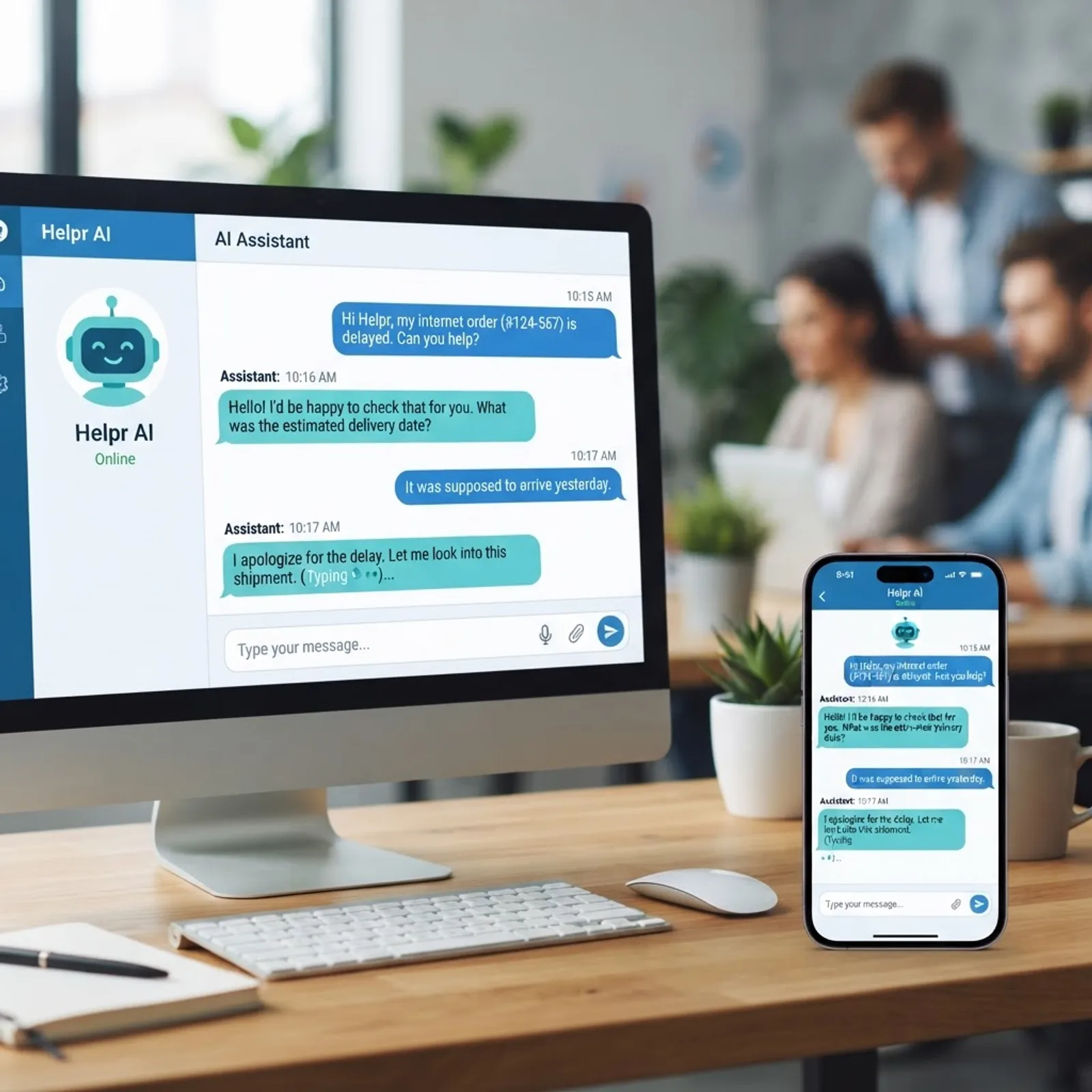
Conversational AI refers to systems that understand natural human language and respond in a human-like way across chat and voice. Modern virtual agents, built on large language models, can now handle password resets, order tracking, billing questions, and appointment scheduling end to end.
Definition: A virtual agent is an AI-powered assistant that resolves customer requests autonomously, without a human in the loop, while knowing when to escalate.
The practical win is deflection. A well-tuned virtual agent can resolve 40% to 60% of incoming Tier-1 queries without ever touching a human queue. That frees your team to focus on the conversations that actually require judgment and empathy.
2. AI Agent Assist for Live Support

Agent assist is where AI shines without any risk of a robotic customer experience. Instead of replacing the agent, AI works as a silent co-pilot. As the customer speaks or types, the system transcribes the conversation, surfaces relevant knowledge base articles, drafts suggested responses, and flags compliance requirements.
In deployments I have reviewed, agent assist tools consistently cut average handle time by 15% to 25% and dramatically shorten onboarding for new hires. A brand-new agent backed by AI can perform like a mid-level veteran within weeks, because the knowledge is delivered exactly when it is needed.
3. Intelligent Call Routing
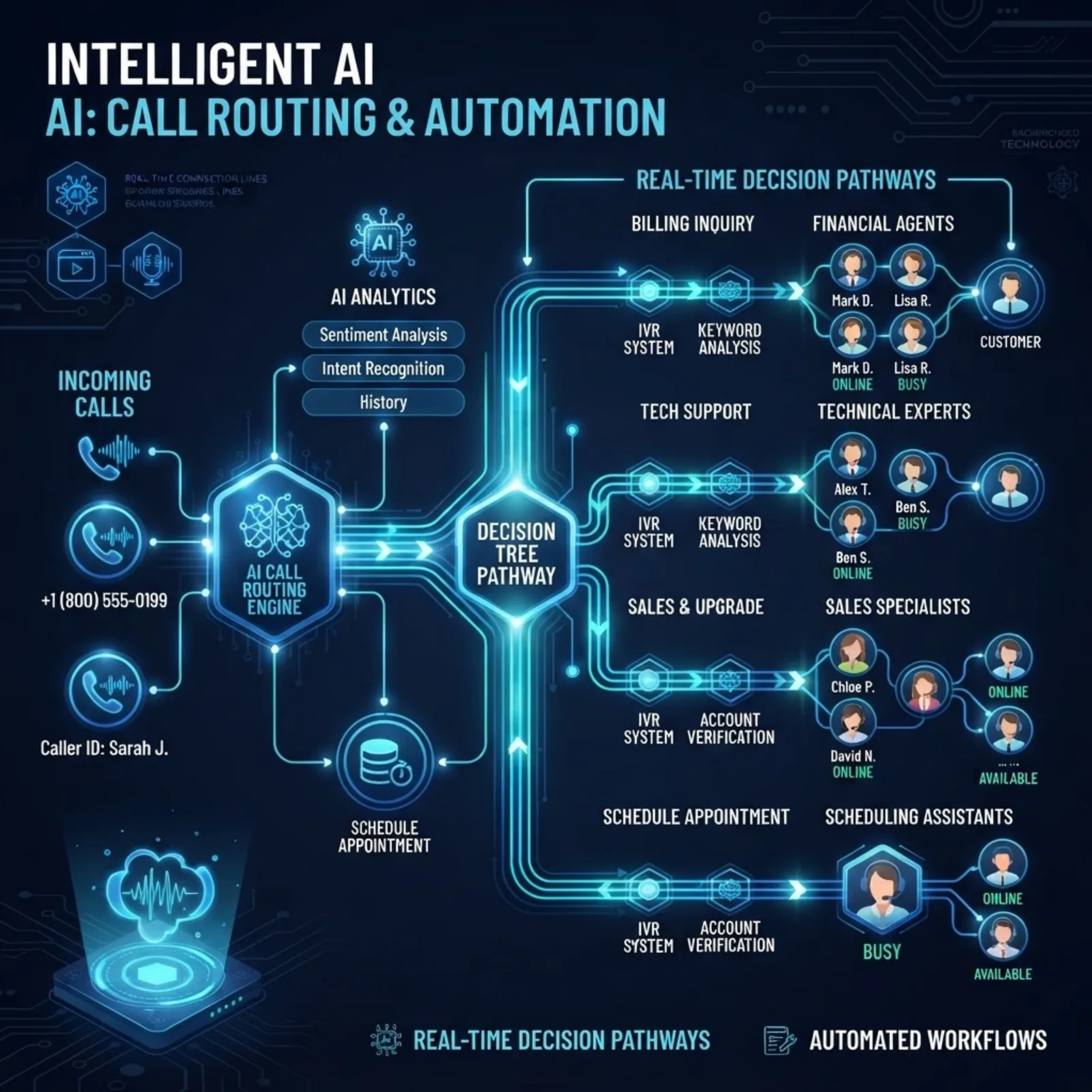
Traditional routing sends callers to the next available agent. AI-driven routing is smarter: it analyzes intent, customer history, sentiment, and even agent skill profiles to match each customer with the best possible person or bot.
The payoff is fewer transfers and higher first-contact resolution. When a frustrated premium customer is instantly connected to a senior agent who already sees their full history, satisfaction climbs and repeat calls drop. This is one of the highest-ROI upgrades a mid-sized contact center can make.
4. Real-Time Sentiment Analysis
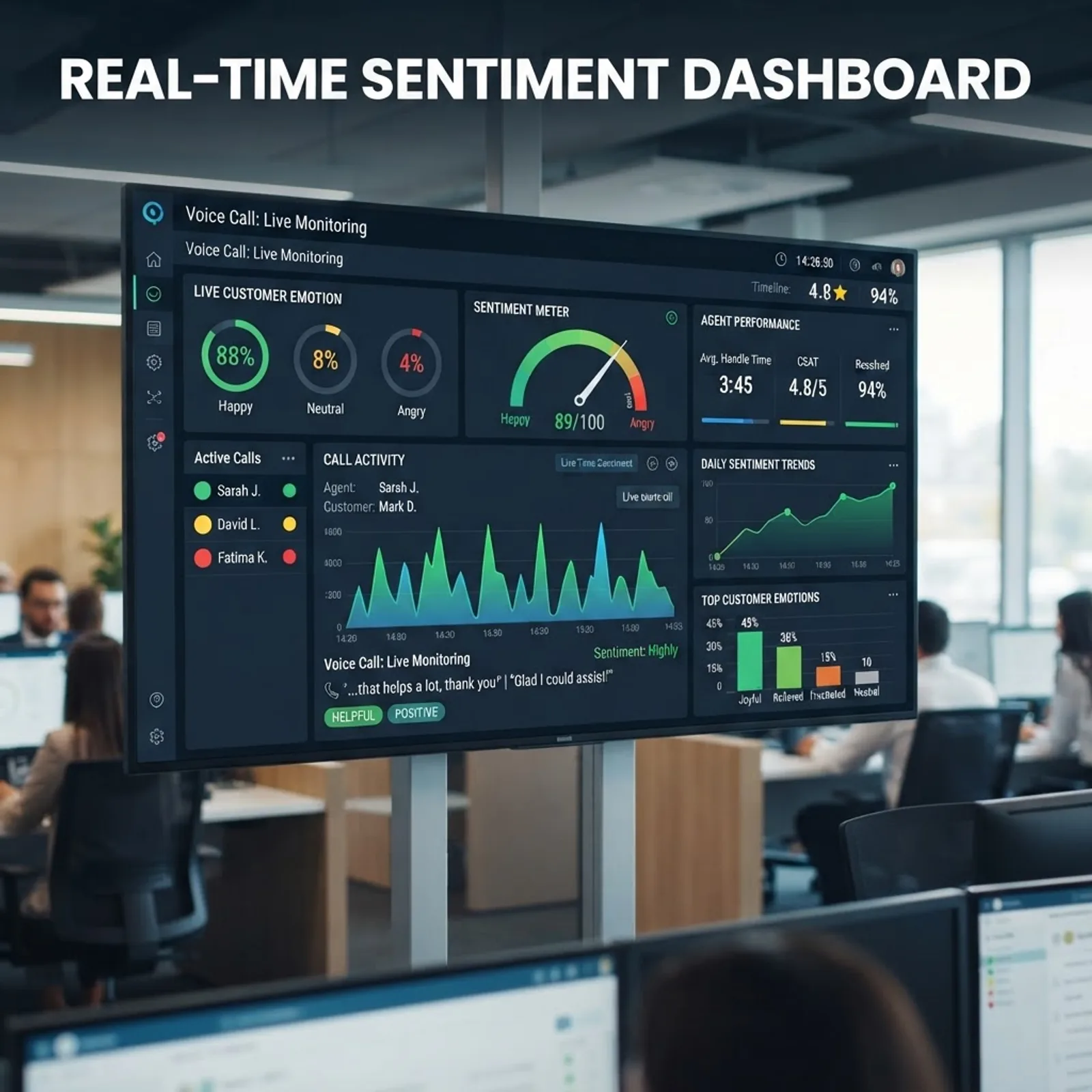
Sentiment analysis uses AI to detect emotion in a customer's words, tone, and pacing. Supervisors get a live dashboard showing which conversations are turning negative, letting them step in before a customer churns or escalates.
Definition: Sentiment analysis is the automated interpretation of emotional tone in text or speech, classifying interactions as positive, neutral, or negative.
Beyond firefighting, aggregated sentiment data reveals systemic problems, such as a confusing billing page generating a spike in angry calls every month. That insight turns your contact center from a cost center into a source of product intelligence.
5. Predictive Analytics and Workforce Planning

AI forecasting models analyze historical volume, seasonality, marketing calendars, and even weather to predict how many contacts you will receive and when. Managers use these forecasts to schedule staff precisely, avoiding both expensive overstaffing and painful understaffing.
Predictive models also power proactive service, reaching out to customers before they experience a known issue, such as a delayed shipment. Solving a problem before the customer even calls is the clearest sign of a mature, AI-driven operation.
AI vs. Traditional Contact Centers: A Direct Comparison
The difference between a legacy operation and an AI-augmented one becomes obvious when you compare them side by side.
| Capability | Traditional Contact Center | AI-Powered Contact Center |
|---|---|---|
| Availability | Business hours, queue-based | 24/7 instant response |
| Tier-1 query handling | Fully manual | Automated with bot deflection |
| Agent support | Static scripts, manual search | Real-time AI suggestions |
| Routing | Next available agent | Intent and skill-based matching |
| Quality monitoring | Sample of calls reviewed | 100% of interactions analyzed |
| Forecasting | Spreadsheet estimates | Predictive machine learning |
| Cost to scale | High and linear | Lower and more elastic |
The table makes the strategic case clear: AI does not just make existing tasks slightly faster, it removes entire categories of manual work.
How to Adopt AI in Your Contact Center Without Breaking It
The biggest mistake teams make is automating everything at once. From experience, a phased rollout protects both customer trust and internal morale. Follow this sequence:
- Start with data. Clean up your knowledge base and transcripts first. AI is only as good as the information it learns from.
- Deploy agent assist before full automation. It delivers value with zero customer-facing risk and builds staff trust in the technology.
- Automate narrow, high-volume tasks. Pick one repetitive query type, such as order status, and perfect the bot experience there.
- Add sentiment and analytics. Use insight to guide where you expand next.
- Always offer a human escape hatch. Customers must be able to reach a person easily, or satisfaction collapses.
Teams that need help architecting this transition often partner with specialists. If you are planning a serious rollout, reviewing the artificial intelligence services at ZoneTechify or the dedicated AI services from WebPeak is a sensible starting point for scoping the work with people who have done it before.
Common Pitfalls to Avoid
AI adoption fails in predictable ways. Watch for these:
- Over-automation. Forcing customers through endless bot loops with no human option destroys trust faster than slow service ever did.
- Ignoring agent buy-in. If staff fear replacement, they will not use the tools well. Frame AI as assistance, not competition.
- Neglecting data privacy. Contact centers handle sensitive information, so any AI system must comply with data protection regulations and encrypt customer records.
- Set-and-forget deployments. AI models drift. Without ongoing tuning against real conversations, accuracy degrades within months.
The Future of AI-Driven Contact Centers

The next wave is autonomous, multimodal, and deeply personalized. AI agents will move fluidly between voice, chat, and video within a single interaction, retaining full context. They will complete transactions, not just answer questions, by securely acting inside back-end systems.
Humans will not disappear. Instead, the human role elevates to relationship management, complex problem-solving, and supervising fleets of AI agents. The best contact centers of the coming years will be judged not by how many calls they take, but by how few problems reach a human at all, because AI resolved the rest instantly and correctly.

Key Takeaways
- AI transforms contact centers across five core areas: conversational bots, agent assist, intelligent routing, sentiment analysis, and predictive analytics.
- Gartner projects conversational AI will cut contact center labor costs by around $80 billion by 2026.
- Well-tuned virtual agents can deflect 40% to 60% of Tier-1 queries, and agent assist can reduce handle time by 15% to 25%.
- AI augments rather than replaces staff, moving humans toward complex, high-value conversations.
- Successful adoption is phased, data-first, and always preserves an easy path to a human agent.
Frequently Asked Questions (FAQ)
Will AI replace human contact center agents?
No. AI handles repetitive, high-volume queries and assists live agents, but humans remain essential for complex, emotional, and high-stakes conversations. Most organizations redeploy staff to higher-value work rather than cutting teams, so AI reshapes roles instead of eliminating the human workforce entirely.
How much can AI reduce contact center costs?
Savings vary by operation, but Gartner projects conversational AI will reduce agent labor costs by roughly $80 billion by 2026. In practice, most teams see meaningful savings through query deflection, shorter handle times, and smarter scheduling, typically within the first year of a well-planned deployment.
What is AI agent assist in a contact center?
Agent assist is an AI co-pilot that listens to live conversations, transcribes them, and surfaces relevant answers, suggested replies, and compliance reminders in real time. It helps agents resolve issues faster and shortens new-hire onboarding, all without changing the customer-facing experience or risking robotic interactions.
Is AI in contact centers safe for customer data?
It can be, provided you choose compliant vendors and enforce encryption, access controls, and data protection regulations like GDPR. Contact centers handle sensitive information, so privacy must be designed in from the start. Never deploy an AI system that stores or processes customer data without clear governance.
How do I start adding AI to my contact center?
Begin by cleaning your knowledge base and call transcripts, then deploy agent assist first because it carries no customer-facing risk. Next, automate one narrow, high-volume query type, add sentiment analytics, and always keep an easy path to a human agent throughout the rollout.