
A practical, expert guide to winning DoD artificial intelligence and machine learning contracts, covering the CDAO, eligibility, bidding steps, compliance, and real use cases.
DoD Artificial Intelligence Machine Learning Contract

The U.S. Department of Defense (DoD) has become one of the largest single buyers of artificial intelligence and machine learning in the world. If your company builds AI models, data pipelines, computer vision, or autonomous systems, a DoD artificial intelligence machine learning contract can be transformational — but the path to winning one is very different from selling to a commercial client. This guide breaks down how these contracts actually work, who awards them, how to qualify, and how to submit a competitive bid, based on how defense procurement functions in practice.
Quick Answer: A DoD artificial intelligence machine learning contract is a formal agreement to deliver AI or ML capabilities to the Department of Defense. Companies win them by registering in SAM.gov, meeting security and data compliance rules, and bidding through the CDAO, DIU, or service branches via solicitations on SAM.gov.
What Is a DoD AI and Machine Learning Contract?
A DoD AI/ML contract is a legally binding procurement in which the Department of Defense pays a vendor to develop, integrate, or maintain artificial intelligence or machine learning capabilities. These range from predictive maintenance software for aircraft to large-scale data platforms and battlefield decision-support tools.
Key definition: Machine learning, in a defense context, is the practice of training algorithms on operational data so they can detect patterns, forecast failures, or classify targets without being explicitly programmed for each case. The DoD treats these systems as capabilities, not just software, which means contracts often bundle data rights, model retraining, testing, and long-term sustainment.
According to the Congressional Research Service, the DoD requested roughly $1.8 billion for AI-specific programs in a recent fiscal year, on top of billions more embedded in larger weapons and IT systems. That scale is why so many technology firms — from startups to primes — pursue this market.
Who Awards DoD AI Contracts?
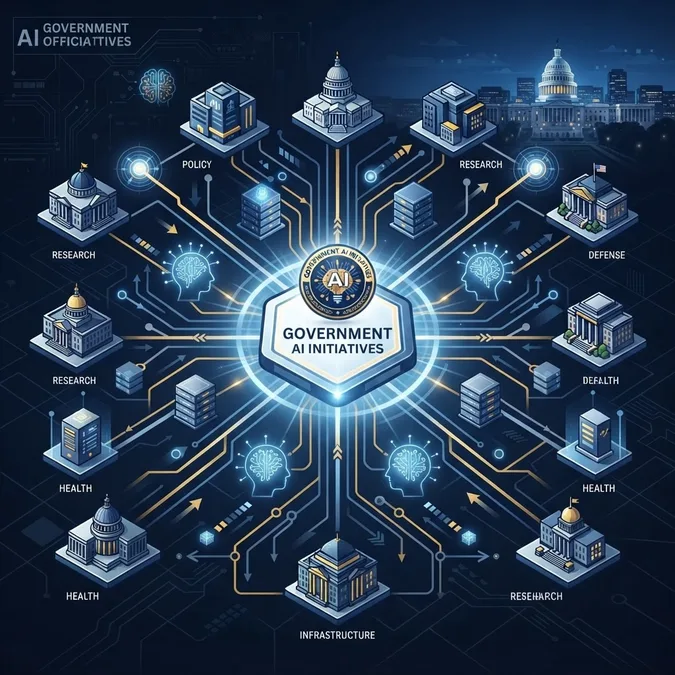
Several organizations inside the DoD buy AI and ML, and knowing the right door to knock on matters more than most vendors realize.
The Chief Digital and Artificial Intelligence Office (CDAO)
The CDAO is the central hub for DoD AI. It absorbed the earlier Joint Artificial Intelligence Center (JAIC) in 2022 and now sets AI policy, runs enterprise data platforms, and awards large integration contracts. If your solution is enterprise-wide, the CDAO is often the ultimate customer.
The Defense Innovation Unit (DIU)
DIU exists to bring commercial technology into the DoD quickly. It uses Commercial Solutions Openings (CSOs) and Other Transaction Authority (OTA) agreements, which are faster and less rigid than traditional contracts. For startups and non-traditional vendors, DIU is frequently the easiest entry point.
The Military Service Branches
The Army, Navy, Air Force, Space Force, and Marine Corps all award their own AI contracts through commands like Army Futures Command and the Air Force's Kessel Run. These tend to be mission-specific — logistics, cyber, ISR, or maintenance.
How the DoD AI Contract Process Works
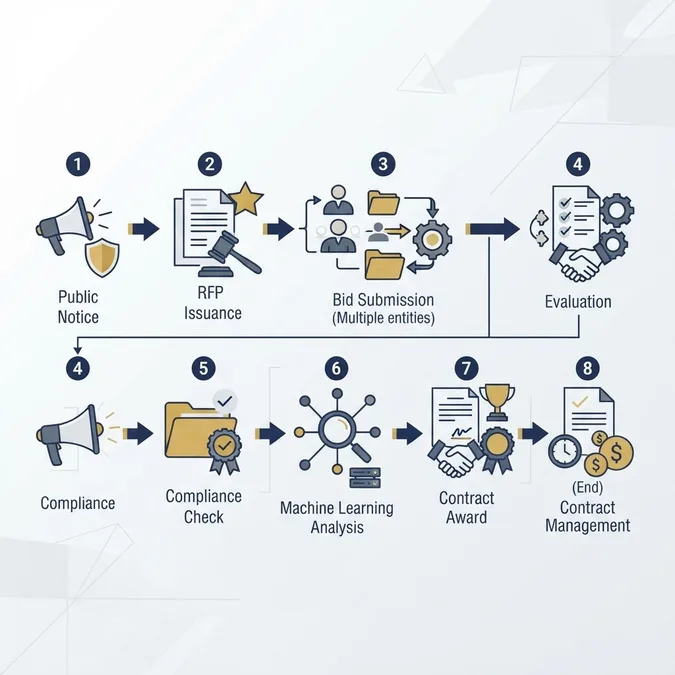
The procurement lifecycle is more structured than commercial sales, but it is predictable once you understand the stages.
- Market research: The DoD publishes a Request for Information (RFI) or Sources Sought notice to gauge industry capability.
- Solicitation: A formal Request for Proposal (RFP), CSO, or Broad Agency Announcement (BAA) is posted on SAM.gov.
- Proposal submission: Vendors submit technical and cost proposals against evaluation criteria.
- Evaluation: Government teams score proposals on technical merit, past performance, and price.
- Award and debrief: The contract is awarded, and unsuccessful bidders can request a debrief.
- Performance and sustainment: Delivery, testing, and often multi-year model maintenance follow.
The single most important habit is monitoring SAM.gov daily and setting keyword alerts for terms like "artificial intelligence," "machine learning," "data analytics," and "autonomy."
Eligibility and Compliance Requirements
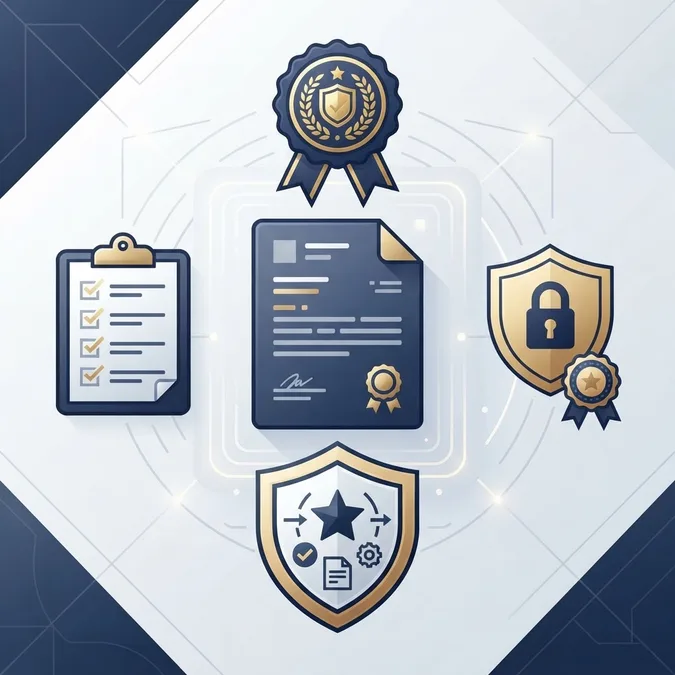
Winning defense AI work requires meeting baseline requirements before you ever submit a bid. Missing any one of these can disqualify an otherwise strong proposal.
- SAM.gov registration: Every contractor must have an active registration and a Unique Entity ID (UEI).
- Cybersecurity compliance: You must meet NIST SP 800-171 controls, and the Cybersecurity Maturity Model Certification (CMMC) is being phased in as a hard requirement for handling Controlled Unclassified Information.
- Data rights clarity: Proposals should state clearly what data rights the government receives — this is a frequent point of negotiation for ML models.
- Responsible AI alignment: The DoD adopted five Ethical AI Principles (responsible, equitable, traceable, reliable, governable). Proposals that address these signal maturity.
- Security clearances: Many programs require cleared personnel and facility clearances for classified data.
Because compliance is technical and ongoing, many firms partner with specialists in artificial intelligence services to harden their models, documentation, and data governance before bidding. Building defensible AI infrastructure early is far cheaper than retrofitting it during an active contract.
How to Bid on a DoD AI/ML Contract
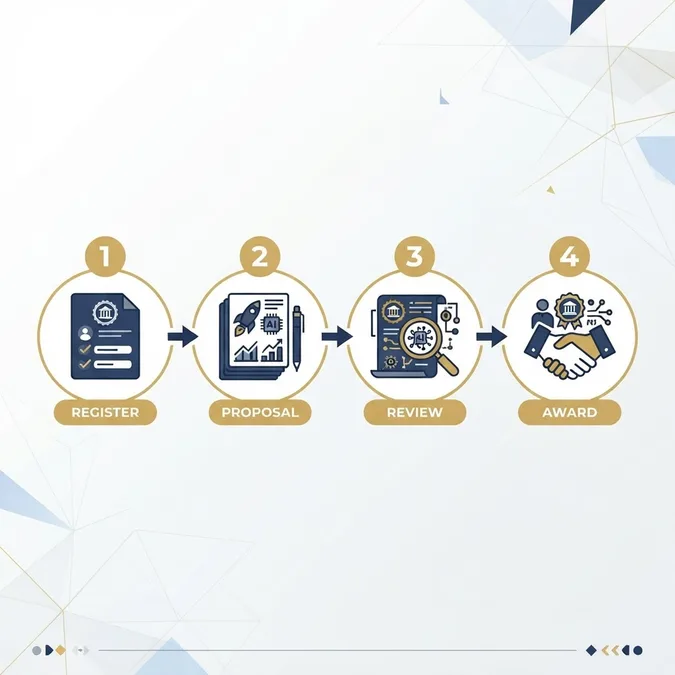
A competitive bid is a discipline, not a document. Follow these steps to improve your win probability.
- Register and get certified. Complete SAM.gov and begin your CMMC readiness assessment early.
- Find the right vehicle. Decide whether to pursue a traditional FAR contract, an OTA through DIU, or a subcontract under a prime.
- Study the evaluation criteria. Write directly to the stated factors — do not describe capabilities the government did not ask about.
- Prove past performance. Cite measurable outcomes: model accuracy, latency reductions, or dollars saved.
- Address risk and testing. DoD evaluators reward vendors who explain how they will validate, monitor, and retrain models.
- Price realistically. Lowest price rarely wins AI awards; "best value" tradeoff is the common evaluation method.
- Request a debrief when you lose. Debrief feedback is the fastest way to improve your next proposal.
Startups that lack a past-performance record often begin as subcontractors to established primes, then graduate to prime contracts once they build a track record.
Common DoD AI and Machine Learning Use Cases
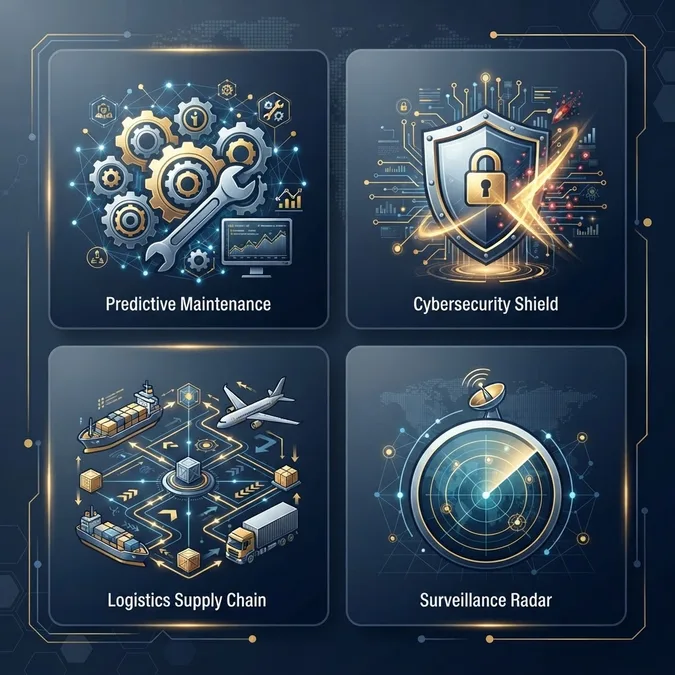
Understanding what the DoD actually funds helps you position your capability where the money is.
- Predictive maintenance: ML models forecast component failures on aircraft, ships, and vehicles, cutting downtime and cost.
- Intelligence, surveillance, and reconnaissance (ISR): Computer vision processes drone and satellite imagery at scale.
- Cybersecurity: ML detects anomalies and intrusions across defense networks in real time.
- Logistics and supply chain: AI optimizes routing, inventory, and demand forecasting.
- Decision support: Command-and-control tools fuse multiple data sources into actionable recommendations.
- Business automation: Natural language processing streamlines contracting, auditing, and administrative workflows.
Predictive maintenance and ISR consistently attract the largest budgets because they deliver measurable readiness and cost outcomes that leaders can defend to Congress.
Traditional Contracts vs. OTAs: A Comparison
Choosing the right acquisition path shapes your speed, flexibility, and cost. The table below compares the two most common routes for AI work.
| Factor | Traditional FAR Contract | Other Transaction Authority (OTA) |
|---|---|---|
| Speed | Slower, months to award | Faster, weeks possible |
| Flexibility | Rigid, heavily regulated | Flexible, negotiable terms |
| Best for | Large, well-defined programs | Prototypes and startups |
| Compliance load | High (full FAR/DFARS) | Lower, tailored |
| Common user | CDAO, service branches | DIU, service accelerators |
| Path to scale | Direct | Prototype to production transition |
Many successful AI vendors start with an OTA prototype through DIU, prove the capability, then transition to a production contract without recompeting.
Why AI Governance Matters More Than Ever
The DoD is tightening how it evaluates the trustworthiness of AI systems, not just their accuracy. Proposals now win or lose on explainability, bias testing, and model monitoring. Firms that document their data lineage and testing protocols hold a clear edge. Businesses investing in advanced AI capabilities and automation are better positioned to meet these governance expectations while keeping delivery timelines realistic.
For broader technical and strategic support — from secure infrastructure to data engineering — teams like ZoneTechify and WebPeak help vendors build the compliance-ready foundations that defense evaluators expect.
The Future of DoD AI Contracts

Defense AI spending is trending upward, not down. The DoD's Replicator initiative aims to field thousands of autonomous systems, and enterprise data platforms are being scaled across every service branch. Generative AI, edge computing, and human-machine teaming are the next wave of solicitations. Vendors who invest now in compliance, data rights clarity, and responsible AI documentation will be positioned to compete as budgets grow and requirements mature.
Key Takeaways
- A DoD AI/ML contract is a formal agreement to deliver artificial intelligence or machine learning capabilities to the Department of Defense.
- The CDAO (which absorbed the JAIC in 2022) is the central hub, while DIU offers the fastest entry via OTAs and CSOs.
- The DoD requested roughly $1.8 billion for AI-specific programs in a recent fiscal year.
- SAM.gov registration, NIST 800-171, and CMMC compliance are non-negotiable prerequisites.
- Predictive maintenance, ISR, and cybersecurity attract the largest AI budgets.
- Best-value evaluation — not lowest price — typically decides AI awards.
Frequently Asked Questions (FAQ)
How do I get a DoD artificial intelligence contract?
Register on SAM.gov with a Unique Entity ID, meet cybersecurity requirements like NIST 800-171 and CMMC, then monitor SAM.gov for AI solicitations. Bid directly or subcontract under a prime, writing your proposal specifically to the government's stated evaluation criteria and past-performance factors.
What is the CDAO in the Department of Defense?
The Chief Digital and Artificial Intelligence Office is the DoD's central organization for AI, data, and analytics. Established in 2022, it absorbed the Joint Artificial Intelligence Center (JAIC), sets AI policy, runs enterprise data platforms, and awards many of the department's largest AI and machine learning contracts.
Do I need a security clearance to win a DoD AI contract?
Not always. Unclassified AI work can be performed without clearances, but many programs handling Controlled Unclassified or classified data require cleared personnel and facility clearances. Review each solicitation carefully, since clearance requirements are stated explicitly and directly affect who can perform the work.
How much does the DoD spend on artificial intelligence?
The DoD requested approximately $1.8 billion for dedicated AI programs in a recent fiscal year, according to the Congressional Research Service. Billions more are embedded within larger weapons, IT, and cybersecurity programs, making total AI-related spending substantially higher than the standalone AI budget line suggests.
Can startups win DoD machine learning contracts?
Yes. Startups frequently enter through the Defense Innovation Unit using Other Transaction Authority agreements and Commercial Solutions Openings, which are faster and more flexible than traditional contracts. Many begin as subcontractors to primes to build past performance before competing for prime awards.
What compliance standards apply to DoD AI vendors?
DoD AI vendors must maintain active SAM.gov registration, meet NIST SP 800-171 security controls, and increasingly achieve Cybersecurity Maturity Model Certification (CMMC). Vendors should also align solutions with the DoD's five Ethical AI Principles and clearly define government data rights within their proposals.