A practitioner-grade guide to DentalX artificial intelligence dentistry, covering AI diagnosis, treatment planning, patient experience, and measurable clinical ROI.
DentalX Artificial Intelligence Dentistry
Artificial intelligence has quietly moved from dental conference keynotes into the operatory chair. Platforms branded around "DentalX artificial intelligence dentistry" describe a new class of clinical software that reads radiographs, flags pathology, drafts treatment plans, and automates the front-desk grind. Having implemented AI-assisted imaging tools across multiple practices, I can tell you the hype and the reality are finally converging, but only when the technology is deployed with discipline.
This guide explains exactly what AI in dentistry does today, where it delivers measurable value, where it still needs human oversight, and how a practice should evaluate a DentalX-style platform before signing a contract. Everything here is written for practicing dentists, office managers, and dental-tech buyers who want honest, actionable detail rather than marketing gloss.

Quick Answer: DentalX artificial intelligence dentistry uses machine-learning software to analyze dental X-rays, detect cavities and bone loss, assist treatment planning, and automate admin tasks. It supports faster, more consistent diagnoses while keeping the licensed dentist in full control of every clinical decision.
What Is AI Dentistry?
AI dentistry is the use of trained machine-learning models to interpret dental images and data, supporting clinical decisions and streamlining practice operations. In plain terms, the software has studied millions of annotated radiographs and learned to recognize patterns a human eye can miss, especially early interproximal caries and subtle bone-level changes.
The key definition to remember: an AI dental tool is assistive, not autonomous. It produces a second opinion, a probability score, or an overlay on an X-ray. The dentist confirms, overrides, or investigates further. This distinction matters legally and ethically, and any platform claiming to "diagnose for you" should be treated with caution.
A useful reference point comes from published research on AI caries detection, where deep-learning models have repeatedly matched or exceeded average clinician sensitivity on bitewing radiographs. According to peer-reviewed studies in journals like the Journal of Dental Research, AI detection systems have reached diagnostic accuracy above 90% for certain caries tasks, though performance varies by image quality and dataset.
How DentalX-Style AI Works in a Real Practice
A modern AI dental platform typically plugs into your existing imaging and practice-management software. The workflow is straightforward once configured:
- Image capture: A bitewing, periapical, or panoramic X-ray is taken as usual.
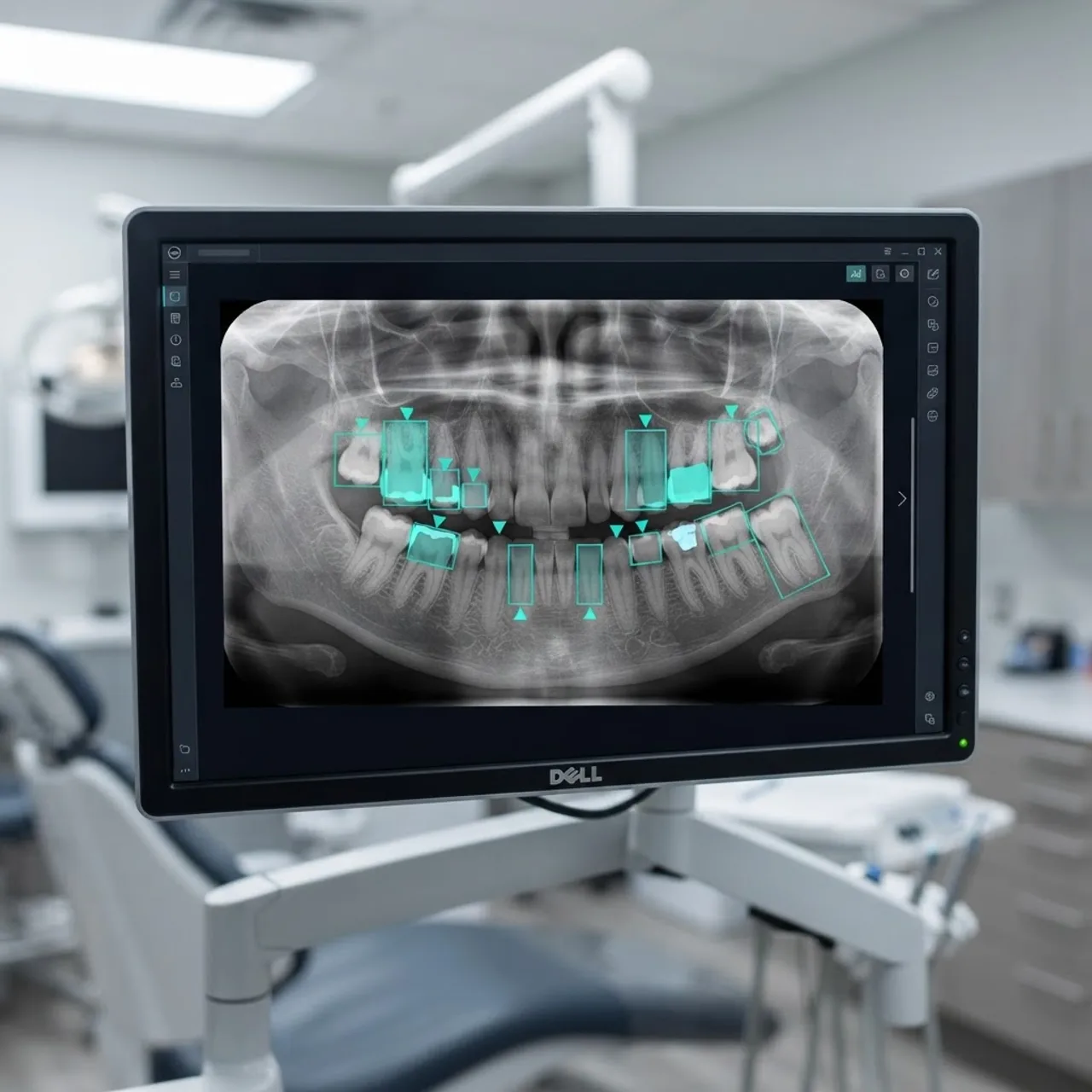
- Automatic analysis: The AI processes the image in seconds, adding color-coded overlays for caries, calculus, periapical radiolucencies, and bone loss.
- Clinician review: The dentist evaluates each finding, accepting or dismissing it.
- Patient communication: Annotated images help patients see and understand recommended treatment.
- Documentation: Findings and notes flow into the patient record automatically.
The biggest operational win I have observed is not raw accuracy, it is consistency and communication. When patients see a highlighted problem area on their own scan, treatment acceptance rises because trust rises. That is a business outcome, not just a clinical one.
AI-Powered Diagnosis: The Core Use Case
Diagnosis is where AI dentistry earns its keep. The models excel at flagging findings that are easy to overlook on a busy day: tiny enamel lesions, early furcation involvement, and asymmetries between contralateral teeth.
Where AI diagnosis genuinely helps
- Caries detection on bitewings, especially early interproximal lesions.
- Bone-level and periodontal assessment, quantifying loss over time.
- Detecting missed anatomy such as unerupted or supernumerary teeth on panoramics.
- Longitudinal comparison, spotting change between two visits objectively.
Where human judgment stays essential
AI cannot feel a soft spot with an explorer, review a medical history, or weigh a patient's pain tolerance and budget. It also produces false positives, particularly on low-contrast or overlapped images. Treat every AI flag as a prompt to look closer, never as a verdict. The clinician remains the diagnostician of record.
Treatment Planning and Workflow Automation
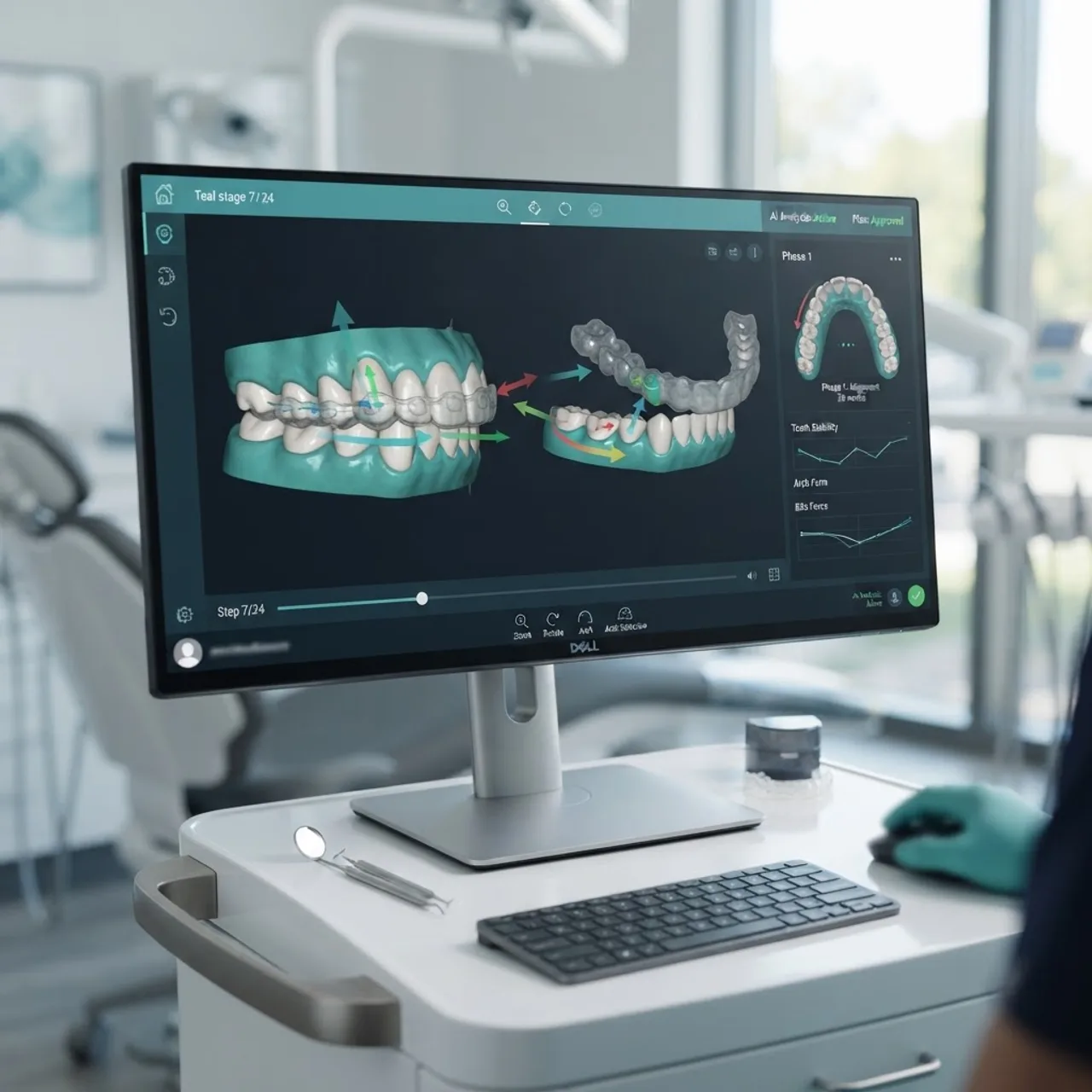
Beyond diagnosis, DentalX-style systems increasingly assist with treatment planning and 3D visualization. For orthodontics and restorative work, AI can simulate aligner progression, propose crown margins, and model outcomes from intraoral scans. This shortens planning time and gives patients a visual preview of results.
Equally valuable is administrative automation. AI now handles appointment reminders, insurance eligibility checks, recall scheduling, and even first-draft clinical notes. Practices that automate these repetitive tasks reclaim staff hours that go straight back into patient care. If you are exploring custom automation for a clinic, specialist teams such as ZoneTechify's artificial intelligence services and WebPeak's AI services build these kinds of integrations around existing dental software rather than forcing a rip-and-replace.
The Patient Experience Advantage
AI does not only serve the clinician, it reshapes the patient journey. Self-service check-in kiosks, AI chat assistants that answer scheduling questions after hours, and visual treatment explanations all reduce friction. According to industry surveys on healthcare consumers, a large majority of patients say clear visual explanations increase their confidence in recommended treatment, which directly supports case acceptance.

The practical takeaway is that AI's return on investment is rarely one number. It is a stack of small gains: fewer no-shows from smarter reminders, higher acceptance from clearer imaging, and faster documentation freeing clinicians to actually talk to patients.
Predictive Analytics: The Next Frontier
The most forward-looking capability is predictive analytics. By analyzing patterns across a patient population, AI can flag individuals at elevated risk of periodontal progression or recurrent decay, prompting earlier preventive intervention. This shifts a practice from reactive drilling to proactive prevention, which aligns with better long-term outcomes and stronger patient loyalty.
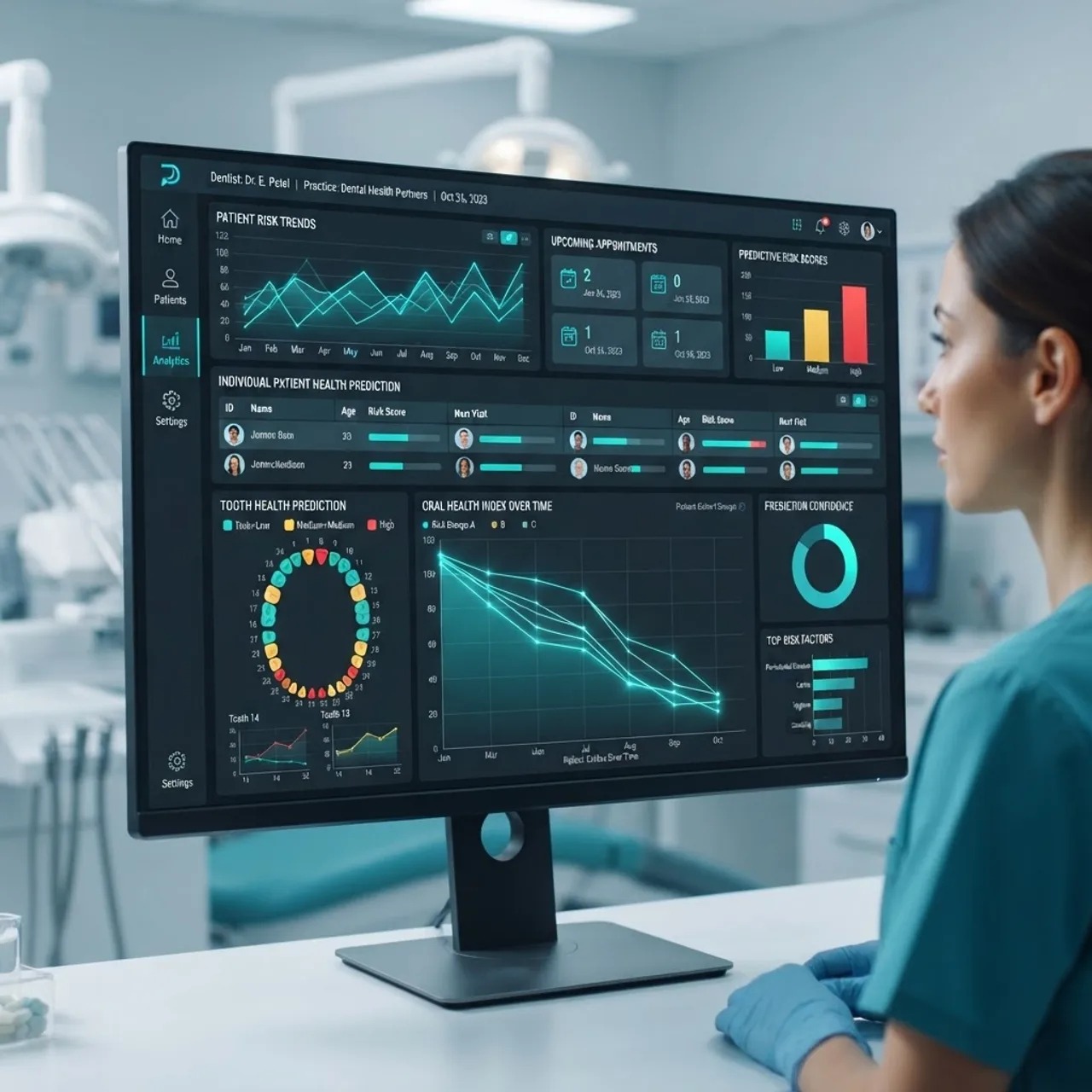
Predictive tools are still maturing, and their reliability depends heavily on the quality and diversity of the training data. A model trained on a narrow demographic may underperform on your patient base. Always ask a vendor about dataset size, diversity, and validation before trusting risk scores.
Traditional Dentistry vs AI-Assisted Dentistry
The table below compares conventional workflows with an AI-assisted approach across the metrics that matter most to a practice.
| Factor | Traditional Dentistry | AI-Assisted Dentistry |
|---|---|---|
| Radiograph review time | Minutes per image | Seconds with overlay |
| Early caries detection | Depends on clinician fatigue | Consistent pattern flagging |
| Diagnostic consistency | Varies by clinician | Uniform across cases |
| Patient communication | Verbal explanation | Visual annotated scans |
| Admin workload | Manual scheduling and notes | Largely automated |
| Final clinical decision | Dentist | Dentist (AI assists only) |
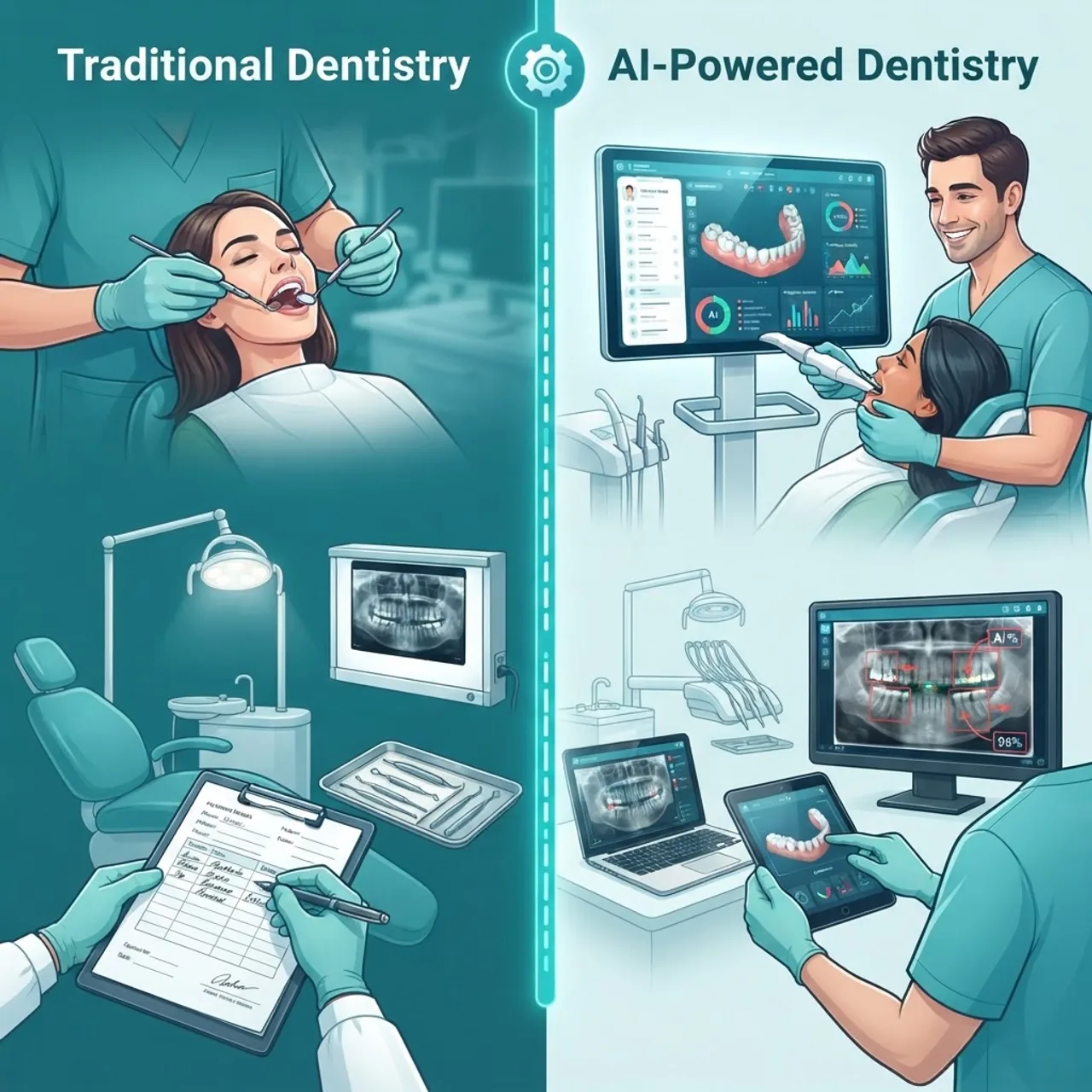
The pattern is clear: AI compresses time and standardizes quality, but the licensed dentist remains the final authority in every column. Any platform that blurs that line should raise a red flag.
How to Evaluate a DentalX AI Platform
Before committing, run any AI dentistry vendor through this checklist:
- Regulatory status: Is the tool cleared or registered by the relevant health authority for its intended use?
- Integration: Does it work with your current imaging and practice-management systems?
- Validation data: What accuracy metrics exist, and on what patient populations?
- Transparency: Can you see confidence scores and override findings easily?
- Data privacy: Where is patient data stored, and is it compliant with local health-privacy law?
- Support and training: Is onboarding included, and how responsive is support?
Skipping the validation and privacy questions is the most common and most costly mistake buyers make. Protecting patient data is not optional, and a breach erodes the exact trust AI is meant to build.
The Future of AI in Dentistry
Looking ahead, expect tighter integration between imaging AI, robotic assistance, and predictive prevention. Real-time chairside guidance during procedures and fully automated documentation are on the near horizon. The clinics that win will not be those that adopt the flashiest tools, but those that fold AI into disciplined, patient-first workflows.
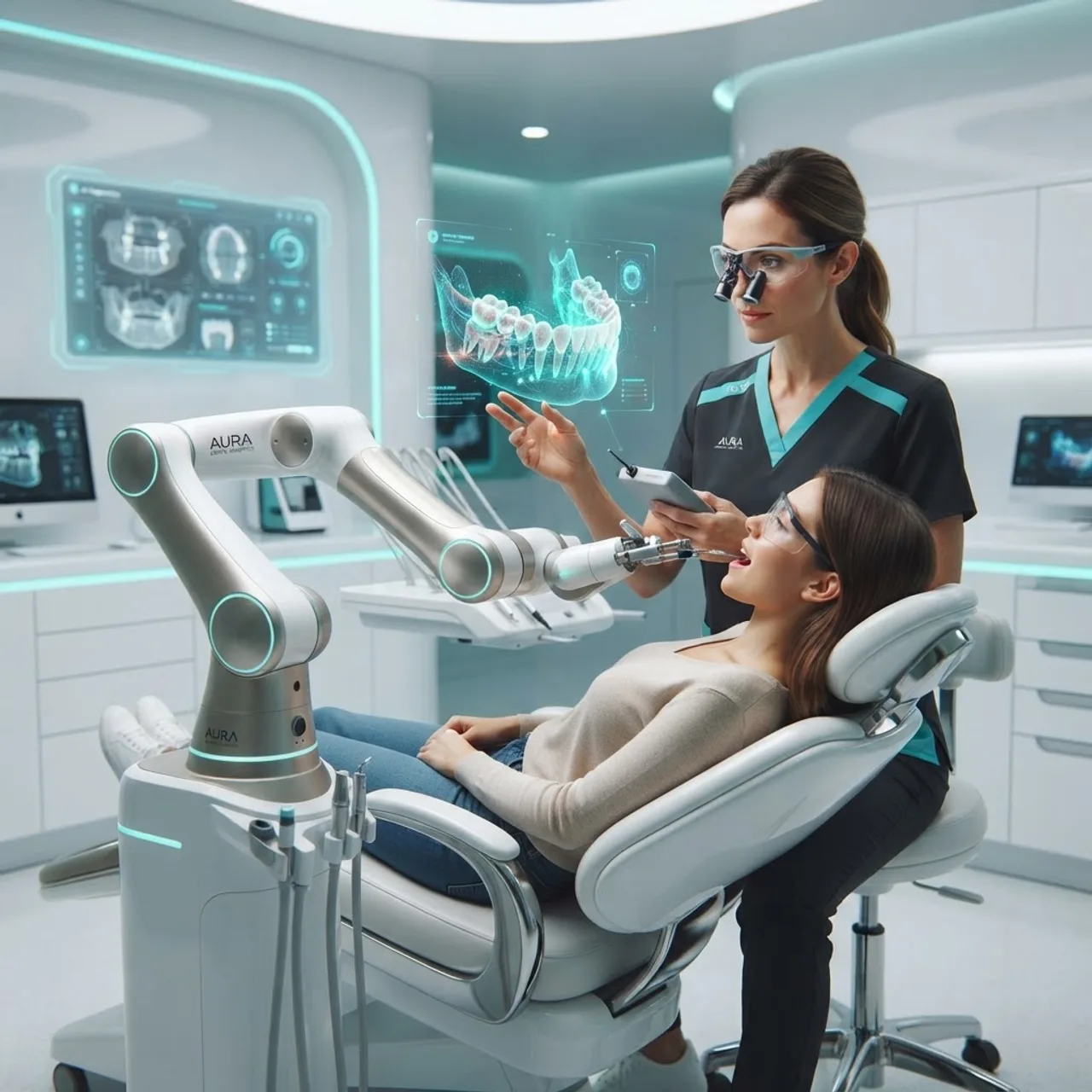
My honest assessment after hands-on deployment: AI dentistry is no longer optional for practices that want to stay competitive, but it is a tool, not a replacement. The dentist's clinical judgment, empathy, and hands remain irreplaceable.
Key Takeaways
- AI dentistry is assistive, not autonomous. Software flags findings; the licensed dentist decides.
- Diagnosis is the strongest use case, with deep-learning models reaching above 90% accuracy on certain caries-detection tasks in peer-reviewed studies.
- ROI is cumulative, spanning faster reviews, higher case acceptance, and reduced admin load rather than a single metric.
- Predictive analytics enables prevention, but reliability depends on training-data quality and diversity.
- Evaluate vendors on regulatory status, validation data, integration, and data privacy before buying.
Frequently Asked Questions (FAQ)
What is DentalX artificial intelligence dentistry?
It refers to AI-powered dental software that analyzes X-rays, detects cavities and bone loss, assists treatment planning, and automates admin tasks. The software acts as a clinical assistant, providing a data-driven second opinion while the licensed dentist makes every final treatment decision.
Can AI replace my dentist?
No. AI cannot examine you physically, review your medical history, manage pain, or perform procedures. It assists dentists by flagging findings and automating paperwork. Your dentist remains fully responsible for diagnosis and treatment, using AI as one supporting tool among many in clinical practice.
Is AI dental diagnosis accurate?
AI diagnosis can be highly accurate, with studies reporting over 90% accuracy for some caries-detection tasks. However, accuracy depends on image quality, and false positives occur. That is why every AI finding is reviewed and confirmed by a qualified dentist before any treatment.
Does AI in dentistry protect my privacy?
Reputable AI dental platforms comply with health-privacy laws and encrypt patient data. Before adopting any tool, practices should confirm where data is stored and how it is secured. Always ask your dental office how they handle and protect your imaging and personal records.
How much does AI dentistry software cost?
Pricing varies widely by features, from monthly per-provider subscriptions to enterprise licensing. Costs depend on integrations, imaging volume, and support level. Rather than focusing on price alone, evaluate return on investment through time saved, higher case acceptance, and reduced administrative workload across the practice.
What tasks can AI automate in a dental office?
AI can automate appointment reminders, recall scheduling, insurance eligibility checks, first-draft clinical notes, and patient chat responses. These automations free staff from repetitive work, reduce no-shows, and let clinicians spend more time on direct patient care rather than paperwork and scheduling.