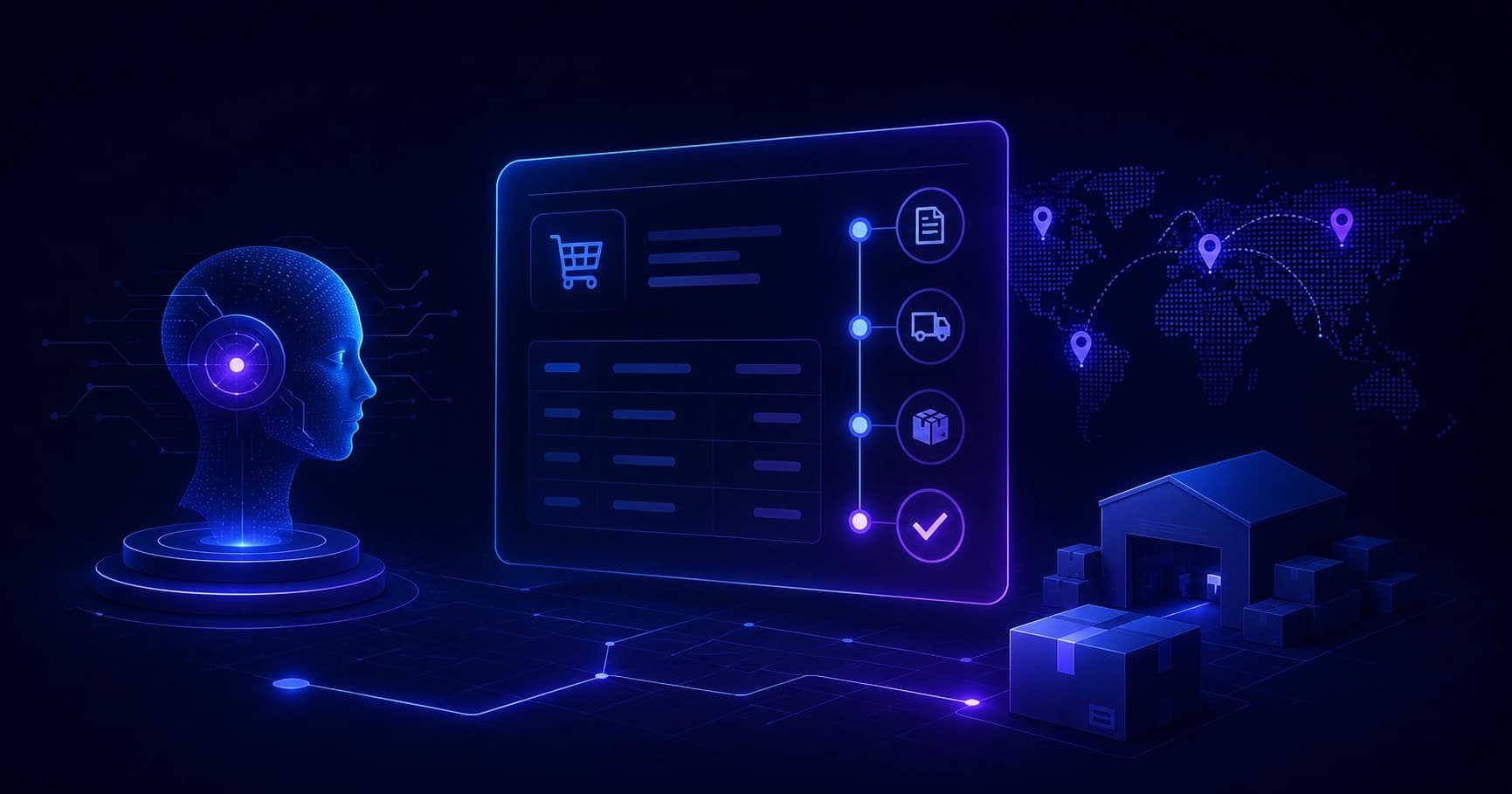
Learn how an AI purchase order tracking system automates procurement, cuts errors, speeds approvals, and gives real-time visibility across your entire supply chain.
Artificial Intelligence Purchase Order Tracking System
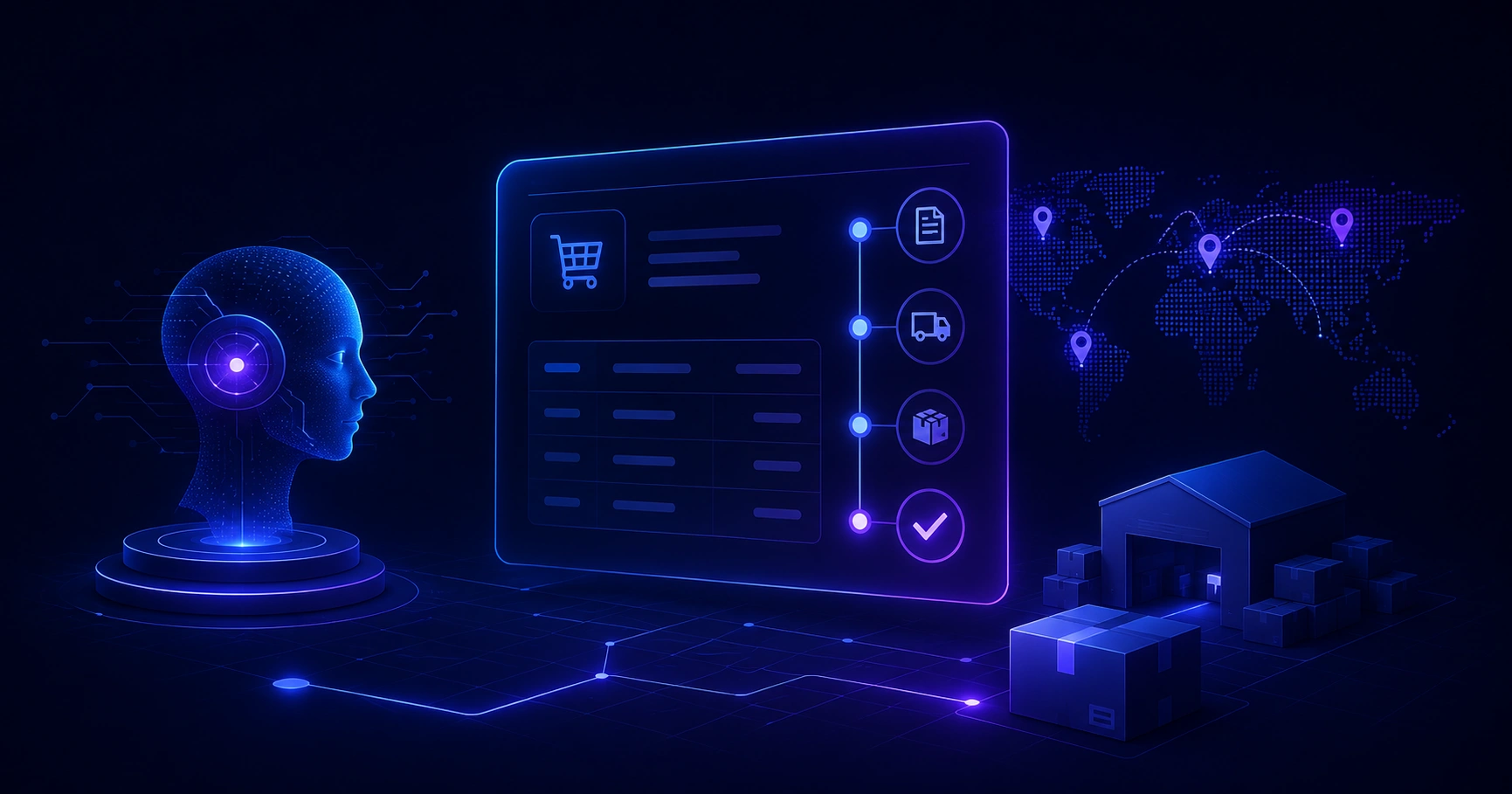
Procurement teams lose countless hours chasing paper trails, correcting data-entry mistakes, and answering "where is my order?" emails. An artificial intelligence purchase order tracking system removes that friction by automating the entire lifecycle of a purchase order, from creation to delivery to invoice reconciliation. In this guide, drawn from real deployments across finance and supply-chain teams, we explain exactly how these systems work, what they cost you when you ignore them, and how to choose the right one.
Quick Answer: An AI purchase order tracking system uses machine learning and automation to create, monitor, and reconcile purchase orders in real time. It extracts data automatically, flags exceptions, matches invoices to orders, and predicts delays, cutting manual work and giving procurement teams full visibility across the supply chain.
What Is an AI Purchase Order Tracking System?
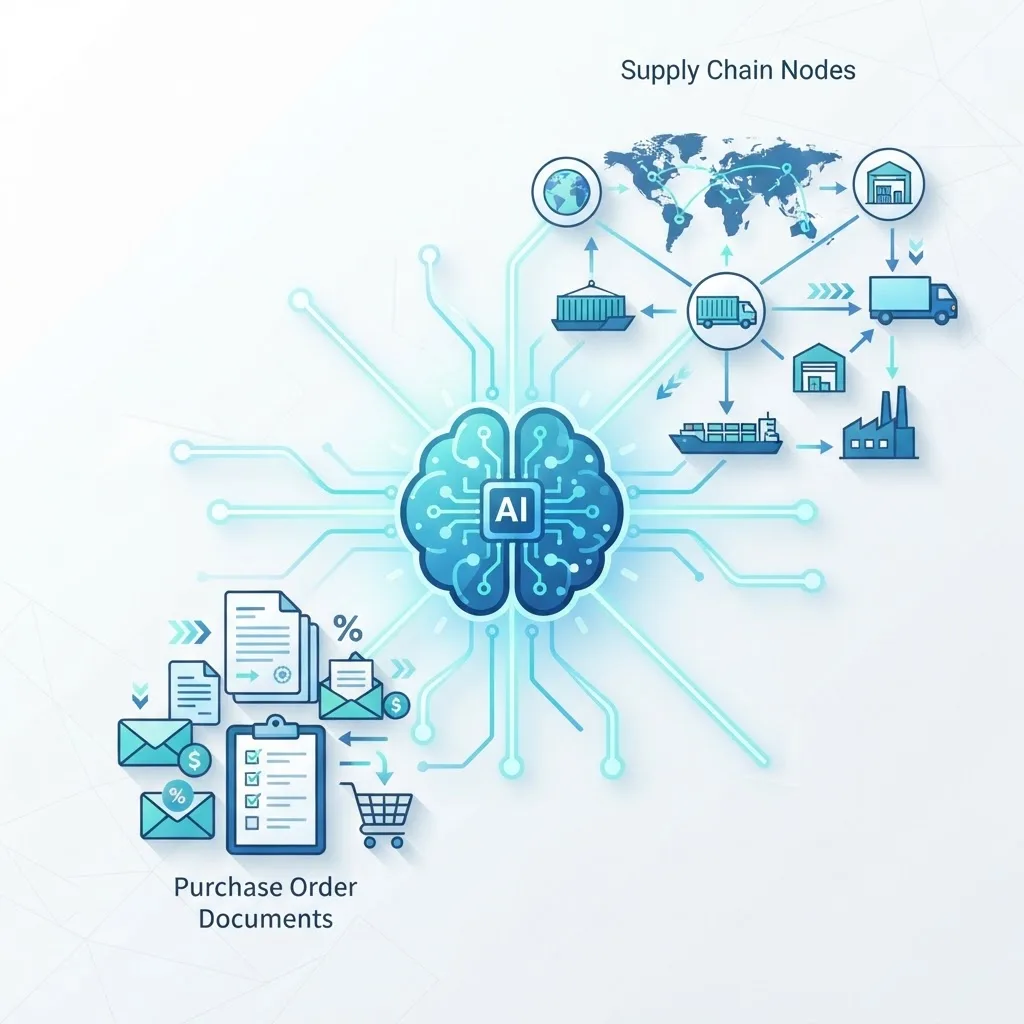
An AI purchase order tracking system is software that applies machine learning, optical character recognition (OCR), and workflow automation to manage purchase orders (POs) from request to fulfillment. Instead of staff manually keying in line items and checking spreadsheets, the system reads documents, updates statuses automatically, and surfaces problems before they escalate.
Key definition: A purchase order is a legally binding document a buyer sends to a supplier confirming the products or services requested, quantities, prices, and delivery terms. Tracking it means knowing its status at every stage: draft, approved, sent, acknowledged, shipped, received, and paid.
The "AI" layer is what separates modern platforms from legacy tools. It learns from historical data, so approvals route faster, duplicate orders get caught, and delivery risks are predicted rather than discovered too late.
Why Traditional PO Tracking Fails
Manual and spreadsheet-based tracking breaks down as volume grows. According to industry research from Ardent Partners, the average cost to process a single purchase order manually ranges from 50 to 100 US dollars once labor, errors, and rework are included. Multiply that across thousands of orders and the waste is significant.
The most common failure points are:
- Data-entry errors that cause payment mismatches and supplier disputes.
- Lost visibility because status updates live in email threads, not a central system.
- Slow approvals when POs sit in someone's inbox for days.
- Duplicate or maverick spending that finance discovers only after the money is gone.
These are not minor annoyances. A single missed delivery date can halt production or leave shelves empty during peak demand.
How AI Transforms Purchase Order Tracking
AI changes PO tracking from a reactive, clerical task into a proactive, strategic function. Here is where it delivers the most measurable value.
Automated Data Capture
OCR combined with natural language processing reads supplier invoices, order confirmations, and emails, then extracts line items with high accuracy. Staff no longer retype details, which removes the single largest source of PO errors.
Real-Time Status Updates
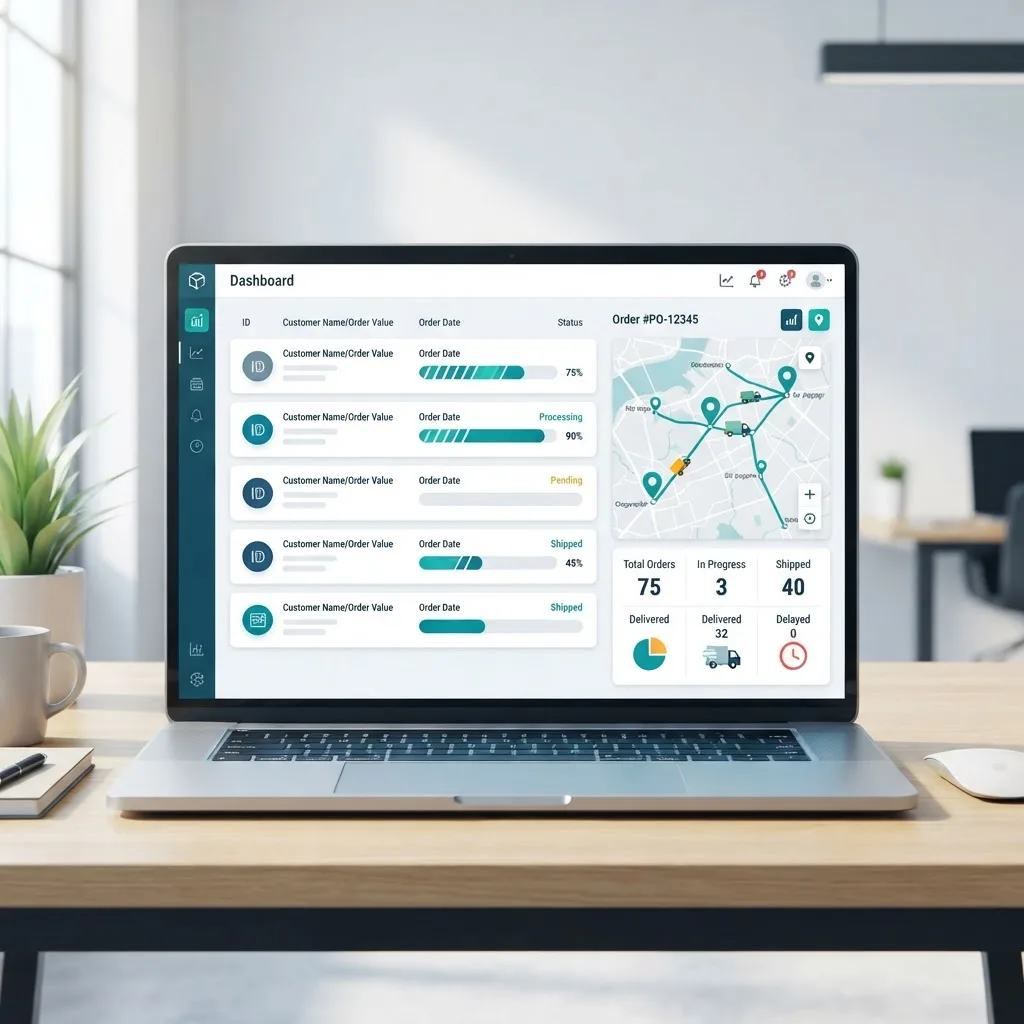
Instead of asking suppliers for updates, the system pulls status changes automatically and displays them on one dashboard. Everyone, from procurement to finance to warehouse teams, sees the same live truth.
Intelligent Three-Way Matching
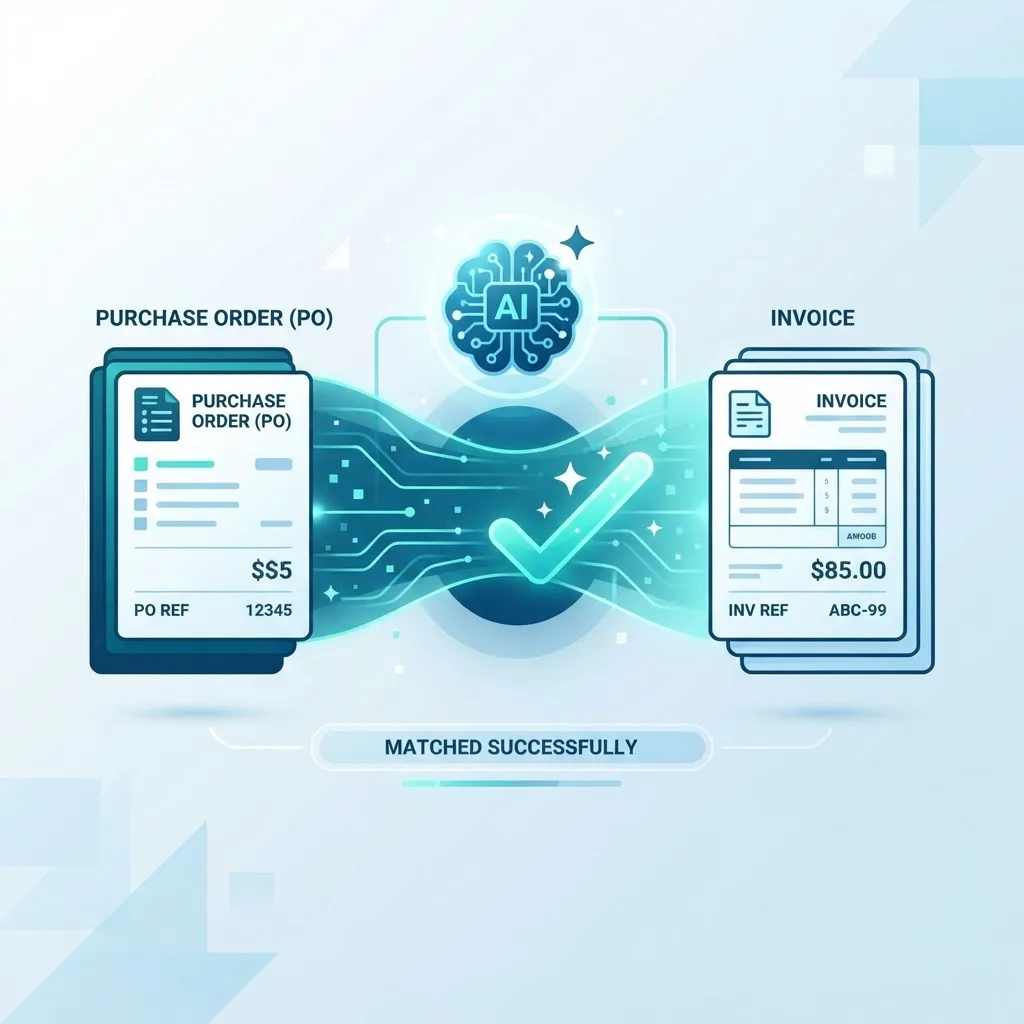
AI matches the purchase order, the goods-received note, and the invoice automatically. When all three agree, payment is approved without human touch. When they do not, the exception is flagged with a clear reason, so a person only reviews the genuine problems.
Predictive Delay Detection
By learning from historical supplier performance, the system predicts which orders are likely to arrive late and alerts you early. This gives buyers time to expedite, reorder, or switch suppliers before a shortage occurs.

Building these capabilities well requires deep automation expertise, which is why many teams partner with specialists in artificial intelligence services to design and deploy a system tailored to their workflows.
Key Features to Look For
When evaluating an AI purchase order tracking system, prioritize these capabilities:
- Automated document extraction with OCR and machine learning.
- Configurable approval workflows that route based on amount, department, or vendor.
- Three-way matching for POs, receipts, and invoices.
- Real-time dashboards with filtering by status, supplier, and value.
- Predictive analytics for delivery and budget risk.
- ERP and accounting integration with tools like SAP, NetSuite, or QuickBooks.
- Audit trails that log every change for compliance.
- Role-based access control to protect sensitive financial data.
A system missing integration or audit capabilities will create new silos rather than removing them.
Step-by-Step: How AI PO Tracking Works
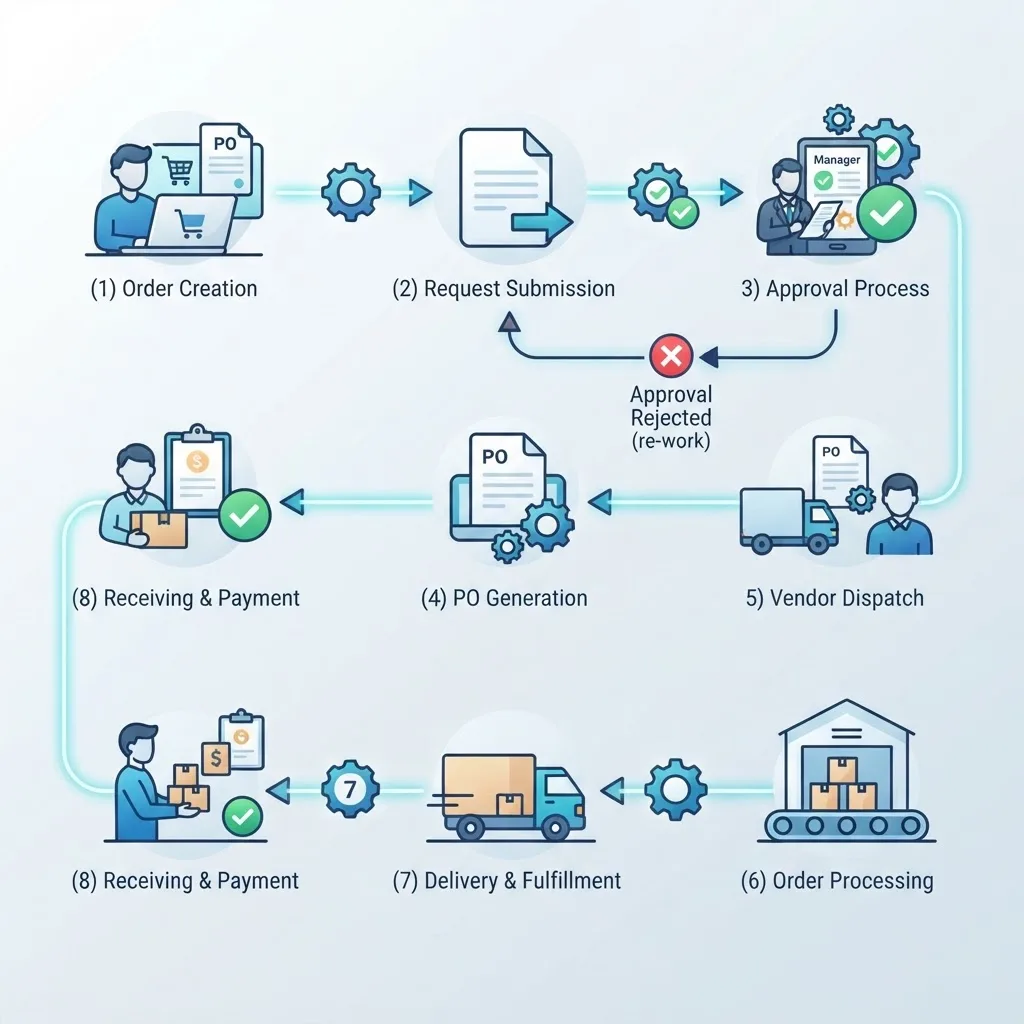
Here is the typical lifecycle inside an AI-powered platform:
- Request created: A team member submits a purchase request, or the system auto-generates one from inventory thresholds.
- AI validation: The platform checks the request against budgets, preferred vendors, and duplicate orders.
- Smart approval routing: The PO is routed to the correct approver automatically based on rules the AI has learned.
- Supplier transmission: The approved PO is sent, and the system logs acknowledgment.
- Live tracking: Shipment and status updates flow into the dashboard in real time.
- Automated matching: On delivery, the system matches the receipt and invoice to the PO.
- Payment and analytics: Clean matches are approved for payment, and every transaction feeds analytics for smarter future buying.
Manual vs AI Purchase Order Tracking
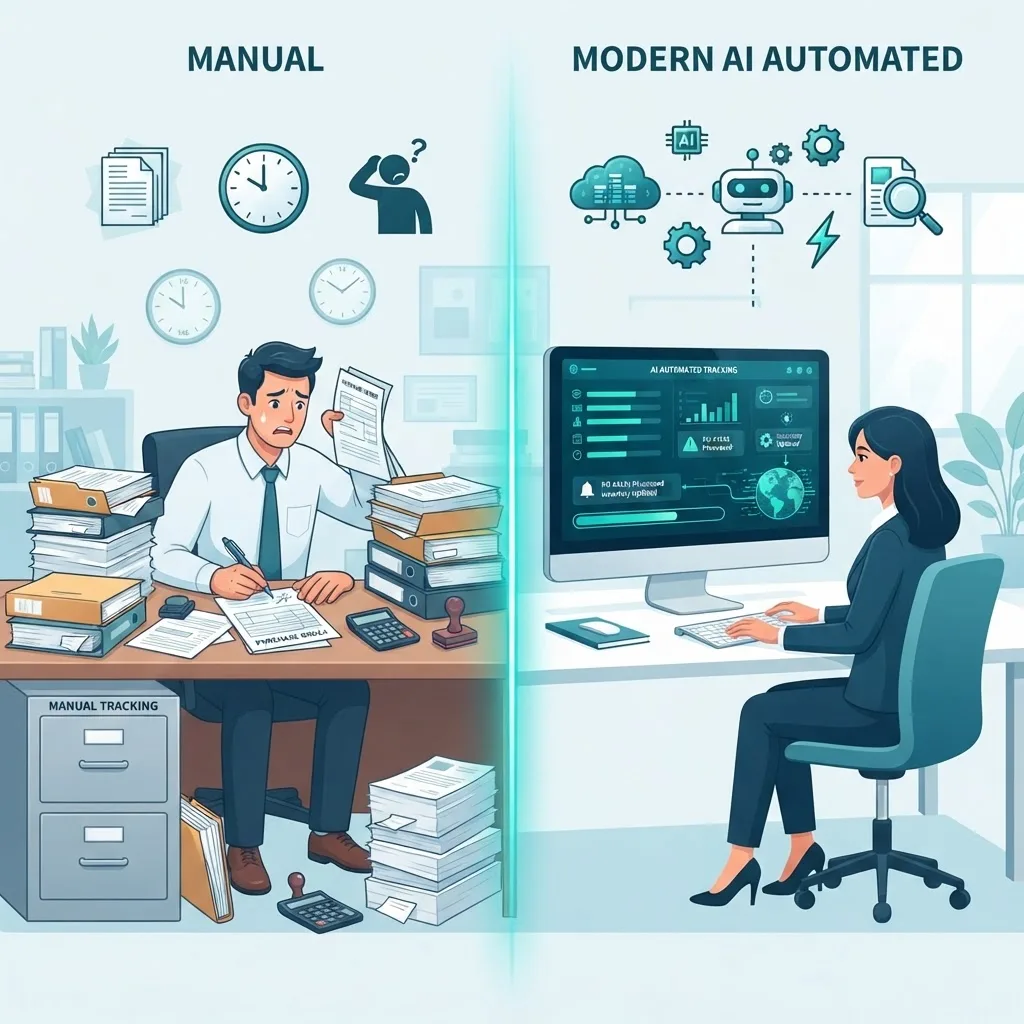
The difference between legacy tracking and an AI-driven approach is stark when compared side by side.
| Factor | Manual / Spreadsheet | AI Tracking System |
|---|---|---|
| Data entry | Manual, error-prone | Automated via OCR |
| Order visibility | Scattered in email | Real-time dashboard |
| Invoice matching | Slow, human-led | Automated three-way match |
| Delay detection | Reactive | Predictive alerts |
| Approval speed | Days | Minutes to hours |
| Scalability | Limited | High |
| Audit readiness | Difficult | Built-in logs |
Real Business Benefits Backed by Data
The return on an AI PO tracking system is measurable, not theoretical. According to McKinsey, organizations that digitize and automate procurement processes can reduce process costs by up to 30 percent while improving compliance and spend visibility.
The concrete benefits include:
- Fewer errors: Automated capture eliminates most manual keying mistakes.
- Faster cycles: Approvals that took days shrink to hours, freeing working capital.
- Better supplier relationships: On-time payments and accurate orders build trust.
- Stronger compliance: Every action is logged, making audits painless.
- Smarter spending: Analytics reveal maverick spend and negotiation opportunities.
These gains compound. A team that reclaims hours from clerical work can focus on strategic sourcing, which is where procurement actually creates value.
Implementation Best Practices
Adopting an AI purchase order tracking system succeeds or fails on execution. Follow these principles:
- Clean your data first. AI learns from history, so accurate supplier and item records improve results immediately.
- Integrate with your ERP. A standalone tool creates another silo; connected systems create a single source of truth.
- Start with high-volume categories. Prove value where the manual pain is greatest before expanding.
- Train the team, not just the software. Adoption depends on people trusting the automation.
- Measure baselines. Track processing cost and cycle time before launch so you can prove the improvement.
Working with an experienced partner such as the team at ZoneTechify or the specialists at WebPeak helps you avoid the common integration pitfalls that stall rollouts. For organizations focused specifically on the machine-learning layer, dedicated AI services from WebPeak can accelerate model tuning and automation design.
The Future of AI in Procurement
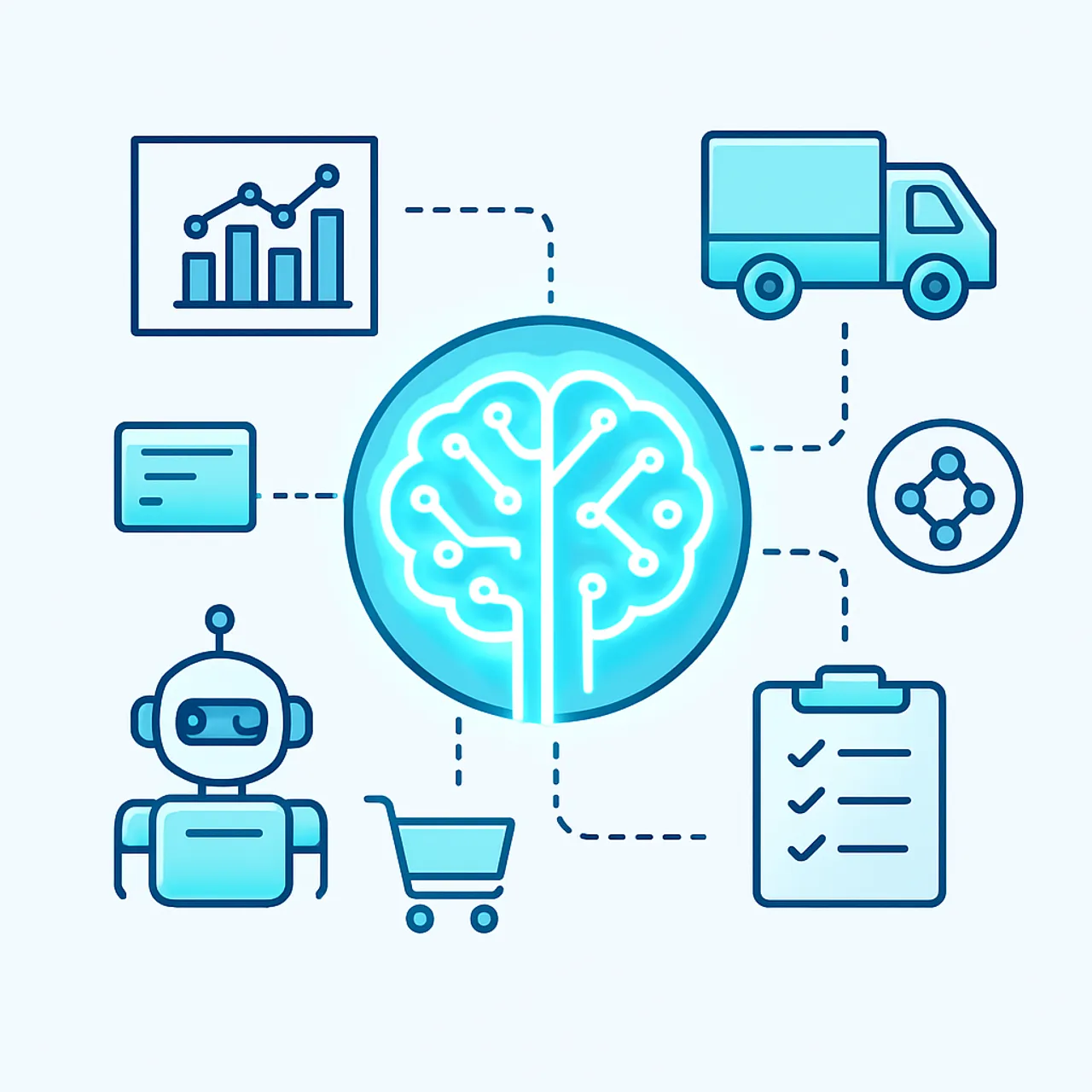
The next wave moves beyond tracking toward autonomous procurement. Systems will not just flag a likely delay; they will automatically reorder from an alternate approved supplier, renegotiate terms using historical pricing data, and forecast demand months ahead. Generative AI is already being used to draft supplier communications and summarize contract terms, and this trend will deepen as models become more reliable and auditable.
The organizations investing now are building the data foundation these autonomous capabilities require. Those who wait will spend years catching up on data quality alone.
Key Takeaways
- An AI purchase order tracking system automates PO creation, monitoring, matching, and reconciliation in real time.
- Manual PO processing can cost 50 to 100 US dollars per order once errors and rework are counted.
- McKinsey reports procurement automation can cut process costs by up to 30 percent.
- Core features to demand: OCR data capture, three-way matching, predictive alerts, ERP integration, and audit trails.
- Success depends on clean data, ERP integration, and strong team adoption, not software alone.
Frequently Asked Questions (FAQ)
What is an AI purchase order tracking system?
It is software that uses machine learning, OCR, and automation to manage purchase orders end to end. It captures data automatically, updates order status in real time, matches invoices to orders, and predicts delivery risks, reducing manual work while giving procurement teams complete visibility across their supply chain.
How does AI improve purchase order accuracy?
AI improves accuracy by extracting data directly from documents instead of relying on manual typing. It validates each order against budgets, catches duplicates, and performs automated three-way matching between the purchase order, receipt, and invoice, so errors are flagged instantly rather than discovered after payment problems arise.
Can an AI PO system integrate with my existing ERP?
Yes. Reputable AI purchase order tracking systems integrate with major ERP and accounting platforms such as SAP, NetSuite, Oracle, and QuickBooks. Integration is essential because it keeps a single source of truth, prevents duplicate data entry, and lets automation act on live financial and inventory information across your organization.
Is an AI purchase order tracking system worth the cost?
For most mid-size and large teams, yes. With manual processing costing 50 to 100 US dollars per order and automation cutting process costs by up to 30 percent, the system typically pays for itself quickly through reduced errors, faster approvals, and reclaimed staff hours spent on higher-value sourcing work.
How long does it take to implement one?
Timelines vary by complexity, but a focused rollout on high-volume categories often goes live within a few weeks to a few months. Clean supplier data, clear approval rules, and solid ERP integration are the biggest factors that determine how quickly you see measurable results and full team adoption.
Does AI replace procurement staff?
No. AI replaces repetitive clerical tasks like data entry and status chasing, not people. It frees procurement professionals to focus on strategic work such as supplier negotiation, risk management, and cost optimization, which is where human judgment and relationships create the most lasting business value.
Final Thoughts
An artificial intelligence purchase order tracking system is no longer a luxury for large enterprises. It is a practical, cost-saving upgrade for any team drowning in manual procurement work. Start by cleaning your data, integrate with your ERP, and prove value on your highest-volume orders. Do that, and you will turn purchase order tracking from a daily headache into a source of insight and control.