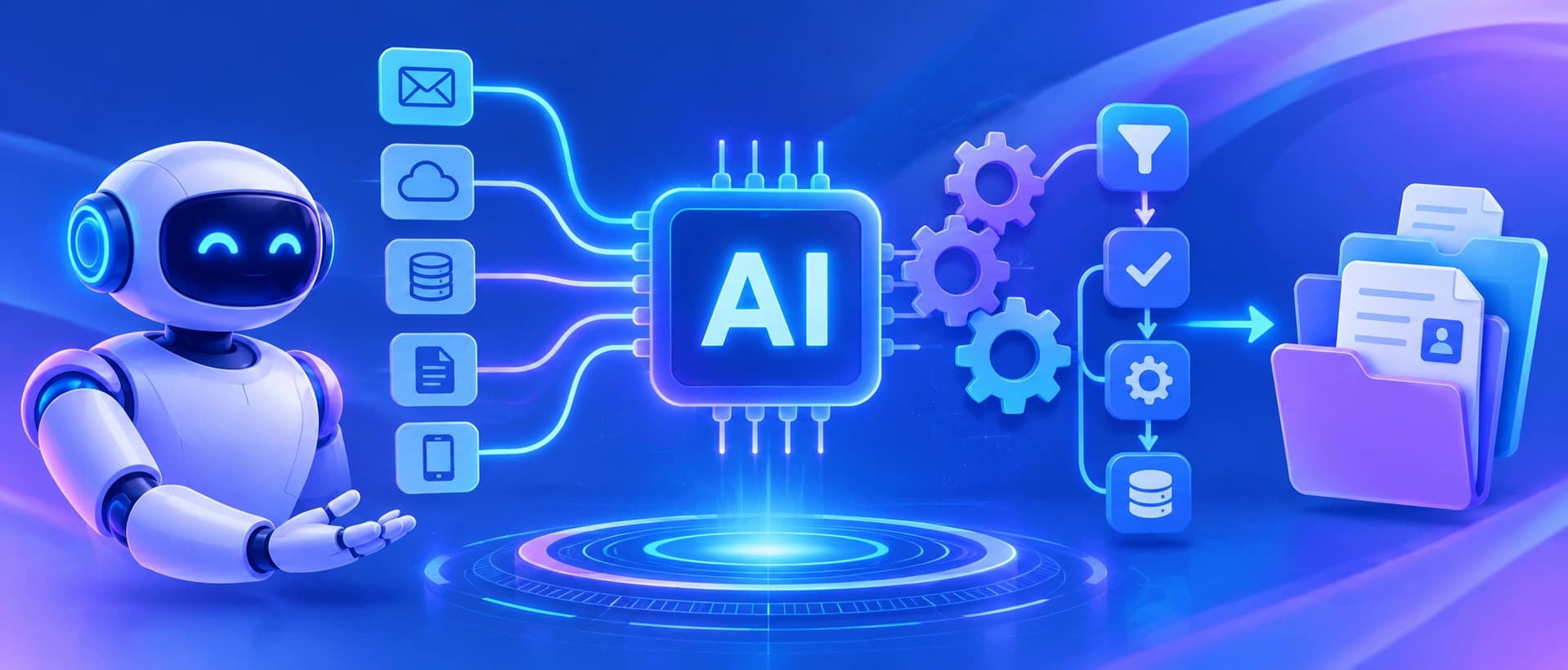
Learn how artificial intelligence intake management and orchestration automates request capture, routing, and workflows to cut delays and scale operations fast.
Artificial Intelligence Intake Management & Orchestration
Every organization runs on incoming requests: customer tickets, loan applications, patient referrals, vendor onboarding forms, legal matters, and IT issues. The moment one of these arrives, a silent clock starts ticking. How quickly it gets captured, understood, prioritized, and routed to the right person decides whether your team looks fast and competent or slow and chaotic. Artificial intelligence intake management and orchestration is the discipline that compresses that entire journey from hours to seconds.
After years helping teams rebuild broken intake pipelines, we have seen the same pattern repeat: the technology is rarely the bottleneck. The bottleneck is the manual handoff between systems and people. This guide breaks down exactly how AI fixes that, what a real orchestration architecture looks like, and how to roll it out without disrupting the work your team already does.
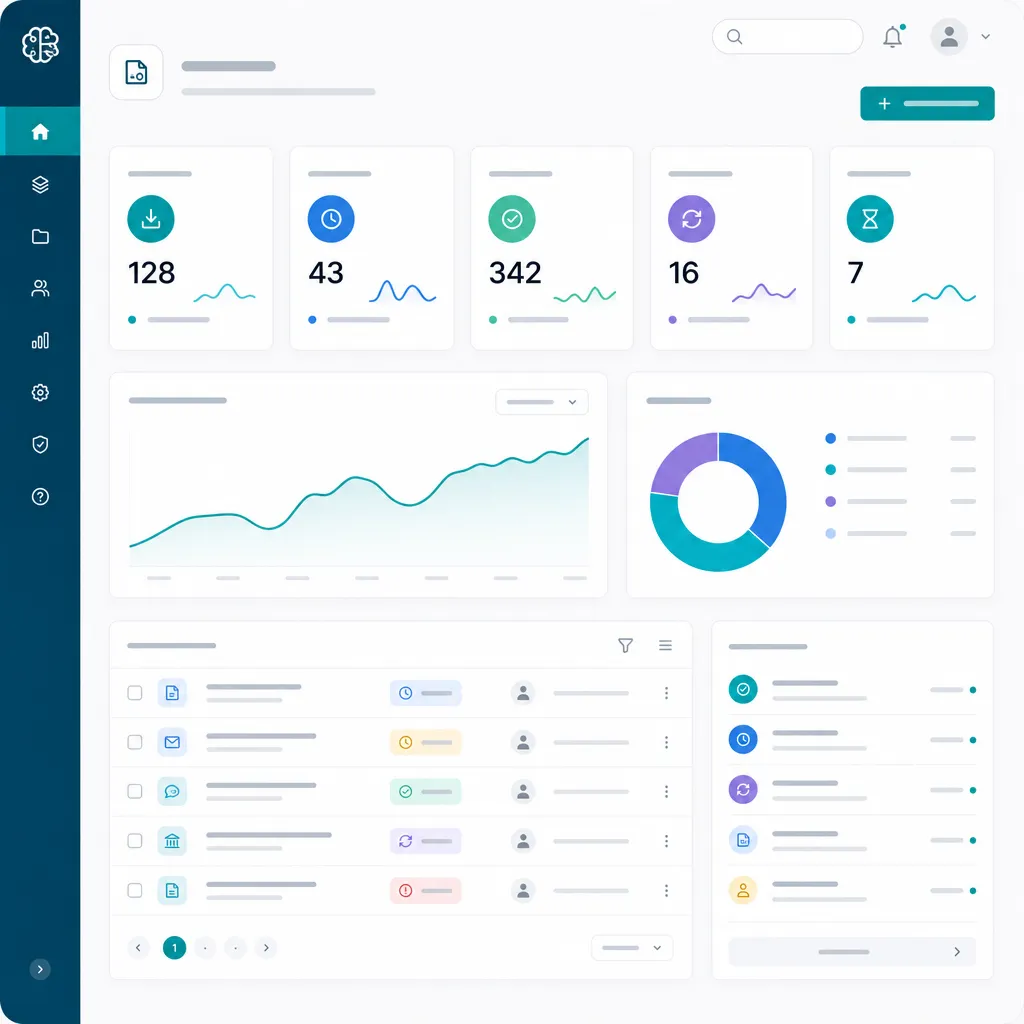
Quick Answer: AI intake management and orchestration uses artificial intelligence to automatically capture incoming requests, extract and classify their data, prioritize them, and route each one to the right person or system. Orchestration then coordinates every downstream step, removing manual handoffs and dramatically reducing response time.
What Is AI Intake Management and Orchestration?
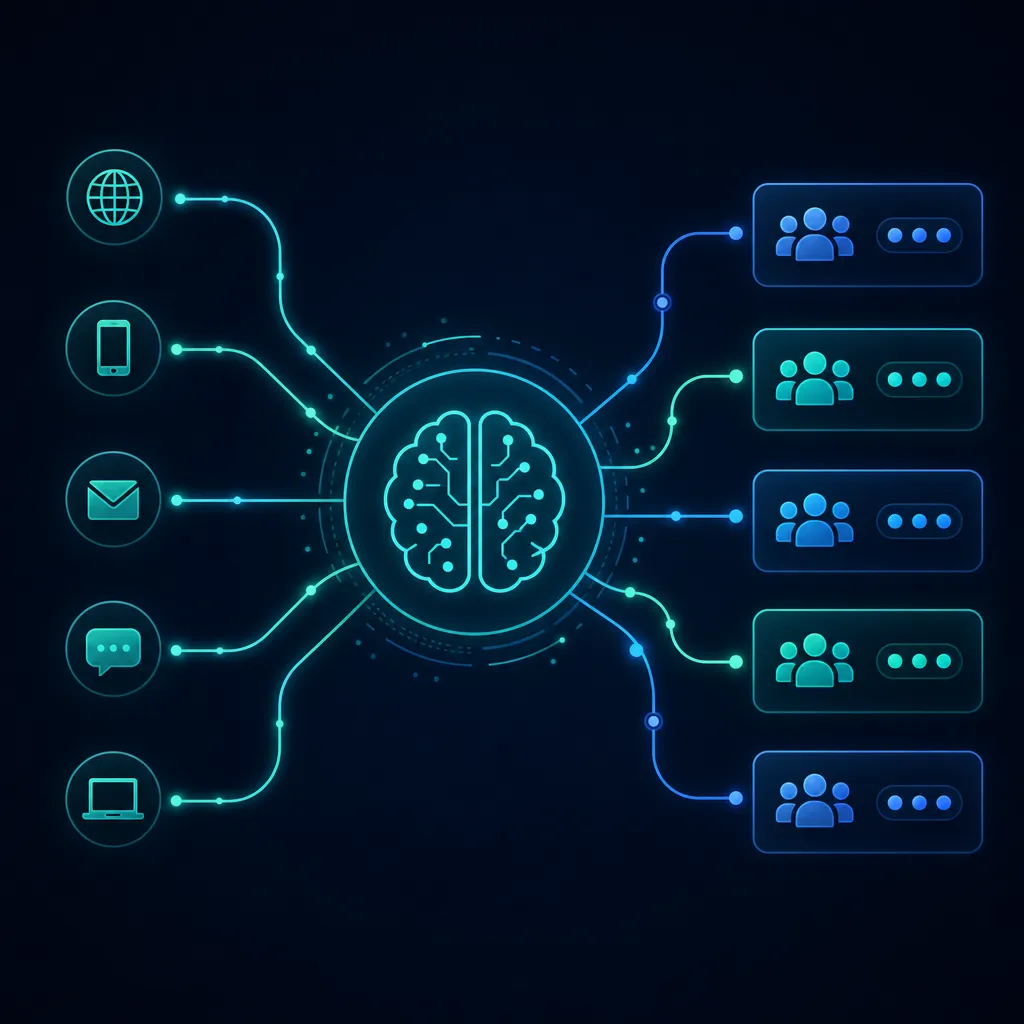
AI intake management is the use of machine learning, natural language processing, and automation to receive, interpret, and organize incoming work without manual data entry. Orchestration is the layer that sits above it, sequencing tasks, triggering systems, and coordinating people so that every captured request moves through its full lifecycle automatically.
Think of intake as the front door and orchestration as the traffic control tower. Intake decides what just arrived and what it means. Orchestration decides what happens next, in what order, and who needs to act.
Defining the Two Core Terms
- Intake management: Capturing a request from any channel (email, web form, chat, API, document) and converting it into structured, usable data.
- Orchestration: Automatically coordinating the sequence of actions, approvals, integrations, and notifications that follow that request until it is resolved.
The distinction matters because many teams buy a smart form and assume the problem is solved. Without orchestration, you have faster data entry but the same downstream chaos.
Why Traditional Intake Breaks Down at Scale
Manual intake works fine at low volume. It collapses predictably as requests grow because every step depends on a human reading, copying, and forwarding information.
The failure points are consistent across industries:
- Re-keying data between an email, a spreadsheet, and a CRM introduces errors and delay.
- Inconsistent triage means urgent requests sit behind trivial ones because no rule enforces priority.
- Lost context as a request bounces between three or four people, each losing a piece of the story.
- No visibility into where anything is, leading to status-check emails that consume hours.
According to McKinsey, employees spend nearly 1.8 hours every day, around 9.3 hours per week, simply searching for and gathering information. Intake-heavy teams feel this most acutely because their entire output depends on information moving cleanly. AI removes that drag by reading, structuring, and routing data the instant it lands.
How AI Intake Orchestration Actually Works
A modern AI intake pipeline follows a clear, repeatable sequence. Understanding it helps you spot where your current process leaks time.
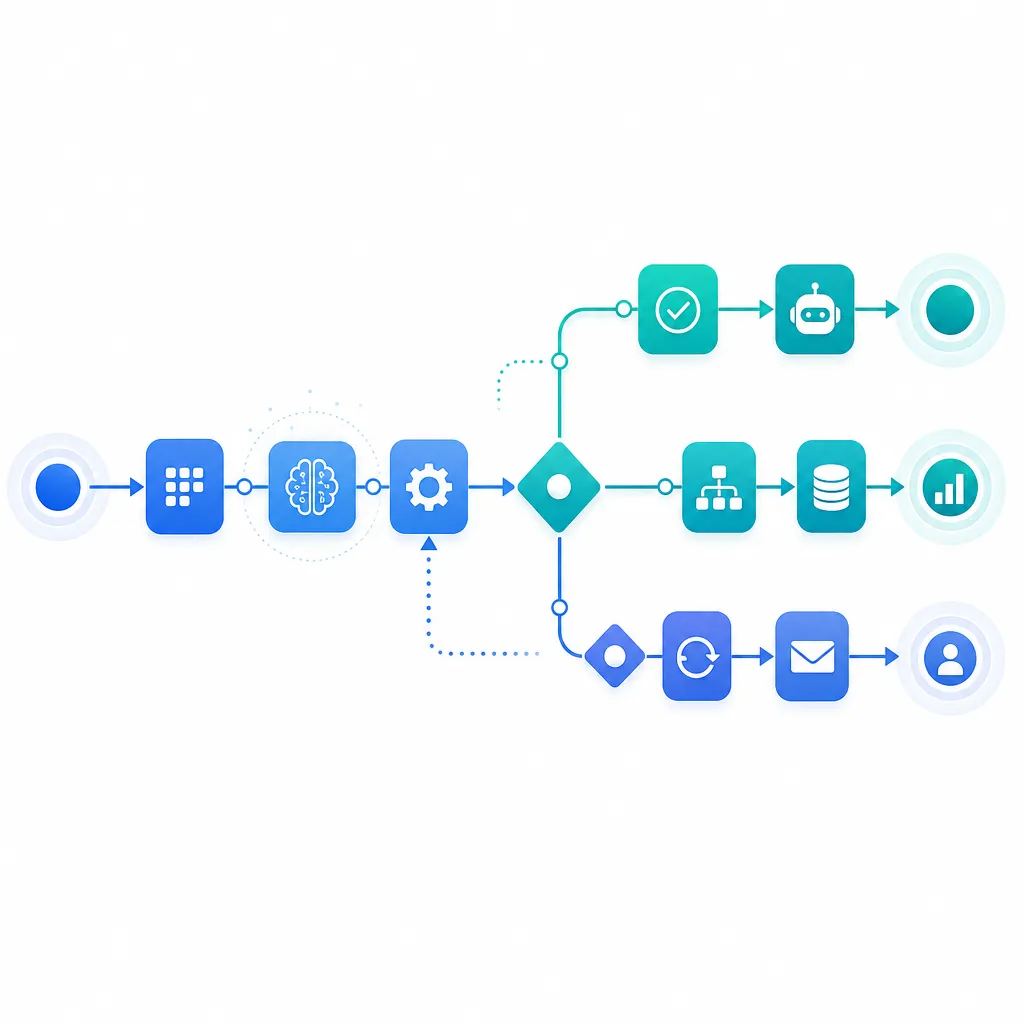
- Ingestion: The system accepts requests from every channel: web forms, inboxes, chat widgets, phone transcripts, uploaded PDFs, and APIs.
- Extraction: Natural language processing and document AI pull out names, dates, amounts, intent, and entities, even from messy free text or scanned files.
- Classification: The request is tagged by type, urgency, department, and sentiment so the system understands what it is dealing with.
- Validation: AI checks for missing fields, conflicting data, or compliance flags and can request clarification automatically.
- Routing: Rules and machine learning assign the request to the right queue, person, or automated workflow.
- Orchestration: Downstream steps fire in sequence: creating records, sending acknowledgments, scheduling, and escalating when thresholds are crossed.
The magic is that steps two through six happen in seconds, with no human touching a keyboard until a genuine decision is required.
The Core Components of an AI Intake System
A durable system is built in layers, each with a single responsibility. Treating them as separate, swappable components keeps your architecture flexible as tools evolve.
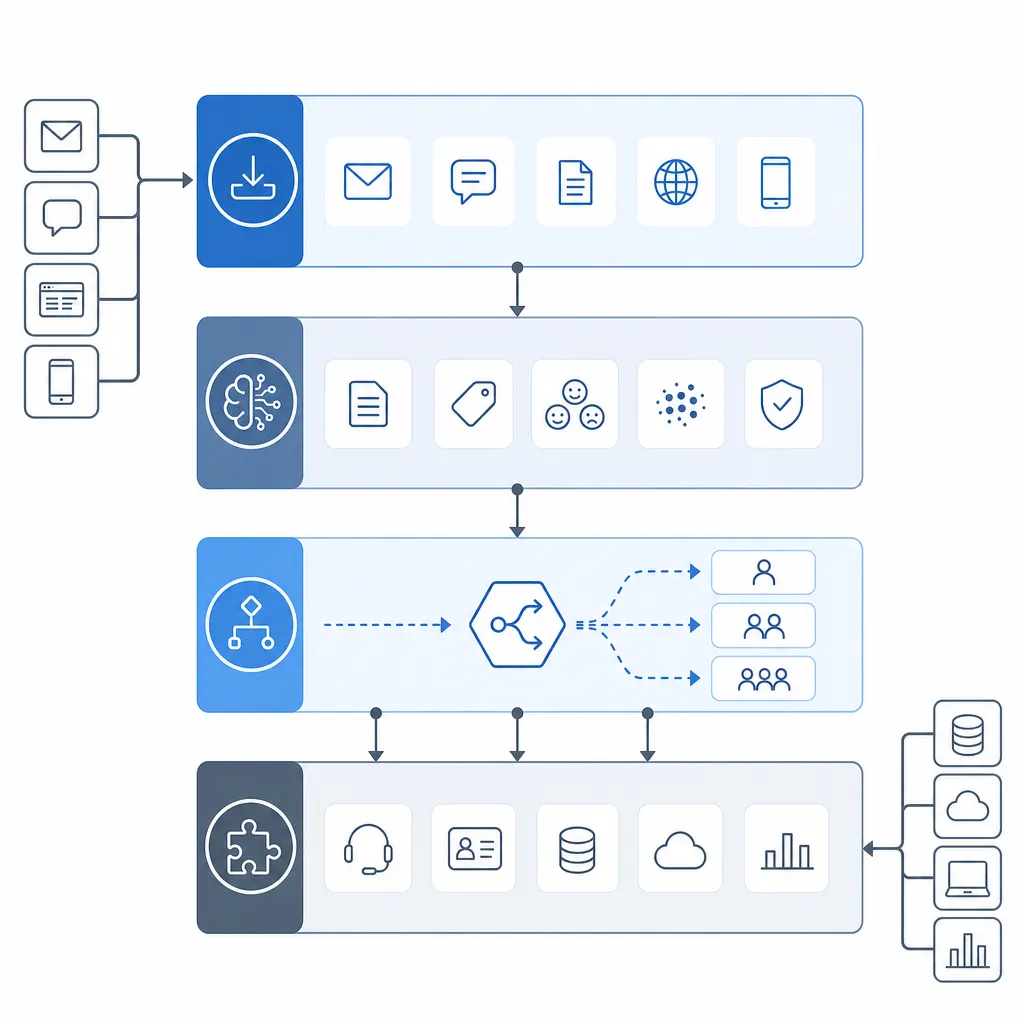
- Capture layer: Unified endpoints that accept every input format without forcing requesters to change behavior.
- Understanding layer: Document AI and NLP models that turn raw input into structured fields and confidence scores.
- Decision layer: A rules engine combined with predictive models that prioritize and route.
- Orchestration layer: A workflow engine that coordinates integrations, approvals, and human tasks.
- Observability layer: Dashboards and audit logs that show throughput, bottlenecks, and accuracy in real time.
When evaluating partners for this kind of build, look for teams that treat the understanding and decision layers as the hard part. Specialists in artificial intelligence services focus there because that is where accuracy and trust are won or lost.
Manual vs AI-Driven Intake: A Side-by-Side Comparison
The difference is not incremental. It changes the economics of how a team operates.
| Factor | Manual Intake | AI Intake and Orchestration |
|---|---|---|
| Data entry | Manual, error-prone | Automatic extraction |
| Average triage time | Minutes to hours | Seconds |
| Routing accuracy | Depends on the person | Consistent and learned |
| After-hours handling | None | Always on |
| Audit trail | Partial | Complete and timestamped |
| Scales with volume | No | Yes |
| Cost per request | Rises with volume | Falls with volume |
The last row is the strategic point. Manual intake gets more expensive as you grow. AI intake gets cheaper per request because the fixed automation handles rising volume without proportional headcount.
Real Business Impact: Measurable Results
The value of AI intake shows up in numbers that leadership cares about, not just convenience.
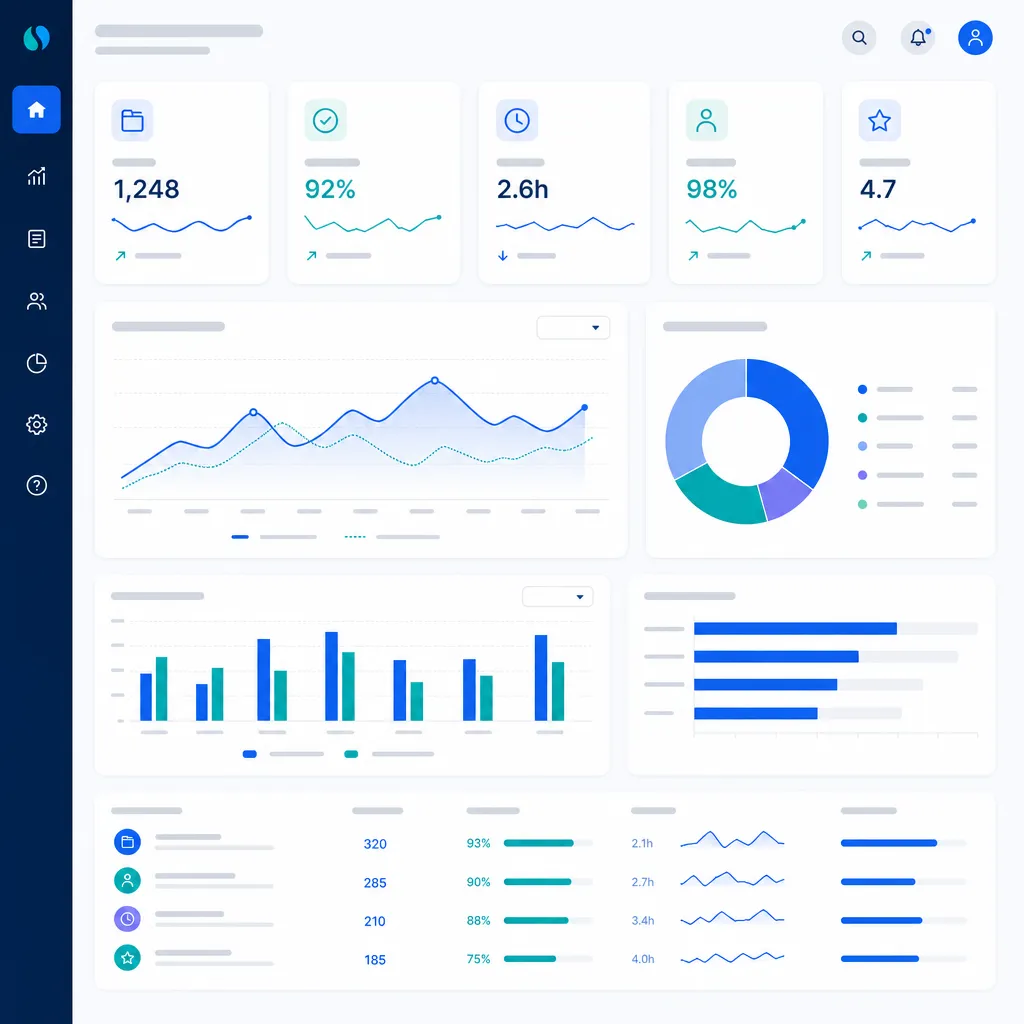
Gartner predicts that by 2026, organizations applying AI-driven automation to operational workflows will reduce operational costs by up to 30 percent. In intake-heavy functions, the gains tend to cluster in three areas:
- Speed: First-response time drops from hours to near-instant acknowledgment, improving satisfaction immediately.
- Accuracy: Automated extraction and validation cut data errors that previously triggered costly rework.
- Capacity: Teams handle two to three times more volume without adding staff, freeing people for judgment-heavy work.
Just as importantly, orchestration creates a complete audit trail. Every request carries a timestamped record of what happened and why, which is invaluable for compliance-driven industries like finance, healthcare, and legal.
How to Implement AI Intake Management
Successful rollouts are deliberate, not big-bang. The teams that win start narrow and expand once trust is established.

- Map your current intake flow. Document every channel, handoff, and decision point. You cannot automate what you cannot see.
- Pick one high-volume request type. Start with a process that is painful and repetitive, not your most complex edge case.
- Define the data you actually need. Over-collecting slows everyone down. Capture only what drives a decision.
- Build extraction and routing first. These deliver the fastest visible win and build internal confidence.
- Add orchestration in stages. Automate acknowledgments, then record creation, then escalations.
- Keep a human in the loop for low-confidence cases. Let AI handle the clear majority and flag uncertain ones for review.
- Measure and iterate. Track response time, accuracy, and reroute rates weekly, then expand to the next request type.
If you want help designing the architecture or choosing models, the team at WebPeak and ZoneTechify build these systems around your existing tools rather than forcing a rip-and-replace.
Common Mistakes to Avoid
Most failed projects share the same avoidable errors:
- Automating a broken process. Fix the workflow logic before adding AI, or you will simply make bad routing faster.
- Demanding 100 percent automation on day one. Aim for high-confidence automation with human fallback; perfection comes from iteration.
- Ignoring change management. If your team does not trust the routing, they will work around it. Show them the audit trail.
- Skipping observability. Without dashboards you cannot prove value or find bottlenecks, and the project quietly stalls.
Key Takeaways
- AI intake management captures and structures incoming requests automatically, while orchestration coordinates every step that follows.
- The biggest bottleneck in most workflows is manual handoffs, not technology, and orchestration removes them.
- A complete system has five layers: capture, understanding, decision, orchestration, and observability.
- McKinsey found employees lose around 9.3 hours weekly searching for information, a cost AI intake directly reduces.
- Gartner projects up to 30 percent operational cost reduction from AI-driven workflow automation by 2026.
- Start narrow, keep humans in the loop for low-confidence cases, and expand once accuracy is proven.
Frequently Asked Questions (FAQ)
What is the difference between intake management and orchestration?
Intake management captures and structures an incoming request, deciding what it is and what it means. Orchestration coordinates everything that happens afterward, sequencing approvals, integrations, notifications, and human tasks until the request is fully resolved. You need both for a complete, hands-off workflow.
Can AI intake systems work with my existing software?
Yes. Well-designed AI intake platforms connect to your CRM, helpdesk, ERP, and email through APIs and integrations. They sit on top of your current tools rather than replacing them, which is why a phased rollout is far less disruptive than teams usually expect.
How accurate is AI at extracting data from documents?
Modern document AI and NLP models routinely exceed 90 percent accuracy on structured and semi-structured documents. Accuracy improves over time as models learn from corrections. The best systems attach a confidence score to every field and route low-confidence cases to a human for quick review.
Is AI intake management only for large enterprises?
No. Small and mid-sized teams often see the fastest return because they feel manual overload most sharply. Cloud-based intake tools scale to volume, so you pay for what you use and can start with a single high-volume request type before expanding.
How long does it take to implement AI intake orchestration?
A focused first use case, such as automating one request type, can go live in a few weeks. Full orchestration across multiple departments takes longer and should be phased. Starting narrow lets you prove value quickly and build the internal trust needed to expand confidently.