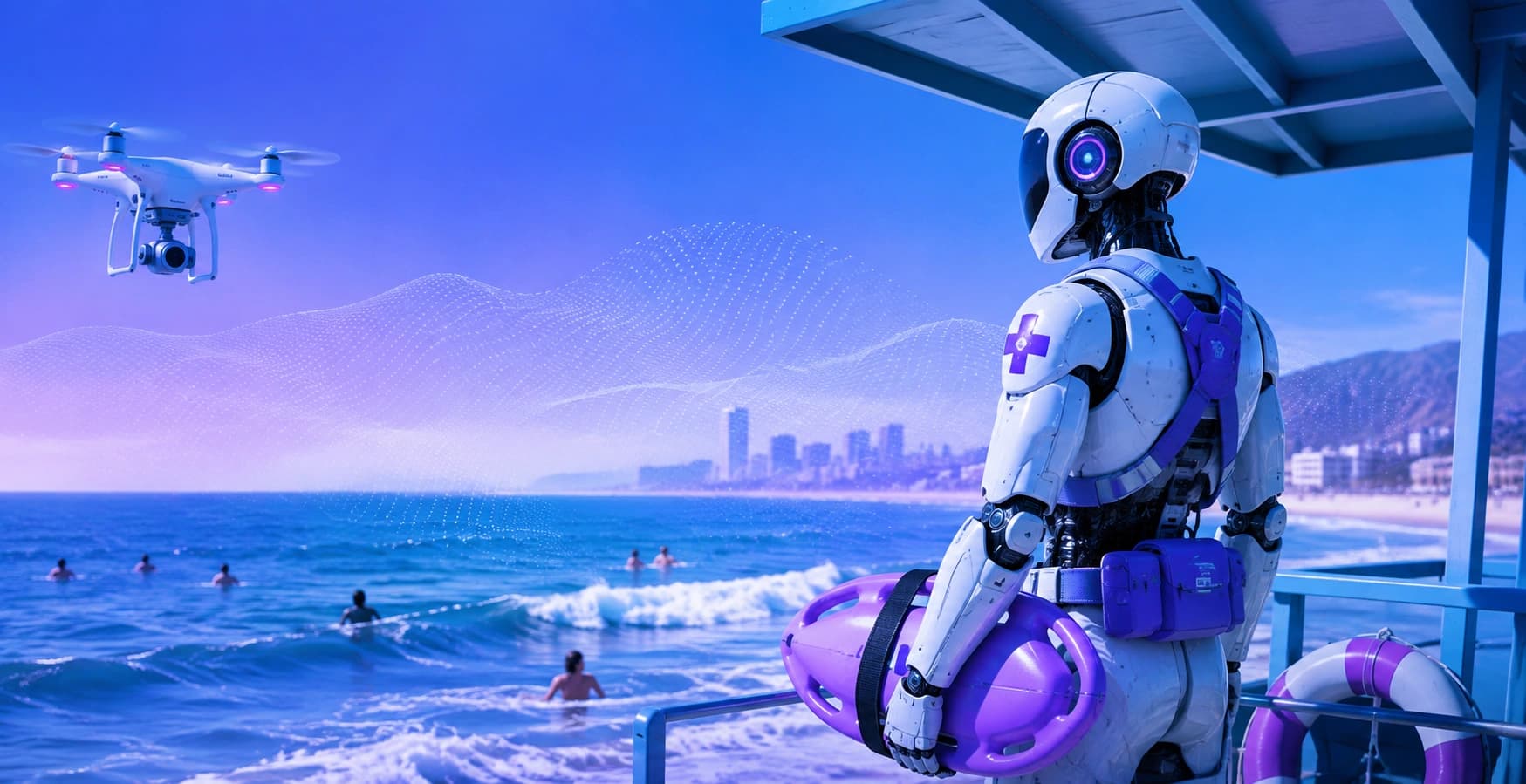
Discover how AI lifeguards are revolutionizing water safety with real-time drowning detection, 24/7 monitoring, and faster emergency response than human lifeguards alone.
Artificial Intelligence Lifeguard
Water safety has always been a human responsibility—lifeguards trained to scan pools and beaches for signs of distress. But according to the CDC, over 4,000 fatal unintentional drowning incidents occur annually in the United States alone, with another 8,000 non-fatal drowning injuries requiring emergency care. Despite trained personnel, drowning happens silently and quickly, often in seconds. Today, artificial intelligence is reshaping water safety with AI lifeguards—autonomous systems that detect drowning in real time, alert rescue teams instantly, and monitor aquatic environments continuously without fatigue or distraction.
Quick Answer: AI lifeguards are computer vision systems that use underwater and poolside cameras with machine learning algorithms to detect swimmers in distress, monitor crowd density, and send instant alerts to rescue personnel. They work 24/7 without breaks, achieve detection accuracy of 90%+ in controlled environments, and complement human lifeguards rather than replace them entirely.
What Is an AI Lifeguard?
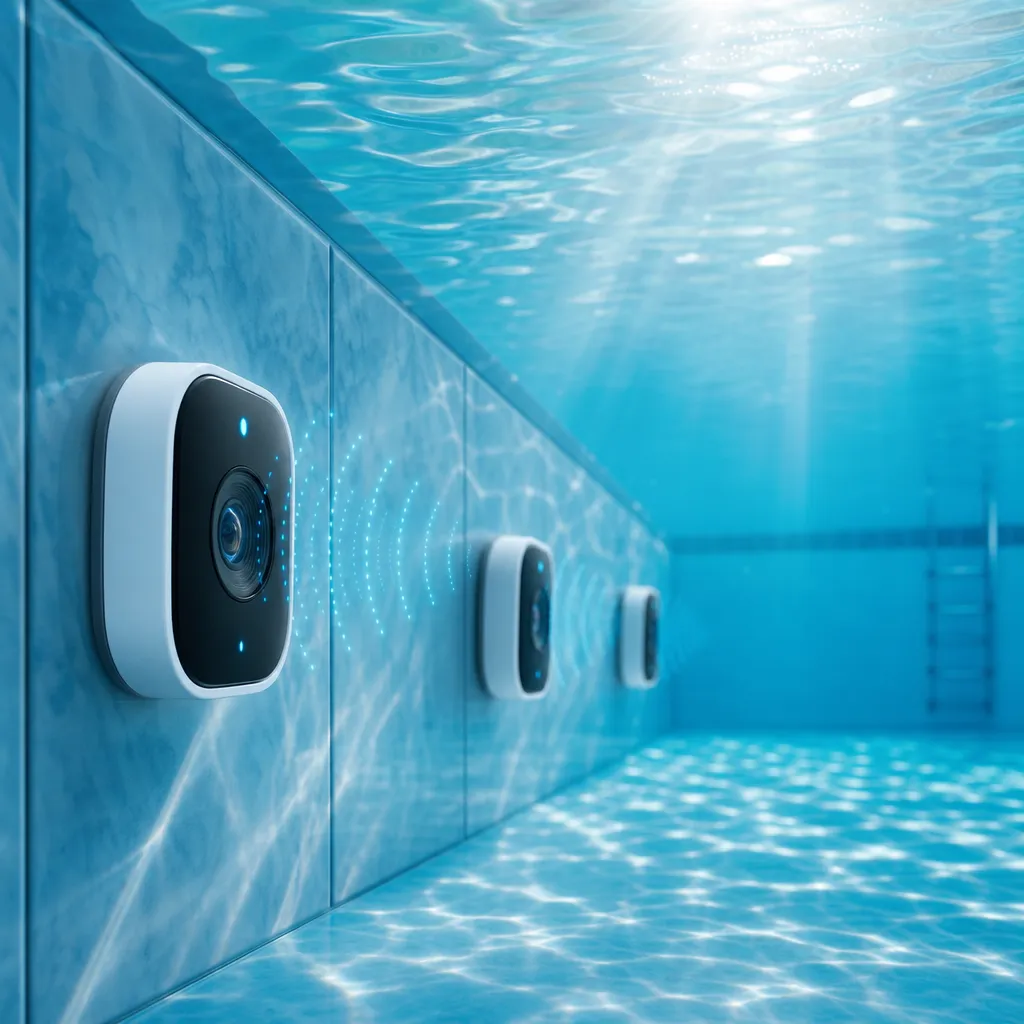
An AI lifeguard is an autonomous safety system powered by machine learning and computer vision technology. These systems process video feeds from underwater cameras, poolside sensors, and thermal imaging to identify drowning patterns, unusual behavior, and emergency situations in real time. Unlike human lifeguards who monitor based on visual cues and experience, AI systems analyze thousands of data points per second, comparing swimmer posture, movement patterns, submersion duration, and anomalies against trained models.
According to research from the International Journal of Computer Vision, modern AI drowning detection systems achieve accuracy rates between 85% and 95% when deployed in controlled pool environments with proper camera angles and water clarity. The technology integrates with existing aquatic facility infrastructure—requiring only camera installations and alert connectivity—making adoption feasible for aquatic centers, resorts, beaches, and water parks.
How AI Drowning Detection Works
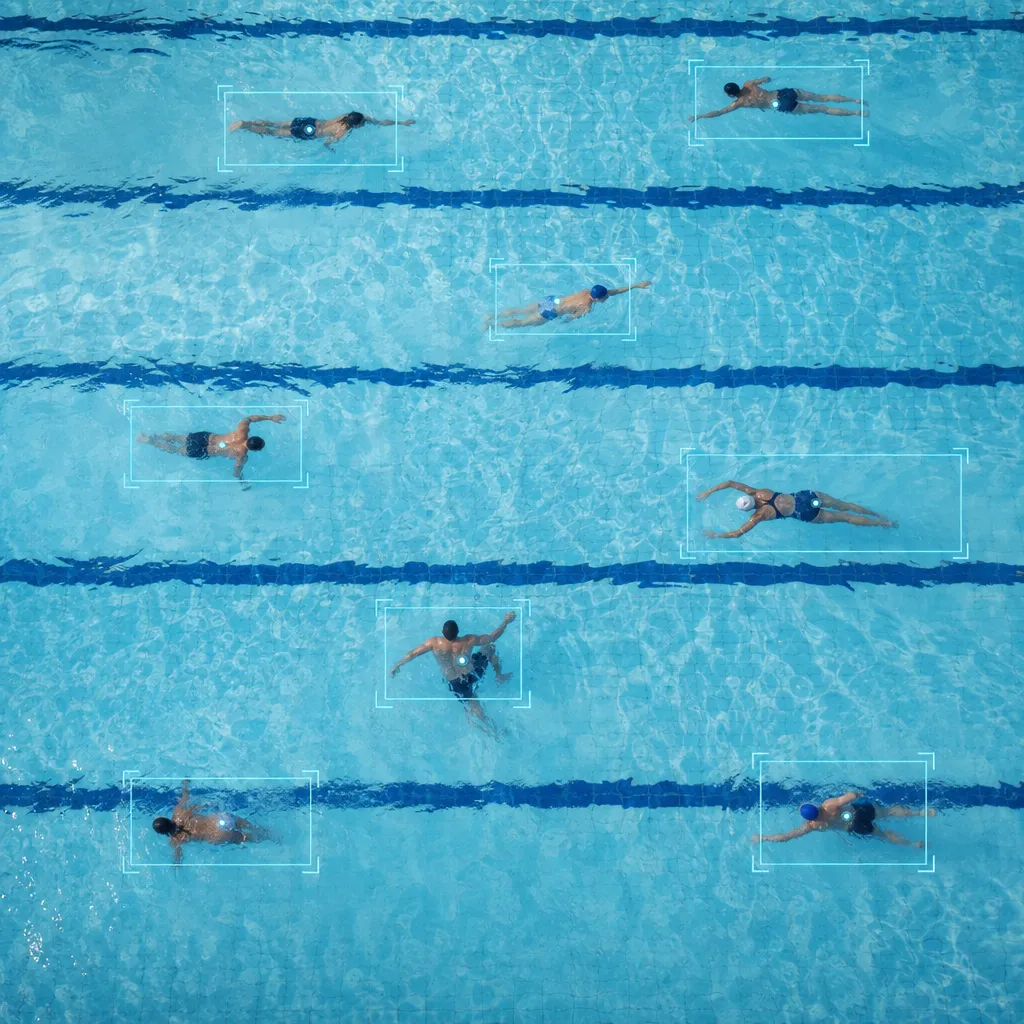
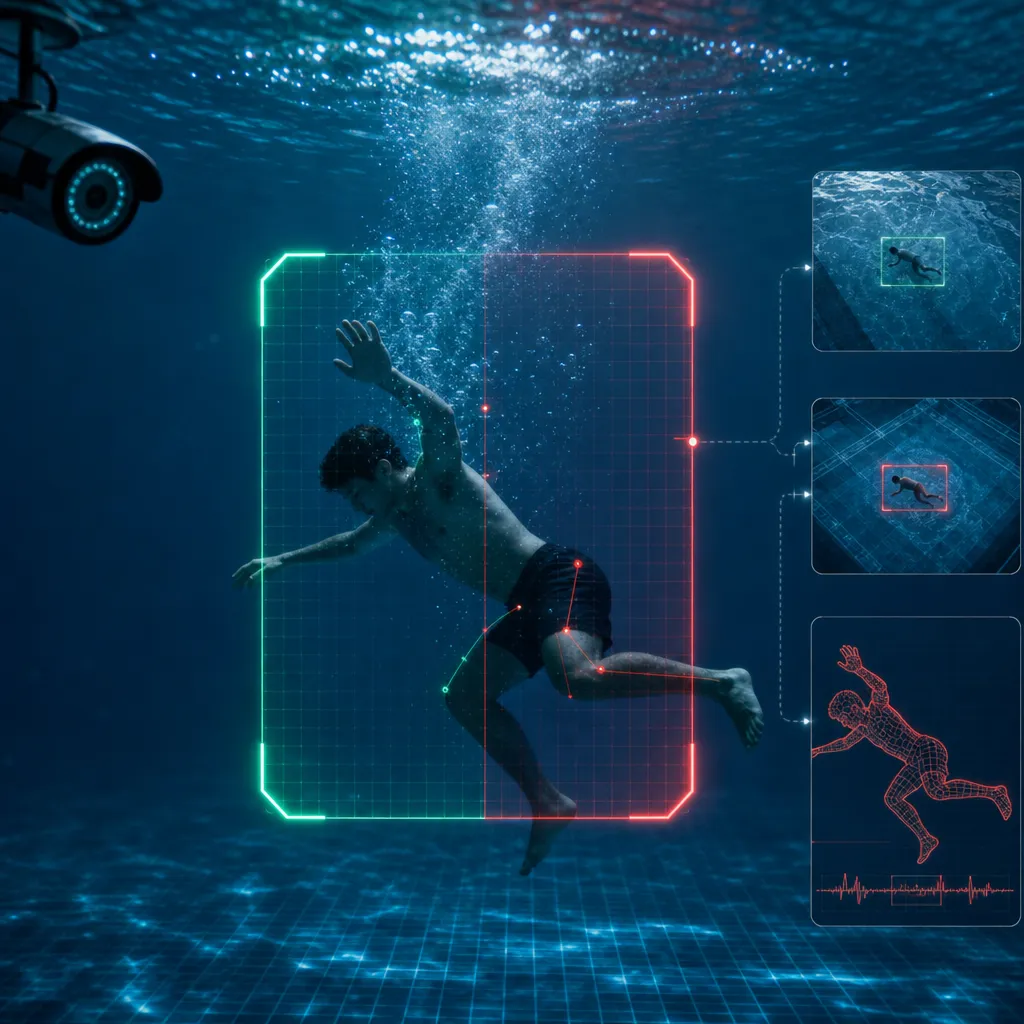
AI lifeguard systems rely on a three-step detection pipeline: video capture, behavioral analysis, and alert generation. Underwater and poolside cameras continuously stream footage to an edge computing system or cloud platform running trained neural networks. These networks have been trained on thousands of hours of pool footage, learning to distinguish normal swimming from distress signals like vertical posture, lack of movement, or irregular breathing patterns.
The system flags high-risk behaviors instantly. When a swimmer exhibits signs matching a drowning profile—such as vertical position in the water, no arm movement for a set duration, or submersion beyond normal parameters—the AI triggers an immediate alert to the lifeguard station, facility staff, and sometimes emergency services directly. This eliminates the communication delay between observation and response.
Research from the Journal of Safety Research indicates that average response time in manned facilities averages 15–30 seconds. AI systems reduce detection-to-alert time to under 2 seconds, a critical difference in a situation where brain damage begins after 4–6 minutes without oxygen.
Key Features of AI Lifeguard Systems
Real-Time Behavioral Monitoring
AI systems continuously analyze swimmer behavior across an entire facility. They identify weak swimmers, children separated from guardians, slip-and-fall incidents on wet surfaces, and unauthorized access. Some advanced systems even estimate water temperature, detect foreign objects, and monitor crowding levels to prevent overcapacity conditions.
24/7 Coverage Without Fatigue
Human lifeguards experience attention fatigue after approximately 20 minutes of scanning. AI systems maintain consistent performance across 24-hour periods, seasonal variations, and high-traffic periods. This is especially valuable for wave pools, water parks, and beach operations where multiple zones require simultaneous monitoring.
Multi-Zone Capability
A single AI system can monitor multiple pools, diving areas, and shallow zones simultaneously. Facility operators receive unified alerts across zones from one centralized dashboard, improving resource allocation and response coordination.
Integration with Wearables and IoT
Advanced AI lifeguard systems integrate with smartwatches, rescue buoys with GPS, and facility-wide IoT networks. Swimmers wearing wristbands transmit location and heart rate data, enabling the AI to cross-reference camera detection with biometric signals for enhanced accuracy.
AI Lifeguard vs. Human Lifeguard: A Comparison
| Feature | AI Lifeguard | Human Lifeguard |
|---|---|---|
| Availability | 24/7, no breaks | 8–12 hours per shift |
| Fatigue | None | Attention drops after 20 min |
| Response Time | Under 2 seconds | 15–30 seconds |
| Accuracy | 85–95% in controlled settings | 70–80%, depends on training |
| Coverage | Multiple zones simultaneously | Single zone focused |
| Cost per Hour | $0.50–$2.00 after installation | $18–$25 per hour |
| Initial Setup | $15,000–$80,000 depending on facility | Hiring and training costs |
| Human Connection | None—no reassurance or education | Direct interaction with swimmers |
This comparison is not about replacement but complementation. The best aquatic facilities use both: AI systems for tireless detection and human lifeguards for rescue execution, emergency medical response, and swimmer education.
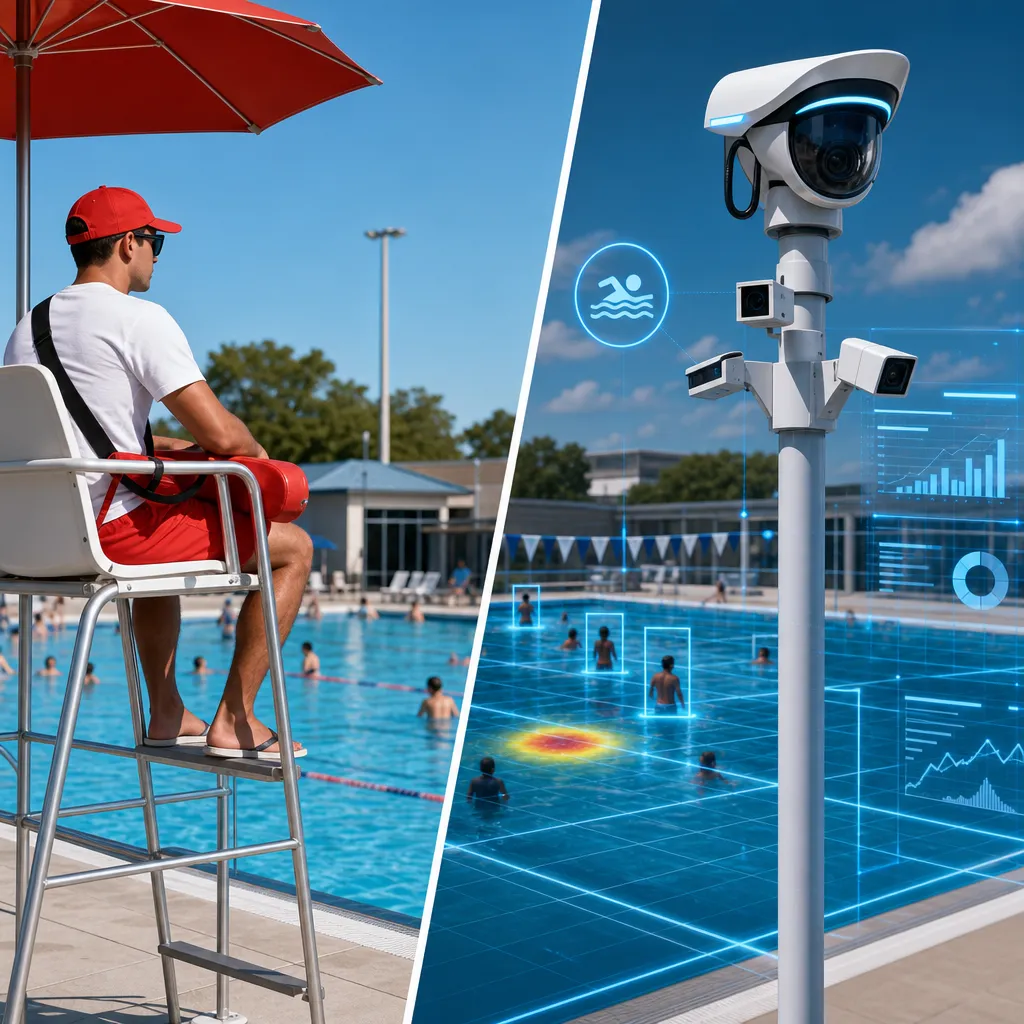
Practical Applications Across Aquatic Settings
Public Swimming Pools
Municipalities deploying AI lifeguard systems report faster incident response and reduced liability exposure. A facility in California reduced average incident response time by 40% after implementing AI-assisted monitoring, though human lifeguards remained on-site.
Water Parks and Resort Pools
Large venues with multiple pools benefit significantly. Theme parks and resorts use AI to maintain safety standards while accommodating high guest volume during peak seasons. The technology enables smaller trained staff to oversee larger areas safely.
Beaches and Open Water
AI systems with drone integration monitor larger areas. Aerial cameras equipped with thermal imaging and AI can identify swimmers in distress across vast shorelines, alerting beach patrol units to specific coordinates for faster rescue.
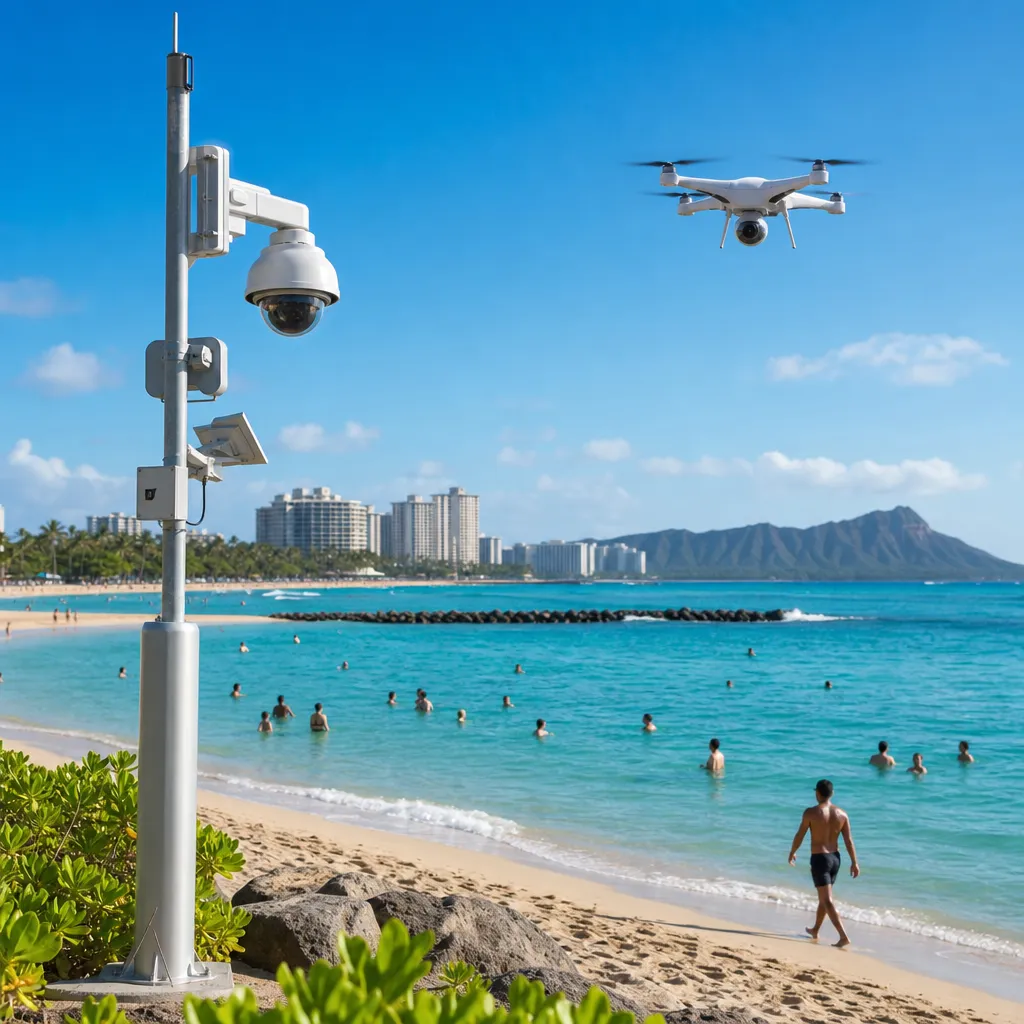
Private Residences and Rehabilitation Centers
High-risk settings like centers serving elderly populations or children with disabilities benefit from passive AI monitoring that alerts caregivers without requiring manual supervision.
The Role of Better Auth Integration in Facility Management
When facilities deploy AI lifeguard systems, authorized personnel—lifeguards, facility managers, and emergency responders—need secure access to alert dashboards and camera feeds. This is where ZoneTechify and WebPeak provide secure authentication infrastructure, ensuring that only trained staff can access safety-critical systems. Proper authentication prevents unauthorized access to live facility feeds and ensures audit trails for incident review.
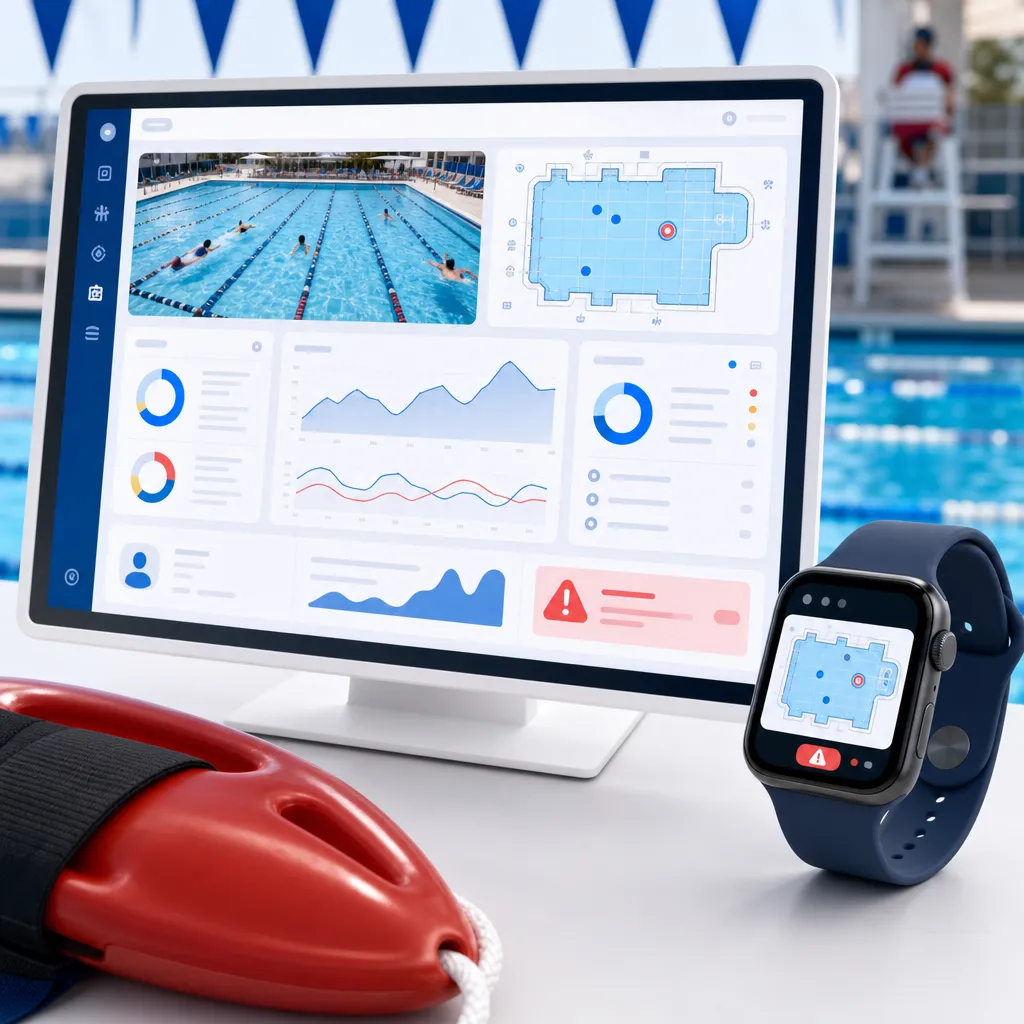
Limitations and Challenges
AI lifeguard systems are not without constraints. Water clarity, lighting conditions, complex pool geometries, and crowded environments can reduce accuracy. False positives—triggering alarms for vigorous swimming or playful behavior—require tuning. Most importantly, these systems cannot physically perform rescue operations; human responders remain essential.
Current systems also struggle in outdoor settings with reflections, changing sunlight, and seasonal weather variations. Cost remains a barrier for smaller facilities, though prices continue declining as adoption scales.
The Future of Water Safety: AI Lifeguards
The trajectory is clear: AI water safety will evolve toward fully integrated ecosystems. Future systems will combine underwater acoustic sensors (detecting distress sounds), real-time biometric monitoring, autonomous rescue drones, and predictive analytics that identify at-risk swimmers before incidents occur.
According to industry forecasts, the global AI-powered aquatic safety market is projected to grow at a compound annual growth rate of 18% through 2032, reaching approximately $3.2 billion. Investment from both public facility operators and private water park chains validates the technology's utility and safety value.
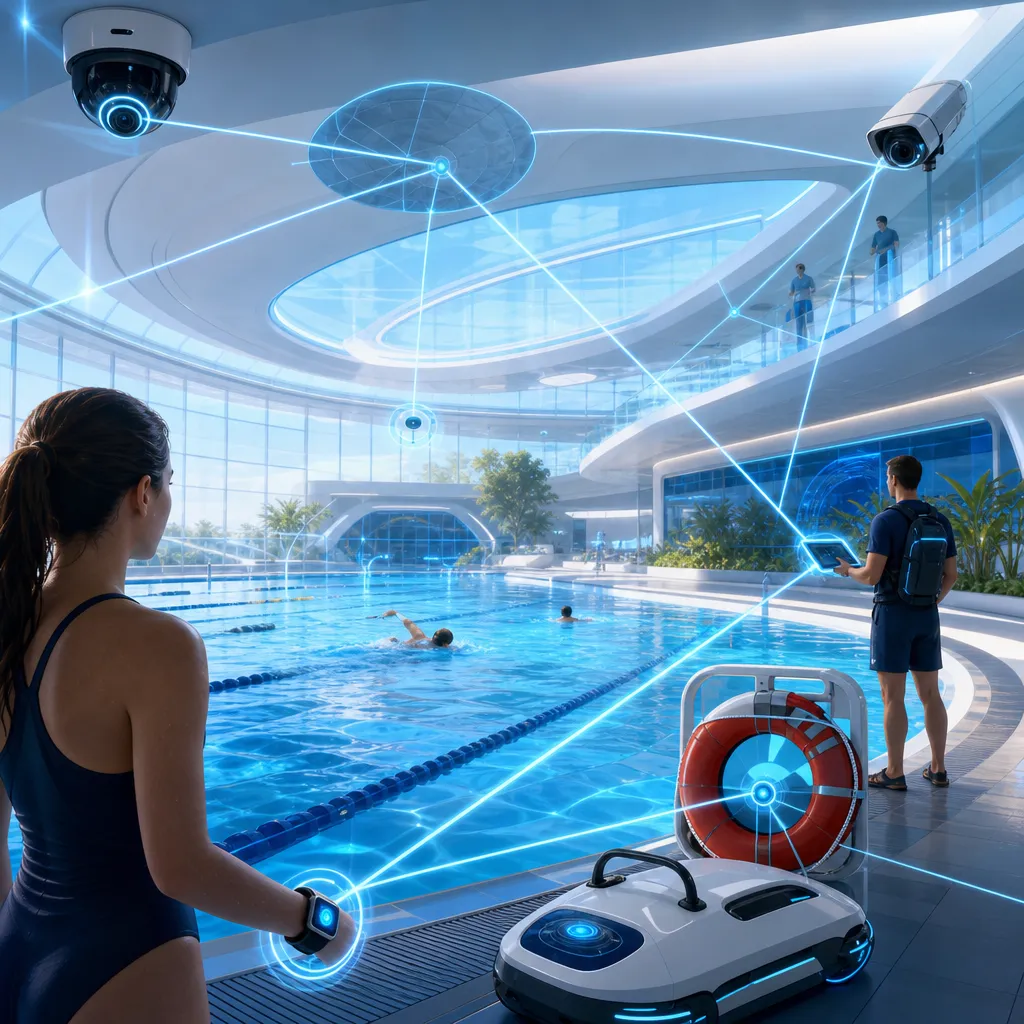
Key Takeaways
- AI lifeguards achieve sub-2-second detection time, compared to 15–30 seconds for human observation, critical in drowning emergencies where brain damage begins at 4–6 minutes of oxygen deprivation.
- Drowning kills approximately 4,000 people annually in the US according to CDC data, with AI systems demonstrating 85–95% accuracy in detecting distress indicators across monitored zones.
- AI systems operate 24/7 without attention fatigue, while human lifeguards experience cognitive decline after 20 minutes, making hybrid approaches optimal for comprehensive safety.
- Implementation costs range from $15,000 to $80,000 depending on facility size and complexity, offering ROI through reduced liability, faster insurance payouts, and fewer incidents.
- Best practices combine AI detection with human rescue capacity—these technologies complement rather than replace trained lifeguards, creating safer aquatic environments.
Frequently Asked Questions (FAQ)
Can AI lifeguards fully replace human lifeguards?
No. AI systems excel at detection and alerting but cannot physically perform rescues, administer CPR, or provide emergency medical care. The most effective approach pairs AI detection with trained human responders. AI handles tireless monitoring; humans handle intervention and emergency medicine.
What is the typical accuracy rate of AI lifeguard systems?
Modern systems achieve 85–95% accuracy in controlled pool environments with optimal lighting and camera angles. Performance drops in open water, crowded conditions, or poor visibility. Regular calibration and human oversight ensure reliable operation.
How quickly can AI detect a drowning incident?
AI systems detect and alert in under 2 seconds from video analysis to notification. In contrast, human lifeguards average 15–30 seconds from observation to communication. This speed advantage is critical—every second matters in drowning emergencies.
What is the cost of installing an AI lifeguard system?
Initial installation typically ranges from $15,000 to $80,000 depending on facility size, number of cameras, and integration complexity. Monthly operational costs are minimal ($200–$500). Human lifeguard labor costs range from $18–$25 per hour, making AI a cost-effective long-term investment.
Are AI lifeguards suitable for small residential pools?
Yes. Compact, affordable AI monitoring systems designed for residential use have emerged, with pricing starting around $3,000–$5,000. These are particularly valuable for families with young children or elderly residents at higher drowning risk.
How do privacy concerns get addressed with AI lifeguard systems?
Facilities using AI lifeguards follow strict data-handling protocols, with cameras focused only on water surfaces and recordings encrypted. Privacy-by-design architecture ensures footage is not retained longer than necessary and access is limited to authorized safety personnel only.