
MongoDB is not a relational database. It is a document-oriented NoSQL database that stores flexible BSON documents, and this guide explains what that means for real projects.
Is MongoDB a Relational Database
Developers ask this question constantly, usually right before choosing a database for a project that will outlive the decision by years. The short answer surprises people who have seen MongoDB handle joins, transactions, and schema validation: no, it is not relational, even though modern MongoDB borrows several features that once belonged exclusively to relational systems. Understanding the difference matters because it changes how you model data, how you index it, and how much your infrastructure costs at scale.
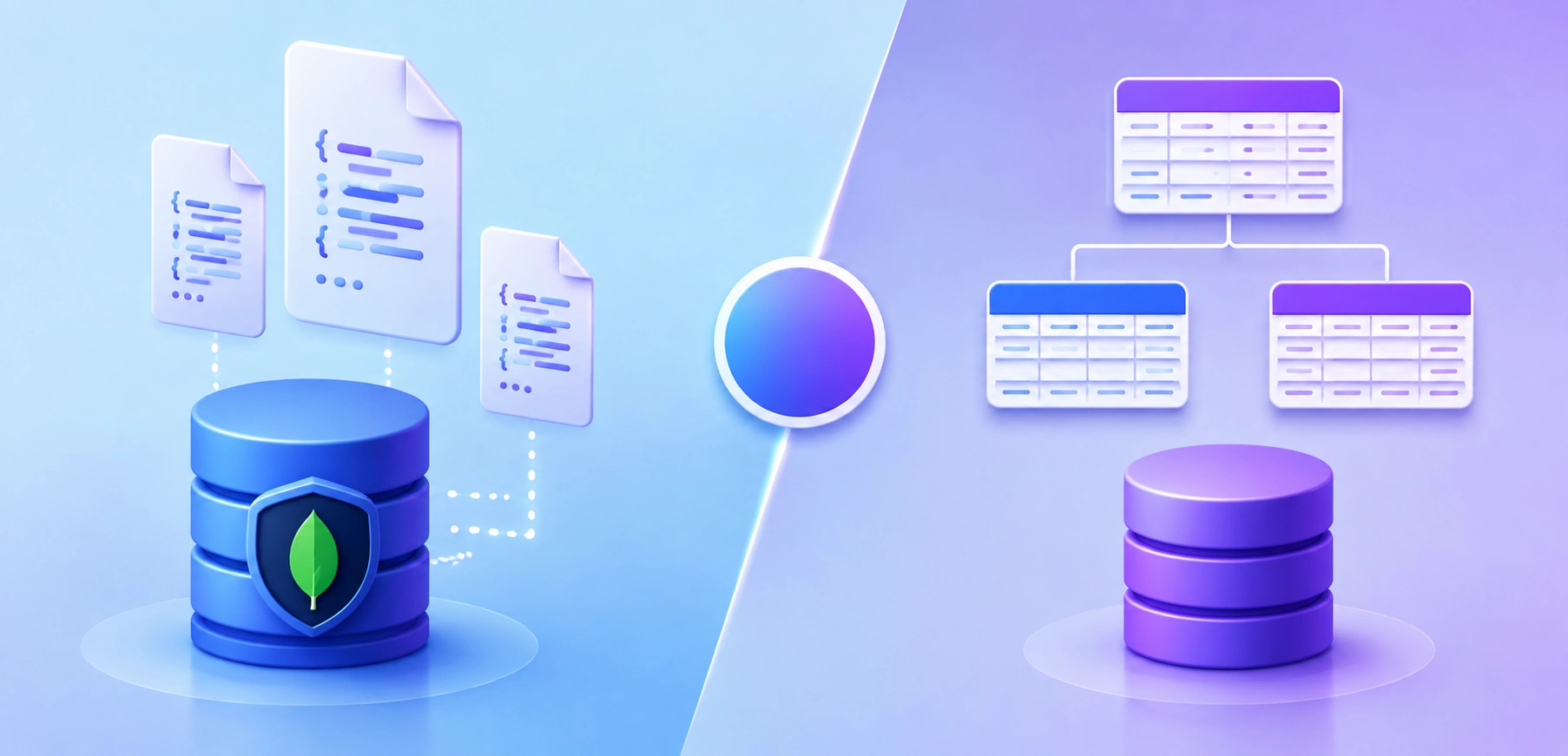
Quick Answer: No, MongoDB is not a relational database. It is a document-oriented NoSQL database that stores data as flexible BSON documents inside collections rather than as rows inside fixed-schema tables. MongoDB does support ACID transactions, joins through the aggregation pipeline, and schema validation, but its core data model remains non-relational.
What Makes a Database Relational in the First Place
A relational database organizes data into tables of rows and columns governed by a fixed schema, and it uses relational algebra as its query foundation. Edgar F. Codd defined the relational model in 1970 at IBM, and the defining characteristic is not SQL support but the mathematical relation itself: every table is a set of tuples with identical structure, and relationships between tables are expressed through primary and foreign keys enforced by the database engine.
That definition gives you a clean test. If the engine requires every record in a table to share the same columns, and if it enforces referential integrity between tables through declared keys, it is relational. PostgreSQL, MySQL, Microsoft SQL Server, Oracle, and SQLite all pass. MongoDB does not, because two documents in the same collection can have completely different fields, and MongoDB has no server-enforced foreign key constraints.

How MongoDB Actually Stores Data
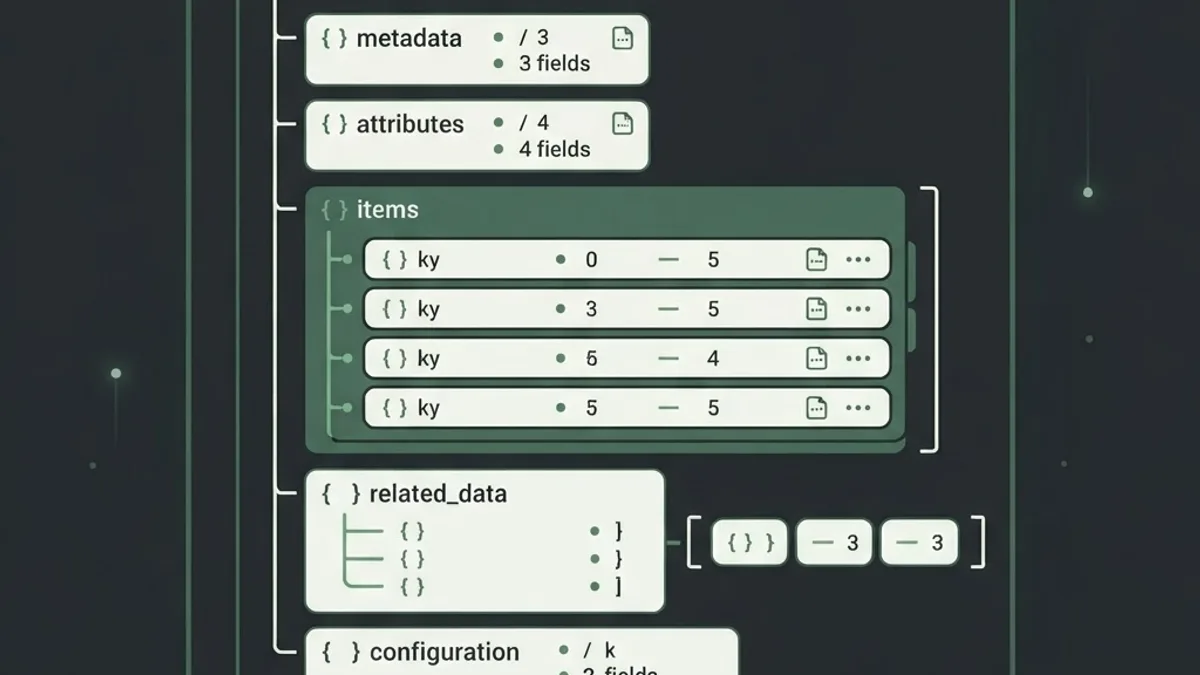
MongoDB stores data as BSON documents, a binary-encoded superset of JSON that adds types such as ObjectId, Date, Decimal128, and binary data. Each document lives in a collection, and each document can hold arrays and nested sub-documents up to a 16 MB limit per document with 100 levels of nesting depth.
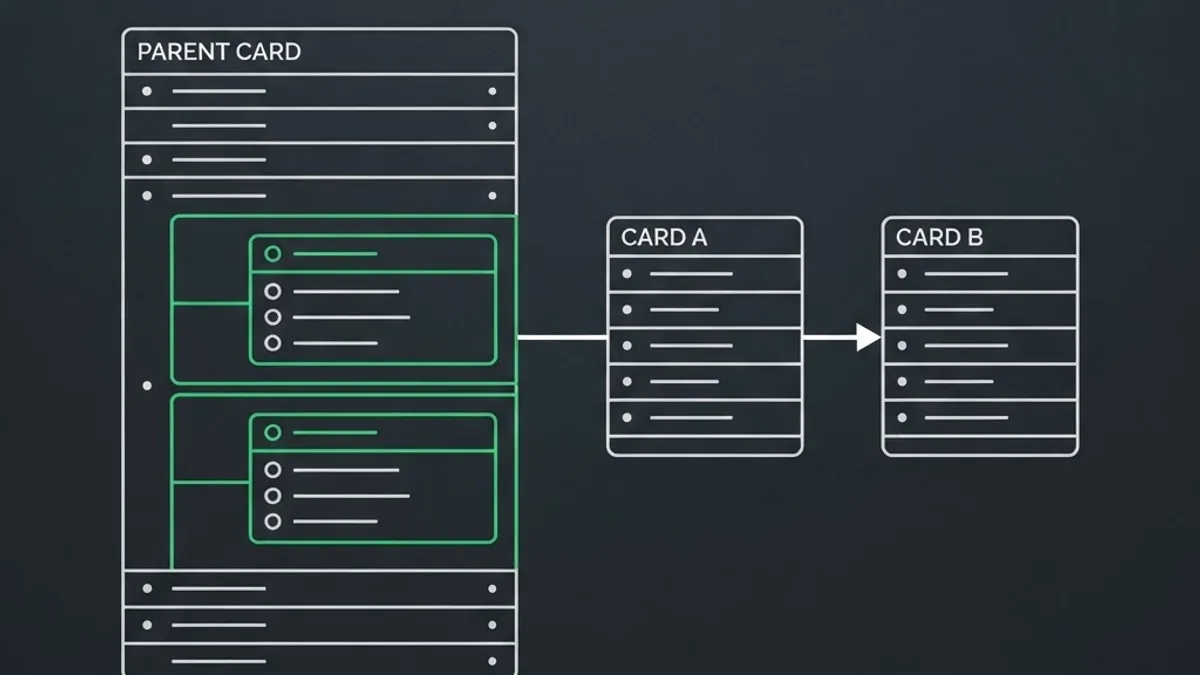
This is the crucial architectural difference. In a relational database, a customer with three addresses and five orders is spread across three tables joined at read time. In MongoDB, that customer can be a single document with an embedded array of addresses, retrieved in one read with zero joins. The data is stored the way the application uses it, not the way normalization theory prefers.
Key Terms Defined
- Document: A single record in MongoDB, stored as BSON, roughly equivalent to a row but capable of holding nested structures.
- Collection: A grouping of documents, roughly equivalent to a table but without an enforced uniform schema.
- Field: A key-value pair inside a document, roughly equivalent to a column but present only on documents that need it.
- Embedding: Nesting related data inside a parent document instead of splitting it into a separate collection.
- Referencing: Storing an ObjectId that points to a document in another collection, similar in spirit to a foreign key but not enforced by the engine.
MongoDB vs Relational Databases: Direct Comparison
| Aspect | MongoDB (Document NoSQL) | Relational (SQL) |
|---|---|---|
| Data unit | BSON document | Row in a table |
| Schema | Flexible, optional validation rules | Fixed, declared up front |
| Relationships | Embedding or manual references | Foreign keys enforced by engine |
| Query language | MQL and aggregation pipeline | SQL |
| Joins | $lookup in aggregation pipeline | Native JOIN clauses |
| Transactions | Multi-document ACID since v4.0 | ACID since inception |
| Scaling model | Native horizontal sharding | Primarily vertical, read replicas |
| Best fit | Evolving schemas, nested data, high write volume | Complex reporting, strict integrity, heavy ad hoc joins |
The row that trips people up is transactions. MongoDB 4.0 introduced multi-document ACID transactions for replica sets in 2018, and version 4.2 extended them to sharded clusters. Supporting ACID does not make a database relational. ACID is a guarantee about how writes behave, while relational is a statement about how data is structured.

Why the Confusion Exists
The confusion is reasonable because MongoDB has spent a decade adding capabilities that developers associate with SQL databases. Four features drive most of the misunderstanding.
- The $lookup stage performs left outer joins inside the aggregation pipeline, so you can absolutely join collections in MongoDB.
- JSON Schema validation lets you enforce required fields, types, and value ranges at the collection level, which looks a lot like a declared schema.
- Multi-document transactions provide the same all-or-nothing write guarantees people expect from a relational engine.
- The MongoDB Atlas SQL interface and BI connector let analysts query MongoDB data using SQL syntax, which understandably muddies the distinction further.
Here is the original point worth remembering: these features make MongoDB more capable, not more relational. A relational engine derives correctness from the schema; MongoDB derives correctness from the application layer and optional validators. That shifts responsibility toward your code, which is a trade rather than a flaw.
What MongoDB Is Instead: NoSQL Categories
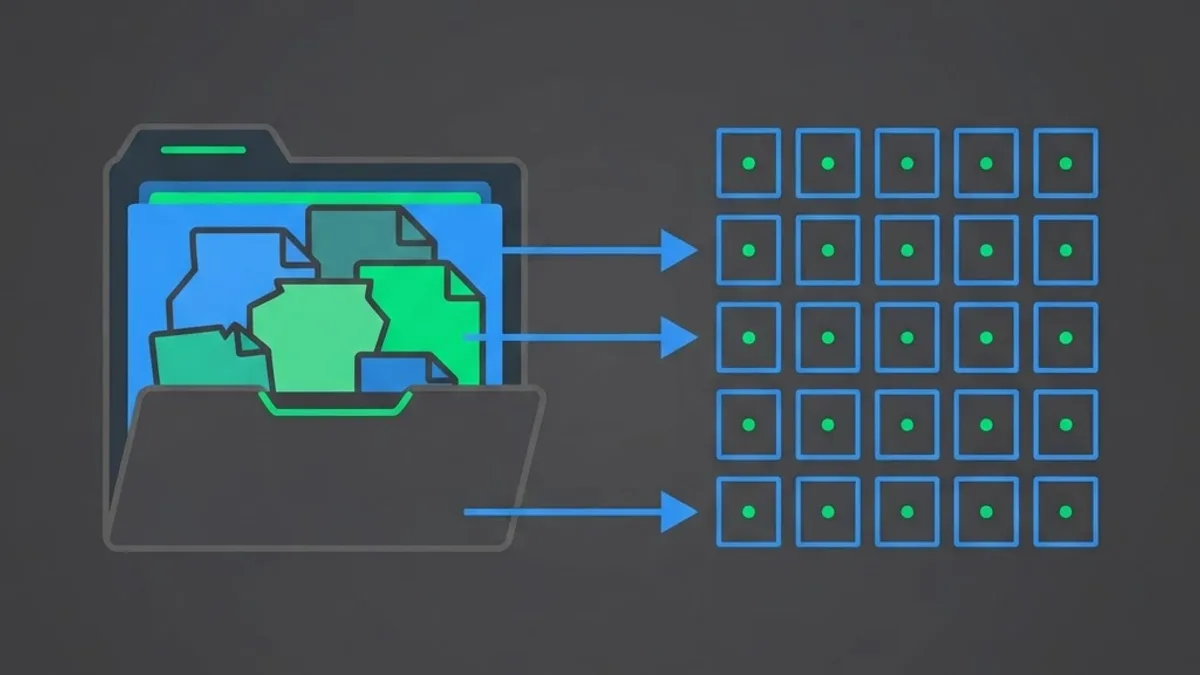
NoSQL is not one thing. It splits into four broad families, and knowing where MongoDB sits prevents bad comparisons.
- Document stores such as MongoDB, Couchbase, and Amazon DocumentDB store self-describing records.
- Key-value stores such as Redis and DynamoDB in its simplest mode retrieve values by a single key.
- Wide-column stores such as Cassandra and HBase organize data by column families for very large write volumes.
- Graph databases such as Neo4j model relationships as first-class edges for traversal-heavy queries.
MongoDB is squarely a document store, and it has been the most widely adopted NoSQL database in the DB-Engines popularity ranking for years, consistently placing in the overall top five alongside Oracle, MySQL, SQL Server, and PostgreSQL. Adoption at that scale is why the question keeps coming up in interviews and architecture reviews.
When MongoDB Is the Right Choice
Choose MongoDB when your data naturally arrives as documents and your schema will change. Content management systems, product catalogs with wildly different attributes per category, event and telemetry logging, user activity feeds, real-time analytics on semi-structured data, and mobile app backends all fit the document model without fighting it.
Choose a relational database when integrity across many entities is the product itself. Accounting ledgers, inventory reconciliation, payroll, and anything with heavy ad hoc analytical joins are easier and safer in PostgreSQL. Teams building either architecture often bring in specialists such as a scalable web solutions partner to pressure-test the data model before writing production code, because a schema mistake made in week one costs a rewrite in month twelve.
Practical Modeling Rules That Prevent Pain
MongoDB rewards deliberate design and punishes accidental design. These rules come from patterns that repeatedly cause production incidents.
- Model for your queries, not your entities. Write down the five most frequent reads first, then shape documents so each one is a single lookup.
- Embed when data is read together and bounded. A blog post with twenty comments embeds well; a post with fifty thousand comments does not, because of the 16 MB document ceiling.
- Reference when data is unbounded or shared. Use ObjectId references for many-to-many relationships and for entities updated independently.
- Add compound indexes in ESR order. Equality fields first, then sort fields, then range fields, which matches how the query planner uses index prefixes.
- Turn on schema validation early. Optional flexibility is useful during prototyping and dangerous in production once multiple services write to the same collection.
- Avoid unbounded array growth. Arrays that grow forever cause document rewrites and index bloat; use the bucket pattern instead.
Can You Use Both Together
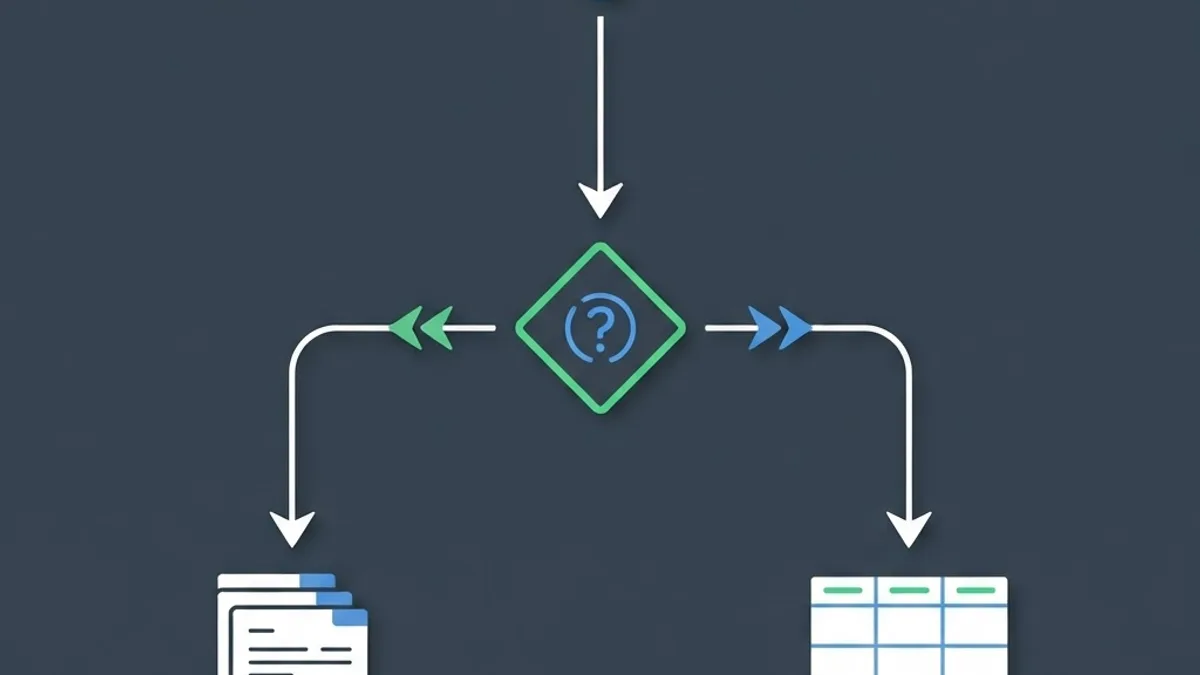
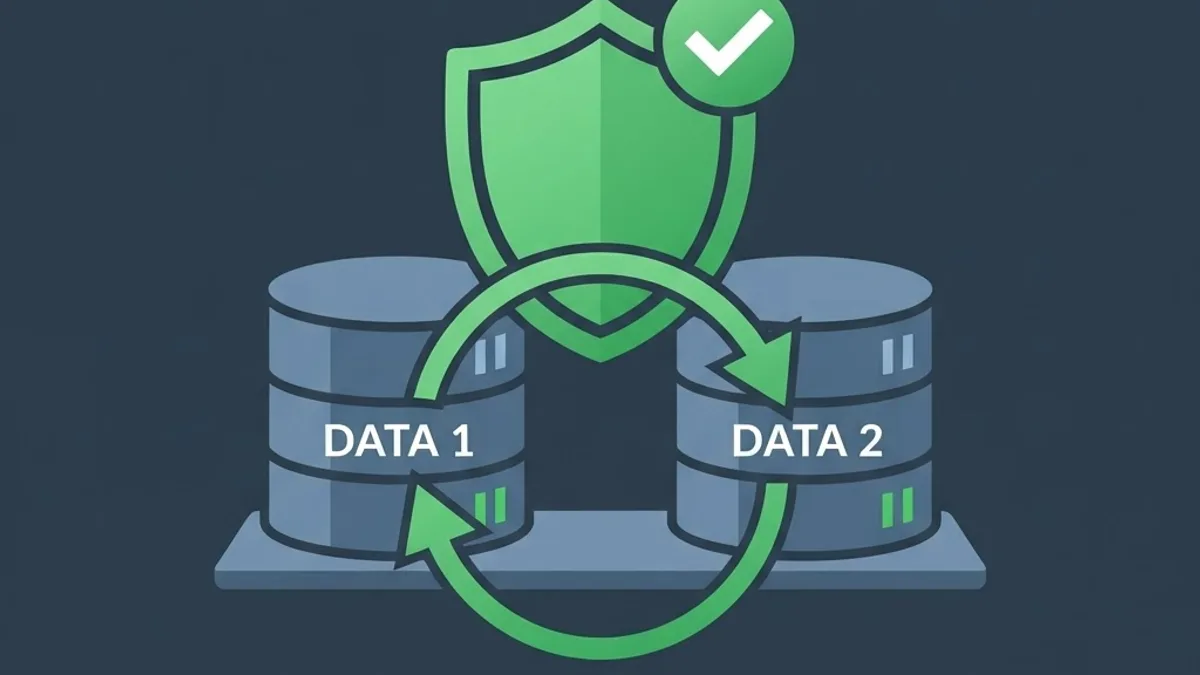
Yes, and mature systems often do. A common production pattern uses PostgreSQL for transactional core records like accounts, payments, and subscriptions, and MongoDB for high-volume, schema-fluid data like activity streams, notifications, and cached product views. This is polyglot persistence, and the cost is operational complexity: two backup strategies, two monitoring setups, and clear ownership boundaries between datasets.
The rule that keeps this manageable is single ownership. One database owns each piece of data as the source of truth, and the other holds derived copies only. Engineering teams at WebPeak Digital apply that boundary rule during architecture reviews because dual-write systems without a designated source of truth are the most common cause of silent data drift.
Key Takeaways
- MongoDB is a document-oriented NoSQL database, not a relational database, because it stores flexible BSON documents rather than fixed-schema rows.
- The relational model was defined by Edgar F. Codd in 1970 and depends on uniform tables plus engine-enforced keys, neither of which MongoDB requires.
- MongoDB documents have a 16 MB size limit and support up to 100 levels of nesting.
- Multi-document ACID transactions arrived in MongoDB 4.0 for replica sets and 4.2 for sharded clusters, so ACID support is not a reason to call it relational.
- MongoDB supports joins through the $lookup aggregation stage, but joins are a query feature, not a structural guarantee.
- Build compound indexes in Equality, Sort, Range order for the best query planner performance.
- Polyglot persistence works well when exactly one database owns each dataset as the source of truth.
Frequently Asked Questions (FAQ)
Is MongoDB SQL or NoSQL?
MongoDB is NoSQL, specifically a document database. It uses MongoDB Query Language and the aggregation pipeline instead of SQL. You can query MongoDB data with SQL syntax through the Atlas SQL interface or BI connector, but that is a translation layer, not the native query engine.
Does MongoDB support joins like SQL databases?
Yes, MongoDB supports joins through the $lookup stage in the aggregation pipeline, which performs a left outer join between collections. It works well for moderate datasets but is generally slower than a relational join, so most MongoDB designs embed related data to avoid joins entirely.
Is MongoDB ACID compliant?
Yes. MongoDB has always been ACID compliant at the single-document level, and version 4.0 added multi-document ACID transactions for replica sets, extended to sharded clusters in version 4.2. ACID compliance describes write guarantees and does not make MongoDB a relational database.
Should I use MongoDB or PostgreSQL for my project?
Use MongoDB when your data is document-shaped, your schema will evolve, and you need horizontal write scaling. Use PostgreSQL when you need strict referential integrity, complex reporting queries, or heavy ad hoc joins. Many production systems use both, with one database owning each dataset.
Can MongoDB replace a relational database completely?
Often yes, but not always. MongoDB handles most application workloads well, including transactional ones. It is a weaker fit for systems requiring complex multi-table analytical queries, strict engine-level referential integrity, or established SQL reporting tooling that cannot be replaced economically.
Does MongoDB have a schema?
MongoDB has a flexible schema rather than none. Documents in one collection can differ in structure, but you can enforce required fields, data types, and value ranges using JSON Schema validation rules at the collection level. Enabling validation early is strongly recommended for production systems.